The importance of Circa Survive: Aesthetic and artistic breakdown. Analogies to the story of Peter and Wendy in the Pan Universe by Quinton Mitchell.

(Please Donate) If you like content like this, please subscribe to by blog but also donations are more than welcomed. I am an independent blogger, thinker, etc., trying to better create and invest in this site. There are no subscription fees to my blog at the current time (it’s free until further notice), so donations are welcomed. Any amount is welcomed. Donations can be made to paypal.me/qmarcell87 at the following link: https://paypal.me/qmarcell87?locale.x=en_US

“Haunting us, these different meanings and spectral beings.” House of Leaves by Circa Survive

“If you allow, something so unnecessary to get you down, there’s no one else to blame.” Drug Dealer by Circa Survive

“If you could only offer love, you’d be like a drug to us, like a drug dealer” Drug Dealer by Circa Survive

Introduction: It was a few years ago, maybe around 2015, when I was at the Tabernacle in Atlanta, Georgia, seeing Circa Survive. I had seen them four times before in concert, and each time was an amazing experience, but on this night, hearing the heavy bass on their song Descensus at minute 2:41 (reminiscent of something one would find in the band Tool), where the bass was interwoven with spacey guitar work invoking the sounds of an Indian sitar, I was taken away. The bass was synced to oscillating white lights in a dark space. All the heads were bobbing in unison, feeling a part of something transcendental. It was a reminder as to why Circa Survive is one of the most important Progressive rock acts of two-thousands, arguably the progressive band for the older millennial generation. The first time I became aware of Circa Survive was in my teen years in the early two-thousands, walking around a mall and going into either a FYE music-store or Hot Topic and seeing the gothic artwork of Esao Andrews on the Juturna album in early 2005. “That looks cool” I said to my girlfriend, and she responded, “Then buy it then”.

I did not buy it though since I was a broke teenager, with enough money from allowance and fast-food job to take my girlfriend to the movies where we would mess around in the back aisles away from any parental supervision (those awkward days). Fast forward to the college days around 2008, and I downloaded Circa’s song, The Great Golden Baby, to my cellphone, which looking back looked like a brick compared to the lean devices we have today. I listened to it on repeat flying home to Georgia in the winter months from Washington State where I attended college, admiring the storytelling. “I’m going on home by own way, going home by my own”. Fast-forward again, I was already immersed in their albums by 2009, but by the twenty-teens while I served in the Air Force, living a lonely hermetic lifestyle after duty (to avoid getting into trouble), I would drink, draw, save all my money for my eventual escape towards freedom (Honorable Discharge), expand my mind, and Circa was always playing. In other words, I am sharing all these stories to convey that I grew up with Circa Survive. So many bands fizzle out and fail to adapt due to being constrained to a particular genre which are embedded within phases of peoples’ lives, etc. Further rock and roll music fell victim to its own balkanization and corporate interests intensified each genre, thus linking a genre to a certain point in time, but time goes on. Where many bands get caught up in making a specific sound thus breeding genre, if there is no intellectual depth engendering multiple interpretations from the listener, then a song won’t stick. The power of Circa Survive is they grow with their audience and their lyrics help guide the listeners, and the lyrics or hooks are brutally stunning/catchy, to the point where average listeners do not simply listen to the lyrics, they internalize the lyrics. Another kudos to Circa Survive being a progressive experimental act is that progressive music defines the norms of genre. It is bending, thus it becomes more egalitarian, whereas many rock bands I grew up with (being African American) there was a sense that rock-and-roll hand sectioned off its own market by appealing to white listeners only. This paper is not about race, but what I am saying is that experimental music sources inspiration from various traditions thus it has a likelihood of touching diverse listeners. I always say that Circa Survive is blues music despite the high-pitched enchanting voice that defines the traditional norms regarding masculinity while definitely being masculine at the same time.

Correlations and Narrative Building through Lyrics: One can easily stitch together the array of lyrics they have and notice a scene appearing such what I did below:

“Make your move, obvious humor – Always on, dressed to impress. I’ll be the last one to find out why.” The Great Golden Baby. “I’ve fixed myself up nice, but you never came.” Kicking Your Crosses Down. “That’s why you never mention my name to them?” Wish Resign. “What brought you back to this place? I knew you never learned, I you never.” Wish Resign. “Can we last through the winter? The weather is starting to freeze.” In Fear and Faith. “If I last through the winter, I swear to you know I won’t call” In Fear and Faith. “Congratulations. Go home now”, from In Fear and Faith. “Don’t go back on your words. You always said you tell me first.” We’re all Thieves. “I’ve been erased. I’ve been erased from the picture” We’re All Thieves. “Time takes its toll on us. It changes everything” The Great Golden Baby. “I already forget I how used to be without you” Meet Me in Montauk. “If you could try and get your timing right. I’ll let you stay.” Descensus. “You mean so much more to me” Meet Me in Montauk. “I won’t let it tear us apart” The Lottery. “I don’t want to feel like this. Ever, ever, ever, again” Nesting Dolls.

Aesthetic Breakdown: Off the top of my head, I consider Circa Survive to be “prog-psych-ambient-gothic (romantically dark)-hippie folk- post emo-blues rock”, where rock falls under philosophical modernism, thus being a medium that plays with boundaries while also psychoanalyzing the human condition, with a range that can be heavy, avant-garde, Lynchian (David Lynch, e.g., the film Blue Velvet or Lost Highway, i.e., surreal), mystical, romantic, jazzy, sad, and empowering. They have accomplished to make themselves the Doors of post-hardcore music but have shown paced longevity to sustain their career for their personal wellbeing but also for the satisfaction of their fanbase. Instead of creating an image and fitting into it, they disregard image, instead focusing on appearing as they are, yet treat music as an art collective for analyzing a range of subjects influenced by personal revelations within their own lives. Relating to The Doors, the cryptic lyrics of Jim Morrison, as if he were a dark harbinger of American vagabond folk soul, flowing through keyboarding of Ray Manzarek, drums of John Densmore, and guitar work of Robby Krieger, seem as if they inspired Circa Survive strongly. However, I also would sprinkle in some Stevie Nicks from Fleetwood Mack with her witchy folk 70s prog rock aesthetic. If Circa Survive were around during the Woodstock Area, coming from the burbs of conservative America, rocking out in garage cover bands, they would make the journey to Woodstock or out West to San Francisco, to try to showcase their music. Sprinkle in some of the Stooges, MC5, Janis Joplin, Sun Ra, and especially the blues of Otis Redding, Bill Withers, Motown, etc. In such an alternate universe, by the nineteen seventies they would have been influenced by the Anti-War and Civil Rights movements, where once can easily see them playing benefit concerts in Washington Square Park with activists and random listeners clapping and singing in unison.

Scene from David Lynch’s film, Blue Velvet, which samples the imagery of the brooding blues singer with conflict. Lynch films often deal with the inability to grasp a clear reality similarly to themes found in early Circa Survive

Relief from Grief: Circa Survive’s music is for those who wish to deal and overcome burden. By staring at the truth of oneself and pouring oneself out without shame or criticism, it is a healthy way to real self-actualization. Circa is a safe camp. Brutally and poetically emotive but constrained, focused, and arranged thus showing a sense of self-awareness, hence having the capability to have personal strength to pull oneself up. The lyrical makeup seems almost bard-like or troubadour. Some people, and some genres of music, do not teach this. They may give you the aggression and anger, but they do not show you a way out. There is no finish line. Rather, Circa Survive provides the emotive introspection but also offers the possibility of relief and acceptance. There is no issue with trying to find beauty in painful memories. For example, for me instead of saying “I was hurt”, as I came to grow, I would rather say, “I put myself in a position to be hurt, but I learned from it and retained my sense of having a moral center or compass”. “I fell a part in your arms for the last time, and I felt free because of the things of you told me” (lyric from I Felt Free on Blue Sky Noise).

Aesthetic Breakdown Continued: The band hails from Bucks County, Pennsylvania, a suburb on the northern side of Philadelphia, and is consisted of Anthony Green who previously was in bands such as Saosin but has had collaborations with other bands such as The Sound of Animals Fighting and Zolof the Rock and Roll Destroyer; Brendan Ekstrom on the guitar who was a member of This Day Forward with fellow bandmate Colin Frangicetto also on the guitar; Nick Beard on the Bass Guitar and Steve Clifford on the Drums. The county has produced many local bands but was notable for being more so catered to sports, such as Central Bucks West, i.e., CB West Football, being a notable national powerhouse, particularly up to the early two-thousands. The suburbs are also near a city with a rich history of skateboarding such as Alien Workshop, Kerry Getz, and the shenanigans of Bam Margera.

Yet, back to Circa Survive, they explicitly fall under the post-hardcore genre, which as a genre leans towards progressive Do-it-Yourself humanist politics with such as that laid down by progenitors such as Black Flag, Minor Threat, Gorilla Biscuits, The Cro-mags, Fugazi, etc. For me poetics plays such a role in this sort of genre be it that of Luis Borges with The Garden of Forking Paths, which one could sense in At the Drive-In’s evolution into the Mars Volta, but there’s also inspiration I sense from poets/writers such as Frank O’Hara and Jim Carroll (East Coast), Sherwood Anderson (Midwest), Flannery O’Connor (Southeast), Raymond Carver (Northwest), Cormac McCarthy (Southwest), etc. For example, Thursday’s Geoff Rickly employs similar themes to that of Circa Survive and could be considered one of the godfathers of the modern two-thousands post-hardcore scene with his beautiful lyrics. Thursday songs such as “Where the Circle Ends” is a spoken word poem calling into question the blights of modern life and its hypocrisies such as claiming to want a better world without participating in its approval, or how urban schools go underfunded. Thursday’s song, “For the Workforce, Drowning”, Geoff makes analogies between nooses and neck ties one would wear in a stale corporate landscape, while also making baptismal allegories about washing away sins each day after coming home from a long commute, yet wails “Just keep making copies of copies, of copies, where will it end?”.  Also, Rickly with Thursday released songs such as “This Song Brought to You by a Falling Bomb” that relates the warfare of the American machine going on at the time (Iraq and Afghanistan Wars) juxtaposed against memories of lost youth under the skylines of New York. Further, Rickly employs similar trends that are found in later Circa Survive with his emphasis on lapses in memory in relation to trauma or covering up sins, which can be seen in Thursday’s songs, Tomorrow I Will be You, Cross Out the Eyes, etc. Post-hardcore music offers an outlet for male aggression but with progressive introspection, and calls into question the ills of an individualistic, one could argue fascists, capitalist system, where people deal with poverty, drug addiction, dissociation, alienation, etc.

Catholicism: Circa’s sounds to me is a confluence of factors ranging from something akin to a Jack Kerouac Catholic angelic-like inspiration in their lyrics such as “He has risen, hold me under” in the song, Stop The F-ing Car (an allusion to the film Boondock Saints, if I remember right – a film strongly influenced by Northern city Irish culture, which is a culture that is a part of the history of the Philadelphia area, and this culture is musical like other Celtic cultures), but that this particular lyrics seems to play on the act of purging in baptism, yet, the inverted statement of “hold me under” insinuates more sin to purge. Relating to Catholicism, their song, Rites to Investiture, deals with the Catholic procedure involving the order of Mass such as that after the act of homily. Lapsed faith, the conflict between dogmatic belief and personal discovery, will always be an important concept within introspective music, so the Kerouac angelic inspiration I speak of regarding Circa can also be found in Thursday songs such as “Asleep in the Chapel” on War All The Time, but also the cover art of their album, A Common Existence. Catholicism with its concepts of miracles and Saints, and its foundations from pagan Rome, gives Catholicism a mystical property involving elements such as the purification properties of water, the traces of essences, and possibility of apparitions. Since we are on the notion of religion, in which religion is often inspiration for artists, at least when pondering the philosophical puzzles of it, or pondering one’s upbringing in it, Anthony Green has something akin of a power to heal with his lyrics and live performances. It is as if he is at the head of a flock, at a sermon, where instead of Joseph’s Colorful Robe from the Bible, instead there is an electric lightshow.

Aesthetics Continued: Then there’s notions of lost memory, amnesia, with the lyric “Didn’t I Know You?” (a lyric from the song, Oh. Hello) which relates to the film Eternal Sunshine of the Spotless mind. Further, fading memory is also incorporated into the song Meet Me in Montauk, which is an obvious homage to Eternal Sunshine. One can add “I already forget I how used to be without you” from Meet Me in Montauk, or in Descensus with the lyric, “If we forget, I’ll do it all again”. You will hear some slight homages to the band Tool as far as the music (however, the cerebral nature to Circa’s work could be considered Jungian as well, i.e., playing with notions of subconsciousness, dreams, fables as allegories into a deeper human connection, etc.), maybe even a little Deftones inspiration with them as pioneers in shoegaze metal such as with their album White Pony, Radiohead, and of course Bjork (“You were in my dreams, half human, half machine” from In the Morning and Amazing, which invokes imagery to that of Bjork’s “All is Full of Love”).

The term of Post-emo I came up with (maybe it already exists? I do not know) is important here. First, by emo I do mean the branch of emotive hardcore music that derived from hardcore punk music, which arose in the late eighties before being solidified into various regional scenes (East Coast, Midwest Great Lakes, Texas) and was hovered above by the transition to introspective rock music such as that of Radiohead, Nirvana and Sunny Real Estate, but by the late nineteen nineties its influence had grown to become commercially viable as opposed to purely independent. This was emo music before the caricature that came to be by the end of the early two-thousands (my high school years). The vein of emotive and experimental hardcore music that Circa falls under is more in alignment with At the Drive In, Thursday, Glassjaw, Juliana Theory, etc. I would consider early post-emo albums to be Further Seems Forever’s underrated album, How to Start a Fire, which amplifies the blues in emo, almost relinking the blues elements in emo back to rock’s early beginnings as R&B (rhythm and blues) and soul music, but also Armor for Sleep’s What do you when are dead, which is a concept album dealing with a full storyline anchored by a main protagonist.  The album by Armor for Sleep involves the five stages of grief model (or the Kübler-Ross model) created by Elizabeth Kübler-Ross which breaks down the stages of grief as being the five emotions of denial, anger, bargaining, depression, and acceptance.

Yet, Circa is also a product of the other vein of early 2000s emo and screamo bands which were immensely popular under labels such as Victory Records, Eyeball Records, Tooth and Nail, etc. Yet, Circa was different than the Hot Topic crowd (not better, but different) even though early Circa Survive had no other place to be sold but at a Hot Topic (which isn’t an insult to Hot Topic at all), hence, I can understand how people might have overlooked the band as just another band rather than a mature art collective of musicians. I suspect being affiliated with such a specific genre caused the members of Circa Survive like some other bands to branch away from the “emo scene” or screamo/metalcore scene and transcend into the “post-“, i.e., similar aesthetics to their roots of the emo/screamo scene, but away enough to distinguish itself as different, deeper, etc. They have never been a “teenie-bopper” band and I would say the same thing for many of the bands I listed above such as the poignant lyricism of Geoff Rickly of Thursday (who collaborated with Circa Survive in their song The Lottery) whose poetics speaks to that of Frank O’Hara and Jim Carroll (author of The Basketball Diaries). Put it this way, how you can trace metal bands to either Black Sabbath (death metal, black metal, etc.), or Led Zeppelin (hair metal, arena rock), etc., in the emotive scene by the end of the nineties you either went the At the Drive-In Relationship to Command way (grimy, dark, adult) or you went the “system boy band” method.  

Analysis of the Cover Art in Relation to the Music: Four of all Circa’s main releases have included a female figure on their cover art. The first two albums Juturna and On Letting Go, the fourth album, Violent Waves, and their 2018 release of The Amulet, feature a female figure, yet I could consider the first three albums (Juturna, On Letting Go, Blue Sky Noise) to linearly be a continuous concept album, with Violent Waves and The Amulet being continuation of this female character’s story-line (and her male companion’s – presumably the narrator, i.e., Green is speaking most from his experiences). Concept albums are a concept notable in progressive music, e.g., Pink Floyd’s The Wall, King Crimson, Jesus Christ Superstar by Andrew Llyod Webber, etc.

Juturna and Mythology: On the cover of their first album, Juturna, we see a faceless woman being sucked up into the air, floating towards something unknown, gravitating off the ground in which the picture includes a decrepit stone building with rusted iron fence, and some sort of dead plant or weed too. Leaving a dead garden. Juturna in Roman mythology is the goddess of wells, springs, and fountains, and the mother of Fontus (a god too of wells and springs), and husband to Janus. Water is indicative of a life source and cleansing force. Janus is where the name of modern month of January comes from, where January is the opening or beginning of the new year.  These roman deities were involved in the Mithraism mystery (gnostic) religions of Rome (a onetime competitor to early Christianity), in with the Cult of Mithra was inspired by Zoroastrian thought, in which Zoroastrian thought from Persia – having influenced Greco-Roman thought- involved the sacredness of magi, i.e., magicians, i.e., the foundation of Western magic and later Neoplatonism such as Christian Kabbalistic practice. Mysticism of the Greco-Roman world was a melting pot influences having inspiration in the sacredness of Egypt, proximity of the Levant and Anatolia (Hittites, Phoenicians, Canaanites, Jews), The Middle East such as Babylon, Persia, but also nomadic traditions of the Steppes. Neoplatonism of the Roman Era was a framework created by Plotinus who built upon the esoteric teachings of Plato, and his framework was based on the idea that there are different levels of reality, in which all reality permeates from a source called The One, yet, is controlled by the Demiurge (the creator), and our reality as humans are on the border between the higher spiritual realm and the lower material realm. By engaging in ceremonial practices such as what would later come around such as the practice of Hermeticism, one can tap into higher levels of being or consciousness. Yet, since there is no agreed upon framework as far as ceremony, Neoplatonism has often been seen as occultist or Gnostic in nature, with many frameworks going as far as not believing in the trinity of God within Christian dogma. I am not saying that Circa Survive is by any means a Gnostic band, yet there is something magical or incantation-like about their work.  

Juturna Cover Art Return: The woman in Esao’s cover art (https://esao.net) is feminine with wavy black hair, a beautiful yet subtle dress, but there is something sickly too about her. Who is she? She seems as if she could have been the quiet introspective daughter from a well-to-family, the type who looks down in photographs, always picking at her skin, despite having a natural beauty indicating “good stock”. She is floating from a once lush Victorian garden now turned into a barren waste indicating this place was once happy but is no more, and her floating seems to indicate a break from reality or being drawn which is translated as being from a supernatural force out of her control but in which her actions caused. She is our Alice, but this is no Wonderland. This is gothic. Beautiful and dark. The goddess Juturna and her relation to Janus seems to mean that the album is about entering a new door or gateway of cleansing and renewal, i.e., the girl we see on Circa Survive’s album art is on a surrealist and magical journey towards possible sobriety and finding her center (ground, footing, bearing) again.

The Female Figure on the cover art to On Letting Go and Violent Waves: The same female figure of Juturna appears on Circa Survive’s second album, On Letting Go, yet her head has been replaced by a hot air balloon. It is not that she is an “air head” but seems to indicate that on her journey she is now having to confront the thoughts in her head, the thing which inflates (burns) our minds to begin with. Memories. She is letting go of her past.

On Circa’s fourth album, Violent Waves, we see the same female possibly, having “landed” in some sort of MC Escher room which is being flooded, yet also being stalked by some sort of surreal jackal-like animal. What does this mean? We know where she came from, but now it seems she is landed back to a place where her memories were crafted (her trauma) and the water she brings or emanates is cleansing the structure (her life, her past), yet this jackal-like figure seems to be something lurking (a corrupting like character). The female character is also glowing, illuminating with sort of ectoplasmic (ghostly) aura, denoting to me that she may have found a sense of power of some sort, i.e., the courage to confront. The color palette of the jackal by Esao is similar to that of other shapes that appear such as those on the hot-air balloon of On Letting Go, which to me means the jackal is part of the same surreal fabric of the universe in the which the journey is undergoing, and is a representation of something or someone bad that “haunts the halls” of the female protagonist mind, yet it’s being cleansed by the mystical force of water. 

The Art Work of Esao Andrew: The artwork of Esao Andrews could almost be defined as “punk gothic”, respectfully speaking (this is me attempting to find the most relatable term for the reader) with Victorian and Edwardian influences likely mixed with his modern influences of Southwest skater and street culture, and it is more subtle than something you find in a Tim Burton film, but invokes the same gothic appeal that mixes morbidity with romanticism. He masterfully uses oil paints on panel or wood.  In an interview with Fireside Tattoo Network (2019), Esao stated he partially inspired by Egon Schiele, like another artists I enjoy in Peter Chung, cover-work from the band The Pixies, but also comic book artist, Al Columbia. The differences between dreams and nightmares are what you make of them and how you interpret them. The song, The Glorious Nosebleed, was inspired by a cartoon book by Edward Gorey who was an artist specializing is surrealist dark childhood fiction. I am not sure if Circa Survive such as Anthony Green were aware of Gorey before meeting Esao or if Esao’s influences were shared with Circa, yet both the band and Esao seem to have gravitated towards each other with a mutual interest of things that are surreally gothic and romantically macabre.

Gothic inspirations: Gothic, outside of art, as a literary genre was a reactionary movement to the cherry romanticism of the Victorian Era, thus it dealt with death, decay, loss, angst about the soon to be gone “spiritual world” to that of the modern industrial, etc. One could say that Gothic fiction was about reminding us of our metaphysical possibilities in the face of the growing materialism. The genre was particularly popular in both American and English fiction, but as far as America it was firmly implanted during and after the Civil War, which subsequently coincided and birth of the American spiritualist movements. The Civil War was the conflict which saw countless deaths in a struggle that called the nation’s very soul into question. All that death challenged perceptions, but also created movements where people sought a belief in otherworldly things, and this gave rise to ghost stories, beliefs in specters, seances, etc. When we think about the Civil War, the self-created historical revisionism of the Confederacy takes more a visual space, yet, the Northern Union is where interesting things we happening, such as the abolitionist movement, the transcendental movement with thinkers like Henry David Thoreau or Ralph Waldo Emerson, etc.
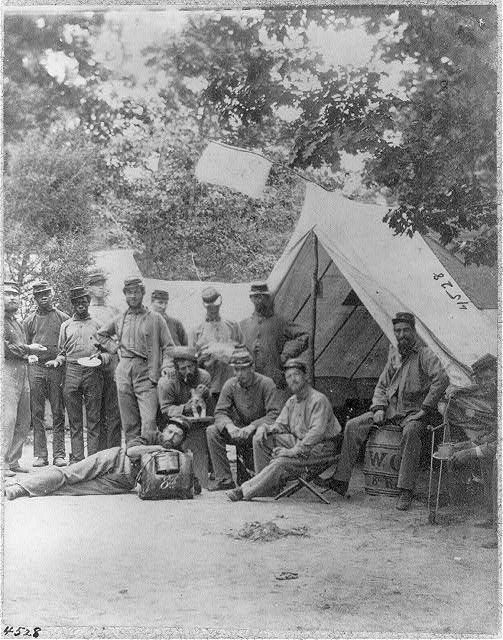
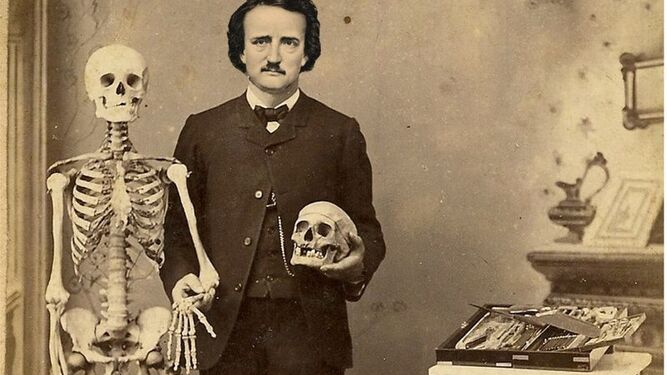
Photo of Union Soldiers from New York. https://www.pinterest.com/pin/505599495648975347/
Poe
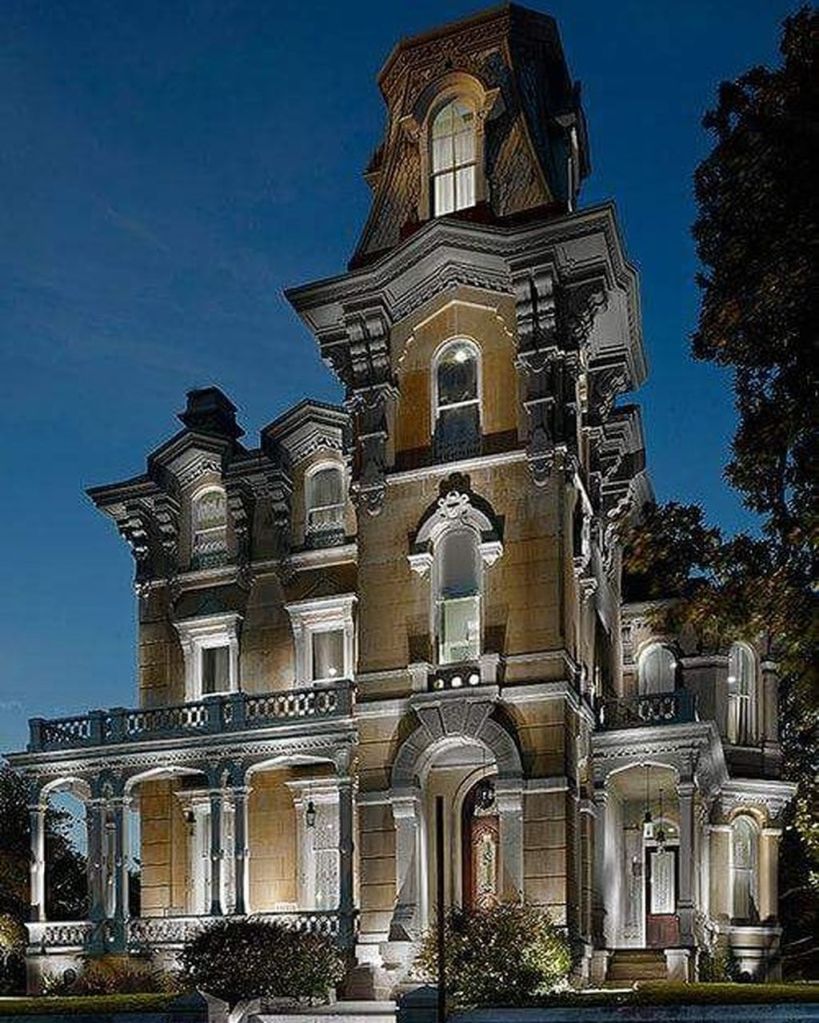
Example of Gothic inspired American architecture

Interestingly, Circa Survive, being from Pennsylvania, is where the Battle of Gettysburg happened, and the war itself, remember – influencing American Gothic -, inspired writers such Ambrose Bierce, the author of surrealist short stories such as An Occurrence at Owl Creek (later turned into a classic episode of the Twilight Zone), where a many, supposedly a deserter, is about to hanged from a railroad bridge, yet, seemingly escapes and finds himself almost into the loving embrace of his family, yet, right as he approaches his family, his body is dropped and hanged. This story deals with memories, romance, death, etc. And of course, before Ambrose Bierce, there was the one and only Edgar Allen Poe (one could even say Washington Irving before him with tales such as the Legend of Sleepy Hollow or Rip Van Winkle), whose life coincided with the quick foundational growth of America as a soon to be economic juggernaut. The time of Poe’s life was in a transitional moment of American culture, where America was a mix of both Eastern seaboard elitism descended from our once English overlords as wealthy families of Boston Brahmin or Dutch Knickerbocker stock made fortunes off still Indian owned resources (“Cause it’s all built upon a burial ground,” lyric from Frozen Creek by Circa), but also the harshness of the frontier. The era as America’s colonial (iconic) tradition transferred towards something mimicking “modern” started during the Era of Good Feelings, which lasted from 1817-1825. The Era of Good Feelings involved a reinvigorated sense of American pride after the War of 1812, the foundation of Manifest Destiny, conflicts with Indian tribes of the plains, treaties with the British and others over land and borders, but culturally speaking the foundation of American culture diverging from English culture. Yet, there was always a dark and gothic sentiment to the architecture, the fashion, etc. It easy to envision Anthony Green as a fresh-off-the-boat Irish immigrant or second-generation American singing around a Union Camp fire as he ponders the truths of the human condition.

Poe’s life basically aligned with creation of the American Way of life, where the American perception is both inspiring, with its vast expanses of untamed land, but also a harsh place such as what one could have easily found on the frontier but also in disease ridden port cities of the coast such as his home of Baltimore, Maryland (interesting fact, Baltimore’s Salad Days Studios is where Juturna was recorded under the direction of Brian McTernan, with the name Salad Days coming from hardcore pioneer band, Minor Threat).  To link Ambrose Bierce, Poe, and gothic romanticism further to Circa, to me, Circa’s roots in the coldness of the East Coast is a foundational element to their music. Circa’s music is influenced by the seasonal changes of New England, with its deciduous forests, leaves, etc.
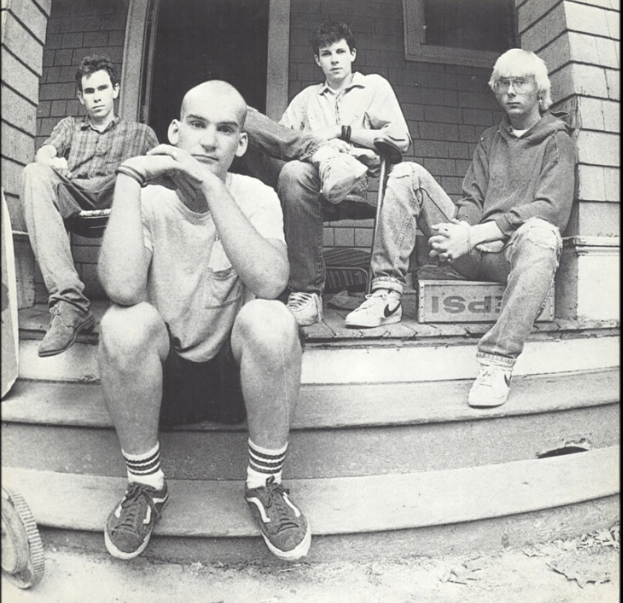
Minor Threat before Ian MacKaye branched off to create Fugazi, an instrumental band in post hardcore and emotive hardcore

Listen to the opening effects of Holding Someone’s Hair Back, and once can easily relate the spacey effects to that of crystalline white snow falling on a field near an old New England colonial farmhouse, a house in which poetry is about to the read. Snow, just like Gothicism, is both beautiful and harsh in that it represents the death of the seasons but also the renewal of life, e.g., the lyric from In The Morning And Amazing, “From winter brings the spring again”.  One can easily image fall time on the Eastern seaboard where leaves are being burned, such as “Smoke’s filled the air and I’m struggling to breathe” from the song, We’re All Thieves.

This gothic element within music such as Circa Survive can also be found in other experimental music projects such Have a Nice Life, where in the song Bloodhail, the singer refers to arrowheads, which to me invokes imagery of the once rich Native culture such as that of the Algonquin, Mohican, etc., of New England before their demise, and one could even say their legacy still has a haunting effect. Another act from New England, from Pennsylvania like Circa Survive, is Planning for Burial, in which one-man show Thom Wasluck mixes post-punk, black metal, shoegaze, and others to weave a mood that paints tales of emotion, pain, and love in New England landscapes. His albums such as Matawan – Collected works from 2018 inspires the strong Native American roots of New England, his 2017 album Below the House seems to relate to romantic tensions living in a dreary landscape, and his 2020 release When Summer Turns to Fall has no words but it is a classically inspired minimalist song that inspires a sense of Walden by Thoreau.  

Cover Art of Blue-Sky Noise: The only male figure as far as artwork is depicted on Blue Sky Noise. We see a young man who is wearing a tunic thus indicating some Roman about him, thus relating his depiction to the Greco-Roman mystical (Mithraic) inspirations I spoke about earlier. If the other albums mentioned above are about a female character, this male character on Blue Sky Noise could possibly be an iteration of her significant other, who too is dealing with issues of trauma, e.g., drug abuse.

Around the male figures head is both a halo, indicating sanctity, but the same shame also is part of a monstrous creature’s mouth which is filled with sharp teeth. This creature has the body of some sort of ram or sheep, or an equine of some sort, but the imagery to me relates to the lower half the satyr creature from mythology. This creature as a nature spirit in Greek mythology known for their Dionysian behavior of drinking and womanizing, indicating this monstrous animal on the cover art for Circa Survive, who also holds a music horn, is the allure of a fast lifestyle. The creatures wing I honestly cannot make much of but can only relate it to the mystical like elements of this creature, i.e., mystical things typically have wings so why think too much into it, yet the wings could represent being “high” or “speed”. In addition, a prism of light is coming out of this creature’s flesh which I translate as meaning the illumination that drugs can bring physically, i.e., tripping. In other words, this once saint boy or young man is surrounded by a fast lifestyle in which the creature (addiction) has the capability of luring one in while also destroying someone.

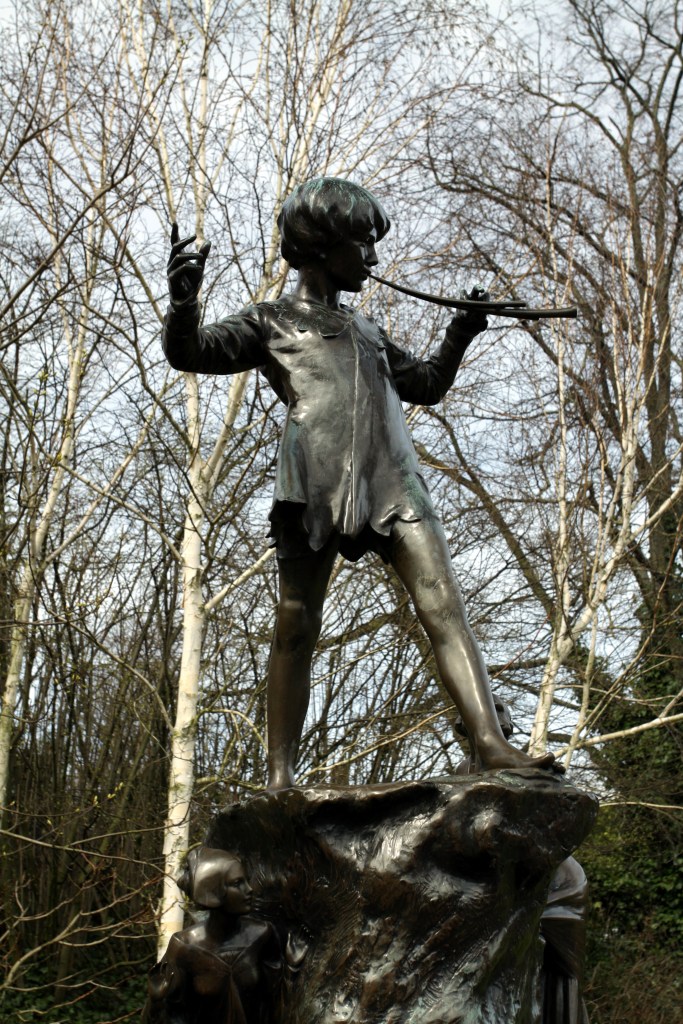
Status of Peter Pan

The male figure in the art also has a right arm which is deformed in some way, which to me insinuates drug abuse by injection, i.e., opioids. This art is a surrealist interpretation of a good person who has fallen victim to the allure of a lifestyle in which hardcore drug use has suspended him in an otherworldly state where monsters surround him.

On Love: The common theme is Circa’s earlier albums was a bond between a man and woman both dealing with some sort of trauma, yet Anthony Green’s brilliance is he does not shy away from this darkness, but by confronting it, he is able to write beautiful lyrics towards a path to light. That is the appeal. He is not messing around. He is not lying. He is staring things in the face. He is taking accountability for his actions and grew from those actions.

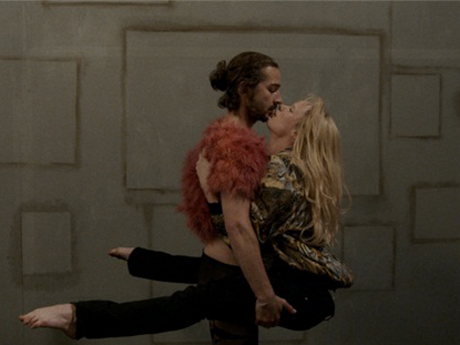
Peter Pan, Wendy, and Other Visual Relations: A visual that inspires this male and female in a dire situation of addiction is the short film/music video, Sigur Rós: Fjögur piano released in 2012 which featured Shia LeBeouf and Denna Thomsen. The music video by Alma Har’el, depicts two lovers turned drug addicts who are in a conflicted relationship yet still have a sense of love and memories of better times, but both have an antagonist with a surrealist drug dealer. These visuals seem very in alignment with Circa Survive, yet the albums I am most referring to (Juturna, On Letting Go, and Blue Sky Noise) were all released before the Sigur Ros video. I am unsure if Alma Har’el was inspired by Circa, yet, both the Sigur Ros video and Circa’s content remind me of the story of Wendy and Peter Pan in the Pan Universe by author J.M. Barrie, whom interestingly was born in the Victorian Era, and was in the literally circles of other gothic writers such as Sir Arthur Conan Doyle (Sherlock Holmes, i.e., the creator of the modern mystery crime genre).
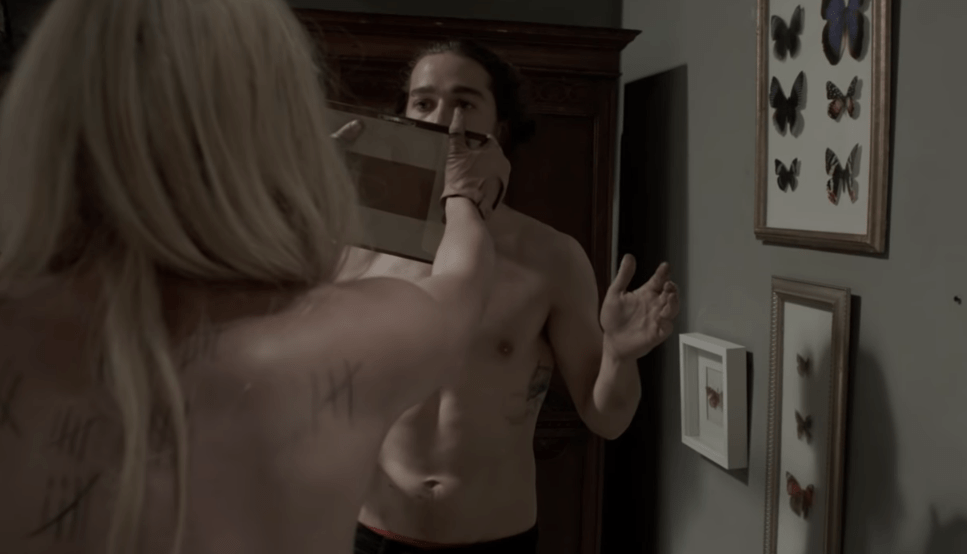
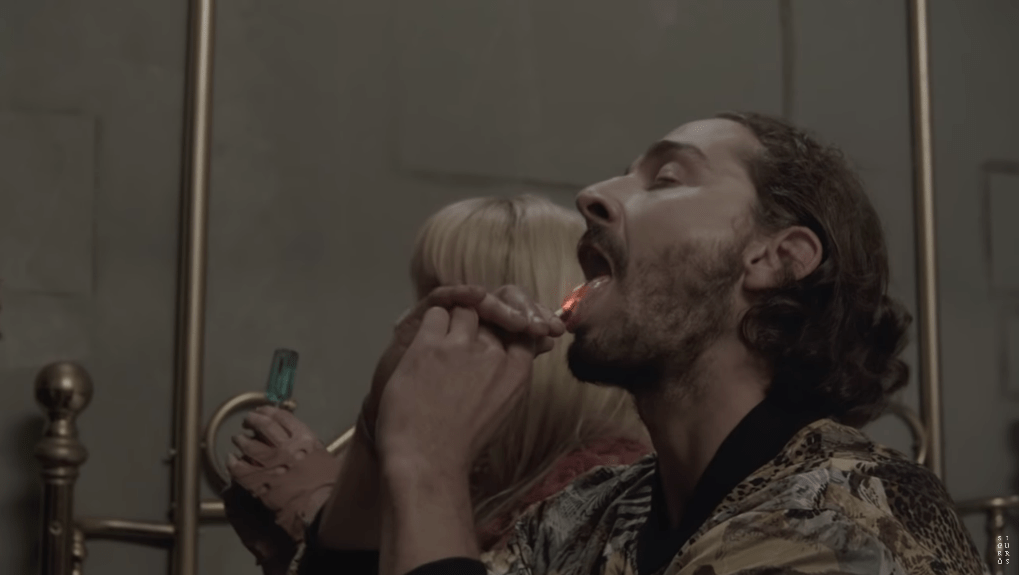
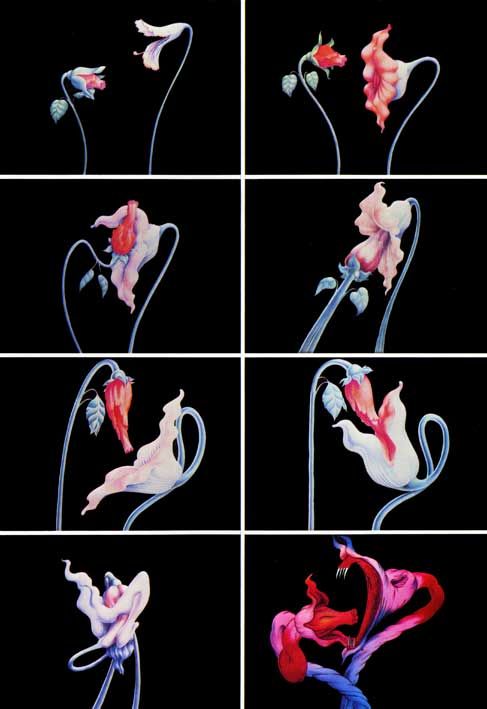
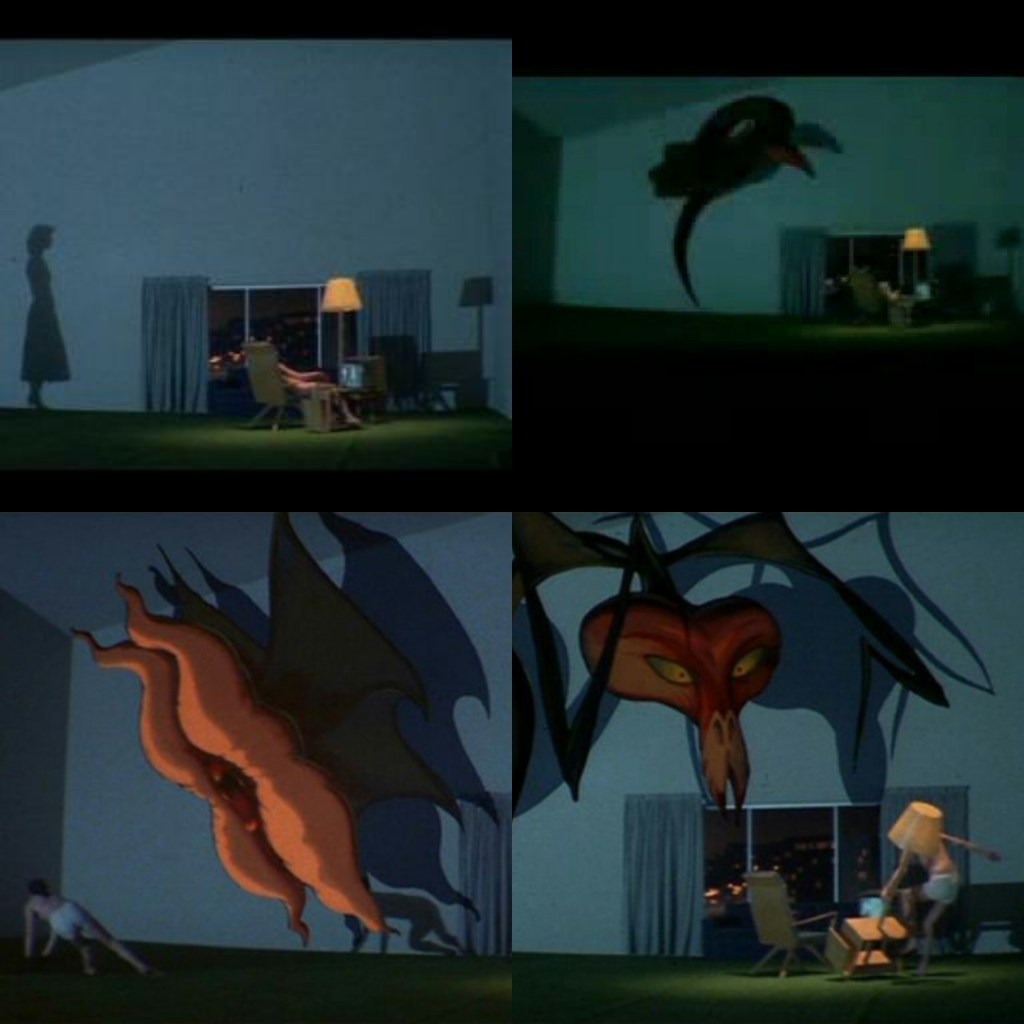
https://vimeo.com/44767537. Stills are from Sigur Ros (c). All Rights are reserved to the original artists and sharing this is for educational purposes.

The time that J.M. Barrie was living was the zenith of the British Empire so there were many cosmopolitan influences making their way back to Britain such as those of India, thus the British elite were mixing English Romantic imagery such as those of John William Waterhouse (his emphasis on Arthurian-like imagery) with that of the ancient mysticism of Hindu India or China and even Africa, so these foreign mystical influences inspired Gothic romanticism (yet, also did drugs, such as that of opium which was legal at the time and pure Absinthe made from wormwood, i.e., the urban legend of the “Green Fairy”). This sort of cosmopolitan influence also influenced French art such as what would become Art Nouveau.  

The characters in Circa Survive’s albums to me are Peter and Wendy who forgot Neverland due to coming to the real world or are real people within the real world trying to find Neverland. For example, there are two cover arts associated with Violent Waves. The first was spoken about above in which the female character is in a house somewhere that seems to be a manifestation of her memories, yet another cover has a ship floating atop a planet or orb or some sense, where this orb has a similar color palette to that of other Circa Esao works. The ship is important because it relates to the Jolly Roger of Captain Hook from the Pan universe.
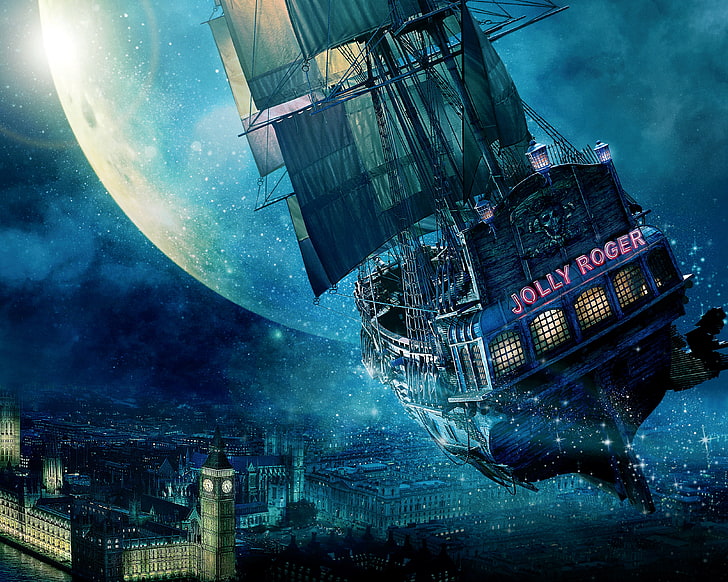
Art Work for the 2015 film Pan by directed by Joe Wright

I prefer for this paper to entertain the concept idea of Peter and Wendy lost in the modern world and who are suffering from amnesia about Neverland. I imagine them living in a dingy apartment, scrapping by, yet both are recovering addicts, and they lost a sense of light, but are on a mission to re-obtain it. Yet, there are evil characters such as a Captain Hook-like person who is analogous to a drug dealer. Lost Boys could represent “street kids”, who are not bad at all, but trying to survive in a harsh environment, this analogy I’m making about Lost Boys relates to the lyric from the British band, Bloc Party, where in their song, The Good News, states, “Throwing down with all the lost boys at the very edge of town”.

Tinker Bell could represent something mixed in that she is not bad, yet she wants to “keep the party alive”, i.e., keep Peter in particular young. A nymph like creature for mythology, who can promise eternal life, but nothing is without a cost. Peter as the male character for this Circa Survive analogy is a person who has a hard time growing up, i.e., avoids responsibility, whereas Wendy grew up too fast, so there is an opposite attraction to each other, where Peter’s innocence (despite his issues) is a light, whereas Wendy’s maturity and strength is a power. Yet, Wendy is very central to the story, even going so far as having to process the trauma of losing a child, such as in the lyrics of Frozen Creek, but also having dealt with assault, i.e., “She’s got the photos but no reflection, He’s got the motive but no transportation”.

This dynamics between my “Circa Survive Peter and Wendy” story-line is that it would create a powerful story line in that both male and female protagonists are both strong and central, who show levels of courage and vulnerability.

Author: This is is me. Circa Fan. Blogger as a hobby. BA from Saint Martin’s University. MS from Embry Riddle Aeronautics. Always thinking outside the box. A fan of East Coast falls.

Kanye West is Pink in Pink Floyd’s The Wall. Easiest Way to Understand by MRG Staff

Kanye will forever be important despite his recent turns. I would fall asleep at night as a bored black teen in suburbia listening to the music of Drive Slow or Late on Late Registration.

Note: I am using Kanye and Ye interchangeably.

I’ll get to the point. After Kanye’s Golden Era with College Dropout, Late Registration (his magnum opus in my opinion), and Graduation to My Beautiful Dark Twisted Fantasy, he went through a lot. His mom died and this is similar to the character of Pink played by Bob Geldof in Pink Floyd’s musical The Wall. Even though Pink’s mother isn’t shown as passing away, the maternal bond is central to both characters. Yet, Pink and Kanye both came to rely on their mothers though Pink’s mother was suffocating, whereas Kanye’s mother was his anchor. This maternal bond (I won’t go all Freudian because I don’t feel well read enough into Freud to say it) was central to both people. Further, Kanye has a had problems with women though in more recent music he’s challenged his notions such as those found in his analysis of the Madonna Whore Complex in the song Violent Crimes on the ye album. This exploration reminds me of the ill-fated philosopher Otto Weininger who wrote the book Sex and Character, but as a Jewish man who aspired to fit into what he saw as Aryan ideals, he later committed suicide. This struggle about identity is similar to me to what is going on with Kanye.

This is similar to the character of Pink in The Wall with Pink as having a rocky relationship with his wife since he’s a traveling rock-and-roll musician. Pink has issues regarding fear of loss, control, etc., and can be heard in the lyrics of the song Don’t Leave Me Now, which says, “I need you to put through the shredder in front of our friends, oh baby, don’t leave me now”, “How could you go? When you know how I need you…to beat up on a pulp on Saturday night, oh babe…don’t leave me now”. The lyrics depicts a man who blames his spouse for his behavior/internalized trauma and cannot operate without having someone to coddle his bad decisions and take his abusive behavior. I’m not insinuating this is Kanye, yet still male and female relationships (or any type) can be rocky and at times have an unhealthy level of dependency going both ways where love and abuse (or the ability to tolerate said abuse) are seen as the same. Negative behaviors can exacerbate as people push limits, essentially to see if the other stays around. Kanye’s relationship with sexual feminist icon Amber Rose (who later made a pivot to the Right Wing populism of the MAGA movement of Trump) seems similar to that of Pink’s character to his estranged wife, especially since Amber Rose left him for another rapper in an industry where masculine posturing and ego are everything, and she sexually doxed him by revealing alleged aspects of their private sex life to the world.

The Phallus and Vagina

Pink in the film after hearing of the infidelity of his wife in between the songs The Happiest Days of Our Lives, Young Lust, and One of My Turns, goes on a psychotic breakdown and endangers a groupie.

Further, Pink’s father dies in WW2 at the Battle of Anzio and Kanye’s father was estranged from him.

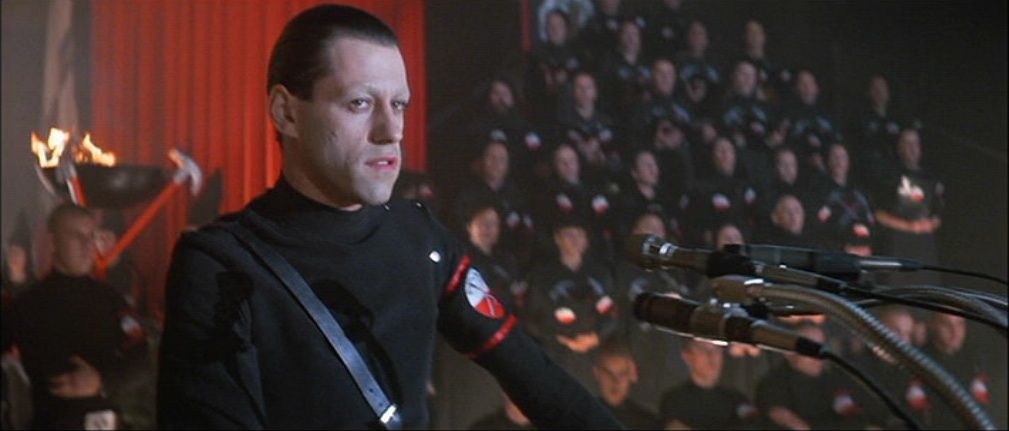
In addition, after Pink’s mental condition finally collapses after the song Comfortably Numb, he starts fantasies of fascism as a type of subconscious defense mechanism to protect his deep-rooted vulnerabilities and lack of stability. He equates his lack of stability to the need to cleanse society of minorities, gays, “people with spots”, and other ramblings. He even screams to the entire crowd of his fantasy fascist supporters that he’d wish they’d all be shot. A man with deep rooted issues but he’s human.

Kanye’s was playing with fascism which is common in the arts such as some of the works of David Bowie, Marilyn Manson, Ramstein, Nine Inch Nails, etc. However, facsism for Kanye is not for motif or to be ironic it seems, but seems to be a literal coping mechanism for this mental state simliar to Pink in The Wall.

I believe a part of Ye’s leaning towards fascism and antisemitism is the anger felt by a black man within Western Civilization as he juggles with the old question of “to be or not to be?”, i.e., to be a champion of our Western home or to stand at odds with it (e.g., the anti-colonial, Pan African sentiment) due to its history of systemic abuses which played a role in effectively…creating us as black people as a construct.

Pink Floyd isn’t racist or fascist and their depiction of fascism in the film was a criticism of it.

The film came out during the Margaret Thatcher years which was full of right-wing “Oi Oi” hate groups associated with the National Front and the conservative Tories in power. This is very similar to the far-right peripheries of the Trump Administration’s grassroots right-wing populism with groups such as Proud Boys.

Kanye’s play with fascism could be seen as being ironic with his lyrics in Black Skinhead which is really Kanye appropriating the hyper-masculinity of the far-right for his own purposes to scare the actual fascists. However, this doesn’t seem to be the case based on his insane antisemitic rantings. Yet, black people have appropriate white supremacist tropes and language as a means of “re-defining” certain terms, such as the N word. If the N word is acceptable, then to Kanye then maybe a black person with a Confederate Flag or worst isn’t that bad. It begs the question. For real. If you ask the black people who use the N word about why the use it, they will come up with some reason about endearment, or being rebellious, etc., but this sort of oddities seems to be what Ye was originally challenging, even though any noble attempt at challenging the status quo, was tarnished by his real mental health and personal issues, which of course coincides with his antisemitism (which seems to have started in 2016).

In one hard, Ye playing with fascism could be seen as ironic way of defending himself against it, yet, playing with irony is sometimes…simply irresponsible. Not all art needs to be ironic. Irony doesn’t necessary insinuate depth, but rather it can do more harm than good by blurring the moral lines of what we consider right versus wrong or social versus anti-social.

Pink in his delusion after his mental breakdown in Pink Floyd’s The Wall
“It’s my flag now!” said Kanye West on Los Angeles 97.1 AMP Radio on Monday. Kanye West leaving his house after taking a private boxing class to stay in shape. He is wearing a green jacket with Confederate flag on a sleeve, hoody, and What Would Jesus Do? (WWJD) Bracelet. Saturday, November 2, 2013. Juliano/x17online.com EXCLUSIVE

Kanye was one of my idols and I still support the guy. He’s a black man fighting for freedom and not just freedom from the perspective of black liberation but total “ubermench”. Yet, like Nietzsche…Ye went insane.

Yet, there’s a profundity to Kanye, his older version (not his antisemitic new version) that most might not get. His descent is essentially a waste. A waste brought on by pride.

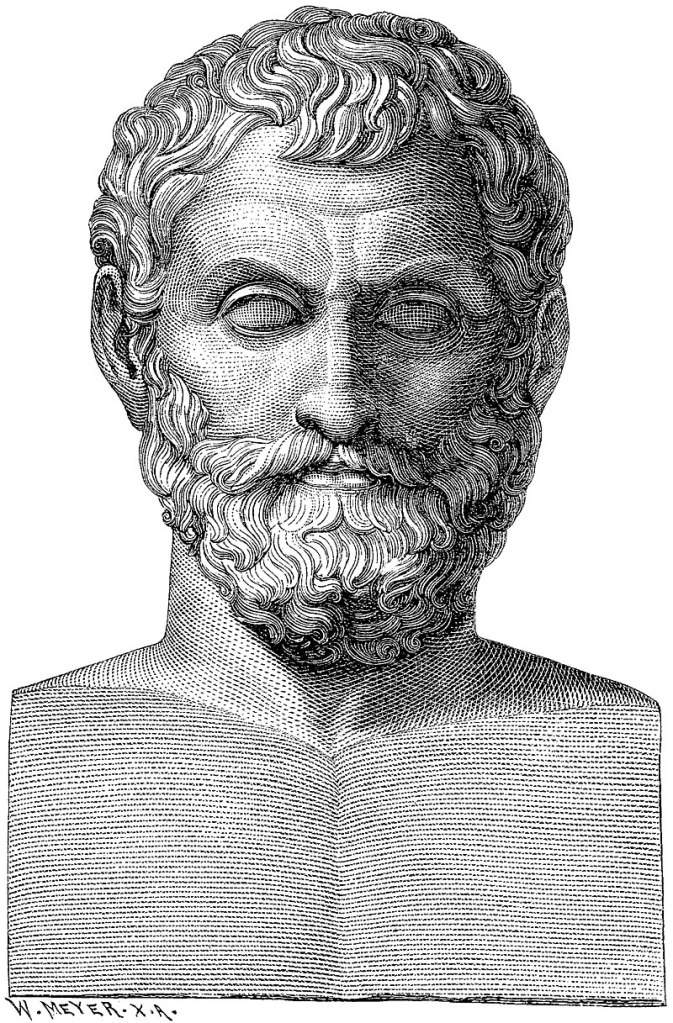
In Greek philosophy there was a man by the name of Diogenes the Cynic who was known for living an eclectic lifestyle, having sharp cynical wit, and living a life as a homeless beggar to show the uselessness of certain aspects of society.

Anyways, Kanye instead of entirely rapping about the grassroots realism that many African Americans face such as murder, misogyny, bravado and nihilism, Kanye analyzed not only that but the silent lives of the black middle class, but he leap-frogged backwards by borrowing from Ray Charles, chain-gang hymns, the Harlem Renaissance, gospel, etc.

Kanye am existential meteorite of hyper-aware blackness that analyzed it from all angles. Kanye can vacillate between bourgeoisie and proletariat, between “house slave” and “field slave”, but instead of picking either/or (shout out to Soren Kierkegaard) he wavers above both and creates music full of pop cultural references which spans foreign film such as the works of Michelangelo Antonioni, classical musical scores, political commentary, high art, low art, fashion, etc.

Let’s be honest, hip hop changed after Kanye, and some might say for the best, yet, for a genre still dominated by black artists, he did open the window to express yourself in ways that were more experimental, existential, etc. Being black I do know that the community is highly social, i.e., we typically tend to be a monoculture – often pushing out black subcultures in exchange for what is simply the most popular at a given time, and it typically takes martyrs to take the heat to shift sentiments.

I truly feel that Ye opened more doors for many black people that they realize, even though Ye wasn’t orignal. There are plently of out-of-the-box thinkers in the black community or black people who have always “beat to their own drum” or style, but it often takes celebrities to create tectonic shifts unfortunately. For example, I grew up Akira, weird Blockbuster movies by David Lynch, listing to The Cure, etc., so Kanye when he first came out was more of a…friend. It wasn’t that he was original to me but rather I had someone to look up to who was still black and a part of the “culture” but also…our own thing. Tupac, Biggie, etc., never made me feel that way because I didn’t grow up in a destitute dire situation. I had two black parents, a home, was told to go to college and stay out of trouble, etc. My parents wanting to protect their kids from the temptations and violence that were sweeping the black community in the late 80s is a reason we migrated into suburban America like many other black people. So, what about our experiences, our stories? Kanye, Ye, whatever, revealed a blackness that was always there but often unseen to others, including black people.

Kanye’s vast array of samples and influences spanning true hip hop to Duran Duran, the film Juice with Tupac and Omar Epps, the film Welcome to America with Eddie Murphy, Bloods versus Crypts, the ability to not get a taxi as night, Richard Pryor to Bill Cosby in the 80s, to Michael Jackson to Fellini films to surreal anime, etc., in my opinion will always set him above and a part from other rappers, except for the Wu Tang Clan with people such as Ghostface Killah in my opinion.

I’m sorry but most rappers in the day didn’t take it to such levels. Essentially, Ye became the Picasso of Hip Hop, which is interesting considering Picasso did play with fascism himself as well, and was later known as being abusive to women.

Before Kanye’s fall, I use to call him the “modern day Gatsby, the hip hop Bukowski”.

I can relate to Kayne because as an African American my interests are vast. I can also empathize before judging. It wasn’t easy to simply “be like everyone else”. To white people or others, black culture is a form of punk, but when you’re black it’s just…life, so when African Americans think outside the box I always support those people and find it honorable, because equality isn’t merely a matter of nationalism or economic empowerment, but it’s a matter of representation in various fields, while also showing the world the diversity of talents and the depths of your comprehension skills.

However, Ye is…sort of dead to me now.

His antisemitism, hatred, erratic behavior are…simply unacceptable. He isn’t making any valid analysis about the state of Palestinians or critiquing colonialism, but rather he’s spreading Nazism via a black body.

I see a black man who stared at the sun of Western Civilization too much and it burned him. It broke his brain. And it is disappointing because I didn’t want his wings to melt because maybe I saw a piece of Kayne in me.

But, until Ye gets himself help, he’s nothing to me.

At this point it seems more performative than real, considering he is still able to maintain his personal finances. It is not like he is some homeless person who needs help. He has all the means to get help.

(Music and Philosophy) Revisiting Horse the Band’s A Natural Death. Comparisons with West versus East Geopolitics, Transhumanism, Neo-Platonism, Brzezinski, and Russian Cosmism by MRG Staff

“Active or self-directed evolution, then – holistic, anthropocentric, and teleologically determined effort – are some of the terms that scholars have applied to most Russian Cosmist” (Young, p. 9)

Cover Art from A Natural Death by Horse the Band

Before I begin, I want to say that this analysis of Horse the Band isn’t to insinuate they have any connections to the right-wing. I think they’re simply storytelling and telling a story as if where a bad guys vs good guy epic. Horse the Band is an American metalcore band from Orange County, California, that became known for their 8-bit video-game influenced sounds which labeled them as Nintendocore. In personal opinion, I would call them Avant-Garde metal employing postmodern themes, such as transhumanism, simulation and simulacrum, 80s cyber and Cold War pastiche akin to the visions of William Gibson’s Neuromancer, merging high art with low art, and digitization, with the electronic synth elements serving as a device to suggest the informational overload of contemporary life.

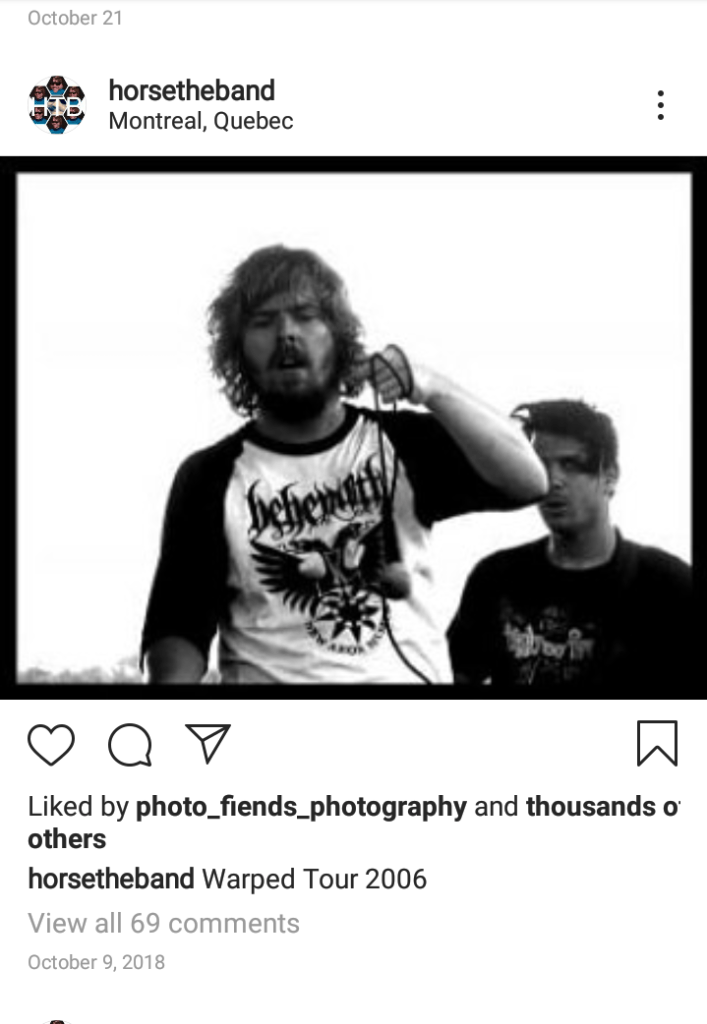
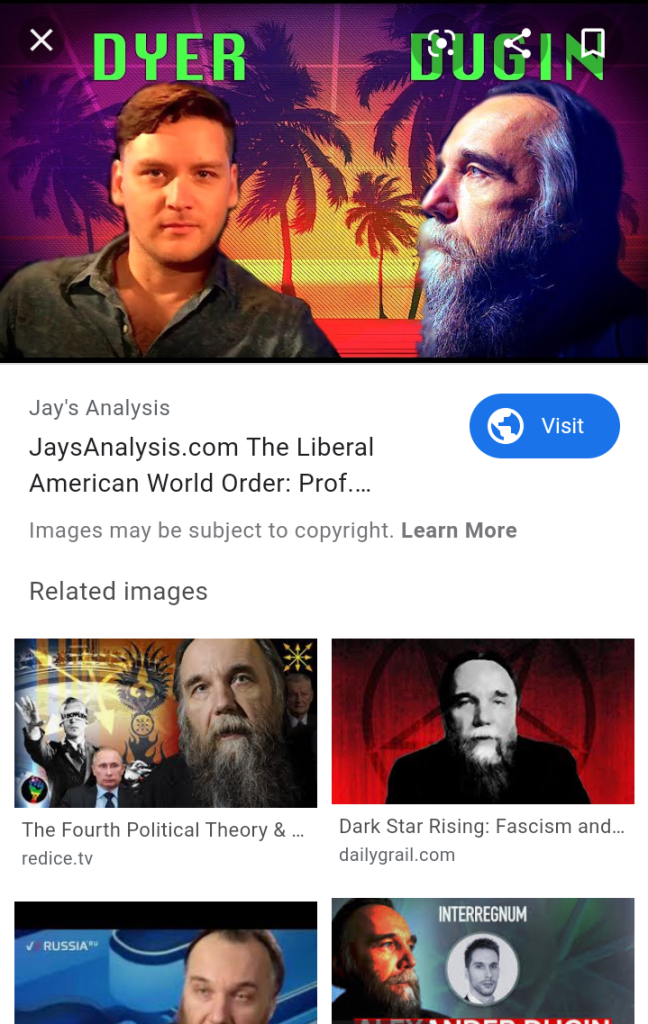
The lead singer for Horse the Band with a Behemoth shirt at Warped Tour. Behemoth is a Polish extreme metal band. Relating to geopolitics, Poland and Russia have a traditional feud with one being Catholic and the other being Orthodox. However, you can see the image of the double headed eagle but also the Chaos Magick symbol. I’m not saying Horse the Band is Alt-Right, yet, their album A Natural Death has songs such as Hyperborea and Face of Bear which relates to Russia. Hyperboreans are a sub-sect of Russian Cosmism and in Young’s (2012) book, The Russian Cosmists, the word Arktos is referenced. Arktos is also the name of Arktos Publishing, once edited by Jordan Jorjani of the Alt-Right. Jorjani can be seen online commentating on New Thinking Allowed with Jeffrey Misholve. Mishlove is a Paranormal researcher from UC Berkeley.
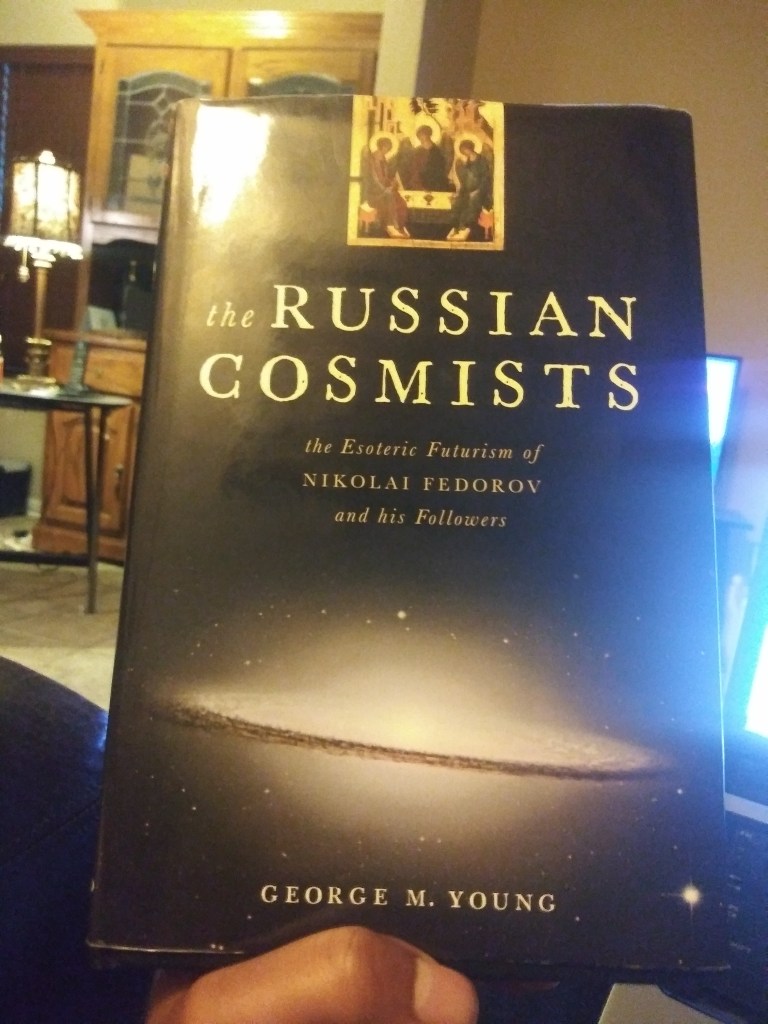
Finished reading this. A great book. This paper isn’t to indict the Russian Cosmist movement as a whole, but there are some elements within this frame of thought that relates to some current regressive ideologies, especially those relating to Aleksandr Dugin but also Transhumanism – both Western and Eastern – as a whole.

The band does a good job of analyzing the informational overload of postmodernity, where this era is defined largely by the domination of images or symbols which creates a self-destroying and self-replicating chaotic reality. In such a state of reality it’s hard to distinguish truth (fake from real; organic from synthetic), thus bringing upon existential (nihilistic) questions of being. Horse the Band doesn’t seem to be perpetuating a sense of cosmic dread through postmodern means with ill-intent, but rather they’re musing, feeling and thinking with music to attempt to answer the old philosophical question of, “What is the meaning of life”. But they’re also just having fun.

Their album, A Natural Death, in my opinion is their magnum opus, despite, their follow-up album, Desperate Living – which is good – getting higher rankings from music critics. Math metal is arguably seen as a type of nerdy aggressive male space and I think the bands on stage antics and style has relegated them from larger audiences. It is a type of Revenge of the Nerds, Reed College weirdo or M.I.T style of metal, thus engendering possible accusations of being for suburban, garage conspiring, computer hackers in some rainy Tech corridor such as Portland or Seattle, yet, their demeanor seems ironic, self-aware and assured, and artful. This relates to the underlying theme of artistic movements such as Dada. Essentially, they act quirky as to challenge audiences or listeners not to take life too seriously, i.e., to destabilize metanarratives, which is the key tenant of postmodernism.

Postmodernism sought to challenge the stiff and empirical mindedness of Modernism of the early twentieth century. Modernism posited a belief in structuralism, the ability to know truth, behavior sciences, and made bold objective truth claims such as science will liberate humanity, or skyscraper urbanism will be the future utopia. Yet, these claims were challenged harshly after WW2 since objective truth claims were blamed for the deaths of millions of humans and all in the name of “progress”. Speaking to the Dada art movement of early twentieth-century Europe, alongside other schools such as Italian Futurism or German Bauhaus, Horse the Band’s, A Natural Death, seems in alignment with Fritz Lang’s Metropolis. Metropolis shows a future advanced urban society based on Modernist and Futurist themes, yet, the film could be argued as one of the earliest warnings of transhumanism and the film is known for its famous female Satanic robot. The fact that Fritz Lang chose a female robot seems interesting. Feminism is often at the forefront of globalist movements such as the Green Movement, or, there’s the banner call of the Future is Female. But, that future also possibly holds transhumanism. Transhumanism seems to be cross-juncture between feminism (particularly with its focus on gender as being a spectrum, not a biological axiom), the New Age movement, the Green movement, globalism, AI and IoT (Information of Things), and transgenderism, etc.

Essentially, transhumanism is related to all these topics, in that it represents a type of “inevitable progress”, and the female form of Fritz Lang’s robot and the real movement of the Future is Female – in a future that will be globally integrated with IoT – indicates the symbolic importance of femininity within this paradigm shift. In other words, femininity as presented and argued within the larger sociopolitical debate makes it synonymous with shifting, merging, androgyny, the evolutionary notion of progress, or, in alchemy language…it’s a malleable “substance”. The female form is also the window into life, so femininity has an esoteric element involving shifting, birth, renewal, etc.

The female robot from Metropolis by Fritz Lang
A statue of Hermaphroditus, the child of Hermes and Aphrodite. The merging of male and female thus has roots in an ancient esoteric tradition. With such traditions influencing technocracy as well, it does seem that the Trans movement isn’t simply for protecting the rights of marginalized group of people but rather promoting a lifestyle conducive to the upcoming technocratic global future.

A Natural Death seems to be a concept album with a linear but fuzzy storyline. It seems to involve a main female and male character through three linear storylines but all are related and the concept of time travel comes into play. One story arch deals with the violence of the American Frontier with songs such as Murder, Broken Trail, Crickets, and Rotting Horse. Another is set in the modern day such as in New York City, a club as insinuated in Sex Raptor, an occult sex ritual as insinuated in his Purple Majesty, and the Beach which seems to be the scene of a goodbye between the main male and female protagonists. The other story arch deals with the ancient past in Hyperborea or a land under threat from Hyperborea, but towards the end of the album we’re in a space travel setting akin to 2001: A Space Odyssey.

Films or books that come to mind that might have been inspirations are (1) Eyes Wide Shut, (2) 2001: A Space Odyssey, (3) Conan the Barbarian by Robert E. Howard, but also HP Lovecraft, (4) The Legend of Zelda and Mario Bros., (5) the American West, (5) the comic hero, Red Tornado – further the albums transhumanist elements, (6) and Stephen King’s The Dark Tower series where a Wild West character is central to the plot involving a tower that serves as the bridge between different realities and worlds.

The songs relating to this paper are Hyperborea, Murder, The Startling Secret of Super Sapphire, Face of Bear, New York City, His Purple Majesty, The Red Tornado, Rotting Horse, and I think we are both suffering from the same crushing metaphysical crisis. Other songs could be inserted to help construct a larger storyline, yet this paper is about the Russian, transhumanist, and/or esoteric underpinnings which reflect themselves, oddly, within real-life scientific advancement, geopolitics etc.

1. Hyperborea (which I’ll argue as being related to the Hyperborean mythos of Russian Cosmism later in this paper). Yet, within the narration and plot of the album, the song depicts a type of unnatural winter storm roll in with the lyric, “Numbness swept down from the east.”, i.e., Numbness swept down from Russia. There seems to be the first appearance of the female main character of the overall album’s plot but based in a past life or past representation. The concept of time-travel will appear later in the album, so this reference along with others from other lyrics seems to shed light that this album is largely a romantic adventure, similar to Link with Princess Zelda. “She sulks from silver towers, she could save a life.”. Towers, princesses, Princess Zelda, and Hyperborea possibly being similar to Hyrule from the game’s franchise. Yet, the male lead character in this harsh wilderness, while making references to a female in a tower (a princess or maiden), also has to tap into something equivalent to Conan the Barbarian’s Riddle of Steel. Don’t trust man,
don’t trust girl,
don’t trust animals,
trust in steel.

A scene from Zelda Breath of the Wind which comes to mind when reading the lyrics of Hyperborea
A scene from Conan the Barbarian, where a young Conan first learns of the Riddle of Steel


There seems to be antagonist, briefly referenced in the opening song with the lyric, “He says he hates us and he’s afraid to try–and I know why.” but this same character might be manifesting himself later on as the “Purple Majesty” who seems to have a type of mental grip on the female. The albums deals with notions of time-travel, reincarnation, eternal recurrence, deja vu, or even possibly, parallel universes. The album involves a romantic relationship between a male protagonist with a female who first appears, as insinuated in the first song, with being a princess in a tower, but in the modern day this female character gets involved with “His Purple Majesty” in a sex ritual, yet, both are reunited towards the end on a cosmic journey towards transcendence. The album deals with love and death, and the male character is first heard has having to tap into his inner strength with the lyric “trust in steel”, yet, he seems to be bouncing back and forth in between time, thus comes in the transhumanist, postmodern, digital effects and themes.

Interestingly, some random facts found online, Robert E. Howard, the author of Conan, had Hyperborea as the land northeast of Conan’s home of Cimmeria. Howard was also a contemporary to HP Lovecraft who incorporated some elements of that into his Chutulu mythos. Friedrich Nietzsche referred to those who followed his philosophy as “Hyperboreans” in The Antichrist, where he states, ““Let us face ourselves. We are Hyperboreans” (Goodreads, n.d.). The Cimmerians were a real Indo-European group, likely from the Steppes, who lived in near the Caucus bridgeway near Armenia (the strip of land South of Russia to Northern Iran and Northeast Turkey) and were related by proxy to the Scythian tribe, and later migrated into Europe in lands know considered Slavic but with traces in Celtic and Germanic

Hyperboreans, an offshoot of the Russian Cosmist school, being described in The Russian Cosmists by George Young (2012)

2. Murder seems to fast forward in time to the American frontier during an Indian raid on white settlers.

I cut open the white man
And take from his woman too
If it were up to me, all the white faces would bleed
Bleed and bleed and bleed, it’s truth

Murder, it’s murder
Murder, it’s murder

Empty plains echo with empty screams
There’s a wagon on the highland
A father and his girl, both are heading south
I tie the boy and the horses

Then you use the skills of the wolf
I don’t use a bullet
Get close enough, I can use my knife
My knife

I cut open the white man
And take from his woman too
If it were up to me, all the white faces would bleed
Red’s a better color, it’s truth

Let the blood out, let it flow
Cut the blood out, let it flow
Kill the blood out, let if flow
Like a river let it flow

Let it flow like a river
Let if flow like a river into the sea

3. The Startling Secrets of Super Sapphire which has an almost eighteenth-century American East coast, Atlantic, and Gothic nature to it, similar to the stories of HP Lovecraft which are abound with Mayflower East Coast characters found in situations of cosmic dread. Lovecraft is credited with the founding of cosmic horror where older themes of ghouls and ghosts are replaced by physical yet beyond comprehension creatures such as aliens. Lovecraft was a cosmicist, not be confuse with cosmist, and this view held that humans are insignificant to the cosmos and there’s forces in the cosmos beyond human reason such as inter-dimensional beings. Though Lovecraft popularized science-horror or cosmic-horror, writers such as Mary Shelley with Frankenstein used natural sciences as a device within horror before Lovecraft. The song seems to depict a character, whom I consider to be a Captain Ahab figure or Old China Trade Opium Merchant from the Port of Salem (Skull and Bones connection with the Russell and Forbes families), who comes across a sacred artifact (Sacred Sapphire), only to be come possessed by it. “The sapphire is the birthstone of the month of September. The name sapphire is derived from the Latin word “saphirus” and the Greek word “sapheiros,” both meaning blue. Some believe that the name sapphire is derived from its association with the planet Saturn. The name can be roughly translated to mean “dear to the planet Saturn” in many different languages” (Jewels for Me.com, n.d.). Saturn as a planet plays a role in cosmology. The halo is obvious with its significance in culture (angelic halos, wedding bands, etc.), but to many Saturn seems to represent the “Morning Star”, i.e., Lucifer or Moloch. Saturn’s mysterious black hexagon pattern at its northern pole has also sparked many comparisons with religious objects such as the Jewish Tefillin, the six sides and six triangles of the Start of David (which is up for debate it seems but there is the quote of Amos 5:25-5:27), and the Islamic Ka’bah . Yet, Saturn when connected to Saturn Day is reflected in Roman culture, thus our modern culture, yet, it’s also reflected in Hebrew such as Shabbatai שבתאי, meaning restful one, which corresponds to the Jewish Sabbath. When Rome conquered Greece, Saturn became synonymous with Chronos, thus being attributed to Chronos’ power of time, and this time attribute is also found in the Hebrew notion of Saturn. Horse the Band’s album as seen in the song “I think we’re both suffering from the same metaphysical crisis” speaks of time-travel, event horizons, etc.

NASA JPL Caltech Space Science Institute Photo of Saturn’s Hexagon

4. Face of Bear (the national animal of Russia)

Winters coming
days die short
at the end of autumns reign
hunger becomes ravenous
hibernation never waits
soon the silent slumber
for now October’s feast
fearless and graceful
crashing through dead leaves

DON’T FEED THE BEARS
OR THE BEARS WILL FEED ON YOU

all the forest fauna
frozen feeling fear
flinching at the moment
face to face with face of bear
all the forest creatures
vanish from sight
their betters come with hungers
that cannot be denied

A few lines downs…

DON’T FEED THE BEARS
OR THE BEARS WILL FEED ON YOU

I’ll die with the honor i choose
I’ll fight face of bear and lose

FACE TO FACE
WITH FACE OF BEAR (x6)

5. New York City. Puts a romantic plot within the storyline between a male and female character. In other song, title, The Beach, we hear a female character crying. Yet, there seems to be a reunion within New York City based on the lyrics:

We embrace in the heart of our city
On wet broken sidewalks we’re free

Further, the song seems to insinuate that Horse the Band is actually coming from a pro-Western viewpoint despite the Russian references. Towards the end of the song accompanying the lyric, “We embrace in the heart of our city. On wet broken sidewalks we’re free”, there’s effects of fireworks. Fireworks are a hallmark of American Independence and freedom. If the plot structure is truly a series of interlocking storylines of the same characters through time and space, it seems that narrator in Hyperborea is actually warning of Hyperborea and the antagonist within this song, in my opinion, might later on manifest himself as the “Purple Majesty”.

6. His Purple Majesty There seems to be something awkwardly Lolita and Crowley Sex Magick about this. There’s a lyric by a female character who states, “I’ll do anything you say”, with a coyness about it. The color purple appears a lot within Stanley Kubrick’s Eyes Wide Shut, and the ceremony master is wearing a purple robe. According to the Museum of Fine Arts Boston in a , during an event titled: Color Tells A Story, it was stated, “This somber palette gives way to a rainbow of neon lights as Bill’s night careens out of control, with glimpses of violet and royal purple cropping up at the most perilous moments.” The color purple represents royalty, thus the word majesty makes sense, but it also represents sexuality, magic, you could even throw “Sex Magick” in there, eroticism, mystery, etc. Going over the lyrics again the song seems to depict a ceremonial sex scene. “But she wanted. But she needed. Perfect sex in purple robes. He said, ‘Hold my hand while I touch you’, he said, ‘it will feel better that way’. She said, ‘I’ll do anything you say.'” But, later, it’s said, “she let him INSIDE even though it feels WRONG. It was all the symptoms of love but bleeding a black horror, a horror”. So… How does the Crowleyian Sex Magick of his Purple Majesty relate to Russia, let alone transhumanism? Well, one of the Russian Cosmist was Konstantin Edouardovich Tsiolkovsky (1857-1935) and a young Jack Parsons had correspondence with him and Werner Von Braun to ask for advice for his early rocket science curiosities. Parsons is known for being into the Occult and became involved with the Ordo Templi Orientis (O.T.O.) of Aleister Crowley. Sex Magick was a practice and Parson’s engaged in orgies with wife. Parsons was friends with L. Ron Hubbard, the founder of Scientology, and was associated with the science-fiction writer’s guild, Mañana Literary Society, where Robert Heinlein – the author of Starship Troopers – was also a member. In Heinlein’s Starship Troopers a future alliance called the Russo-Anglo-American Alliance is formed. So, from Horse the Band’s Russian references, particularly through this song “His Purple Majesty”, we first come to Crowley Sex Magick before coming to Crowley himself, Jack Parsons, Konstantin Tsiolkovsky, Russian Cosmism which is transhumanism, and also Robert Heinlein who speaks of the Russo-Anglo-American Alliance.

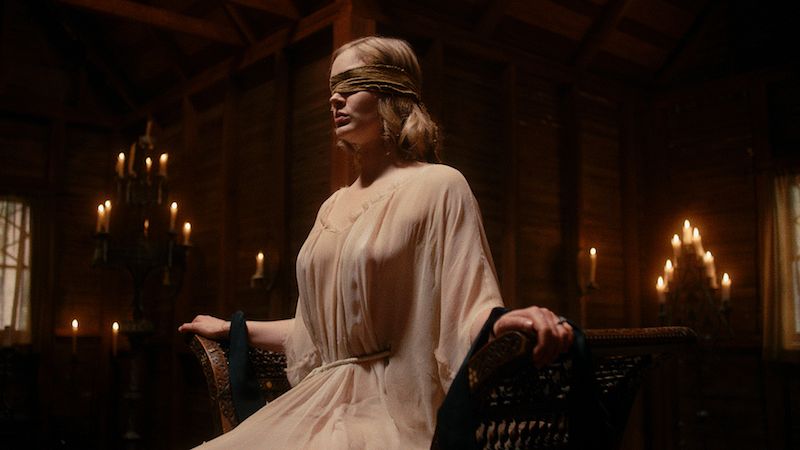
A photo of Bella Heathcote playing Susan Parsons at a Crowley ritual. All rights of this photo are reserved to CBS and CBS All Access. Sharing of this photo is for educational purposes only.
A scene from Eyes Wide Shut by Kubrick

7. Red Tornado, is based on the DC Comic book hero. This song firmly links the album to transhumanism, considering Red Tornado is an android. Here are some of the lyrics:

Circuitry and sympathy
Are two different things
But they come together
In a robot who dreams
Round and round
And round he goes

Later in the song:

His emotions spin at destructive speeds
That he needs to control
The cumulonimbus inside the machine
He’s half robot and half tornado
So sad the cyborg cyclone seems
Drifting through the sky
A willful wisp of machinery
Not born but devised
Still the cyborg cyclone cries
Coolant drips from his eyes
Plastic hands on his heart
That slowly…
Tear him apart

Oddly, my theory, is this album channels the esoteric and technocratic struggle between East and West. It peels away the normal surface to reveal the seedlings of pseudo-science, mad scientists, and occultists who influence “above-ground” political discourse and technological development. The Western form of Technocracy as an application could be best understood through Zbigniew Brzezinski, with this book titled: Between Two Ages America’s Role in the Technocractic Future. A few quotes from this book are listed below.

“The technotronic era involves the gradual appearance of a more controlled society. Such a society would be dominated by an elite, unrestrained by traditional values. Soon it will be possible to assert almost continuous surveillance over every citizen and maintain up-to-date complete files containing even the most personal information about the citizen. These files will be subject to instantaneous retrieval by the authorities.” (Goodreads.com, n.d.)

“In the technotronic society the trend would seem to be towards the aggregation of the individual support of millions of uncoordinated citizens, easily within the reach of magnetic and attractive personalities exploiting the latest communications techniques to manipulate emotions and control reason.” (Goodreads.com, n.d.)

Zbigniew Brzezinski receiving a medal from Jimmy Carter

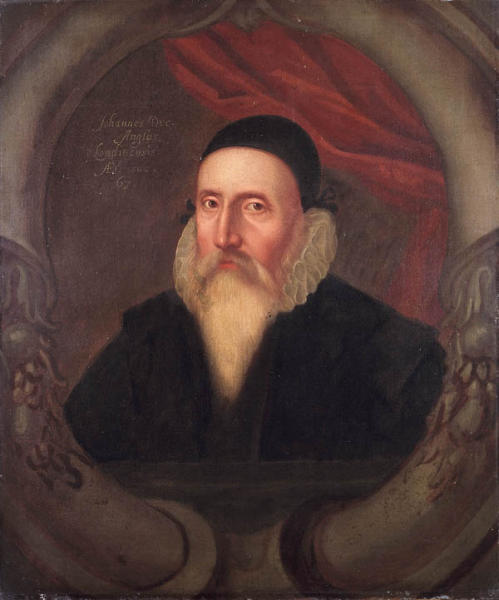
This might sound odd, but it’s no oddity that John Dee, the minister to Queen Elizabeth, coined the term British Empire and he himself was a magus that practiced Hermeticism and alchemy. Whether it’s the British Empire, Russian Empire, or American Empire, besides or underneath pragmatic or realist policy is a supplemental esoteric ideology (example, Masonry in regards to British Imperialism or American Manifest Destiny; Masonry or Russian Cosmism under pre-Revolutionary Russian conquests, post-Revolutionary Communism, or post-Communist State Oligarchy & Ethnic Nationalism, i.e, Aleksandr Dugin, the Hyperboreans.

John Dee was an Occultist who first coined the term, British Empire

The album on purpose or by accident, though seemingly without any nefarious intent, touches on the current Russia versus USA geopolitical struggle (psychological operations included) involving characters such as Aleksandr Dugin with his concept of Chaos Magick and his Eurasianist ideology, Lev Gumilev’s Neo-Eurasianism, and Valery Dumin’s Hyperborean neo-paganism. All three of the men were analyzed in the book, The Russian Cosmists, by George M. Young (2012), a professor from the University of New England.

The album seems to be a clash of both East versus West and touches upon science, Gnosticism, and esoteric thought. The tension and aggression in the album through the guttural death growls meshed with melodic instrumental solos and computer effects depicts a type of “Chaos Magick War” of factions of both East and West that are warring with each other, thus revealing a deeper, ancient, eternally reoccurring, and more sinister end-game. Yet, this end-game outside of the view of the public is arguably rigged, i.e., a Manichean Dialectic. I say rigged because there is proof of transfer of information between both East and West during the Cold such as now revealed Esalen Institute exchanges as talked about in Atlas Obscura’s piece titled, How a Fame New Age Retreat Center Helped End the Cold War, by Sarakh Laskow (2015). Even the US establishment such as the Rockefeller Dynasty (who gave seed money to both Apple and Intel via Laurence Rockefeller of Venrock Capital) spoke briefly of merging with Russia. Ivy Lee (uncle of author, William S. Burroughs), was a founding member of the Council of Foreign Relations and the Rockefeller’s media fixer. Lee favored peaceful relations with Russia which he wrote in Present-Day Russia (1928), page 214, published by Macmillan & Co., which is archived at sources such Foreign Policy magazine which was reviewed by William L. Langer, but also the University of Chicago Press Journal which is referenced in Schuman (1929) in American Journal of Sociology 35, no. 1 (Jul., 1929): 144-145.

Further, David Rockefeller opened one of the first Western bankers in Russia during the Cold War. According to JP Morgan Chase & Co. (2017), “In the 1970s, Chase added nearly 40 new branches, representative offices, affiliates, subsidiaries and joint ventures outside the United States, including two historic firsts in 1973: Chase opened a representative office in Moscow, the first presence for a U.S. bank in the Soviet Union since the 1920s” (p. 13). Further, JP Morgan Chase & Co. (2017), “In 1973, Chase Manhattan Bank Chairman David Rockefeller visited China and met with Chinese Prime Minister Chou En-Lai. Chase became the first U.S. correspondent to the Bank of China since the 1949 Chinese Revolution.” (p. 13).

The article by Sarah Laskow can be found at https://www.atlasobscura.com/articles/how-a-famed-new-age-retreat-center-helped-end-the-cold-war

The concept of “from chaos comes rebirth” is symbolic of the phoenix symbol which is often associated with Dugin’s Fourth Political Theory, but is also symbolic to the regalia of the color purple (remember the song: His Purple Majesty) which according to legend was used the Phoenicians, i.e., where the word Phoenix has possible etymological origins here. The Phoenicians were a Canaanite peoples from the Levant region near modern Lebanon, Syria and Israel, who worshipped Baal. Baal was a deity equivalent to Zeus in Greece, who controlled weather, and was represented by a Bull which signified fertility and strength. This figure seems to be the same or related to the concept of Moloch, the deity known for child sacrifice. A rendition of this Baal figure was worshiped by the ancient Hebrews as Baʿal Berith and/or El Berith, when the Jews had broken their covenant with God during the times before the ascension of Gideon. Baal thus seems to have fallen out of favor and was assigned to the role of Beelzebub.

In my novice research into Russian Cosmism and the Occultist underpinnings of Transhumanism, this album, A Natural Death, seems very on point. By Transhumanism, and one could argue transgenderism, I’m talking about alchemical-materialist-evolution based in part on the Neoplatonic notion of The One, which relates to Darwin’s Theory of Evolution which posits that all life evolved from a singular primordial source. Neoplatonism and Darwinism, though seemingly from different fields of study, e.g., metaphysics versus natural biology, yet both posit that all life came from a single source. I personally believe in evolution of some sort, but that’s not important. Darwinism sees evolution as a sign of strength and vigor required for survival, whereas Neoplatonism seems to argue that merging concepts is a way to return to the source or The One. Thus, these two ideologies are related and support each other. It could be argued that Darwin himself was an Occultist and Neoplatonist. Merging is fitness if we were to say Neoplatonic Darwinism. This is the underlying logic of transhumanism, and arguably the prepping for transhumanism with transgenderism, and it is seen as the next evolutionary step, i.e., involving the alchemical merging and manipulation of matter. From a Neoplatonic viewpoint, this seems to be the reason why Occult movements tend to focus on the dark arts or dark fashion. To them, they see what we consider evil as not being evil since its an emanation of the one, or natural doesn’t create morality, so by performing black ceremonial magic, they are in effect merging reality as they see it.

On the album there are the songs such as Hyperborea and Face of Bear, where Hyperborea relates to the Russian esoteric movement that believes Russia is the ancient mystical source of humanity, while Face of Bear relates to the national animal and symbol of Russia. With Horse the Band being called Nintendocore, the two main franchise games of Nintendo that comes to mind is Mario but also Zelda. Zelda seems important to the paper because the fictional land of Hyrule seems loosely based on a Hyperborean concept, with the Zelda franchise taking place in a European medieval setting that blends Celtic, Nordic, possible Slavic, and Anglo-Saxon Germanic elements. The Zelda franchise had the famous game, Ocarina of Time, which involves the main character Link, using a magical musical instrument to go back and forth in between time in order to awaken the Seven Sages, so the villain of the game, Ganandorf, can’t obtain the sacred Tri-Force. The lyric by Horse the Band in the second to last song on the album states, “Initiate! Instruments set to yesterday. At the Speed of Light, across empty plains of time”. Also, within Ocarina of Time, the concept of the Seven Sages seems to relate to the Seven Sages of actual Classical Antiquity which included Thales. Within the Zelda universe, especially relating to Ocarina of Time, the elemental properties of the Tri-Force itself seems to be the equivalent to the Greek concept of the arche, which were the elemental constructs the Classical thinkers used to determine the origin of matter, reality, etc. For example, Thales’ arche was water whereas for Anaximander, apeiron was the arche, which was a concept outside of matter, like the concept of ether.

The finale end song (it’s the second to last on the album) of “I think were both suffering from the same crushing metaphysical crisis” reminds me of 2001 A Space Odyssey with concepts such as transhumanist evolution through metaphysics or theoretical physics, with the main character evolving into a new form of being (the Star Child) and connecting back to a higher source, i.e., the One, or The Grand Architect of Grand Masonry.

A scene from 2001: A Space Odyssey before transfiguration into the Star Child

The song starts off with “Dilation of chronal aperture in 3 2 1”, with the narrator sounding like a NASA rocket launch conductor. Chronal indicates time, whereas aperture is a window in which lights passes, such as a space through which light passes in an optical or photographic instrument, especially the variable opening by which light enters a camera. Paez (2019) states, “It is commonly accepted in energy medicine circles that a “healthy” chakra has a clockwise spin, it’s aperture is opened to the appropriate amount and has no energetic cords or other imbalances interfering with its function. The health of chakras can be controlled and improved through mental as well as physical means.” So, there seems to be an obvious Hindu Aryan mysticism via references to yogic practices of India.

Dilation of chronal aperture in 3 2 1

Activate!
Initiate instruments set to yesterday!
At the speed light across empty plains of time
On a ship of jewels and gold
All of time unfolds

A seven click blip
For a fifteen-eon trip
Crafting déjà vu
Event horizon boom
Days resind and lapse
Birth after death
Tomorrow is the past
Event horizon boom
Cities shrink and fade into the ice age
Dinosaurs now new
Event horizon boom

Time is broken!

How small we compared to space and time? (played in reverse)
Time after time
Time after time
Time after time

All these machines that dream
Make me want to scream
There’s no bears or wild things
The future not what it seems
Causality denied
All of time is now mine
The crisis we both share
Is you are me when I was there

Time after time
It’s almost time
Time to say goodbye
At the end of time.

The song depicts a journey through space-time where the travelers – assuming a male and female (the songs Beach and His Purple Majesty involves a female character) – are experiencing déjà vu, but on the journey after seeing the future, it seems that Artificial Intelligence (the lyric: All these machines that dream, make me want to scream) have replaced all organic life (there’s no bears or wild things, the future not what it seems). Out of all the animals that are not there, the band singles out bear, which was stated previously is the animal of Russia. So, in theory, are they really saying, Russia is no longer there? The journey seems to go to the outer edges of the known the universe or towards a black hole since the term, Event Horizon, is mentioned twice. The event horizon is the boundary defining the region of space around a black hole from which nothing (not even light) can escape (Swinburne University of Technology, n.d.). It also can be used as the very outer edge of known space, indicating an expanding universe.

The song Rotting Horse with its drab lowly guitar playing, channels the sullen windswept brutality of the American frontier of the eighteen-hundreds, and this song seems to emulate the Wild West, Cowboys versus Indians, artwork on the album’s cover. Since time travel is a theme here, this period of time could have been just one of the visions or multiple realities the protagonist experienced. The repeating guitar with ominous background effects that seems to encompass both angelic choir organ keys, layered with electronic dissonance, touches upon in my opinion the temporary nature of life and the process of decay.

Russian Cosmism is effectively Russian transhumanism. It’s an umbrella of thinkers so you can’t really insinuate that all the Cosmists believed the same thing, or that they would advocate for how their ideologies have been appropriated over time. Yet, Cosmism is like Transhumanism found in the West, yet, since the West and Russia are culturally different, largely around religion, their independent transhumanist schools have notable differences. The Russian Cosmist branch of Transhumanism was inspired by (1) the introduction of Neoplatonic, Masonic, and Occultist ideas into Russia, (2) the wavering oscillation (depending on which specific Cosmists were referring to) of Traditionalism with modernist ideologies such as Marxism, and (3) from a sense of Russian Orthodox exceptionalism either in a global egalitarian “progressive” fashion or from an ethnocentric nationalism, emboldened by a ‘chip on the shoulder’ attitude towards concepts such as American Exceptionalism. Western Transhumanism, being influenced by Neoplatonism was also influenced by the socio-political and religious realities of Catholicism and Protestantism, whereas Russia was inspired or constrained by the solidarity of Orthodoxy.

It could be argued that after the schism between Catholicism and Protestantism, the West was more inclined to take on the Scientific Revolution (with modernity following), since Protestantism wasn’t purely religious, but was also a response to intellectual, economic, and personal freedoms away from the Holy See. For example, Giordano Bruno was a Dominican Friar who was a philosopher, mathematician, poet, and Hermetic Occultist. He was also a Neoplatonist and intrigued by the works of Pythagoras. His ideas, then heretical, were the possibility of life on other planets and that the universe has no true center. Bruno was later burned at the stake for concepts now considered either cannon or possible. Going back to the intellectual progression during and after the Protestant Reformation, the three concepts of intellectual, economic, and personal liberties were vital in sparking scientific secular innovation within the shift from mercantile capitalism to industrial capitalism.

Book cover with Giordano Bruno. The Book is A Primer to Giordano Bruno: New Age Prophet, Mystic and Heretic (The Essential Giordano Bruno Book 1) by Julia Jones

Transhumanism in the West in my opinion is strongly related to the political systems of Protestant nations, as typified by the British Empire (which included the United States), and these systems are democratic, pluralist (ironically insinuating the philosophical arguments around dualism), individualist, and capitalist models. The philosophical underpinnings of Western Transhumanism is diverse spanning Continental Philosophy of German idealism of Hegel, the Hegelian criticisms of Nietzsche and his resulting extreme existentialism (which thus links to the Darwinist notion of the strongest survives); the French postmodernists which their emphasis on deconstruction, merging concepts for analysis, and analyzing post-capitalist social conditions such as expanding upon Marx’s work on alienation; the Analytical School of Britain with thinkers such as Bertrand Russell or Gilbert Ryle’s critique of Cartesian Dualism; Game Theory and American pragmatism. Continental philosophy serves as the catalyst for deconstruction and merging, whereas American pragmatism and British Imperial Analytics inspired topics such as machine-logic, the Turing Test, and Game Theory. The Occult underpinnings traveling aside these philosophies ranges from Neoplatonism, Kabbalah, Christian Qabbalah, Averroism, Zoroastrianism with concepts such as magi, i.e., magic.

Underneath all these philosophies tracing backwards people at some point would cross upon Plato, and thus the later Plotinus, who is the founder of Neoplatonism and our concept of modern metaphysics, ceremonial magic within the West, etc.

Having read the book by Young (2012), I noticed in the progenitors of the Cosmist school of that concepts such as androgyny and body enhancements appeared more than once. For example, Vladimir Solovyov, in response to the hard technocracy of Cosmist Sergei Fedorov, argued that instead of the physical resurrection of all humans as called for in Fedorov’s “Common Task”, Solovyov instead wanted a spiritual resurrection of Sophic inspiration and syzygic unity, i.e., synergy, between male and female essences. Young (2012), states, “Instead of regulating nature, whether external or internal, Solovyov views the great human task as one of incarnating divine love on a universal scale. In one his major works, The Meaning of Love, he develops the idea of a Christian androgyny that would embrace all humanity” (p. 109, para. 2); “Already within itself physical love bears the death-defeating force, the seeds of life and immortality – our task is to realize in full what now exists only as an ideal in Plato and in potential in our everyday lives. Wholeness, “all-unity”, in love means androgyny.” (Young, p. 103, para. 2); “To them he bequeathed the doctrine of sophiology, the centrality of the eternal feminine in Christian spirituality.”

Pavel Alekandrovich Florensky provided a framework for mathematical theory, semiotics, and linguistics, but also cyborgs to Cosmism, building off the autocratic technocracy of Fedorov, the androgynous sophic synergy of Solovyov, and the sophic infused political-economy of Sergei Bulgakov. Young (2012) states Florensky, ”was another Cosmist who believed that the Communist future could possibly (but not necessarily) lead to a revival of medieval objectivism, collectivism, and constructive vision, and a turning from the illusionary individualism and self-destructive atomization that had characterized prerevolutionary modernity” (p. 124), and, Florensky’s natural inclinations may have led toward a kind of figurative levitation, up and away from everyday earthly realia and into a world of Platonic realiora (Young, p. 125). Relating to back Transhumanism, Florensky speculated on early cybernetics, with Young (2012) stating, “And in a 1919 article titled, “Organoprojection”, Florensky discusses the projection of artificial organs, continuation of our bodies, to extend human capabilities throughout the cosmos. Projected organs and body parts can operate and act on the world beyond the limits of our present physical bodies. “Magic, in the circumstance, could be defined as the art of altering the limit of the body with respect to its customary location” By a continuation of flesh and machinery we can extend our organs to reach as far as we can imagine, and operations now considered magical can become routine” (p. 131-132).

The Neoplatonic concept of “The One” could also be argued as being found Konstantin Tsiolkovsky. As previously mentioned, Tsiolkovsky links to Western Occultism and Technocracy through his correspondence to a young, Jack Parson, the pioneering rocket scientist who was inspired by Aleister Crowley and The Occult. Parson has a crater on the dark side of the moon, which to me reflects a commonality between the two nations who first made it into space, the USSR and the United States. Back to Tsiolkovsky’s relationship to Neoplatonism, Young (2012) states, “An idea at the heart of most of his nontechnical writings is that of the “atom spirit” (atom-dukh) inherent in every particle of matter in the cosmos, recalling Fedorov’s idea that all matter as dust of the ancestors” (p. 151).

Further, later but fellow Cosmist, Vladimir Ivanovich Vernadsky had a Neoplatonic view of Plotinus and/or a Material Monist perception in the liking of Anaximenes to reality. “Vernadsky rejects any separation of matter from spirit, but defines all present life as “living matter” and holds that all presently nonliving matter shares with all life a fundamental unity that includes the potential to change from inert to living matter and from living matter back to inert, from being presently alive to being alive formerly and once more alive in the future – a twentieth century scientific analog to Pythagorean metempsychosis” (p. 157). Further, “Vernadsky recognized that a unified view of nature, the idea of the interconnectedness of all, has for millennia been at the heart of much religious and philosophical speculation, and so at the deepest level he found no conflict between scientific and spiritual views of the world. He noted that of all the world’s religions he had studied, the one he felt closest would be the ancient Greek hylozoistic pantheism of Thales, Anaximenes, and Heraclitus, which finds life to some degree present in all matter” (p. 157).

To understand the basic theories of Thales, Anaximenes, and Heraclitus, to name a few, I referenced Stanford’s Encyclopedia of Philosophy and Wikipedia, for the sake of time.

Thales of Miletus

Thales (640 BC – 546 BC)
Anaximander (610 BC – 546 BC)
Anaximenes (586 BC – 526 BC)
Pythagoras (570BC-495 BC)
Heraclitus (535 BC-475 BC)
Plato (428 BC-427 BC?)
Plotinus (240/5 – 270 AD)

Heraclitus (610 BC-546 BC), of the Ionian School, was a pre-Socratic Greek philosopher taught by Thales (one of the Seven Sages), known as The Obscure and The Weeping Philosopher, believed in the unity of opposites and analyzed the nature of dialectics. He was committed to a unity of opposites and harmony in the world. He was most famous for his insistence on ever-present change, or flux or becoming.

Anaximenes was of the pre-Socratic Milesian School of philosophy, included Thales, Anaximander, and Anaximenes. Anaximander was the teacher of both Anaximenes and Pythagoras (yet, Pythagoras had other teachers such as Pherecydes of Syros). Anaximenes practiced Material Monism, which is a Pre-Socratic framework which believes in the physical world and all its objects as being composed of a single element. This concept of Material Monism is related to the idea of Dialectical Monism, which affirms that everything is one but the one is represented by dual manifestations.

Yet, this would also way later inspired Dialectical Materialism of Marxism where everything is comparisons of materialist distinctions such as classes, cultures, genders, etc. Yet, dialectics based in part on the Classical thinkers listed above, way before Marx, would go to inspire the overarching Illuminus thought of Renaissance Europe which thus had an effect on early democratic theories, which then fractured into the dialectic expressions of Libertarian and Marxism. Both Marxism and Libertarian thought (cousin ideologies) are arguably based from the Jacobin schism between Girondins and the radical Montagnard’s of Robespierre, with the both being aligned to Masonry (British Lodges versus the Grand Orient Lodge of France), which itself expresses Monism via the concept of the Grand Architect and Neoplatonic ritualistic ceremony to achieve “levels”. Speaking of levels, this is basic concept in video design.

Anaximenes was the first to state that substances can change form, and he also believed that the universe was in constant motion, insinuating notions of flux or evolution. Pythagoras, is known for many things such as his ideas on mathematics, communalism, asceticism, and mystical symbology such as tetractys which would inspired numerology and cryptography, but also the concept of metempsychosis which is a philosophical term in the Greek language referring to transmigration of the soul, especially its reincarnation after death. In other words, the souls in immortal and transfers to other bodies.

Platonic Realism of Plato is the philosophical position that universals or abstract objects exist objectively and outside of human intelligence. In other words, there are universals such as shapes, forms, numbers, fractals, etc., way beyond human intelligence, and in a way we’re just seeing emanations of these, and matter as we see or can understand it, aren’t the purest forms, and these purest forms are beyond reason to humans.

Later, regarding Plotinus, who’s teacher was Ammonius Saccas (of the Platonic tradition), Plotinus taught that there is a supreme, totally transcendent “One”, containing no division, multiplicity, or distinction; beyond all categories of being and non-being. His “One” “cannot be any existing thing”, nor is it merely the sum of all things (compare the Stoic doctrine of disbelief in non-material existence), but “is prior to all existents”. Plotinus identified his “One” with the concept of ‘Good’ and the principle of ‘Beauty’.

We can see an overarching theme which is the material singularity of all things, dialectics, the merging dialectics as being closer to “The One”, but also progress, flux, transfiguration, metempsychosis, reincarnation. Thus, transhumanism has (1) a current hard science aspect inspired by Darwinist evolution; (2) an esoteric tradition; (3) political support within the Illuminus roots of Libertarians and Marxists, and (4) roots within both Analytical and Continental Philosophy. Interestingly, what happens when you mix Marxism and Libertarian? You get a corporation and they’re pretty good at research and development for products instrumental in Transhumanism. Marxism serves as the social glue of the organizational culture but also its hierarchical structure, though it may imitate diversity, this diversity is often a sign of representing the the diversity of the world it is exploiting. Libertarian is where the profit above all else comes into play, but also corporations like free-trade, i.e., globalism, as it searches for new markets and strives to reduce cost especially that of labor. The fact that Marxist and Libertarians are still arguing despite not realizing their common heritage as a unified liberty movement, is simple willful ignorance solidified by concepts such as race in post-colonial nations, e.g., libertarian movement in the USA is often post-Republican white and morally conservative, which actually defies the principle of respecting others personal liberties, and the notion of free-trade actually encourages immigration. Marxist in post-colonial nations still have an affinity for material fetishism often provided by the corporations they protest.

While reading The Russian Cosmists, relating to Hyperborea it was stated, “Along with Gumilev, another prominent unorthodox scholar with at least some direct connection to the Cosmist movement is Valery Demin, a proponent of a Russian version of the “Arktos” theory designating the Hyperborean extreme north as the original homeland of the Indo-Europeans, and perhaps all other peoples. Demin’s 1997 Moscow University doctoral dissertation was titled “Philosophical Principles of Russian Cosmism,” and he is the author of more than twenty books and one hundred shorter works, including essays in Cosmist collection, about the peoples, legends, history, and prehistory of the far north” (Young, p. 229). Regarding Valery Demin, Young (2012) states, “Basing their theories on the writings of Herodotus, Pliiny, Ptolemy, and other ancient authorities, and supported by modern research including Fedorov’s speculations on the origins of civilization in the Pamir Mountains, and Bal Gannadhar Tilak’s writings on the far norther origins of the Vedas, Demin and the Hyperboreans argue that the arctic, which had a much milder climate some 40,000 years ago, was a kind of northern Shambala, or perhaps a prototype for Plato’s Atlantis; in any case, the original homeland of a happy, healthy people who lived far beyond present lifespans”.

Relating to Horse the Band with their opening song on A Natural Death called Hyperborea the work Arktos is referenced in the book by Young (2012). Looking up Arktos, I come to Arktos Publishing, which is known as the main far-right publisher in contemporary times. Arktos Publishing is known for distributing the Alekansdr Dugin’s The Fourth Political Theory, but its editor was Jason Jorjani. Jorgani was a professor at the New Jersey Institute of Technology who was fired for his association with the American Far-Right. His focus of study (his obsession) is that of Iran, which relates back to the Cosmist ideology of Sergi Fedorov, with Young (2012) stating, “The ancient Iranians, to whom Fedorov believes the Slavs are related, were continental rather than insular and peninsular in outland, land tillers rather than land seekers, and in their close relationship to the earth recognized that life is won only by constant struggle against nature. Evil, for the Zendo-Slavic peoples, is not an inescapable condition of existence, as in India, but can be overcome by concerted human effort.”

Russian Neo-Nationalism links to this esoteric Iranian link, with Young (2012) stating, “George Vendasky, for example, sees Russian pre-Christian pagan religion as a development from both Zoroastrianism and Mithraism. And Aleksandr Dugin and other current Russian neo-Eurasianists and neonationalists point to ancient Russia’s religious and cultural kinship with ancient Iran to support their calls for a new Russo-Iranian Eurasian continental alliance to counter NATO power and culture”. (p. 83).

Zoroastrianism was the religion of Iran; Jason Jorjani of the Alt-Right is a scholar of Iran via Arktos Publishing and frequently appears on New Thinking Allowed, a YouTube show, hosted by Jeffrey Mishlove (the only person to get a paranormal doctorate from UC Berkley); Iran is synonymous with the word Aryan and the concept of Aryan links the Eurasian landmass from Europe, Hindu India, the Western Chinese desert and Tibet. This region is considered the Grand Chessboard as stated by Zbigniew Brzezinski, with the USA, Russia, and China vying for supremacy in the resource rich region, thus, this is why esoteric ideology often accompanies militaristic expansionism, e.g., Nazis appropriating the Swastika and sending missions to Tibet, Dugin with his Eurasianism, etc.

Jason Jorjani analyzed by The Intercept

Indo-European studies often correlates to the Alt-Right and past regimes such as the Nazis, but also Cosmist as revealed by Young (20120; Iran is within the grand vision of Aleksandr Dugin’s Eurasianist ambitions; and the band Horse the Band (ironic since the horse was likely first domesticated by peoples of the Steppes) has Russian references in songs such as Face of Bear and Hyperborea, with the later being a real “Grand Origin” movement based on Russian nationalism.

Jay Dyer is often an apologist for Russia. His conspiracy, especially that visible to the public (thus with a larger chance of hits online), often denounces The West. Dyer in my personal opinion represents the post-Republicanism of MAGA America. In essence he is part of the link of Russian psychological warfare into the United States, and he’s a symbol that links Republicans to Russia which is something Dugin wanted. Dyer similar to white supremacist, Lauren Southern, have interview Dugin and helped him get a larger following. It’s also interesting to note that Dyer nor Southern, or any other Alt-Right, or Alt-Right adjacent person within the limelight speaks about Zionism as one of the culprits. MAGA America was not only made possible by the help of Russia but more so from the assistance of Zionism in the USA, Russia, and Israel. Yes, there is a unspoken relationship between the Zionists and the Alt-Right, such as Rebel Media which employed Lauren Southern being owned by Jewish businessman, Ezra Levant.

References

Frederick L. Schuman, “Present-Day Russia. Ivy Lee,” American Journal of Sociology 35, no. 1 (Jul., 1929): 144-145.
https://doi.org/10.1086/214937

Goodreads.com. (n.d.). Between Two Ages Quotes by Zbigniew Brzezinski. Retreieve December 22, 2019, from https://www.goodreads.com/work/quotes/3269714-between-two-ages.

Graham, D. W. (2019, September 3). Heraclitus. Retrieved December 23, 2019, from https://plato.stanford.edu/entries/heraclitus/.

JPMorgan Chase & Co. (2017, April 12). The History of JPMorgan Chase & Co.: 200 Years of Leadership in Banking. Retrieved November 29, 2019, from https://web.archive.org/web/20170412231822/https://www.jpmorganchase.com/corporate/About-JPMC/document/shorthistory.pdf.


Paez, P. (2019, August 22). Posture & Chakras. Retrieved December 22, 2019, from https://www.chakras.info/posture-and-chakras/

Swinburne University of Technology (n.d.). Event Horizon: COSMOS. Retrieved December 22, 2019, from http://astronomy.swin.edu.au/cosmos/E/Event Horizon


Young, G. M. (2012). The Russian cosmists: the esoteric futurism of Nikolai Fedorov and his followers. Oxford: Oxford University Press.