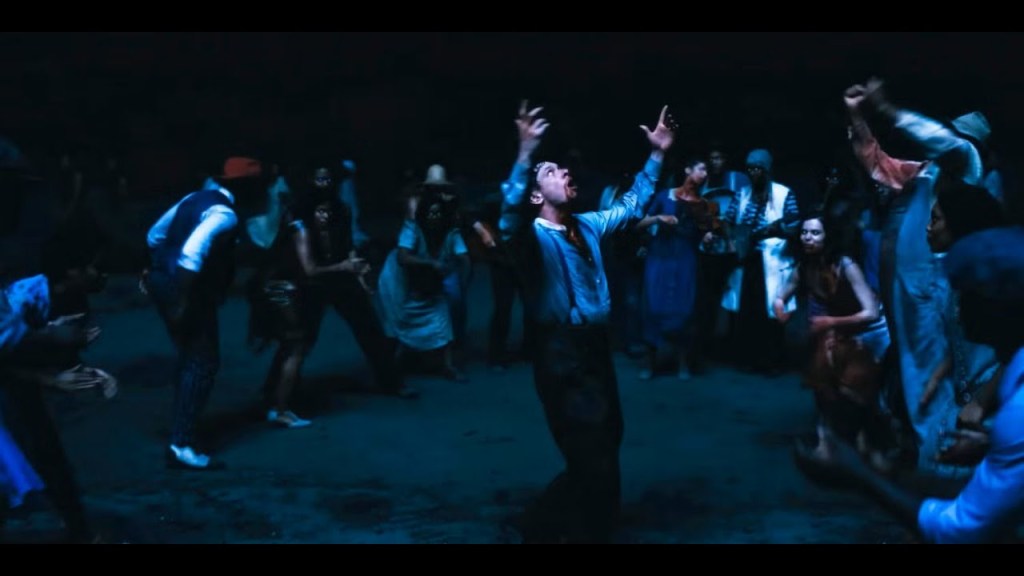
Part One: Introductory Comments (Disclaimer: this section contains more of my personal opinions on matters not necessarily concerning the film, so if you want the actual film analysis, I recommend skipping to Part 2 to begin)
Part 2: A few foundational movies that remind me of Sinners (2025). Rosewood (1997), Def by Temptation (1991), etc.
Part Three: Portals, Vampires, The Irish, White Minorities as the Oppressed and then Oppressors, and Evolution of Black Blues into modern Rock and Roll.
Part Four: A non-politically correct take on casting and characters. The Tragic Mulatto, Black Queens, The Oaf, The Action Hero, etc.
“Magic is the politics of the excluded. It’s also, in inversion of a kind typical in such situations, the politics of the excluders” page 91, The King in Orange: The Magical and Occult Roots of Political Power by John Michael Greer (2021).
“Magic, as we’ve seen, is the art and science of causing changes in consciousness in accordance with will. If you are denied access to any other source of power, you can still exercise power over your own consciousness” page 92, The King in Orange: The Magical and Occult Roots of Political Power by John Michael Greer (2021).
Disclaimers: I really don’t care about race; however, racism, hate, etc., are real and we must understand them. I suspect a lot of people when they hear something like “white supremacy’ they have numbed themselves to not hear it (and some people I suspect get an instant triggered reaction), but I believe I provide some decent insights. This paper is not intended to “shame white people” but rather explain the real effects of a system catered towards white power that has had detrimental effects on everyone, white people included in my own opinion (e.g., artificially inflating egos while stitching those egos to a capitalist system which ironically produces social alienation). I have no issues with anyone based on what I consider to be arbitrary features such as race; however, this paper will discuss topics such as white supremacy and that is important because it is being normalized in mainstream ways that are unfortunate (for example, the cynical and obvious re-application of white supremacy under the MAGA movement as it lazily pretends to not be doing so). Despite me talking on subjects like this throughout the paper, I do believe you will find some interesting and funs tidbits about other films, music history, etc. Enjoy. Q
Part One: Introductory Comments
I hope Sinners (2005) sweeps the Award Season. There are not many good films out at all, but even if there were, Sinners is a good movie that should be at the top of the list. I don’t have too many complaints about the film, and the ones I do I will go into down below, but Coogler’s film – even if not THE best film of all time or of recent – needs to be in the talks for Best Picture, Best Director, etc., because it is the best that is simply out there now. Snubbing Coogler wouldn’t help paint Hollywood in the best light in my opinion. I think people are in need of hope these days, and Sinners (2025) does present a level of hopefulness in the film. What more could you ask for now?
There is really no excuse to not give it one of the top awards. The Academy should praise Coogler, his production team, and the actors for helping save the magic of Hollywood, which as a person who loves movies is waning, and waning because of a general sense of informational overload, nihilism, the popularity/immediacy of more attainable social media influencers as compared to traditional unattainable actors, etc. Hollywood as is, is a consequence of our internet-based world. People’s brains are always on, so attentions spans aren’t the best, so I think people have a hard time rationalizing the price of going to movies that aren’t mindless entertainment. Sinner is helping the entire the industry.
Commentary on Sinners (2025) by Ryan Coogler is interesting because a lot of people want it to succeed for various reasons, sometimes on grounds of black solidarity or non-black allies wanting to be more inclusive of diverse voices, but also there are horror fans wanting their genre to continue to expand its limits as far as storytelling, etc. Also, a lot of people want it to fail, some because they don’t like it for whatever reasons (i.e., not their thing, style, etc.), but there are likely a lot of Right-Wing trolls using film criticism as a veiled way to be racist and exclude any narrative that has diversity in it. These trolls are relying on people putting the blame on “wokeness” (progressive ideology) when people call them out for their likely racial biases, so it seems the Social Justice camp are the anti-free speech types, when really the progressives are calling out their obvious-not-so-obvious strategy of undermining stories with women, traditionally marginalized groups, etc. Conservatives have gotten real slick, where they hide their bigotry but when called out, they play the victim.
Lastly, other people just see the film as art and are pulling good faith, but subjective analysis from the film. These people are not going in with any agenda for or against. The truth is, being a black led film, a lot of black people want it to succeed, whereas a lot of people who are not black want to see it fail, or if it does succeed these anti-diversity types want to believe it is not because of merit, but because of “wokeness”, “pandering”, etc. Film, like most things in the USA in 2025 are a victim to our very toxic culture wars, exemplified by the MAGA movement, which is really a populist vengeance movement by people who got tired that they were being blamed for a system of racism, sexism, etc., despite them ironically voting for a party which is promotes these things.
I should watch it again, but I give Sinners am 8 out of 10. I am happy I saw it, but it is not something I am itching to watch again. I feel quite nullified about the film. The story is compelling enough to be interesting, but nothing pushed me over the edge to get an emotional reaction out of me, nor do I treat it like a classic cult film in any sense. But the film grows me day by day, and at the most I’d give it 8.5 out of 10.
A little better interpersonal dialogue between characters and a different third act would have pushed the film into 8.5 to 9 or higher for me. For a film that is pushing the limits, it also felt like it was playing it safe to me at the same time, so I am left with a null state of feeling. There were some awe moments such as musical pieces, but I did find myself zoning out in some parts, but like I said, I may need to watch it again. I watched the movie fully sober, so there was no amplification from the buzz of booze of sway my feelings, which is a good thing. I went into the theater with a clear head.
The cinematography, costumes, makeup, set design, etc., are all exceptional. One flaw is maybe Michael B. Jordan’s character coming off as too cool for school for me, and I don’t mean that to undermine the notion of confident black masculinity. That is a big discussion nowadays. When black men succeed or seem too confident, the allegation is that if they aren’t liked it is because people don’t like seeing confident black men, because they are seen as “uppity”, “cocky”, “flashy”, etc. I do think that this fear of black, male, heteronormative, cisgender confidence certainly exists (because it usurps the idea as white males being the de facto leaders or those worthy of honorable treatment), and I write this being black myself, but sometimes confident people can just be a little…cringe, regardless of who they are. I think I am too used to seeing Jordan in action or hero like roles (Creed, Black Panther, etc.), where it didn’t feel fresh for me, but he’s a face able to sell tickets so that is important to help convince Hollywood to keep making films that have black main ensembles without them being released purely to black audiences or in limited markets.
My mind may change in a few hours, or tomorrow, or never. I don’t know. I am more of an “everyman” hero, rather than an “action hero” person when it comes to films that are trying to have deeper meanings. To be honest, maybe they could have dropped one of the twins and gave the character Sammie more of leading action-like role, because it would have been more out of character for him since he is depicted as a slightly wet-nosed young man.
To me, Sinners is great because it is a deep film, and not an action movie. If it were sold as an action movie, then great, then I think there should have been better action throughout (giving me my internalized pre-teen boy need for 1980s or 1990s cult classic action), but Sinners is really a deep movie, that put action into it, and I wouldn’t be surprised if this was more of a Hollywood executive decision to set up the acts the way they did, because Hollywood often does treat art like a mathematical insurance formula. Directors are given the hard task of balancing studio needs with their own vision.
On a side note, and this may seem petty, and I am not trying to be a hater to Ryan, but in an interview with Indie Wire, he talked about how “he and his family love Irish music”, and that’s very well possible, but I also think that’s…not true (and, I say that playfully and with humor).
First off, it is as if he is “trying to keep it real” in this interview, i.e., “black enough to seem authentic to other black people”, but he’s also trying to be more auteur than what he may actually be. Yet, I respect the fact that he has to sell a movie to audiences on his promotional tour.
To me, it is like…why were you not hyping this genre more before you released your movie that interestingly has Irish music in it?
Better put, Ryan alleges that he is into Irish folk music, which may be true, but he did not explain how he came to like it in the interview, nor is he being honest about how liking such as genre – notably in the black community – would have been seen as odd.
Essentially there are likely other people of color who really had to struggle to earn the right to express themselves the way they wanted to, just for a person like Ryan, to make it seem like that this wouldn’t be the case in most instances unfortunately.
For example, I grew up skateboarding as a kid before it was more acceptable for the black masses to admit to liking skateboarding – despite, the rich history of black skaters throughout the industry – yet, fast-forward, after certain rappers legitimized skateboarding (first it was Lupe Fiasco but he wasn’t hard enough, but the Lil Wayne did it), then all of a sudden skateboarding saw a boom in black children wanting to shred. Which is great, but I think we got to stop this “black authenticity” thing.
Check out this post I did after this one. I wrote this about three years ago which alludes to what Ryan is talking about regarding Black and Celtic cultures.
Regardless, hearing Ryan talk just made me feel like he is a person trying to sell a movie, sound more auteur than what he is, while also trying to keep it real with his inflections and speech as a means of retaining his “black authenticity”, thus priming him as the “black savant director”, which many people want, simply because they want that to exist. But… IT does need to exist.
Anyways, with a limited number of actors, let alone black actors, Hollywood is only willing to bet the house if an actor such as Jordan was casted. But I really didn’t care for Jordan in this film. I cared for Sammie more and wanted to see his story arc complete. The film doesn’t really know who the main star is. It should be Sammie as far as the story, but it ends up being Jordan because of his star power to draw in the audience. Jordan would have been great if the film were a true action movie akin to Die Hard with Vampires, with Jordan running around with a gun holster, smoking the undead. But the film wasn’t that.
Part 2: A few foundational movies that remind me of Sinners (2025)
Sinners (2025) is a good movie that smashes in a lot of concepts, histories, and tropes together as a means of painting an atmosphere which a lot of people may not have known about Southern culture, be they a true Southerner or not.
For example, the Chinese of the Mississippi Delta (who often served as intermediaries between the black and white communities), the trope of tragic mulatto (which I have conflicted feelings about), the concept of “passing”, the intertextuality of rock-and-roll music in that it is based on black hymns, Scots Irish jigs, etc., but also to showcasing the Choctaw Tribe of Mississippi.
When it comes to the film Sinners (2025) by Ryan Coogler, a few films faintly come to mind, pulled from my subconscious as I write this, and I often do not hear these referenced in current analysis on Coogler’s recent film (granted, these films are older and many online YouTube content creators are of a younger era).
The films that comes to mind for me are Def by Temptation (1990) featuring Kadeem Hardison and Samuel L. Jackson in which an innocent church going young man, with an overprotective pastor father (who has sins on his own hands), ends up visiting his womanizing (rather, pretending to be a womanizer) childhood friend in the city, just to be stalked by a demonic force which uses lust to corrupt and kill men. I saw this movie randomly one night on BET in the late 1990s, when BET played late night classic movies on Saturday nights such as Foxy Brown, Coffy, Cooley High, etc.
This film was produced interestingly by Troma Entertainment, the same studio that gave the world B cult classic movies such as the Toxic Avenger (1984), however, Def by Temptation added an oddly deep and poignant piece of art to Troma’s catalog. I guess you have got to take whatever distribution you can when you are an inspiring indie director.
Also, there is the film Rosewood (1997) directed by John Singleton (famous for Boyz n the Hood in 1991), written by Gregory Poirier, and with acting by Ving Rhames, Jon Voight, etc.
Rhames plays a WWI veteran trying to save a thriving black community in Florida from white mob violence due to false allegations of a black man raping a white woman. The story of the burning of Rosewood, Florida is based on a true story, like the Tulsa Race Riots which burned down what was known as Black Wall Street, The Cincinnati Riots of 1829, 1836 and 1841, or the forceful removal of Black Americans from Forsyth County, GA.
The film Rosewood is a good comparison to Sinners in that Rosewood presents a strong, uncompromising, hyper-masculine black military veteran hero, which is something the characters of Smoke and Stack (played by Michael B. Jordan) attempts to do in Sinners.
Another film, to a lesser degree as far as plot, but to a similar degree because of atmosphere, which also stars Samuel L. Jackson (who is quite the outstanding indie film actor in his own right who likes to take artistic risks), is the film Eve’s Bayou (1997) written and directed by Kasi Lemmons, about a young girl (played by Jurnee Smollett) who uses voodoo (or at least we are made to believe so) against her womanizing and possibly abusive father. This film weaves a Southern gothic mood with ancestral African practices, which can be seen in Sinners as well. It was the best performing indie film of 1997 according to some sources.
Sure, people have brought up Tarantino’s From Dusk Till Dawn, but to me another film is Crossroads (1986) starting Ralph Macchio, Jami Getz, and Joe Seneca. It is a great film that touches upon mythology of the Delta Blues.
Part Three: Portals, Vampires, The Irish, White Minorities as the Oppressed and then Oppressors, and Evolution of Black Blues into modern Rock and Roll.
However, now onto vampires, Coogler presents an interesting vampire story by depicting the main vampire, Remmick (played by Jack O’Connell) as a tragic soul, trapped in eternal damnation, i.e., he must kill to stay alive, but by killing others to survive or by possibly killing himself to save himself from his curse, he forbids himself from spiritual places such as our concept of heaven where he may possibly see his former loved ones.
He is forced to wander aimlessly, addicted to his need to feed on blood, but it is not only physical needs he has, but also his own spiritual needs, thus he is attracted to soul, and soul is often expressed through music.
Music thus can create portals between time and space, and some people are able to channel this energy with almost magical precision (e.g., the concept of mojo). These practitioners – consciously or unconsciously – builds bridges across various dimensions of space-time.

These musical savants thus become prime targets of what I call “physio-spiritual” vampires, i.e., needing blood and spiritual energy.
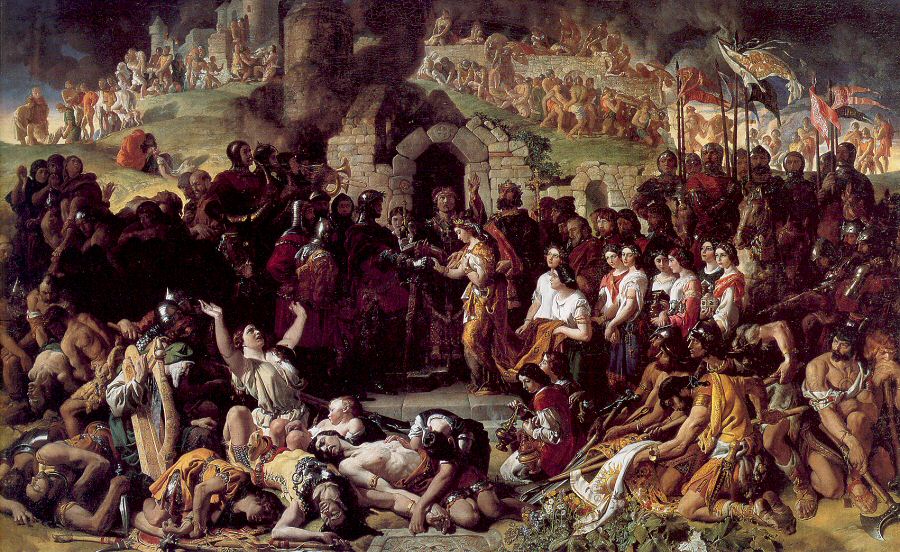
The more indigenous and ancestral that soul and music is, the better for the vampire, i.e., it is like a more potent drug. This is why Remmick went to the Native Americans before they cast him away.
The vampire is essentially on a quest for a type of “ayahuasca or LSD trip” to help deal with his own trauma, i.e., a psychedelic experience to help him commune with older times that connects him to his own roots. Culture is thus like a fine wine or as being “organic” food. The vampire is wanting the “raw stuff”, and not the processed stuff. The larger the crowd communing with this music, the better for a vampire like Remmick. A larger crowed, swept up in the frenzy of musical elation is a larger “physio-spiritual” feast for a vampire, thus a stronger “high”.
I like that Remmick is a wanderer with a vague back story. It makes it more haunting. What is even more haunting is to think that if what Remmick is doing is happening in some random backwoods Southern town, there where else has this or is currently going on at? The ambiguity reminds me of the haunting lyrics in The Doors song Riders on the Storm. The Doors are actually considered forefathers of modern goth music as a random side note.
“There’s a killer on the road
His brain is squirmin’ like a toad
Take a long holiday
Let your children play
If you give this man a ride
Sweet memory will die
Killer on the road, yeah”
The wanderer in horror reminds me of Stephen King’s Needful Things with the character Leland Gaunt and Storm of the Century with the character of Andre Linoge.
Remmick can see the future potential of Sammie’s Delta Blues (where Sammie is a homage to the legend of Robert Johnson, who supposed sold his soul to play the guitar in a Faustian bargain and is considered the first rock star).
The Delta Blues, in real life would even make itself over to the United Kingdom, and inspire early rock bands such The Yard Birds, Pink Floyd, The Beatles, The Animals, The Rolling Stones, etc. Many of these bands were the children of World War II veterans, who grew up in the reconstruction of Britian during the 1950s which saw an influx of American commercialization, including music. Many teenagers in Teddy Boy, Mod, and greaser cultures listened to American Black music, and many went on to create cover bands, before expanding upon the rock-and-roll genre, notably during the psychedelic and counterculture nineteen sixties.
Rock-and-roll music is a melting pot genre of African soul and hymnals mixed with jigs and folk songs of the Irish, English, and Scots Irish (Scots who settled Northern Ireland before settling the American South. For example, Elvis was Scots Irish).
Rock and Roll became modern with the insertion of the electric guitar. Rock-and-roll became seen later as a white genre, largely because music studios helped segregate music. White parents often didn’t want their children, especially daughters, corrupted by “race mixing”, so white bands filled the void in a genre which was heavy considered black in the nineteen fifties. This is why they were often cover bands of black musicians. Adding in the racial polarization of the Civil Rights Era (for example with many black people wanting more Afrocentric music), by the seventies, rock and roll was heavily a white genre, notably because of the garage band proto-punks of suburbia revolting against their nineteen fifties Leave it To Beaver upbringings in the late sixties. Largely inspired by the Velvet Underground these proto-punks established punk music, but not in opposition to blackness but simply because that’s just how things evolved based on how America was structured at the time. Punk and hip-hop music in New York City would evolve side by side, and this noted in music documentaries such as NY77: The Coolest Year in Hell by Henry Corra in 2007 (I highly recommend watching this documentary).
Even metal music has roots in black Southern blues music, which would go on to inspire many British musicians who went into the psychedelic and progressive movement of the late 60s but favoring heavier and harder riffs (and darker or realist subject matter as opposed to the utopian ideals of Free love). Metal was emerging at the same time as the parallel-evolving genre of Glam rock (which rubbed off one early punk rock) with the American band, The New York Dolls, and the British band, T Rex.
However, like a lot of these genres, which became consumed by the larger white population, these genres often became filled with Right Wing and conservative people, often of the white working classes, who would contort the genres. For example, the classic case of Skinheads who were often Ska listening white British Youths living amongst the first and second generation of West Indies black friends, became infected with the fascist youth movement of Britian’s National Front party. Skinheads as an image has never really recovered from this appropriation by the right wing, despite the best efforts of SHARPS (Skinheads against racism and prejudice).
Remmick, represents the hot topic of cultural appropriation (also, gentrification to some extent), however, it is not as simple as the concept of a white person in post-colonial nations trying to take and launder BIPOC culture.
Remmick is Irish, and the Irish were discriminated against in the USA and the United Kingdom. Ireland was the first English experiment at setting up plantation (large-scaled farming) settlements with the Ulster Plantations of the seventeenth century under the Tudor and Stuart Kings, and then even under the English Dictatorship led by Oliver Cromwell who served a type of Lord Protector role over Ireland in the absence of the British monarchy before the restoration of the royal family.
These plantations make up in part what is Northern Ireland today.
Remmick is likely even older than the Ulster Plantations and is likely a victim of earlier English incursions into Ireland such as through the Anglo-Norman Invasions of Ireland in the twelfth century (i.e., the eleven hundreds) conducted by the Plantagenet-Angevin dynasty.
However, the Irish, even though facing discrimination and oppression, also did promote discrimination themselves. Today you often hear in rebuttals to black liberation talking points is the fact that the Irish too experience levels of slavery such as in the 1631 events known as the Sack of Baltimore, where some Irish people were human trafficked by Barbary Pirates led by Dutchman and Islamic convert, Jan Janszoon.
Regardless, this “white people were slaves too” argument is often employed to distract from white supremacy within the United States and U.K., by using a lazy form of gaslighting or reverse psychology. The truth is the African Transatlantic Slavey trade was a global institution and industry (with stock brokerage, insurance, traders, advertising for slaves, etc.), where black people were the main commodity, rather than simply being unfortunate victims of consequences or kidnappings.
Certain voices that fight this watering down of black enslavement with the “Irish were slaves too” argument proponents, point to the fact that Africans were subjected to chattel slavery (i.e., weren’t even human and the children of slaves would be slaves too), as opposed to indentured servitude faced by the Irish (and well as other poor people in the United Kingdom) who helped settle places such as Australia, the US state of Georgia (founded in part as a debtors prison by Lord Oglethorpe), and even places such as Jamaica (where the weather didn’t fare too well for the Irish workers, thus promoting more imports of Black slaves to the island.
The famous Jamaican accent is theorized to have strong Irish influences).
Irish Americans have been in the USA since the early colonial times (some even were slaveholders, fought in the Confederacy, and some were slave overseers, i.e., middlemen on plantations), but the largest stereotypical demographic of Irish Americans is those who came to the United States during and after the Civil War, largely to the port cities of New York and Boston.
These Irish immigrants were competing for resources with newly freed African Americans who were migrating away from the South. Further, many new immigrants did not like military conscription to fight for freeing slaves in a land that was still alien to them. The New York City Draft Riots of 1863 are a prime example.
This economic competition between immigrant communities created some cross-over but also tensions, and the Irish became a notable political force such as through New York’s Tammany Hall.
The Irish also became known for entering occupations such as cops and firefighters, often further putting the Irish into situations of tension with other minority or immigrant groups, often living in cramped, dangerous, and unsafe urban shanties.
Fast forward to modern times, cities such as Boston, with its rich Irish history, has the stereotype of being notoriously racist, and there is historical basis for these allegations such as Irish American violent protests over school integration which was brought back into the public consciousness with opening dialogue by Jack Nicholson in Martin Scorsese’s The Departed.
Also, there was the high-profile case of the Murder of Carol Stuart, where a white Irish American husband killed his wife, and had himself shot to pretend he was attacked too, but the husband then blamed the murder on black people. This false allegation led to manhunts by the Boston Police Department, often violating the Civil Rights of Black Americans living in economically distressed areas.
This historical context I am providing helps to paint Remmick in a possibly more complex light.
He is the oppressed but also the oppressor at the same time.
Certain ethnic groups such as Jews, Italians, Poles and Irish were discriminated against by the predominate White Anglo Saxon Protestant (WASP) community (which even predates later German immigrants), however, they eventually became absorbed into “Pan-whiteness”, i.e., the overarching white superstructure that hovers over Western Civilization, i.e., white is seen as the natural and neutral default position for which all other things are analyzed, appraised, and judged against.
These groups often can relate to and gain access to more oppressed groups, who are more oppressed because of the color of their skin, by uniting over shared narratives of oppression (which Remmick tries to do to be invited – as vampires need to be – into the black owned musical hall in the film).
These “white minority groups” (e.g., Jews, Italians, Poles, Irish, etc.), are also able to move more easily within white supremacist and/or capitalist power-systems, and often there is no reaching back and elevating up other oppressed groups, who as restated are often discriminated against because of skin color. For example, there were Jews in the American Antebellum South, and even the Treasurer of the Confederacy, Benjamin P. Judah, was Jewish, which means Confederate schemes such as backing the Confederate dollar with slave picked cotton that would later be procured by the British (whom the Confederates were trying to court to their side), was likely an idea convened upon by Judah.
In addition, to stay on the same topic, black people played a large role in assisting Irish and Italian mobs, notably during Prohibition, but black people were also barred from most public spaces, more likely to be seen as being a criminal, and unable to capitalize monetarily on the monetary gains of the criminal underworld.
In many ways, Jews, Irish, and Italians were able to use that “immigrant grind” mentality, which often used the underground economy to gain political power. One of my personal theses on Black American issues is that Black Americans were largely denied this ability to convert the “criminal capitalist entrepreneurship” to legitimate power like their “white minority” counterparts.
These white minorities benefited from the “multiplier effect” of white supremacy, i.e., a larger and more powerful force with wider reach and deeper impact. Black Americans however forced into segregation, even though creating their own sustainable internalized communities as a result (which some call for a return to in the modern times – which I don’t fully agree with), would never reach the scale afforded to the white superstructure.
In other words, “Buying Black” for example, can only go so far because (A) there is simply more non-black people in positions of power, and B) at a certain point, internally speaking, this segregated society will create its own internalized one-percent class, still lacking the sheer power of the white superstructure.
Black Americans were unable to convert criminality into legitimate power, unlike others, since black people were needed to be visual, symbolic, and real-world objects of disdain to sustain the racial-caste system where blackness was put that the bottom. Even the early settlers were criminals in that they built their wealth over stealing land or by entering into contracts with Native Americans who had no context of English style contract law, which would therefore make many treaties null-and-void based on modern tenants of contract law (e.g., being of age, not under duress, being sober, etc., when entering into legal contracts).
Black people got the criminality, but none of the means to translate it into legitimate power via politics, banking, policing, media, etc. For example, mafias backing the political campaigns of civil leaders, sheriffs, etc.
This is why I feel the characters of Smoke and Stack are totally fine with having ripped off their mobster business associates, be they Irish with whiskey or Italians with wine, etc. Smoke and Stack see themselves as way more worse off than any white passing Irish or Italian person would ever be, and they were only exploiting Smoke and Stack for their own purposes anyways. There is no honor amongst thieves, so the adage goes.
Speaking on matters of early immigrants or freed Blacks engaging in the underworld as a means of survival (e.g., hustling, grinding, what have you), is that music was often overlapping the underground economy, which is still in part true (for example on drug dealing often financed the careers of many rap artists).
Further in example, the mafias – first the Jewish and then Italian mafias – were involved in the music industry and often reaped royalties of black music. A modern example in pop culture is in the show The Sopranos, in the episode titled: A Hit is a Hit (first aired in 1999), where the character Hesh Rabkin (a Jewish shylock, i.e., money lender), made his fortune in part by taking most of the royalties of black musicians he managed.
Other notable examples of this marriage between oppressed groups in the entertainment industry, but in which one side naturally benefits more than the other because of white supremacy, is the film Cadillac Records (2008), starring Beyonce, Jeffrey Wright, and Adrian Brody (playing producer Leonard Chess).
Remmick, also feeds off his own culture. Supposedly, based on some online movie easter-eggs laid by the Sinner’s promotional team, insinuates in fictional news clippings, that the ancient Remmick made it to the Americas a few decades before the events of the film.
He rode on a ship full of Irish immigrants who were dancing and partying one night (note: imagine the scene in Titanic where Jack and Rose are dancing for cliché imagery), but all the travelers mysteriously vanished leaving nothing but a ghost ship entering port, which is a common and fun theme in vampire lore such as in film depictions of Bram Stoker’s Dracula where Dracula comes to England after feeding on the crew who sailed him from mainland Europe to Victorian England.
This would mean that Remmick will even consume (appropriate) his own culture just to feel that lost feeling that haunts him. To relate this to the world outside of this cinematic universe, is to me similar how to these “white minority” communities will romanticize their Old-World roots in the New World, yet, still be beneficiaries and proponents of white supremacy, which uses appropriation as a means of expanding its own palette, while erasing the non-white source of said culture (i.e., the source of flavors).
Don’t get me wrong though. Remmick is a deeply poignant character, and I am not making him the equivalent to some frat-boy with an unframed poster of the Boondock Saints on his wall who praises his Irishness to sound tied to something deeper, but who is really a perpetrator of white supremacy, patriarchy, etc.
All I am saying is that people to the latter exist like these theoretical frat-boys I use as an example, and though they are kind of doing what Remmick is doing, Remmick however, for the sake of the story has reason to, even if flawed, evil, etc.
Remmick is not a modern, mindless American consumer who lost his identity, clinging onto commercialized versions of his roots – though there are parallels that can be made – but, rather Remmick is totally aware of what he lost, but has no other means of reconciling it since he’s essentially a slave to himself, forever damned with his curse.
In theory, if vampires remain the same as when they were killed, but if their bodies remain the same but become stronger over time because of they are supernatural, then one could argue that the emotions, feelings, memories, etc., after vampiric conversion, would also become stronger too. Vampires not only have supernatural strength, but supernatural feelings. A normal human couldn’t understand the emotional highs and lows of a vampire in this theory, nor could a normal human understand the needs of a vampire with this eternal emotional hole inside of them.
In another analysis I saw online, the content creator did a good job of depicting Remmy as “middle management”, i.e., the often invisible but important force that maintains a hierarchical system between the top and bottom.
Back to my own analysis, however, the supernatural foundation of the film Sinners is that blues music can open a sort of Lovecraftian portal between space-time, and the power of this is what attracts vampires. Using music as a means of potentially opening portals is a cool and fascinating concept in my opinion.
Music touches upon mathematics, string theory, physics, etc., and to me is symbolic of H.P. Lovecraft’s short story, The Dreams in the Witch House, where a young math student at the fictional Miskatonic University is boarding in a room that has odd angles. It is revealed these angles represent a type of non-Euclidean math, and enables travelling through other dimensions, and this also unleashes a witch who used the house with all its strange dimensions and angles in the past.
The house is basically a structural sigil used in a magical “working”, i.e., ritual. This witch has been performing ritualistic child sacrifices and drifts between dimensions. The poor student becomes aware of this, without anyone believing him, and he eventually descends into madness.
This story was made into a short film within the horror anthology, Masters of Horror, in 2005, and was directed by horror maestro Stuard Gordon. I recommend you check it out. Good horror anthologies are hard to come by these days.
Wunmi Mosaku, who plays Annie in Sinners, was part of the cast of HBO’s Lovecraft Country, which is an interesting link to Lovecraftian elements one could pull from Coogler’s work of Sinners.
Part Four: A non-politically correct take on casting and characters. The Tragic Mulatto, Black Queens, The Oaf, The Action Hero, etc.
Michael B. Jordan, who plays twin brothers, Elijah “Smoke” and Elias “Stack” Moore, are essentially the “alpha black guy(s)” who end up getting Tarantino-like vengeance on the KKK, which to me was forced in the film, but I do understand this subplot. The brothers buy an old warehouse for their club from a corrupt white man called Hogwood played by David Moldonado who is also in the KKK. The man takes Smoke and Stack’s money but is going to come back to kill the brothers and any other black people caught in the warehouse (turned into a dance club by the brothers). This subplot makes sense enough, but also, I felt it was a little cliche and was about giving the audience a sense of vindicated violence against atrocious people with horrible racist beliefs. It was the equivalent of Pam Grier playing Foxy Brown castrating the evil protagonist, i.e., the character of “The Man”. Symbolically, the fact a Klansman took the twin’s money but later wanted to kill them, just points to the obvious fact that white supremacy will economically exploit you while also devaluing and killing black life.
However, Jordan’s characters are the heroes, but they are…sinners. They are on the anti-hero spectrum. For example, it is alluded that one of the twins has pimped women before, I believe somewhere Arkansas, and this is problematic. I am not trying to virtue signal, but because he seems to not have any issue with it, it could be insinuated that it is cool or “it is what it is”.
Sure, we don’t see the relationship between him as a pimp with the “working girls” he manages (for example, we don’t know if it was a violent relationship or some sort of mutually beneficial arrangement).
But, still the notion of black men and pimping is an unfortunate stereotype (which does have basis in reality to varying degrees – I just think its overdone), and I am not sure if Coogler inserted this to paint the brothers in some sort of “old unc” archetype, i.e., the black community equivalent of a pervy, alcoholic, past their prime, and unscrupulous uncle-type of character (think of the “jailbird” in your family), or if he was paying homage to an unspoken veneration of the pimp in certain elements of urban black culture, such as in rap music or blaxploitation films, such as Superfly, the lyrics of Bay Area rapper Too Short, Snoop Dog, etc.
Regardless, one of the twins being a pimp firmly paints him as on the other side of generally approved of moral norms. Not to mention they shoot a man in his buttocks and another in his leg for attempting to steal, yet all this shows is that the brothers operate with an amoral code of “street justice”. They fact they try to educate a young girl on how to negotiate good deals for herself, and they pay her to watch their truck filled with booze, is them showing they have a good side, but simply are “in the streets”. It is a dog-eat-dog world, and they are just players in the game, and if anything, God helped write the rules.
The brothers, well at least one of them, is the de facto hero of the film but they are also sinners who will have to atone in some way, shape, or form.
Moving on, Hailee Steinfeld, playing Mary, represents the “tragic mulatto”, which as a device can provide good analysis on the intersections of race, but in 2025, it seems to be a tired continuation of depicting mixed race people as being conflicted rather than being at peace with themselves. I will write more on this below.
Hailee being “light skinned” serves to juxtapose herself with the strong dark black female of Wunmi Mosaku’s character of Annie.
Annie represents modern slogans and concepts of “black girl magic”, the good witch, etc., who is a divine feminine character tapped into higher knowledge, where in the case of black identity is tapping into ancestral African customs that have been erased by white supremacy, but which are vital in healing generational trauma.
While helping her estranged husband Smoke in his bar venture, she takes on a “mama-san” like role, i.e., the wise female keeper of a house of “ill repute” as churchgoers of old may say. However, in other analysis I have seen in the past, some people have stated using black people with magical abilities to save the day is the trope of the “magical negro”, which is a character, sometimes oddly used a lot by Stephen King (who is ally to progressive causes, so I am not “cancelling” him). The Green Mile, The Stand, etc., are good examples of this trope that some allege is a thing in media.
Hailee Steinfeld’s character for better and worst touches upon the trope of the “tragic mulatto”. This trope dates to the Antebellum period of the United States, if not earlier, in which mixed race people, often of African and European ancestry, are shown as being in perpetual melancholy for not being accepted by the racialized society they exist in.
Rather than stories of transcending race, most stories centering around multiracialism often centers around a “tug of war” mentality that mixed race people may suffer from. I said, “for the worse”, because even though throughout history, mixed race people have suffered trials and tribulations surrounding their identity, where they fit in, etc., I find it sometimes problematic to always insinuate the lives of mixed-race people as being innately conflicted, unhappy, etc.
The film is set in the nineteen thirties, so of course this identity crisis would have been a very real thing, especially in the heart of the Jim Crow South, however, outside of cinema and outside of this film, I notice more portrayals of being conflicted about being mixed-race, rather than stories about embracing all the elements of who you are. So, I am not blaming the film for analyzing the tragic mulatto archetype, since it is based in reality and is great way at exploring the intersections of race; however, outside of cinema, in the real world as of 2025, I personally think we need more depictions of mixed-race people as being well-adjusted or on a journey towards being so, since in the real world we are likely to hear racially divisive concepts such as “white women corrupting black men”, white femme fatales, etc.
Many black people even insinuate being “light skinned” as weak, effeminate, “suss” (suspicious, i.e., sexually ambiguous), etc. Hailee’s character whether people want to admit it or not speaks to a “See, I told you so, don’t trust those “lite skins” or “white women”” sort of feeling that permeates in parts of the internet.
By depicting liter skinned peoples as inherently bad, it ironically feeds into an internalized colorism that even exists in the Black American community, despite the Black American community being seen often as the oppressed rather than being capable of any sort of oppression.
However, Hailee’s character for the better is not shown as being a villain or evil, which some people in earlier times may have done. She is shown in the film more so as victim of circumstances, and she gravitates towards black community in varying degrees. Even in the film, when Hailee is in the juke joint (the club), the other characters state she is supposed to be there, as opposed to the outsider vampires.
But to be real, Hailee’s character is meant to be a juxtaposition to Wunmi Mosaku’s characters, who is the archetype of the strong, black (very dark skinned, i.e., melanin) women.
Wunmi’s character is healer, the “mamma-san”, etc., who has herbal remedies, converses with the ancestors, has knowledge of esoteric and supernatural things, etc., and this resonates in the real world, notably in our current phase of black liberation politics, e.g., “buy black campaigns”, “black girl magic”, etc.
Whereas Hailee’s character, whether she likes it or not, can tap into her “racial currency” as a “passing” women, i.e., when a person who was able to pass as white would do so in order avoid the limitations that white supremacy imposed, Wunmi on the other hand as a “black” black woman can’t run from her problems or identity, but has to accept it.
By accepting it she accepts it on a spiritual level, outside the limitations and erasure that white supremacy imposed on black African culture from slavery until…today in certain instances.
You add the story device of Wunmi having lost a child, which is a real thing that many women of color who lack access to medical care, face more likely than their white woman counterparts.
Hailee’s character is written in a way to not threaten or overshadow the lived experiences of a black woman, so whether people want to admit it or not, the movie retains the interests of black female moviegoers.
White supremacists, racists of any color, etc., often try to discourage interracial relationship by seeming to care about mixed race people by alleging their lives will be terrible, when really these people simply don’t want the relationships to exist. Better put, people who try to discourage interracial relationships on the grounds that they won’t be accepted by either which side, is ironic because people who allege this are often the culprits of making a racist world that makes it harder for biracial or multiracial peoples.
The Chinese storeowners, Bo and Grace Chow, played by Li Jun Li and Yao, provide a good way of inserting Asian characters into historical depictions of America, and these Chinese of the Deltas of Mississippi are a real thing.
Asian Americans are often absent in historical depictions of American life despite them playing a role in America’s development, that wasn’t always simply building railroads which is the common way people see the Chinese for example in history.
With Asian Americans often not getting roles as strong leading characters, having these Chinese characters, notably in a black-led film, helps link the Black and Asian communities in real life in which sometimes our communities have collided (often centering around the concept of economic exploitation where many stores in black neighborhoods were ran by Asian Americans or immigrants). The film unites enough while also leaving the door open for deeper conversations.
For example, during the COVID19 lockdowns there were certain cases of people assaulting Asian Americans, but some of these people doing the crimes were black people, and this was during Black Lives Matters era (which had high tensions with police, backlash by the Right Wing, etc.).
The Stop Asian Hate campaign arose as a result, but people used these unfortunate attacks to undermine the BLM movement and to paint black people as hypocritical, unworthy of reform, and inherently criminal in nature. Some of these attack cases happened in areas such as the Bay Area, but these areas having such as deep connection to progressive political traditions and social justice, often provide better platforms for engaging in cross-cultural communication, unlike the chaos of online debates one may find on Twitter, or within more racially segregated (non-fluid) communities elsewhere in the United States.
Having a film that unites Black and Asian people as being able to work together is a good thing in my opinion, since often Asian people are painted as “model minorities” who can benefit from white supremacy as a buffer-like race against black communities.
Unfortunately, some Asian people, like other non-white groups adopt anti-black thinking as a means of assimilating to the predominate “White superstructure” that is the United States.
However, there many allies in the Asian American community discussing these issues as a means of bridging the gap with other minority communities, notably the black community, in which they were set up to be pitted against each other.
Showing the complex nature of Asian and Black relationships, notably within the Jim Crow South, but within a horror film which requires transcending racial lines for survival is a good way to ease tensions in the real world in my opinion, even if in a small way.
Next on the list, is the actor Omar Miller playing Cornbread who represents the symbolic “oaf” in horror genres.
Big, rural, loveable, gentle, etc. The Little John from English folklore sort of character is likely where this trope comes from but firmly planted into the American psyche by John Steinbeck’s character of Lennie Small in Of Mice and Men. Ozzie in the Leprechaun film played Mark Holton, or Tom Culllen in Stephen King’s The Stand are good examples of the “big oaf” character.
Cornbread, played by Miller, does fine in his role, and dies in a somewhat comedic way while using the restroom, so he plays into this oafish trope. He also plays a convincingly scary vampire, in which he is shown as feral, which is common in vampire tropes as newly turned vampires learn to deal with their hunger, etc.
Further, the legendary actor, Delroy Lindo, plays the “jaded old drunk”, Delta Slim, but his jadedness veils a wisdom but a type of wisdom, though enlightening, also can lead to a sense of spiritual paralysis. Essentially Slim has seen too much, and he’s numbed himself to not feel. He plays music out of sadness, unlike the youthful hopefulness and energy found in Sammie’s playing.
When it comes to possible ideas that could have worked in the film, I wrote them below.
Vampires are supposed to be good at suggestion and manipulation, so it would have been interesting if the vampires who were stuck outside somehow found a way to mentally torment or influence the people inside the club. This may be a little too close however to Tales for the Crypt: Demon Knight (1995), where the devil, brilliantly played by Billy Zane, tries to tempt humans trapped inside a house to let him in by tapping into their desires.
Each character in the house could have represented a sin (lust, envy, greed, lying, gluttony, murder, blasphemy, etc.,) in which the vampires would try to manipulate as a means of entering the club. The goal of course would be for the humans inside the club to “beat their sins” by confessing buried trauma, facing them head on, making amends, triumphing racism or biases, etc. This story device could have implemented flashback sequences but also interpersonal tensions between the characters inside. The characters in the film were established enough to make sense and create some emotional connections, but more inter-dialogues between the characters may have deepened our understanding of each character.
Also, was no real explanation about why an Irish vampire was in the Delta of Mississippi. Not having an explanation is not bad and leaves a lot to the imagination, which can be effective storytelling. For example, In No Country for Old Men, the protagonist of Sigur, equally as ambiguous, has no real reasons to do what he does besides just being a force of nature or fate. That’s why he’s scared. He is death personified, like the concept of death in Ingman Bergman’s The Seventh Seal.
The Irish Vampire, Remmick, promises community, fun, and family, but with death as the gateway.
And when you think about that last sentence it invokes a very 1960s, hippie, Tim Leary, meets Charles Manson type of vibe to Remmick. Rock and Roll in our collective consciousness, does encapsulate or play with the concept of “sin” with drugs, sex, rebellion, but also an odd tendency to see its heroes die, often at young ages so they can become immortalized.
Remmick is simply offering this, but with otherworldly consequences of eternal damnation. He’s selling all the good parts but not telling you any of the bad parts, i.e., the addiction, the loneliness, the death of loved ones, the need for “stronger and stronger” fixes.
This reminds me of The Lost Boys, where the vampires are essentially just young punks partying forever, but at the price of their own souls.
 Mitchell Research Group