Disclaimer: I enjoy Tim Dillon. I think he’s pretty level-headed and fair in his analysis of politics.
Wow. This post was originally dedicated towards talking about my criticism of Dave Smith but now has evolved into comedians in general.
If this were a book idea, I would call it “Comedians of the bourgeoise & the Jesters Who Hold Court: How Anti-progressivism in comedy supports classical liberal elitism, conservatism and fascism” by Quinton Mitchell.
But I am a busy working-class person, with not much time to do a book now, but for keepers, I am copyrighting that title, just for proof for later if I ever get to it.
This post and idea of a book comes from what I observe with comedians as they rally against “wokeness” (which has some merit), but often ends up eradicating underlying progressive sentiments, and inadvertently or purposefully ends up supporting the conservative status quo.
Comedians, who also moonlight as podcasters, did have some sway on the 2024 US Presidential election. The scope is of course debatable, but to say they had no influence seem flat out false to me. Joe Rogan for example is now under Spotify, which has a net worth of $134 Billion dollars, so of course he, his guests, and others like him have some level of influence.
Sure, comedians/podcasters can dismiss this allegation of helping Trump win, and by dismissing people who allege this it makes it seems like those accusing comedians are just further proof of being “out of touch” or “suffering from the woke mind virus”, yet comedians are also lavishing in the attention that they possibly DID have impact.
What I just said here reminds me of the recent Tim Dillion interview on CNN with Elle Reeve. First off, I don’t hate Tim Dillon, and, I think he has a fair approach to analyzing both sides of the political spectrum, but he does like the finer things in life, often talking with a slight sense of Gatsby-like outsider-peeking-into-the-rich analysis with his stories centering around the “WASP-ey” nature of the Hamptons as juxtaposed against the out-of-touch “white” privilege and dramatics of blue collar Long Island.
Dillon reminds of the something akin to the punk-of-the-elite class-which-therefore-makes-you-not-punk mantra of Brett Easton Ellis (a MAGA supporter), but Dillon is nowhere nearly as elitist and nostalgic as Brett East Ellis in my opinion. Dillon and I are Millennials more impacted in our developmental years by turn of the Millenium events (e.g., 9/11, War on Terrorism, The Great Recessions, etc.), whereas Ellis is true Gen-Xer who was raised in a time of “America not questioning” itself commercialism of the 1980s and 90s. If anything, Dillon still believes in some sort of grassroots hope without being fully nihilistic towards progressive sentimentality, despite his sometimes-dystopian analysis of life under late-stage capitalism. Dillon actually has self-awareness unlike many other Rogan-sphere comedians. I think Dillon stands on his own and I feel bad even linking him to Rogan.
Dillon also seems to be trying to hold court with those in political power such as with RFK, Jr., and his wife, and did have a slightly smug dismissiveness about the allegation that comedians helped Trump win in the interview I referenced on CNN.
Whether Dillon wants to admit or not, I think he – and by extension his comedian “Rogan-sphere” buddies – saw this CNN interview as a crowing-achievement, because A) it must have been personally surreal for himself to be thought off as a serious person to “the establishment”, which lays the impetus for more comedic inspiration for himself going forward because the whole event can thread upon irony and ridiculousness, and B) it gives him a consciousness-like, Chuck Palahniuk, Fight Club “Project Mayhem” sense of glee, knowing that he and his comedy buddies are in part sticking it, or capable of sticking it to “the man”.
For example, Dave Smith in a YouTube video titled his video “Tim Dillion Embarrasses CNN” which goes to show how they see the establishment, but for Dave Smith specifically, is his wrath is dedicated more so towards the current “liberal” (i.e., Left Wing) establishment, and I say this because Smith and many other “free speech” comedians, seem to not be attacking the Donald Trump Administration as much as they could, except for maybe on America’s support for Israel in the Gaza War, but this to me is more so a trendy thing to do for them to gain sympathy and appropriate leftist positions (e.g., Theo Von crying about Gaza on his podcast, just to go to dinner with Jared and Ivanka Kushner, where both of them fund Israeli settlements on contested Palestinian lands).
Did he Dave, did he really? And if so, what are you so excited about that, when we have a literal fascist regime in the Trump Administration in power right now?
But, don’t get me wrong. CNN should BE CALLED OUT. CNN can be very embarrassing, considering by proxy it is seen as a type of “left wing” news outlet, but the issue to me is that comedians often in this lingering anti-woke regime, forget to call out the absurdity one can see daily in the conservative media. Tim Dillon, Andrew Schulz, etc., calling out CNN is not bad, and could be coming from a place of wanting them to do better, but even if that we the case, the fact remains that the “focus” is still on what we consider to be Left Wing. I think this is important to call out because not focusing on the conservatives gives them a sort of pass. As a result, I think a lot of people feel they are in this suspended animation of absurdity. Trump’s lies, cruelty, and truth bending seems untouchable while we all still unnecessarily debate the philosophy of “wokeness”. Who cares anymore. The constant attacks on wokeness are really a form of kicking people while they are down.
My observation is that comedians found the Left Wing to be easier targets, but now with Trump in power, doing all sorts of ridiculous things, it seems that many “anti-woke” comedians all of a sudden have “writers block”.
Trump is literally (1) claiming white South African farmers are going through genocide – which is a popular white supremacists’ myth – to distract from the point that his administration is funding the actual ethnic cleansing of Gaza, (2) Trump is hosting Trump meme-coin events, thus selling his title as President and pimping out of the Oval Office, (3) the Jeffrey Epstein Files, which people in the heyday of Qanon lunacy used to attack the political-left – largely because of Bill Clinton’s relationship with Epstein, despite Trump knowing Epstein too- are still not…public despite a disastrous attempt at doing a “public unveiling” featuring stochastic terrorists like Chaya Raichik of Libs of Tik Tok, etc. (4) Trump literally has “slave patrols” chasing down migrants, and whether we agree to disagree about the legality of their status (e.g., yes, coming to the US without permission or claiming asylum is a crime), we should hopefully be able to agree that the heavy-handed “Gestapo” like strategies of detaining people – many of whom are hardworking, tax paying and law abiding – is excessive force, and ironically obfuscates from the fact that capitalism benefits from often low-wage labor.
Or let’s go simpler…with that being that eggs are still high (as if it’s not a joke already that Presidents can’t control egg prices, and the fact that eggs spiked in prices due to an Avian Bird Flu pandemic).
Switching from Dillon to Smtih, I believe that Dave Smith is nothing more than MTV generation Republican who uses libertarianism to sound counter to narratives of power, but the underlying ideology of libertarianism naturally supports the elite status-quo which causes the wars he claims to be about. Since the Fall of the Berlin Wall, Smith can’t honestly say that Communism has caused any wars. What is causing them is the territorial and self-preservationist natures of nation-states, often ruled by an elite class of wealth people – getting into hot wars or cold wars over influence, resources, etc.
But comedy’s current overemphasis on wokeness forgets that wokeness is really a strategy of progressive ideology but not progressivism overall.
Wokeness in a very simplified definition could be explained as: (1) employing a combination of intersectional thinking which is an analysis of power along the intersections of various identities, (2) having an intolerance towards intolerance – which seems counterintuitive, but intolerance towards bigotry is an effective weapon against the status quo who wield both capital and state-violence, and (3), and has philosophical roots in Saul Alinsky’s Rules for Radicals, the works of Herbert Marcuse such as One Dimensional Man or Eros and Civilization, with the latter analyzing the subversive nature of capitalism and convenience via socialization, control, etc.
This is very gross over-simplification, but I think these are three core tenants. I didn’t list Marxism because wokeness despite being left-wing oriented in how we understand it in contemporary society, can be distained by people in the Far Left (i.e., those who feel identarian politics erodes class solidarity and, if anything is a weapon employed by liberals to balkanize class solidary) or by the Center-Left (who often see wokeness as counter to the “do what thy wilt” nature of liberalism, often focusing on free speech debates). But wokeness can be defended by from people within both camps. So wokeness is not inherently “communist”. It is really a worldview, framework, strategy, style, mantra, sentiment, etc., rather than an ideology. To be honest, you can allege that many people on the political right are “woke”, and these people are conservatives who simply complain or call-out the actions of the status quo, but don’t actually want it to go away.
Libertarians are effectively…woke conservatives. They’ll talk about “CIA, Operation Gladio conspiracies” here and there, they may smoke marijuana, they may sprinkle in Anti-George Bush and Dick Cheney throwbacks, and maybe, just maybe, might criticize police for excessive force (despite them liking cops as being defenders of property rights), but at the end of the day, they are…conservatives, and Republicans.
But regardless, even if there were flaws in the strategy of wokeness, it doesn’t mean progressive ideology is bad, but the goal of these comedians is to make it seems they are one in the same.
What these comedians are doing, is no different than what conservatives such as Jordan Peterson attempted to do by liking progressivism with “postmodern Neo Marxism”.
Jordan Peterson lazily (and with the help of meatheads like Joe Rogan), pitched the very Nazi-like idea that progressivism was explicitly “postmodernism” in nature, or as he put it “Postmodern Neo-Marxism”. This insinuates that the wants and needs of groups outside of “in-group”-oriented hierarchies as somehow espousing a dangerous “dada” nonsense.
Feminism, LBGTQ, diversity, environmentalism, etc., based on Jordan Peterson’s biased explanation of postmodernism (amplified by Joe Rogan’s platform to millions of listeners), means that these groups and the wants of these groups are unnatural, relativistic, and possibly even a “Jewish” subversion (with the latter being allegations espoused by the Nazis, American Paleoconservatives such as Pat Buchanan, and the more recent Alt-Right).
To go a little off course, but when thinkers like Peterson revive old tropes of “Cultural Marxism”, which always morphs into the horrid nature of antisemitism which I consider to be Jew hatred and blaming of Jewish people, but not a criticism of the state of Israel. By Peterson opening up the Cultural Marxist pandora’s box, he, even as a Pro-Israel, Christian-adjacent classical liberal (conservative), is able to help the State of Israel, because the antisemtiism they helped unleashed, helps Zionists organizations clamp down on free speech and criticiams against their colonial conquests against Palestinians. It is a very sinister strategy where you (1) promote antimsetimic tropes to help reinvigorate white supremacy though pulling Center Right politics more Far Right, and this Right Wing sphere includes the Evangelical Christiains who want Israel restored for their own religious propgheic reasons, but also, (2) promoting antimsetimsim allows Pro-Israeli groups, companies, think-tanks, etc., clamp down on speech agaisnst ISarel by alleging its antimsemitic. This also allows these Zionist groups to have more of a disporortionate effect on American life such as schools being threatened with defunding if they don’t support Israel, people being fired from jobs, or companies not getting state grants or contracts if htey don’t pledge to Pro-Isreal Anti-Boycott, Divest, and Sanction (BDS) laws.
Truly, an evil double whamy, entrendre, what have you, we live under.
But back on course, from Dave Smith, Bill Maher, Tony Hinchcliffe, Joe Rogan, Andrew Schulz, Tim Dillon, etc., are “defenders of classical liberal” traditions such as individualism and free speech, yet classical liberalism has been fully assimilated into the existing capitalist structure, thus naturally creating classism, imperialism, wars, etc., despite these comedian’s beliefs that they are countering state power with free speech.
As a result, I consider comedians like this to be Jesters of the Courts of Kings. Court Jesters could be an esteem tradition in the barbaric Dark and Middle Ages if a person was good enough. Not wanting to back to poverty, or get their heads chopped off, they would pander to the rich while at court, helping to justify the system as is, which was a feudalist system where elites were ordained by God to bind people to the land in exchange for “protection”, but a protection ironically from those elites themselves who had the power (with the exception lords may protecting serfs from highway bandits, when they weren’t acting in the capacity of robber barons I suppose).
These comedians’ free speech advocacy, which often centers around making fun progressives who are critical of existing hierarchies, is in a “snake that eats its own tail” feedback loop., because their comedy ends up supporting those at the top, while dismissing the grievances of those at the bottom, and when they do reach down to elevate the grievances of those at the bottom, it is often those at the bottom who still stuck in mental control that favors the rich, conservatism, etc.
Bill Burr is the most famous comedian who taps into true grassroots, blue collar, unintellectual progressive sentiments, which is why conservatives were so terrified of him. He is not only a white, straight guy from a culture ingrained in American lore as being romantically blue collar (i.e., the Irish), but uses his positions in these “privileged intersectional” boxes to call out the conservative status quo. Bill Burr threatens the status quo, no different than how when Republicans lost their minds over “White guys for Harris” during Kamal Harris’ run. The status quo knows that straight, white men are the buffer demographic needed at keeping things essentially the same for a very few amounts of people.
Yet, these comedians I am referring to will obfuscate from the fact that they are doing anything wrong by alleging that grassroots (and often monetarily broke) progressives are the “real elitists” as a means of pitting them against the everyday moderates and conservatives who are still largely living in their own denialism about how the capitalist system is exploiting them.
Comedians therefore can be weapons to help divide the proletariat working classes, so they never develop enough class consciousness to overpower the manager, owner, corporate, and elite classes.
Therefore, these comedians are…jesters holding court. Having made some money off Netflix who took risks on their careers by releasing their so-so comedy specials, but also having made money off pall-wall Patreon accounts or from the YouTube Google Paid Partnership Program algorithm, many of these comedians, who were once average joes, are in the upper middle class to lower rich brackets, and they don’t want to go back to where they came from. So, it seems the more they make it to the top, and I often saw this in Andrew Schulz, is that end up in this increasingly isolated “HBO Entourage” fantasy, where they are now the cool kids, and if they say anything ridiculous which gets criticism, then it is some people hating on them (literally, “They hate us, cuz they ain’t us” saying).
They get close to power, hoping to be let just a bit further into some secretive enclave, that they kind of sell out, but to distract from that fact, they simply base their entire comedic identity around pointing out what they see as “Left Wing hypocrisy).
On Dave Smith’s beliefs, which to me is a good start at calling out what I consider to be this “classical liberal apologia within comedy (which always ends up supporting the status quo), is that Smith calls himself a libertarian, but he that he defines himself as this because “the state represents violence”, which to me is a corny co-opt because one could in reverse provide a counter by stating “uncontrolled humans are innately violent” and stronger people or groups of people will target weaker people.
Also, I am not a pacifist. I aspire to be, but I am not one because peace isn’t something that naturally exists in nature, notably human nature, so taking the high moral ground of calling oneself a pacifist is nice, but in reality, has no substance. If anything – for better or worse – the freedoms of people are in protected by the possibly of violence. Pacifism though a something to aspire to, isn’t how the world is, and if the Dove Left or Libertarians got their way, they would likely create such as power vacuum that things would more violent sooner than later. A problem, with Libertarians and the Dove Left, is that they naturally assume that the United States is to blame for everything, and this often morphs into “Far out Man” “Blame the CIA” for everything arguments as if everyone other nation on earth doesn’t have their own self-preservationist attitude and realpolitik.
Government as a concept is not bad, and yes, government does have a monopoly on state-violence, so we as individual people aren’t exercising vigilante violence, based on our own subjective belief systems.
One could argue (and I admit that am oversimplifying things here for the sake of brevity) that government is one of the oldest human concepts we have as a species, in which humans ceded their personal freedoms to create a truce that was held firm by some sort of higher force needed for the arbitration of issues. Other species have something we could make the comparison to as a government, i.e., a social system of rules and truces that governs behavior.
From elder members of tribes to Kings, to elected representative bodies, we have had some level of government, because government essentially represents consensus, a body to establish truces, and an organ to uphold standards.
Sure, governments being comprised of people can be corrupted, but if anything, that’s a people problem, and not a problem with the concept of government.
Further, Dave Smith’s libertarianism provides him an easy way to win arguments by taking a non-interventionist and pacifist approach, notably by calling out the State of Israel in its treatment of the Gaza Strip in which the IDF is treating the entire area and its peoples as supporters of Hamas. Yet even though what the IDF is doing is unfortunate and is a clear example of what colonialism looks like, and sure, the United States helping Ukraine defend itself against Russia is not out of kindness but rather helping to sustain American hegemony, still, Dave Smith’s libertarianism doesn’t counter state-power, but rather enables the forces of wealth disparity via classism, that eventually hijacks governments to create the wars — often for conquests, market domination, and resource extraction – he claims to be against.
His libertarian ideals emphasize private property rights, which therefore evolves into a society of wealth-disparity since some will always own more than others and eventually monopolize markets and use government to help protect those monopolies.
Libertarianism is essentially capitalism, and capitalism, imperialism, etc., have been the impetus for wars of conquests, resource extraction, slavery, human trafficking, etc. Capitalism does not admit it does these things, because it’s not an actual person, but an idea, but the people implementing and advocating for the idea of capitalism often obfuscate from the negative externalities of capitalism, rather instead giving a “rising tides lifts all boats” Milton Friedman-like cop out.
Dave Smith is also on this bandwagon on anti-wokeness (which has made comedy predictable) and seems to employ what a lot of other current comedians are doing, which is what I call “Gotcha, see, you’re a hypocrite” angel to comedy, notably targeted at Liberals (who do corny things such as performative Civil Rights while continuing to support economic systems, that their conservative opposition benefits from), and the political-left. For example, there is a trend of calling out liberal elites (i.e., your Center Leftists, modernist liberals, etc., who compromise with the political-Right in order to prevent socialist economics undermining private property rights that disproportionately benefits the wealthy) and the Left (i.e., those critical and sometimes fully opposed to liberal economics, i.e., capitalism).
So not only does he have a political ideology that favors the rich naturally, but he also basis a lot of his comedy on calling out the hypocrisy of the only counter to conservatism, where conservatism is unapologetic in its belief in free-markets, hierarchies, etc. Sure, call out hypocrisy, but I don’t think that’s what he’s fighting, but rather he’s fighting for the preservation of the economic system as is, which means there’ nothing really revolutionary about his beliefs at all. Just because you get rid of government doesn’t mean that the majority of people’s lives will get better. If anything, it may get worse. Libertarians are at this point a weaponized ideology of think-tanks and organizations who provide intellectual top cover for elitism and wealth disparity. People like Reagan and Nixon called themselves libertarians to my knowledge because it was the fashionable thing to be in post-WWII America as it became more popular to rally against New Deal Era social programs.
How it is punk to be a libertarian, when people like Reagan would call themselves that? Libertarianism is nothing more than an ideology of apologia for private property which naturally favors the elites, business and mercantile classes. It is the higher-brow, bow-tie Ivy League variant of anarcho-capitalism.
Also, why is libertarianism also the preferred ideology of racial (notably white) supremacy and separatism? Because it provides intellectual layering of people’s internal desires and fears, which is anchored in racism, sexism, etc. Better put many conservatives aren’t libertarian because of the high-brow, debate-club talking points they say, but often it is about maintaining a hierarchy based on race, gender, sex, etc., and they see government regulation and interventionism as counter to their wants. But libertarianism provides a “high horse” position by alleging it is simply about maintaining freedom. Sure, it may be maintaining freedom but maintaining freedom and being a humanist are two different things.
Sure, Dave will probably allege that he is a purist when it comes to his beliefs and that his beliefs have been invaded and ruined by others, but even that would be a cop out.
Generation X and Elder Millennial Libertarians in my view, coming from a person in my late thirties, are what I MTV-generation Republicans. They were raised on Reaganomics and Clinton Neo-Liberalism, but to save face when George Bush Neocons started ruining the planet (destabilizing the Middle East and helping cause a decade long Global Recession), they distanced themselves from standard Republicanism and called themselves libertarians because it was cool to do so. The Tea Party movement and the presidential campaigning of Ron Paul also led a lot of people into libertarian ideals. Paul often seemed like the rational one in a room because he was anti-war but also anti-regulation, yet the flaw still remains…. with that being that power can accrue in the hands of a few even if you get rid of government, and nothing may change for the better, and may get worse, because there’s no government recourse to challenge those with dipropionate power.
Many of these Libertarians were also raised with a pre-existing libertarianism from the mid-20th century hovering the background which included the thoughts of Murry Rothbard-inspired extremism (who was a Jewish man who had odd links to white supremacists), a Milton Friedman and Thomas Sowell intellectualism of the 60s and 70s, and also a good dose of American Southern-oriented “State’s Rights” Jeffersonians (i.e., often Southern libertarians who used Thomas Jefferson as the basis for their ideological stances on segregation, states’ rights, etc.).
Figures such as MTV’s Kurt Loder was an example of the “hip libertarianism”. Don’t get me wrong. Kurt Loder who I grew up watching as the “smart guy” on MTV who gave it an air of journalistic integrity, seemed like a nice guy and I want to say him beliegn a libertarian in his heart was coming from a good place, however, I would argue the idealism of libertarianism, simply ends up supporting the status quo as is.
I suspect Loder’s libertarianism was based on the Baby Boomer rejection of the stuffiness of suburban conveniences, which later found existential catharsis is the lyrics of Lou Reed and Velvet Underground during the emergent punk scene, post the failure of the hippie movement, with bands like The Stooges, Television, those of NYC CBGBs, etc. Essentially, libertarianism of Loder’s day could be seen as punk, but really it wasn’t. It felt punk maybe, but how punk could it really have been if Milton Friedman of the University of Chicago was winning a Nobel Prize for basically promoting “Greed is Good” during the same late 1960s to early 1980s timeframe. The wish fulfilment of Milton was the Reagan 1980s.
Loder helped inspire Fox New’s host, Kennedy.
Kennedy therefore leads us to “Republican Comedy” shows such as Red Eye and Gutfeld!
Greg Gutfeld of course calls himself a libertarian too…
Dave Smith has of course been a panelist on Gutfeld’s shows.
The truth of the matter the older I get and the more I get tired of analyzing the system is that liberals and conservatives are the same, and both are the biggest hinderances towards a true progressive future, which I feel can only happen underneath some sort of true Left-Wing ideology.
To me, conservatives are simply “classical liberals”, where what we call liberals in contemporary speech are “modernist liberals”. Both are liberals in that they have a core philosophy centering around private property, markets, individualism, and the “Devine Rights of Man” (inalienable rights), but classical liberals (conservatives) inspired by people such as Edmund Burke still favor classes, traditional, religion, etc., and feel that human nature itself (the invisible hand, i.e., human chaos) will somehow solves things, whereas modernist liberals (liberals in our modern day lexicon) inspired by Oliver Wendell Holme’s “living interpretation of the US constitution”, and the philosophical school of Pragmatism led by figures such John Dewey, have a hands-on (real hand versus the invisible hand) approach. Science, managerialism, psychology, etc., are more so utilized by modernist liberals in applying classical liberal presuppositions.
Yet, both are liberals based on that classical core tenant of beliefs.
My belief is that only true Leftist ideology can reform society at this point because liberalism, and notably neoliberalism has reached its inevitable conclusion, which is corporations replacing the state that represents all peoples in theory such as through privatization of services, and the fact that wealth is already so much in the hands of a few people (the game has been won) that economic mobility for the vast majority of people is either impossible, going to get much harder, or will only be sustained by those in power manipulating from behind the scenes to prop up a system that requires belief in them still holding onto power. For example, as technology and AI literally gloats about replacing people’s jobs, the fact still remains that people still need to pay bills and rents since even living is a for-profit enterprise under capitalism. Captialism running out of things to do, so can only recycle itself to stay relevant (for example, promoting anachronistic fashions to keep consumers interested), promote forced-obsolesce (ensuring things break more easily so you have to keep buying that thing, i.e., reducing quality), promoting subscriptions to unlock extra features in products people already paid for, etc. This is why Universal Basic Income is gaining traction. It is not about creating a post-capitalist utopian state, but rather maintaining the hierarchy as is, but why an agreed upon amount of state generated “play money” to keep propping up belief in the current Monopoly Game we are enslaved to. Liberalism like Marxism are both idealistic utopian ideal, even though Orthodox Marxist won’t admit it because they consider themselves as “true realists” because of dialectical-Materialism, etc.
But liberalism like Marxism posits itself on a belief that their specific idea will lead to a utopian version of the future, where Marxist believe in a collective of the proletariat will get us there, whereas liberals believe that individual will get us there.
The same fallacy that Communists argued when by claiming the state would wither away after the “dictatorship of the proletariat” took over to implement a “classless, cashless, stateless society”, can too be found in capitalism (liberalism) where this fallacy somehow believes that rich people winning the game of capitalism will…somehow give up their wealth for a utopian future for everyone, or, I guess the masses will be better off peasants than previous era of peasants if only a few winners of capitalism stay in power?
If you step back, you notice that the Far Right and Liberals both agree on destroying the only reformist ideology which can be found the Left.
From anti-woke comedians to the liberalism of Cenk Uygur Young Turks or steamers such as Destiny, to the Far Right from literal Neo Nazis to the general and Right Wing with figures such as Ben Shapiro, Jillian Michaels, to think tanks, to bot armies, to God knows what else… is that there is a war against the Left.
I call it full spectrum cross-divisional (both left and right) liberal warfare against the progressive Left.
Was wokeness annoying?
Sure.
But I felt I grew as a better person because of it.
A lot of people hung up on wokeness as the culprit of the world’s problems are those who never cared to really care about what woke progressivism stood for or was trying to do, but tapped into their own sense of victimhood by alleging they got cancelled by the “woke mob”.
Like I can’t imagine being a main in 2025 who still angry and afraid or triggered by feminism, even if an individual triggers you. I say this because even though individuals in the left may be very annoying, rude, hypocrites, themselves…so what? That’s a “them” problem, so I am not going to throw feminism, or LGBTQ, or fellow Black consciousness thinkers under the bus because I get their goal. My support for progressivism is not based on transactional relationships but rather a belief in the transformational nature of it. It’s simply the right thing to do, and yes, I am making a firm objective truth claim on what is right and wrong.
For example, it is the right thing to support women in supporting women, and I have to accept that it may not include me, and if anything, always may be mistrustful of me as a man. It is what it is. Patriarchy has given them every reason to feel a certain way. It sucks. Sure, there will be bridges between us possibly, but maybe me being supportive of their self-determination is the simply the only thing I can do? It doesn’t mean my life is over, especially on matters where emotions may be involved. Sure, if I am accosted by a person on a person-to-person basis, then yes, I will defend myself, but I am not simply going to throw feminism under the bus as being the root scourge of modern problems. I apply the rhetoric to other things to.
The goal of conservatism is to make it seem that what is now is natural and not a construction. It’s easier to be a conservative. It’s safer. It’s tempting as a result. Maybe the Left needs to realize that people have a propensity for simple thinking and easy living, and, yes, we have natural insecurities which sometimes intersectional conflict brings out to people’s dismay? The Left is not perfect, but still there are the only force that can reform their current neoliberal globalist regime we labor under.
A part of me thinks that we weren’t woke enough, if the result was Trump or JD Vance.
Regardless, for example, I admit there was a time where I thought this woke ideology was explicitly Communists, but then I grew out of that because it’s not about the strategy but the underlying sentiment that underrides that strategy. And even if were Communists…so what? Communism has an analytical tool against capitalism is not the same as living under a totalitarian communist regime.
I don’t see the woke era as a bad thing but rather something that push conversations forward, however, a society as a tolerance point, and those who espouse woke ideology (though I support them) should respect that. Wokeness was most so about pushing conversations forwards on the hopes of achieving materialist gains. Sure, we’ve talked a lot, but we still don’t have…. Medicare for All, legalized weed, a fair immigration system, and if anything, rights have been LOST.
Identity politics is not bad, but it’s how much we focus on it. The Left can have both class solidarity while also factoring in intersectionality, but to me it’s how much emphasis at the forefront do we put on identity. Identity is easy to me. Talking about it, analyzing it, etc., is easy, cheap, and often can lead to nothing beside maybe Behavorial modifications to how we treat each other, but often talking on identity all day everyday does nothing but create a few hyper-successful voices who become the leaders of their tribal groups, but nothing is actually changing. If anything, fatigue kicks in, and those who wanted a better world, drop the Left, and go back…to suburbia or the system as is.
It happened in the 70s and 80s after Civil Rights and is a happening again, and this attack on wokeness is a sign of that. Liberalism coopted and destroyed anything revolutionary, and created a newer type of inclusive liberalism. A new update to its software, rather than anything in the underlying code structurally being changed.
This is something the left needs to work out, but you better believe it that the opposition will do as much as it can to promote disunity.
But as I end this, Andrew Schulz, another comedian, interviewed Bernie Sanders. This may seem random, but Andrew has said certain controversial things to some that have gotten him into “hot water” as far as Twitter goes, but Bernie is slightly disappointing fashion was pushing this “wokeness as a problem” trope, to the glee of Schulz and his friends.
I feel Bernie did this being an old guy and little out of touch about the deeper nuances of online conversations and controversies, but I also think that Bernie is unfortunately adopting a liberal and Right-Wing framing of wokeness, as it being some “ridiculous” strategy. And, sure, as I’ve admitted, wokeness was not perfect, but in the case of Schulz is that Schulz was really wanting top-cover for anything he may have said that pissed people off. By getting Bernie to agree with him to varying degrees, it somehow alleviated Schulz from anything he said, because both he and Bernie pushed the ideas that “woke” type of Left are more problematic than good.
Me hearing Bernie on Andrew Schulz’s Flagrant 2 Podcast, to me means we need younger blood and this why Alexandia Ocasio Cortez is so important and why the system fears her. She would have pushed a bit more than what Bernie was capable of doing.
I truly think the system is afraid of AOC and if these comedians are truly free speech, I think Joe Rogan, Andrew Schulz, Theo Von, etc., should host her.
Revising policies and forms, such as AF Form 2030 Drug and Alcohol Abuse Certificates (or equal) and Standard Form 86 Background Investigation Questionnaire (or equal), relating to questions about cannabis use asked by the federal government (notably the Department of Defense, Office of Personnel Management, etc.) and its contractors.
Providing supporting arguments for how cannabis revenues are a force-multiplier that supports National Security.
Uncovering possible racial disparity in grants of Security Clearances.
Short Title: Revising forms relating to questions involving cannabis and how cannabis is a force-multiplier for National Security
Contractor in this letter is meant to be any business, corporation, self-proprietor, etc., who has received federal funds, thus creating a legal contract between contractor and government, to perform work, services, construction, and/or to provide equipment or materials to the Federal Government, and/or any business, corporation, self-proprietor, etc., who is a part of the Federal Procurement Data Systems (FPDS) and/or registered or having been registered in systems such as the Systems for Award Management (SAM.gov), Central Contractor Registration (CCR), Online Representations and Certification Application (ORCA), etc.
Marijuana or Cannabis (genus of flowering plants in the family Cannabaceae) used throughout this letter are meant to be interchangeable but also include any other word or variant of Marijuana such as Cannabis Indica, Cannabis Salvia, CBD (Cannabidiol), Pot, Hemp, Hash, Hashish, Kief, Keef, Ganja, etc.
TABLE OF CONTENTS
Section I – Revising Forms and Policies Relating to Marijuana Questions, etc.
Section II – The State Argument, Increases in Cannabis Lobbying, Decreases in Prison Lobbying
Section III – Our Canadian Allies
Section IV – Veteran Support of Cannabis
Section V – Current Pro-Cannabis Legislation & Section 528 of the NDAA FY20
Section VI – Other Supporting Arguments (the right to not Self-Incriminate)
Section VII – Possible hypocrisies Section
Section VIII – Cannabis a Force Multiplier, National Guard Argument
Section IX – Welfare Argument
Section X – Ideas and Arguments Continued
24 Section XI – Race and Civil Rights
Images & Figures:
Figure 1 – AF Form 2030 Section II Question Relating to Marijuana ………………………. p. 6
Figure 2 – SF 86 Section 23 Question Relating to Marijuana……………………… …………p. 8
Figure 3 – Center for Responsive Politics estimates of Pro-Cannabis Lobbying Funds….…. p. 11
Figure 4 – Section 528 of the National Defense Reauthorization Act……………………….. p. 15
Figure 5 – Washington State’s Liquor and Cannabis Board Annual Fiscal Report (2019) ….. p. 21
Methodology: This paper uses a qualitative approach of searching various online sources for supporting facts, but also utilizes quantitative data pulled from publications, reports, etc.
Abstract & Highlights:
There is no value added in asking for use of marijuana not attached to criminal convictions such as on AF Force Form 2030 Drug and Alcohol Abuse Certificates (or equal across the Service Branches), relating to entry or re-entry into the Armed Services, seeking employment with a federal contractor (such as those attached to the Department of Defense), or when a recruit/employee/potential employee either of the federal government or a federal contractor is seeking a Security Clearance (Standard Form 86).
There might exist a disparity regarding rejection of Security Clearances between minorities and white federal employees, contractors, and military service members, relating to criminally charged marijuana offenses or admission of marijuana use not attached to criminal charges. White Americans report a higher lifetime use of marijuana, but black people make up a higher percentage of arrests cases (ACLU, 2020) and this disparity can lead to rejection of security clearances/loss of employment/rejection of employment, thus resulting in lower levels of minority representation, which thus violates the vision of the Civil Rights Act despite many states finding marijuana to be a commodity with economic, medicinal, and therapeutic properties. My claim is supported by a Department of the Air Force Inspector General (DAF IG) Report (December 2020), titled: Report of Inquiry (S8918P) -Independent Racial Disparity Review (No. S8918P).
Pro-Marijuana Lobbying Funding saw an estimated increase of 16,357.1% from 2011 to 2020, meaning supporting Pro-Marijuana policies is great for re-election campaigns.
According to Pew Research, Americans favor cannabis legalization at 67% (Daniller, 2019).
In states where marijuana is legal and taxed, these marijuana taxes might be funding the Total Force Structure of the United States military, thus making marijuana revenues a force multiplier for National Security, such as construction/infrastructure projects funded by state-accounts or social programs (e.g., educational programs which produce component recruits or officers, facilities used by Active Duty Troops utilizing Tuition Assistance, or educational facilities which house Reserve Officer Training Corps, i.e., ROTC units), which directly & indirectly supports the overall Department of Defense. State National Guard Units are de-facto a part of the federal military due to the Montgomery Amendment, because of Perpich v. Department of Defense, 496 U.S. 334 (1990). Taxation of state legal cannabis is having a positive economic and social effect on the military despite the military’s antiquated stance on marijuana.
Marijuana offers the potential to be a positive external variable towards force multiplication that can help pay for military equipment, etc., where force multiplication is defined in Joint Publication (JP) 3-05.1 (published 26 April 2007) as a capability that, when added to and employed by a combat force, significantly increases the combat potential of that force, and thus enhances the probability of successful mission accomplishment (p. 394).
US States such as Washington State collected a total of $395.5 million in legal marijuana income and license fees in fiscal year 2019 up from 2018 numbers (Washington State Treasury, 2020). California has possibly generated $1 Billion since January 2018 (Staggs, 2020). Wall Street analysts estimate cannabis could become an $85 billion industry by 2030 (Business Insider Prime, 2020).
When thinking about aircraft for example when compared to Washington State’s 2019 fiscal year cannabis revenues of $395.5 million.
The F-35A by Lockheed Martin – the most common variant of the weapon system – has/will have a cost of $82.4 million in 2020, $79.17 million in 2021 and $77.9 million in 2022 (Stone, 2019). Dividing WA State Marijuana Revenues by the F-35A cost, we get 4.79 aircraft (FY20), 4.89 aircraft (FY21), and 5.07 aircraft (FY22). In other words, 4 aircraft with $65.1 Million remaining FY20 (.79 or 79% of 1 aircraft cost is the remaining value), 4 aircraft with $73.36 Million remaining in FY21 (.89 or 89% of 1 aircraft cost is the remaining value), 5 aircraft with $5.54 Million remaining in FY22 (.07 or 7% 1 aircraft cost is the remaining value). That is 13 theoretical F-35A aircraft, or (1) F-35A squadron (12 aircraft is a squadron) plus one funded by marijuana tax revenues. Total residual (remaining) balance across the three fiscal years is $144 Million ($48 Million per year), which can lead to additional aircraft purchases, spare part Purchase Orders, sustainment contracts, calibration/maintenance, fueling, training, etc. Granted this is theoretical since most of the marijuana tax revenues goes to education, public health, law enforcement (ironic), etc. However, it is possible that marijuana tax revenue can support the military mission, particularly with Federal Fiscal concerns relating to the debt ceiling, risk of sequestration (government shutdowns, compensation payments to contractors), etc. Essentially the states raising revenue from marijuana for the public good is a cost savings to the Federal government since the states might ask for less money from agencies such as the Department of Education, Health and Human Services, Department of Justice, the Department of Defense, etc.
Interestingly, according to Losey (2020) of the Air Force Times, the State of Oregon where marijuana is fully legal, two bases in Oregon — Kingsley Field and Portland Air National Guard Base — will be among the first to host the F-15EX, the updated and upgraded version of the Strike Eagle now under production. Losey (2020) also states that Jacksonville Air National Guard Base in Florida will receive the F-35A in 2024, the guard said in an Aug. 14 release (end quote). Florida has decriminalized marijuana for medicinal purposes.
There is no substantial evidence that use of marijuana makes it harder for military recruits or people wishing re-entry into the Armed Forces from learning their job specialty, nor is there any evidence proving that use of marijuana not connected with criminal charges or connected with criminal charges possess a security risk, since moderate or casual alcohol use has no proof of increasing security risks. Troops are tested at MEPs, randomly tested while serving, and in lockdown during Basic Military Training.
Waivers for Marijuana use not attached to criminal convictions should not be needed and the requirement for waivers connected to criminal charges tied to marijuana use, should be loosened, especially if a member with charges was charged in a state where marijuana is now legal.
Many states including our largest states have legal marijuana, and these states hold strong Electoral College and Popular Vote power.
Forward: I understand that making bills is not an easy task, but the idea which I am presenting and arguing for in this letter/paper, I feel should follow the strategy of the successful passage of Section 528 within the current year National Defense Authorization Act (in which I feel Section 528 does not do enough but it is a great step in the right direction). I understand that bills must be drafted, be recommended to committees, may require Congressional Budget Office Cost Estimates, be voted for upon the floor, and then be passed by the United Senates before signature by the President (although, if he or she doesn’t sign within 10 days of receipt and Congress does not “sine die”, i.e., for good, adjourn prior to the 10-day limit, the bill becomes law, alleviating the “pocket veto” scenario, i.e., the bill was on his or her desk, while Congress was open, thus the bill becomes law after 10 days). However, I do know that certain sections of laws do not seem to require as much groundwork to be inserted into legislation.
Also, with soon-to-be out of office, President Donald J. Trump, vetoing the upcoming NDAA, this might be a convenient time to insert my idea. If not, my idea could also influence an Executive Order of the upcoming Biden Harris Administration while the legislative process works itself out. Yet, with the Supreme Court majority conservative, the time to act is now. Yet, I think I have a good idea and make decent arguments. For example, marijuana is a cash commodity that helps states generate tax revenues which goes to public works, education, law enforcement, etc., and in direct and indirect ways, legal marijuana tax revenues are supporting the Total Force Structure of the US Department of Defense (Federal Force, State National Guard, etc.). Further, since our laws create disparity among the races and ethnicities of the United States, I feel that the current federal criminalization of marijuana has led to increased administrative burdens since waivers are required for military entry/re-entry, but also possible disparities in the granting of Security Clearances.
Disclaimer: I respect you. I respect our country. I respect authority. I respect the military. Yet, I also consider myself a Progressive. I am a Progressive Veteran and Patriot. I support unwavering defense for the USA and its allies, but I believe in progressive social policy, inclusion, diversity, and welfare that enables people to have a fair shot. So, nothing in this is letter/paper is intended to be perceived as a personal attack to you at all.
Purpose: I am writing you this letter to offer what I consider is a good idea which should be easy to pass until more legislation on progressive policies on marijuana are passed or an Executive Order reflecting pro-marijuana policies is signed by the President. My idea is inspired to (A) continue to support our Government and its Armed Forces (and its prime contractors) by ensuring we have a large selection pool of diverse people with a “Don’t Ask, Don’t Tell” policy concerning marijuana use not attached to criminal convictions for new recruits, members who wish to seek re-entry to the Armed forces, or external/internal applicants of federal contractors, thus not requiring waivers and not requiring admissions of use not attached to criminal charges on Federal Background Checks, (B) to reform recruiting/hiring policies relating to marijuana use not attached to criminal charges, (C) to show how marijuana tax revenues are a force multiplier that helps National Defense and Security, and (D) to hopefully raise the current minimum in Section 528 of the current NDAA so that more than one criminal charge for marijuana use isn’t a disqualifier for entry or re-entry into the Armed Services.
Section I – Revising Forms and Policies Relating to Marijuana Questions on the SF86, etc. I feel that Congress should pass an amendment or bill, or, the Executive Branch should sign an Executive Order until legislation is signed (or bring back Coles Memo of the Obama Administration with new caveats based on points I am presenting), which will revise military forms, e.g., Air Force Form 2030 Drug and Alcohol Abuse Certificate (and any equivalent forms among military Sister Branches, including the United States Coast Guard which falls under Homeland Security, the U.S Merchant Marines under the Department of the Navy & Department of Transportation, etc.); revise questionnaires regarding questions asking about marijuana use not attached to criminal convictions; revise recruiting questions regarding marijuana use not attached to criminal convictions that are given either verbally, electronically, and/or written either by contractors working for recruiters, i.e., call center personnel, or actual recruiters/volunteer recruiters of the Armed Services, and revise questions asked on SF86 Background Investigation Questionnaires OMB No. 32006 0005 (or equal), so that only criminal convictions relating to marijuana is asked rather than the current policy of simply asking for “use”.
Figure 1 – AF Form 2030 Section II Question Relating to Marijuana
As you can see above in AF Form 2030, AF Drug and Alcohol Abuse Certificate, Section II, the question asks for “use not attached to criminal charges”, but instead states, “have you ever used or experimented with marijuana?”, yet, it has a caveat stating, “prior marijuana use is not a disqualifying for enlistment or appointment, unless you are determined to be a chronic user or psychologically dependent….”, and further it states, “Preservice marijuana use may render you ineligible for certain skills.”.
The question should be revised to only state, “Do you have any criminal convictions related to marijuana, please do not state use not attached to documented criminal charges.”, and there should be special instructions for recruits who are from/have lived in States or municipalities where marijuana is legal and/or decriminalized.
Further, it states a person can be disqualified if determined to be a chronic user or psychologically dependent, which to me seems subjective, because how the Air Force determines this is not stated in the form; studies to determine if marijuana is an addictive substance that is somehow worst than legal Schedule II or III drugs are debatable or non-existent due to federal restrictions on further studies; many States have legalized marijuana for medicinal and recreational purposes (some of our largest states as far as population, Electoral College Power, economic output, etc.), and most Americans favor cannabis legalization at 67% (Daniller, 2019) meaning the general public deems marijuana to be acceptable.
Further, the statement “Preservice marijuana use may render your ineligible for certain skills”, is an “interesting” statement to put into the form. This question seems to dissuade recruits and seems to state that the Department of Defense is not entirely confident in its abilities to reshape and reform individuals who come from diverse backgrounds, unique life situations, etc. Even if there are limited peer-reviewed studies relating to the effects of chronic marijuana use which might insinuate fractions of a percentage loss in IQ levels, the thing is that the military requires aptitude testing prior to even going to MEPS (Medical Examination Processing Stations) and Basic Training such as the Armed Services Vocational Aptitude Battery (ASVAB), Officer Aptitude Rating Test (OAR Test) of the US Marine Corps, US Navy, and United States Coast Guard, or the AFOQT (Air Force Officer Qualification Test). Thus, cannabis use – not attached to criminal charges or attached to charges – cannot realistically be used to disqualify a person from a certain job specialty when the military gauges mental competency with the ASVAB (or equivalent), and even if the military were to make the argument that cannabis has long-term detrimental cognitive side-effects, the Federal Government has limited the possibilities of expanded research, and the same arguments could be made for environment, educational funding, poverty, income level, etc. Yet, we rightfully do not disqualify candidates because of economic origins, income levels, if they were born in an area with underfunded schools, etc.
When a recruit attends Basic Military Training (BMT), Basic Combat Training (BCT), Officer Candidate School (OCS), Officer Training School (OTS), or equivalent, recruits are often not learning any skills related to their future job skill or specialty. Rather, they are undergoing intensive physical training and learning basic military culture and protocol.
According to Military.com (2019), the timespans of military trainings are 9 weeks (2 months and 1 week) for the US Army, 10 weeks for the US Air Force (it was 8 weeks but an additional 2 weeks were added on), the US Navy is 8 Weeks (technically 7 weeks but it includes an additional week, typically referred to in military culture as Zero Week), the US Marine Corps is 12 Weeks (3 months, not including 4-days of in-processing time), and the US Coast Guard is 7.5 Weeks (a little less than 2 months).
These training times do not include the date a recruit or candidate seeking entry goes to MEPS (Military Examination Processing Station) and travels to Basic Military Training (or equal), etc. So, for 2-months to 3-months, plus the time from MEPS to Training, the recruit is not learning a skill attached to their MOS (Military Occupational Specialty Code) for the US Army and US Marine Corps, AFSC (Air Force Specialty Code) for the United States Air Force or Space Force, or Job Category as Listed in Rating Systems in the case of the US Navy or US Coast Guard.
Basic Military Training (or equal) is effectively a time for rehabilitation and to insinuate that use of marijuana not attached to criminal charges or even attached to criminal charges, especially when recruits are tested for aptitude prior to going to Basic Training, will somehow make a recruit ineligible for a skill is debatable, and it is on the Service Branches to justify with evidence and proof of such a claim. The statement provided in the AF Form 2030 (or equal) seems highly subjective, judgmental, biased, and grandfathered into the present day. For example, the stigma around marijuana is being dictated by older people in higher ranks, e.g., roughly 30% in 1989 supported legal cannabis versus 67% support for legal cannabis in 2019 (Daniller, 2019), in which marijuana was demonized or turned into a drug of caricature, i.e., Cheech and Chong culture, Dazed and Confused imagery, etc. Further, there could possibly be a sense of generational disdain or envy considering older generations who typically see younger generations as “weaker”, might simply be barring access to entry because of their own personal beliefs/experiences which are not backed by science, facts, and the current political realities of the day, but rather propaganda attached to political agendas. While in BMT, I can attest that I did not drink caffeine (which is a stimulant with addictive properties, and is a Schedule III drug that is common for workers, troops, etc., to assist with job performance, studying, etc.), had little to no sugar (no Gatorade, juice, etc.), was forbade from tobacco, etc. BMT was a total mind and body restructuring, so to assume that previous marijuana use either attached or not attached to criminal charges, somehow makes a person ineligible for entry and unable to learn a job specialty is highly debatable. Our Canadian allies permit marijuana use with pilots included (Burns, 2018). I am not saying that US troops should be smoking marijuana (until policy can change after laws are reformed), but forms such as the AF Form 2030 Drug and Alcohol Abuse Certificate need to be reformed based on the logic I am presenting.
Figure 2 – SF 86 Section 23 Question Relating to Marijuana for Federal Background Checks
Above you can see the question within the Standard Form 86 (SF86) which is the Federal Background Check or Investigation Questionnaire, which can be found online at (https://nbib.opm.gov/e-qip-background-investigations/) and this form is used for granting Security Clearances. Since marijuana (cannabis) is legal and/or decriminalized in many states, cities, municipalities, and even allied nations to the United States, asking for “use not attached to criminal charges” has no value.
For example, what about Canadian troops (our allies going back as far as the World Wars in which Canada under Major General Rod Keller bravely sacrificed themselves at Juno Beach to achieve Allied objectives at Normandy) who are currently permitted to use marijuana (which is good policy in my opinion), happened to work on a Joint Force effort with the United States, but they require a Security Clearances and Canada defends the sovereign rights of its own citizens?
Regardless, what is one really gaining from knowing a person has used marijuana, especially when it is not attached to criminal charges? Criminally charged use of marijuana might help make better Security Clearance determinations, for any array of reasons (which in themselves could be argued as debatable), because it could insinuate a problem with law enforcement or criminal activity with a gang (which in many communities people are forced to be in as a means of surviving), but if there is no recorded criminal use for marijuana, which restated is legal in many places (some of the most economically powerful places in the United States who also have strong military/federal presences), then this question has no value. I can understand keeping the other drugs on the questionnaire (until policy reform occurs), yet, for marijuana which is helping to fund the public good (education, infrastructure, law enforcement, etc.), it is time to reform or remove this question. There is no proof to my knowledge of someone smoking marijuana becoming a security risk, no different than legal alcohol used moderately as not posing a risk. A Myers-Briggs personality test might have better insight as to whether a person “will spill the beans”, rather than asking for use of a substance that many states find to be acceptable.
Powell (2020) of the Harvard Gazette interviewed Kevin Hill, associate professor of psychiatry at Harvard Medical School and director of the Division of Addiction Psychiatry at Beth Israel Deaconess Medical Center, and regarding marijuana (cannabis), he stated, “It’s less addictive than alcohol, less addictive than opioids, but just because it’s less addictive doesn’t mean that it’s not addictive.” Further. Dr. Hill in the Powell (2020) interview in the Harvard Gazette stated, “Schedule 1 really means two things. Number one, does it have addictive potential? Cannabis does, clearly. But it also means that there is no medical value. I think you are hard-pressed at this point to say that cannabis and cannabinoids have no medical value. So, I do not think it should be a Schedule 1 substance and changing that really would make it a lot easier to study. Funding is a bigger barrier.”
Further, a question asking for marijuana use not attached to criminal charges, especially when many states – some of our most economically dynamic states and largest as far as population – deem marijuana to be legal and socially acceptable, when the Department of Defense, Office of Personnel Management, etc., asks a person about use not attached to criminal charges, yet, makes determinations about a person which insinuates they are possibly a criminal, this seems a violation of Constitutional Rights of a person. The Fifth Amendment of the United States Constitution allows people to not self-incriminate themselves and further parts of the Uniform Code of Military Justice (UCMJ) has similar protections, so asking for use of marijuana not attached to criminal charges, especially when a person who is seeking entry into the military (when they will be tested anyways at MEPs and randomly and/or routinely while in service), re-entry into the military, or seeking employment with a federal contractor (especially if the position requires a Security Clearance), seems a casual violation of a person’s privacy and their ability to not self-incriminate under The United States Constitution. I repeat this is only for marijuana because the many of the States have expressed legality of the drug.
I am only saying marijuana largely since as a nation founded on federalism (a balance between centralized and decentralized authorities, i.e., the Federal Government and States), which is a reason why we have Representatives and Senators, marijuana is fully legal (decriminalized) in more than a dozen states and growing. Currently only six (6) states have marijuana as fully illegal (criminalized), i.e., only 12% of the States. According to DISA Global Solutions (2020), fifteen (15) states (and the District of Columbia where our laws are created & the where the Pentagon is housed) have full decriminalization for recreational and medicinal use (end quote). Guam and the Northern Marina Islands also have full legalization for recreational use. Additionally, out of these 15 states, California has 55 Electoral College votes, New York has 29 Electoral College Votes, Illinois has 20 Electoral College Votes, Michigan has 16 Electoral College Votes, and states such as Nevada and Arizona helped to swing the 2020 Presidential Election, insinuating the momentum for marijuana legalization is gaining more traction.
Even the states with mixed approaches such as Pennsylvania (20 Electoral College Votes) and even the conservative-leaning state of Georgia (16 Electoral College Votes. Note: The City of Atlanta decriminalized under one ounce of cannabis, Source: Hawkins Spizman Trial Lawyers, n.d.) are playing a major role in current 2020 politics, with Georgia going so far as resulting in two Congressional Senate Run-Off elections, meaning in the case of The State of Georgia (an agricultural state), that voting for conservative anti-marijuana politicians is no longer a given, i.e., times are changing. Many of these states are the largest economies of our nation and they hold most of the electoral college votes and provide the bulk of the popular vote due to population, e.g., California (39,512,223 people est.), Florida (21,477,737 people est.), New York (19,453,561 people est.), Illinois (12,671,821 people est.), etc. Thus, the politicians who support marijuana reform, have a higher chance of re-election for a multitude of reasons.
In 2011 according to the Center for Responsive Politics (2020), pro-cannabis lobbying was only a marginal $35,000.00 USD but in 2020 it was estimated the total of pro-cannabis lobbying investments increased to $5,760,000.00 USD, which is a 16,357.1% increase. When compared to lobbying funds for controversial private prisons, according to Center for Responsive Politics (2020), in 2019 total spend was estimated at $4.3 Million and $3.2 Million in 2020. CoreCivic Group contributed $1,310,000.00, GEO Group contributed $1,100,000 etc., to politicians for private prisons (Center for Responsive Politics, 2020). In these Center for Responsive Politics (2020) findings, 19 out of 20 reported politicians (Donald Trump included as well as Georgia Senator David Perdue who is facing a Senate run-off election race) accepted funds from private prisons. 19 politicians were Republicans with only 1 being Democrat (from the State of Texas).
Figure 3 – Center for Responsive Politics estimates of Pro-Cannabis Lobbying Funds
Despite the unfortunate existence of private prisons, the 2020 estimated lobbying donations for this industry amount to $3.2 Million which is 44% less than the $5.76 Million that went to the cannabis industry in 2020. This means that it is less lucrative to take money from an industry (prisons) which tries to further enrich itself by arresting/fining people (resulting in loss of employment, displacement, increased risks of disease and STD transmission, strain on single parents, and inflated costs in poorly audited and administered contracts), than it is to support a growing industry of marijuana which produces jobs, taxes, reduces black market crime, etc. Supporting marijuana is pragmatic, progressive and realist politics.
My idea can be quite simple to do and have bipartisan support, e.g., leveraging Republican support from former House Speaker and House Minority Leader John Boehner, who currently is chair of the National Cannabis Roundtable, an organization which spent $428,000 on pro-cannabis lobbying efforts in Fiscal Year 2020 (Center for Responsive Politics, 2020.). Also, there is former Republican Governor of Massachusetts Bill Weld who sits on Acreage Holding’s board with John Boehner which is a marijuana investment company which has helped create jobs in Flint, Michigan, according to Breana Noble, Detroit Times (2018). Current Republicans in Congress who supported cannabis legalization are Matt Gaetz (Fla.) — the only GOP co-sponsor on the MORE Act —, Denver Riggleman (Va.) who stated he voted for it because his brother was jailed for a marijuana offense, Don Young (Alaska), Tom McClintock (Calif.) and Brian Mast (Fla.) according to Julie-Grace Brufke (2020) of The Hill. There are also more Republicans as well (see page 17, para 2).
Further, our neighbor to the North in Canada, which is a NATO (North American Treaty Organization), NORAD (North American Aerospace Defense Command), Five Eyes Partner (intelligence gathering) and AFNORTH/USNORTHCOM member, has full legalization of cannabis across the board and Canadian cannabis firms can be sold on stock exchanges such as Toronto Stock Exchange (which can be sold legally in the United States on exchanges such as E-Trade, owned by Morgan Stanley, by way of the Over-the-Counter Market). On October 17, 2018, Canada passed Bill C-45, which made recreational use of marijuana (cannabis) totally legal (Kestler-D’Amours, 2018). Relating to passage of Canada’s Bill C-45, Prime Minister Justin Trudeau established a Task Force to pave the way for cannabis legalization and used US States such as Colorado and Washington State as a model (Kestler-D’Amours, 2018).
Think about that, Canada, our military ally, a member of the prestigious NATO Alliance, legalized weed by basing their policy on Washington State and Colorado’s pro-cannabis policies, and these US States have a strong military presence ranging from Joint Base Fort Lewis – McChord (JBLM); Camp Murray National Guard Center; Fairchild Air Force Base; Everett Naval Base; Naval Air Station Whidbey Island; Bremerton Naval Base and Submarine Base; the Western Air Defense Sector (WADS); Fort Carson; Cheyenne Mountain Air Force Station; Peterson Air Force Base (Home to the US Space Command, i.e., the predecessor of the newly created United States Space Force); Schriever Air Force Base and Buckley Air Force Base.
Relating to Peterson-Schriever Garrison (P-S GAR) in Colorado (where cannabis is legal), the United States Space Command (formerly the United States Air Force Space Command) operates Geographically Separated Units (GSUs) such as New Boston Air (Space) Force Station in New Hampshire (where cannabis is decriminalized); Cape Code Air (Space) Force Station (where in Massachusetts, cannabis is fully legal for both recreational and medicinal purposes); Kaena Point Air (Space) Force Station (where in Hawaii marijuana is decriminalized in a mixed approach); Clear Air (Space) Force Station (where in Alaska, marijuana is fully decriminalized) [Clear Air Force (Space) Station also houses Royal Canadian Air Force Units, where Canadian forces are legally allowed to use marijuana], and Cavalier Air (Space) Force Station (where in North Dakota, cannabis is decriminalized and able to be used for medicinal purposes), etc.
Burns (2018) wrote an article about how the Government of Canada (or, Gouvernement du Canada in French) issued a directive, Defence (the British/Canadian spelling) Administrative Orders and Directives (DAOD) – 9000, which permits Canadian military service members to use marijuana, i.e., cannabis. Under the new policy, members of the Canadian Armed Forces (CAF) will be prohibited from using recreational cannabis within eight hours of a duty shift, and within 24 hours of work that involves operating weapons or vehicles (Burns, 2018). Cannabis use will additionally be barred within 28 days of duty that includes service on a military aircraft, operation in a hyperbaric environment, or high-altitude parachuting (Burns, 2018). Somewhat understandably, service members will not be allowed to use recreational cannabis during work hours or carry it with them on international operations, either (Burns, 2018). Effectively, Canadian troops are safely allowed to use marijuana within the time stipulations listed above but most likely in the safe zone while on leave or Rest and Relaxation (R&R), so they do not violate the time minimums listed above.
According to the Veterans Cannabis Project (n.d.), 34 States Allow Medical Marijuana, 83% of Veterans support Medical Marijuana Programs, yet 0% of Veteran Administration facilities provide medical cannabis (though HR712 or the separate MORE Act might and should correct this fact).
Further, According to DiGiovanni (2018) decorated veterans are supporting the legalization of marijuana efforts such as retired Lieutenant Colonel Todd Scattini, i.e., The Hemp Colonel, who is a United States West Point Academy graduate, and is the current CEO of Harvest 360 and the European representative of CW Hemp. According to the article by the DiGiovanni (2018) on the Veterans Cannabis Project’s website, Scattini served in combat arms roles, including Tank & Scout platoon leader and Cavalry troop commander. His language skills and passion for foreign service led to positions overseas, including at the US Embassies in Bosnia and Herzegovina, and Slovenia (DiGiovanni, 2018). But it was his assignment in 2011, as a senior advisor to the commander of the International Security Assistance Force in Afghanistan, that opened his eyes to the both the opportunity of hemp and the healing power of medical cannabis (DiGiovanni, 2018).
Current pro-cannabis legalization laws of recent that I have read into are the SAFE Banking Act (S. 1200), sponsored by Senator Jeff Merkley (D-Oregon), which strives to improve safety for cannabis businesses, employees, and consumers by prohibiting a federal banking regulator from penalizing a depository institution for providing banking services to a legitimate marijuana-related business (Status: Senate – 04/11/2019 Read twice and referred to the Committee on Banking, Housing, and Urban Affairs); Small Business Tax Equity Act (H.R.1118 & S.422), sponsored by Senator Ron Wyden (D-Oregon) which would allow compliant, tax-paying cannabis businesses to deduct normal business expenses and access tax credits that are available to other lawful businesses (Status: Senate – 02/07/2019 Read twice and referred to the Committee on Finance); Marijuana Justice Act(S. 597 & H.R. 1456), sponsored by Representative Barbara Lee (D-California-13th District) strives to remove marijuana from the list of controlled substances and expunging the convictions of those who have served federal time for marijuana use and possession offenses (Status: House – 04/08/2019 Referred to the Subcommittee on Crime, Terrorism, and Homeland Security); Realizing Equitable & Sustainable Participation in Emerging Cannabis Trades (RESPECT) Resolution (H.Res.163), sponsored by Representative Barbara Lee (D-California-13th District), offers best practices and recommended steps for states and localities to reduce financial barriers to entry relating to cannabis businesses, eliminate constrained licensing frameworks that perpetuate disadvantages relating to cannabis businesses, encourages automated expungement and resentencing for prior cannabis offenses (Status: House – 03/25/2019 Referred to the Subcommittee on Crime, Terrorism, and Homeland Security); Marijuana Opportunity Reinvestment and Expungement (MORE) Act(H.R. 3884. S. 2227), sponsored by Representative Jerrold Nadler (D-NY-10th District), is bipartisan legislation that removes marijuana from the Controlled Substances Act, thus decriminalizing the substance at the federal level and enabling states to set their own policies (Status: Senate – 12/07/2020 Received in the Senate and Read twice and referred to the Committee on Finance), and HR712 VA (Veterans Administration) Medicinal Cannabis Research Act of 2019, sponsored by Representative Luis J. Correa (D-CA-46th District) which would direct the Secretary of Veterans Affairs to carry out a clinical trial of the effects of cannabis on certain health outcomes of adults with chronic pain and post-traumatic stress disorder, and for other purposes (Status: House – 03/12/2020 Ordered to be Reported (Amended) by Voice Vote).
Relating to H.R. 712, the Congressional Budget Office as ordered by the House Committee on Veteran Affairs on March 12, 2020 (The United States Congress, n.d.), issued a Cost Estimate by Ann E. Futrell on April 13, 2020. On February 1, 2019, VA began a 5-year research study at its medical center in San Diego, California, to evaluate effects of the use of medical cannabis among 136 participants with PTSD and other health conditions (Futrell, 2020). The department plans to spend $1 million to conduct the study (Futrell, 2020). CBO expects that trial would satisfy the bill’s requirement for research. Satisfying the reporting requirement would cost less than $500,000 over the 2020-2025 period, CBO estimates (Futrell, 2020). That spending would be subject to the availability of appropriated funds (Futrell, 2020). Ms. Futrell’s Cost Estimate was reviewed by Leo Lex, Deputy Director of Budget Analysis.
Further, we have 2020 National Defense Authorization Act (NDAA), Sec. 528. Reenlistment waivers for persons separated from the Armed Forces who commit one misdemeanor cannabis offense. This is a step in the right direction, but it does not go far enough, yet, what I am arguing in this paper is for the federal government (and its contractors) to not ask about use not attached to federal charges, but also, the minimum threshold as specified in Section 528 must be raised considering the relationship of states to the federal government.
Figure 4 – Section 528 of the National Defense Reauthorization Act
Section 528 which was helped passed by House Representative Ruben Gallego of Arizona’s 7th Congressional District (a US Marine Corps veteran who served in Iraq) is great and a proper step forward, yet I feel it doesn’t go far enough (e.g., a misdemeanor can be very marginal), because the military (and its contractors where workers often have to do SF 86 Background Investigation Questionnaires) are still asking if new recruits, former military members who wish to rejoin, or applicants for employment with federal contracts, if they have used marijuana even if it is not attached to any criminal conviction. It seems the military’s forms such AF Form 2030 or equal (and Standard Form 86 or any other agency equivalent) are still asking these statements to new recruits/members who seek re-entry, employees of federal contractors. Regarding, the military it is still requiring waivers (or possible rejections of clearances relating to contractors or troops).
Based on my ideas and evidence presented so far, the military/federal government should not be asking for marijuana use that is not attached to criminal charges, largely (but not limited to the fact) that Section 528 of the FY20 NDAA, it only speaks to convictions by a court of a competent jurisdiction. Considering that the Office of Personnel Management via its e-QIP System which does background checks for the government and its contractors, I feel the question on the SF 86 relating to marijuana use not relating to criminally convicted charges in courts of competent jurisdiction should be removed from the questionnaire since its relevance is waning. Further, people who do have criminal convictions relating to marijuana such a possession should not fear having a clearance revoked.
There does not seem to be coherent and publicly published logic that is readily available to the public and published in a way which is palpable for the general public to understand that details how the OPM or equivalent makes it security clearance determinations, thus preventing the person who may have had their clearances revoked or employment terminated, from having all the cognizant facts to utilize their constitutional right to challenge such determinations, e.g., obtain legal representation, appeal, etc.
Further, since the vast array of questions on Background Checks can incidentally lead to subjective determinations, many good people have possibly suffered simply because of human bias which is not an exceptional look for the Federal Government; however, I am sure investigators do their jobs to the best of their abilities. For example, if a highly paid non-elected GS Civil Servant has had three DUIs, missed alimony payments, has domestic dispute charges, has had frequent travel outside of the United States, and has a higher debt-to-asset ratio (insinuating higher risk of financial default, i.e., bankruptcy), but they get to keep their job and/or get a Security Clearance. Why should a person, such as a recently college graduate, person who has been seeking employment, person from an underrepresented group and/or low-income area, or your average worker have to admit use of marijuana use not attached to criminal charges, when stating use not attached to criminal convictions, could possibly result in getting a Security Clearance revoked, which could mean loss of employment, having to seek another internal opportunity, increased unemployment insurance registration, destitution, falling behind on bills, etc.?
That is why the SF86 must be reformed. SF86 questions relating to marijuana should be changed to only ask about cannabis use for convicted charges, yet, convicted charges should not be a barrier to employment or gaining a clearance, due to 1) the general shift of perception within the public that supports legalization of cannabis, 2) there is no proof that marijuana/cannabis use leads to any sort of Security Breaches, 3) many States where it is legal have a strong federal employment and military presence, etc.I am not saying the Federal Agencies including the Department of Defense or its contractors cannot test for marijuana (until policy shifts), but rather asking for use not attached to criminal charges does not provide any value.
To reiterate, my idea is that the Department of Defense, Office of Personnel Management (who manages the SF86 Screening Process), or any other agency, or contractor to the federal government, can only ask for use for marijuana related to criminal offenses, and not just “use”. Further, recruiters, contractors who work with recruiters (such as call center staff), and the Human Resource Departments of federal contractors should be educated that they legally can only ask for criminally charged marijuana convictions and not simple use, and any statement made voluntarily of use, either in the past or present, that is not attached to a criminal conviction cannot be used against a military recruit, person who wishes to re-enter the military, or applicant to the federal government or its contractors. Further, if a person has had their record cleared, sometimes charges can still show up on background checks and such charges should not be asked for either.
Once a law, amendment to a law (or revision that expands upon Section 528), or Executive Order based on my idea is approved, I also feel it should be retroactively applied to anyone who was rejected for entry or re-entry into the military (or disqualified for a Security Clearance), or disbarred from employment either as federal civil servant or contractor, so when they try again, they do not have to say anything about use not attached to criminal convictions (even if they admitted on a previous government form), and if even they do admit use voluntarily, it does not matter, because…the military (or employer) will test you regardless upon entry or re-entry and while serving (or working) [until policy changes such as full legalization of cannabis]. It as if it did not happen.
Relating to military recruitment, there should be no requirement of a military waiver for marijuana use not attached to criminal charges and any waivers that are on record for people who admitted marijuana use not attached to criminal charges before active duty or even after active duty who wish to rejoin (regardless if they used within the inactive portion of their Military Service Obligation which aligns to Section 528 of the FY2020 National Defense Authorization Act, considering the section insinuates that waivers are only needed for “active duty”, i.e., not “inactive duty”), should be expunged immediately.
I added on, “within the inactive portion of their Military Service Obligation” is because once a person separates from active-duty service, they are not getting active-duty benefits, they typically fall under Non-Participating Inactive Reserve Status which is effectively back to Selective Service status of the general public, they receive no BAH (Housing Allowance) from the military, no BAS (Sustenance or Food Allowance) from the military, no uniform stipend from the military, perform no military Physical Tests (PT) or Fitness Tests, likely do not receive Tri-Care Health Insurance from the military, and most fall under the jurisdiction of the Veterans Administration, i.e., once you start drawing Veteran Benefits you can’t receive active-duty benefits.
Further, my idea is good, because The United States only has roughly 300 to 330 Million people; however, we have vast responsibilities covering the globe spanning Eurasia, Eastern Europe, the South China Sea, etc., where our adversaries have populations of 1 Billion and that is not including their own allies. So, to limit the candidate pool because of stigma over something that many states deem to be acceptable, same as many people serving in Congress find it to be acceptable, is simply bad policy of an antiquated time that has systemically embedded itself into negative stereotypes, mass arrests, ruined lives, administrative burdens, and ruined futures, etc.
I see no value to the military (Department of Defense), federal contractors, or the taxpayers who fund the military in asking military recruits, people who wish to seek re-entry into the military, civilian federal employees, or employees of federal contractors, if they have used marijuana, especially if it not attached to any recorded criminal conviction.
For now, the military should only care about criminal charges relating to marijuana – until Congress can reschedule cannabis in the Controlled Substances Act and/or pass legislation such as the MORE Act or equivalent – since criminal charges could possibly create liability issues, e.g., possible outstanding warrants. Criminal convictions pose more of a constraint on logistics and planning for the military, e.g., dates in which recruits can go to Basic Military Training, Officer Training/Candidate School, etc. However, even criminal convictions do not disqualify a person from service (which is good since the military can reshape lives), but simply asking for use without any criminal record has no value and should require no waiver.
Think of it as the “Don’t Ask, Don’t Tell” regarding Marijuana use for initial entry or re-entry into the Armed Forces (or even relating to Security Clearances for troops and contractors). “Don’t Ask, Don’t Tell” was acceptable for decades, but we finally progressed passed that, and now it is time for marijuana, which is a commodity which is traded on stock market via the Over-the-Counter Market which is readily available on commercial exchanges such as E-Trade (owned my Morgan Stanley), taxed by states, creates jobs, reduces black-market crime and trafficking, and was legal for most of our nation’s history. In other words, The Founding Fathers and Revolutionaries had more leeway than people in 2020.
According to Booker (2018) of NPR (National Public Radio), “For the first time in what historians say could be centuries, hemp has been grown and harvested at Mount Vernon, George Washington’s historic estate. In the 1760s, Washington predicted that hemp could be a more profitable crop than tobacco and grew it across his farm. At the time, hemp was abundant in Virginia and elsewhere in the U.S. This summer, horticulturists at Mount Vernon partnered with the University of Virginia and planted hemp once again. “To bring this crop back it just really helps complete our agricultural story,” says Dean Norton, the director of horticulture at the estate. The push to bring back hemp came from a Charlottesville, Va., farmer, Brian Walden, who considers himself a “hemp patriot.””.
Regarding that fact about Mount Vernon, Virginia, i.e., George and Martha Washington’s estate, Mount Vernon is registered with the U.S. National Register of Historic Places, U.S. National Historic Landmarks, and Virginia Landmarks Register. The U.S. National Register of Historic Places is operated by the National Park Service which falls under the Department of Interior, giving further support to the fact that Federal Government does support the growth of marijuana, which in this case, has historical basis considering cannabis was legal for most of the United States’ history.
It is… useless to ask for “use” of marijuana. The military should care for criminal convictions (which is debatable in itself) for cannabis (until the United States reschedules cannabis) because A) the military should only care for use while in Active Status – emphasis on active status – due to readiness, investment, troops get paid, etc., B) the military test randomly all the time such as at MEPS and during active service C) asking for use not tied to criminal convictions encourages people to shy away from the military, and D) the trend of legalization is already here in which many states have full decriminalization for recreational and medicinal use.
For example, if a person lives or has lived in a state, city, locality, municipality, etc., where cannabis (marijuana) is legal and/or decriminalized, but they end up wanting to serve the United States in the military or as a civil servant or contractor, or a former member wants to come back and serve some more, why would a person need a waiver or be asked about “use not attached to criminal convictions”, especially when many states say it is legal and these states contribute to the Total Force Structure of the Department of Defense via the National Guard?
Part of the military is state driven; thus, part of the military is de-facto sovereign (despite the controversial Montgomery Amendment) where the State Governor is Commander-in-Chief (unless under federal orders). Many states with these National Guard Units are fine with marijuana thus meaning the Commander-in-Chief is fine with marijuana; taxes from marijuana might be directly and indirectly funding National Guard units such as roads, air strips, utilities, etc.; state marijuana tax revenues free up federal funds (less money states request from the federal government), and marijuana taxes fund social programs such as education. State marijuana tax revenues thus supports the overall Total Force Structure of the Department of Defense in direct and indirect ways.
States that tax marijuana and distribute funds throughout their state support the Total Force Structure of the military both federally and at the state level (National Guard). Many states with legal marijuana use that money to fund educational programs such as colleges which house ROTC (Reserve Officer Training Corps) units. Since marijuana tax revenue is going to education, this possibly increases the cognitive competencies of workers and potential recruits or service-member who wish to seek re-entry.
For example:
A state might fund a community college system with marijuana tax revenues (or, by other means enabled by diverting funds from elsewhere only made possible by marijuana taxes), but a troop using Tuition Assistance might be taking classes at that facility.
A state library system might be sharing resources with a military base library.
A State University system by expanding construction projects produces direct benefits for ROTC units, such expanded fitness facilities, classrooms, etc.
Further, marijuana tax revenue is going to fund law enforcement in these states and local law enforcement works in unison with the military and Military Police when it comes to legal matters such as responding to emergencies. In addition, marijuana tax revenue is going towards public health efforts which also helps to protect the military, civil servants, and workers for federal contractors. Public Health has always been a concern of the military going back as far as the military educating troops about diseases such as a Syphilis during the World Wars. By states increasing public health funding, enabling testing services, providing contraception, tracking viral outbreaks, offering clean needle exchanges, providing family planning services, etc., this provides an extra level of protection to service members, civil servants, and federal contractors.
Further, many Air National Guard Units are cohabiting with civilian airports which are used as runways, and I am confident that tax revenues from marijuana is helping to fund infrastructure which supports the State National Guard Units but also upstream to the Federal forces of the Department of Defense and Pentagon. In support of this claim, Washington State Treasury (2020), led by Duane A. Davidson who reports to Washington State’s Governor and National Guard Commander-in-Chief, Jay Inslee (Democrat), referenced statistics from the Washington State Liquor and Cannabis Control Board’s Fiscal Year 2019 Annual Report. Statistics provided by the Washington State Treasury (2020) included that fact that Washington State collected a total of $395.5 million in legal marijuana income and license fees in fiscal year 2019, all but $5.2 million of it from the state’s marijuana excise, or sales tax. Further Washington State Treasury (2020) stated that the report also shows that the marijuana revenues were $172 million more than that of liquor, and that the marijuana tax income of the state for fiscal year 2019 of $395.5 million grew by slightly more than $28 million from the prior fiscal year. Lastly, based on the statistics provided by the Washington State Treasurer (2020) the General Fund received $116.5 million.
Figure 5 – Washington State’s Liquor and Cannabis Board Annual Fiscal Report (2019)
Marijuana tax allocation to public services in Washington State has a positive social benefit, particularly for a state which lacks a state income tax. Relating to how Washington State distributes its revenues generated from taxation on marijuana, in RCW (Revised Code of Washington) 69.50.540, Titled: Dedicated marijuana account—Appropriations, per section (g), at the end of each fiscal year, the treasurer must transfer any amounts in the dedicated marijuana account that are not appropriated pursuant to subsection (1) of this section and this subsection (2) into the general fund. Later sections of RCW 69.50.540 states that revenues that go into the general funds are distributed to counties, cities, and towns where licensed marijuana retailers are physically located, etc.
Speaking back to the $116.5 million in Washington State’s General Fund which was funded by taxation on legal marijuana per RCW 69.50.540 Section (g), I went to Washington States Office of Financial Management which published the Governor Inslee’s 2019-2021 Proposed Biennial Budget. The Military Department (which includes the Air and Army National Guard Units of Washington State) was allocated $14.7 Million in which $5 Million goes to Shake-Alert Monitoring System for the procurement of seismic monitoring stations and global navigation satellite systems which integrates with the overall Shake-Alert System; $928,000 for Tsunami Sirens for Coast Cities which involves the procurement of sixteen (16 each) All-Hazard Alert Broadcast (AHAB) Systems; $750,000 to National Guard Wildfire Pay which pays State Active Duty Wages for service members with firefighter certifications to that of their civilian counter-parts, etc.
Further, while I was searching Washington State’s Office of Financial Management’s website relating to General Fund allocations (which seems to align with marijuana tax revenues allocated through RCW 69.50.540 Section (g)), I found a document Titled: Agency Information Technology Budget Detail, authorized by RCW 43.88.092, Appendix A – IT Projects with OCIO Oversight: Completed for Fiscal Year 2018, where on page 47 of this Appendix, the Military Department (National Guard, etc.) received or will receive a new contract for Next Generation 911 (NG911) Emergency Services IP Network Re-procurement since the current CenturyLink contract is due to expire or has expired. The CenturyLink contract was a transitional system that was awarded before national-standards were implemented and the new NG911 System provides complete call-maker to call-taker Turn-Key services that meets the national standard. [Source: Washington State Office of Financial Management (2019)].
Looking elsewhere on the Office of Financial Management’s website, I found Transportation Projects that directly tied to the U.S. Military, and we can assume that marijuana tax revenues in one shape or another directly or indirectly helps fund these projects.
For Example, per Washington State’s Office of Financial Management’s (2019) documented, titled: OFM Transportation Document 19GOV001 as developed December 10, 2018 – Hwy Mgmt. & Facilities Program (D), one project listed was the I-5 JBLM (Joint Base Lewis McChord) Corridor Improvements under Project No. M00100R.
Further, according to the Washington State Office of Financial Management (2019), on their website in a section titled, 2019-21Governor’s proposed budgets, 2019-29 capital plan, Agency capital project detail, Military Department, I also found National Guard construction projects issued by the Washington State Military Department based out of Camp Murray under RFP-19-GS-006 which was funded by the State Building Construction Account such as $75,000.00 going towards Project No. 40000004 (per the Office of Financial Management) for Anacortes Readiness Center Major Renovation, where the Readiness Center is a National Guard Center that was badly in need of upgrades. Per the Office of Financial Management (2019), The Anacortes Readiness Center is one of the smallest facilities in the Washington National Guard inventory. It has no female restrooms, showers, and locker rooms; lacks office space and classrooms for training purposes; has an inadequate supply room for necessary equipment; and is not ADA (Americans with Disabilities Act) compliant. This project will perform predesign for an ADA compliant facility, which will add 6,000 square feet of new space; renovate offices, classrooms, the kitchen, and supply and storage areas; and create a new locker room, restrooms, and showers for female members.
Lastly, at the Washington State Office of Financial Management (2019) 2019-21Governor’s proposed budgets, 2019-29 capital plan, Agency capital project detail, Military Department, I found Camp Murray Building 33 Addition/Alteration funded by the State Building Construction Account funded at an amount of $1,000,000 to $4,000,000.00. Camp Murray is the National Guard Center for the Washington State National Guard and is right across I-5 from Joint Base Lewis McChord, which is a place I am familiar with since I lived in Fort Lewis and DuPont, WA as a pre-teen.
Looking at these projects I noticed some were listed as federal funded whereas others were listed as state funded, meaning that state marijuana tax revenues which affect the state fund (either directly, or indirectly, i.e., freed up funds from one account made possible by marijuana taxes) for construction projects might be helping to fund military infrastructure.
According to a report titled, Oregon Marijuana Tax Statistics: Accounting Information by Oregon.gov (2020), the State of Oregon as of September 2020 collected $15,765,218 of state taxes and $2,445,050 from local taxes, yet only some local marijuana taxes are collected by the state; those collected locally are not counted here. Actual state and local amounts will be known when quarterly tax returns are filed.
So, based on the report listed above, the total of marijuana tax revenues is $18,210,268.00, yet, on the same Oregon.gov website, there is another report titled, Oregon Marijuana Tax: Distribution Information, which calculated a total of $29,832,637 in which 40% went to the State School Fund, 20% Mental Health, Alcoholism, and Drug Services, Oregon State Police (15%), Oregon Health Authority, for Drug Treatment and Prevention (5%), and 20% went back to the City and Local Governments.
Staggs (2020) of the Orange County Register stated that California has raised $1 billion in cannabis tax revenue since the industry kicked into gear in January 2018, according to figures recently released by the state. The bulk of that $1.03 billion in tax money, after covering regulatory costs, has been spent on programs such as childcare for low-income families, cannabis research, public safety grants and cleaning up public lands harmed by illegal marijuana grows (Staggs, 2020). Yet, for concrete numbers, the State of California Department of Tax and Fee Administration issued a public news release by Wells (2020) which stated that total tax revenue reported by the cannabis industry is $172.7 million for 4th quarter returns due by January 31, 2020 and this does not include tax revenue collected by each jurisdiction.
Section IX – Welfare Argument
Speaking to the Stagg (2020) article, in which he speaks of programs for low-income families, I am confident that some troops, especially lower enlisted troops, might be using State Welfare programs to help supplement income, such as WIC (Women, Infant, and Children Special Nutritional Supplemental programs), childcare support services, etc. These programs are sustaining themselves in part with marijuana tax revenues.
The data shows that during the 2018-19 school year, a third of children at DOD-run schools on military bases in the United States — more than 6,500 children — were eligible for free or reduced lunches. At one base — Georgia’s Fort Stewart — 65 percent were eligible (McFadden, Romo, & Abou-Sabe, 2019).
In 2016, the Government Accountability Office published a report recommending that the Defense Department start tracking data on service members’ and their families’ use of food assistance programs such as SNAP and the Special Supplemental Nutrition Program for Women, Infants, and Children, or WIC, but aid groups and lawmakers question whether the department is collecting meaningful data (McFadden, Romo, & Abou-Sabe, 2019).
Section X – Ideas and Arguments Continued
It serves no use to ask for use of marijuana not attached to criminal convictions for new recruits, people who wish to re-enter the military, federal contractors seeking employment, federal civil servants seeking employment, etc. I do respect that the military can test while on active duty considering the importance of the mission, but it is time to progress.
Here is another argument for my idea. For example, does the military ask if you have ever had a beer or glass of wine when wanting to serve? No, they do not, even though alcoholism and social drinking are a part of military life (I grew up around it), even though the reported statistics likely do not state that, because many troops likely do not state the accurate facts for fear of having marks on their record (which might not to be actual policy) or being sent to rehabilitation, which could (even though it is not stated) influence a troop in thinking they might not be successful at promotion levels where character & social politics plays an important role in interviews at board selection committees. Does the military ask if a recruit or person who wishes to seek re-entry ever touched a person in an inappropriate manner? No, they do not, even though – lets be frank – the military does not have the best track record with assault, despite its efforts to combat it. So, we make a big deal about marijuana use not attached to criminal charges, even though prior service or out-of-service marijuana use does not create a bruised eye for the military, yet we do not ask questions or require waivers that relate to alcohol use that is not tied to criminal charges, nor does the military have means to search for improper sexual misconduct that is not reported, etc.
Regarding marijuana, there are stereotypes and stigmas, and even if there were studies, they are likely are so antiquated and outdated, that their relevancy has no sway considering such studies were most likely highly biased based on the times (such as previous times being more racist such as against African Americans and Hispanics, most notably Mexican Americans – note: Hispanic participation in the military is growing and African Americans have served in each conflict of the United States).
Further, stigma in part comes from the social change in the 1960s and 1970s in which the outcome of the Vietnam War was likely blamed in the social consciousness on drug use to hide the mismanagement of the Nixon and Johnson Administrations. The War on Drugs was arguably a strategy to quell the anti-Vietnam War and pro-Civil Rights efforts, even though the real drug culprit was opium, not marijuana, yet, ironically, for nearly two decades we had a legal opium market via prescription drugs (in which company stock were common in every-day Americans 401ks, possibly even military or government Thrift Savings Plans (TSP), i.e., the American public profited from opium addiction which is far more dangerous than marijuana).
The only reason why marijuana is considered a “gateway drug” as you know is because our policies push people to the gatekeepers, i.e., drug dealers (traditionally speaking, since many states with decriminalization efforts have functional, safe, and regulated commercial enterprises where people do not have to go into the black market for cannabis).
Even, Republicans such as former House Speaker and House Minority Leader, John Boehner is profiting from it and that is fine. Are people really going to convince me that he or people associated with him have lost Security Clearances or do not grant commission to Service Academies, or write recommendations, etc.? Presidents from both major parties have admitted using marijuana. Think about that. Our Commander-in-Chiefs have used marijuana but also ironically incarcerated others for it or have disbarred or rejected people because of marijuana. Note: I understand that politics is not easy, but still, there is the moral behind what I am saying.
I am not stating that active-duty troops should be using marijuana until policy changes occurs (which could be modeled on the Canadian model which in itself is based in part from American States where marijuana is legal) but asking newcomers to the military, people who rotated into civilian life and wish to serve again, civil servants or employees of federal contractors, etc., if they’ve use marijuana when there is no criminal record of it is a waste of time. Time is money. Only worry about criminal charges, yet even criminal charges are debatable because of disparities along racial, ethnic, and income lines. To my analogy of alcohol or sexual content, there is plenty of abuse of alcohol at all ranks and there has been plenty of sexual predators who have slipped through the cracks who have no record, but irresponsible alcohol use and assault of any kind, but particularly that of a sexual nature, are way more of a threat than marijuana ever could be, especially since many states have made cannabis legal (and these states have Guard Units that are a part of the Total Force Structure which supports the Department of Defense).
A measure which reforms military Drug and Alcohol Abuse Certificates (or equivalent) across the Sister Service Branches of the Department of Defense for entry or re-entry into the military and which revises forms (questions asked on applications, Standard Form 86s, etc.) of Federal contractors to only ask for criminal convictions relating to marijuana until an Executive Order from the President and/or legislation from the Congress relating to legalization and/or rescheduling of marijuana to a decriminalized category is needed. The measure will reform forms and practices for the federal government and its contractors to only ask for use relating to recorded convictions, rather than asking any question relating to simple “use”. Candidates, recruits, applicants, etc., do not have to state whether they have used marijuana if not attached to criminal convictions, considering the government and many companies have robust drug testing policies.
Asking for marijuana use not attached to criminal charges on forms such as AF Form 2030 Drug and Alcohol Abuse Forms (or equal across Sister Service Branches) and SF 86, are also systemically racist, even if incidental by nature, and thus violates the goals of the Civil Rights Act of 1964, which has provisions such as Title VII which strives on increase minority and woman representation within government. Title VII provisions of the Civil Rights Act of 1964 are expressed in Federal Acquisition Regulation Clause FAR 52.222-25 Affirmative Action Compliance, meaning that federal contractors must follow this clause, which further means that asking questions about marijuana use not attached to criminal charges increasingly violates the goals of the Civil Rights Act of 1964. Effectively the Controlled Substance Act is hampering Civil Rights, particularly through the judicial system via policing policies, etc.
According the American Civil Liberties Union’s (ACLU) website section, titled: Marijuana Arrest by Numbers, 52% of all drug arrests in 2010 were for marijuana, and that most people that people are arresting are not kingpins but rather people with small amounts of pot (end quote). Further, the ACLU (2020) issued a more recent report, titled: Tale of Two Countries: Racially Targeted Arrests in the Era of Marijuana Reform, which details marijuana arrests from 2010 to 2018 and examines racial disparities at the national, state, and county levels. Two key findings that I will point out in the ACLU (2020) report is that Marijuana Arrests Decreased after Legalization or Decriminalization, yet Racial Disparities in Arrests Persist Even in States That Legalized or Decriminalized Marijuana. Many of these states (which some are the whitest states in America) also have a strong military presence. For example, F.E. Warren AFB in Wyoming, Ellsworth Air Force Base in South Dakota, Hill AFB in Utah, Mountain Home AFB in Idaho, Minot or Grand Forks AFB in North Dakota, Offutt AFB in Nebraska, etc. These states in our current political environment are not immune to the national debates, especially those relating to race, so being an African American or Hispanic American (or, any minority group), it is my impression that troops of
Figure 8 – Use of Marijuana Between Blacks and Whites for Ages 12+ (2018)
color, or civil servants or federal contractors, can be singled out or targeted, thus increasing risk of judicial punishment (thus, loss of security clearances). For example, there is an intersection between Blue Lives Matters and the fringes of the Alternative Right.
There might exist a disparity regarding rejections of Security Clearances between minorities and white federal employees and military service members, relating to criminally charged marijuana offenses or admission of marijuana use not attached to criminal charges. White Americans report a higher use of marijuana over a lifetime as compared to blacks at 50.7% white versus 42.4% black (ACLU, 2020, p. 30), but black people make up a higher percentage of arrests cases and this disparity can lead to rejection of security clearances/loss of employment/rejection of employment, thus resulting in lower levels of minority representation, which thus violates the vision of the Civil Rights Act considering many states find marijuana to be a commodity with economic, medicinal, and therapeutic properties.
The ACLU (2020) issued a report titled, Tale Two Countries: Racially Targeted Arrests in the Era of Marijuana Reform, in which the ACLU presented data sourced from Uniform Crime Reporting Data (p. 15), the National Archive of Criminal Justice Data, i.e., NACJD (p.15) and the US Census Bureau (p. 15) proving disparity between white versus black arrests regarding marijuana, and the findings still found a higher level of arrests for African Americans even in states where it is legal. Further, the report stated that its focus was primarily on African Americans in relation to White Americans, and per the report ,the ACLU (2020) were not able to compare marijuana for the Latin (Latinx) community since the FBI Uniform Criminal Reporting system (UCR) does not racially categorize the Latin (Latinx) community since it is comprised of different races, making it impossible to distinguish between Latinx and non-Latinx individuals in the Black and white populations arrest rates for Latinx individuals the report (ACLU, 2020, p. 11). However, the report by the ACLU (2020) does state that it is critical to continue examining the extent of racial bias in the enforcement of marijuana laws, specifically against Black and Latinx populations, but also that of Native and Indigenous populations, Arab and Middle Eastern populations, Asian populations, Pacific Islander populations, and those with multiple racial/ethnic identities (e.g., biracial populations) (p. 30).
Further, ACLU (2020) stated that The Substance Abuse and Mental Health Services Administration (SAMHSA), a federal branch of the U.S. Department of Health and Human Services, conducts nationally representative annual surveys of marijuana use over respondents’ lifetime, over the past year, and over the past month. SAMSHA survey data consistently finds that rates of ever use and recent use by race do not significantly differ between Black and white populations (ACLU, 2020, p. 31, para 2). Therefore, the wide racial disparities in marijuana possession arrest rates cannot be explained by differences in marijuana usage rates between Black and white people (ACLU, 2020, p. 31, para 2). In other words, there is something else going on.
In 2018, there were almost 700,000 marijuana arrests, which accounted for more than 43% of all drug arrests (ACLU, 2020, p 7). In fact, in 2018, police made more marijuana arrests than for all violent crimes combined, according to the FBI. Further, it is not clear that marijuana arrests are trending down—they have actually risen in the past few years, with almost 100,000 more arrests in 2018 than 2015 (ACLU, 2020, p 7). On average, a Black person is 3.64 times more likely to be arrested for marijuana possession than a white person, even though Black and white people use marijuana at similar rates (ACLU, 2020, p 7). Black people are still more likely to be arrested for possession than white people (ACLU, 2020, p 10). (See Next Page)
Figure 10 – Figure 12 within the ACLU (2020) Report (p. 33), titled: A Tale of Two Countries: Racially Targeted Arrests in the Era of Marijuana Reform.
How do the facts presented by the ACLU (2020) affect the United States Military, federal government, or government contractors, particularly relating to Security Clearances, employment, recruitment, etc.?
Dickstein (2020) of Stars and Stripes presented a story on how African American troops in the United States Air Force and Space Force are not treated the same as white troops based on a four-month investigation by the Department of the Air Force Inspector General (DAF IG), Lt. General Sami Said. Based on data presented in DAF IG Lt. General Sami Said’s 150-page report, which is careful to note that the identification of racial disparity does not automatically mean racial bias or racism is present, Dickstein (2020) extracted the below bullet-points for his Stars and Stripes article:
Enlisted Black airmen and guardians were 72% more likely than whites to be punished through the Uniform Code of Military Justice or through nonjudicial punishment measures. (Dickstein, 2020).
Enlisted Black airmen and guardians were 57% more likely than whites to face a court-martial. (Dickstein, 2020).
Black junior enlisted Air Force and Space Force troops are twice as likely to be involuntarily discharged for misconduct than white troops. (Dickstein, 2020).
Black Air Force and Space Force service members are 1.64 times more likely to be named suspects in Air Force Office of Special Investigations criminal cases than white service members. (Dickstein, 2020).
Black airmen and guardians are twice as likely be apprehended by Air Force security forces than white airmen and guardians. (Dickstein, 2020).
Black officers are less likely than white officers to be designated to attend professional military education courses. (Dickstein, 2020). ** Note: This bullet is interesting because it doesn’t seem attached to crime, suspicion of crime, or punishment, but rather perception regarding race, yet, the DAF IG is saying that the data doesn’t mean that there is racism?”
Looking at the report myself, although there is an up to 2% racial disparity in overall testing rate for black service members from 2015 to 2019, when broken down by rank, the numbers show black E1-E4s are underrepresented in random testing when compared to their white peers, which indicates there was no inappropriate targeting of young black enlisted members for drug testing. Overall, this report revealed enlisted members were tested at a higher rate than officers consistently from 2015 to 2019, as depicted below (The Department of the Air Force Inspector General, p. 13).
The Inspector General Department of the Air Force (2020) states, objective investigation data from OSI and Security Forces indicate some of the disparity in NJP (Non-Judicial Punishment) results from a disparity in behavior rather than race (The Department of the Air Force Inspector General, p. 11). Accessions data show that members who joined the service with moral waivers are more likely to receive military discipline during their time in service (The Department of the Air Force Inspector General, p. 11). Finally, the disparity in population numbers between demographic groups disproportionally impacts the RPT (Rates Per Thousand) data (The Department of the Air Force Inspector General, p. 11). Because there are fewer black service members than white service members (ratio of about 1:5 overall and 1:13 for officers), even one additional individual disciplinary action will have a far greater impact on the RPT for black service members (The Department of the Air Force Inspector General, p. 11).
Racial disparities in military justice actions against black service members is a complex issue that has been reviewed in-depth by the Air Force Judge Advocate General’s Corps (AFJAG) (The Department of the Air Force Inspector General, p. 11). A 20-year analysis of Air Force NJP data and courts-martial revealed the following: For every single year between 1999 and 2019, black Airmen were more likely to receive NJP than white service members, in terms of RPT. Black service members were 1.74 times more likely than white service members to receive NJP (Non-Judicial Punishment) and 1.60 times more likely than white service members to be court-martialed (The Department of the Air Force Inspector General, p.11). For every single year, black service members were more likely to face courts-martial than white service members. Black service members were court-martialed at an average RPT of 3.39, compared with white service members at an average RPT of 2.12. This data reveals that black Airmen were 60% more likely to face court-martial than white service members (The Department of the Air Force Inspector General, p.11).
The report released by the Department of the Air Force (2020), i.e., DAF IG (2020) relating to racial disparity in Air Force disciplinary action, got me thinking because the DAF IG (2020) talks about “behavior”. What are they really saying with this statement? Is this statement a sort of passive way of insinuating that African Americans have issues? And, if so, are we being sympathetic to the struggles of the African American community and its history, but also the current realities, in which there is a historic and present condition of oppression, imprisonment, laws created to explicitly target African Americans, Hispanic Americans, Indigenous Native Americans (First Peoples), etc.? However, I am not saying the Air Force is not taking the proper steps forward to address racial disparity issues, but one thing they could do is the ideas I am presenting through this paper. Also, they might have to better weigh where they are stationing troops of color by establishing some sort of index which accounts for local hate crimes, political atmosphere, demography, etc. Being a veteran of the United States Air Force, I can attest that most of my experience were positive and I received no disciplinary action (no UCMJ Court Martial, no Non-Judicial Punishments, etc.). I walked a straight line. Yet, I can also attest that the general culture of America where dealing with militarism is largely still dictated and catered to the majority (white) class of the United States. There is an intersectionality between country culture, Republicanism, YouTube military videos, trucks, guns, Soldier of Fortune culture, police, etc. In a way, militarism can be co-opted to be a force for silent white supremacy. When is the last time you have seen an authentic Hollywood blockbuster that showed minorities in a patriotic light while factoring in their pre-military living situations, the social pressures they face both external and internal, the systemic oppression external to the military, etc.?
Yet, I assume that a disparity exists because of marijuana in part, though not entirely (reducing the African American experience to marijuana would be stereotypical in itself). To my understanding, alcohol culture is very Eurocentric whereas cannabis smoking is not (though stats prove otherwise), thus, our nation’s view of alcohol is largely dictated by ethnocentrism, supremacy, etc. However, facts provided by the ACLU (2020) shows that white America consumes the same amount, if not more, cannabis than African Americans do, despite the imagery or stereotypes we see on television.
So, where is this disparity, such as that of the DAF IG (2020) coming from? Likely from a combination of factors, such as what I call “amplification”, i.e., minorities stand out, whereas the majority ironically fades into the background. The DAF IG (2020) did mention the same concept. Further, our there is our criminal justice system. Being a teenager from highly policed urban area is much different than a white teenager from a rural, exurban, or suburban environment.
This got me thinking further. Black Americans, i.e., African Americans, did not have fair voting rights for 77% of the time the United States has been in existence as an officially independent nation. In other words, African Americans were disbarred from law creation, and these laws in many ways have had negative consequences on the community, i.e., African Americans were unable to put their cultural viewpoint or how they view certain issues or substances, on the table. Transatlantic Slavery existed from the late fifteen-hundreds to the late eighteen-hundreds (not including the continuation of sharecropping policies, Jim Crow Apartheid Policies, etc.). 2020 to 1776 (Independence Day) is 244 years. 1776 to 1964 (Civil Rights Act of 1964 was passed on July 2, 1964) is 188 years. 188/244 is 0.77 or 77%, i.e., African Americans did not have full Civil Rights protections for 77% of the time since the United States declared independence.
The Voting Rights Act of 1965 was passed on August 6, 1965 which means 189 years since 1776, i.e., 189/244 is 0.774 or 77.4%. African Americans did not have full Voting or Civil Rights protections for 77%-77.4% of the time the United States has officially been in existence.
The first record black African slaves were brought to what is now the United States of America, to Jamestown Colony on August 20, 1619 after being kidnapped from Angola (History Channel.com Editors, 2020).
2020 from 1619 is 401 years. 1619 to 1964 (the year the Civil Rights Act of 1964 was passed) is 345 years. 345/401 is .86%. 1619 to 1965 (the year the Voting Rights Act of 1965 was passed) is 346 years. 346/401 is 86.2%. So, the from the time the first Africans stepped foot on US soil (that is officially recorded), descendants of black African slaves have not had full civil or voting rights protections for 86-86.2% of the time from colonial America to the modern era.
1965 to 2020 is 55 years and 1964 to 2020 is 56 years. Many if not most Black Baby Boomers were born without having Civil or Voting Rights, i.e., my father was born in 1959, meaning his developmental years were formed in a segregated environment, i.e., Southern Georgia.
Think about that,86-77% of Black America’s existence, we were disenfranchised without Civil or Voting Rights protections, and by the time we had full legal protections, most of the economic wealth was already consolidated, such as during the eighteen-hundreds. From 1860 to 1900, the wealthiest 2% of American households owned more than a third (33%) of the nation’s wealth, while the top 10% owned roughly three quarters (75%) of it (Tindall & Shi, 2012, p. 589). The bottom 40% had no wealth at all (Fraser, 2015, p. 66).
So, 1619 to 1900 is 281 years and 1776 to 1900 is 124 years. 281/401 (70%) and 124/401 (30.9%), meaning that from the first time a recorded African stepped foot on what is now the United States or from the later date of American Independence, African Americans by the 1900s were excluded from wealth creation for 70% of the time, later down to 30% of the time, and it would take 64 to 65 additional years to even be granted the Civil and Voting Rights protections they were disbarred from for 86-77% of the time of the United States’ existence.
To amplify the levels of oppression, we must realize that African Americans, according to Bennett, Martin, & Debarros (1993) of the US Census Bureau noted that in 1900, African Americans only made up 11.6% of the population (p.4), and by 1910, 90% of African Americans lived in the Southern United States (p. 4), i.e., the worst place for African Americans to live (though after the Great Migrations, the North proved it was not a good place either, and the West Coast was being settled by many ex-Confederates). Our law policy (drug policy included) is inseparable from race in this county unless we do something about it.
A population making up 11.6-13% of the United States population, has not had Voting or Civil Rights protections for 86-77% of the time the US (and its predecessor colonies) have been in existence, and further, this 11.6-13% was disbarred from the largest centralization of wealth from Founding to the Gilded Age (70-30% of the time since the Colonial Era and Independence), and the bulk of this population (90%) by the early twentieth century still lived in the American South, and on average, per the ACLU (2020) a Black person is 3.64 times more likely to be arrested for marijuana possession than a white person, even though black and white people use marijuana at similar rates.
African Americans, similarly, to Hispanic Americans (which is an ethnicity with a racial spectrum, so some get labeled as “white” whereas others not), Indigenous Native Americans (First Peoples), etc., need help, though we have this notion of “we are all equal”, yet I would argue that a stark view of equality is an inequality, because a moral view of equality does not make up for the real lack of equality (structural, legal, perceptual, etc.) that exists.
Conclusion
A bill, amendment to a bill, rider amendment, or Executive Order should be passed which states that Federal Agencies (the Department of Defense included) should reform forms such as AF Form 2030 (or an equivalent among current or previous Sister Service Branches) and forms such as Standard Form 86 for Federal Background Checks, so that these forms only ask for marijuana use attached to criminal charges (though criminal charges for marijuana should not be ranked as a high disqualifying factor), rather than the current policy of asking for use not attached to criminal charges. This should be done immediately and applied retroactively to any person who was denied entry into the military, denied re-entry into the military, denied employment by for a civil servant position, denied employment by a federal contractor, or denied a Security Clearance regardless if for military employment, federal civilian employment, or employment within a federal contractor.
Bennett, C. E., Martin, B. M., & Debarros, K. (1993, September). We the Americans: Blacks [PDF]. Washington, D.C.: U.S. Government Printing Office on behalf of the U.S. Department of Commerce, Economics & Statistics Administration, Bureau of the Census. Retrieved from https://www.census.gov/prod/cen1990/wepeople/we-1.pdf
Fraser, S. (2015). The Age of Acquiescence: The Life and Death of American Resistance to Organized Wealth and Power (Edition Unstated ed.). Little, Brown, and Company
Futrell, A. E. (2020, April). Congressional Budget Office, Cost Estimate: H.R. 712, a bill to direct the Secretary of Veterans Affairs to carry out a clinical trial of the effects of cannabis on certain health outcomes of adults with chronic pain and post-traumatic stress disorder, and for other purposes, As ordered reported by the House Committee on Veterans’ Affairs on March 12, 2020 (No. 56329). Congressional Budget Office. https://www.cbo.gov/publication/56329
The United States Congress. (n.d.). H.R.712 – 116th Congress (2019-2020): VA Medicinal Cannabis Research Act of 2019. Congress.Gov | Library of Congress. Retrieved December 26, 2020, from https://www.congress.gov/bill/116th-congress/house-bill/712
Tindall, G. B., & Shi, D. E. (2012). America: A Narrative History (Brief Ninth Edition) (Vol. 2) (Brief Ninth ed., Vol. 2). W. W. Norton & Company.
Wells, C. (2020, March 6). California Department of Tax and Fee Administration Reports Cannabis Tax Revenues for the Fourth Quarter of 2019 [Press release]. https://www.cdtfa.ca.gov/news/20-03.htm
“Active or self-directed evolution, then – holistic, anthropocentric, and teleologically determined effort – are some of the terms that scholars have applied to most Russian Cosmist” (Young, p. 9)
Cover Art from A Natural Death by Horse the Band
Before I begin, I want to say that this analysis of Horse the Band isn’t to insinuate they have any connections to the right-wing. I think they’re simply storytelling and telling a story as if where a bad guys vs good guy epic. Horse the Band is an American metalcore band from Orange County, California, that became known for their 8-bit video-game influenced sounds which labeled them as Nintendocore. In personal opinion, I would call them Avant-Garde metal employing postmodern themes, such as transhumanism, simulation and simulacrum, 80s cyber and Cold War pastiche akin to the visions of William Gibson’s Neuromancer, merging high art with low art, and digitization, with the electronic synth elements serving as a device to suggest the informational overload of contemporary life.
The lead singer for Horse the Band with a Behemoth shirt at Warped Tour. Behemoth is a Polish extreme metal band. Relating to geopolitics, Poland and Russia have a traditional feud with one being Catholic and the other being Orthodox. However, you can see the image of the double headed eagle but also the Chaos Magick symbol. I’m not saying Horse the Band is Alt-Right, yet, their album A Natural Death has songs such as Hyperborea and Face of Bear which relates to Russia. Hyperboreans are a sub-sect of Russian Cosmism and in Young’s (2012) book, The Russian Cosmists, the word Arktos is referenced. Arktos is also the name of Arktos Publishing, once edited by Jordan Jorjani of the Alt-Right. Jorjani can be seen online commentating on New Thinking Allowed with Jeffrey Misholve. Mishlove is a Paranormal researcher from UC Berkeley. Finished reading this. A great book. This paper isn’t to indict the Russian Cosmist movement as a whole, but there are some elements within this frame of thought that relates to some current regressive ideologies, especially those relating to Aleksandr Dugin but also Transhumanism – both Western and Eastern – as a whole.
The band does a good job of analyzing the informational overload of postmodernity, where this era is defined largely by the domination of images or symbols which creates a self-destroying and self-replicating chaotic reality. In such a state of reality it’s hard to distinguish truth (fake from real; organic from synthetic), thus bringing upon existential (nihilistic) questions of being. Horse the Band doesn’t seem to be perpetuating a sense of cosmic dread through postmodern means with ill-intent, but rather they’re musing, feeling and thinking with music to attempt to answer the old philosophical question of, “What is the meaning of life”. But they’re also just having fun.
Their album, A Natural Death, in my opinion is their magnum opus, despite, their follow-up album, Desperate Living – which is good – getting higher rankings from music critics. Math metal is arguably seen as a type of nerdy aggressive male space and I think the bands on stage antics and style has relegated them from larger audiences. It is a type of Revenge of the Nerds, Reed College weirdo or M.I.T style of metal, thus engendering possible accusations of being for suburban, garage conspiring, computer hackers in some rainy Tech corridor such as Portland or Seattle, yet, their demeanor seems ironic, self-aware and assured, and artful. This relates to the underlying theme of artistic movements such as Dada. Essentially, they act quirky as to challenge audiences or listeners not to take life too seriously, i.e., to destabilize metanarratives, which is the key tenant of postmodernism.
Postmodernism sought to challenge the stiff and empirical mindedness of Modernism of the early twentieth century. Modernism posited a belief in structuralism, the ability to know truth, behavior sciences, and made bold objective truth claims such as science will liberate humanity, or skyscraper urbanism will be the future utopia. Yet, these claims were challenged harshly after WW2 since objective truth claims were blamed for the deaths of millions of humans and all in the name of “progress”. Speaking to the Dada art movement of early twentieth-century Europe, alongside other schools such as Italian Futurism or German Bauhaus, Horse the Band’s, A Natural Death, seems in alignment with Fritz Lang’s Metropolis. Metropolis shows a future advanced urban society based on Modernist and Futurist themes, yet, the film could be argued as one of the earliest warnings of transhumanism and the film is known for its famous female Satanic robot. The fact that Fritz Lang chose a female robot seems interesting. Feminism is often at the forefront of globalist movements such as the Green Movement, or, there’s the banner call of the Future is Female. But, that future also possibly holds transhumanism. Transhumanism seems to be cross-juncture between feminism (particularly with its focus on gender as being a spectrum, not a biological axiom), the New Age movement, the Green movement, globalism, AI and IoT (Information of Things), and transgenderism, etc.
Essentially, transhumanism is related to all these topics, in that it represents a type of “inevitable progress”, and the female form of Fritz Lang’s robot and the real movement of the Future is Female – in a future that will be globally integrated with IoT – indicates the symbolic importance of femininity within this paradigm shift. In other words, femininity as presented and argued within the larger sociopolitical debate makes it synonymous with shifting, merging, androgyny, the evolutionary notion of progress, or, in alchemy language…it’s a malleable “substance”. The female form is also the window into life, so femininity has an esoteric element involving shifting, birth, renewal, etc.
The female robot from Metropolis by Fritz LangA statue of Hermaphroditus, the child of Hermes and Aphrodite. The merging of male and female thus has roots in an ancient esoteric tradition. With such traditions influencing technocracy as well, it does seem that the Trans movement isn’t simply for protecting the rights of marginalized group of people but rather promoting a lifestyle conducive to the upcoming technocratic global future.
A Natural Death seems to be a concept album with a linear but fuzzy storyline. It seems to involve a main female and male character through three linear storylines but all are related and the concept of time travel comes into play. One story arch deals with the violence of the American Frontier with songs such as Murder, Broken Trail, Crickets, and Rotting Horse. Another is set in the modern day such as in New York City, a club as insinuated in Sex Raptor, an occult sex ritual as insinuated in his Purple Majesty, and the Beach which seems to be the scene of a goodbye between the main male and female protagonists. The other story arch deals with the ancient past in Hyperborea or a land under threat from Hyperborea, but towards the end of the album we’re in a space travel setting akin to 2001: A Space Odyssey.
Films or books that come to mind that might have been inspirations are (1) Eyes Wide Shut, (2) 2001: A Space Odyssey, (3) Conan the Barbarian by Robert E. Howard, but also HP Lovecraft, (4) The Legend of Zelda and Mario Bros., (5) the American West, (5) the comic hero, Red Tornado – further the albums transhumanist elements, (6) and Stephen King’s The Dark Tower series where a Wild West character is central to the plot involving a tower that serves as the bridge between different realities and worlds.
The songs relating to this paper are Hyperborea, Murder, The Startling Secret of Super Sapphire, Face of Bear, New York City, His Purple Majesty, The Red Tornado, Rotting Horse, and I think we are both suffering from the same crushing metaphysical crisis. Other songs could be inserted to help construct a larger storyline, yet this paper is about the Russian, transhumanist, and/or esoteric underpinnings which reflect themselves, oddly, within real-life scientific advancement, geopolitics etc.
1. Hyperborea (which I’ll argue as being related to the Hyperborean mythos of Russian Cosmism later in this paper). Yet, within the narration and plot of the album, the song depicts a type of unnatural winter storm roll in with the lyric, “Numbness swept down from the east.”, i.e., Numbness swept down from Russia. There seems to be the first appearance of the female main character of the overall album’s plot but based in a past life or past representation. The concept of time-travel will appear later in the album, so this reference along with others from other lyrics seems to shed light that this album is largely a romantic adventure, similar to Link with Princess Zelda. “She sulks from silver towers, she could save a life.”. Towers, princesses, Princess Zelda, and Hyperborea possibly being similar to Hyrule from the game’s franchise. Yet, the male lead character in this harsh wilderness, while making references to a female in a tower (a princess or maiden), also has to tap into something equivalent to Conan the Barbarian’s Riddle of Steel. Don’t trust man, don’t trust girl, don’t trust animals, trust in steel.
A scene from Zelda Breath of the Wind which comes to mind when reading the lyrics of HyperboreaA scene from Conan the Barbarian, where a young Conan first learns of the Riddle of Steel
There seems to be antagonist, briefly referenced in the opening song with the lyric, “He says he hates us and he’s afraid to try–and I know why.” but this same character might be manifesting himself later on as the “Purple Majesty” who seems to have a type of mental grip on the female. The albums deals with notions of time-travel, reincarnation, eternal recurrence, deja vu, or even possibly, parallel universes. The album involves a romantic relationship between a male protagonist with a female who first appears, as insinuated in the first song, with being a princess in a tower, but in the modern day this female character gets involved with “His Purple Majesty” in a sex ritual, yet, both are reunited towards the end on a cosmic journey towards transcendence. The album deals with love and death, and the male character is first heard has having to tap into his inner strength with the lyric “trust in steel”, yet, he seems to be bouncing back and forth in between time, thus comes in the transhumanist, postmodern, digital effects and themes.
Interestingly, some random facts found online, Robert E. Howard, the author of Conan, had Hyperborea as the land northeast of Conan’s home of Cimmeria. Howard was also a contemporary to HP Lovecraft who incorporated some elements of that into his Chutulu mythos. Friedrich Nietzsche referred to those who followed his philosophy as “Hyperboreans” in The Antichrist, where he states, ““Let us face ourselves. We are Hyperboreans” (Goodreads, n.d.). The Cimmerians were a real Indo-European group, likely from the Steppes, who lived in near the Caucus bridgeway near Armenia (the strip of land South of Russia to Northern Iran and Northeast Turkey) and were related by proxy to the Scythian tribe, and later migrated into Europe in lands know considered Slavic but with traces in Celtic and Germanic
Hyperboreans, an offshoot of the Russian Cosmist school, being described in The Russian Cosmists by George Young (2012)
2. Murder seems to fast forward in time to the American frontier during an Indian raid on white settlers.
I cut open the white man And take from his woman too If it were up to me, all the white faces would bleed Bleed and bleed and bleed, it’s truth
Murder, it’s murder Murder, it’s murder
Empty plains echo with empty screams There’s a wagon on the highland A father and his girl, both are heading south I tie the boy and the horses
Then you use the skills of the wolf I don’t use a bullet Get close enough, I can use my knife My knife
I cut open the white man And take from his woman too If it were up to me, all the white faces would bleed Red’s a better color, it’s truth
Let the blood out, let it flow Cut the blood out, let it flow Kill the blood out, let if flow Like a river let it flow
Let it flow like a river Let it flow like a river Let if flow like a river into the sea
3. The Startling Secrets of Super Sapphire which has an almost eighteenth-century American East coast, Atlantic, and Gothic nature to it, similar to the stories of HP Lovecraft which are abound with Mayflower East Coast characters found in situations of cosmic dread. Lovecraft is credited with the founding of cosmic horror where older themes of ghouls and ghosts are replaced by physical yet beyond comprehension creatures such as aliens. Lovecraft was a cosmicist, not be confuse with cosmist, and this view held that humans are insignificant to the cosmos and there’s forces in the cosmos beyond human reason such as inter-dimensional beings. Though Lovecraft popularized science-horror or cosmic-horror, writers such as Mary Shelley with Frankenstein used natural sciences as a device within horror before Lovecraft. The song seems to depict a character, whom I consider to be a Captain Ahab figure or Old China Trade Opium Merchant from the Port of Salem (Skull and Bones connection with the Russell and Forbes families), who comes across a sacred artifact (Sacred Sapphire), only to be come possessed by it. “The sapphire is the birthstone of the month of September. The name sapphire is derived from the Latin word “saphirus” and the Greek word “sapheiros,” both meaning blue. Some believe that the name sapphire is derived from its association with the planet Saturn. The name can be roughly translated to mean “dear to the planet Saturn” in many different languages” (Jewels for Me.com, n.d.). Saturn as a planet plays a role in cosmology. The halo is obvious with its significance in culture (angelic halos, wedding bands, etc.), but to many Saturn seems to represent the “Morning Star”, i.e., Lucifer or Moloch. Saturn’s mysterious black hexagon pattern at its northern pole has also sparked many comparisons with religious objects such as the Jewish Tefillin, the six sides and six triangles of the Start of David (which is up for debate it seems but there is the quote of Amos 5:25-5:27), and the Islamic Ka’bah . Yet, Saturn when connected to Saturn Day is reflected in Roman culture, thus our modern culture, yet, it’s also reflected in Hebrew such as Shabbatai שבתאי, meaning restful one, which corresponds to the Jewish Sabbath. When Rome conquered Greece, Saturn became synonymous with Chronos, thus being attributed to Chronos’ power of time, and this time attribute is also found in the Hebrew notion of Saturn. Horse the Band’s album as seen in the song “I think we’re both suffering from the same metaphysical crisis” speaks of time-travel, event horizons, etc.
NASA JPL Caltech Space Science Institute Photo of Saturn’s Hexagon
4. Face of Bear (the national animal of Russia)
Winters coming days die short at the end of autumns reign hunger becomes ravenous hibernation never waits soon the silent slumber for now October’s feast fearless and graceful crashing through dead leaves
DON’T FEED THE BEARS OR THE BEARS WILL FEED ON YOU
all the forest fauna frozen feeling fear flinching at the moment face to face with face of bear all the forest creatures vanish from sight their betters come with hungers that cannot be denied
A few lines downs…
DON’T FEED THE BEARS OR THE BEARS WILL FEED ON YOU
I’ll die with the honor i choose I’ll fight face of bear and lose
FACE TO FACE WITH FACE OF BEAR (x6)
5. New York City. Puts a romantic plot within the storyline between a male and female character. In other song, title, The Beach, we hear a female character crying. Yet, there seems to be a reunion within New York City based on the lyrics:
We embrace in the heart of our city On wet broken sidewalks we’re free
Further, the song seems to insinuate that Horse the Band is actually coming from a pro-Western viewpoint despite the Russian references. Towards the end of the song accompanying the lyric, “We embrace in the heart of our city. On wet broken sidewalks we’re free”, there’s effects of fireworks. Fireworks are a hallmark of American Independence and freedom. If the plot structure is truly a series of interlocking storylines of the same characters through time and space, it seems that narrator in Hyperborea is actually warning of Hyperborea and the antagonist within this song, in my opinion, might later on manifest himself as the “Purple Majesty”.
6. His Purple Majesty There seems to be something awkwardly Lolita and Crowley Sex Magick about this. There’s a lyric by a female character who states, “I’ll do anything you say”, with a coyness about it. The color purple appears a lot within Stanley Kubrick’s Eyes Wide Shut, and the ceremony master is wearing a purple robe. According to the Museum of Fine Arts Boston in a , during an event titled: Color Tells A Story, it was stated, “This somber palette gives way to a rainbow of neon lights as Bill’s night careens out of control, with glimpses of violet and royal purple cropping up at the most perilous moments.” The color purple represents royalty, thus the word majesty makes sense, but it also represents sexuality, magic, you could even throw “Sex Magick” in there, eroticism, mystery, etc. Going over the lyrics again the song seems to depict a ceremonial sex scene. “But she wanted. But she needed. Perfect sex in purple robes. He said, ‘Hold my hand while I touch you’, he said, ‘it will feel better that way’. She said, ‘I’ll do anything you say.'” But, later, it’s said, “she let him INSIDE even though it feels WRONG. It was all the symptoms of love but bleeding a black horror, a horror”. So… How does the Crowleyian Sex Magick of his Purple Majesty relate to Russia, let alone transhumanism? Well, one of the Russian Cosmist was Konstantin Edouardovich Tsiolkovsky (1857-1935) and a young Jack Parsons had correspondence with him and Werner Von Braun to ask for advice for his early rocket science curiosities. Parsons is known for being into the Occult and became involved with the Ordo Templi Orientis (O.T.O.) of Aleister Crowley. Sex Magick was a practice and Parson’s engaged in orgies with wife. Parsons was friends with L. Ron Hubbard, the founder of Scientology, and was associated with the science-fiction writer’s guild, Mañana Literary Society, where Robert Heinlein – the author of Starship Troopers – was also a member. In Heinlein’s Starship Troopers a future alliance called the Russo-Anglo-American Alliance is formed. So, from Horse the Band’s Russian references, particularly through this song “His Purple Majesty”, we first come to Crowley Sex Magick before coming to Crowley himself, Jack Parsons, Konstantin Tsiolkovsky, Russian Cosmism which is transhumanism, and also Robert Heinlein who speaks of the Russo-Anglo-American Alliance.
A photo of Bella Heathcote playing Susan Parsons at a Crowley ritual. All rights of this photo are reserved to CBS and CBS All Access. Sharing of this photo is for educational purposes only. A scene from Eyes Wide Shut by Kubrick
7. Red Tornado, is based on the DC Comic book hero. This song firmly links the album to transhumanism, considering Red Tornado is an android. Here are some of the lyrics:
Circuitry and sympathy Are two different things But they come together In a robot who dreams Round and round And round he goes
Later in the song:
His emotions spin at destructive speeds That he needs to control The cumulonimbus inside the machine He’s half robot and half tornado So sad the cyborg cyclone seems Drifting through the sky A willful wisp of machinery Not born but devised Still the cyborg cyclone cries Coolant drips from his eyes Plastic hands on his heart That slowly… Tear him apart
Oddly, my theory, is this album channels the esoteric and technocratic struggle between East and West. It peels away the normal surface to reveal the seedlings of pseudo-science, mad scientists, and occultists who influence “above-ground” political discourse and technological development. The Western form of Technocracy as an application could be best understood through Zbigniew Brzezinski, with this book titled: Between Two Ages America’s Role in the Technocractic Future. A few quotes from this book are listed below.
“The technotronic era involves the gradual appearance of a more controlled society. Such a society would be dominated by an elite, unrestrained by traditional values. Soon it will be possible to assert almost continuous surveillance over every citizen and maintain up-to-date complete files containing even the most personal information about the citizen. These files will be subject to instantaneous retrieval by the authorities.” (Goodreads.com, n.d.)
“In the technotronic society the trend would seem to be towards the aggregation of the individual support of millions of uncoordinated citizens, easily within the reach of magnetic and attractive personalities exploiting the latest communications techniques to manipulate emotions and control reason.” (Goodreads.com, n.d.)
Zbigniew Brzezinski receiving a medal from Jimmy Carter
This might sound odd, but it’s no oddity that John Dee, the minister to Queen Elizabeth, coined the term British Empire and he himself was a magus that practiced Hermeticism and alchemy. Whether it’s the British Empire, Russian Empire, or American Empire, besides or underneath pragmatic or realist policy is a supplemental esoteric ideology (example, Masonry in regards to British Imperialism or American Manifest Destiny; Masonry or Russian Cosmism under pre-Revolutionary Russian conquests, post-Revolutionary Communism, or post-Communist State Oligarchy & Ethnic Nationalism, i.e, Aleksandr Dugin, the Hyperboreans.
John Dee was an Occultist who first coined the term, British Empire
The album on purpose or by accident, though seemingly without any nefarious intent, touches on the current Russia versus USA geopolitical struggle (psychological operations included) involving characters such as Aleksandr Dugin with his concept of Chaos Magick and his Eurasianist ideology, Lev Gumilev’s Neo-Eurasianism, and Valery Dumin’s Hyperborean neo-paganism. All three of the men were analyzed in the book, The Russian Cosmists, by George M. Young (2012), a professor from the University of New England.
The album seems to be a clash of both East versus West and touches upon science, Gnosticism, and esoteric thought. The tension and aggression in the album through the guttural death growls meshed with melodic instrumental solos and computer effects depicts a type of “Chaos Magick War” of factions of both East and West that are warring with each other, thus revealing a deeper, ancient, eternally reoccurring, and more sinister end-game. Yet, this end-game outside of the view of the public is arguably rigged, i.e., a Manichean Dialectic. I say rigged because there is proof of transfer of information between both East and West during the Cold such as now revealed Esalen Institute exchanges as talked about in Atlas Obscura’s piece titled, How a Fame New Age Retreat Center Helped End the Cold War, by Sarakh Laskow (2015). Even the US establishment such as the Rockefeller Dynasty (who gave seed money to both Apple and Intel via Laurence Rockefeller of Venrock Capital) spoke briefly of merging with Russia. Ivy Lee (uncle of author, William S. Burroughs), was a founding member of the Council of Foreign Relations and the Rockefeller’s media fixer. Lee favored peaceful relations with Russia which he wrote in Present-Day Russia (1928), page 214, published by Macmillan & Co., which is archived at sources such Foreign Policy magazine which was reviewed by William L. Langer, but also the University of Chicago Press Journal which is referenced in Schuman (1929) in American Journal of Sociology 35, no. 1 (Jul., 1929): 144-145.
Further, David Rockefeller opened one of the first Western bankers in Russia during the Cold War. According to JP Morgan Chase & Co. (2017), “In the 1970s, Chase added nearly 40 new branches, representative offices, affiliates, subsidiaries and joint ventures outside the United States, including two historic firsts in 1973: Chase opened a representative office in Moscow, the first presence for a U.S. bank in the Soviet Union since the 1920s” (p. 13). Further, JP Morgan Chase & Co. (2017), “In 1973, Chase Manhattan Bank Chairman David Rockefeller visited China and met with Chinese Prime Minister Chou En-Lai. Chase became the first U.S. correspondent to the Bank of China since the 1949 Chinese Revolution.” (p. 13).
The concept of “from chaos comes rebirth” is symbolic of the phoenix symbol which is often associated with Dugin’s Fourth Political Theory, but is also symbolic to the regalia of the color purple (remember the song: His Purple Majesty) which according to legend was used the Phoenicians, i.e., where the word Phoenix has possible etymological origins here. The Phoenicians were a Canaanite peoples from the Levant region near modern Lebanon, Syria and Israel, who worshipped Baal. Baal was a deity equivalent to Zeus in Greece, who controlled weather, and was represented by a Bull which signified fertility and strength. This figure seems to be the same or related to the concept of Moloch, the deity known for child sacrifice. A rendition of this Baal figure was worshiped by the ancient Hebrews as Baʿal Berith and/or El Berith, when the Jews had broken their covenant with God during the times before the ascension of Gideon. Baal thus seems to have fallen out of favor and was assigned to the role of Beelzebub.
In my novice research into Russian Cosmism and the Occultist underpinnings of Transhumanism, this album, A Natural Death, seems very on point. By Transhumanism, and one could argue transgenderism, I’m talking about alchemical-materialist-evolution based in part on the Neoplatonic notion of The One, which relates to Darwin’s Theory of Evolution which posits that all life evolved from a singular primordial source. Neoplatonism and Darwinism, though seemingly from different fields of study, e.g., metaphysics versus natural biology, yet both posit that all life came from a single source. I personally believe in evolution of some sort, but that’s not important. Darwinism sees evolution as a sign of strength and vigor required for survival, whereas Neoplatonism seems to argue that merging concepts is a way to return to the source or The One. Thus, these two ideologies are related and support each other. It could be argued that Darwin himself was an Occultist and Neoplatonist. Merging is fitness if we were to say Neoplatonic Darwinism. This is the underlying logic of transhumanism, and arguably the prepping for transhumanism with transgenderism, and it is seen as the next evolutionary step, i.e., involving the alchemical merging and manipulation of matter. From a Neoplatonic viewpoint, this seems to be the reason why Occult movements tend to focus on the dark arts or dark fashion. To them, they see what we consider evil as not being evil since its an emanation of the one, or natural doesn’t create morality, so by performing black ceremonial magic, they are in effect merging reality as they see it.
On the album there are the songs such as Hyperborea and Face of Bear, where Hyperborea relates to the Russian esoteric movement that believes Russia is the ancient mystical source of humanity, while Face of Bear relates to the national animal and symbol of Russia. With Horse the Band being called Nintendocore, the two main franchise games of Nintendo that comes to mind is Mario but also Zelda. Zelda seems important to the paper because the fictional land of Hyrule seems loosely based on a Hyperborean concept, with the Zelda franchise taking place in a European medieval setting that blends Celtic, Nordic, possible Slavic, and Anglo-Saxon Germanic elements. The Zelda franchise had the famous game, Ocarina of Time, which involves the main character Link, using a magical musical instrument to go back and forth in between time in order to awaken the Seven Sages, so the villain of the game, Ganandorf, can’t obtain the sacred Tri-Force. The lyric by Horse the Band in the second to last song on the album states, “Initiate! Instruments set to yesterday. At the Speed of Light, across empty plains of time”. Also, within Ocarina of Time, the concept of the Seven Sages seems to relate to the Seven Sages of actual Classical Antiquity which included Thales. Within the Zelda universe, especially relating to Ocarina of Time, the elemental properties of the Tri-Force itself seems to be the equivalent to the Greek concept of the arche, which were the elemental constructs the Classical thinkers used to determine the origin of matter, reality, etc. For example, Thales’ arche was water whereas for Anaximander, apeiron was the arche, which was a concept outside of matter, like the concept of ether.
The finale end song (it’s the second to last on the album) of “I think were both suffering from the same crushing metaphysical crisis” reminds me of 2001 A Space Odyssey with concepts such as transhumanist evolution through metaphysics or theoretical physics, with the main character evolving into a new form of being (the Star Child) and connecting back to a higher source, i.e., the One, or The Grand Architect of Grand Masonry.
A scene from 2001: A Space Odyssey before transfiguration into the Star Child
The song starts off with “Dilation of chronal aperture in 3 2 1”, with the narrator sounding like a NASA rocket launch conductor. Chronal indicates time, whereas aperture is a window in which lights passes, such as a space through which light passes in an optical or photographic instrument, especially the variable opening by which light enters a camera. Paez (2019) states, “It is commonly accepted in energy medicine circles that a “healthy” chakra has a clockwise spin, it’s aperture is opened to the appropriate amount and has no energetic cords or other imbalances interfering with its function. The health of chakras can be controlled and improved through mental as well as physical means.” So, there seems to be an obvious Hindu Aryan mysticism via references to yogic practices of India.
Dilation of chronal aperture in 3 2 1
Activate! Initiate instruments set to yesterday! At the speed light across empty plains of time On a ship of jewels and gold All of time unfolds
A seven click blip For a fifteen-eon trip Crafting déjà vu Event horizon boom Days resind and lapse Birth after death Tomorrow is the past Event horizon boom Cities shrink and fade into the ice age Dinosaurs now new Event horizon boom
Time is broken!
How small we compared to space and time? (played in reverse) Time after time Time after time Time after time
All these machines that dream Make me want to scream There’s no bears or wild things The future not what it seems Causality denied All of time is now mine The crisis we both share Is you are me when I was there
Time after time It’s almost time Time to say goodbye At the end of time.
The song depicts a journey through space-time where the travelers – assuming a male and female (the songs Beach and His Purple Majesty involves a female character) – are experiencing déjà vu, but on the journey after seeing the future, it seems that Artificial Intelligence (the lyric: All these machines that dream, make me want to scream) have replaced all organic life (there’s no bears or wild things, the future not what it seems). Out of all the animals that are not there, the band singles out bear, which was stated previously is the animal of Russia. So, in theory, are they really saying, Russia is no longer there? The journey seems to go to the outer edges of the known the universe or towards a black hole since the term, Event Horizon, is mentioned twice. The event horizon is the boundary defining the region of space around a black hole from which nothing (not even light) can escape (Swinburne University of Technology, n.d.). It also can be used as the very outer edge of known space, indicating an expanding universe.
The song Rotting Horse with its drab lowly guitar playing, channels the sullen windswept brutality of the American frontier of the eighteen-hundreds, and this song seems to emulate the Wild West, Cowboys versus Indians, artwork on the album’s cover. Since time travel is a theme here, this period of time could have been just one of the visions or multiple realities the protagonist experienced. The repeating guitar with ominous background effects that seems to encompass both angelic choir organ keys, layered with electronic dissonance, touches upon in my opinion the temporary nature of life and the process of decay.
Russian Cosmism is effectively Russian transhumanism. It’s an umbrella of thinkers so you can’t really insinuate that all the Cosmists believed the same thing, or that they would advocate for how their ideologies have been appropriated over time. Yet, Cosmism is like Transhumanism found in the West, yet, since the West and Russia are culturally different, largely around religion, their independent transhumanist schools have notable differences. The Russian Cosmist branch of Transhumanism was inspired by (1) the introduction of Neoplatonic, Masonic, and Occultist ideas into Russia, (2) the wavering oscillation (depending on which specific Cosmists were referring to) of Traditionalism with modernist ideologies such as Marxism, and (3) from a sense of Russian Orthodox exceptionalism either in a global egalitarian “progressive” fashion or from an ethnocentric nationalism, emboldened by a ‘chip on the shoulder’ attitude towards concepts such as American Exceptionalism. Western Transhumanism, being influenced by Neoplatonism was also influenced by the socio-political and religious realities of Catholicism and Protestantism, whereas Russia was inspired or constrained by the solidarity of Orthodoxy.
It could be argued that after the schism between Catholicism and Protestantism, the West was more inclined to take on the Scientific Revolution (with modernity following), since Protestantism wasn’t purely religious, but was also a response to intellectual, economic, and personal freedoms away from the Holy See. For example, Giordano Bruno was a Dominican Friar who was a philosopher, mathematician, poet, and Hermetic Occultist. He was also a Neoplatonist and intrigued by the works of Pythagoras. His ideas, then heretical, were the possibility of life on other planets and that the universe has no true center. Bruno was later burned at the stake for concepts now considered either cannon or possible. Going back to the intellectual progression during and after the Protestant Reformation, the three concepts of intellectual, economic, and personal liberties were vital in sparking scientific secular innovation within the shift from mercantile capitalism to industrial capitalism.
Book cover with Giordano Bruno. The Book is A Primer to Giordano Bruno: New Age Prophet, Mystic and Heretic (The Essential Giordano Bruno Book 1) by Julia Jones
Transhumanism in the West in my opinion is strongly related to the political systems of Protestant nations, as typified by the British Empire (which included the United States), and these systems are democratic, pluralist (ironically insinuating the philosophical arguments around dualism), individualist, and capitalist models. The philosophical underpinnings of Western Transhumanism is diverse spanning Continental Philosophy of German idealism of Hegel, the Hegelian criticisms of Nietzsche and his resulting extreme existentialism (which thus links to the Darwinist notion of the strongest survives); the French postmodernists which their emphasis on deconstruction, merging concepts for analysis, and analyzing post-capitalist social conditions such as expanding upon Marx’s work on alienation; the Analytical School of Britain with thinkers such as Bertrand Russell or Gilbert Ryle’s critique of Cartesian Dualism; Game Theory and American pragmatism. Continental philosophy serves as the catalyst for deconstruction and merging, whereas American pragmatism and British Imperial Analytics inspired topics such as machine-logic, the Turing Test, and Game Theory. The Occult underpinnings traveling aside these philosophies ranges from Neoplatonism, Kabbalah, Christian Qabbalah, Averroism, Zoroastrianism with concepts such as magi, i.e., magic.
Underneath all these philosophies tracing backwards people at some point would cross upon Plato, and thus the later Plotinus, who is the founder of Neoplatonism and our concept of modern metaphysics, ceremonial magic within the West, etc.
Having read the book by Young (2012), I noticed in the progenitors of the Cosmist school of that concepts such as androgyny and body enhancements appeared more than once. For example, Vladimir Solovyov, in response to the hard technocracy of Cosmist Sergei Fedorov, argued that instead of the physical resurrection of all humans as called for in Fedorov’s “Common Task”, Solovyov instead wanted a spiritual resurrection of Sophic inspiration and syzygic unity, i.e., synergy, between male and female essences. Young (2012), states, “Instead of regulating nature, whether external or internal, Solovyov views the great human task as one of incarnating divine love on a universal scale. In one his major works, The Meaning of Love, he develops the idea of a Christian androgyny that would embrace all humanity” (p. 109, para. 2); “Already within itself physical love bears the death-defeating force, the seeds of life and immortality – our task is to realize in full what now exists only as an ideal in Plato and in potential in our everyday lives. Wholeness, “all-unity”, in love means androgyny.” (Young, p. 103, para. 2); “To them he bequeathed the doctrine of sophiology, the centrality of the eternal feminine in Christian spirituality.”
Pavel Alekandrovich Florensky provided a framework for mathematical theory, semiotics, and linguistics, but also cyborgs to Cosmism, building off the autocratic technocracy of Fedorov, the androgynous sophic synergy of Solovyov, and the sophic infused political-economy of Sergei Bulgakov. Young (2012) states Florensky, ”was another Cosmist who believed that the Communist future could possibly (but not necessarily) lead to a revival of medieval objectivism, collectivism, and constructive vision, and a turning from the illusionary individualism and self-destructive atomization that had characterized prerevolutionary modernity” (p. 124), and, Florensky’s natural inclinations may have led toward a kind of figurative levitation, up and away from everyday earthly realia and into a world of Platonic realiora (Young, p. 125). Relating to back Transhumanism, Florensky speculated on early cybernetics, with Young (2012) stating, “And in a 1919 article titled, “Organoprojection”, Florensky discusses the projection of artificial organs, continuation of our bodies, to extend human capabilities throughout the cosmos. Projected organs and body parts can operate and act on the world beyond the limits of our present physical bodies. “Magic, in the circumstance, could be defined as the art of altering the limit of the body with respect to its customary location” By a continuation of flesh and machinery we can extend our organs to reach as far as we can imagine, and operations now considered magical can become routine” (p. 131-132).
The Neoplatonic concept of “The One” could also be argued as being found Konstantin Tsiolkovsky. As previously mentioned, Tsiolkovsky links to Western Occultism and Technocracy through his correspondence to a young, Jack Parson, the pioneering rocket scientist who was inspired by Aleister Crowley and The Occult. Parson has a crater on the dark side of the moon, which to me reflects a commonality between the two nations who first made it into space, the USSR and the United States. Back to Tsiolkovsky’s relationship to Neoplatonism, Young (2012) states, “An idea at the heart of most of his nontechnical writings is that of the “atom spirit” (atom-dukh) inherent in every particle of matter in the cosmos, recalling Fedorov’s idea that all matter as dust of the ancestors” (p. 151).
Further, later but fellow Cosmist, Vladimir Ivanovich Vernadsky had a Neoplatonic view of Plotinus and/or a Material Monist perception in the liking of Anaximenes to reality. “Vernadsky rejects any separation of matter from spirit, but defines all present life as “living matter” and holds that all presently nonliving matter shares with all life a fundamental unity that includes the potential to change from inert to living matter and from living matter back to inert, from being presently alive to being alive formerly and once more alive in the future – a twentieth century scientific analog to Pythagorean metempsychosis” (p. 157). Further, “Vernadsky recognized that a unified view of nature, the idea of the interconnectedness of all, has for millennia been at the heart of much religious and philosophical speculation, and so at the deepest level he found no conflict between scientific and spiritual views of the world. He noted that of all the world’s religions he had studied, the one he felt closest would be the ancient Greek hylozoistic pantheism of Thales, Anaximenes, and Heraclitus, which finds life to some degree present in all matter” (p. 157).
To understand the basic theories of Thales, Anaximenes, and Heraclitus, to name a few, I referenced Stanford’s Encyclopedia of Philosophy and Wikipedia, for the sake of time.
Heraclitus (610 BC-546 BC), of the Ionian School, was a pre-Socratic Greek philosopher taught by Thales (one of the Seven Sages), known as The Obscure and The Weeping Philosopher, believed in the unity of opposites and analyzed the nature of dialectics. He was committed to a unity of opposites and harmony in the world. He was most famous for his insistence on ever-present change, or flux or becoming.
Anaximenes was of the pre-Socratic Milesian School of philosophy, included Thales, Anaximander, and Anaximenes. Anaximander was the teacher of both Anaximenes and Pythagoras (yet, Pythagoras had other teachers such as Pherecydes of Syros). Anaximenes practiced Material Monism, which is a Pre-Socratic framework which believes in the physical world and all its objects as being composed of a single element. This concept of Material Monism is related to the idea of Dialectical Monism, which affirms that everything is one but the one is represented by dual manifestations.
Yet, this would also way later inspired Dialectical Materialism of Marxism where everything is comparisons of materialist distinctions such as classes, cultures, genders, etc. Yet, dialectics based in part on the Classical thinkers listed above, way before Marx, would go to inspire the overarching Illuminus thought of Renaissance Europe which thus had an effect on early democratic theories, which then fractured into the dialectic expressions of Libertarian and Marxism. Both Marxism and Libertarian thought (cousin ideologies) are arguably based from the Jacobin schism between Girondins and the radical Montagnard’s of Robespierre, with the both being aligned to Masonry (British Lodges versus the Grand Orient Lodge of France), which itself expresses Monism via the concept of the Grand Architect and Neoplatonic ritualistic ceremony to achieve “levels”. Speaking of levels, this is basic concept in video design.
Anaximenes was the first to state that substances can change form, and he also believed that the universe was in constant motion, insinuating notions of flux or evolution. Pythagoras, is known for many things such as his ideas on mathematics, communalism, asceticism, and mystical symbology such as tetractys which would inspired numerology and cryptography, but also the concept of metempsychosis which is a philosophical term in the Greek language referring to transmigration of the soul, especially its reincarnation after death. In other words, the souls in immortal and transfers to other bodies.
Platonic Realism of Plato is the philosophical position that universals or abstract objects exist objectively and outside of human intelligence. In other words, there are universals such as shapes, forms, numbers, fractals, etc., way beyond human intelligence, and in a way we’re just seeing emanations of these, and matter as we see or can understand it, aren’t the purest forms, and these purest forms are beyond reason to humans.
Later, regarding Plotinus, who’s teacher was Ammonius Saccas (of the Platonic tradition), Plotinus taught that there is a supreme, totally transcendent “One”, containing no division, multiplicity, or distinction; beyond all categories of being and non-being. His “One” “cannot be any existing thing”, nor is it merely the sum of all things (compare the Stoic doctrine of disbelief in non-material existence), but “is prior to all existents”. Plotinus identified his “One” with the concept of ‘Good’ and the principle of ‘Beauty’.
We can see an overarching theme which is the material singularity of all things, dialectics, the merging dialectics as being closer to “The One”, but also progress, flux, transfiguration, metempsychosis, reincarnation. Thus, transhumanism has (1) a current hard science aspect inspired by Darwinist evolution; (2) an esoteric tradition; (3) political support within the Illuminus roots of Libertarians and Marxists, and (4) roots within both Analytical and Continental Philosophy. Interestingly, what happens when you mix Marxism and Libertarian? You get a corporation and they’re pretty good at research and development for products instrumental in Transhumanism. Marxism serves as the social glue of the organizational culture but also its hierarchical structure, though it may imitate diversity, this diversity is often a sign of representing the the diversity of the world it is exploiting. Libertarian is where the profit above all else comes into play, but also corporations like free-trade, i.e., globalism, as it searches for new markets and strives to reduce cost especially that of labor. The fact that Marxist and Libertarians are still arguing despite not realizing their common heritage as a unified liberty movement, is simple willful ignorance solidified by concepts such as race in post-colonial nations, e.g., libertarian movement in the USA is often post-Republican white and morally conservative, which actually defies the principle of respecting others personal liberties, and the notion of free-trade actually encourages immigration. Marxist in post-colonial nations still have an affinity for material fetishism often provided by the corporations they protest.
While reading The Russian Cosmists, relating to Hyperborea it was stated, “Along with Gumilev, another prominent unorthodox scholar with at least some direct connection to the Cosmist movement is Valery Demin, a proponent of a Russian version of the “Arktos” theory designating the Hyperborean extreme north as the original homeland of the Indo-Europeans, and perhaps all other peoples. Demin’s 1997 Moscow University doctoral dissertation was titled “Philosophical Principles of Russian Cosmism,” and he is the author of more than twenty books and one hundred shorter works, including essays in Cosmist collection, about the peoples, legends, history, and prehistory of the far north” (Young, p. 229). Regarding Valery Demin, Young (2012) states, “Basing their theories on the writings of Herodotus, Pliiny, Ptolemy, and other ancient authorities, and supported by modern research including Fedorov’s speculations on the origins of civilization in the Pamir Mountains, and Bal Gannadhar Tilak’s writings on the far norther origins of the Vedas, Demin and the Hyperboreans argue that the arctic, which had a much milder climate some 40,000 years ago, was a kind of northern Shambala, or perhaps a prototype for Plato’s Atlantis; in any case, the original homeland of a happy, healthy people who lived far beyond present lifespans”.
Relating to Horse the Band with their opening song on A Natural Death called Hyperborea the work Arktos is referenced in the book by Young (2012). Looking up Arktos, I come to Arktos Publishing, which is known as the main far-right publisher in contemporary times. Arktos Publishing is known for distributing the Alekansdr Dugin’s The Fourth Political Theory, but its editor was Jason Jorjani. Jorgani was a professor at the New Jersey Institute of Technology who was fired for his association with the American Far-Right. His focus of study (his obsession) is that of Iran, which relates back to the Cosmist ideology of Sergi Fedorov, with Young (2012) stating, “The ancient Iranians, to whom Fedorov believes the Slavs are related, were continental rather than insular and peninsular in outland, land tillers rather than land seekers, and in their close relationship to the earth recognized that life is won only by constant struggle against nature. Evil, for the Zendo-Slavic peoples, is not an inescapable condition of existence, as in India, but can be overcome by concerted human effort.”
Russian Neo-Nationalism links to this esoteric Iranian link, with Young (2012) stating, “George Vendasky, for example, sees Russian pre-Christian pagan religion as a development from both Zoroastrianism and Mithraism. And Aleksandr Dugin and other current Russian neo-Eurasianists and neonationalists point to ancient Russia’s religious and cultural kinship with ancient Iran to support their calls for a new Russo-Iranian Eurasian continental alliance to counter NATO power and culture”. (p. 83).
Zoroastrianism was the religion of Iran; Jason Jorjani of the Alt-Right is a scholar of Iran via Arktos Publishing and frequently appears on New Thinking Allowed, a YouTube show, hosted by Jeffrey Mishlove (the only person to get a paranormal doctorate from UC Berkley); Iran is synonymous with the word Aryan and the concept of Aryan links the Eurasian landmass from Europe, Hindu India, the Western Chinese desert and Tibet. This region is considered the Grand Chessboard as stated by Zbigniew Brzezinski, with the USA, Russia, and China vying for supremacy in the resource rich region, thus, this is why esoteric ideology often accompanies militaristic expansionism, e.g., Nazis appropriating the Swastika and sending missions to Tibet, Dugin with his Eurasianism, etc.
Jason Jorjani analyzed by The Intercept
Indo-European studies often correlates to the Alt-Right and past regimes such as the Nazis, but also Cosmist as revealed by Young (20120; Iran is within the grand vision of Aleksandr Dugin’s Eurasianist ambitions; and the band Horse the Band (ironic since the horse was likely first domesticated by peoples of the Steppes) has Russian references in songs such as Face of Bear and Hyperborea, with the later being a real “Grand Origin” movement based on Russian nationalism.
Jay Dyer is often an apologist for Russia. His conspiracy, especially that visible to the public (thus with a larger chance of hits online), often denounces The West. Dyer in my personal opinion represents the post-Republicanism of MAGA America. In essence he is part of the link of Russian psychological warfare into the United States, and he’s a symbol that links Republicans to Russia which is something Dugin wanted. Dyer similar to white supremacist, Lauren Southern, have interview Dugin and helped him get a larger following. It’s also interesting to note that Dyer nor Southern, or any other Alt-Right, or Alt-Right adjacent person within the limelight speaks about Zionism as one of the culprits. MAGA America was not only made possible by the help of Russia but more so from the assistance of Zionism in the USA, Russia, and Israel. Yes, there is a unspoken relationship between the Zionists and the Alt-Right, such as Rebel Media which employed Lauren Southern being owned by Jewish businessman, Ezra Levant.
References
Frederick L. Schuman, “Present-Day Russia. Ivy Lee,” American Journal of Sociology 35, no. 1 (Jul., 1929): 144-145. https://doi.org/10.1086/214937

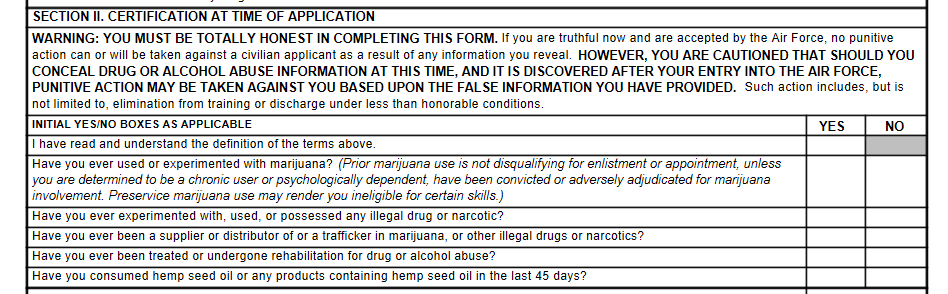


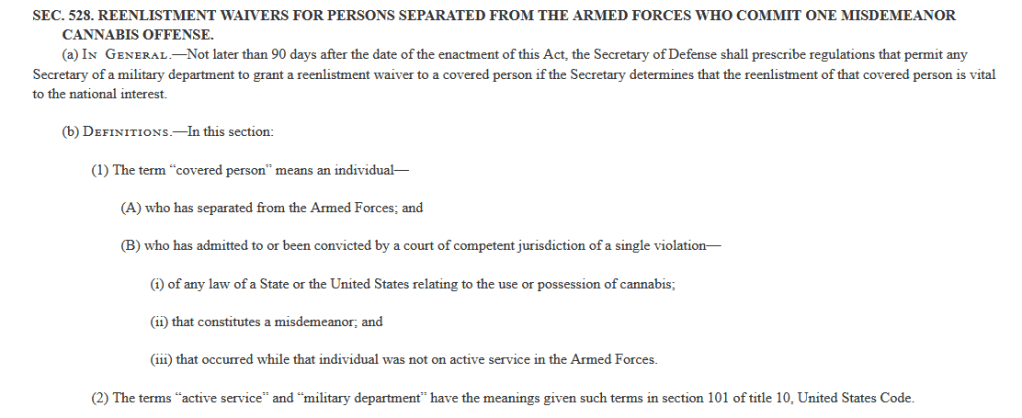

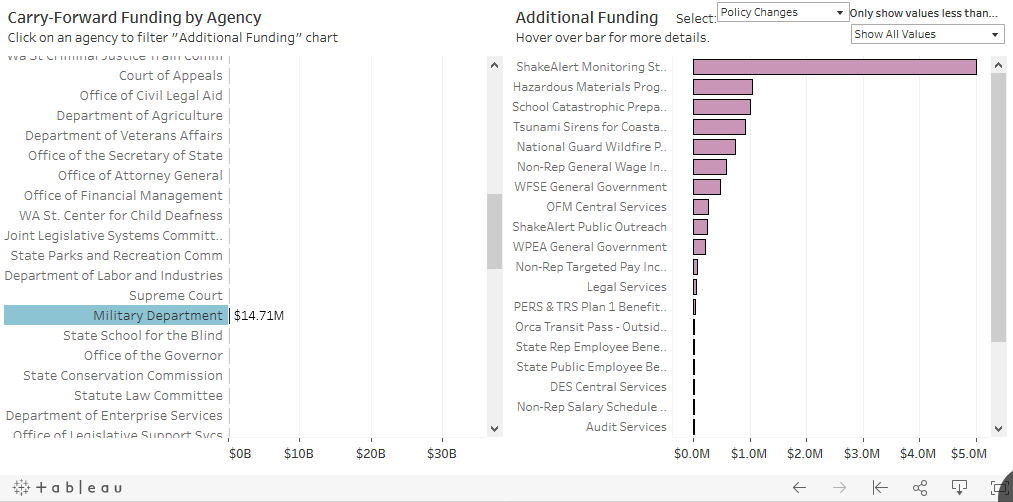


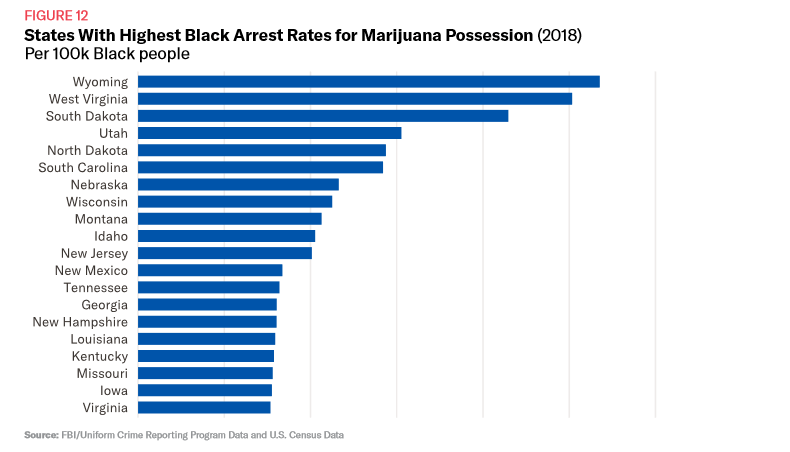














 Mitchell Research Group