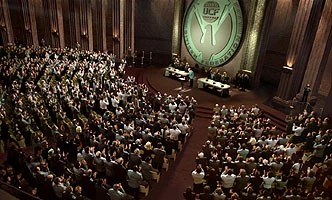
(Update 9/28/25) Since I wrote this, Javier Milei is taking a $20 billion bridge loan from Trump, which to me strengthens my argument relating to the dollarization of Argentina.
According to Newsweek, “Trump Admin’s $20 Billion ‘Bail Out’ for Argentina’s Milei Raises Eyebrows” (Published Sep 25, 2025 at 03:06 PM EDT, updatedSep 25, 2025 at 04:17 PM EDT0:12), by Mandy Taheri.
“The Trump administration says it is working to provide tens of billions of dollars to Argentina’s President Javier Milei, in a financial bailout that many critics say clashes with President Donald Trump’s “America First” platform.The U.S. State Department told Newsweek Thursday that the America First Foreign Assistance programs must align with administration policies and advance concrete U.S. national interests.Why It MattersOn Wednesday, U.S. Treasury Secretary Scott Bessent confirmed the United States is in talks to provide $20 billion to Milei. The announcement comes months after the Trump administration dismantled the U.S. Agency for International Development (USAID) in an effort to instead support programs aligned with Trump’s “America First” agenda.” https://www.newsweek.com/trump-admins-20-billion-bail-out-for-argentinas-milei-raises-eyebrows-10780604 (End of update).
Intro: See my past posts
Is Milei a stooge of the global banking syndicates simply trying to implement austerity measures as a means of handing over the Argentina economy to corporations? Is he a faux populist who is handing Argentina’s monetary policy over to the US Federal Reserve, International Bank of Settlements, etc.? Or is Milei a genius who is making a tough short-term decision in order for Argentina to finally see sustained long term growth?
Disclaimer: I am just writing. I do not think that there is necessarily a direct correlation or grand plan to bring to life the fictional world of the book or movie Starship Troopers. Rather, what is going on in Argentina with their economic woes is likely just the case of the realities of the globalized world which runs on Keynesian economics, where some countries have the power (control of the money supplies, governing institutions, military alliances, etc.), others don’t have power (often being relegated to resource depots for the Industrial North), and those who seem as if they should have more power but just seem to be laggards – but, not necessarily because of their own faults explicitly, but rather it is hard to economically plan in a world with so many uncertainties, variables, wars, environmental changes, etc.
However, what is happening in Argentina does mirror – softly – what appears in the 1997 film of Starship Troopers, even if we are speaking in mere analogous terms. Yet, approaching this post from a literal or analogy standpoint, we can still help to grow our perceptions, deconstruct history, categorize and organize data, etc., particularly pertaining to understanding fascism, racism, imperialism, etc. One thing that is certainly real in our real world, is that there are doubts about liberal democracy, there are demographic shifts where the Anglo post-colonial New World is merging with the Latin post-colonial New World, but there is also the eerie 1920’s or 1930’s rise of autocratic leaders.
When autocrats rise and international institutions collapse, history has shown that there is more dark than light. And, all we can do is pray that light wins out. One of my big ideas on this site is that books such as Starship Troopers by Robert Heinlein and the Ender’s Game Saga by Orson Scott Card eerily foreshadowed real world political events or attempts at alliances, etc.
So let’s talk about how Argentine President Javier Milei plans on “dollarizing” the Argentine economy.
According to Valentina Demalde (2/15/2024) of the Business Review at Berkley (BRB), “Dollarization as a potential economic strategy for Argentina presents several compelling advantages. Foremost, it promises currency stability and inflation control, a precious commodity in a nation with a history of hyperinflation and devaluation. This stability can instill trust among investors and the public, offering a predictable economic environment. With a stable U.S. dollar, Argentina may enjoy lower interest rates, a boon for businesses and individuals alike, making borrowing more affordable. Furthermore, adopting the U.S. dollar can attract foreign investment, with investors favoring countries with stable and widely accepted currencies. This influx of foreign capital can stimulate economic growth. Additionally, businesses engaged in international trade would benefit from reduced transaction costs, as they would no longer need to navigate currency exchange. Finally, dollarization can promote financial integration with the global economy, potentially increasing trade and investment in Argentina.“
“Dollarization in Argentina presents several potential drawbacks. Most notably, it entails relinquishing control over domestic monetary policy, a vital tool for governments to manage economic challenges— Milei sees this as an advantage due to a lack of trust in the government’s management. The prospect of dependence on the U.S. economy is concerning, as it would make Argentina vulnerable to U.S. economic fluctuations and shocks. However, Milei’s plan to increase trade with the U.S. aims to address this issue. Dollarization also carries a risk of exacerbating short-term social inequality, as those with access to U.S. dollars may initially benefit, although proponents like Milei argue that the long-term effects of a stable economy will ultimately improve the overall situation of society. The loss of seigniorage, while viewed as a pro by some, poses a significant drawback as it could limit the government’s capacity to fund public spending. Finally, the transition to a dollarized economy could trigger political unrest and opposition from stakeholders invested in maintaining the status quo.” [Source: https://businessreview.studentorg.berkeley.edu/javier-mileis-dollarization-vision-a-new-era-for-argentinas-economy/#:~:text=He%20emphasizes%20a%20gradual%20approach%20to%20dollarization%2C%20driven,align%20with%20the%20preferences%20of%20the%20Argentine%20population.]
Does Milei’s dollarization effort by proxy absorb Argentina into the sphere of American power and hegemony? Yes and no. American dollars were already in high demand in countries such as Argentina because of their purchasing power, so Milei’s idea could be argued as institutionalizing what people have already been doing out of necessity to survive. Argentines get dollars often but not always from black market currency dealers, but since it is illegal, dealers can sell at higher rates than what banks offer to exchange, yet Argentine banks limited how much currency you could covert thus creating the black market.
Yet, even if Milei’s idea will work, there could be certain ramifications – for better or worse, once Argentina accomplishes full dollarization. Despite having focused on economics in my undergraduate business education, I am no expert economist by any means. However, let’s logically think through somethings.
Argentine Pesos are less valuable that American Dollars, so American dollars are far more expensive to obtain. If you have a lot of something that is near worthless and you’re trying to get something that is far more expensive, you’re only going to be able afford a smaller amount of that more expensive product. So, dollarization seems deflationary in nature. It is essentially the argument of gold standard advocates to go back to the gold standard, but rather instead of using gold, which is truly deflationary. There’s not enough fungible gold in the world to prop up the sheer size of the global economy as well as fund future innovation which is often funded by running government deficits as a form stimulus. Milei is treating the US Dollar as something akin to gold. The USD is relatively stable, people trust America’s banking system (even when it collapses on itself such as post 2008 crash), the US has the most sway over the SWIFT banking system, it has a strong military with fast striking capability that not only has strong air/space superiority but also protects the high seas where global trade happens via shipping, etc. The United States has also affected the world as far as fashion, music, language, art, etc., where everyone on Earth is a little bit “American”. For example, the relatively racial (not ethnic) homogenous Chinese and Russian populations do not have the cultural vigor and gravitas that the USA does (i.e., dynamism as Zbigniew Brzezinski, author of the Grand Chessboard (1997), may have said), since American culture is largely a melting pot glued together with an Anglo English (lingua franca) logos largely defined by pragmatism. India with Bollywood has more sway than any art coming from China or Russia into the West.
Yet, by deflating the money supply, there will be less money as far as volume goes, even though whatever volume arises it will have more value. To have more of something that is worthless, or to have less of something that is worth more?
The goal it seems to have less of something that is worth more because once you get it, you have something people are willing to transact with, thus this move could help promote future growth and investment. It is as if he is whacking down a forest with blight, just to invest in more expensive seed and hope a healthier forest grows back sooner than later.
But dollars just won’t just fall into the lap of the Argentines.
They will have to purchase them or earn them. Or, be gifted them. By earning them, they can sell their products (exports) and demand payment in only US dollars and then not reconvert those dollars they earn to Argentine Pesos or hold those US dollars in bank vaults but peg the circulating pesos to the number of US dollars held in reserve. Or they can take out loans at US dictated interests’ rates and then use those dollars backed loans to stimulate economies, hopefully make money, and use parts of their profit to pay off interests or principal payments; yet, if they do this, it could create a cyclical effect for the better, because if they are able to use those dollar based loans to stimulate economies enough to attached foreign investments, they can dictate those investment also be done in dollars, thus increasing the overall volume of US dollars in circulation, thus increase overall value of the overall economy as a whole. Yet, the issue with borrowing US dollars (taking out loans in US dollars) is that interest rates are not historically low anymore and institutions can add on top of the base federal funds rate, e.g., the Fed sets a base rate, but a bank may add onto that base rate to develop their Annual Percentage Rate/Annual Percentage Yield’s on consumer credit.
The United States since it has so much sway over the IMF (International Monetary Fund) which has a debt plan already with Argentina, it may be beneficial to “give” Argentina dollars since the US can print money.
In the wake of the expiration of the Petrodollar agreement between the USA and Saudi Arabia, the world is relatively calm. I noticed watching certain stock news outlets and programs on TV, that no one talked about it. The only people talking about it were doomsday cryptocurrency advocates, who of course want fear just like gold speculators to bolster their price of their own assets. But, with the petrodollar scheme having expired (assuming the Saud’s won’t want to re-enter a newly negotiated agreement), the US dollar will need other means of propping up its currency in a multi-polar world where once emerging economies are rising powers such as Brazil, India, Nigeria, (outside of China) etc.
The USD is fine. If the Euro is fine, the USD is more than fine considering the global influence the US has, including already established relationships with oil producing countries who can fill the void (diversify the role) where the Saud’s left off. If anything, this move by the Sauds may move them closer to China and thus Russia, but that thus pulls them away from the Western influence they may have had, and pushes the USA closer to friendly and more conducive oil partnership nations with Norway, Canada, Mexico, Nigeria, etc.
The USA is also a net exporter of oil as well itself, and is transitioning to alternative energy sources such as lithium based EVs (which Argentina has lots of as far as lithium), nuclear power, etc. Also, in a dreamworld, the USA would have an improved relationship with Venezuela and get them to play a larger role in a new type of petrodollar role, such as them doing oil transactions in US dollars and investing excess oil into US treasuries in exchange for foreign direct investment, lifting sanctions, and debt cancellation from the USA and other international creditors. It makes no sense that Donald Trump can talk to North Korea and the conservatives don’t lambast him, but the moment someone tries to talk to Cuba, Venezuela, etc., all of a sudden you become unpatriotic.
Milei’s idea may work. Tough times will a happen as the money supply deflates (evaporates) thus hurting the working classes who need…money, even if it’s the less valuable peso. Yet, if Argentina can dollarize, the nation will de facto act like any other US territory. Argentina would likely have to enter into a free trade agreement to make it all worthwhile and better sync its economy from top-to-bottom with the United States which would include correlating its business/trading day to that of the USA; expanding sister city agreements with US cities and establishing exchange programs for students; expanding student visa agreements and entering into comprehensive research agreements with college institutions; voting in favor of the USA on international governing bodies such as the UN; entering in mutual security and law enforcement pacts; implementing more stringent US food and safety standards on consumer goods and foods, and possibly even permitting the US to house troops in Argentina to conduct joint-exercises (which could be a way of bridging any historical tensions between Argentina and the British), etc. We already have Messi in Miami… This sounds cheesy but a big part of diplomacy is sports, culture, etc.
If so, in a weird way, this sort of goes back to my “Starship Troopers” theory I have written about earlier, which is essentially how Starship Troopers is happening notably the Hispanicization of the USA, Argentina’s role in the 1997 film of Starship Troopers (and its real-world history of fascism), the militarization of feminism to support the Military Complex. Also, my Starship Trooper’s thesis involves rising tensions with China, exacerbated by the Trump Administration’s Steve Bannon of the Council on National Policy and this administration’s odd connections to The Epoch Times, Falun Gong, Guo Wengui. Note: Erik Prince, worked for Hong Kong based security company, Frontier Services Group, led by Johnson Ko, where both Ko was a board member of Cambridge Analytica’s successor company, Emerdata, where Cambridge Analytica was used by Steve Bannon with funding from the Mercer Family – owners of Breitbart Media – to help Trump in 2016. Second Note: Tiawan was founded by the Right-Wing nationalist leader Chiang Kai Shek, and Taiwan was later headquarters to the World Anti-Communist League, which was an organization known for admitted ex Nazi war criminals.
Also, there is the Republican Party’s courting of Russia which is an autocratic society (this is similar to the Russian Anglo-American alliance in the Starship Troopers universe). We cannot also forget the rise of Right Wing Kookery as best seen in the social network surrounding pop figures such as Joe Rogan who has invited speakers that span John Birch-like paranoid Right Wingers such as Alex Jones, Theosophists, UFO believers, shamans, Jungian advocates such as JB Peterson….a lot of things which can lead to Neo Nazis.
The books of scholar Nicholas Goodrick-Clarke studied the occultic roots of Nazi in books such as The Occultic Roots of Nazism (1985) and Black Sun: Aryan Cults, Esoteric Nazism and the Politics of Identity (2022), the role of oddball Darwinist billionaires such as Elon Musk, etc. [https://en.wikipedia.org/wiki/Black_Sun_(Goodrick-Clarke_book). https://en.wikipedia.org/wiki/The_Occult_Roots_of_Nazism].
Robert Heinlein had a syncretic political worldview. It seems contradictory if you get hippies but then also some radical pre-Alex Jones John Bircher’s liking your works. Inspired by both left wing and right-wing thought, his views could be considered 3rd Position or 3rd Way. He was influenced by Upton Sinclair’s socialism, the early basic universal income ideas (social credit) of C.H. Douglas, but the later adopted a more conservative, hawkish worldview. Heinlein was a libertarian in older age but sympathetic to socialism in his youth and he seems to have blended both, which is best viewed in the film adaptation of Starship Troopers in 1997 in my personal opinion. Heinlein to me represents the transition of Socialism’s acceptance in pre-WWII America, which in itself was a response to the Great Depression and embrace of earlier Progressive Era sentiments, to the post-WWII indictment of anything socialism, notably communism. This post-WWII shift of the late forties to early mid-fifties was a time where some very patriotic Americans who were socialist, shifted towards anti-socialist thoughts as hostilities arose with the USSR.
Heinlein’s emphasized personal responsibility and individual rights/liberty, yet did believe in the state, yet seems to have believed more in a populist as opposed to totalitarian type of state.
But Heinlein did support military and certain levels of government force when it comes to national defense and also “protecting us from ourselves” notably in regard to nuclear weapons. It seems confusing, but the best way to try to figure out “Heinlein-ism” as I might call it, is to play with terms such as calling it “right leaning, yet inclusive, global autocracy with an emphasis on the voluntaryist state that blends elements of both libertarianism and socialism, where the right of the franchise (voting) is granted to those willing to die to protect the body politic”. By Right leaning, I mean a devotion to the military and meritocracy, yet inclusive in that the meritocracy transcends notions such as race or nationality. [Note: There is a theory that neoconservatism was created by ex-Trotskyites, which has some basis in reality, but this theory seems more created by antisemitic paleoconservatives best typified by figures such as Pat Buchanan. See article by Bill King, 2004: https://enterstageright.com/archive/articles/0304/0304neocontrotp1.htm)
In 1959, Robert Heinlein published the science fiction novel, Starship Troopers. The book details a world after World War III where war veterans take over the governments of the world and establish a world federation based on meritocracy where in order to vote (the franchise) one must serve in the military. Per the novel form memory, the Anglo-American and Russian Alliance (which oddly reminded me of Trump’s aspirations with Vladimir Putin in previous writings) went to war with China, yet the Western powers essentially lost and settled with the Chinese at the Treaty of New Delhi. Yet, veterans were sprawled across the planet, and many having made it back to their homeland (with feelings of betrayal), found that modern society was decaying. A few veteran groups in order to combat violent crime and lawlessness started taking justice into their own hands (eerily harkening back to the post-WWI German veteran groups of Bavaria, the Weimar Republic, etc., which later evolved into the Nazis and their Brownshirts). Having established a quasi-governmental faction in their own right, this veteran collective eventually overthrew the scientists who were running western democracies. [Note: Blanquism is a form of putschism and it is interesting to note that the Nazis tried their own putsch with the Beer Hall Putsch in 1923]. Yet, these scientists attempted a Blanquist coup against the veterans in the Revolt of Scientists yet were beat. [ After that, the world slowly became a world federalist government ran by veterans, where in order to vote one must service the state with military service. Those who serve are called Citizens and those who do not are called Civilians. Citizens can vote, hold public office, etc. The new government that is established is the Terran Federation where differences of nation, race, gender, etc., don’t seem to matter but rather if a person serves in the military or does not, does matter. After this human world government is established, humans find themselves in conflict with an alien species, i.e., Arachnids from a planet called Klendathu.
In the 1997 film adaption by auteur director Paul Verhoven, is a satire of Heinlein’s presumably serious political treatise laid out in the 1959 book. Paul Verhoven and Ed Neumeier, who both worked together on the classic sci-fi film of Robocop (a scathing indictment of unfettered capitalism during Reagan’s nineteen-eighties), directed and wrote the 1997 film adaptation. The film has the main character Johnny Rico’s backstory (Juan “Johnny” Rico in the book) being based in …. Buenos Aires, Argentina. The film version expands upon the rights of Citizens such as the ability to go to college (at least for free), have children (possibly beyond a dictated limit), etc. Verhoven et al, cast good looking American 1990s TV drama actors of the Beverly Hills 90210, Melrose Place, MTV era. These fitness-like models were cast as a means of Verhoven paying nods (satirically) to the 1935 Nazi propaganda piece Triumph of the Will by Leni Riefenstahl. My opinion of 1997 film by Verhoven, for which I have been a fan of since I was a child in the fifth grade, is that Verhoven chose these very “whitewashed’ characters as a satire on the spreading of American capitalism, beauty standards, etc., i.e., a nod the colonizing and homogenizing effects of corporate culture, etc. It seems to be the case that the former United States had the most power within the Terran Federation’s establishment, so it’s already strong real-world culture laid the basis of this fictional government. Hence, American Vernacular English, its pop culture, etc., as is the case in our real world would have colonized the rest of the world.
Argentina is also important because it represents an extension of “whiteness” with the context of New World, post-colonial intersectionality. In our real world, the United States for example has a large swatch of the political base driven by fear of “white replacement” by way of immigration, challenges to traditional white male power, etc. This can be heard on cable news by figures such as Tucker Carlson, who dog-whistle to news watchers to inspire a sense of white fear, grievances, etc. Since globalism and cosmopolitanism are a part of our world and not going away, the definition of whiteness is moving the goalpost of what actually is white as a means of retaining statistical and numerical majorities. Hence, the United States as it undergoes the process of “Hispanicization” is shifting the definition of whiteness from the traditional definition of European, notably Northern and Central European (e.g., Anglo-Saxon stock), to include white Hispanics, where Latin America has its own complicated history with racial categorization (where one could say it is more fluid, yet also ironically rigid in certain ways since there is an aggrandizement of Eurocentric values as opposed to Indigenous, Afrocentric, multi-racial sentiments, etc.).
Yet, the film doesn’t address race and racism is not a part of the utopian world of Starship Troopers, nor is gender inequality. The world is a pure meritocracy.
But to expand on the Nazi influences that drove Verhoven’s satirical work, Argentina plays an important role because historically, Argentina as well as other South American nations harbored Nazi War criminals who were able to blend into the existing German and Italian immigrant populations. These Nazis used “rat lines” to enter Argentina, Chile, Brazil, Bolivia, etc., sometimes with the help of sympathetic Catholic priests assisting. For example, Klaus Barbie was active in Bolivia providing military training assistance to dictators involved in the early cocaine trade, which later assisted the powerful Medellin Cartel of Pablo Escobar via Roberto Suárez Gómez. Barbie was so emboldened that he had his own terror death squad in the country called the Fiances of Death and assisted in coup called the Cocaine Coup in Bolivia. Josef Mengle, the Angel of Death, was in South America. Otto Skorzeny (who later did assassinations for Israel’s Mossad as a means of not being hunted down and killed by them) even provided security detail to Argentina’s Juan Peron, husband of the famous Evita Peron. The infamous cult, Colonia Dignidad, created by Nazi and pedophile Paul Schäfer, was in Chile, and it is important to insert that Chile did have a pro-Nazi element with figures such as Esoteric Hitlerist Miguel Serrano. This cult has ties to the Pinochet Regime, which was a regime supported by the United States, corporations (such as the ITT Corporation, founded by Sosthenes Behn, which was later bombed by the radical Leftist Group, the Weather Underground for their participation in the overthrow of Salvador Allende), Richard Nixon all the way to Ronald Reagan, Henry Kissinger, Margaret Thatcher, and the CIA, as a means of hindering Left Wing movements on the continent during the Cold War.
 Mitchell Research Group