Washington has lost a third of its team, but I think there’s oddly…hope…? This me rambling, free flow thinking, note taking, etc.
One team I have followed is the Washington Huskies since I went to middle school, college, and then later settled down here as an adult in Washington State despite all my moves, my own military service, etc. I have seen them play Oregon when Oregon had Johnathan Stewart and Dennis Dixon, Arizona when they had Rob Gronkowski (Husky fans call this game the Immaculate Interception since UW won on an interception that deflected off another player’s foot), and then later Auburn when they played UW in Atlanta at Mercedes Benz Stadium. I would say that I have followed their recruiting (with some lags in recent years) probably since I was a sophomore in college around 2007 when I was attending a small college in Washington State. This was the era of Jake Locker and Keith Price under center.
The University of Washington Husky Football program (The Purple and Gold) is in a precarious position despite having a rich history.
Washington is a sort of one the public “Ivy” schools as far as academics, and UW and Michigan are just two of many teams that harken back nostalgia to the “gee golly jeepers” days of early twentieth century football notably from the Roaring 1920s to the end of World War II (i.e., when Army or Notre Dame mattered, Harvard vs. Yale mattered, or when postcards depicting trolly lines on the way to the Pasadena Rose Bowl in a still rural Los Angeles metro-area mattered, etc.). They could be considered a part of the Norman Rockwell nostalgic teams of college football.
However, (1) coach Kalen DeBoer is leaving for Alabama, which seems a little odd because he seemed so reserved as a coach with Washington as compared to the old-school, chew you out, Bear Bryant-esque style of Nick Saban within the deep-rooted football culture of the SEC. (2) Today, for the Huskies, one third of the team is gone. (3) Their AD Jen Cohen, who was on the CFP Selection Committee, left of USC and was replaced by Tulane’s AD Troy Dannen. (4) They’re going to a new conference, thus with the help of USC, UCLA, and Oregon are helping to severe decades of regional tradition, which to me reminds of what happened with the University of Nebraska Cornhuskers when they too joined the Big Ten after leaving the Big Twelve and were never the same since then. (6) Recruits and transfer prospects are changing their minds, etc.
2. Bad Mojo in the 2024 CFB National Championship, Purple Reign and the Theory of Aesthetics
This is going to be a weird section.
It is sort like me pretending to be on a marketing team or something. Thinking outside the box about what are the “aesthetics” of UW.?
The superstitious and cynical/realist/realpolitik part of me, with the latter encompassing a very business, marketing, aesthetics, Las Vegas gambling spreads, TV rights, etc. – viewpoint, knew that UW was likely going to…lose.
What I call the “mojo” (throwback to Friday Night Lights and having been born and partially raised in the Southern U.S.A) was…off.
The Cinderella Stories were more so favoring Michigan with Jim Harbaugh needing to win as to not feel like a total failure in his coaching career (with him currently being partially embattled in alleged recruiting violations and a call-stealing scheme), and if his brother John Harbaugh can win the Super Bowl with AFC win-leader the Baltimore Ravens, this would be the first time in history that brothers have won the NCAA and NFL Championships in the same season.
JJ McCarthy, who seems like a good kid, is – from my “realist viewpoint” – being prepped to be some sort of Tom Brady like Irish American golden boy QB, because to be honest, and to be respectful, most Americans have Irish ancestry and Irish-ness has permeated the popular culture lexicon with the stereotype of being jovial and fun but tough, pious, hardworking, and honorable. It wouldn’t be out of the ordinary if the Patriots with their dismal QB situation brings on players such as JJ McCarthy from Michigan and to pay a nod to nostalgia for receivers Wes Walker, Danny Amendola, etc. such as potentially drafting Ladd McConkey from Georgia, etc. The McConkey selection may not happen, but it’s not too far off considering Ladd was injured at UGA, so other teams may overlook him and in perfect Patriot fashion where they seem to be good at getting “bargain buys”, a Ladd pick up may not be out of the ordinary.
All I am saying is that the NFL is in part a story, a movie, etc., and it seems teams such as the Patriots notably try to input players that resonate within their community for nostalgia purposes such as the city being define by Irish Americans, Jewish Americans (traditionally from around the Brookline area. Players like Julian Edelman. Boston has a deep-rooted Jewish community, e.g., Benjamin Netanyahu worked at Boston Consulting Group and attended MIT and owner). Italian Americans (the Patriots tried with Jimmy Garoppolo), African Americans (typically in RB, OL, and Defense positions, but the organization did try with Cam Newton and Jacoby Brissett at QB), and Anglo-Americans. You can even throw in a few the fact that Boston and Massachusetts/Rhode Island, etc., have a strong Portuguese, Cape Verdean, and Caribbean population.
Aesthetics and marketing matters to a degree. In the NFL we can stereotype the Seattle Seahawks, especially when they had Russell Wilson as being marketed as a type of backyard football, video game, Bill Gates and Paul Alen Microsoft tech money, grunge, neon signs, smoothe jazz, rainy, drizzling, coffee drinking but with a low-key wealthy and cultured vibe, with a few hard drinking Scandinavian fish eating sailors or every-day Raymond Carver blue collar workers. Thow in a little black soul or hip-hop culture spanning from all the way South to Lakewood, WA all the way to the Hill Top (crypt gang territory back in the 80s-90s) neighborhood in Tacoma and all the way up to the Rainer Valley and Central District up in Seattle, which permeates through all communities but notably the black, Asian, and the pacific Islander community.
Of course we have to remember the Native Americans where the Puget Sound area has many reservations and successful native American tribes.
For example, back to my JJ McCarthy “aesthetics theory” in relation to the Cinderella stories leading up to the UW vs Michigan game, I think back to the early 2000s when the Boston, as the stereotypical hub of everything Irish American, and by proxy…white American, you had the Boston Patriots, Celtics, Bruins, and Red Sox dominating but in the pop culture sphere you had Boondock Saints, The Departed, Mystic River, and even HBO’s Entourage produced by Boston native Mark Wahlberg. Boston pop culture and Boston sports helped produced the primordial ooze that gave us American Pie throwback frat-boy gamblers like David Portnoy of Barstool Sports.
Also, Blake Corum at RB was featured in pre–National Championship coverage detailing his backstory, etc.
As far as the Cinderella pre-game stories lines – which do a play a role in shifting public sentiment- I didn’t notice the same thing with the Huskies. It is almost as if the entire media was slightly hiding us from who Michael Penix really was as a loveable down-to-Earth player, despite the media obviously showcasing his insane throwing stats. But, being in the Puget Sound region, it did not seem as if the rest of the country really cared. Michigan, Harbaugh, McCarthy, fight songs like Victors, and the Big 10 just mattered more.
Winning is not only about game play but business, marketing, TV rights, etc., because that all equates to money and money separates good programs from elite programs. I can’t even imagine the levels of alumni engagement that schools such as Michigan and Ohio State have.
Washington is an elite academic institution but because of its location nestled in the far corner of the lower-48 states, as compared to the generally deep history of the Midwest and East Coast, its fanbase and alumni are known but not really on the insides of “institutional power”. How many alumni from the Big 10 as high paid government officials, sit on corporate boards, are high ranking military officials, etc.?
Sure, football is just a game but it’s also a billion-dollar industry.
University of Washington had a great PR campaign that still is in existence called Purple Reign, i.e., a spin on the school colors, the fact it rains so much, and the goal of UW wanting to be a major player in national CFB. It is a cool campaign that seems to touch on the coolness of Jimi Hendrix, the suave of the Artist Name as Prince, etc.
The Seattle area has had two major spikes in popularity in recent times.
The first was the mid-1980s through 1990s dominance of Microsoft based in Kirkland, Washington in the upper middle class suburbs northeast and true east of Lake Washington. This era coincided with the grunge movement of Nirvana, Alice in Chains, etc.
Secondly, there was the early twenty-teens era that was refined by Paul Allen’s influence where he bought the Seattle Seahawks in 1997 and during his tenure as owner, the Seahawks made the Super Bowl three times following NFC Championship victories (2005, 2013, 2014), and won Super Bowl XLVIII in February 2014. Seattle by the late 90s had already established itself as a tech hipster hub but by the 2000s this was solidified. Music wise, Northwest indie was the rave with the Postal Service from Bremerton, WA, and Modest mouse for Issaquah. There were also Seattle hip hop groups such as Blue Scholars.
Yet, in the 2020s, Seattle is different. High prices have removed the traditional working-class neighborhoods. Drug abuse in the homeless population is rampant, especially in the wake of anti-cop brutality protests. Inflation is high. Culturally, there’s no big…spark making Seattle stand out on the music, fashion, or arts scene. Seattle is either transplants renting or hanger-ons who were lucky to inherit a house who walk with a level of coolness in that they can stake claim in the older days of the city. Also, lots of real estate was bought up by Chinese or foreign investors causing a housing crisis. In other words, Seattle is in a flux transition, but often from these tough times comes creativity, but I am still waiting to see what that is or looks like. But this is happening all over the country as cities are more and more expensive, younger people aren’t starting families because of student loan debt/housing shortages, stocks are super expensive, and the cost of living in high as businesses offload increases onto consumers.
3.The web of corporate media, money, broadcasting, etc.
Washington going to the Big Ten is more about money it seems, even though UW is a good academic school, arguably better than schools such as the University of Nebraska.
According to the Associated Press (2022) which was posted by CNBC, the Big Ten’s new $7 billion media rights deal will string the conference’s top football games across three major networks each week, creating an NFL-style television schedule on Saturdays. The Big Ten announced Thursday it has reached seven-year agreements with Fox, CBS and NBC to share the rights to the conference’s football and basketball games (Associated Press, 2022).
The deals go into effect in 2023, expire in 2030 and eventually will allow the conference’s soon-to-be 16 member universities to share more than $1 billion per year, a person familiar with the terms told The Associated Press (Associated Press, 2022).
UW going to the Big 10 means they will get a chuck of this pot of money and get a larger audience that spans both coast and hits major media markets such as New York, Chicago, and LA.
UW is also benefiting from its Adidas deal, even though culturally speaking Nike still retains dominance but we still associated Nike with basketball, etc.
Yet, UW making it to the national championship means they were the first Adidas sponsored team to making it to the National Championship. This means Adidas is very happy.
Disney owns 21st Century Fox (not be confused with Fox Corporation), but also via Disney’s Entertainment division, they own ABC. ABC in the past procured ESPN, thus Disney is also the parent of this. Further, HULU was initially shared between 21st Century Fox, Disney (ABC ESPN), and Comcast NBC Universal (Peacock), but Disney now owns all majority shares via their 21st Century Fox acquisition and NBCUniversal selling their shares. Yet, Fox Corporation (no longer owns 21st Century Fox) with the Big Ten jointly own Big 10 Network, but Big10 Network can be accessed via Hulu…owned by Disney. In other words, all roads in a way lead back to…Disney.
The Big 10 is essentially rubbing off on all major networks with the Disney (ABC/ESPN, 21st Century Fox. Hulu, Disney+) …. Fox Corporation (Fox Sports and the Big10 Network – where the Big 10 can still be access via Disney’s Hulu. Fox also ownsTubi Streaming…. NBCUniversal Comcast which includes Peacock, and Paramount Global, i.e., CBS Viacom (who own Paramount and CBS but has an agreement with Warner Brother’s Discovery which owns MAX, i.e., formerly HBO Max which as an apps holds rights to TNT, TBS, etc. Paramount Global also owns PlutoTV and FuboTV – with FuboTV’s share ownership still be undisclosed). Big 10 Network can likely be accessed via satellite companies such as ATT – DirectTV and Dish Network (owns Sling TV) as well.
Side Note: Fox is confusing. Old New Corporation was divided into “new” New Corp (more for publishing such as the New York Post, Wall Street Journal) and 21st Century Fox (more for entertainment and film – though not of the same name, 21st Century Fox was the de jure legal successor to old New Corp, i.e., its spiritual successor more focused on TV, film, etc.). Yet, when Disney bought 21st Century Fox (media like The Simpsons), the remaining assets were organized and listed as simple Fox Corporation. So, Fox “holdings” today is New Corp and Fox Corporation, stock symbols Nasdaq: FOXANasdaq: FOX (where Fox Corporation owns Fox Broadcasting i.e., TV shows, Fox Sports that includes Big 10 Network partially, Fox News, Tubi, etc.).
** Disclaimer: This is not investing advice and I hold no financial title or fiduciary responsibility.
5. Where are We? Wait, what just happened?
After going undefeated in the 2023 season and playing (but losing) in the 2024 College Football Playoff Championship, it feels like the Huskies left a lot on the field. The game was generally off all the way around. From weird punts giving Michigan decent field position, to Penix overthrowing on plays he’s made to beasts like Rome Odunze on a regular basis, to Penix overlooking receivers, to missed opportunities such as a painful drop by Will Nixon, to the offensive line with RT Rosengarten getting bullied, to UW penalties that were caught, and Michigan penalties that were not caught.
The game overall wasn’t the high flying, potential overtime thriller that many expected.
I knew going in that this was a battle of two different philosophies. UW with their Air Raid offense that lacks defense but can score quick if the QB is given time has no pressure versus UM with their more balanced run, grind, and hope to bust a long run philosophy mixed with aggressive defensive play, where McCarthy at QB was more of a dual threat game manager focused on minimizing personal mistakes, going down his reads, and if need be using his legs. UM also highlighted they had more depth such as Michigan substituting their QB and RB. If UW didn’t make those mistake, I think that UW’s kicking game would have been more of an X-Factor considering they have one of the best kickers, if not the best kicker in college football, with
They left a lot to be desired. I am an interesting college football fan because I was raised a miliary brat, so I grew up in many areas where I would follow the local college teams, but I also had my family teams or just teams that fascinated me because of their rich history despite, maybe, having fallen from grace in recent times.
6. Crisis Mode – Crunching Numbers and a future crash on offensive production.
Washington’s top three wide receivers have declared for the NFL with Rome Odunze, Ja’Lynn Polk, and Jalen McMillian combined in total for 3,358 yards. If we add Senior Jack Westover who accounted for 433 yards, our new total is 3,791 yards.
The top three WRs accounted for 27 touchdowns and if we add Jack Westover (TE) the new total is 31 TDs.
Think about this, Michael Penix threw for 4,903 yards so his top three receivers who are now going to the NFL accounted for 68.48% of his total yards, and if we focus on his top four receivers that number increases to 77.32%.
Michael Penix threw 36 TDs total. His top three receivers thus accounted for 75% of those TDs but his top four receivers in total accounted for 86% of those TDs.
So, Washington is losing their 4K+ yard passing “super senior” QB in Michael Penix, so thus losing anywhere between 77%-68% of what made up their passing production and losing 86%-75% of what made up their passing TD production. In other words, UW (U-dub) is a heavy passing offense who loses most of what made up their offense production. I didn’t count TDs considered to be rushing TDs by Receivers in these stats, so even more of UWs offense production is going away Polk, McMillian, Odunze, and even Westover accounting in total for another 4 total TDs.
Ironically, this over emphasis on pass production concentrated among seniors or NFL eligible receivers has left the Huskies with a Wide Receiver crisis, where younger receivers aren’t as proven or battle ready.
Further, on the running side of the ball, Dillon Johnson (Junior RB), their leading rusher with 1,195 yards on 233 carries and a whopping 16 TDs. Out of the top three RBs which includes Will Nixon (33 carries for 201 yards and 1 TDs) and Tybo Rogers (44 carries on 184 yards with 0 TDs). The top three in total accounted for 1,580 yards in which 1,195 was attributed to Dillion Johnson, so with Johnson declaring for the NFL, that’s 75.63 or roughly 76% of rushing production now gone. Dillion Johnson out of the top three accounted for 75.2% of the rushing production on carries. In summary Dillion Johnson leaving the Huskies is taking away around 75-76% of running offense production.
This means that UW this season was operating in a “make it or break it” “the stars must align” season, where they put so much offensive production on seniors or NFL eligible players, that if UW didn’t win it all, which they didn’t, then they would have a massive drop in offense going into next seasons. We must remember that players like Penix, Polk, Dillon (three years at Mississippi State), etc., are transfers into the program, so some of their development was developed in part outside of the Husky system. Will Nixon in 2023 had 201 carries, being number two in that category. Dillon who as freshman back at Mississippi State had rushed 51 times for 225 yards, yet Nixon as a sophomore only touched the ball 33 times for 201 yards, yet, this means Nixon is capable of averaging 6.1 yards, which interestingly was average 1 yard more than Dillon. In other words, UW fed the ball so much to Dillon who is now leaving, when Nixon in theory should have seen more action. It’s all hearsay and in the rear-view window now, but if UW had employed a more balanced approach in its RB core rather than over-relying on Dillon, the Huskies would have had more opportunities to assess Nixon’s ability to carry the team and work out bad habits going forwards.
6b. Crisis Mode – There is no loyalty in business. New Coach.
Depth is what in part separates good from elite teams. A potential rocket-rise and a potential rocket fall.
But I don’t think Husky fans saw it this way because they were so excited to be winning the way they were that why would you question?
Based on DeBoer habit of resume-building, typically serving no more than two years in any position, it seems that DeBoer and OC Ryan Grubb were sort of worrying more about their future job potential than the longevity of the Husky program overall.
However, this would not be the case if Washington naturally promotes Grubb to Head Coach so he can keep the culture that he and DeBoer built together. Yet, there is the issue of can Grubb as a personality attract the attention to garner a reputation as an “elite coach” or legendary coach.
However…Grubb may be joining DeBoer at Alabama.
DeBoer used the Huskies as a launch pad towards a more prestigious coaching job, and the OC was likely hoping to either replace DeBoer or get an opportunity somewhere else as a Head Coach of OC at a more elite team. It’s just the nature of the business of the game. It’s not about loyalty per se but climbing to the top and this is an important lesson that we can all take to heart in our careers. This is how people earn more than others, i.e., they take the higher paid positions when they open and see no long-term loyalty since organizations see no long-term loyalty to you.
As of breaking news on Sunday 1/14/2024, UW has hired Arizona’s coach Jeff Fisch
I am not sure how I feel about it.
My idea was to hire a well-connected coach with personality. Pete Carroll, he considers Seattle home now, still embedded with the Seahawks. His NFL ties would attract prospects. His son is OC, Brennan Carroll under Arizona HC Jeff Fisch. Pete could have been a sort of publicity filler role (who is also a great coach) to help fundraise, be a local media darling, inspire kids, and be a good connection for NIL players who want a direct plug for NFL scouts. Pete could also continue close ties between the Seahawks and Huskies organizations.
It’s a stretch but by doing this Pete would have been the first person to coach a Seattle NFL team and college team. Since he has one Super Bowl, in theory could compete for a National Championship which never has been done in my opinion as far as a head coach. Sure, this is unlikely considering the Husky’s current roster woes.
Pete Carroll is a part of the Seattle community and I think he wants to coach still. Even though is over 70 years of age, he could be a sort of nice filler coach to attract talent and raise up the new crop of assistant coaches who can then compete for the head coach. He was links to help players get scouted by the NFL. Seattle also has a habit of recruiting Huskies.
To me the two best scenarios would have been1) Have Pete Carroll be the filler role for no more than two years, use this for an aggressive marketing campaign, and bring over Brennan Carroll to be OC, thus prepping Brennan to take over as HC after Pete retires. This would give Pete the rare stat of having coached the Seahawks and Huskies. But mainly leave the Huskies coaching staff intact, or (2) Outright hire Brennan Carroll for HC instead of Jeff Fisch.
Brennan Carroll enters his third season with Arizona in 2023 after being hired as the Wildcats offensive coordinator and offensive line coach by head coach Jedd Fisch on January 1, 2021. Carroll joined the Wildcats from the Seattle Seahawks where he spent the previous six seasons as running game coordinator and offensive line coach following a decade in the college ranks at USC and Miami.
In his second season with Arizona in 2022, the Wildcats averaged 461.9 yards of total offense per game to finish 22nd nationally. Arizona passed for 318.4 yards per game, representing the 8th ranked passing attack nationally. The Wildcats development and growth on offense was historical as quarterback Jayden de Laura threw for 3,685 yards and 25 touchdowns in 2022, which ranked sixth and third respectively in program history for a season.
6c – Crisis Mode – Big losses on Defense, the Linemen corps, and Tight Ends corps.
Defensively, UW is losing LB/Edge Bralen Trice who led the team with 7 sacks, 1 Forced Fumble, and 1 Fumble Recovery to the NFL. Also, going away are Zion Tupuola-Fetui is a senior and likely going to the NFL with him as the number two leader in sacks with 3.5 sacks. Faatui Tuitele (FL) is retiring from football.
Further, leading CB Jabbar Muhammad (who spent three seasons at Oklahoma State) with 14 Pass Deflections and 3 Interceptions is going to the NFL.
Also, Junior Safety Mishael Powell, a local kid from O’Dea High School who turned down scholarships to Ivy League schools to be a walk-on red-shirt freshman a few seasons ago is transferring and he had 3 interceptions.
Cornerback Jaivion Green at 6-foot-2, 207-pound is leaving too.
Super Senior, Cornerback Dominque Hampton with 101 Total Tackles and 2 Interceptions is going to the NFL since he’s maxed out his eligibility.
Super Senior, Edefuan Ulofoshio whose name means “Unafraid of War” with 94 Total Tackes, 1 Interception, 2 Sacks, 1 Fumble Recovery, 3 Pass Deflections, and 1 Defense TD has maxed out his eligibility.
On the Offensive line, LT Troy Fautanu and RT Roger Rosengarten are going to the NFL.
6d – Crisis Mod – Bye Bye Walk ons and Starting TEs
Walk-ons Griffin Waiss and Austin Harnetiaux, a tight end and a linebacker are leaving (Dan Raley, Sports Illustrated, 2024).
Senior TEs Devin Culp and Jack Westover, the first from Spokane, WA and the other from Bellevue, WA are done, unless they can get one more year of eligibility in some sort of graduate status.
6e – Crisis Mode – Loss of a Starter, loss of two QB Transfers, loss of a QB Back up, etc.
As far as transfers, QB Will Rogers from Mississippi State University committed but is likely to re-enter the transfer portal. This is a big deal because with Penix now gone, the back up to Penix, Dylan Morris had announced that he was transferring to James Madison in the FCS (D1-AA). Also, according to Dan Raley (2024) the Huskies are also losing one-time San Diego State transfer and sophomore Will Haskell (back in the portal).
About Will Rogers, Raymond Lucas, Jr., of 247Sports (2024) stated “He threw for 8,713 yards and 71 touchdowns in Leach’s final two seasons at the helm. His numbers regressed under now-fired coach Zach Arnett this past season, throwing for 1,626 passing yards with 12 passing touchdowns and four interceptions in eight games. One of his top performances of the season came when he threw for a career-high 487 yards during a 37-30 loss to South Carolina Sept. 23.”
Dan Raley (2024) of Sports Illustrated stated, “The biggest concern is the quarterback position where the Huskies have just 17-year-old Austin Mack and Demaricus Davis, presumably 18, holding down the spot without any college game experience.” At the same time, Mack, an incoming freshman, provides hope for the Huskies’ future. Originally a 2024 recruit, Mack decided to reclassify and enroll early, demonstrating his enthusiasm to contribute to the team.
Mack went to the same school as Jake Browning at Folsom High School
The remaining quarterbacks on the roster include walk-ons Tyson Lang (Sophomore), Camdyn Stiegeler (Redshirt Freshman), Teddy Purcell (Sophomore), and Alex Johnson, a junior transfer (Karley Sibert, 2024). So if we add Demarcius Davis from Raley (2024), we now have Alex Johnson (JR), Tyson Lang (SO), Camdyn Stiegler (Redshirt FR), Teddy Purcell (SO), Demarcius Davis (FR), Alex Mack (Green Shirt, i.e., Early Enroll FR),
7. Some Good News
However, transfers DL BJ Green from Arizona State, WR Jeremiah Hunter from UC Berkley (Cal) seem to be still committed to Washington.
No. 1 center and second-team All-Pac-12 selection Parker Brailsford, offensive guards Nate Kalepo and Julius Buelow, linebacker Alphonzo Tuputala and cornerback Elijah Jackson (Dan Raley, Sports Illustrated, 2024).
Junior CB, Elijah Jackson, who made the game winning pass-deflection on Adonai Mitchell in the Texas vs UW game, is likely to come back and he had 61 Total Tackles this season.
8. UW’s Historical Recruiting Woes and Accomplishments
I would say that the Huskies in my opinion on a scale of 1 star to 5 stars is a 3 star on average team. They always have NFL caliber players, but they are often the only ones carrying the team, it’s very cyclical in their on the team, etc. In other words, they’ll have one player on each side of the ball that is going pro but it’s not a deep roster of NFL talent. Many of the guys on the team will graduate and go onto live normal professional lives, etc. To an extent that is honorable. Football isn’t just what makes UW special.
UW traditionally has a strong basketball program with plenty of NBA draftees, many locally sourced from the Seattle Tacoma metro area. Seattle is a basketball town. Doug Christie, Jamal Crawford, Dejounte Murray, Kevin Porter, Jr., Nate Robinson, Terrance Williams, Marjon Beauchamp, Brandon Roy, Tari Eason, Will Conroy, Jaylen Nowell, etc. And this isn’t the entire list.
Washington does a decent job of retaining in-state top talent but also does lose some highly recruited kids often to Nike’s money/facilities at Oregon, the sunshine and glitz of Southern California, and even powerhouse schools such as Ohio State.
But Washington outside of the state often recruits well from the Inland Empire, LA Area catholic schools such as the Trinity League which features schools such as St. John Bosco, the South Bay region of LA, Sacramento, the San Francisco-Oakland East Bay Area, etc.
Also, Washington has done a decent job of recruit some kids from Texas, Louisiana, etc.
Washington is often a three star out of five star average team
For Washington to continue to do well in recruiting it has to A) keep in-state talent, period, B) focus on the top schools in adjacent states such Jesuit HS from Portland, Bishop Kelly HS from Boise, etc., C) Continuing to recruiting kids from the Pacific Islands D) utilizing the Transfer Portal and JUCO system E) Continuing to do work on the Strength-Conditioning Front F) Invest in Defense and Run Game
Since the 2000s onward…
Notable In State Talent: Jermaine Kearse (Lakes High School), Buddha Baker (Bellevue HS), Desmond and Marcus Trufant (Wilson HS), Cade Otton (Tumwater HS), Bishop Sankey (Gonzaga Prep), Austin Seferian Jenkins (Gig Harbor HS), Jake Locker (Ferndale HS), Myles Gaskin (O’Dea HS), Kaleb Mcgary (Fife HS), Danny Shelton (Auburn HS), Kasen Williams (Skyline), Austin Sefarian Jenkins (Gig Harbor HS),Drew Sample (Newport HS)
Notable In State Loses: Johnathan Stewart (Lacey, WA but went to Oregon), Myles Jack (Bellevue, WA but went to UCLA), Zac Banner (Tumwater WA but went to USC), DeAndre Coleman (Garfield HS), Leon Jackson (Pasco HS but went to Nebraska/Hawaii), Emeka Egbuka (Ohio State), Tre’Shaun Harrison (Garfield HS), etc.
Currently, On the recruiting side, In-state talent and Five Star recruit LB Zaydrius Rainey-Sale from Bethel High School in Bethel, WA has de-committed from University of Washington.
Other teams besides the University of Washington Huskies I follow either due to family, having been a military brat or just general love of college football tradition are the University of Georgia Bulldogs (though the Dawgs are an elite program so it’s fun to root for teams who need help, i.e., the Dawgs with always be great but I never really felt like I fit into the “Southern” fanbase, so I’d say they’re my 3rd favorite team). University of Kansas Jayhawks (my mother was an alumnus and I only care about Kansas BB but I do follow their football, so I’d say really, it’s a time between UW and KU for my favorite teams).
University of Miami Hurricanes (my mother is from Miami). Florida State University Seminoles (my father grew up not far from Tallahassee). University of Central Florida Golden Knights (my mother worked in the student health clinic for some time). Kansas State University Wildcats (before my mother was accepted to the University of Kansas Nursing School, she and my father took undergraduate classes at Kansas State University. Manhattan, Kansas is not too far from Lawrence, Kansas, and both not far from Kansas City, KS/MO). For HBCUs I would say Florida A&M (had two cousins who went there), Bethune Cookman (had one cousin who went there), and Grambling State University was my paternal grandmother’s favorite team. Other teams I like because of tradition or being a kid playing NCAA Football by EA Sports are the University of Minnesota Golden Gophers as my favorite Great Lakes region team (since they had one of the best college running back duos with Marion “The Barbarian” Barber and Laurence Maroney) and Boston College Eagles (my favorite Catholic football program). I do also like the Montana Grizzlies for an FCS Team.
Understanding issues facing African American Owned Businesses from Brand-Image to the Supply Chain
Applying Quality Management to African American Businesses
MGMT 691 Graduate Capstone Proposal
By Quinton M. Mitchell
M.S. Management (Operations Management) 2018
Embry-Riddle Aeronautical University (Worldwide Campus)
ABSTRACT
The purpose of this research paper is to (1) Explore any limitations to branding products or services created by African Americans as Black-Owned by conducting a literature review which analyzes scholars who argue for and against segregated economies, i.e., protected enclaves; (2) Understand consumer behavior differences between African Americans and other groups by understanding theories such as the Customized Communication Incongruity Theory by Arora & Wu (2012) and Socialization Theory by Ward (1987); (3) Explore how marketing and advertising affects African Americans and how diverse/positive marketing campaigns improves black success; (4) To show positive gains within the African American community but also to explore the hindrances to African American economic productivity such as higher insurance costs, lack of capital markets, sensitivity to economic conditions, etc., and (5) Discuss Supply Chain issues in African American businesses by using black-owned breweries for a test industry to implement concepts just as strategic alliances, best practices and/or to emulate practices such as those used by Japanese Keiretsu.
Table of Contents
Managerial Problem stated as a Research Question…………………………….…….5
Setting/Background……………………………………………………………………5-6
Research Activity……………………………………………………………………….6-7
Literature Review………………………………………………………………………7
To open the community or to close off the community?……………………………7-10
The underlying psychology of branding and marketing pertaining to African Americans…………………………………………………………………….10-12
Disparities between African American Owned Business and White Owned Businesses……………………………………………………………………12-16
How African Americans respond to brand image & issues regarding advertising and media portrayals…………………………………………………………………………….16-20
African Americans in the Supply Chain & the need for Strategic Alliances or Joint Ventures………………………………………………………………………………20-32
Is the Japanese Keiretsu model appropriate for African American Breweries? ….33-39
Figure 1. 2017 Top Black Owned Businesses by Black Enterprises…………….22
Figure 2. Michael Porter’s (1979) Five Force of Competition…….………………32
Figure 3. Zaibatsu vs Keiretsu by Yonekura (1985), cited by Grabowiecki (2012) …………33
Figure 4. Theoretical Model for African American Brewery Consolidation………36
Keywords: African American, #business, #behavior
Managerial Problem stated as a Research Question:
Does the resurgence of labeling products as “Black Owned” has its limitations? Should African American owned businesses think bigger and take a risk by creating brand campaigns that targets a larger non-race specific consumer base? Should smaller African American owned firms join forces through concepts such as strategic alliances, joint-ventures, or even the Japanese concept of Keiretsu? Is it safe to view the black community as a singular entity, or does a complex intersectionality exists within the black-community, and, if so, which ideology, or which marriage of ideologies, is more effective at achieving sustained success for African Americans? In addition, can the establishment of a supply-chain network between African American owned businesses help improve visibility of brands, maximize economies-of-scale, improve service/item quality or value, and increase profitability?
I.Setting/Background:
African-American in business have a long history in the United States ranging from entrepreneurs or CEOs who have gone to build empires or sustain already established business empires; to running established firms who have made catered services and products towards African-Americans and the world at large, and the number of African-Americans winning managerial positions in name-brand American firms since the Civil Rights movement. Yet, Black-Owned businesses faces a plethora of issues ranging from access to credit, the risk-reward aspect of certain industries, and the fact that African-Americans, as with most Americans, have benefited positively from, while also being negatively impacted by the effects of globalism, the loss of labor protection, the hyper-competition of corporate multi-national companies.
In addition, Gillian B. White (2017) wrote an article that noted black CEO representation peaked in 2007 but has been slowly dwindling due to removal or retirement. As a result, I am arguing that black-owned businesses who market their products as “black owned” instead should market their products towards all consumers, regardless of the self-empowered notion of supporting black-owned businesses, because the level of product visibility and profitability will increase. Essentially, be black-owned, sure, and be proud of that, but market and win customers regardless of who they are. However, this paper is not an indictment of Black-Owned branding, but rather an argument that the call for branding products as such should of course be from a sense of empowerment, but not to the extreme of exclusivity which could have detrimental effects on capital accumulation and distribution of profits amongst the community. Why have one market, when you can compete with larger companies in multiple markets? To support Black-owned businesses and possibly improve the quality-of-life of certain African American communities, thinking bigger and expanding consumer bases can increase African American economic prosperity. For example, we know that Toyota is a brand of cars that is obviously made in Japan, and the brand is synonymous with quality, but the Japanese benefit from a clever branding strategy where the products does the talking for the culture. The goal of this paper is to provide recommendations to assist black-owned businesses, not from a stance of exclusion, but rather to further normalize products for all consumers regardless of race.
II. Research Activity:
A brief background into African American business ownership from a historical perspective will be presented. In addition, a historical view of race-centric marketing will be presented to strengthen the premise that race and marketing are often in unison. This historical perspective will lead up to my initial business problems facing the community and then I will follow up on conceptual ideas that could generate benefits. Giving dues when needed to the current landscape, I will then offer my recommendation for focusing on brand-image marketed towards a diverse consumer base, which in my opinion, can increase black economic output without labeling itself as “black-owned”, but if a firm decides to brand themselves as black-owned, which is justified considering the complex history of the United States, then there needs to be a strategic re-training of the thought process to challenge oneself to expand what new markets black Americans can or should participate in. Qualitative research will then be discussed to link the marketing of brands to the importance of the supply-chain.
Finally, a summary of the supply-chain as far as key aspects will be discussed and then I will construct a conceptual supply-chain or strategic alliance theory in which an African American business owner could formulate strategic ideas. The goal of this project is to emphasis strategic-thinking while loosely threading upon the quality management philosophies of early scholars such as Deming, Juran, and Crosby, to get Black-owned business owners to think more expansionist-minded, while simultaneously being inclusive towards all communities.
IV. Literature Review
A. To open the community or to close off the community?
Cummings (1999) presents a study comparing African American entrepreneurs conducting business in the ghetto’s protected- market versus the suburbs or larger Metropolitan Statistical Areas and argues that African American firms outperform when operating in larger non-segregated environments. Cummings (1999) provides a qualitative and quantitative study regarding the flaws of racially-segregated economies by touching upon the enclave-theory and protected market theory by referencing researchers such as Drake & Clayton (1945), Cummings (1980), and Light & Rosenthein (1995). In the study, Cummings (1999) states, “Although racial segregation may be a prime factor promoting ethnic and enclave enterprise, it simultaneously undermines business growth and development”. In addition, Cummings (1999) shares findings from Brimmer and Terrell (1971) who states that African American entrepreneurs who depend upon a segregated-protected market have high potential for failure. Moreover, when faced with desegregation and group dispersion, businesses that depend exclusively upon an enclave market are likely to fail (Brimmer and Terrell, 1971).
Rueben & Queen (2015) studied how African American owned businesses suffer adversely from unequal access to capital markets and the prevalence of institutional barriers. Although not universally appreciated, African Americans have a long history of entrepreneurial achievements against odds. African Americans are more likely to start a business, yet, are less likely to succeed (Rueben & Queen 2015). Rueben & Queen (2015) stated that the success of minority businesses to employ more workers and raise the productivity of workers is essential to U.S. economic growth, considering the U.S. labor forecasts (U.S. Bureau of Labor Statistics 2012, as cited by Rueben & Queen 2015), the 2025– 2050 outlook on the U.S. labor market is expected to grow slowly with most of growth coming from 55 million by minorities and immigrant workers. Further, despite these increases in the number of African American owned firms, African American entrepreneurs tend to participate in industry sectors with less capital requirements for start-up and expansion. However, some of these industries have lower revenue streams. Yet, when African American entrepreneurs operate in high revenue generating industries, their average annual revenue and average annual payroll per employee are significantly lower than their white counterparts (Rueben & Queen 2015).
The yearning to empower black businesses has led to a conflict in policy ideologies as presented by Cummings (1999). The enclave economy theory alludes to the positive outcomes associated with racially or ethnically segregated communities, but considering the criticisms presented by Tabb (1970) such as (1) smaller markets, (2) lower income consumers, (3) higher insurance rates, (4) inability to access credit, (5) higher rates of theft, and (6) limited access to capital, there are parties at be that wish to open the black community to larger markets but from the stance of community re-invigoration, yet not entirely from a segregated mentality. According to Cummings (1999), community-based development initiatives are activities inspired by or aimed at service social groups in a locality. In addition, community-based development initiatives also refer to those efforts organized by people who share a common urban geography (Blakely 1994).
Strategies that come from inwardly focused values and not economic realities are likely not going to make a competitive advantage (Barney & Hesterly, 2015, p 6). This touches upon my argument regarding the general trend in the growth – as far as a calling or social justice movement – of marketing products or services as Black-owned. There is nothing wrong with this, yet there are many assumptions and a diversity of ulterior motives that can occur when there is a calling for a segregate mentality. Such as, considering the social nature of human beings when classified, there can be a limit on the expressive modes – which can be profitable – that a group feels they can participate in. I call this a “culture-trap”, in which the standard or traditional culture is such a firm aspect of identity, that deviating to innovate for an individual, can have detrimental social and psychological effects. In addition, this “culture-trap” not only limits innovation, it can lead to issues such as brain-drain (when intellectuals leave the community in order to associate themselves with more supportive individuals), attrition (leaving the community), and the recycling effect of standard discourses when relating to issues effecting a community. Also, there have been clear examples of black-on-black business crimes or political corruption, in which the culprits have often used the calling for black segregation for their own financial and personal gains.
There seems to be a standard agreed upon set of values for African-Americans when consciously entering the business arena, i.e., a sense of liberation and self-empowerment, and although these yearnings are noble and arguably justified considering the sociopolitical and economic truths of African-American culture (slavery, segregation, red-lining, police profiling, etc.), yet the ultimate goal is, of course, to empower the group, yet it has to be based inevitably on an open-market, non-exclusive long-term agenda – with active but non-exclusive black participation – where products or services are focused on the bottom-line of profitability, penetrating new markets (both physical, i.e., foreign countries, but also unrealized cultural markets, i.e., cultural facets of American culture with black participation but that aren’t associated with black cultural as a whole) and the realization of a multicultural globalist reality based on a post-racialist idea or aspiration.
However, the claims provided by Cummings (1999), Rueben and Queen (2015), and Tabb (1970) are rebutted by Chaplain (2012) who argues that integration has destroyed the black economy. The black community lacked the requisite socio-cultural characteristics to develop a robust entrepreneurial tradition and, second, that integration, as an independent variable, destroyed black-owned business. Chapin (2012) studies the affects of government regulations which highly curtailed African American business growth and this provides more historical background on my study. Since insurance is a major part of entrepreneurship and running a business, Chapin (2012) study can shed light on the emotional reasons many African Americans are compelled to market their goods as black-owned and might give credence to the calling for black separatism. Yet, a major focus for business ownership growth and development in the African American community must be on the strategic expansion of the employer firms (Rueben & Queen 2015).
Chaplin (2012) seems to be of the vein of intellectuals who argue segregation as a benefit to African-Americans; however, Chaplin (2012) is sensitive to history, and only seems to be basing his premise on the fact that systemic injustice such as a society built on “white Affirmative-Action” had a detrimental effect on blacks, even though black communities formulated under this system and showed signs of progress. Yet, Cummings (1999) study on the undermining of business growth and Rueben & Queen (2015) study which shed light on the future growth of minority groups in the United States, I feel that there is a calling for creating a black-owned business mentality, yet, there is also the need for it not be exclusive. Essentially, we need more entrepreneurs and businesses owners, but the underlying motivation must be global and catering towards all people.
B. The underlying psychology of branding and marketing pertaining to African Americans
Jeffrey Steven Padoshen (2008) presents a compelling study into how African Americans value and apprise goods based off unique characteristics of their community. As “minority” groups such as African Americans and Latinos grow in overall proportion to America as a whole, particular attention must be placed on the understanding of their consumption characteristics (Padoshen, 2008). Padoshen (2008) presents a study that investigates word-of-mouth and brand loyalty within the context of durable-goods purchases in the African American community to see if there are effects on purchase decisions when a supplier was at one time linked to the slave trade, and if there’s a preference for purchasing products which come from black-owned companies. Padoshen (2008) provides a historical background into African American communication by referencing Thorp & Williams (2001) who argued that African American uprooting from their African homeland destroyed the means of communication. Further, Padoshen (2008) references Harris-Lacwell (2004) & Gothard (2001) who argued that oral-storytellers remedied these severed means of communications (Thorp &Williams, 2001) within the black community. Padoshen (2008) references Gothard (2001), Thorp & Williams (2001), & Harris-Lacwell (2004), & Miller & Kemp (2005) many times throughout his insightful study. Both Gothard (2001) and Miller & Kemp (2005) defined word-of-mouth communication within the context of the African American community – a major part of African American culture – as having four (4) distinct elements, which is trust, respect, open-voice, and black-to-black communication.
According to Padoshen (2008), African American culture is one in which greater distinctions are made between outsiders and insiders compared to Anglo-American culture (de Mooij, 1998) and significant weight is attached to personal qualities. For many African Americans, premium brand names and symbols are mechanisms that reflect the hard and long portrayal of higher aspirations (Miller and Kemp, 2005). Further, Miller & Kemp (2005) speaks into how African-Americans favor brand-names because it is reflecting a “badge” or “badge of honor”, particularly for a group who was largely relegated to be an outsider, thus, wearing brand-names helps to include these people into the overall larger culture. In addition, Padoshen (2008) states that African Americans have indicated that when purchasing automobiles, brand nameplate, looks and style are more important in their purchase decision than safety when compared to Anglo Americans (Packaged Facts, 2006).
Padoshen (2008) references one of his prior studies (Padoshen & Hunt, 2006) to support his claim that historical treatment of African Americans, similar that of Jews who suffered under the Holocaust, can have generational effects when buying products from sources who are equates with supporting or benefiting from the systemic injustices that kept that their people subjugated. The most important finding of Padoshen (2008) finding is that, African Americans indicate that they are no more trusting of the advice they receive in comparison with that of Anglo Americans. Padoshen (2008) research is an exceptional example of the dilemma facing most African Americans in my opinion, which is that studies – even if objective without any sort of racial bias – assumes a distinct racial and sociopolitical characteristic than that from the larger culture they are technically a part of. This bias, even if assumed on noble grounds to prevent an issue such as systemic injustice, can never lead to a full understanding of human nature. Essentially, we can define a group up to a point, but can never fully know a group, or even a group understanding itself entirely, which isn’t a bad thing – from a business perspective, this is new unrealized markets and ways towards profitability.
C. Disparities between African American Owned Business and White Owned Businesses
Tang & Smith (2013) conducted a study that researched African American business disparity in comparison with White-owned businesses regarding market segmentation, product differentiation, and competition, but their findings suggested that the difference was not statistically significant. Tang & Smith (2013) studied the largest African-American owned employer firms from 1998-2008, as published in Black Enterprise Magazine, in which businesses on the list must be at least 51 percent African American-owned if a private company, or African Americans must own at least 51 percent of the controlling shares if the company is publicly traded and be willing to voluntarily provide financial data. Yet, Tang & Smith (2013) admits a bias in their research as far as selection of candidates from the Black Enterprise Magazine, in that some of the firms on the list may be “front companies”, in that they are non-African American owned but registered as such and that certain actual African-American owned firms may not have given up financial data to maintain a non-disclosure position. From personal experience in government and corporate procurement, where seeking minority, woman-owned, or general small (no-racial assignment) businesses is a goal, I have found this misrepresentation of classification as something endemic in the procurement field.
Tang & Smith (2013) utilized a contingency (environmental)-view to study Black business disparity when compared to White-owned businesses, in which they cite Aldrich’s (1979) definition of a contingency-view as explaining variations in firm performance from the interaction of the organization and environment, in which environments affect firms through the process of making or withholding resources, and the top three environmental contingencies are complexity, volatility, and munificence. Munificence is defined as very liberal in giving or bestowing or characterized by great liberality or generosity (Munificent, n.d.). Tang & Smith (2013), summarizes their utilization of the contingency (environmental influenced)-view, by saying, “When the rest of America catches a cold, Black America gets the flu. In other words, declines and dips in environmental variables like income, GDP, and labor supply will have a greater negative impact on black businesses. The number and type of contingent environmental factors able to influence the performance of established African American firms is undoubtedly numerous.”
A large motivator in conducting their research, Tang & Smith (2013) cited Fairlie & Robb (2012) who stated that it is estimated that closing the revenue gap between minority and non-minority owned businesses would add $2.5 trillion to the US economic output, creating 11.8 more jobs in America; Fairlie & Robb (2008) who stated that performance disparity might stem from issues of start-up capital, owner’s education level, and prior business experience, and Keollinger et al (2007) who stated that African-Americans have lower personal wealth, greater difficulty in obtaining financing, less education, and lack of entrepreneurial legacy. Further, Tang & Smith (2013) cited research by Puryear et al. (2001) which found that African-American owned businesses were the only minority group to report medium gross sales significantly lower than their white comparison sample, and African-American businesses where the least success as rated by their owners. In addition, Tang & Smith (2013) states that some of the studies pertaining to performance disparity between African-American and majority-owned firms, focus almost exclusively on sale proprietors or entrepreneurial firms undergoing the start-up stage (e.g. Buckley, 2002; Puryear et al, 2001; Richtermeyer, 2002); However, the focus on more established business will likely shift from overcoming liability of newness and survivability to concepts such as market segmentation, product differentiation, and competition as the business moves through the typical life-cycle (Hofer, 1975 – as cited by Tang & Smith, 2013).
Overall, Tang & Smith (2013) concluded that (1) the complexity and volatility associated with one of the most difficult US business environments since the 1940s (the Global Recession, in my own words) may increase the performance disparity between established African American and White-owned firms; (2) that existing knowledge about African American entrepreneurial firm performance may not transfer to larger, more established African American businesses; (3) their findings do not suggest that emerging African American firms should avoid entering complex and volatile industries;(4) emerging African American businesses often operate in industries that are more favorable, marked by less complexity and volatility such as construction, wholesale trade, and manufacturing (US Department of Commerce Minority Business Development Agency, 2011), but these industries are characterized as relatively low growth industries (Tang & Smith, 2013); (5) a “strategic choice” approach would imply that despite unfavorable industry characteristics, African American businesses may be able to actively shape their future and control their environment (Child, 1972), responding to threats and opportunities created by environmental change by altering organizational strategies in ways that enhance performance (Pfeffer and Salancik, 1978; Porter, 1980). The task for African American businesses then becomes developing the capabilities or distinctive competencies needed to overcome isolating mechanisms and mitigate industry conditions (Tang & Smith, 2013).
It is on black community-leaders to be open-minded (challenging the culture-trap I referred to earlier and opening new ways of thinking, while community member simultaneously keep open-minds as to not be lead to narratives which might not account for the entire truth) considering Thorps & Williams (2001) claim that authentic leaders who “tell it like it is” have strong community influence as cited by Padoshen (2006); in the African-American community, greater distinctions are made between outsiders and insiders with weight attached to personal qualities (de Mooji, 1998 – as cited by Padoshen, 2008); brand names and symbols are signifiers of higher aspirations and are considered badges-of-honor (Miller & Kemp, 2005 – as cited by Padoshen, 2008), so much so that safety – at least relating to automobile purchases – is largely a non-impactful decision (Packaged Facts, 2006 – as cited by Padoshen, 2008); African-Americans are no more trusting than Anglo-Americans (Padoshen, 2008); closing the revenue-gap between whites and blacks would add $2.5 trillion to the US economic output (Fairlie & Robb, 2012 – as cited by Tang &Smith, 2013); African-Americans have lower personal wealth, greater difficulty in obtaining financing, less education, and lack of entrepreneurial legacy (Keollinger et al, 2007 – as cited by Tang & Smith, 2013); more established firms will shift from survivability and newness to market segmentation, product differentiation, and competitions (Hofer, 1975 – as cited by Tang & Smith, 2013); information on African-American start-up and entrepreneurial performance many not reach established African-American firms, the Global Recession had a negative impact on the African-American community, and African-American firms often operate in less volatile or complex industries with relatively slow growth (Tang & Smith, 2013; US Department of Commerce Minority Business Development Agency, 2011), yet, these unfavorable characteristics – speaking to volatile and complex markets – may be able to actively shape African-Americans futures (Childs, 1972 – as cited by Tang & Smith); the black church, barber-shop and beauty salons and other informal settings fosters open interaction (Gothard, 2001; Harris-Lacewell, 2004 & Miller & Kemp, 2004 – as cited by Padoshen, 2006 and 2008).
V. How African Americans respond to brand image & issues regarding advertising and media portrayals
Kristen Bialik (2018) of the Pew Research Center, noted that (1) more than 40 million blacks live in the United States, making up around 13% of the nation’s population according to 2016 Census Bureau estimates (US Census Bureau, 2016); (2) The share of blacks ages 25 and older who have completed four years of college or more has also roughly doubled during that span, from 12% in 1993 to 24% in 2017 (United States Census Bureau, 2017); (3) There were 4.2 million black immigrants living in the U.S. in 2016, up from 816,000 in 1980, according to a Pew Research Center analysis of census data, and recent growth in the black immigrant population has been fueled by African migration at 39% of the overall black immigrant population in 2016, up from 24% in 2000, but about half of all foreign-born blacks (49%) living in the U.S. in 2016 were from the Caribbean (Lopez & Radford, 2017, as cited by Bialik, 2018); (4) the wealth gap between blacks and whites decreased among lower-income families but increased among middle-income families. The Great Recession of 2007-2009 triggered a stark decline in wealth for U.S. families and further widened the already large wealth gap between white and black households (Konchhar & Cilluffo, 2017); (5) There has been a steady increase in the share of Americans who view racism as a big problem in the U.S. – especially among African Americans since 2009, when Barack Obama was elected. In 2017, about eight-in-ten blacks (81%) said racism is a big problem in society today, up from 44% eight years prior. By comparison, about half of whites (52%) said racism is a big problem in our society, up from 22% in 2009 (Neal, 2017), and (6) An overwhelming majority of blacks (92%) say whites benefit at least a fair amount from advantages that blacks do not have. This includes nearly seven-in-ten blacks (68%) who say whites benefit a great deal. By comparison, 46% of whites say whites benefit at least a fair amount from advantages in society that blacks do not have, with just 16% saying whites benefit a great deal (Oliphant, 2017).
Dimofte, Johansoon, & Bagozzi (2010) conducted a study based off a survey sample pool from an online panel of more than three million consumers in the U.S. where the pool was stated as being generally reflective of the overall American consumer base – seeking equal representation among factors such as gender equality and educational attainment, although the sample relating to African Americans had more African American female respondents and when relating to Hispanic Americans had more younger male Hispanic respondents. Dimofte, Johansoon, & Bagozzi (2010) then compared global brand recognition among diverse ethnic groups by basing their main concerns on Phinney’s (1996) definition of ethnicity and his first aspect of ethnicity which is cultural values, attitudes, and behaviors of groups.
Dimofte, Johansoon, & Bagozzi (2010) drew conclusions based from survey data analysis and a structural equation model which suggests that associations with global brands as a general category vary across ethnic groups, such as Caucasian consumers showing less of an appreciation of global brands, whereas African Americans and Hispanics show similar patterns to those of prior research such as that of O’Hara (1987) who suggests African Americans & Hispanics have more similarities to markets in lesser developed nations; the research of Alden, Steenfamp, and Batra (1999) who posited that most global brand findings are based on cross-national samples and that the global brand effect is particularly strong in less developed countries, and the research of Darley & Johnson (1993) who presented that African American marketplace behavior and attitudes toward advertising reflect those observed in less developed countries in Africa and Asia, including more positive attitude towards globalization. Furthermore, Dimofte, Johansoon, Bagozzi (2010), states, “U.S. consumers tend to be more diverse than in most mature market economies, with large ethnic-based market segments”, thus enabling Dimofte, Johansoon & Bagozzi (2010) to identify potential differences between Caucasian Americans and ethnic minority market segments.
Dimofte, Johansoon, & Bagozzi (2010), understanding the complex issues with gathering, organizing, defining, and measuring global brand research, admits that research on global brands is more limited (Keller, 2007). Minority groups are young on average than the rest of the U.S. population and thus are more attractive to marketers (Dimofte, Johansoon, & Bagozzi 2010). Further, O’Hara (1987) & Pitts et al. (1989) as cited by Dimofte, Johansoon, & Bagozzi (2010) states that African American segment has long been of special interest to marketers, with products adapted for their special needs, especially in cosmetics, personal care products, food, and print media.
Dimofte, Johansoon, & Bagozzi (2010) indicates that it is generally accepted that consumption behavior, especially a conspicuous brand choice, is to some extent reflective of individual identity and social aspirations, thus, choice of brand especially for product categories with social visibility, constitutes an expression of identity and achievement, or, in other words, self-expressive markers and identity forgers considering global-brands are well-known and widely recognized, which thus makes them more adept and effective at service a social function. Overall, Dimofte, Johansoon, & Bagozzi (2010) summarizes African American and Hispanics generally favored globalization; Caucasians did not think that global brands had higher quality, but Caucasians did feel global brands had consistent quality; African Americans and Hispanics perceive the prices of global brands as higher, but all three groups show a cognitive consistency that global brand is a relevant attribute, and that African Americans and Hispanics favor higher quality although the sale of higher quality goods are best marketed when the aspiration-factor is implied and not emphasized.
Arora & Wu (2012) conducted a study that researched how positive and negative stereotypes were found to impact ad-evoked feeling and brand equity, by theorizing that stereotypes through print advertising generates Customized Communication Incongruity. The results of the study conducted by Arora & Wu (2012) concluded that for positive stereotypes, both males and females prefer positive stereotypes, and positive stereotypes influenced ad-evoked feelings that influenced brand equity for both genders. Further, the Arora & Wu (2012) study concluded that brand loyalty and perceived quality dimensions of consumer-based brand equity were not significantly impacted by negative ad-evoked feelings, with males more agreeable of negative stereotype advertising than females, but both genders still generated negative ad-evoked feelings. The simplest way to summarize Arora & Wu’s (2012) theory of Customized Communication Incongruity, is when an individual sees an advertising that results in a mismatch or distortion of values or expectations. Thus, their study relating to racial stereotype-based advertising is meant to study how people react to media that is arguably stereotypical, and whether this response has effects on brand-value.
The Customized Communication Incongruity Theory by Arora & Wu (2012) builds off schema-based research provided Leoff (2002) who suggested that ads that do no match advertising expectations are more likely to draw consumers’ attention and proceed more extensively than ads that match advertising expectations, thus providing a way for brands to stand out. Advertisers have a strong influence on shaping consumer perceptions as advertisements can either help eradicate the negative perceptions of African Americans, or they can facilitate pervasive stereotypes, which may increase racism (Arora & Wu, 2012). In other words, ad campaigns that break stereotypes can spur continued interests. Arora & Wu (2012) cited Stevenson & Swayne (2011) whose research suggested that as of the late 90s, there were a small percentage of black models used in in magazine advertisements when compared to the general population. Further, Arora & Wu (2012) cites Cohen & Garcia (2005) who suggested that application of negative stereotypes of a racial group, with media as a reinforcement tool, brings discrimination and stigmatizations to the front, and media when based on stereotypes can have adverse effects to self-esteem, self-efficacy, and even level of achievements.
Fortenberry & McGoldrick (2011) conducted a study on outdoor advertising regarding African Americans and found that there are differences between white and black consumers’ receptiveness to outdoor billboard advertising. These differences are highly significant across each of the items within the scale of receptiveness, measuring awareness, influence on patronage, information conveyance, and overall attitude toward the medium. The receptiveness difference is at least in part a function of education and income, and the differences lose their significance only at the highest levels of both. Maybe surprisingly, the affluent black consumers without college education show higher levels of receptiveness (Fortenberry & McGoldrick 2011).
Yet, Fortenberry & McGoldrick (2011) cites Ward’s (1987) socialization theory, in order to find reasons for why college-educated affluent blacks mimic less receptiveness to billboards similar to that of their white counterparts and concluded that education socializes people to be more critical away from family and personal social bonds, and that the increased income generated by furthering education helps people migrate to areas where billboard advertising isn’t as common or accepted. Lastly, Fortenberry & McGoldrick (2011) cites Morris (1993) and Yoon (1995) who summarized that Black Americans demonstrated a greater degree of openness in discussing the influence of billboards within their society and supported the views that they have strong interest in material possessions.
Yuki Fujikoa (1999) conducted a study to show the effects of vicarious contact via television on stereotypes of African Americans among White and Japanese college students, in which the study provided some evidence that television messages had a significant impact on viewers’ perceptions when first-hand information was lacking. The study suggests that perceived positive portrayals of African Americans on television are effective in reducing negativity (Fujikoa 1999). It is more effective to reduce negative stereotypes of African Americans when we interact with many different African Americans who display counter-stereotypical behavior than when we interact with intimate African American friends (Fujikoa 1999). Since television can show a variety of positive African American models to a relatively large audience, television seems to have a great potential for stereotype reduction. Fujikoa (1999) cites Berg (1990) who stated that stereotypes are not necessarily negative, but they can destructive or bad when used by the dominant group to underscore majority-minority differences or to make some other (e.g. ethnic minority) groups inferior. Further, Fujikoa (1999) cites Berg (1990) who stated that interracial contact helps develop a mutual relationship between members of the two ethnic groups (e.g. White and African Americans), and we may expect an improvement in racial attitudes.
VI. African Americans in the Supply Chain & the need for Strategic Alliances or Joint Ventures
Yet, to reiterate, Rueben & Queen (2015) more than half of the 106,566 African-American (AA) owned employer firms (67,665 or 63.5 %) participate in only 5 of the 22 major North American Industry Classification System (NAICS) sectors: (1) Health Care/Social Assistance, (2) Professional/Scientific/Technical Services, (3) Retail Trade, (4) Administrative Support/Waste Management, and (5) Construction, yet these 5 industries are included in the top 10 revenue generating industries for all firms.
Black Enterprise Research (2016), of the organization Black Enterprise, which defines itself as a total media firm whose goal is providing premier business, investing, and wealth-building resources for African Americans, presented the following list of top-performing African-American firms.
Figure 1 – Black Enterprise Research List of Top African American Businesses by Revenue (2016)
According to the United States Census Bureau (2012) the North American Industry Classification System (NAICS) is the standard used by Federal statistical agencies in classifying business establishments for collecting, analyzing, and publishing statistical data related to the U.S. business economy. NAICS was developed under the auspices of the Office of Management and Budget (OMB), and adopted in 1997 to replace the Standard Industrial Classification (SIC) system (U.S. Census Bureau, 2012). NAICS codes from personal experience are important because from a government procurement standpoint, many solicitations are issued based on NAICS codes, so the more a firm has diverse NAICS codes, the more chance they have at being discovered by government contracting agencies, but also the higher possibility of the firm relating their company’s unique products of services to that of government issued solicitations. For example, while in the United States Air Force, while serving with the 325th Contracting Squadron at Tyndall Air Force, Florida, when soliciting for commercial items, equipment, commercial construction, IT products etc., I was required to find sources based on NAICS codes. If a firm didn’t have a NAICS code listed under their profile either in the Government-Point-of-Entry called Federal Business Opportunities or through another market research tool such as the Small Business Administration’s Dynamic Business Search (http://dsbs.sba.gov/dsbs/search/dsp_dsbs.cfm), then than firm might be overlooked.
A brief skim over the top twenty firms as provided by Black Enterprise Research (2016), it seems to align to the research provided by Rueben & Queen (2015) with Health Care/Social Assistance, Professional/Scientific/Technical Services, and Retail Trade (which I will caveat as including automotive parts sales and food services) being represented. Yet, from the view of any onlooker in this paper, there is something missing: there are no actual large name, visible brand names, or brand-name manufacturers on the list, i.e., Ford Motor Company, General Electric, Starbucks, etc.
This leads back to issues facing African-American firms such as (1) unequal access to capital markets and the prevalence of institutional barriers (Rueben & Queen, 2015), (2) issues of start-up capital, owner’s education level, and prior business experience (Fairlie & Robb, 8008 – as cited by Tang & Smith, 2013), and the reality of a historical treatment in which African-Americans entered the business arena when the United States was already on its way to de-industrialization and globalization, i.e., the cost and liability of being a large manufacturer were disadvantageous to African-Americans. So, it seems that African American firms are highly active either as suppliers within already established supply-chains that supplements larger manufacturers – either as multi-year contract suppliers through agreements with larger firms, or as stand-alone units that are smaller than more visible corporate entities such as Fortune 500 companies. African-American firms can generate profits, but as far as dominating markets in comparison with standard Fortune or S&P 500 firms, it seems that African-American firms are used by these firms to maintain smaller demographic specific markets (for example, Johnson and Johnson owing a firm that sells black hair-care products) or helping achieve their larger strategic-goals by making including them as suppliers within their supply-chains.
This insinuates that (1) winning long-term contracts with larger firms is vital and (2) overcoming capital-constraints and operating in a globalist reality is something that needs to be realized by Black business owners. The second statement, can be fulfilled either through government financing programs, such as grants, loans, or obtaining government contracts; private financing from large banks who have a goal of supporting minority-owned business; private financing through black-owned banks, such as Carver Federal Savings Bank (https://www.carverbank.com/), who theoretically can target or work with viable black-owned firms to issue credit for start-up firms or established firms while simultaneously expanding their reserves, and/or luring in foreign-direct investment through acceptable financial institutions, particularly in developing regions such as Africa in which the majority of black immigration to the United States are coming from.
Whitfield & Farrell (2010) conducted a study that suggested that African American executives were less likely to perceived constructive dimensions of organizational culture. Whitfield & Farrell (2010) references Gomez-Mejia & Palich (1999) who stated that a diversity inclusive corporate culture is said to improve innovation and adaptiveness in heterogeneous market segments faced by international companies, and Crook et al (2008) who stated that building diverse supply-chains is seen as an additional effective means of increasing a firm’s performance similar to employer diversity. Additionally, Whitfield & Farrell (2010) references the United States Small Business Association (2001) who stated that minority-owned businesses have been a growing segment of the U.S. economy, nearly doubling as a percentage of the economy from the mid-1990s to early 2000s, and Eroglu, Green Thornton, & Bellenger (2001) who stated that this growth has become a business necessity.
Whitefield & Farrell (2010), concludes their research by stating, “There is some cause for optimism among these findings of perceptual differences. Between the non-minority buyers and the African American supplier CEOs the significant difference is that these suppliers see the buyer culture as less constructive. The African American CEOs see less passive defensiveness and less aggressive defensiveness than the buyers. For the African American, the views are different from Caucasians but not extreme or opposite. The Hispanic minority CEOs perceptions are more divergent from the perceptions of Caucasian buyers. For the Hispanic supplier CEOs, the buying organization culture appears defensive to cultural diversity.” In summary, regardless of what color the supplier or buyer is, when purchasing firms that are white-owned or black-owned, or for suppliers who are black-owned or white-owned, there is an easier framework to conduct business.
Selecting a specific industry and developing a specific-supply chain model for a firm is theoretical for this paper. Speaking for the need to implement standard Supply-Chain concepts such as Enterprise Resource Planning systems (SAP, Peoplesoft, Oracle), utilizing third-party logistic firms, speaking to supply-chain concepts such as Statistical Delivery rates or Quality control, or issues of warehousing, doesn’t necessarily offer coherent strategies for improving African-American firms. Instead, the research I have pulled insinuates that African-American firms are profitable yet tend to operate in the role of supplier to larger firms, considering the capital constraints are often to daunting to be an effective large scale manufacturer or conglomerate, and/or African-American firms tend to operate as stand-alone entities functioning within the larger economy and catering towards customers either on a non-exclusive first-come first-serve basis regarding their products (restaurants, logistics companies, healthcare services, or IT services), or operation on an exclusive-basis in which products or services are catered towards unique cultural taste such as barbershops, cosmetics, etc.
For African-American owned firm to reach economies-of-scale – considering the institutional barriers, capital constraints and business realities – strategies such as strategic alliances or joint-ventures between African-American owned firms could be implemented to join forces thus facilitate maximizing economies-of-scale. This strategy could reconcile the realities of the modern American business environment which is defined by expensive labor costs, the potentiality of collective-bargaining or unionism, and free-trade in a globalist reality. By developing strategic alliances or joint-ventures between African-African firms, even if firms are unrelated to each other as far as the products or services they offer, this could help pool human and financial capital, limit tactic knowledge, facilitate mutual marketing of each other’s products, etc. Essentially, since African-Americans were introduced to the free-market of the mid-to-late twentieth century, when being a stand-alone manufacturer was becoming a more daunting task, African-American firms can combine forces, under single incorporation, in order to have more a visible and real impact on the economy. Former separate CEOs could then serve as board-members and by pooling together each other’s profitability under one roof this could help this theoretical firm get public financing which would then create more capital to expand into Afro-centric markets but also markets that aren’t racially exclusive. This compounding effect would not only have a social effect on the general public because people would be able to associate a large-scale firm with African-American success but could help create capital that could be targeted on innovation that would otherwise be non-existent if firms operated as stand-alone units.
For African American firms to reach the level of profitability that can have a global effect but also a community-empowering effect, the goal must be about winning a competitive advantage. A firm has a competitive advantage when it can create more economic value than rival firms (Barney & Hesterly, 2013, p 8). In addition, Barney & Hesterly (2013) states that competitive advantage is when a firm creates more economic value than rival firms, and economic value is simply the difference between the perceived benefits gained by a customer that purchases a firm’s products or services and that full economic cost of these products of services. In order words, the customer must think a product or service has more value (Benefits > Cost = Value) than that of competitors, but the firm is liable of sustaining this perception of higher value by providing quality services or products.
To achieve competitive advantages, not at the expense of other Black-owned businesses, African American firms may benefit through strategic alliances, joint-ventures, or the Japanese concept called Keiretsu. In a joint venture, the companies start and invest in a new company that is jointly owned by both parent companies (Marzec, 2016). A strategic alliance is a legal agreement between two or more companies to share access to their technology, trademarks, or other assets. A strategic alliance does not create a new company (Marzec, 2016).
Regarding the concept of Keiretsu, Minor, Patrick, & Wu (1995) referenced both The Economist (1991) which stated that the most inclusive definition for keiretsu is that they are families of firms with interlocking stakes in one another, and Cohen (1985) who stated that keiretsu were encouraged by guidance, tax incentives, financial guarantees, direct subsidies, and protection from foreign competition. Further, Minor, Patrick, & Wu (1995) explains that keiretsu were the descendants of the pre-war zaibatsu, which were vast mining-to-manufacturing conglomerates based on the banking system, but the zaibatsu were disbanded, yet restriction on cross-shareholding were lifted; One of the unique aspects of keiretsu is that from 20 per cent to 40 per cent of stock is owned by member companies of its own keiretsu, and 60-80 per cent of the keiretsu stock is never traded; Horizontal, or bank-centered, keiretsu bring companies together to work on long-term projects that would be financially impossible for a single firm. These projects often turn out to be highly profitable because foreign competitors cannot take advantage of such partnerships where antitrust laws are more stringent (Boarman, 1993), and the vertical, or supplier keiretsu, forms when major manufacturers, such as an automobile maker or manufacturer of household electrical appliances, contract with suppliers for sole sourcing in exchange for production agreements excluding other buyers. Japan’s keiretsu, Korea’s chaebol, and Mexico’s grupos have played an important role in their countries’ development since the Second World War. These industrial conglomerates, bound by family ties, long-standing friendships, common ownerships and interlocking directories, and closely allied with their national governments, have spawned and linked industrial clusters in agriculture, minerals, basic industry and manufacturing – raising national productivity and their nation’s international competitiveness (Minor, Patrick & Wu, 1991).
Regardless of the organizational structure of Black-owned firms there always needs to be an emphasis on quality. High-quality goods and services can provide an organization with a competitive advantage (Evans & Lindsay, 2014, p 4). Further, Evans & Lindsay (2014) summarizes the Three Gurus of Quality Management – Deming, Juran, and Crosby – by saying, “Despite their significant differences to implementing organizational change, the philosophies of Deming, Juran, and Crosby are more alike than different. Each view quality as imperative in the future competitiveness in global markets; makes top management commitment an absolute necessity; demonstrates that quality management practices will save, not cost money; places responsibility for quality on management, not workers; stresses the need for continuous, never-ending improvement; acknowledges the importance of the customer and strong management/worker partnerships; and recognizes the need for the difficulties associated with change the organizational culture” (p. 64).
Many of the African American firms on the Black Enterprise Research list, such as automotive parts suppliers, can be defined as contract manufacturers. According to Evans & Lindsey (2014) a contract manufacturer is an organization that performs manufacturing and/or purchasing and/or pushing need to produce a product or device not for itself, but as a service to another (Evans & Lindsay, 2014, p 43). This segment could be a good test to try out a strategic alliance, or, on a grander scale, a Keiretsu. Yet, in my own research, in I attempted to build an Excel spreadsheet based on the Black Enterprise Research (2016), to organize the data to find similar African American owned automotive part businesses. I did online searches into the businesses and conducted System for Award Management searches of the particular businesses’ registration and NAICS codes, but I felt the data of Black Enterprise Research (2016) wasn’t that viable for my model, however, it is valuable for basic information purposes.
As a result, I decided to propose an idea about what a black-owned Keiretsu in the brewing industry would look like. So, let’s talk about beer and wine – a favorite subject to many, even though there are other far more intensive fields (engineering, sciences, technology, high finances) that could have an impact, yet, I don’t have the technical acumen on these subjects, so any suggestions would be theoretical.
Brewers Association (2017) conducted a study that was based on two national surveys conducted by the Brewers Association on two national surveys: the annual Beer Industry Production Survey (BIPS) and the Brewery Operations Benchmarking Survey (BOS). The Craft Brewing Industry Contributed $67.8 Billion to the U.S. Economy in 2016, more than 456,000 Jobs
Small and independent American craft brewers contributed $67.8 billion to the U.S. economy in 2016. The figure is derived from the total impact of beer brewed by craft brewers as it moves through the three-tier system (breweries, wholesalers and retailers), as well as all non-beer products like food and merchandise that brewpub restaurants and brewery taprooms sell. The industry also provided more than 456,000 full-time equivalent jobs, with more than 128,000 jobs directly at breweries and brewpubs, including serving staff at brewpubs (Brewers Association, 2017).
Mark Snider (2016) of the USA Today did an article about the advancement of African Americans in craft brewing. Snider (2016) interviewed Kevin Blodger, of the Brewers Association, who chairs a diversity association at the organization, who stated, “While the numbers aren’t huge, I think there are more people of color starting to own breweries, work at breweries and be part of breweries. – there is not much advertising budget. It is a word of mouth thing, and if you look at the people that were originally involved in craft beer, it was white men. And we tend to associate with people that look like us.” Appealing to minorities will help sustain craft beer’s double-digit growth, which for several years has outpaced the comparatively flat overall U.S. beer market. Sales of craft beer rose 10%, or $23.5 billion, in 2016, amounting to a 21.9% share of the total market, the association says (Snider, 2016). Further, more blacks are imbibing craft beer. In 2016, African Americans made up 12% of weekly craft beer drinkers, up from 10% the year before, according to the Yankelovich Monitor survey (Snider, 2016). Interesting in the same article by Snider (2016), Garrett Oliver, an African American brew-master at the Brooklyn Brewery, stated, “why is craft brewing such a monoculture?”, yet, in the same article, Mark and Sharon Ridely – African American owners of Brass Tap Brewery (in predominately black Prince George County, Maryland – states that their brewery attracts a majority of out-of-town white customers from the nearby convention center but they do see a good minority population.
I personally feel that this all goes back to my argument of a “culture trap”. The overall culture of African Americans has not been exposed to the potential profitability of the craft-beer market. So, Mr. Garrett’s frustration might not be a systemic issue as far as blatant discrimination or disallowing black beer-brands, but more so traditional marketing towards African Americans has led them away from the industry. This possibility is both an internal and external issue that cannot be easily boiled down as discrimination, considering consumers are largely responsible for driving sales. Essentially, if they don’t know, they simply don’t know, or if it’s not popular – considering the arguments from researchers presented earlier in this paper – they may not choose to participate or buy craft-beers because it’s not seen as a status-symbol, etc.
Anheuser Busch InBev NV (AB InBev) is a Belgium-based company engaged in the brewers’ industry. The Company owns a portfolio of over 200 beer brands. The Company’s brand portfolio includes global brands, such as Budweiser, Corona and Stella Artois; international brands, including Beck’s, Leffe and Hoegaarden, and local champions, such as Bud Light, Skol, Brahma, Antarctica, Quilmes, Victoria, Modelo Especial, Michelob Ultra, Harbin, Sedrin, Klinskoye, Sibirskaya Korona, Chernigivske, Cass and Jupiler. The Company’s soft drinks business consists of both its own production and agreements with PepsiCo related to bottling and distribution arrangements between its various subsidiaries and PepsiCo. Ambev, which is a subsidiary of the Company, is a PepsiCo bottler. Brands that are distributed under these agreements are Pepsi, 7UP and Gatorade (Reuters, n.d.).
After reading that last paragraph, it easy to see the sheer reach of AB InBev from shelf-space to what we see every single day, from daily sports games to major sporting events such as the Super Bowl, NASCAR, Stanley Cup, PGA master’s Tour, NBA Finals, etc. With rise of the Hispanic population in the United States – which a great thing that helps fulfill the American Dream – I have noticed a rise in beer sales catered towards Hispanic-Americans from Modelo, Pacifico, and Tecate. This is great, but I do notice that it might be another example of a missed opportunity for African-Americans who either assume themselves entirely to be represented within the larger context of society, or to simply not think that this market is for them. Owning a space within the beer industry can have a positive economic effect not only on the black community, largely considering that to many black leaders in urban communities that alcohol or other products are sold within the community by outsiders.
Yet, based on the example of Anheuser Busch InBev NV (AB InBev), the sheer scale of large corporations makes it harder for smaller businesses, i.e., corporations can prevent new entrants into markets with new entrants being a concept presented by Michael Porter (1979). The five forces of competition by Porter (1979) include (1) Threats of new entrants, (2) Bargaining power of suppliers, (3) Bargaining power of customers, (4) Threats of substitute products or services, and (5) Jockeying for position among current competitors in the industry under question. According to Porter (1979) the weaker the forces collectively, however, the greater the opportunity for superior performance. Further, Porter (1979) states, the seriousness of the threat of entry depends on the barriers present and on the reaction from existing competitors that entrants can expect.
If barriers to entry are high and newcomers can expect sharp retaliation from the entrenched competitors, obviously the newcomers will not pose a serious threat of entering (Porter, 1979). Regarding barriers of entry which relates to the threat of new entrants (which would be a consolidated black brewing business for my model), Porter (1979) provides six major sources for barrier of entry which are (1) Economies of Scale, (2) Product Differentiation, (3) Capital Requirements, (4) Cost disadvantages independent of size, (5) Access to distribution channels, and (6) Government Policy. Interestingly, the second major source for barriers of entry as provided by Porter (1979) which is Productive Differentiation relates to the beer industry, with Porter (1979) stating, it is perhaps the most important entry barrier in soft drinks, over-the-counter drugs, cosmetics, investment banking, and public accounting. To create high fences around their businesses, brewers couple brand identification with economies of scale in production, distribution, and marketing (Porter, 1979).
The Porter’s (1979) theory relates to the Tabb (1970) statement regarding African American businesses in which Tabb (1970) stated inability to access credit and limited access to capital as being a hindrances. Capital Requirements are Porter’s (1979) third major source of barrier to entry. Essentially, African American breweries must hurdle over larger firms’ brand-identification that is bolstered by their economies of scale, distribution, and marketing, but also African American firms need better access to capital. However, Porter’s (1979) sixth major source of barrier of entry which is Government Policy, might be to the advantage of African American owned firms (breweries within my example), by utilizing Equal Opportunity regulations under the Civil Rights Act to challenge practices in retailing such as “pay-to-play rules”, which can help African American firms fight for shelf space which is vital in brand identification. Further, Government Policy such as Small Business Administration loans might be an asset to minority ran businesses or breweries.
FIGURE 2 – Michael Porters (1979) Five Competitive Forces
Bray (2016) stated that shareholders of SABMiller and Anheuser-Busch InBev on Wednesday approved a deal valued at more than $100 billion to create a giant in the beer industry that would control some of the world’s best-known brands, including Budweiser, Corona, Hoegaarden, Leffe and Stella Artois. The takeover of SABMiller by its larger rival, Anheuser-Busch InBev, was approved by shareholders despite objections from some SABMiller investors. The combined company would account for 27 percent of beer sales worldwide and would have annual revenue of about $55 billion. The deal would also give Anheuser-Busch InBev, already the world’s largest brewer, a substantial operation in Africa, where it has little presence, and greater dominance in Latin America (Bray, 2016).
VII. Is the Japanese Keiretsu model appropriate for African American Breweries?
The beer market, as pertaining to African Americans could benefits from a Keiretsu model. If there are already large corporations – arguable white-owned – even though the intention of these large partnerships, strategic alliances, or corporations built on buyouts exists, then maybe African American owned breweries should join forces to compete. Imagine a scenario where black-owned breweries, self-made home-brewers (who could be outlets for market research by testing their beer directly with the public, friends, or even at church festivities), and bottlers came together, either by combining forces, by mergers and acquisitions thus alleviating Economics of Scale and possibility limitations to Capital Requirements as provided by Porter (1979), etc. On top of this, imagine these firms coordinating over warehousing space (which feeds into the supply-chain concept of Just-In-Time ordering and 3PLs – Third Party Logistic companies), entering into joint contracts with bottling companies where they could possibly get advantageous pricing for buying more volume, entering into future’s contracts with hops or grain suppliers, sharing workers from brewers or people in offices who do administration work, but, most importantly – yet, not essential – is all of this were coordinated through a black-owned bank who could issue loans and help expand reserves. Yet, even though I do feel this idea could work, yet, when regarding matters of black-owned banking as unifying factor to issue new debt or underwrite equity on the investment side of things, there are some concerns, which are presented below.
FIGURE 3 – Zaibatus vs Keiretsu by Yonekura (1985), cited by Grabowiecki (2012)
Grabowiecki (2019) provides information relating to keiretsu by mentioning that there are two types of keiretsu with the first being horizontal (Kinyu, i.e., financial based), non-hierarchical types (descending from prewar zaibatsu and generally associated with trading houses, e.g., Sogo Shosha), less tightly coordinated, which are connected by credit relations with a common bank and give preferential treatment to partners or joint ventures. Further Grabowiecki (2019) states that Vertical (Shihon, i.e., capital) keiretsu, on the other hand, are networks of subsidiaries operating within large corporations and subordinated to them by means of capital and long-term production-distribution relations (Grabowiecki, p. 182); has a pyramidal structure of shareholding and of personnel transfers (from core company to first-tier suppliers, from first-tier to second-tier, and so on) (Grabowiecki, p. 183) and clearly centralized executive managers (Grabowiecki, p. 186, para. 3).
Further, Grabowiecki (2019) references Gerlach & Lincoln (2004) and Flath (2005) by stating where the vertical keiretsu operates within an industry, broadly defined, the horizontal keiretsu consists of firms from virtually every major industry in the economy, with especially strong representation in the key industries of the postwar high-growth period that was the era of its greatest strength (heavy industry, petrochemicals, materials processing, and banking and trading (p. 182). There are only six horizontal keiretsu which are Mitsui, Mitsubishi, Sumitomo, Fuji, Sanwa, and Dai-Ichi Kangyo (Grabowiecki, p. 182-183 who cites Lynn & Rao, 1995).
In other words, a horizontal keiretsu is a type of conglomerate or a large business who has their hands within many industries, sometimes unrelated industries, and the first firm, personally, that comes to mind is General Electric. General Electric has multiple business-lines ranging from traditional lighting, healthcare, aviation, power, and renewable energy. General Electric (GE) is an example of a firm pursuing an unrelated diversification strategy, in which Barney & Hesterly (2016) states that when less than seventy percent of a firm’s revenues are generated in a single-product market and when a firm’s businesses share few, if any, common attributes, then that firm is pursuing a strategy of unrelated corporate diversification.
Yet, since most African American owned breweries likely lack equity or the presence of underwritten shares (stock, bonds, commercial paper, notes, debentures), the concept of keiretsu, specifically that of a vertical capital driven type, would not work. However, the keiretsu precursor in the zaibatsu would. Keiretsu, formal joint ventures, and strategic alliances seem more in line with larger more established firms, but a “micro-zaibatsu” could prove promising. Interestingly, a horizontal keiretsu on a micro-scale would work better where now separate African American owned breweries would form a “family”, zaibatsu, or “cartel”, set up a holding company in a state such as Delaware for tax-purposes, but the parent company would do coordination of operations, supplier relations, marketing, wholesaling, advertising, etc. The profits from retail would flow into in the holding company.
FIGURE 4 – Theoretical Model for African American Brewery Consolidation by Quinton Mitchell (author of this paper)
Sharon Nunn (2017) stated that the number of black-owned banks operating in the U.S. has been dropping steadily for the past 15 years and fell to 23 this year, the lowest level in recent history, according to the Federal Deposit Insurance Corp. That has left many African American communities short of access to capital and traditional financial services, according to some banking experts. The 2008 recession hit the black banking sector especially hard, and if the current rate of closures of about two a year, as well as the industry-wide reluctance or inability to start banks, continues, black-owned banks could disappear entirely within the next eight to 12 years. Such banks comprise just a sliver of the overall U.S. financial sector, with collective assets of $5.5 billion, versus $16.3 trillion in the industry overall (Nunn, 2017). Yet, Nicholas Lash, a professor at the Loyola University Chicago, emphasized the decline of black-owned banks as being slightly insignificant presented by Nunn (2017), stated, “Size-wise they’ve been small. – So, their total impact on black communities cannot be very, very large.”. I find these last set of statements interesting but true. Let’s be honest, most Black Americans bank at everyday – white, if you wish to call them that – banks, which is also indicative of how much embedded African-Americans are already into the standard way of American life, from student loans, mortgages, investment banking, credit cards, etc.
This further calls the argument for black separatism into question, with the largest argument being that African Americans are already…Americans embedded with in a system, as with many others regardless of group. Yet, like my argument about furthering strategic-alliances, joint-ventures, or, in my opinion of Keiretsu, it also seems that black-owned banks need to join forces considering the completing fact stated by Nunn (2017), which is, “A prolonged period of low interest rates and intense competition, as bigger banks slowly move into under-served areas, have combined to contribute to the black banking sector’s decline, even after the recession’s end.”
Tanasia Kenney (2016), of Atlanta Black Star, presented five black breweries: (1) Black Frog Brewery of Toledo, Ohio, founded by United States Armed Services veteran, Chris Harris – which has marketability across racial spectrums considering the military veteran status, [http://www.blackfrogbrewery.com/]; (2) Cajun Fire Brewing Company of New Orleans, [http://www.drinkcajunfire.com/home.html]; (3) Harlem Brewing Company, [http://www.harlembrewing.com/]; (4) Harlem Blue Brewery [http://www.harlemblue.com], and (5) 18th Street Brewery of Gary, Indiana [http://www.18thstreetbrewery.com/]. Further, as detailed by Snider (2018), there is Brass Trap Brewery of Prince George County, Maryland, the Brooklyn Brewery, and Baltimore’s Union Craft Brewery. In addition, there is a black-owned winery based out of the famous Napa Valley, California, called the Brown Estate.
Higgins, Toms, & Uddin (2016) presented a study into the British beer industry regarding the industry’s usage of tie-arrangements, and the effects of risks and allocation of surplus between brewer and tenant. Further, Higgin, Toms, & Uddin (2016) studied how the British employed a model in the 1990s that was defined by vertical integration controlled by larger brewers over estates of tenants or directly-manage pubs, where the manger is technically an employee of the brewer and is only salary but does not incur most of the risk, however, doesn’t benefit from most of the profits. Yet, this model was challenged by regulators and brewers had to divest portions of their “tied estates” aka pubs or retailers. The new model brought a hybrid-systems where tenants managed pubs and licensees were paid based on percentages of property owned and beer sales margins (Higgins, Toms & Uddin, 2016). In other words, pubs, and retailers instead of being direct fronts from brewers at the end of their value or supply chain, instead gained a level of autonomy, to win more profits, but also, they incurred more the possibility of risk which could hurt profits.
Hybrids facilitate cooperation and reduces transaction cost (Higgins, Toms, & Uddins, 2016). Long-term inter-dependencies and relations contracting occurs in hybrid contexts that are neither hierarchical nor purely market based; personal relationships, reputation, and trust can also be important and counteract the purely cost driven motives that might underpin network governance (Higgins, Toms, & Uddins, 2016). Lastly, Higgins, Toms & Uddins (2016) states that sharing human capital binds networks together and improves their performance, as does the products technical specifications, thereby creating process improvements, and product development opportunities.
Imagine if these companies somehow worked together, while simultaneously operating like a Keiretsu (entering mutual contracts as far as marketing, distribution, bottling, information sharing, and warehousing), but having their finances controlled – at least partially at first – by a black-owned bank. Imagine a beer and wine conglomerate called…John Henry Beverages Global, which is a beer conglomerate, founded by black entrepreneurs, with initial funding and underwriting performed by a black-bank with supplementary financing from traditional banks (Bank of America, J.P. Morgan Chase – who would only be willing to voucher for debt only after profitability forecast are shown – but who could benefit on assisting a minority firm). A collective of breweries who hold cross-shares in each other but is marketed as an all-inclusive beer and wine holdings group that caters to all Americans (marketing itself upon on the Black American experience that inspired the nation as a whole – i.e., the Legend of John Henry which has an aura of hard-work in the face of adversity). Additionally, products can be sold in emerging markets, such as Africa where in certain nations beer is popular and sports such as soccer has a large following which offers an advertising and sponsorship opportunity.
According to Maureen O’Hare (2017), Nigeria overtook Ireland as the world’s second largest Guinness market, and Cameroon is the fourth-biggest market for Guinness and the beer is also brewed in Kenya, Uganda, and Namibia. Africa, with its $13 billion beer market, is the biggest source of beer sales for the owners of Guinness, the British multinational Diageo.
VIII. Conclusion
Labeling a business as black-owned is not a bad move at all, considering the historical plight against African Americans. For example, African Americans did not have fair voting rights for 77% of the time the USA has been an officially independent nation. Trans-Atlantic slavery existed from the late fifteen-hundreds to the late eighteen-hundreds. 1776 (though September 17, 1787 was the official signing of the Constitution) to 2020 is 244 years. 1776 to 1965 (the year the Civil Rights Act was signed) is 189 years. 189/244 is .7745 or 77.45%, meaning African Americans since a declaration of American independence did not have voting rights for almost 80% of the time we have been officially in existence. Yet, the first recorded African slaves were brought to Jamestown, Virginia in 1619 after being abducted from Angola (The History Channel, an A&E Network, 2020). 2020 from 1619 is 401 years and 1619 to 1965 is 346 years. 346/401 is .862 or 86.2%. Thus, for only 55 years since 1965 (my father was born in 1959), African Americans have been able to have a political say in the 401-year history of what we become the official United States of America. You can further add weight to these numbers/percentages by adding this following fact by O’Donnell (2019) who stated that by 1890, the top 1 percent of the U.S. population owned 51 percent of all wealth. The top 12 percent owned an astounding 86 percent. The lower 44 percent of U.S. population—almost half the country—owned just 1.2 percent (O’Donnell, 2019). The sheer weight of not having voting rights mixed with the sheer volume of wealth owned by a few white hands, and adding on additional European immigration (Hispanic included depending on how they identify) and brutal Jim Crow Laws has resulted in the African American community statistically being left behind, and, sadly social ostracized for it. Lastly, add the fact that African Americans since the 1900 to 1990 only made up 11.6 to 12.1% of the population, yet, in 1910 – the Jim Crow Era – 90% of African Americans lived in the American South (Bennet, Martin & Debarros, 1993, Census.gov, p.2).
Yet, even when facing the residual effects of the past which still lingers on, the ability for the African American community to incubate wealth and prosperity is a noble task which must be taken seriously, e.g., promoting self-confidence in academic environments which values African American history/achievement and continuing to support Civil Rights legislation over fair access to federal contracts, minority small business set-asides, and equal opportunity regarding employment/job recruitment. However, the black community must not only incubate wealth, but it must also have an open-economy model which continues to gain loyal consumers across racial lines, national boundaries, etc. The claims that segregation was better for African Americans might have some truth to it but the economic scale I would argue would always be limited with that approach.
IX. Annotated Bibliography
Arora, A. S., & Wu, J. (2012). How can you activate ‘incongruence’ in ‘customized communications’ through african-american stereotypes? measuring ‘customized communication incongruity’ in advertising. Journal of Marketing Development and Competitiveness, 6(5), 83-106. Retrieved from http://search.proquest.com.ezproxy.libproxy.db.erau.edu/docview/1316073349?accountid=27203
Bennett, C. E., Martin, B. M., & Debarros, K. (1993, September). We the Americans: Blacks [PDF]. Washington, D.C.: U.S. Government Printing Office on behalf of the U.S. Department of Commerce, Economics & Statistics Administration, Bureau of the Census. Retrieved from https://www.census.gov/prod/cen1990/wepeople/we-1.pdf
Davis, J. F. (2016). Routledge studies in the history of marketing: Pioneering African American women in the advertising business: Biographies of MAD black WOMEN Taylor and Francis.
Dimofte, C. V., Johansson, J. K., & Bagozzi, R. P. (2010). Global brands in the united states: How consumer ethnicity mediates the global brand effect. Journal of International Marketing, 18(3), 81-106. 10.1509/jimk.18.3.81
Evans, J., & Lindsay, W. (2014). Customer Focus. In Managing for Quality and Performance
Excellence (9th ed., p. 148). Mason, OH: South-Western, Cengage Learning.
Higgins, D., Toms, S., & Uddin, M. (2016). Vertical monopoly power, profit, and risk: The British beer industry, c.1970-c.2004. Business History, 58(5), 667-693. doi:10.1080/00076791.2015.1041381
Minor, M. S., Patrick, J. M., & Wu, W. (1995). Conglomerates in the world economy: Comparing keiretsu, chaebol and grupos. Cross Cultural Management: An International Journal, 2(4), 35-45. doi:10.1108/eb008399
Reuben, L. J., & Queen, P. E. (2015). Capital constraints and industry mix implications for African American business success. The Review of Black Political Economy, 42(4), 355-378. 10.1007/s12114-015-9210-9
Smith, D. A., & Tang, Z. (2013). The growth performance of top African American businesses. Management Decision, 51(1), 163-172. 10.1108/00251741311291364
Steven Podoshen, J. (2008). The African American consumer revisited: Brand loyalty, word-of-mouth, and the effects of the black experience. Journal of Consumer Marketing, 25(4), 211-222. 10.1108/07363760810882407



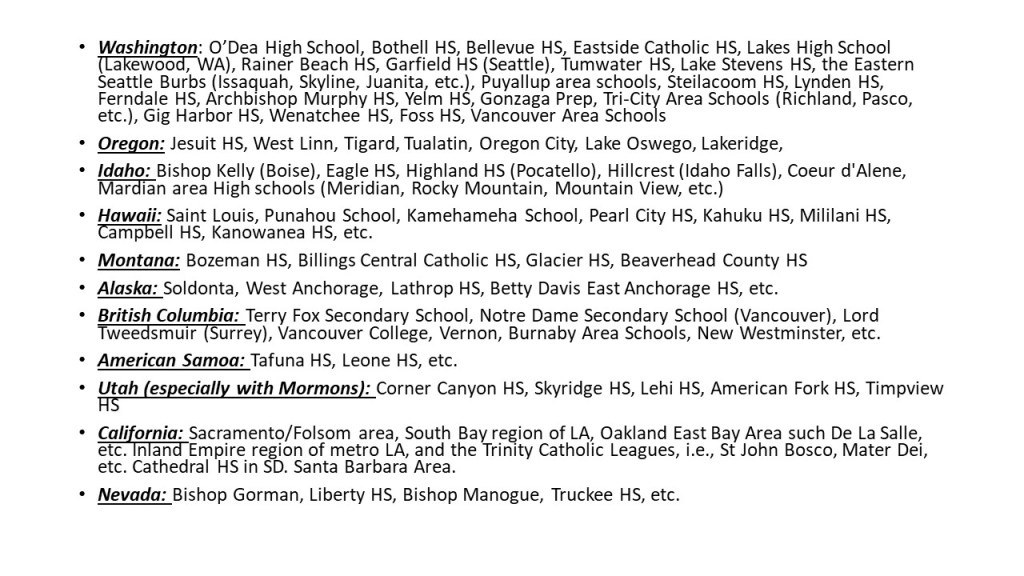


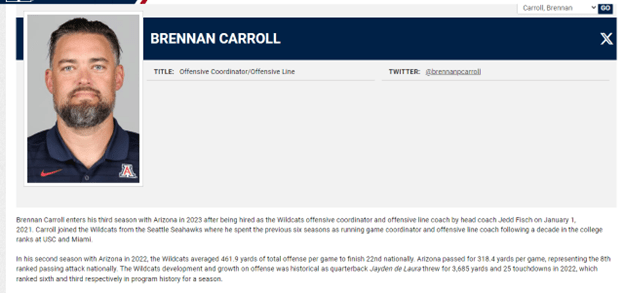

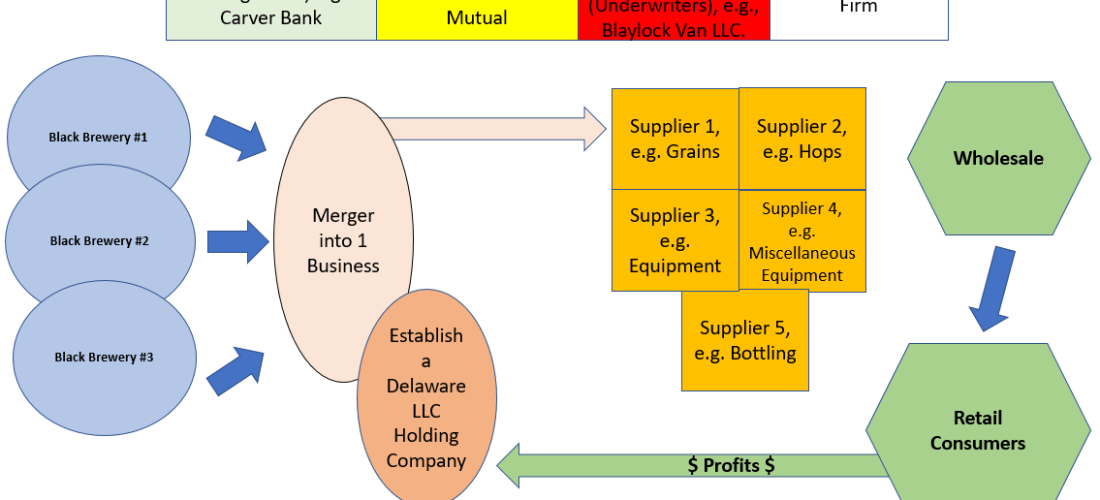

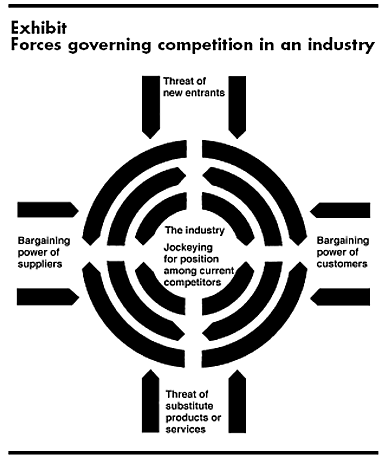
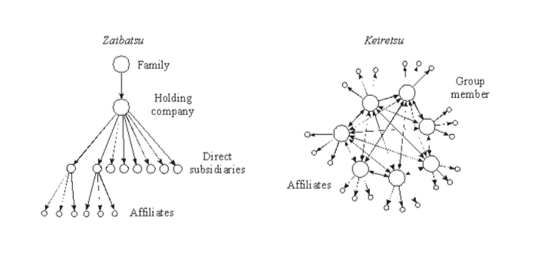
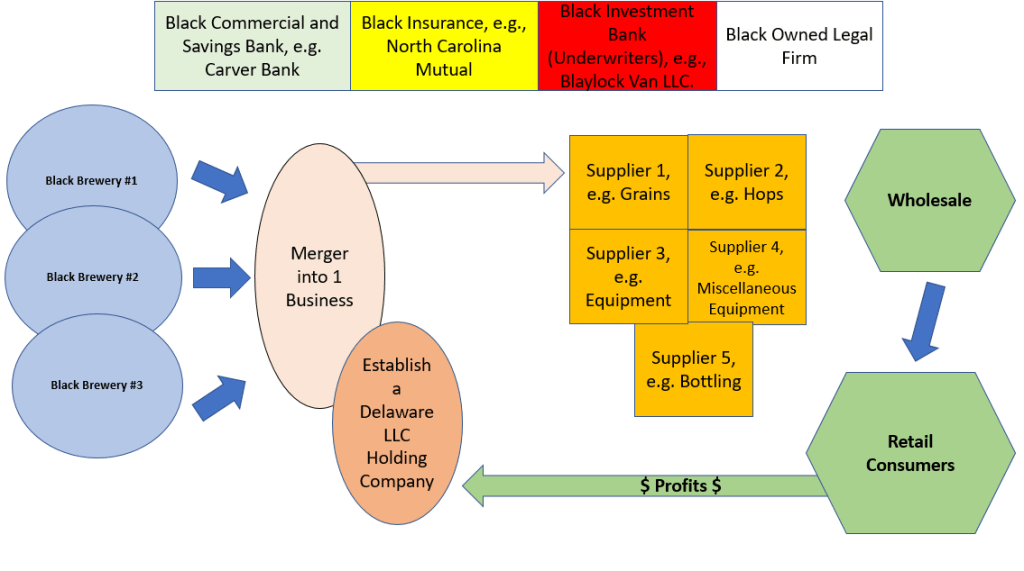
 Mitchell Research Group