Disclaimer: You can either watch the videos first or read the post first and then revert to watching the videos. If you read first, remember to scroll up to the top to watch the first set of shared videos. Thank you! Also, I am not a communist, but rather I find value in some Marxist talking points or sentiments from an analysis standpoint. I find the worldview of Marxism offers an alternative methodology to the seeing the world as is, yet, outside of analysis, I find the real-world applications of Marxism (a type of communism) to be less than desirable. I feel it oversimplifies reality into dialectics based on my novice understanding of it. However, I acknowledge and understand, contrary to critics and enemies of Left-Wing thought, that there is a difference between socialism and communism, in which socialism is a plethora of various and often differing egalitarian types of socio-political and/or economic systems, whereas communism is a type of socialism, and Marxism is a theory of communism. Also, I do see value in capitalism. I consider myself open minded and blend elements of capitalism, socialism etc., in my personal views. Personally, I prefer to think theoretically about a world beyond the dialectics of capitalism versus socialism.
This post will explore (1) Patrick Bet David’s erroneous claims that the first slaveowner in the Thirteen Colonies was a black man; (2) an analysis of his casual antisemitism despite attempting to court Jewish people and Zionists, i.e., he juggles two key demographics of Right Wing politics which are Zionists/Evangelicals and Antisemites; (3) how immigrants often adopt a white supremacist mentality when trying to assimilate into pre-existing super-structures [(in Marxist theory) the super-structures are the institutions and culture considered to result from or reflect the economic system underlying a society]; (4) the nexus between capitalism, colonialism, and supremacy, and (5) remembering disgraced New Jersey Institute of Technology professor, Jordan Reza Jorjani, who is of partial Iranian descent — similar to Patrick Bet David, and how Jorjani’s views were infused within the late twenty-teens Alt Right movement, particularly relating to “Indo Aryans”, “Indo Europeans”, etc. Jorjani’s main ideas could be considered at an intersection with “occultic fascism” in the vein of people such as Julius Evola, another darling of the Far Right and Alt-Right, and Francis Parkey Yockey.
Further, Jorjani’s ideas are adjacent to the theosophy of Madam Blavatsky (who coined terms such as “root races”), antediluvian “pre-flood’ myths, pan-spermia (alien intervention in human evolution) or ancient alien theories (e.g., Anunnaki believers and alien assistance with pyramid building), etc. These ideas have been platformed on popular YouTube podcasts such as the Joe Rogan Podcast, Danny Jones, etc. The accrual of these counter-cultural and/or alternative history ideas have been documented as having a cross-juncture with Far Right and fascist politics such as the field of “Nazi Archaeology”. This is best explained by University of Exeter professor, Dr. Nicholas Goodrick-Clarke who has explored Nazism and other fascists ideologies influence on and use of counterculture and fringe ideas such as Ariosophy, Western esoterism, etc. For example, regarding his 2001 book Black Sun: Aryan Cults, Esoteric Nazism and the Politics of Identity it was mentioned that the book explored, “Subjects surveyed that include American and British neo-Nazism, the writings of Julius Evola and Francis Parker Yockey, Savitri Devi‘s and Miguel Serrano‘s Esoteric Nazism, belief in Nazi UFOs, neo-Nazi Satanism, Christian Identity, the World Church of the Creator and Nordic Racial Paganism.”
[Note: Jorjani was the editor of Arktos Media, the publisher of Vladmir Putin’s chief intellectual, Aleksandr Dugin’s The Fourth Political Theory. Arktos Media has published Far-Right content. Jorjani is a believer in a cyclical view of history notably the Kali Yuga which as a concept was appropriated by the Nazis who themselves think they are Aryans, where Aryan is a variant of the word for Iran. Modern political pundits and provocateurs such as Steve Bannon have even been noted as having a “Kali Yuga” worldview.
Intro:
The one thing I notice about Right Wing grifters is that if they have larger legal troubles or fear getting in trouble, they often deflect their problems as being the fault of the “woke mob” or Leftists. For example, when Brian Callen got accused of sexual misconduct, it was because the system was out to get him. When Andrew Tate got in trouble for trafficking, it was because of the woke mob. Dan Bilzerian who will be talked about a lot in this post got in trouble with authorities about possible fraudulent accounting practices regarding his penny stock weed company. Patrick Bet-David, who I will refer to as PBD throughout this post, that despite never having been in trouble with the law to my knowledge, has been accused of running a Multi-Level Marketing pyramid scheme, so it is possible that since he sees no issue in how you make your money (he’s just an entrepreneur, right?) is that he understands he may be in trouble one day with the Federal government so he preemptively sides with Right Wing anti-government politics. However, I consider PBD to be an Ayn Rand and Milton Friedman disciple, so his worldview will always have a libertarian, anti-government, and Republican viewpoint. (End Intro)
But that aside, I don’t really know where to begin.
Patrick Bet David recently pushed the Right Wing lie that the first slaveowner in the United States was a black person. This is likely alluding to the story of Andrew Johnson, which has been debunked.
Tyler Parry of the African American Intellectual Historical Society (2019) stated, “In various corners of the internet, memes circulate about a Black man identified as “Anthony Johnson,” believed to be a pioneer of American slavery and the first slave owner in North America. Intended for shock value, these memes reveal the new ways people disseminate knowledge in the age of social media. Anyone with access to the internet and the necessary software can generate historical narratives that gain disconcerting popularity. Of course, memes are perfect for establishing “Myth-stories,” as they do not ask readers to evaluate the sources and are often shared prolifically.” (Parry, 2019).
Further, Perry (2019) stated, “Though it is not the only myth attached to American slavery, the meme-ing of Anthony Johnson manifests the unique challenges scholars face in combating historical misinformation. As one of the few documented Black landowners in 17th-century Virginia, his unique story has morphed into a manipulative trope used by right-wing activists. From the 1960s–90s Johnson was predominantly known among academics who studied slavery, but interest in his (misrepresented) life has recently gained traction with the advent of digital sharing, discussion sites, and public forums. For instance, as of July 12, 2019, Johnson’s Wikipedia page claims he was a “colonist” sold by “Arab slave traders,” though there is no citation for the latter claim, nor is it supported by historians. It was likely added by a user who hoped to redirect blame from the Atlantic Slave Trade toward the “Arab Slave Trade,” a popular talking point among right-wing commentators. In his podcast disputing reparations for slavery, conservative pundit Michael Knowles reiterated this myth about Johnson without reviewing the available literature. Such historical distortions seek to minimize Europe’s culpability in expanding African slavery and discredit the system’s intergenerational impact upon African Americans.” (Perry, 2019).
Another source, the History Channel, stated, “On or about August 20, 1619, “20 and odd” Angolans, kidnapped by the Portuguese, arrive in the British colony of Virginia and are then bought by English colonists. The exact date is not definitively known (a letter from the time identified the ship’s arrival coming in “the latter part of August”), but this date has been chosen by many to mark the arrival of the enslaved Africans in the New World—beginning two and a half centuries of slavery in North America. Founded at Jamestown in 1607, the Virginia Colony was home to about 700 people by 1619. The first enslaved Africans to arrive in Virginia disembarked at Point Comfort, in what is today known as Fort Monroe. Most of their names, as well as the exact number who remained at Point Comfort, have been lost to history, but much is known about their journey.” There is even a historical marker dedicated to the area where the first African slaves on American soil.
The lie that PBD casually believes in and promoted on his YouTube podcast, is just another attempt at covert white supremacist historical revisionism and revisionist contextuality (with the latter being not necessarily erasing or revising history for bias purposes, but rather trying to doctor the context of generally agreed upon historical facts for bias purposes, e.g., claiming the Irish, Anglo, or Scottish indentureship was as bad as Africans within chattel slavery).
And I understand that many people reading this might state that PBD…isn’t white.
Regardless, the fact that American society is and has largely been dictated by white men created a super-structure in which whiteness is the default position (and where blackness was designed to be the antithesis), and even newcomers who aren’t white, as they try to assimilate will adopt white supremacy as an ontological position as a means of “fitting in”, weighing values, and garnering acceptance, i.e., being a “pick me”.
By white supremacy I am not talking about “European culture” or simply existing as a white person, but rather the mentality of believing that white people must control the levers of power at the expense of others as a means of “preserving themselves” since they consider themselves superior. White supremacy is an inherently paranoid and therefore violent way of thinking, because it sees reality as a Darwinist struggle of “different species”. White supremacy is also the epitome of projection, i.e., it alleges that everyone is out to get white people, yet white supremacists use this as a means of wanting to dominate everyone else.
The hardcore capitalist mentality of PBD is naturally in bed with white supremacy, since capitalism (if left unchecked) is an inherently elitist, top down and an exploitative doctrine which has variants or styles such as colonialism, where colonialism was the main culprit for the enslavement of black people and the mass murder of Indigenous peoples. Better put, PBD being a capitalist, notably of the Ayn Randian type of “virtuous selfishness” (e.g., the global pro-business organization called the Atlas Network takes its name from Rand’s Atlas Shrugged book despite claims that it did not), where Rand was popular within paleoconservative politics of the mid-to-late twentieth century, is naturally in alignment with a colonial exploitative framework which created the foundation for anti-blackness within the West. This therefore explains why PBD often has “Freudian slips” of casual racism when arguing for legitimacy of his capitalist doctrine. Even better put further, PBD essentially believes marginalized peoples are the result of their own follies, and he disregards the deeply enshrined white supremacy that dictated American discourse for most of its history. For example, many capitalists when speaking against the government or in support of the police state which protects their property, the typical culprits are black people, such as pushing the stereotype of being black people getting “handouts”, being “welfare queens”, being inherently poor, criminal, uneducated, and lacking an entrepreneurial spirit. Even white liberals can make this subconscious instant association of blackness with defectiveness or poverty, despite these liberals yearning to reconcile the flaws of the past, yet this yearning can come off as infantilizing via something akin to the “clinical gaze”. The clinical gaze I am referring to was address by Michel Foucault and is described as “how doctors modify the patient’s story, fitting it into a biomedical paradigm, filtering out non-biomedical material” (The British Journal of General Practice. https://bjgp.org/content/63/611/312)
In other words, at least based on my understanding of the concept, this means doctors dehumanize the person and then turn the person into data, statistics, etc. So, progressive liberals can be seen at times, despite noble intent, as incidentally seeing black people for example as the embodiment of statistical data needing to be corrected. However, the Left Wing’s emphasis on qualitative experience, i.e., lived experience, has been a movement that has largely corrected the clinical gaze of older progressive liberals who inhabited a more segregated paradigm.
I take what PBD said personally since I am descended from people who suffered under slavery in the United States, mainly from the US states of Georgia and Alabama.
At minute 26:40 of the video, PBD states talks about how one of the black descendants of Thomas Jefferson was wanting to erase history for not liking Jefferson statues. At minute 28:10 he states that the first slave owner was black, and his co-host Andrew Siosik agrees with them. First off, PBD does not get the point that by having a statue you are not just learning about that history, but rather you are celebrating and idolizing that history. No one is saying we can’t learn about Jefferson or even later Confederate soldiers, but rather people are raising the question of whether we should celebrate them, since a statue, i.e., a monument, ends up memorializing the person or persons.
But the fact remains that what PBD said is a flat out lie used by white supremacists as a means of taking the steam out of black people’s argument when discussing their lived experiences in relation to white supremacy such as being profiled, followed, any many cases killed. White supremacy is not about simply conquering a people but getting the people who were conquered to blame themselves for their lots in life. Yet ironically, white supremacy despite pushing notions that it is the most superior, also likes to play victim politics as a means of pre-emptively attacking and keeping down those which it rules over. By revising history, in this matter regarding PBD, it robs black people of authentic justification to be angry and tries to use reverse psychology to get black people to blame themselves and “look into the mirror”, i.e., judge ourselves.
White supremacy, in which many immigrants align with as they try to fit into the larger status quo and super-structure of American society, is what PBD panders to without even understanding it I think. In other words, he is very ignorant about the complexities of US history, but since he aligns himself with the profit seeking capitalist Right Wing, he applies as right wing historical revisionism to history (despite, the full history of the United States not being his own history). This mentality is very similar to the child of immigrants, such as Fit (real name Amrou Fudl) from the Fresh and Fit podcasts, who despite being of African origin has adopted a right-wing, Darwinist, Bell-Curve statistical viewpoint. Fit from the Fresh and Fit podcast has called black people stupid, lazy, and acted as a primate when describing black Americans.
PDB, Fit, and other immigrants or children of immigrants often swing down on black Americans because black America is historically the most swung down on race in the United States, and swinging down on blackness is almost a rite of passage when trying to assimilate into the predominate white superstructure. I would recommend you watch this video about Ferris State’s Museum dedicated towards understanding America’s racism.
Patrick Bet-David’s casual Antisemitism
But let me switch up to what I consider to be the subconscious antisemitism within Patrick Bet David’s mindset despite his claims of being a Christian Zionist. Separately, it is important to note that PBD doesn’t call himself Iranian (e-rahn-ian) but Assyrian, despite being born and raised in his early years in Iran. Back on track, I have been noticing that PBD has been pushing antisemitic tropes despites him appearing to seem to defend Jewish people in his recent discussion with Dan Bilzerian. Further, Patrick Bet David pushed more Jewish stereotypes in his group discussion about Candace Owens and PBD helped push the antisemitic George Soros conspiracy theory on the Flagrant 2 Podcast with Andrew Schulz. The video is titled, Patrick Bet-David Explains Who George Soros is & Why He’s Important in Society
Hannes Grassegger (2019) of Buzzfeed wrote a piece about how two Jewish political consultants helped to push the George Soros conspiracy theory. It is my understanding that they did this because of Soros’ criticism towards the Zionist project and the treatment of Palestinians, yet, by pushing a new version of the “Protocols of the Elders of Zion” conspiracy theory with Soros as the main villain, the real rise in antisemitism would create top cover for Zionists by making them into victims able to deflect away from their own mechanizations, plans, agendas, etc. Better put, these Jewish consultants scarified Soros for the cause of expanding Zionism yet also putting pressure on one of its biggest critics being George Soros.
The hatred towards Soros is laughable considering he is just one billionaire and the Right Wing who love capitalism are incapable of pointing out any plausible conspiracies from non-Jewish billionaires. The hatred towards Soros is not only lazy but it is just another form of white supremacist projectionism, i.e., desiring the capitalist avarice but only for themselves, and when a Jewish person plays and wins the game, the lizard brain of white supremacy descends into paranoid manic conspiracy theories. However, it is not just white supremacy that pushes antisemitism but also black militant politics such as the tomfoolery of people such as Louis Farrakhan, who ironically visited Iran to do give an antisemitic speech.
Note that this article was done in 2019 yet as of 2024, the Israeli state under Netanyahu has not only raised Gaza (with Zionists even blocking and destroying humanitarian aid to Gazans) but the IDF has also invaded the West Bank which has ever-growingly become conquered by Israeli settlers.
Grassegger (2019) stated, “The demonization of Soros is one of the defining features of contemporary global politics, and it is, with a couple of exceptions, a pack of lies. Soros is indeed Jewish. He was an aggressive currency trader. He has backed Democrats in the US and Karl Popper’s notion of an “open society” in the former communist bloc. But the many wild and proliferating theories, which include the suggestion that he helped bring down the Soviet Union in order to clear a path to Europe for Africans and Arabs, are so crazy as to be laughable — if they weren’t so virulent.”
Back to the video by Valuetainment, titled: “HATES Jewish People!” – Candace Owens & Dan Bilzerian UNDER FIRE, published on 21 August 2024, which as of August 22, 2024 at 3:17 PST has amassed 284,110 views. Contributor and co-host, Andrew Sosnick, who is of Jewish descent, actually justifies getting into bed with the Far Right if it means helping defeat Kamala Harris. Sosnick in a past video that I don’t have the title of or the time-stamp on has been accused or belittle by PBD for being soft on Democrats, so I feel Sosnik has to continue to double down on right wing rhetoric for his own credibility within the largely right-wing oriented, male, crypto bro, dating guru, Bell Curve statistic believing sphere of the Red Pill section of YouTube.
Adam quoted the recent Ronald Reagan movie starring Denis Quaid (who they called a friend), by stating “A person who agrees with you 80% of time is a friend an ally, not a 20% traitor”. Adam referenced this quote in relation to white supremacist Nick Fuentes and Far Right pundits such as Candace Owens criticizing the MAGA movement and Donald Trump. Adam, making a false equivalency between Joe Biden and Alexandria Ocasio Cortez, one being center left and the often being left (some say “far left), justifies the Neo Nazis of the American First movement, Goyim Defense League, Groypers, etc., being part of MAGA. To me this common sense because Nazis, survivalists, race realists, antisemites, anti-feminists, anti-LGBTQ have always been apart of the modern Republican Party, so Adam is simply admitting what Democrats and the Left allege the Right actually is.
The irony to me is further exacerbate since Adam being Jewish is essentially arguing for a type of amoral realpolitik and pragmatism, which is something that Israel has been criticized for as far as achieving their objectives such as how Israel contracted a Nazi such as Otto Skorzeny to hunt other Nazis despite Otto Skorzeny starting various Neo Nazi organizations which endangered Jews across the globe.
Instead, Adam should have stated, “We don’t need you. Good riddance”, yet that doesn’t seem to enter his head.
Next off in the segment, another co-host, Vinnie Oshana, goes off to allege how the media is controlled by the Left, but fails to realize (if true) that this is not a manufactured conspiracy but possibly (and, most likely) the natural trajectory of American media since the US is a melting pot and has become more socially aware and accepting over the last sixty years.
It’s not that the mainstream media is biased but rather media is reflecting where most of the people are today. If we view the content of OAN, Newsmax, etc., most of that content is highly alienating and arguably offensive. Conservative media, art, etc., is not intended to be inclusive or accepting, and since capitalism is about market expansion, most media would lean progressive since they would have a larger pool of potential customers, etc. This seems like something a self-ascribed capitalist should know but Vinnie’s intent is to weave another needle in the right narrative of conservative victimhood despite their own propensity for bullying people outside the traditional Western norms. This goes back to my earlier points about PBD in which his type of capitalist beliefs has historically been in alignment with right-wing and far-right politics. PBD wants capitalism but a capitalism that only has a media that feeds into supporting the larger supremacist superstructure that hides behind the levers of power, i.e., the status quo.
In the discussion with Bilzerian, PBD around minute 1:01:10 starts talking about…Jewgenics, which is the study of Jews allegedly having higher IQs than everyone else. After, talking about this quasi “Bell Curve” talking point, PBD then goes to talk about how Jews are successful because of unity and higher IQs, thus they make “better decisions”. Sure, this may be flattering on the surface, but it does thread upon stereotyping a people, when there are many Jewish people living in poverty or in lower income demographics. We can debates studies on the matter all day, but the success of Jewish people seems (emphasis on seems) to be more environmental such as children (often bilingual since they are learning Hebrew and the language of the nations, they are citizens of), develop stronger linguistic and reading comprehension skills. This mixed with expectations and what I consider to be the multiplier effect of opportunity, i.e., uplifting each other despite academic performance, i.e., giving each other “a shot”, helps to incubate sub-communities of the larger Jewish community (which has segments that are impoverished, uneducated, under-employed, etc.) towards success.
We can even add on notions of inheritance to children, and the cultural traditional of giving financial donations that many Jewish children get during Bar and Bat Mitzvah’s that help train children how to deal or invest money, etc. It is almost a trope about how many Jewish teens get money from family members and use that money in something akin to venture capital to go start their first businesses. In other words, supportive environments with strong professional connections to get an inside leverage on jobs in exclusive industries – even if starting out as unpaid interns – mixed with children developing stronger bilingual, linguistic, and reading comprehension skills would generally produce “smarter children” in any race or culture.
PBD effectively is pushing the notion of seeing Jews as “lucky” or “lucky charms”.
At minute, 1:07:35, PBD brings up that portrait with the Shah of Iran. He goes to stated that the Shah actually oppressed the Jews and called out the “Zionist media”, and because of this his beloved Shah was removed from power.
This statement is strange because it seems PBD is trying to relate to and agree with Bilzerian and attempts to acknowledge that a “global Zionist plot” is possible or has been involved in regime change. So, it seems PBD trying to relate to the points of Bilzerian is alleging that because the Shah oppressed Jews that they somehow removed the Shah and installed the Ayatollah. If this is true, this means that PBD has revised history to totally disregard the abuse that the Shah imposed on his people overall (secret police, torture, abhorrent wealth hording and lavish lifestyles, etc.), and that his relationship with the US government, who were supportive of Israel, is a reason for the rise of the radical Islamic Ayatollah. The Shah was suffering from cancer and was allowed to get treatment within the United States, and this provoked the Iranians who were angry with the Shah and wanted him returned to Iran to face trail.
PBD despite objectifying the Jews from a standpoint of wealth that he admires, he then panders to the possibility of right-wing conspiracy such as “global Jewry”, “the Zionist occupied government”, etc. To me it is more about environment and incentive than supernatural forces or genetics, though genetics may play a role, though genetics are so complicated – with mutations happening all the time – that it seems rather objectifying to distill success down to pure genetic characteristics.
We also fall into the trap of defining intelligence based on a pre-conceived set of standards but who determined the standards? Creativity may outweigh concrete concepts like math or science in certain situations.
At minute 1:23:08, PBD goes off about how fascist and communists got rid of religion in order to support “materialism” and this was done to control people.
This is an odd statement because sure, yes, totalitarian regimes – both left and right – have employed erasing religion as a means of control, however…. religion was used since the beginning of religion to control people. PDB brings this up I suspect because it feeds back into his propensity for oversimplistic binary thinking, where in essence he is actually referring to dialectical materialism of Marx as being the culprit for what he see as the moral decay of the West and attacks against wealth.
This therefore can lead one to start pushing allegations of “cultural Marxism” against those who do not represent or bow down to the traditional status quo. In other words, conservatives can allege that people wanting rights are somehow employing “Marxism” has a means of “destroying hierarchy”, when in essence, people just want rights.
It is important to note that these Cultural Marxist allegations are ironically anchored in part in antisemitism, and contemporary figures such as Jordan Peterson who uses terms such as “Postmodern Neo-Marxists” are simply rehashing and repacking this cultural Marxist or cultural Bolshevik term employed by the likes of the Nazis for a new generation. A new generation which includes Dan Bilzerian.
Around minutes 1:25:29, Bilzerian asks PBD if Nazis are bad and PBD simply says “depends on who you ask”. Seriously? So PBD somehow thinks he is a defender of “Jewish people”, some sort of Cyrus the Great from Persia, yet, he cannot even straight up say that Nazis are bad and that it is all subjective?
The issue with Bilzerian’s question is that he is using the question to set up for his following false equivalencies. Bilzerian doesn’t distinguish German people from Nazis, as a means of alleging that not all Nazis were bad. He is making it sound as if the Western propaganda against Muslims during the Global War on Terrorism is somehow equal to stereotyping all Nazis. The difference is that the Nazis were a political party, i.e., a hate group, so yes all were bad, yet, Muslims are a religion so not all are bad, but Bilzerian is trying to use the “don’t stereotype” people notion because of their religion as a means of defending not stereotyping all Nazis. This therefore feeds into the foundation of Bilzerian’s ever-growing antisemitic lens. He is effectively saying without saying that the Nazis were good people, and they had a reason for disliking the Jews. The Nazis were pure evil. Many Nazis that survived the war never renounced their allegiance to Hitler and many died as ardent Holocaust deniers.
The creepy thing about living in the twenty-twenties and beyond is that the internet has repackaged old antisemitism and racism for a new generation of meme making, video game playing, technologically saturated youths who look up to people such as Elon Musk, where Musk promotes racist talking points all the time. This trend seems indicative of the inherent fear of many white people and the need for many to push apartheid like politics and sentiments. Online on YouTube for example, it is common to see Rhodesia nostalgia videos or Rhodesian military analysis videos which paints the Rhodesians has heroic rather than a Jim Crow racist pariah state. It is also common to see World War II videos pointing out the bravery of the SS. White supremacists have appropriated the self-determination of marginalized groups to push towards a new “White Identity politics”, where white supremacist can finally celebrate being different, separate, and superior to others. Many individuals within immigrant groups such as Indians, Iranians, Cubans, Mexicans, etc., often wish to be included into the right-wing white superstructure because of its perceived higher value.
Dan Bilzerian represents what happens when society has such a lack of discourse around the state of Israel and its politics that people then find themselves listening to good-faith but mostly bad-faith analysis of Israel, where the bad-faith side is of course steeped in a literal mistrust, hatred, and fear of Jews. This is something that Vinnie Ohsana on the the PBD segment alluded to but didn’t outright state.
What I mean by good-faith is pragmatic analysis of Israel indifferent to ethnicity of Jewish people, e.g., criticizing their government but not hating Jews. The lack of discourse in contemporary politics around Israel has enabled fringe ideologies to dictate the discourse, even if presenting their arguments as professional, restrained, well-researched, etc.
The typical subjects within this contemporary antisemitism involves a range of topics such as (1) 9/11 was in inside job and that a group of “dancing Israelis” celebrated because this meant that Netanyahu and the Mossad, etc., could drag the US into wars in the Middle East for the protection of Israel, (2) the USS Liberty attack by Israeli Air Force and alleged involvement in the 1983 Beirut barracks bombings (3) the plausibility of Jeffrey Epstein being some sort of blackmailing intel asset for Mossad to make sure US politicians towed the line of AIPAC, WJC, etc. (4) the Jews allegedly controlling hip-hop, pornography, sports, etc., which helps conservatives point to Jews as being responsible for “moral decay” or “bread and circus” antics — despite the fact that many Jews are ultra conservative, follow Kosher laws, etc. However, the rebuttal is that despite Jews being conservative mostly, they have no problem in “corrupting” the goyim who have “lesser souls” (5) the over-representation on Jews in prominent positions, etc. (6) George Soros, who as a billionaire has spent his money on progressive causes to the ire of conservatives. Soros has found himself unilaterally being blamed for the current state of the world despite in the USA and Europe, most of the wealth or socio-political power is still largely white, male, and Christian, etc. (7) the Rothchilds via “central banking” have turned nations into slaves for the Jews, etc., (8) Jewish participation in the Trans-Atlantic slave trade, (9) Jewish male “neuroticism” and the wavering between being unassertive versus a Might Makes Right clinical view of power, etc. (10) the Jews we see today are not the real Jews but Caucus peoples called Khazars who converted to Judaism to distinguish themselves from Muslims and Christians, who later migrated into Europe, so they have no legal claim on the lands in current day Israel (11) Jewish men enjoy abusing “shiksa” or Gentile Women
Antisemitism happens across racial, ethnic, and nationalistic lines, often where the develops an intersectionality of antisemitism depending on whichever group is promoting it. For example, antisemitism in the African American or Black-American community often centered around being denied power, whereas antisemitism in white people often centers around their power being corrupted and drained.
I had watched quite a bit of the content because at first it seemed like a genuine criticism of plausibly shady dealing with Israel, such spying on campus protestors who support the BDS (Boycott, Divest, and Sanction) movement, but also Israel being home to many US tech companies and how this sharing of technology (and possible theft thereof) of US trade secrets, etc., has damaged American primacy.
Yet slowly but surely Adam Green started pushing the theory that the Talmud endorses hatred towards the “goy” or “goyim” (gentiles, non-Jews, etc.). He also started mixing in very common conspiracy theories about Jews such as Jews controlling the hip-hop industry as a means on enslaving black people and destroying the family unit (despite Adam Green likely being a white supremacist or at least adjacent to many of their talking points).
I actually wrote about Adam Green in another post relating to RFJ, Jr., where RFK himself has said antisemitic things.
Side note. The Right Wing is attempting to paint the Political Left as antisemitic because they are protesting the bombings in Gaza. Yet, the Right Wing my entire life have been the ones in bed with actual white supremacist antisemites. Look into Willis Carto or Eustace Mullins where Mullins is notable helping push the myth that Jews are behind the Federal Reserve. For example, the John Birch Society – a right-wing conspiracy organization – which was founded in part by th Bradley Family (who are related to the Uihlein Family who fund figures such as Charlie Kirk’s Turning Point USA), had splintered into the National Alliance, a white supremacist organization founded by William Luther Pierce and Revilo P. Oliver. Piece, author of the Turner Diaries, inspired hate groups such as The Order, who killed Jewish radio host, Alan Berg, but also this book inspired Tim McVeigh who did the Oklahoma City Bombing.
There are many links between conservatism and the Far Right, and ironically MAGA inspired the Far Right to change their appearance from skinheads for example, but rather into young ideological men in suits with modern haircuts, etc.
Other thoughts on PBD
Patrick Bet David is a….self-made millionaire…who allegedly made his money by running a Multi Level Marketing insurance company where he siphoned off the profits in order to inflate his own personal brand dubbed Valuetainment (which includes his PBD Podcast).
Patrick to me after having watched his material for years is a proponent of unfettered capitalism (almost teetering upon the libertarianism of The Atlas Network, Mont Pelerin Society, Mises Institute, etc.), social conservatism, etc. For example, Patrick Bet David in his home has a portrait with him, Tupac, Einstein, Martin Luther King, Milton Friedman, The Shah of Iran, etc. Within the portrait, there are the books Atlas Shrugged by Ayn Rand (hence proving his links to Atlas Network type of anarcho-capitalist and libertarian thinking) and the Communist Manifesto. These two books best explain Patrick’s dialectic framework. It’s either “freedom” or “communism”, i.e., a hardliner yet oversimplified way of thinking.
Patrick despite maybe having changed his name to “Bet David” which insinuates a connection to Judaism, despite him being Iranian (he prefers Assyrian), ironically panders to antisemitic talking points and stereotypes despite what his almost scripted defense of Israel and Jews. Yet, Patrick has such as an oversimplistic and binary way of thinking mixed with his use of cherry picked statistics, that he sometimes comes off as gruff, unrefined, and in many ways simply pandering to current conservative landscape, notably online, which is comprised of everything spanning the Man-o-sphere (Men’s Rights Movement, Red Pill movement, Fresh & Fit podcast, etc.), Cryptocurrency community (a medium of exchange which has been linked to libertarianism on the surface, but organized crime under the surface), Trad-Wife Movement (via Pearl Davis, via Just Pearly Things), COVID skeptics, but also the George Soros Conspiracy (which is important to this piece I am writing).
Far Right love for Indo-European and Indo-Aryan Studies. PBD, Jorjani, etc.
PBD being Right Wing reminded me of the curious case of Jordan Jorjani. Jorjani of partial Iranian heritage was a professor at the New Jersey Institute of Technology but was fired I believe after being videotaped talking about a new world order of Aryans. He says it was taken out of context. Regardless, from what I know about Jorjani, who can be seen from time to time contributing to “New Age” podcasts on subjects such as time-travel and aliens, is that his main thesis is that Aryans, i.e., a Proto Indo-European peoples, whose traditions were best manifested in ancient Persia during the times Zoroaster, where corrupted and “mongrel-ized” by the Asiatic Muslims of the Mongols. These Aryans had spread sacred knowledge and in order to save the world, the world needs to adopt an Evola or Rene Guenon like return to traditionalism. He wishes to reinvigorate the Aryan spirit, invoking something asking to the Übermensch concept of Nietzsche in writings such as Thus Spoke Zarathustra which gave us terms such as “Will to Power”. This affinity with the Indo-European or Indo-Iranian or Aryan research is of course common within Nazi and white supremacist concepts. Many white supremacists however push that the original Aryans were blonde haired, blue eyed. Yet, most mainstream researchers seem to think of Aryans as a class of peoples within the social structures of the Steppe peoples of Central Eurasia, who may have domesticated the horse and spread their language west towards Southwest Russia and modern-day Ukraine but also as far as East as the Iranian basin and Indian subcontinent. Regardless, Patrick Bet David without saying it, though very prideful of his Assyrian origins seems to point here and there to being of a noble lineage that laid the foundation of Western civilization, but I had also heard him say somewhere that his language is the same that Jesus spoke, which may be true if he’s talking about a particular strain of Aramaic, notably that of Levant region.
There have been notable Right Wing or Alt-Right YouTubers such as Survive the Jive, who devotes his entire time to promoting Aryanism in as much of an academic sense as he can.
Jorjani however to me represents the “Kook Right Wing” at its finest. There’s something both quack but also Lovecraftian where of course H.P. Lovecraft was a notorious racist. He reminds me of a kind of Ghostbusters gone bad researcher who may have been a contributor to P.E.A.R, i.e., the Princeton Engineering Anomalies Lab, if it were still in existence.
Understanding issues facing African American Owned Businesses from Brand-Image to the Supply Chain
Applying Quality Management to African American Businesses
MGMT 691 Graduate Capstone Proposal
By Quinton M. Mitchell
M.S. Management (Operations Management) 2018
Embry-Riddle Aeronautical University (Worldwide Campus)
ABSTRACT
The purpose of this research paper is to (1) Explore any limitations to branding products or services created by African Americans as Black-Owned by conducting a literature review which analyzes scholars who argue for and against segregated economies, i.e., protected enclaves; (2) Understand consumer behavior differences between African Americans and other groups by understanding theories such as the Customized Communication Incongruity Theory by Arora & Wu (2012) and Socialization Theory by Ward (1987); (3) Explore how marketing and advertising affects African Americans and how diverse/positive marketing campaigns improves black success; (4) To show positive gains within the African American community but also to explore the hindrances to African American economic productivity such as higher insurance costs, lack of capital markets, sensitivity to economic conditions, etc., and (5) Discuss Supply Chain issues in African American businesses by using black-owned breweries for a test industry to implement concepts just as strategic alliances, best practices and/or to emulate practices such as those used by Japanese Keiretsu.
Table of Contents
Managerial Problem stated as a Research Question…………………………….…….5
Setting/Background……………………………………………………………………5-6
Research Activity……………………………………………………………………….6-7
Literature Review………………………………………………………………………7
To open the community or to close off the community?……………………………7-10
The underlying psychology of branding and marketing pertaining to African Americans…………………………………………………………………….10-12
Disparities between African American Owned Business and White Owned Businesses……………………………………………………………………12-16
How African Americans respond to brand image & issues regarding advertising and media portrayals…………………………………………………………………………….16-20
African Americans in the Supply Chain & the need for Strategic Alliances or Joint Ventures………………………………………………………………………………20-32
Is the Japanese Keiretsu model appropriate for African American Breweries? ….33-39
Figure 1. 2017 Top Black Owned Businesses by Black Enterprises…………….22
Figure 2. Michael Porter’s (1979) Five Force of Competition…….………………32
Figure 3. Zaibatsu vs Keiretsu by Yonekura (1985), cited by Grabowiecki (2012) …………33
Figure 4. Theoretical Model for African American Brewery Consolidation………36
Keywords: African American, #business, #behavior
Managerial Problem stated as a Research Question:
Does the resurgence of labeling products as “Black Owned” has its limitations? Should African American owned businesses think bigger and take a risk by creating brand campaigns that targets a larger non-race specific consumer base? Should smaller African American owned firms join forces through concepts such as strategic alliances, joint-ventures, or even the Japanese concept of Keiretsu? Is it safe to view the black community as a singular entity, or does a complex intersectionality exists within the black-community, and, if so, which ideology, or which marriage of ideologies, is more effective at achieving sustained success for African Americans? In addition, can the establishment of a supply-chain network between African American owned businesses help improve visibility of brands, maximize economies-of-scale, improve service/item quality or value, and increase profitability?
I.Setting/Background:
African-American in business have a long history in the United States ranging from entrepreneurs or CEOs who have gone to build empires or sustain already established business empires; to running established firms who have made catered services and products towards African-Americans and the world at large, and the number of African-Americans winning managerial positions in name-brand American firms since the Civil Rights movement. Yet, Black-Owned businesses faces a plethora of issues ranging from access to credit, the risk-reward aspect of certain industries, and the fact that African-Americans, as with most Americans, have benefited positively from, while also being negatively impacted by the effects of globalism, the loss of labor protection, the hyper-competition of corporate multi-national companies.
In addition, Gillian B. White (2017) wrote an article that noted black CEO representation peaked in 2007 but has been slowly dwindling due to removal or retirement. As a result, I am arguing that black-owned businesses who market their products as “black owned” instead should market their products towards all consumers, regardless of the self-empowered notion of supporting black-owned businesses, because the level of product visibility and profitability will increase. Essentially, be black-owned, sure, and be proud of that, but market and win customers regardless of who they are. However, this paper is not an indictment of Black-Owned branding, but rather an argument that the call for branding products as such should of course be from a sense of empowerment, but not to the extreme of exclusivity which could have detrimental effects on capital accumulation and distribution of profits amongst the community. Why have one market, when you can compete with larger companies in multiple markets? To support Black-owned businesses and possibly improve the quality-of-life of certain African American communities, thinking bigger and expanding consumer bases can increase African American economic prosperity. For example, we know that Toyota is a brand of cars that is obviously made in Japan, and the brand is synonymous with quality, but the Japanese benefit from a clever branding strategy where the products does the talking for the culture. The goal of this paper is to provide recommendations to assist black-owned businesses, not from a stance of exclusion, but rather to further normalize products for all consumers regardless of race.
II. Research Activity:
A brief background into African American business ownership from a historical perspective will be presented. In addition, a historical view of race-centric marketing will be presented to strengthen the premise that race and marketing are often in unison. This historical perspective will lead up to my initial business problems facing the community and then I will follow up on conceptual ideas that could generate benefits. Giving dues when needed to the current landscape, I will then offer my recommendation for focusing on brand-image marketed towards a diverse consumer base, which in my opinion, can increase black economic output without labeling itself as “black-owned”, but if a firm decides to brand themselves as black-owned, which is justified considering the complex history of the United States, then there needs to be a strategic re-training of the thought process to challenge oneself to expand what new markets black Americans can or should participate in. Qualitative research will then be discussed to link the marketing of brands to the importance of the supply-chain.
Finally, a summary of the supply-chain as far as key aspects will be discussed and then I will construct a conceptual supply-chain or strategic alliance theory in which an African American business owner could formulate strategic ideas. The goal of this project is to emphasis strategic-thinking while loosely threading upon the quality management philosophies of early scholars such as Deming, Juran, and Crosby, to get Black-owned business owners to think more expansionist-minded, while simultaneously being inclusive towards all communities.
IV. Literature Review
A. To open the community or to close off the community?
Cummings (1999) presents a study comparing African American entrepreneurs conducting business in the ghetto’s protected- market versus the suburbs or larger Metropolitan Statistical Areas and argues that African American firms outperform when operating in larger non-segregated environments. Cummings (1999) provides a qualitative and quantitative study regarding the flaws of racially-segregated economies by touching upon the enclave-theory and protected market theory by referencing researchers such as Drake & Clayton (1945), Cummings (1980), and Light & Rosenthein (1995). In the study, Cummings (1999) states, “Although racial segregation may be a prime factor promoting ethnic and enclave enterprise, it simultaneously undermines business growth and development”. In addition, Cummings (1999) shares findings from Brimmer and Terrell (1971) who states that African American entrepreneurs who depend upon a segregated-protected market have high potential for failure. Moreover, when faced with desegregation and group dispersion, businesses that depend exclusively upon an enclave market are likely to fail (Brimmer and Terrell, 1971).
Rueben & Queen (2015) studied how African American owned businesses suffer adversely from unequal access to capital markets and the prevalence of institutional barriers. Although not universally appreciated, African Americans have a long history of entrepreneurial achievements against odds. African Americans are more likely to start a business, yet, are less likely to succeed (Rueben & Queen 2015). Rueben & Queen (2015) stated that the success of minority businesses to employ more workers and raise the productivity of workers is essential to U.S. economic growth, considering the U.S. labor forecasts (U.S. Bureau of Labor Statistics 2012, as cited by Rueben & Queen 2015), the 2025– 2050 outlook on the U.S. labor market is expected to grow slowly with most of growth coming from 55 million by minorities and immigrant workers. Further, despite these increases in the number of African American owned firms, African American entrepreneurs tend to participate in industry sectors with less capital requirements for start-up and expansion. However, some of these industries have lower revenue streams. Yet, when African American entrepreneurs operate in high revenue generating industries, their average annual revenue and average annual payroll per employee are significantly lower than their white counterparts (Rueben & Queen 2015).
The yearning to empower black businesses has led to a conflict in policy ideologies as presented by Cummings (1999). The enclave economy theory alludes to the positive outcomes associated with racially or ethnically segregated communities, but considering the criticisms presented by Tabb (1970) such as (1) smaller markets, (2) lower income consumers, (3) higher insurance rates, (4) inability to access credit, (5) higher rates of theft, and (6) limited access to capital, there are parties at be that wish to open the black community to larger markets but from the stance of community re-invigoration, yet not entirely from a segregated mentality. According to Cummings (1999), community-based development initiatives are activities inspired by or aimed at service social groups in a locality. In addition, community-based development initiatives also refer to those efforts organized by people who share a common urban geography (Blakely 1994).
Strategies that come from inwardly focused values and not economic realities are likely not going to make a competitive advantage (Barney & Hesterly, 2015, p 6). This touches upon my argument regarding the general trend in the growth – as far as a calling or social justice movement – of marketing products or services as Black-owned. There is nothing wrong with this, yet there are many assumptions and a diversity of ulterior motives that can occur when there is a calling for a segregate mentality. Such as, considering the social nature of human beings when classified, there can be a limit on the expressive modes – which can be profitable – that a group feels they can participate in. I call this a “culture-trap”, in which the standard or traditional culture is such a firm aspect of identity, that deviating to innovate for an individual, can have detrimental social and psychological effects. In addition, this “culture-trap” not only limits innovation, it can lead to issues such as brain-drain (when intellectuals leave the community in order to associate themselves with more supportive individuals), attrition (leaving the community), and the recycling effect of standard discourses when relating to issues effecting a community. Also, there have been clear examples of black-on-black business crimes or political corruption, in which the culprits have often used the calling for black segregation for their own financial and personal gains.
There seems to be a standard agreed upon set of values for African-Americans when consciously entering the business arena, i.e., a sense of liberation and self-empowerment, and although these yearnings are noble and arguably justified considering the sociopolitical and economic truths of African-American culture (slavery, segregation, red-lining, police profiling, etc.), yet the ultimate goal is, of course, to empower the group, yet it has to be based inevitably on an open-market, non-exclusive long-term agenda – with active but non-exclusive black participation – where products or services are focused on the bottom-line of profitability, penetrating new markets (both physical, i.e., foreign countries, but also unrealized cultural markets, i.e., cultural facets of American culture with black participation but that aren’t associated with black cultural as a whole) and the realization of a multicultural globalist reality based on a post-racialist idea or aspiration.
However, the claims provided by Cummings (1999), Rueben and Queen (2015), and Tabb (1970) are rebutted by Chaplain (2012) who argues that integration has destroyed the black economy. The black community lacked the requisite socio-cultural characteristics to develop a robust entrepreneurial tradition and, second, that integration, as an independent variable, destroyed black-owned business. Chapin (2012) studies the affects of government regulations which highly curtailed African American business growth and this provides more historical background on my study. Since insurance is a major part of entrepreneurship and running a business, Chapin (2012) study can shed light on the emotional reasons many African Americans are compelled to market their goods as black-owned and might give credence to the calling for black separatism. Yet, a major focus for business ownership growth and development in the African American community must be on the strategic expansion of the employer firms (Rueben & Queen 2015).
Chaplin (2012) seems to be of the vein of intellectuals who argue segregation as a benefit to African-Americans; however, Chaplin (2012) is sensitive to history, and only seems to be basing his premise on the fact that systemic injustice such as a society built on “white Affirmative-Action” had a detrimental effect on blacks, even though black communities formulated under this system and showed signs of progress. Yet, Cummings (1999) study on the undermining of business growth and Rueben & Queen (2015) study which shed light on the future growth of minority groups in the United States, I feel that there is a calling for creating a black-owned business mentality, yet, there is also the need for it not be exclusive. Essentially, we need more entrepreneurs and businesses owners, but the underlying motivation must be global and catering towards all people.
B. The underlying psychology of branding and marketing pertaining to African Americans
Jeffrey Steven Padoshen (2008) presents a compelling study into how African Americans value and apprise goods based off unique characteristics of their community. As “minority” groups such as African Americans and Latinos grow in overall proportion to America as a whole, particular attention must be placed on the understanding of their consumption characteristics (Padoshen, 2008). Padoshen (2008) presents a study that investigates word-of-mouth and brand loyalty within the context of durable-goods purchases in the African American community to see if there are effects on purchase decisions when a supplier was at one time linked to the slave trade, and if there’s a preference for purchasing products which come from black-owned companies. Padoshen (2008) provides a historical background into African American communication by referencing Thorp & Williams (2001) who argued that African American uprooting from their African homeland destroyed the means of communication. Further, Padoshen (2008) references Harris-Lacwell (2004) & Gothard (2001) who argued that oral-storytellers remedied these severed means of communications (Thorp &Williams, 2001) within the black community. Padoshen (2008) references Gothard (2001), Thorp & Williams (2001), & Harris-Lacwell (2004), & Miller & Kemp (2005) many times throughout his insightful study. Both Gothard (2001) and Miller & Kemp (2005) defined word-of-mouth communication within the context of the African American community – a major part of African American culture – as having four (4) distinct elements, which is trust, respect, open-voice, and black-to-black communication.
According to Padoshen (2008), African American culture is one in which greater distinctions are made between outsiders and insiders compared to Anglo-American culture (de Mooij, 1998) and significant weight is attached to personal qualities. For many African Americans, premium brand names and symbols are mechanisms that reflect the hard and long portrayal of higher aspirations (Miller and Kemp, 2005). Further, Miller & Kemp (2005) speaks into how African-Americans favor brand-names because it is reflecting a “badge” or “badge of honor”, particularly for a group who was largely relegated to be an outsider, thus, wearing brand-names helps to include these people into the overall larger culture. In addition, Padoshen (2008) states that African Americans have indicated that when purchasing automobiles, brand nameplate, looks and style are more important in their purchase decision than safety when compared to Anglo Americans (Packaged Facts, 2006).
Padoshen (2008) references one of his prior studies (Padoshen & Hunt, 2006) to support his claim that historical treatment of African Americans, similar that of Jews who suffered under the Holocaust, can have generational effects when buying products from sources who are equates with supporting or benefiting from the systemic injustices that kept that their people subjugated. The most important finding of Padoshen (2008) finding is that, African Americans indicate that they are no more trusting of the advice they receive in comparison with that of Anglo Americans. Padoshen (2008) research is an exceptional example of the dilemma facing most African Americans in my opinion, which is that studies – even if objective without any sort of racial bias – assumes a distinct racial and sociopolitical characteristic than that from the larger culture they are technically a part of. This bias, even if assumed on noble grounds to prevent an issue such as systemic injustice, can never lead to a full understanding of human nature. Essentially, we can define a group up to a point, but can never fully know a group, or even a group understanding itself entirely, which isn’t a bad thing – from a business perspective, this is new unrealized markets and ways towards profitability.
C. Disparities between African American Owned Business and White Owned Businesses
Tang & Smith (2013) conducted a study that researched African American business disparity in comparison with White-owned businesses regarding market segmentation, product differentiation, and competition, but their findings suggested that the difference was not statistically significant. Tang & Smith (2013) studied the largest African-American owned employer firms from 1998-2008, as published in Black Enterprise Magazine, in which businesses on the list must be at least 51 percent African American-owned if a private company, or African Americans must own at least 51 percent of the controlling shares if the company is publicly traded and be willing to voluntarily provide financial data. Yet, Tang & Smith (2013) admits a bias in their research as far as selection of candidates from the Black Enterprise Magazine, in that some of the firms on the list may be “front companies”, in that they are non-African American owned but registered as such and that certain actual African-American owned firms may not have given up financial data to maintain a non-disclosure position. From personal experience in government and corporate procurement, where seeking minority, woman-owned, or general small (no-racial assignment) businesses is a goal, I have found this misrepresentation of classification as something endemic in the procurement field.
Tang & Smith (2013) utilized a contingency (environmental)-view to study Black business disparity when compared to White-owned businesses, in which they cite Aldrich’s (1979) definition of a contingency-view as explaining variations in firm performance from the interaction of the organization and environment, in which environments affect firms through the process of making or withholding resources, and the top three environmental contingencies are complexity, volatility, and munificence. Munificence is defined as very liberal in giving or bestowing or characterized by great liberality or generosity (Munificent, n.d.). Tang & Smith (2013), summarizes their utilization of the contingency (environmental influenced)-view, by saying, “When the rest of America catches a cold, Black America gets the flu. In other words, declines and dips in environmental variables like income, GDP, and labor supply will have a greater negative impact on black businesses. The number and type of contingent environmental factors able to influence the performance of established African American firms is undoubtedly numerous.”
A large motivator in conducting their research, Tang & Smith (2013) cited Fairlie & Robb (2012) who stated that it is estimated that closing the revenue gap between minority and non-minority owned businesses would add $2.5 trillion to the US economic output, creating 11.8 more jobs in America; Fairlie & Robb (2008) who stated that performance disparity might stem from issues of start-up capital, owner’s education level, and prior business experience, and Keollinger et al (2007) who stated that African-Americans have lower personal wealth, greater difficulty in obtaining financing, less education, and lack of entrepreneurial legacy. Further, Tang & Smith (2013) cited research by Puryear et al. (2001) which found that African-American owned businesses were the only minority group to report medium gross sales significantly lower than their white comparison sample, and African-American businesses where the least success as rated by their owners. In addition, Tang & Smith (2013) states that some of the studies pertaining to performance disparity between African-American and majority-owned firms, focus almost exclusively on sale proprietors or entrepreneurial firms undergoing the start-up stage (e.g. Buckley, 2002; Puryear et al, 2001; Richtermeyer, 2002); However, the focus on more established business will likely shift from overcoming liability of newness and survivability to concepts such as market segmentation, product differentiation, and competition as the business moves through the typical life-cycle (Hofer, 1975 – as cited by Tang & Smith, 2013).
Overall, Tang & Smith (2013) concluded that (1) the complexity and volatility associated with one of the most difficult US business environments since the 1940s (the Global Recession, in my own words) may increase the performance disparity between established African American and White-owned firms; (2) that existing knowledge about African American entrepreneurial firm performance may not transfer to larger, more established African American businesses; (3) their findings do not suggest that emerging African American firms should avoid entering complex and volatile industries;(4) emerging African American businesses often operate in industries that are more favorable, marked by less complexity and volatility such as construction, wholesale trade, and manufacturing (US Department of Commerce Minority Business Development Agency, 2011), but these industries are characterized as relatively low growth industries (Tang & Smith, 2013); (5) a “strategic choice” approach would imply that despite unfavorable industry characteristics, African American businesses may be able to actively shape their future and control their environment (Child, 1972), responding to threats and opportunities created by environmental change by altering organizational strategies in ways that enhance performance (Pfeffer and Salancik, 1978; Porter, 1980). The task for African American businesses then becomes developing the capabilities or distinctive competencies needed to overcome isolating mechanisms and mitigate industry conditions (Tang & Smith, 2013).
It is on black community-leaders to be open-minded (challenging the culture-trap I referred to earlier and opening new ways of thinking, while community member simultaneously keep open-minds as to not be lead to narratives which might not account for the entire truth) considering Thorps & Williams (2001) claim that authentic leaders who “tell it like it is” have strong community influence as cited by Padoshen (2006); in the African-American community, greater distinctions are made between outsiders and insiders with weight attached to personal qualities (de Mooji, 1998 – as cited by Padoshen, 2008); brand names and symbols are signifiers of higher aspirations and are considered badges-of-honor (Miller & Kemp, 2005 – as cited by Padoshen, 2008), so much so that safety – at least relating to automobile purchases – is largely a non-impactful decision (Packaged Facts, 2006 – as cited by Padoshen, 2008); African-Americans are no more trusting than Anglo-Americans (Padoshen, 2008); closing the revenue-gap between whites and blacks would add $2.5 trillion to the US economic output (Fairlie & Robb, 2012 – as cited by Tang &Smith, 2013); African-Americans have lower personal wealth, greater difficulty in obtaining financing, less education, and lack of entrepreneurial legacy (Keollinger et al, 2007 – as cited by Tang & Smith, 2013); more established firms will shift from survivability and newness to market segmentation, product differentiation, and competitions (Hofer, 1975 – as cited by Tang & Smith, 2013); information on African-American start-up and entrepreneurial performance many not reach established African-American firms, the Global Recession had a negative impact on the African-American community, and African-American firms often operate in less volatile or complex industries with relatively slow growth (Tang & Smith, 2013; US Department of Commerce Minority Business Development Agency, 2011), yet, these unfavorable characteristics – speaking to volatile and complex markets – may be able to actively shape African-Americans futures (Childs, 1972 – as cited by Tang & Smith); the black church, barber-shop and beauty salons and other informal settings fosters open interaction (Gothard, 2001; Harris-Lacewell, 2004 & Miller & Kemp, 2004 – as cited by Padoshen, 2006 and 2008).
V. How African Americans respond to brand image & issues regarding advertising and media portrayals
Kristen Bialik (2018) of the Pew Research Center, noted that (1) more than 40 million blacks live in the United States, making up around 13% of the nation’s population according to 2016 Census Bureau estimates (US Census Bureau, 2016); (2) The share of blacks ages 25 and older who have completed four years of college or more has also roughly doubled during that span, from 12% in 1993 to 24% in 2017 (United States Census Bureau, 2017); (3) There were 4.2 million black immigrants living in the U.S. in 2016, up from 816,000 in 1980, according to a Pew Research Center analysis of census data, and recent growth in the black immigrant population has been fueled by African migration at 39% of the overall black immigrant population in 2016, up from 24% in 2000, but about half of all foreign-born blacks (49%) living in the U.S. in 2016 were from the Caribbean (Lopez & Radford, 2017, as cited by Bialik, 2018); (4) the wealth gap between blacks and whites decreased among lower-income families but increased among middle-income families. The Great Recession of 2007-2009 triggered a stark decline in wealth for U.S. families and further widened the already large wealth gap between white and black households (Konchhar & Cilluffo, 2017); (5) There has been a steady increase in the share of Americans who view racism as a big problem in the U.S. – especially among African Americans since 2009, when Barack Obama was elected. In 2017, about eight-in-ten blacks (81%) said racism is a big problem in society today, up from 44% eight years prior. By comparison, about half of whites (52%) said racism is a big problem in our society, up from 22% in 2009 (Neal, 2017), and (6) An overwhelming majority of blacks (92%) say whites benefit at least a fair amount from advantages that blacks do not have. This includes nearly seven-in-ten blacks (68%) who say whites benefit a great deal. By comparison, 46% of whites say whites benefit at least a fair amount from advantages in society that blacks do not have, with just 16% saying whites benefit a great deal (Oliphant, 2017).
Dimofte, Johansoon, & Bagozzi (2010) conducted a study based off a survey sample pool from an online panel of more than three million consumers in the U.S. where the pool was stated as being generally reflective of the overall American consumer base – seeking equal representation among factors such as gender equality and educational attainment, although the sample relating to African Americans had more African American female respondents and when relating to Hispanic Americans had more younger male Hispanic respondents. Dimofte, Johansoon, & Bagozzi (2010) then compared global brand recognition among diverse ethnic groups by basing their main concerns on Phinney’s (1996) definition of ethnicity and his first aspect of ethnicity which is cultural values, attitudes, and behaviors of groups.
Dimofte, Johansoon, & Bagozzi (2010) drew conclusions based from survey data analysis and a structural equation model which suggests that associations with global brands as a general category vary across ethnic groups, such as Caucasian consumers showing less of an appreciation of global brands, whereas African Americans and Hispanics show similar patterns to those of prior research such as that of O’Hara (1987) who suggests African Americans & Hispanics have more similarities to markets in lesser developed nations; the research of Alden, Steenfamp, and Batra (1999) who posited that most global brand findings are based on cross-national samples and that the global brand effect is particularly strong in less developed countries, and the research of Darley & Johnson (1993) who presented that African American marketplace behavior and attitudes toward advertising reflect those observed in less developed countries in Africa and Asia, including more positive attitude towards globalization. Furthermore, Dimofte, Johansoon, Bagozzi (2010), states, “U.S. consumers tend to be more diverse than in most mature market economies, with large ethnic-based market segments”, thus enabling Dimofte, Johansoon & Bagozzi (2010) to identify potential differences between Caucasian Americans and ethnic minority market segments.
Dimofte, Johansoon, & Bagozzi (2010), understanding the complex issues with gathering, organizing, defining, and measuring global brand research, admits that research on global brands is more limited (Keller, 2007). Minority groups are young on average than the rest of the U.S. population and thus are more attractive to marketers (Dimofte, Johansoon, & Bagozzi 2010). Further, O’Hara (1987) & Pitts et al. (1989) as cited by Dimofte, Johansoon, & Bagozzi (2010) states that African American segment has long been of special interest to marketers, with products adapted for their special needs, especially in cosmetics, personal care products, food, and print media.
Dimofte, Johansoon, & Bagozzi (2010) indicates that it is generally accepted that consumption behavior, especially a conspicuous brand choice, is to some extent reflective of individual identity and social aspirations, thus, choice of brand especially for product categories with social visibility, constitutes an expression of identity and achievement, or, in other words, self-expressive markers and identity forgers considering global-brands are well-known and widely recognized, which thus makes them more adept and effective at service a social function. Overall, Dimofte, Johansoon, & Bagozzi (2010) summarizes African American and Hispanics generally favored globalization; Caucasians did not think that global brands had higher quality, but Caucasians did feel global brands had consistent quality; African Americans and Hispanics perceive the prices of global brands as higher, but all three groups show a cognitive consistency that global brand is a relevant attribute, and that African Americans and Hispanics favor higher quality although the sale of higher quality goods are best marketed when the aspiration-factor is implied and not emphasized.
Arora & Wu (2012) conducted a study that researched how positive and negative stereotypes were found to impact ad-evoked feeling and brand equity, by theorizing that stereotypes through print advertising generates Customized Communication Incongruity. The results of the study conducted by Arora & Wu (2012) concluded that for positive stereotypes, both males and females prefer positive stereotypes, and positive stereotypes influenced ad-evoked feelings that influenced brand equity for both genders. Further, the Arora & Wu (2012) study concluded that brand loyalty and perceived quality dimensions of consumer-based brand equity were not significantly impacted by negative ad-evoked feelings, with males more agreeable of negative stereotype advertising than females, but both genders still generated negative ad-evoked feelings. The simplest way to summarize Arora & Wu’s (2012) theory of Customized Communication Incongruity, is when an individual sees an advertising that results in a mismatch or distortion of values or expectations. Thus, their study relating to racial stereotype-based advertising is meant to study how people react to media that is arguably stereotypical, and whether this response has effects on brand-value.
The Customized Communication Incongruity Theory by Arora & Wu (2012) builds off schema-based research provided Leoff (2002) who suggested that ads that do no match advertising expectations are more likely to draw consumers’ attention and proceed more extensively than ads that match advertising expectations, thus providing a way for brands to stand out. Advertisers have a strong influence on shaping consumer perceptions as advertisements can either help eradicate the negative perceptions of African Americans, or they can facilitate pervasive stereotypes, which may increase racism (Arora & Wu, 2012). In other words, ad campaigns that break stereotypes can spur continued interests. Arora & Wu (2012) cited Stevenson & Swayne (2011) whose research suggested that as of the late 90s, there were a small percentage of black models used in in magazine advertisements when compared to the general population. Further, Arora & Wu (2012) cites Cohen & Garcia (2005) who suggested that application of negative stereotypes of a racial group, with media as a reinforcement tool, brings discrimination and stigmatizations to the front, and media when based on stereotypes can have adverse effects to self-esteem, self-efficacy, and even level of achievements.
Fortenberry & McGoldrick (2011) conducted a study on outdoor advertising regarding African Americans and found that there are differences between white and black consumers’ receptiveness to outdoor billboard advertising. These differences are highly significant across each of the items within the scale of receptiveness, measuring awareness, influence on patronage, information conveyance, and overall attitude toward the medium. The receptiveness difference is at least in part a function of education and income, and the differences lose their significance only at the highest levels of both. Maybe surprisingly, the affluent black consumers without college education show higher levels of receptiveness (Fortenberry & McGoldrick 2011).
Yet, Fortenberry & McGoldrick (2011) cites Ward’s (1987) socialization theory, in order to find reasons for why college-educated affluent blacks mimic less receptiveness to billboards similar to that of their white counterparts and concluded that education socializes people to be more critical away from family and personal social bonds, and that the increased income generated by furthering education helps people migrate to areas where billboard advertising isn’t as common or accepted. Lastly, Fortenberry & McGoldrick (2011) cites Morris (1993) and Yoon (1995) who summarized that Black Americans demonstrated a greater degree of openness in discussing the influence of billboards within their society and supported the views that they have strong interest in material possessions.
Yuki Fujikoa (1999) conducted a study to show the effects of vicarious contact via television on stereotypes of African Americans among White and Japanese college students, in which the study provided some evidence that television messages had a significant impact on viewers’ perceptions when first-hand information was lacking. The study suggests that perceived positive portrayals of African Americans on television are effective in reducing negativity (Fujikoa 1999). It is more effective to reduce negative stereotypes of African Americans when we interact with many different African Americans who display counter-stereotypical behavior than when we interact with intimate African American friends (Fujikoa 1999). Since television can show a variety of positive African American models to a relatively large audience, television seems to have a great potential for stereotype reduction. Fujikoa (1999) cites Berg (1990) who stated that stereotypes are not necessarily negative, but they can destructive or bad when used by the dominant group to underscore majority-minority differences or to make some other (e.g. ethnic minority) groups inferior. Further, Fujikoa (1999) cites Berg (1990) who stated that interracial contact helps develop a mutual relationship between members of the two ethnic groups (e.g. White and African Americans), and we may expect an improvement in racial attitudes.
VI. African Americans in the Supply Chain & the need for Strategic Alliances or Joint Ventures
Yet, to reiterate, Rueben & Queen (2015) more than half of the 106,566 African-American (AA) owned employer firms (67,665 or 63.5 %) participate in only 5 of the 22 major North American Industry Classification System (NAICS) sectors: (1) Health Care/Social Assistance, (2) Professional/Scientific/Technical Services, (3) Retail Trade, (4) Administrative Support/Waste Management, and (5) Construction, yet these 5 industries are included in the top 10 revenue generating industries for all firms.
Black Enterprise Research (2016), of the organization Black Enterprise, which defines itself as a total media firm whose goal is providing premier business, investing, and wealth-building resources for African Americans, presented the following list of top-performing African-American firms.
Figure 1 – Black Enterprise Research List of Top African American Businesses by Revenue (2016)
According to the United States Census Bureau (2012) the North American Industry Classification System (NAICS) is the standard used by Federal statistical agencies in classifying business establishments for collecting, analyzing, and publishing statistical data related to the U.S. business economy. NAICS was developed under the auspices of the Office of Management and Budget (OMB), and adopted in 1997 to replace the Standard Industrial Classification (SIC) system (U.S. Census Bureau, 2012). NAICS codes from personal experience are important because from a government procurement standpoint, many solicitations are issued based on NAICS codes, so the more a firm has diverse NAICS codes, the more chance they have at being discovered by government contracting agencies, but also the higher possibility of the firm relating their company’s unique products of services to that of government issued solicitations. For example, while in the United States Air Force, while serving with the 325th Contracting Squadron at Tyndall Air Force, Florida, when soliciting for commercial items, equipment, commercial construction, IT products etc., I was required to find sources based on NAICS codes. If a firm didn’t have a NAICS code listed under their profile either in the Government-Point-of-Entry called Federal Business Opportunities or through another market research tool such as the Small Business Administration’s Dynamic Business Search (http://dsbs.sba.gov/dsbs/search/dsp_dsbs.cfm), then than firm might be overlooked.
A brief skim over the top twenty firms as provided by Black Enterprise Research (2016), it seems to align to the research provided by Rueben & Queen (2015) with Health Care/Social Assistance, Professional/Scientific/Technical Services, and Retail Trade (which I will caveat as including automotive parts sales and food services) being represented. Yet, from the view of any onlooker in this paper, there is something missing: there are no actual large name, visible brand names, or brand-name manufacturers on the list, i.e., Ford Motor Company, General Electric, Starbucks, etc.
This leads back to issues facing African-American firms such as (1) unequal access to capital markets and the prevalence of institutional barriers (Rueben & Queen, 2015), (2) issues of start-up capital, owner’s education level, and prior business experience (Fairlie & Robb, 8008 – as cited by Tang & Smith, 2013), and the reality of a historical treatment in which African-Americans entered the business arena when the United States was already on its way to de-industrialization and globalization, i.e., the cost and liability of being a large manufacturer were disadvantageous to African-Americans. So, it seems that African American firms are highly active either as suppliers within already established supply-chains that supplements larger manufacturers – either as multi-year contract suppliers through agreements with larger firms, or as stand-alone units that are smaller than more visible corporate entities such as Fortune 500 companies. African-American firms can generate profits, but as far as dominating markets in comparison with standard Fortune or S&P 500 firms, it seems that African-American firms are used by these firms to maintain smaller demographic specific markets (for example, Johnson and Johnson owing a firm that sells black hair-care products) or helping achieve their larger strategic-goals by making including them as suppliers within their supply-chains.
This insinuates that (1) winning long-term contracts with larger firms is vital and (2) overcoming capital-constraints and operating in a globalist reality is something that needs to be realized by Black business owners. The second statement, can be fulfilled either through government financing programs, such as grants, loans, or obtaining government contracts; private financing from large banks who have a goal of supporting minority-owned business; private financing through black-owned banks, such as Carver Federal Savings Bank (https://www.carverbank.com/), who theoretically can target or work with viable black-owned firms to issue credit for start-up firms or established firms while simultaneously expanding their reserves, and/or luring in foreign-direct investment through acceptable financial institutions, particularly in developing regions such as Africa in which the majority of black immigration to the United States are coming from.
Whitfield & Farrell (2010) conducted a study that suggested that African American executives were less likely to perceived constructive dimensions of organizational culture. Whitfield & Farrell (2010) references Gomez-Mejia & Palich (1999) who stated that a diversity inclusive corporate culture is said to improve innovation and adaptiveness in heterogeneous market segments faced by international companies, and Crook et al (2008) who stated that building diverse supply-chains is seen as an additional effective means of increasing a firm’s performance similar to employer diversity. Additionally, Whitfield & Farrell (2010) references the United States Small Business Association (2001) who stated that minority-owned businesses have been a growing segment of the U.S. economy, nearly doubling as a percentage of the economy from the mid-1990s to early 2000s, and Eroglu, Green Thornton, & Bellenger (2001) who stated that this growth has become a business necessity.
Whitefield & Farrell (2010), concludes their research by stating, “There is some cause for optimism among these findings of perceptual differences. Between the non-minority buyers and the African American supplier CEOs the significant difference is that these suppliers see the buyer culture as less constructive. The African American CEOs see less passive defensiveness and less aggressive defensiveness than the buyers. For the African American, the views are different from Caucasians but not extreme or opposite. The Hispanic minority CEOs perceptions are more divergent from the perceptions of Caucasian buyers. For the Hispanic supplier CEOs, the buying organization culture appears defensive to cultural diversity.” In summary, regardless of what color the supplier or buyer is, when purchasing firms that are white-owned or black-owned, or for suppliers who are black-owned or white-owned, there is an easier framework to conduct business.
Selecting a specific industry and developing a specific-supply chain model for a firm is theoretical for this paper. Speaking for the need to implement standard Supply-Chain concepts such as Enterprise Resource Planning systems (SAP, Peoplesoft, Oracle), utilizing third-party logistic firms, speaking to supply-chain concepts such as Statistical Delivery rates or Quality control, or issues of warehousing, doesn’t necessarily offer coherent strategies for improving African-American firms. Instead, the research I have pulled insinuates that African-American firms are profitable yet tend to operate in the role of supplier to larger firms, considering the capital constraints are often to daunting to be an effective large scale manufacturer or conglomerate, and/or African-American firms tend to operate as stand-alone entities functioning within the larger economy and catering towards customers either on a non-exclusive first-come first-serve basis regarding their products (restaurants, logistics companies, healthcare services, or IT services), or operation on an exclusive-basis in which products or services are catered towards unique cultural taste such as barbershops, cosmetics, etc.
For African-American owned firm to reach economies-of-scale – considering the institutional barriers, capital constraints and business realities – strategies such as strategic alliances or joint-ventures between African-American owned firms could be implemented to join forces thus facilitate maximizing economies-of-scale. This strategy could reconcile the realities of the modern American business environment which is defined by expensive labor costs, the potentiality of collective-bargaining or unionism, and free-trade in a globalist reality. By developing strategic alliances or joint-ventures between African-African firms, even if firms are unrelated to each other as far as the products or services they offer, this could help pool human and financial capital, limit tactic knowledge, facilitate mutual marketing of each other’s products, etc. Essentially, since African-Americans were introduced to the free-market of the mid-to-late twentieth century, when being a stand-alone manufacturer was becoming a more daunting task, African-American firms can combine forces, under single incorporation, in order to have more a visible and real impact on the economy. Former separate CEOs could then serve as board-members and by pooling together each other’s profitability under one roof this could help this theoretical firm get public financing which would then create more capital to expand into Afro-centric markets but also markets that aren’t racially exclusive. This compounding effect would not only have a social effect on the general public because people would be able to associate a large-scale firm with African-American success but could help create capital that could be targeted on innovation that would otherwise be non-existent if firms operated as stand-alone units.
For African American firms to reach the level of profitability that can have a global effect but also a community-empowering effect, the goal must be about winning a competitive advantage. A firm has a competitive advantage when it can create more economic value than rival firms (Barney & Hesterly, 2013, p 8). In addition, Barney & Hesterly (2013) states that competitive advantage is when a firm creates more economic value than rival firms, and economic value is simply the difference between the perceived benefits gained by a customer that purchases a firm’s products or services and that full economic cost of these products of services. In order words, the customer must think a product or service has more value (Benefits > Cost = Value) than that of competitors, but the firm is liable of sustaining this perception of higher value by providing quality services or products.
To achieve competitive advantages, not at the expense of other Black-owned businesses, African American firms may benefit through strategic alliances, joint-ventures, or the Japanese concept called Keiretsu. In a joint venture, the companies start and invest in a new company that is jointly owned by both parent companies (Marzec, 2016). A strategic alliance is a legal agreement between two or more companies to share access to their technology, trademarks, or other assets. A strategic alliance does not create a new company (Marzec, 2016).
Regarding the concept of Keiretsu, Minor, Patrick, & Wu (1995) referenced both The Economist (1991) which stated that the most inclusive definition for keiretsu is that they are families of firms with interlocking stakes in one another, and Cohen (1985) who stated that keiretsu were encouraged by guidance, tax incentives, financial guarantees, direct subsidies, and protection from foreign competition. Further, Minor, Patrick, & Wu (1995) explains that keiretsu were the descendants of the pre-war zaibatsu, which were vast mining-to-manufacturing conglomerates based on the banking system, but the zaibatsu were disbanded, yet restriction on cross-shareholding were lifted; One of the unique aspects of keiretsu is that from 20 per cent to 40 per cent of stock is owned by member companies of its own keiretsu, and 60-80 per cent of the keiretsu stock is never traded; Horizontal, or bank-centered, keiretsu bring companies together to work on long-term projects that would be financially impossible for a single firm. These projects often turn out to be highly profitable because foreign competitors cannot take advantage of such partnerships where antitrust laws are more stringent (Boarman, 1993), and the vertical, or supplier keiretsu, forms when major manufacturers, such as an automobile maker or manufacturer of household electrical appliances, contract with suppliers for sole sourcing in exchange for production agreements excluding other buyers. Japan’s keiretsu, Korea’s chaebol, and Mexico’s grupos have played an important role in their countries’ development since the Second World War. These industrial conglomerates, bound by family ties, long-standing friendships, common ownerships and interlocking directories, and closely allied with their national governments, have spawned and linked industrial clusters in agriculture, minerals, basic industry and manufacturing – raising national productivity and their nation’s international competitiveness (Minor, Patrick & Wu, 1991).
Regardless of the organizational structure of Black-owned firms there always needs to be an emphasis on quality. High-quality goods and services can provide an organization with a competitive advantage (Evans & Lindsay, 2014, p 4). Further, Evans & Lindsay (2014) summarizes the Three Gurus of Quality Management – Deming, Juran, and Crosby – by saying, “Despite their significant differences to implementing organizational change, the philosophies of Deming, Juran, and Crosby are more alike than different. Each view quality as imperative in the future competitiveness in global markets; makes top management commitment an absolute necessity; demonstrates that quality management practices will save, not cost money; places responsibility for quality on management, not workers; stresses the need for continuous, never-ending improvement; acknowledges the importance of the customer and strong management/worker partnerships; and recognizes the need for the difficulties associated with change the organizational culture” (p. 64).
Many of the African American firms on the Black Enterprise Research list, such as automotive parts suppliers, can be defined as contract manufacturers. According to Evans & Lindsey (2014) a contract manufacturer is an organization that performs manufacturing and/or purchasing and/or pushing need to produce a product or device not for itself, but as a service to another (Evans & Lindsay, 2014, p 43). This segment could be a good test to try out a strategic alliance, or, on a grander scale, a Keiretsu. Yet, in my own research, in I attempted to build an Excel spreadsheet based on the Black Enterprise Research (2016), to organize the data to find similar African American owned automotive part businesses. I did online searches into the businesses and conducted System for Award Management searches of the particular businesses’ registration and NAICS codes, but I felt the data of Black Enterprise Research (2016) wasn’t that viable for my model, however, it is valuable for basic information purposes.
As a result, I decided to propose an idea about what a black-owned Keiretsu in the brewing industry would look like. So, let’s talk about beer and wine – a favorite subject to many, even though there are other far more intensive fields (engineering, sciences, technology, high finances) that could have an impact, yet, I don’t have the technical acumen on these subjects, so any suggestions would be theoretical.
Brewers Association (2017) conducted a study that was based on two national surveys conducted by the Brewers Association on two national surveys: the annual Beer Industry Production Survey (BIPS) and the Brewery Operations Benchmarking Survey (BOS). The Craft Brewing Industry Contributed $67.8 Billion to the U.S. Economy in 2016, more than 456,000 Jobs
Small and independent American craft brewers contributed $67.8 billion to the U.S. economy in 2016. The figure is derived from the total impact of beer brewed by craft brewers as it moves through the three-tier system (breweries, wholesalers and retailers), as well as all non-beer products like food and merchandise that brewpub restaurants and brewery taprooms sell. The industry also provided more than 456,000 full-time equivalent jobs, with more than 128,000 jobs directly at breweries and brewpubs, including serving staff at brewpubs (Brewers Association, 2017).
Mark Snider (2016) of the USA Today did an article about the advancement of African Americans in craft brewing. Snider (2016) interviewed Kevin Blodger, of the Brewers Association, who chairs a diversity association at the organization, who stated, “While the numbers aren’t huge, I think there are more people of color starting to own breweries, work at breweries and be part of breweries. – there is not much advertising budget. It is a word of mouth thing, and if you look at the people that were originally involved in craft beer, it was white men. And we tend to associate with people that look like us.” Appealing to minorities will help sustain craft beer’s double-digit growth, which for several years has outpaced the comparatively flat overall U.S. beer market. Sales of craft beer rose 10%, or $23.5 billion, in 2016, amounting to a 21.9% share of the total market, the association says (Snider, 2016). Further, more blacks are imbibing craft beer. In 2016, African Americans made up 12% of weekly craft beer drinkers, up from 10% the year before, according to the Yankelovich Monitor survey (Snider, 2016). Interesting in the same article by Snider (2016), Garrett Oliver, an African American brew-master at the Brooklyn Brewery, stated, “why is craft brewing such a monoculture?”, yet, in the same article, Mark and Sharon Ridely – African American owners of Brass Tap Brewery (in predominately black Prince George County, Maryland – states that their brewery attracts a majority of out-of-town white customers from the nearby convention center but they do see a good minority population.
I personally feel that this all goes back to my argument of a “culture trap”. The overall culture of African Americans has not been exposed to the potential profitability of the craft-beer market. So, Mr. Garrett’s frustration might not be a systemic issue as far as blatant discrimination or disallowing black beer-brands, but more so traditional marketing towards African Americans has led them away from the industry. This possibility is both an internal and external issue that cannot be easily boiled down as discrimination, considering consumers are largely responsible for driving sales. Essentially, if they don’t know, they simply don’t know, or if it’s not popular – considering the arguments from researchers presented earlier in this paper – they may not choose to participate or buy craft-beers because it’s not seen as a status-symbol, etc.
Anheuser Busch InBev NV (AB InBev) is a Belgium-based company engaged in the brewers’ industry. The Company owns a portfolio of over 200 beer brands. The Company’s brand portfolio includes global brands, such as Budweiser, Corona and Stella Artois; international brands, including Beck’s, Leffe and Hoegaarden, and local champions, such as Bud Light, Skol, Brahma, Antarctica, Quilmes, Victoria, Modelo Especial, Michelob Ultra, Harbin, Sedrin, Klinskoye, Sibirskaya Korona, Chernigivske, Cass and Jupiler. The Company’s soft drinks business consists of both its own production and agreements with PepsiCo related to bottling and distribution arrangements between its various subsidiaries and PepsiCo. Ambev, which is a subsidiary of the Company, is a PepsiCo bottler. Brands that are distributed under these agreements are Pepsi, 7UP and Gatorade (Reuters, n.d.).
After reading that last paragraph, it easy to see the sheer reach of AB InBev from shelf-space to what we see every single day, from daily sports games to major sporting events such as the Super Bowl, NASCAR, Stanley Cup, PGA master’s Tour, NBA Finals, etc. With rise of the Hispanic population in the United States – which a great thing that helps fulfill the American Dream – I have noticed a rise in beer sales catered towards Hispanic-Americans from Modelo, Pacifico, and Tecate. This is great, but I do notice that it might be another example of a missed opportunity for African-Americans who either assume themselves entirely to be represented within the larger context of society, or to simply not think that this market is for them. Owning a space within the beer industry can have a positive economic effect not only on the black community, largely considering that to many black leaders in urban communities that alcohol or other products are sold within the community by outsiders.
Yet, based on the example of Anheuser Busch InBev NV (AB InBev), the sheer scale of large corporations makes it harder for smaller businesses, i.e., corporations can prevent new entrants into markets with new entrants being a concept presented by Michael Porter (1979). The five forces of competition by Porter (1979) include (1) Threats of new entrants, (2) Bargaining power of suppliers, (3) Bargaining power of customers, (4) Threats of substitute products or services, and (5) Jockeying for position among current competitors in the industry under question. According to Porter (1979) the weaker the forces collectively, however, the greater the opportunity for superior performance. Further, Porter (1979) states, the seriousness of the threat of entry depends on the barriers present and on the reaction from existing competitors that entrants can expect.
If barriers to entry are high and newcomers can expect sharp retaliation from the entrenched competitors, obviously the newcomers will not pose a serious threat of entering (Porter, 1979). Regarding barriers of entry which relates to the threat of new entrants (which would be a consolidated black brewing business for my model), Porter (1979) provides six major sources for barrier of entry which are (1) Economies of Scale, (2) Product Differentiation, (3) Capital Requirements, (4) Cost disadvantages independent of size, (5) Access to distribution channels, and (6) Government Policy. Interestingly, the second major source for barriers of entry as provided by Porter (1979) which is Productive Differentiation relates to the beer industry, with Porter (1979) stating, it is perhaps the most important entry barrier in soft drinks, over-the-counter drugs, cosmetics, investment banking, and public accounting. To create high fences around their businesses, brewers couple brand identification with economies of scale in production, distribution, and marketing (Porter, 1979).
The Porter’s (1979) theory relates to the Tabb (1970) statement regarding African American businesses in which Tabb (1970) stated inability to access credit and limited access to capital as being a hindrances. Capital Requirements are Porter’s (1979) third major source of barrier to entry. Essentially, African American breweries must hurdle over larger firms’ brand-identification that is bolstered by their economies of scale, distribution, and marketing, but also African American firms need better access to capital. However, Porter’s (1979) sixth major source of barrier of entry which is Government Policy, might be to the advantage of African American owned firms (breweries within my example), by utilizing Equal Opportunity regulations under the Civil Rights Act to challenge practices in retailing such as “pay-to-play rules”, which can help African American firms fight for shelf space which is vital in brand identification. Further, Government Policy such as Small Business Administration loans might be an asset to minority ran businesses or breweries.
FIGURE 2 – Michael Porters (1979) Five Competitive Forces
Bray (2016) stated that shareholders of SABMiller and Anheuser-Busch InBev on Wednesday approved a deal valued at more than $100 billion to create a giant in the beer industry that would control some of the world’s best-known brands, including Budweiser, Corona, Hoegaarden, Leffe and Stella Artois. The takeover of SABMiller by its larger rival, Anheuser-Busch InBev, was approved by shareholders despite objections from some SABMiller investors. The combined company would account for 27 percent of beer sales worldwide and would have annual revenue of about $55 billion. The deal would also give Anheuser-Busch InBev, already the world’s largest brewer, a substantial operation in Africa, where it has little presence, and greater dominance in Latin America (Bray, 2016).
VII. Is the Japanese Keiretsu model appropriate for African American Breweries?
The beer market, as pertaining to African Americans could benefits from a Keiretsu model. If there are already large corporations – arguable white-owned – even though the intention of these large partnerships, strategic alliances, or corporations built on buyouts exists, then maybe African American owned breweries should join forces to compete. Imagine a scenario where black-owned breweries, self-made home-brewers (who could be outlets for market research by testing their beer directly with the public, friends, or even at church festivities), and bottlers came together, either by combining forces, by mergers and acquisitions thus alleviating Economics of Scale and possibility limitations to Capital Requirements as provided by Porter (1979), etc. On top of this, imagine these firms coordinating over warehousing space (which feeds into the supply-chain concept of Just-In-Time ordering and 3PLs – Third Party Logistic companies), entering into joint contracts with bottling companies where they could possibly get advantageous pricing for buying more volume, entering into future’s contracts with hops or grain suppliers, sharing workers from brewers or people in offices who do administration work, but, most importantly – yet, not essential – is all of this were coordinated through a black-owned bank who could issue loans and help expand reserves. Yet, even though I do feel this idea could work, yet, when regarding matters of black-owned banking as unifying factor to issue new debt or underwrite equity on the investment side of things, there are some concerns, which are presented below.
FIGURE 3 – Zaibatus vs Keiretsu by Yonekura (1985), cited by Grabowiecki (2012)
Grabowiecki (2019) provides information relating to keiretsu by mentioning that there are two types of keiretsu with the first being horizontal (Kinyu, i.e., financial based), non-hierarchical types (descending from prewar zaibatsu and generally associated with trading houses, e.g., Sogo Shosha), less tightly coordinated, which are connected by credit relations with a common bank and give preferential treatment to partners or joint ventures. Further Grabowiecki (2019) states that Vertical (Shihon, i.e., capital) keiretsu, on the other hand, are networks of subsidiaries operating within large corporations and subordinated to them by means of capital and long-term production-distribution relations (Grabowiecki, p. 182); has a pyramidal structure of shareholding and of personnel transfers (from core company to first-tier suppliers, from first-tier to second-tier, and so on) (Grabowiecki, p. 183) and clearly centralized executive managers (Grabowiecki, p. 186, para. 3).
Further, Grabowiecki (2019) references Gerlach & Lincoln (2004) and Flath (2005) by stating where the vertical keiretsu operates within an industry, broadly defined, the horizontal keiretsu consists of firms from virtually every major industry in the economy, with especially strong representation in the key industries of the postwar high-growth period that was the era of its greatest strength (heavy industry, petrochemicals, materials processing, and banking and trading (p. 182). There are only six horizontal keiretsu which are Mitsui, Mitsubishi, Sumitomo, Fuji, Sanwa, and Dai-Ichi Kangyo (Grabowiecki, p. 182-183 who cites Lynn & Rao, 1995).
In other words, a horizontal keiretsu is a type of conglomerate or a large business who has their hands within many industries, sometimes unrelated industries, and the first firm, personally, that comes to mind is General Electric. General Electric has multiple business-lines ranging from traditional lighting, healthcare, aviation, power, and renewable energy. General Electric (GE) is an example of a firm pursuing an unrelated diversification strategy, in which Barney & Hesterly (2016) states that when less than seventy percent of a firm’s revenues are generated in a single-product market and when a firm’s businesses share few, if any, common attributes, then that firm is pursuing a strategy of unrelated corporate diversification.
Yet, since most African American owned breweries likely lack equity or the presence of underwritten shares (stock, bonds, commercial paper, notes, debentures), the concept of keiretsu, specifically that of a vertical capital driven type, would not work. However, the keiretsu precursor in the zaibatsu would. Keiretsu, formal joint ventures, and strategic alliances seem more in line with larger more established firms, but a “micro-zaibatsu” could prove promising. Interestingly, a horizontal keiretsu on a micro-scale would work better where now separate African American owned breweries would form a “family”, zaibatsu, or “cartel”, set up a holding company in a state such as Delaware for tax-purposes, but the parent company would do coordination of operations, supplier relations, marketing, wholesaling, advertising, etc. The profits from retail would flow into in the holding company.
FIGURE 4 – Theoretical Model for African American Brewery Consolidation by Quinton Mitchell (author of this paper)
Sharon Nunn (2017) stated that the number of black-owned banks operating in the U.S. has been dropping steadily for the past 15 years and fell to 23 this year, the lowest level in recent history, according to the Federal Deposit Insurance Corp. That has left many African American communities short of access to capital and traditional financial services, according to some banking experts. The 2008 recession hit the black banking sector especially hard, and if the current rate of closures of about two a year, as well as the industry-wide reluctance or inability to start banks, continues, black-owned banks could disappear entirely within the next eight to 12 years. Such banks comprise just a sliver of the overall U.S. financial sector, with collective assets of $5.5 billion, versus $16.3 trillion in the industry overall (Nunn, 2017). Yet, Nicholas Lash, a professor at the Loyola University Chicago, emphasized the decline of black-owned banks as being slightly insignificant presented by Nunn (2017), stated, “Size-wise they’ve been small. – So, their total impact on black communities cannot be very, very large.”. I find these last set of statements interesting but true. Let’s be honest, most Black Americans bank at everyday – white, if you wish to call them that – banks, which is also indicative of how much embedded African-Americans are already into the standard way of American life, from student loans, mortgages, investment banking, credit cards, etc.
This further calls the argument for black separatism into question, with the largest argument being that African Americans are already…Americans embedded with in a system, as with many others regardless of group. Yet, like my argument about furthering strategic-alliances, joint-ventures, or, in my opinion of Keiretsu, it also seems that black-owned banks need to join forces considering the completing fact stated by Nunn (2017), which is, “A prolonged period of low interest rates and intense competition, as bigger banks slowly move into under-served areas, have combined to contribute to the black banking sector’s decline, even after the recession’s end.”
Tanasia Kenney (2016), of Atlanta Black Star, presented five black breweries: (1) Black Frog Brewery of Toledo, Ohio, founded by United States Armed Services veteran, Chris Harris – which has marketability across racial spectrums considering the military veteran status, [http://www.blackfrogbrewery.com/]; (2) Cajun Fire Brewing Company of New Orleans, [http://www.drinkcajunfire.com/home.html]; (3) Harlem Brewing Company, [http://www.harlembrewing.com/]; (4) Harlem Blue Brewery [http://www.harlemblue.com], and (5) 18th Street Brewery of Gary, Indiana [http://www.18thstreetbrewery.com/]. Further, as detailed by Snider (2018), there is Brass Trap Brewery of Prince George County, Maryland, the Brooklyn Brewery, and Baltimore’s Union Craft Brewery. In addition, there is a black-owned winery based out of the famous Napa Valley, California, called the Brown Estate.
Higgins, Toms, & Uddin (2016) presented a study into the British beer industry regarding the industry’s usage of tie-arrangements, and the effects of risks and allocation of surplus between brewer and tenant. Further, Higgin, Toms, & Uddin (2016) studied how the British employed a model in the 1990s that was defined by vertical integration controlled by larger brewers over estates of tenants or directly-manage pubs, where the manger is technically an employee of the brewer and is only salary but does not incur most of the risk, however, doesn’t benefit from most of the profits. Yet, this model was challenged by regulators and brewers had to divest portions of their “tied estates” aka pubs or retailers. The new model brought a hybrid-systems where tenants managed pubs and licensees were paid based on percentages of property owned and beer sales margins (Higgins, Toms & Uddin, 2016). In other words, pubs, and retailers instead of being direct fronts from brewers at the end of their value or supply chain, instead gained a level of autonomy, to win more profits, but also, they incurred more the possibility of risk which could hurt profits.
Hybrids facilitate cooperation and reduces transaction cost (Higgins, Toms, & Uddins, 2016). Long-term inter-dependencies and relations contracting occurs in hybrid contexts that are neither hierarchical nor purely market based; personal relationships, reputation, and trust can also be important and counteract the purely cost driven motives that might underpin network governance (Higgins, Toms, & Uddins, 2016). Lastly, Higgins, Toms & Uddins (2016) states that sharing human capital binds networks together and improves their performance, as does the products technical specifications, thereby creating process improvements, and product development opportunities.
Imagine if these companies somehow worked together, while simultaneously operating like a Keiretsu (entering mutual contracts as far as marketing, distribution, bottling, information sharing, and warehousing), but having their finances controlled – at least partially at first – by a black-owned bank. Imagine a beer and wine conglomerate called…John Henry Beverages Global, which is a beer conglomerate, founded by black entrepreneurs, with initial funding and underwriting performed by a black-bank with supplementary financing from traditional banks (Bank of America, J.P. Morgan Chase – who would only be willing to voucher for debt only after profitability forecast are shown – but who could benefit on assisting a minority firm). A collective of breweries who hold cross-shares in each other but is marketed as an all-inclusive beer and wine holdings group that caters to all Americans (marketing itself upon on the Black American experience that inspired the nation as a whole – i.e., the Legend of John Henry which has an aura of hard-work in the face of adversity). Additionally, products can be sold in emerging markets, such as Africa where in certain nations beer is popular and sports such as soccer has a large following which offers an advertising and sponsorship opportunity.
According to Maureen O’Hare (2017), Nigeria overtook Ireland as the world’s second largest Guinness market, and Cameroon is the fourth-biggest market for Guinness and the beer is also brewed in Kenya, Uganda, and Namibia. Africa, with its $13 billion beer market, is the biggest source of beer sales for the owners of Guinness, the British multinational Diageo.
VIII. Conclusion
Labeling a business as black-owned is not a bad move at all, considering the historical plight against African Americans. For example, African Americans did not have fair voting rights for 77% of the time the USA has been an officially independent nation. Trans-Atlantic slavery existed from the late fifteen-hundreds to the late eighteen-hundreds. 1776 (though September 17, 1787 was the official signing of the Constitution) to 2020 is 244 years. 1776 to 1965 (the year the Civil Rights Act was signed) is 189 years. 189/244 is .7745 or 77.45%, meaning African Americans since a declaration of American independence did not have voting rights for almost 80% of the time we have been officially in existence. Yet, the first recorded African slaves were brought to Jamestown, Virginia in 1619 after being abducted from Angola (The History Channel, an A&E Network, 2020). 2020 from 1619 is 401 years and 1619 to 1965 is 346 years. 346/401 is .862 or 86.2%. Thus, for only 55 years since 1965 (my father was born in 1959), African Americans have been able to have a political say in the 401-year history of what we become the official United States of America. You can further add weight to these numbers/percentages by adding this following fact by O’Donnell (2019) who stated that by 1890, the top 1 percent of the U.S. population owned 51 percent of all wealth. The top 12 percent owned an astounding 86 percent. The lower 44 percent of U.S. population—almost half the country—owned just 1.2 percent (O’Donnell, 2019). The sheer weight of not having voting rights mixed with the sheer volume of wealth owned by a few white hands, and adding on additional European immigration (Hispanic included depending on how they identify) and brutal Jim Crow Laws has resulted in the African American community statistically being left behind, and, sadly social ostracized for it. Lastly, add the fact that African Americans since the 1900 to 1990 only made up 11.6 to 12.1% of the population, yet, in 1910 – the Jim Crow Era – 90% of African Americans lived in the American South (Bennet, Martin & Debarros, 1993, Census.gov, p.2).
Yet, even when facing the residual effects of the past which still lingers on, the ability for the African American community to incubate wealth and prosperity is a noble task which must be taken seriously, e.g., promoting self-confidence in academic environments which values African American history/achievement and continuing to support Civil Rights legislation over fair access to federal contracts, minority small business set-asides, and equal opportunity regarding employment/job recruitment. However, the black community must not only incubate wealth, but it must also have an open-economy model which continues to gain loyal consumers across racial lines, national boundaries, etc. The claims that segregation was better for African Americans might have some truth to it but the economic scale I would argue would always be limited with that approach.
IX. Annotated Bibliography
Arora, A. S., & Wu, J. (2012). How can you activate ‘incongruence’ in ‘customized communications’ through african-american stereotypes? measuring ‘customized communication incongruity’ in advertising. Journal of Marketing Development and Competitiveness, 6(5), 83-106. Retrieved from http://search.proquest.com.ezproxy.libproxy.db.erau.edu/docview/1316073349?accountid=27203
Bennett, C. E., Martin, B. M., & Debarros, K. (1993, September). We the Americans: Blacks [PDF]. Washington, D.C.: U.S. Government Printing Office on behalf of the U.S. Department of Commerce, Economics & Statistics Administration, Bureau of the Census. Retrieved from https://www.census.gov/prod/cen1990/wepeople/we-1.pdf
Davis, J. F. (2016). Routledge studies in the history of marketing: Pioneering African American women in the advertising business: Biographies of MAD black WOMEN Taylor and Francis.
Dimofte, C. V., Johansson, J. K., & Bagozzi, R. P. (2010). Global brands in the united states: How consumer ethnicity mediates the global brand effect. Journal of International Marketing, 18(3), 81-106. 10.1509/jimk.18.3.81
Evans, J., & Lindsay, W. (2014). Customer Focus. In Managing for Quality and Performance
Excellence (9th ed., p. 148). Mason, OH: South-Western, Cengage Learning.
Higgins, D., Toms, S., & Uddin, M. (2016). Vertical monopoly power, profit, and risk: The British beer industry, c.1970-c.2004. Business History, 58(5), 667-693. doi:10.1080/00076791.2015.1041381
Minor, M. S., Patrick, J. M., & Wu, W. (1995). Conglomerates in the world economy: Comparing keiretsu, chaebol and grupos. Cross Cultural Management: An International Journal, 2(4), 35-45. doi:10.1108/eb008399
Reuben, L. J., & Queen, P. E. (2015). Capital constraints and industry mix implications for African American business success. The Review of Black Political Economy, 42(4), 355-378. 10.1007/s12114-015-9210-9
Smith, D. A., & Tang, Z. (2013). The growth performance of top African American businesses. Management Decision, 51(1), 163-172. 10.1108/00251741311291364
Steven Podoshen, J. (2008). The African American consumer revisited: Brand loyalty, word-of-mouth, and the effects of the black experience. Journal of Consumer Marketing, 25(4), 211-222. 10.1108/07363760810882407


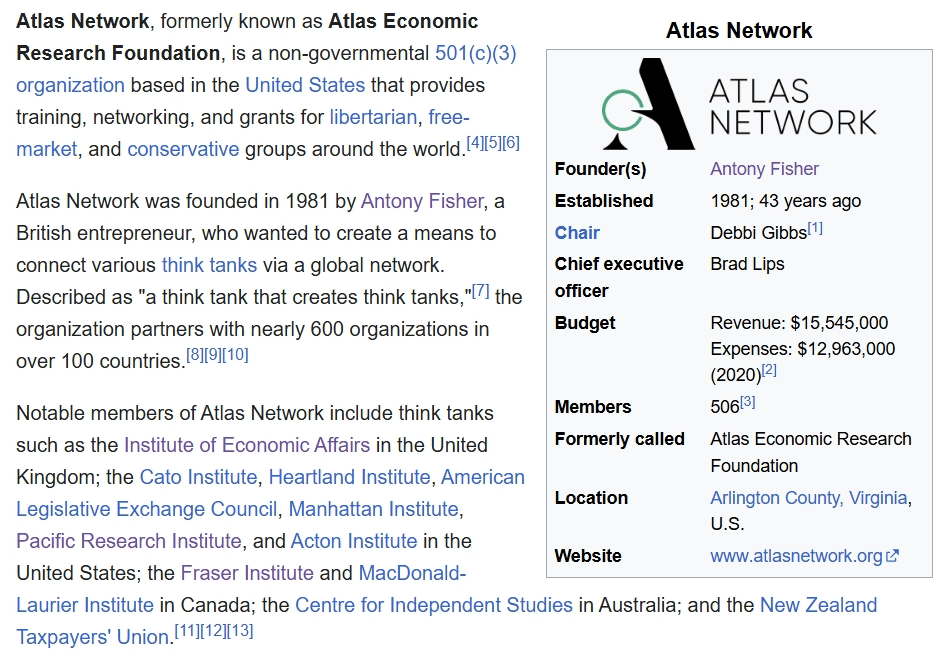
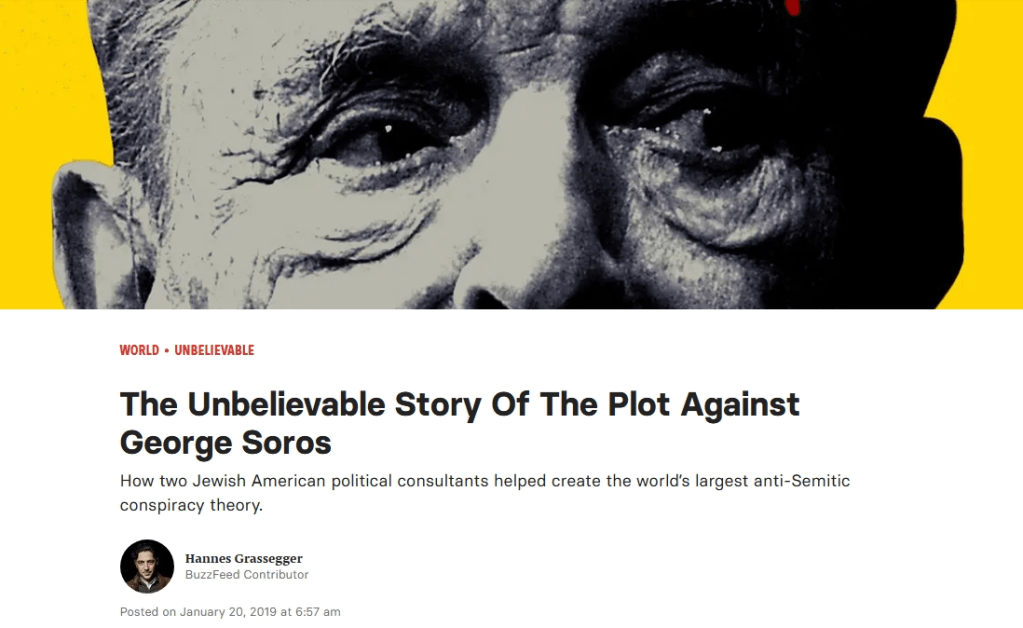
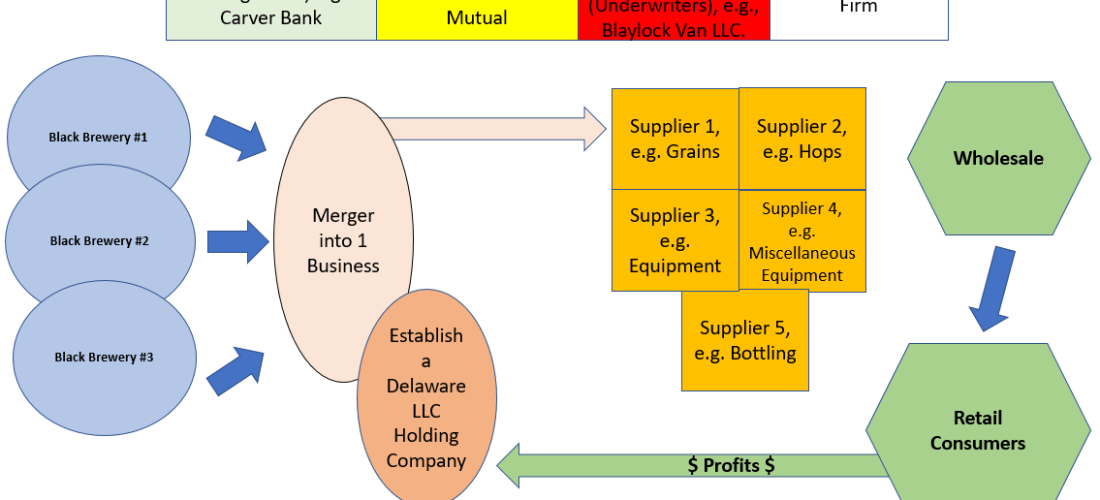

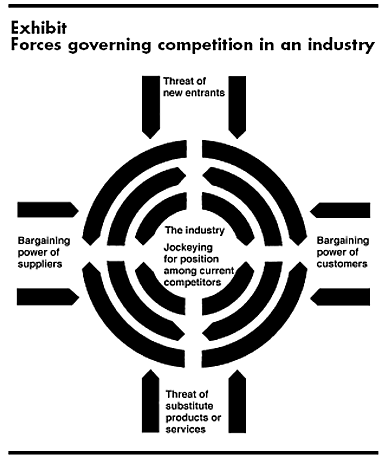
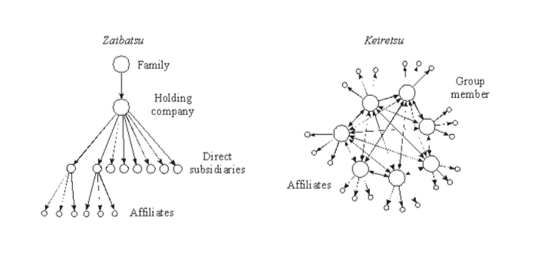
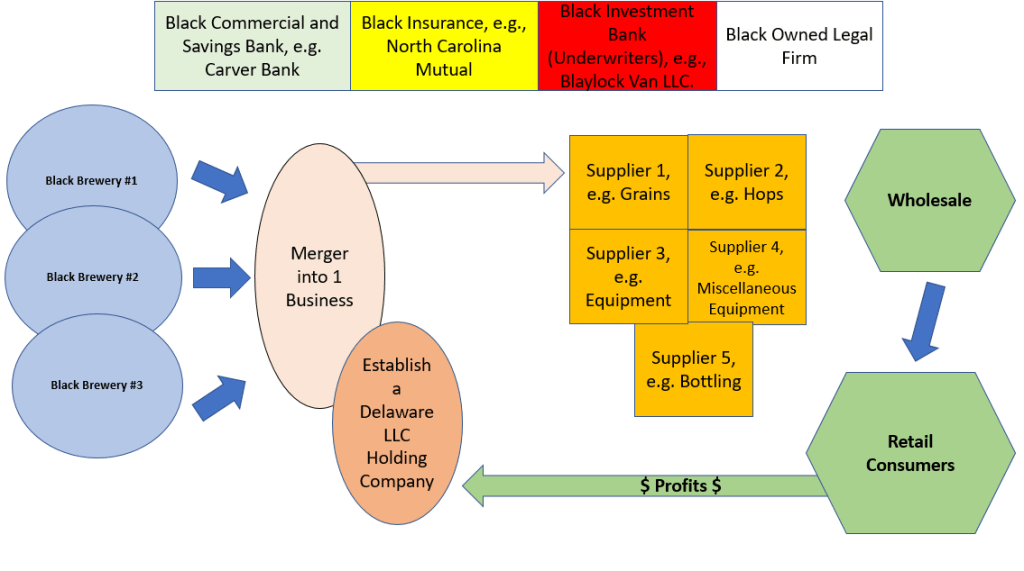
 Mitchell Research Group