It is important to remember, for the sake of unity, that a fair share of white people helped Black Americans get our freedom.
Wilberforce University, Bennett College, Clark Atlanta University, Fisk University, Xavier University of Louisiana, LeMoyne Owen College, Rust College, Shaw University, Alcorn State etc are all named after white benefactors and abolitionists
And it wasn’t about being a “white savior” who infantilizes black people but white allies in the cause of human liberation and progress
We today don’t admit that it was dangerous for white people to help black people especially with white supremacy terrorists in the Reconstruction South.
John Brown was hanged for example for trying to start a slave revolt at Harper’s Ferry. Many Kansas Jayhawkers (abolitionists) died fighting Missouri Pro slavery factions. White women might have faced physical violence for disobeying white male oriented patriarchy.
Let’s not forget the thousands of lives lost in the Civil War where many units were from abolitionists hotbed in Maine, Ohio, Massachusetts, Pennsylvania etc.
Even though the United States has kept perpetuating racism in various ways after the Civil War, we in modern times when analyzing the past should also look for stories of unity and positivity.
I have noticed in modern political discourse on both sides of the political spectrum a growing sense of segregation, with the left-wing pushing a de-colonial, Critical Theory (perpetual criticism), and a self-determinist framework, whereas the right-wing also plays the “identity politics” game but with a majority white, reactionary, and coded language mindset.
With each new generation we forget our past of unity or fleeting moments of unity.
It seems right wing racists, foreign intel agencies, the “woke” liberals, the media, political parties farming votes, capitalists monetizing race, etc., can’t help but divide things.
1) Participatory Budgeting where citizens vote on what percentage they want their taxes going, everyone’s submissions are averaged out, but then legislators do the same thing. Both are averaged and used as a baseline for Budgeting.
2) Merge the census with tax returns to cut costs if not by law, then by executive order
3) Review federal acquisition procedures to ensure procurement practices are optimal
4) Deleted
5) Better publicize what the federal government does in fun commercials such as what’s going on in science, agriculture, historic preservation, national parks, environmental efforts like the restoring animals on the Endagered Species List, Army Corps of Engineers, NOAA (National Oceanic & Atmospheric Administration)
6) Instill a spirit of customer service amongst public (civil) servants so the general public improves their perception of government
7) The possibility of using Enterprise Resource Planning system tools like SAP in government agencies to better coordinate finance (as to comply with rules such as the bona fide need rule, Misappropriation Act, colors-of-money), procurement offices, auditors, senior leadership, etc. One government, one language as far as ERP, SaaS (Software as a Service), Asset Management Tools, freight carrier guides with 3PLs (third party logistics).
8) Establish a Loving Day based on the Loving Supreme Court case to celebrate multiracial families where celebrities of biracial or multiracial heritage talk about their lives such as Derek Jeter, Pete Wentz, Patrick Mahomes, Mariah Carey, Halle Barry, Blake Griffin, Zach LaVine, The Rock, Meghan Markle, Cameron Champ, etc. See article: https://andscape.com/features/black-pga-golfer-cameron-champ-is-going-places-his-grandfather-wasnt-allowed
10) Encourage telework and refurbish commercial space into residential space
11) Deflate the College Cost Bubble by using the Department of Labor to challenge hiring criteria of businesses where many require expensive advanced degrees when jobs might require less costly education, i.e., increasing the value of a high school diploma again, etc.; requiring schools getting federal assistance or whom have had past substantial federal assistance on financial brink to consolidate to cut costs
12) Allow negotiation of Medicare drug costs
13) Establish a federal corporation that invests in prescription drug stocks because by doing so this agency can better negotiate by buying or selling shares
14) Medicare Now! Let people use thru Medicare earlier before retirement
15) Lay the ground work for single-payer Healthcare by flipping the FICA formula so out of the 7.65% where 6.20% goes to Social Security and the rest, 1.45%, towards Medicare/Medicaid (where your employes matches your contribution), you flip it but you do it slowly so those who paid into Social Security and are near retirement can get their full benefits (unless they opt for more Medicare). Raise the overall 7.65% to 8-10%.
16) E.U. style data protection for US consumers
17) Also require digital currencies be backed by some sort of convertible asset like gold or silver
18) Issue a Defense Production Act edict to gold miners to mine more gold and silver to continue increasing our vault reserves
19) Not to Exceed Age Limits for Justices such as 70 or 80 as opposed to term limits so we don’t get activist judges who constantly flip on laws as one judge takes over from the other, etc. Yet, we don’t get judges who are always in the hospital once very old
20) A Total Energy Policy that includes both green and fossil fuels including converting nuclear weapons into energy fuel for reactors, while handing over fuselages to the aerospace industry such as to send satellites into in orbit
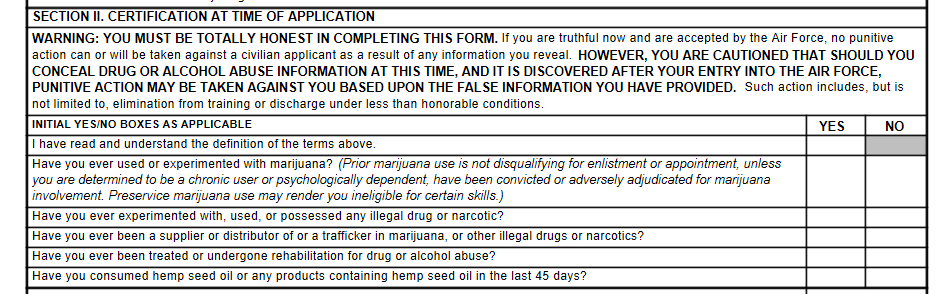
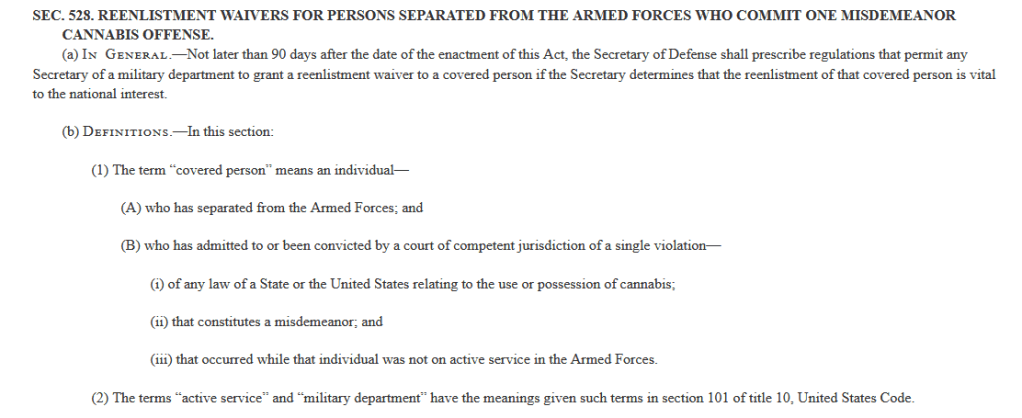
21) Full Legalization of Cannabis and help with military recruitment by disallowing the asking about prior or post service (in the case of re-entry) Marijuana usage.
23) The possible establishment of a US Space Force Academy in a place like Cape Canaveral or Daytona Beach (near Embry Riddle Aeronautical University), Houston, Hunstville AL, Prescott AZ, or Santa Barbara CA near Vanderberg AFB (even if it has to still fall under the guidance of the USAFA and Air Education Training Command). Even if the school has to start off as a two-year school for junior and seniors who do their first two years at the USAFA. An academy size comparable to smaller academies such as US Coast Guard Academy or US Merchant Marine Academy. Sports will be in the small NAIA or NCAA III. Name facilities after famous astronauts or space pioneers.
24) (My personal favorite) Operation Gerbil or Gerbil Maze with NASA and companies like Blue Origin, SpaceX, Astra, etc. Replace nodes on the International Space Station with new sections but send the old ones to the Moon so we have materials to establish a small research facility. Scrap junk missions to land materials on the moon such as wiring, aluminum, etc.
26) Re-establish mental asylums with funds and grants to states via DHHS to help with the mentally ill homeless population.
27) Separate mental asylums, drug rehab, and jail where in many cases these are merge to cut costs especially as jails become more privatized
28) Fund clean needle exchanges and promote one-time use needles.
29) Urge cities that have lax policies on homeless peoples to encourage these people to clean their areas, aka, you can stay here if you clean the streets. This can be done by coordinating with nonprofit organizations, local police, etc.
30) Urge ISP service providers to require ALL adult sites have Two Factor Authentication to prevent minors from accessing pornography but protect pornography as free speech between consenting adults. Sites that don’t apply this such as those incorporate overseas can be blocked. I support the right to watch adult entertainment, but it is too accessible.
31) Reform federal sugar subsidies
32) Transition After Training (TAT) for Transgender service people where recruits after basic training, completing trade school and upon reaching a rank that permits off base living or single quarters will have the ability to transition.
33) Department of Justice mandate to protect Trans people if jailed be it local, state, or federal such as solitary confinement or protective custody to prevent them being abused or harassed
34) Artic Defense Pact as an extension of NATO, NORAD, and AFNORTH with Canada, US, Denmark, UK, Japan and Nordic countries to exercise and coordinate defense of the arctic especially as climate change opens waterways
36) Expand the early commissioning program at Junior Military Colleges but also schools like Embry Riddle Aeronautical University
37) Expand the payout for Enlisted College Loan Repayment Plans in the military
38) Expand the Segal Education Award for the Peace Corps, AmeriCorps, Teach America
39) House arrests for petty crimes as opposed to jailing
40) Policies to end racial segregation in jails such as isolating violent criminals from inmates capable of rehab. Segregate based on crimes committed and character (not race) instead of bunching all types of criminals together.
41) STD testing for all inmates before entry, while incarcerated, and before exit
42) Encourage the expansion of open stock market exchanges on Eastern Time to close on West Coast or Central (Chicago) Time so trading hours are extended a little bit
43) Include Mexico’s top universities into the Association of American Universities with the US and Canada to promote goodwill
44) Use Border Wall funding as leverage for increased gun control (not confiscation)
45) Return parts of federal land to Native Tribes and Native Hawaiians
46) Fly the flags of Native Tribes on federal property and deed back parts of federal lands to Native American tribes
47) Investigate Highway of Tears Native femicides with Canada
48) As Reparations Package: Free or very cheap HBCUs; free genetic testing to find African ancestry, and 0% federally insured fixed rate mortgages (Freedman Loans) as a reparations package for black Americans similar to the GI Bill and VA Home Loan
49) Require truck drivers submit DNA swabs since many unsolved crimes were submitted by truckers. Also, pilots such as those who use smaller off the radar air strips.
50) Authorize a “hacker hunter unit” with law enforcement and clandestine operation authority within the Cybersecurity and Infrastructure Agency (CISA)
51) Have (RPCs) remote processing centers where the US can have courts and processing centers for refugees in foreign nations similar to forward-operating bases (FOBs), thus reducing the need to migrate all the way to the United States when judges can do virtual court sessions, but you have onsite translators, law enforcement officials to run background checks, etc.
52) Cash Preservation Act to ensure that large businesses are still required to do a certain percentage of businesses with paper cash currency
53) Link all successful experiments at attempting to cure HIVAIDs to race for a cure, spanning stem cells, medications, nanotechnology, gene therapy, etc.
Terrence Howard, Kanye, B.o.B, Tyga, DeSean Jackson, Will Smith…something is going on.
I appreciate Umar standing up for black people but I disagree with him on things.
He’s another talker in a sea of people doing the same, chasing that easy money from the “algorithm”
I wonder how many women Dr. Umar Johnson sleeps with after his seminars while touring the country considering a lot of the applause in his crowds seems to come from black (maybe single, maybe not) women. Seriously. He’s selling a product that many want, and I figure many women might want the honor of saying they’re the muse to the “honorable” Dr. or “Chief” or “Emir” Umar Johnson.
For such a judgemental person he’s out of shape and should cut back on the deep fried lemon pepper wings.
Considering his misogyny and bigotry, like the “reject modernity, embrace traditionalism” “black people were better under segregation” of thinkers like Kevin Samuels, with the late Mr. Samuels having been associated with podcasts like the Fresh and Fit Podcasts (which leads to Rollo Tomassi, Andrew Tate, Stefan Molyneux, Lauren Southern, The Young Americans, etc.), I wouldn’t be surprised if Johnson, with his version of Pan-Africanism, is a proponent of polygamy, considering many men are doing whatever they can these days to “get their balls” back, even though I’d argue they were never taken/they’re embarrassing themselves/saying things they might not be able to take back one day. But, who knows? That’s just speculation my part…
I guess according to Umar… people who love each other and have children across “racial lines” have to get…divorced? Split time with their kids? Feel shame?
Fuck you.
Umar chirps about staying in your race and that black men should only date black women but this puts all the blame on men as if black women don’t set the criteria. Marrying someone simply for their race and no other characteristic is stupid to me but it works for some.
There’s plenty of black men for black women and if a woman can’t find a partner that’s more of a sign of her than men. There’s always a willing man more than a willing woman in my opinion. Black women are also allowed to date outside their race and this doesn’t offend me. I remember growing up and there was no love thrown my way and I can admit that. I also grew up traveling as a military brat where environments are very diverse and non-segregated.
Honestly all the anti-whitey talk is a turn off. It’s a turn off to air this supposed dirty laundry. Hate is a turn off. Ignorance is a turn off.
I admit, I’m dating a white woman but black women are beautful but my lady isn’t black. Cool. She makes me feel supported, free, and she doesn’t think she knows better when I speak about race. I can be a nerd. I don’t have to worry about appearances. I can listen to whatever music I want. She simply listens. She shows me affection and there’s no real power struggles. I support her.
No one supported me so why turn my hand away from someone I care for just because of a fat and fat mouthed bigot rapping off black stats and woke talking points I already know about?
I use to live in “Hotlanta” and went to high school there but it wasn’t my style 100%. Bougie. Fast. Heartless. Fake it to you make it. Avarice. Leased cars. Shootings. Strip clubs. Hook up culture. Some of the most spoiled black children I’ve ever seen living in mansions but making fun of poor kids or bullying white kids. Granted there was plenty of old Dixie hate around. I know the S.W.A.T, Ben Hill, Greenbrier, Fort Mac, Old National, Riverdale, the West End near Morehouse and Spelman, just as much as I know the burbs where I grew up where my school was 50% black. Church on Sunday, wings for lunch with extra bleu cheese or Publix chicken with “fixins” on the side. To be honest I miss old days of black culture before rap, before “woke”, but I’m not hating. I grew up with two parents, one from the hood of Miami near Liberty City by way of kinfolk from Alabama near Selma (my grandmother grew up near Coretta Scott King), and my other parent is from the backwoods country of Georgia.
Yet, Umar Johnson has no right to tell a black person who lives the black experience, which is an experience of many experiences, from poor to bourgeoisie, rural to urban, Northern to southern, East to West, native born American or new African immigrant, part black, extrovert, or introvert, straight or gay, tall, or short, “proper sounding” or ebonics, that they aren’t black because they don’t meet his criteria.
When will black people ever stop this? Time and time again…This purity testing? Blackness could be this all-encompassing and loving movement, happy to spread sacred wisdom of the Motherland to influence all mankind, but instead it comes off as hate against hate.
And, who care’s if he’s “eloquent” or “funny”. Hitler was eloquent. Idi Amin was eloquent. Mao was eloquent. Grand Wizard’s can be eloquent or funny.
Dr. Umar who is essentially in the Intellectual Dark Web, like quacks such as Jordan Peterson, Stefan Molyneux, Eric Weinstein, etc. He’s not building anything. He’s not engineering anything. He’s not coding for anything. He’s just another…talker. A paid, viral, algorithm chasing talker with some papermill doctorate, in our postmodern hellscape of self-help gurus with fascist underpinnings hidden under Joseph Campbell Jungian analysis or whatever.
I find it offensive that Umar as one American guy thinks he can single handedly define what Pan-Africanism is. His Pan-Africanism seems like a black man’s wet dream of Hitler grandeur with his Pan-Aryan ideas or some George Orwell 1984 dystopia. Pan-Africanism, Umar aside, despite the noble intentions and the many contributions of self-ascribed Pan-Africanist is inserting a black framework into larger discussion, seems like a form of reverse colonialism where predominately American voices are dictating the narrative, despite America, compared to black countries abroad, is privileged. Yes, systems do oppress black people, but one black American has more opportunity than many black Africans abroad.
I understand the need for we as black people to regain a sense of our roots, but often Pan-Africanism seems like erasure, oddly. It attempts to merge all black aesthetics into one on the grounds of unity, but incidentally might erase the unique nuances that makes the black experience so unique. Further it might not even include things which some might not consider “black enough”. It also might insert toxic elements from the America’s into the family oriented, rural, and pastoral cultures of many African groups. It’s not that Pan Africanism is bad, but how it has come to be, seems slightly problematic but questioning it in certain circles is grounds for something akin to “excommunication”.
And, by the way if you’re some white liberal reading this. Respectfully, all love to you, thank you for being allies to black people in time of need, but on this matter… white liberals have a tendency of listening to the loudest black voice in the room because they’re constantly searching for the blackest “diamond” in the rough.
Pan-Africanism in one way could be considered a bridgehead for the United State’s growing interests in Africa to hedge countries like China, and the US State Department (and intel community) could use “Pan-Africanists” to insert US ideas into Africa.
Adding insult to injury as Umar goes around threatening the existences of interracial couples who are already receive hatred from certain parties, he also DID NOT go to a Historically (emphasis on historically) Black College and University (as if it matters or makes you less black if you don’t go to one). Sorry, is Obama not black enough for going to an Ivy League college, a place where black people were denied for most of American history? Why are we shaming black dance teams at “white colleges” when this could be a showcase of black culture, etc.? Black people act like white folk don’t have (or, didn’t invent) remote controls. It’s not hard for others to watch Grambling vs Southern or the Celebration Bowl.
Umar went to Millersville University and got an advanced degree from the Philadelphia College of Osteopathic Medicine, where osteopathic medicine is heavily criticized by traditional medicine, but it’s not that Umar cares, or many of his follower’s care, considering we live in a world of Zodiac followers and hand-readers, because he simply needed a Dr. in front of his name to give himself more credence. Good on him for achieving it, but simply because you’re a “doctor” doesn’t mean your prescription to the world’s problems are entirely accurate.
He’s even been caught lying talking about his ancestry to Frederick Douglass according to The Root (2017) article by Michael Harriot, titled: We Fact-Checked Umar Johnson’s Hotep Tantrum with Roland Martin Because Someone Had To. That should have cancelled him, but his hotep followers don’t care, his black female followers obsessed with black men with white women don’t care, no different than Trump supporters not caring for his multiple lies.
The further irony of Umar is that he’s some type of Muslim, but for whatever odd reason, black Americans never question the fact that Islam played a huge role and still does play on in the enslavement of black people. Muslims, whom I have no problem with, but relating to the history of slavery in Africa, weren’t permitted to enslave fellow Muslims, so being in Northern Africa and the Sahel, Muslims made raids into Sub-Saharan Africa or traded for slaves for goods with black African tribes or kingdoms. Tribes who didn’t want to be enslaved and wanted to make money from the gold trade routes converted to Islam as a business decision. These gold trade routes helped Timbuktu flourish, but the wealth of gold trading Muslim African Kingdoms likely tipped off the Europeans who had contact with Islam (for better or worsts).
After the Reconquista of Spain and Portugal over the Moors, the Portuguese simply sailed to areas that Muslims were familiar with, and the Trans-Atlantic Slave Trade began in the Age of Discovery, especially after Queen Isabella and King Ferdinand sent Christopher Columbus to what would be the new world.
If certain black people are so committed to “de-colonization”, then why not go further, and return to nature-worship which is more indigenous than any Abrahamic religion? However, our ancestors in the USA fought with Christianity inspiring us, so why throw away what our ancestors fought with simply because we want “consciousness”? Why can’t you be a Christian or a cultural one at least (identifies as one, but not a hardcore follower) like most Americans and be equally as intrigued with African culture? Are we better than our ancestors because they were more oppressed than us, but they didn’t “fight hard enough” according to or modern standards? I dunno…
I would argue the existence of black people is miserable because not only are you oppressed by systems out of your control that inherently criminalized or stereotype you, but you’re also policed, haggled, and harassed by your own black people where everyone walks around purity testing the authenticity of the other instead of owning their own lives. You’re a target of white supremacists and get the ire of black nationalists.
Yet, maybe I can’t be mad at Umar because black people are human and most humans care about what other’s think and try to fit in as to not bring negative attention to themselves.
II. Want to Hear a Conspiracy?
Anyways,
Want to hear a “conspiracy theory”?
Ok. Here we go…
White supremacists love black separatism.
Oh, wait, that’s not a conspiracy.
It’s as if the Founding Fathers who supported slavery but knew that the freedom of black people was inevitable, knew that one day, particularly with black people being treated so poorly, would segregate themselves, because they would hate white people, which was their plan all along.
There’s something odd going on to me, but it seems we as a people have accepted the contemporary discourse of self-determination and tribalism as a needed tenant for a more just world, yet, to me, I suspect that this tribalism, particularly in the United States, where white and black are more similar than we given credit for, is and has been pre-planned or is the expression of past segregated/nationalistic ideas still echoing into the present (for example, even the hippies of days past were still racially regressive compared today’s standards but their views or analyses on race, gender, etc., largely remains unchanged to this day).
The Great Replacement Theory” or “Kalegri Plan” is something spouted by conspiracy theorists, white nationalists, and Nazis (and, Fox News) alike, but I would argue that the future is the “Great Re-Segregation”.
The Great Re-Segregation is the innocuous herding of groups into defined spaces (maybe, even “smart cities” with “themes” and within meta-verse spaces, i.e., no different than racially segregated neighborhoods) in a globalized world where groups are essentially herded like animals (without thinking of it as such), where our data is collected (genetic information included), surveillance is everywhere, and the mass media is used to stir up unrest in the public, yet, since levers of power will be largely influenced by Westernized European inspired ideas, policy, etc., but also the growing influence of the homogeneous Chinese.
A society ruled by a technocratic elite (i.e., like things already are), indifferent to progressivism or conservatism, who operate with a pragmatic and “syncretic” viewpoint and manages the species, like a Darwinist exhibition. Sure, we will still have overlap between the groups, because we as a species have always had overlap, because sharing genetics helps “keep gene pools” humble (not inner-bred), which helps the overall longevity of the species (i.e., genetic vigor), but most people will be herded (socially groomed) to segregate and the political right and political left are both responsible.
Countries are essentially “centers” overseeing commodified groups where all nations answer upward to institutions and systems effectively ran by a small group of people, i.e., a pyramid scheme. When consumer bases start to slow down in how fast they replicate while also demanding more rights as they climb the economic ladder, economic down-turns are manufactured, new bodies from around the globe are shifted into industrial ones, and process of segregation in one hand and assimilation in another takes course.
However, I don’t want you to lose faith in all institutions, and institutions in many ways are highly effective at mitigating risks and subsidizing costs to help the public; however, there’s players within these systems that seem to have an agenda, or maybe these leaders are simply operating subconsciously the way the system was designed to, i.e., an empiricist, scientific, sterile mindset of mitigating groups, creating grand narratives, managing the scarcity of resources, etc.
III. Trauma, Conspiracy Theory, etc., etc.
But on black people.
Terrance Howard is flying around the world telling people that he has disproved gravity. Kanye “Ye” West is having a psychotic episode for our sick entertainment as he is handled by white nationalists and antisemites using him as a “pet to prove that they aren’t has “unstable” as Ye. Rapper, B.o.B., attempted crowdfunding to raise money to help prove the Earth is flat. NFL Wide receiver, DeSean Jackson was called out for saying antisemitic things. Rappers such as Tyga often talks about “Jewish money”, etc., the irony is that there’s likely Jewish management working on his albums (with rappers also somehow allowed to say terms like “white bitches”). Will Smith, likely feeling emasculated by social media and his wife (or, life partner, what have you, whom had a relationship with Tupac – who holds a messianic status amongst certain black people), calling his manhood and even blackness into question, assaulted another black man on stage, in front of the whole world, at the world’s most prestigious acting award (even if the event has fallen off in popularity in recent years as far as ratings). Kyrie Irving did share a post of a “Black Hebrew Israelite” adjacent documentary (not to be confused with black people who practice Orthodox or Reformed Judaism) that has antisemitic tropes.
The comedian, Godfrey, and even the radio personality, Charlemagne the God, whom I would say have their heads on right for the most part, sometimes praise the Farrakhan’s of the Nation of Islam, which as a group espouses…Black Nazi rhetoric, even if they make certain good points analyzing power, how things work, etc. I found it interesting that everyone called out Ye for his obvious hatred, yet, there this veneration for figures like the Farrakhan’s which is often a way of proving “how down you are” in a culture were purity testing, i.e., sizing each other up seems prominent.
Black people have been taught that we cannot be racist, but only prejudiced, since we lack institutional power, yet, the irony of this idea is that A) it allows black people to not challenge our potentially bigoted ideas and to feel empowered within those beliefs because traditionally we lack power, and B) this notion seems like a form of infantilizing black people by saying our actions aren’t as comparable to that of our supposed “superiors”, and this can be problematic on multiple fronts such as empowering sociopaths who already lack the ability to take self-accountability, and yes, black people can be sociopaths as well.
Bullet point (B) in my opinion tends to be promoted more by non-black liberals or non-black Leftists, who struggle with how to help or listen for fear of offending. Building empowerment solely on the idea that we as black people don’t have power or haven’t had an impact on power systems, seems defeatists to me, i.e., a victim-based mentality, which sure has plenty of merit – considering black people were and are victims in many ways – but, this tendency also has elements of “erasure”, i.e., it erases the impacts black people have been able to insert on power systems.
We as black people always focus on depression as black people. Our movies are either hilarious comedies or the most depressing family or slavery stories. It’s one extreme to the next. It reminds me of the Greek mask where one half is smiling and the other is sad.
Many self-ascribed black nationalists don’t know every single black person who contributed something of prominence, and we often talk about social leaders and celebrities, as opposed to our engineers, scientists, doctors, etc., which interestingly is something that all groups do, further showing we’re no better or worse than anyone else.
Before I go on, I want to state that I want all humans to be inspired by blackness. I do not want black exclusivity, black segregation, black hierarchies, black gatekeeping, purity testing, etc. We are all humans and should find inspiration and commonality amongst each other because we all have different ways of seeing things, so it’s intelligent to learn and adapt to each other. The same way how when I was kid found a moral is tales like Robin Hood who fought the rich and the state for the benefit of the common man, I want a white kid feeling lonely in the boonies to be inspired by Shaka Zulu.
I’ll get to the point of my beliefs. I don’t like segregation. I was raised with a Christian inspired Abolitionism that seeks a future where are people judged by their actions solely and not for their race.
Even though I am by no way a good Christian, and many Christians would reject me as being a Christian because I’m not an extremist, I still place merit on the teachings on mercy, love, humility, etc., that Christianity teaches.
Interestingly, my political left leanings are in part inspired by Christian mercy.
I believe that racial segregation is social engineering derived from our colonial roots and is a way of dividing the public by manufacturing dialectical (diametrically opposed) tension, cultures., etc.
I find it “funny” that white nationalists support the rhetoric of black separatists, so…if logic is to persist, and black people or the political left say that the US is white supremacists (i.e., Amerikkka), then maybe black separatism was intended to be another force that keeps the races separate, so they can be “farmed” “herded” etc. I find it interesting that certain elements of Left-Wing thought, with its anti-colonial, post-colonial, and de-colonial framework calls for self-determinism, yet, white nationalists or other Right-Wing forces call for self-determination too.
I believe that those in power use both left-wing and right-wing because they have a pragmatic view of power, to maintain racial segregation, hierarchies, etc., but these people, seeing themselves as entitled to “evolve the species”, use tension to merge elements of bipolar opposites, so from the explosion of these opposite agents, you create a new paradigm, but the later repeat the cycle as new diametrically opposed binaries reveal themselves.
There’s a Darwinists and Enlightenment Period based mindset (which includes liberalism, Communism, fascism, and capitalism) that sees chaos and flux as essential in the process of evolution and these concepts are embedded into Western thought, didactic, etc. The common man, burdened by the grind of existence, where the system knows and manipulates our Maslow Hierarchy of Needs by creating scarcity (competition, unemployment, etc.), is more likely to find solace in their identity (the cheapest form of currency in my opinion), and not question how those identities are constructed to be binaries in a system of control for the benefit of a few.
For example, the Nation of Islam, which is listed as a hate group by the US State Department, Southern Poverty Law Center (who helped take down the KKK in the 1960s), and Anti-Defamation League, believes that black scientist named Yakub (insinuating Jacob from the Jewish tradition) created white people and other races with an unspecified birth-control method to be “diametrically opposed” to blackness, and to conquer black people.
Nation of Islam by the way was allegedly created by a man impersonating a black man, and he mysteriously disappeared, potentially stealing money from membership fees of poor blacks. Many poor black people fled up north, and the creator of the Nation of Islam, using the then popular trend of secret groups, like B’nai B’rith, the Klu Klux Klan, etc., focused on these new black migrants who became jaded by racism up north. Before the twentieth century, after the Civil War, the United States saw an increase in spiritualism, mesmerism (hypnosis), seances, etc., because there was a lot of death from the war and a changing of America as new immigrants came in. The N.O.I., is simply a byproduct of these events. Today, the Nation of Islam has ties to Scientology, which is further proof of the mind-control elements the N.O.I. seeks out.
Simply reading this I can pull so much. A) black people descended from slaves often make similarities to that of the ancient Jews in captivity since that was the only book that slaves were allowed to read (or, be read too), granted it was redacted by slave owners to justify slavery, B) because of Christianity being forced upon us – my people, as it was for most groups, including tribal Europeans in the Dark Ages, newly freed black people after slavery, notably those exposed to other ideas in Northern Cities, were searching for identity and some chose a religion that was perceived as polar opposite to Christian, rural, and Southern, yet still beholden to the credibility of Abrahamic faiths, and chose unorthodox Islam, and C) the figure of Yakub – a rip off of Jacob – is essentially the concept that not only chirps to anti-Jewish thought, but also the notion of the “Uncle Tom”, “sell-out”, “race traitor”, etc., meaning that the Nation of Islam inserted this character, as a “purity testing” trip-wire figure, as a means of taking the high ground to call any detractors or critics “enemies of the race”, which is a pretty low and lazy way of winning arguments.
There was also an aversion to the COVID-19 vaccines, despite black Americans in certain categories being at increased risk for contracting it due to high blood pressure, heart disease, diabetes, etc., but also black and Latin workers often work in businesses that were prone to outbreaks such as warehouses, meat packing facilities, restaurants, etc.
Sure, my last point about COVID-19 is more understandable, because to be frank, the virus was new, people had limited information, the virus did fundamentally change how we operate (such as tele-work, social distancing, etc.), and there is a general mistrust of institutions; however, for all the other previous points stated, there is a trend of black men, notably popular black celebrities, descending into what I consider to be postmodern solipsism, relativity, and conspiracy theory.
Further, as this phenomenon of black celebrities going mad is happening, which is not necessarily new, there are public figures willingly to use this distortion or confusion of what is real or what is not real to mix it with Pan-Africanism so these public leaders to ascend to prominent positions.
Umar Johnson, for example, is a Men’s Rights Activist, likely inspired by the late yet controversial Kevin Samuels (whom like Jesse Lee Peterson, tells the story that black people were better off segregated).
IV. Fascism hiding under Postmodernism
Misinformation affects all people regardless of demographic because as a society we are now living in a hyper-reality of late-stage, globalized capitalism – full of parody, pastiche, bad actors, i.e., trolls or agents of misinformation, and recycled pop culture – where the distinction between real and fake, or simulation and simulacra is hard to discern.
We live in a world where corporate power for example is so strong, innocuous, and entrenched and it pervades all aspects of life, including the commodification of race, culture, sexuality, orientation, ideology, religion, education, healthcare, and just about…everything. Even misinformation is commodified.
I say that postmodernism is the chameleon skin that shrouds the predatory animus of capitalism.
The disorienting “skin”, i.e., postmodern culture, is simply a way of capitalism to sustain itself by a) creating relativity so we don’t know what is real or fake, and b) recycling culture, often in anachronistic fashion, because most growth or markets have already been exhausted, and most production isn’t from labor value but is from financialization, i.e., using fiat money to speculate on assets to create artificial demand where those at the top benefit the most, and manipulate business cycles to their own benefit (knowing government’s, already being privatized, will insure their loses at taxpayer expense).
As a result, we live in a world where “Continental Philosophy” encompassing fields such as metaphysics and existentialism merges with “Analytical Philosophy” encompassing fields like linguistics, game theory, logic, etc. In other words, we have a lot of intensive research and data alongside endless subjective interpretations of said data thus leading to a “collective flux”, i.e., mass solipsism, resulting in statements such as “my truth”.
Even though this democratization of information can be inspiring and helpful (e.g., checking institutional power), it does lead to a “triumph of the will” of ideas, i.e., the strongest survives, hence we may be subject to constant and ever-growing ideological conflict as ideas battle each other with no sense of moderation or consensus in sight.
But as a fellow black man, I can understand why there’s this need for truth among black people, yet, it seems to be leading black men (not saying more so than anyone else) down conspiracy rabbit holes.
The truth is, of course, black people had our diverse and often differing indigenous identities stripped and were forcibly yet partially assimilated into Western Civilization, to be labor power, but also to serve as an aesthetic binary to whiteness, where blackness became the magnet for the vileness of white supremacy.
Black Americans were designed to arouse a sense of supremacy in white settlers, many who had nothing but the value of being white.
Black people historically were denied education, reading, the ability to speak up, and our own destinies. Yet, this doesn’t mean that black people lacked aptitude, but rather we were disbarred from understanding the civilization which fell upon us, and which also devalued us. There’s a tendency to think that we’re not getting the entire story, or, there’s a paranoia of some higher deeper and nefarious truth – which is true but can be untrue depending upon on how we seek those truths.
But, how far black people have come is a true miracle.
We must be willing to check our own theses.
Simply because we feel something doesn’t mean that it is true, and the also the simplest path towards a solution is often not the truth but its tempting to take the less arduous path. For example, antisemitism is often a gross simplification of the truth, because Jews don’t run the world, even though, of course, there are powerful players that are Jewish pulling the levers of power, but to time and time again blaming Jews is intellectually lazy and ironic. If Jews really ran the world, why would they not just bulldoze anyone in their way?
White nationalist for example, preach that they are superior one second, while claiming to be victims at the same time, and most of the bad ideas that are affecting everyone – white people included – were created by white people. Karl Marx, a Jew, or a BIPOC person didn’t steal your job, but Mitt Romney working in Leveraged Buyouts did.
The temptation to jump to antisemitism, is disingenuous, and an easy scapegoat, but black people do this too, i.e., we try to find a simple explanation without understanding all the nuances, conflicts, inner diversity of various groups, etc.
When you add all of this with the fact that black men are often the most criminalized, black people in general – traditionally speaking – are often seen as having “less quality” or “less refined tastes”, etc., there is an insatiable thirst for truth to rebuild or regain our “consciousness” “regalia” “honor”, but the trauma on black people, both present and past, both anecdotal and institutional, seems to corrupt the path towards truth. This corruption, which objectively is from a good place I would argue, seems to have some black people questioning everything, even basic principles such as Terrance Howard arguing against basic arithmetic (something all humans developed and understood on their own).
History is already a confusing and rigorous endeavor, but most people fall for conspiracy theories, where I defined conspiracy theories as theories where the conclusion is already predetermined, but the researcher with a specific or ideological bias uses facts that simply serve their point, instead of actively challenging their own thesis or idea. Conspiracy theories as opposed to let’s say investigative journalism often lacks rigorous peer review, panel presentations, debates, etc.
She’s not a horrible person, but I don’t get much from her opinions and they seem highly biased, reactionary, and not reasearched that well. I think she has learning to do on issues, but she has a platform to spread her “contrarian” ideas to the masses and add to the paranoia that’s already out there. You hear the word shill a lot online, and in many ways despite her seeming “against the man”, I think she’s only libertarian as a rebuttal to progressive politics so conservatism can be sustained without verbally admitting it, yet, her Fruedian slips in her Tweets reveals a lot of where she is coming from.
Idaho, where Kim is from, is a lovely state with its own unique albeit small progressive elements, but hearing Kim Iversen talk it reminds me of a conservative person from Idaho who really didn’t grow up around a lot of diversity despite her having family who are Asian. Yet, she was indoctrinated within a largely white environment – which isn’t bad – yet, that can shape a person’s biases similarly to if it were the opposite. Put it this way, I’m sure many Right Wingers love her, despite her coming off as “progressive”. I feel she is closeted cheerleader for white supremacy without even realizing it because she equates the talks around white supremacy as being hostile towards white people but fails to get its a conversation about a system.
This take by Kim Iversen and Joe Rogan…is stupid. I’m sorry, it’s stupid. White Supremacists can’t be threats because they…wear khakis? Kim is so paranoid that white people will be “criminalized” that she’ll actually downplay people in a movement that has done violence in the USA such as terrorism.
Another goofball take by Kim. So liberals are leaving supposedly. OK. But Ryan Grim rebuts her claim by saying liberals are moving to liberal areas and her best comeback is “well, they’re not the same sort of Demcrats”. Oh really, can you elaborate more? She also doesn’t address the larger reasons behind the housing crisis such as the Federal Reserve’s easy money policy making home prices soar, innovations in online homebuying making home buying faster, etc.
I’m glad that Kim Iversen runs her mouth. Seriously. She could easily slip away as another innocuous ambiguous newscaster, yet, by her talking and her Tweeting, her true biases, thought process, and beliefs become more apparent.
See exhibits below….
.
She can’t understand why people are mad that a vigilante went to a protests which resulted in two deaths? She doesn’t get the symbolic nature of the case considering it was a BLM protests but Kyle being acquitted is a form of the state scaring people to not protests etc.
Forward: Before I get into the article, I want to write a quick list of white supremacists hate crimes, since it seems Kim Iverson is skeptical that white supremacy is a threat, largely since she feels doing anything about it would violate some sort of libertarian principle. But I’m not sure if she’s a libertarian necessarily, and could simply be a free thinker, yet her segments on Rising by The Hill to me have been helping to stoke a sense of mistrust, conspiracy, and even apologetics for right wing ideology.
After I wrote this, it struck me that Kim Iversen is following in the tradition of former MTV VJ, Kennedy, and MTV contributor, Kurt Loder, who are both libertarians. Yet, Kim’s style on her show, Rising by The Hill, seems to be picking up notes from Fox News’ Tucker Carlson, i.e., opining in real time, firmly anchored by a bias, rather than giving in-depth analysis of the issues she’s talking about and with nuance. Kim Iversen seems like a decent person. She’s continuously worked and built a career for herself, and that is commendable. However, I notice that she seems flat-footed when it comes to having a good pulse of what’s going on, and in many ways, I think her upbringing has left her a bit ignorant or unable to understand nuance on many issues, such as those relating to race. Her politics are all over the place, which isn’t problematic in and of itself, but discerning what Iversen believes is task. To me, she’s ultimately a “progressive Republican” with a tendency of spreading paranoid energy, and seems strongly influenced by her upbringing in Idaho, but she takes the “hip position” of being a libertarian (without stating it publicly), meaning she’s really nothing more than a Republican. As she decries the tyranny of the state, her political position ends up being nothing more than apologetics for Republican politics. She can be the most progressive conservative pundit on YouTube if she wants, but in reality, the Republican Party doesn’t care about any of her “progressive ideas”, yet she continuously muckrakes the Democratic Party – a party, which of course, can be embarrassing and counter-productive, but still the Democratic Party gives more people across the country, regardless of background, a sense of belonging (as opposed to the monolithic politics of the GOP).
White Supremacist Violence and/or Mass Shootings by White Suspect Crimes:
Payton S. Gendron (10 kills in Buffalo NY). Timothy McVeigh and Terry Nichols (168 Kills and 680 wounded). Dylan Roof (9 Kills at a church in Charleston, SC). Stephen Paddock (60 Kills and 411 wounded). Robert Crimo III (killed 7 and injured over a dozen in Highland Park, IL). Phoenix Ilkner, a College Republican called exteme by classmates (2 killed and injured others) at Florida State University. Scott Decry (8 dead, Seal Beach CA). John T. Ernest (Poway Synagogue Shooter. 1 dead. 3 injured). Ethan Nieneker, charged with two counts of capital murder and one count of first-degree felony murder (Austin TX). Vance Boetler, shot two Democrat politicians in Minnesota, with no National Mourning from the Trump Vance Administration. Eric Rudolph (1 Killed and 111 injured at the Atlanta Olympics). James Huberty (21 Kills and 19 wounded at McDonalds during San Ysidro Massacre in 1984). Devin Kelley (26 Kills and 22 wounded at the Southerland Church Shootings in TX). Robert Long (8 Kills and 1 Wounded in Atlanta). Dimitrios Pagourtzis (10 Kills and 14 wounded at Santa Fe HS in Texas who was found with Nazi and Soviet regalia). Brenton Tarrant (51 Kills and 40 injured at a mosque in Christchurch, New Zealand). Buford Furrow Jr. (1 Kill and 5 wounded at a LA Jewish Day Care). John King, Lawrence Brewer, Shawn Berry (1 Kill of James Byrd Jr who was decapitated by being dragged by a truck in Jasper, TX). Frazier Glenn Miller (3 Kills at a Jewish Synagogue in Kansas). Robert Bowers (11 Kills and 7 wounded at a Jewish Synagogue in Pittsburgh). Eric Harris and Dylan Klebold (15 Kills and 17 wounded at Columbine HS, where the sole black victim was called the N-word before being shot while calling for his mother). James Harris Jackson (1 Kill with a sword of a black homeless man collecting cans in New York City, NY). Jeremy Joseph Christian (2 Killed and 1 Wounded in Portland OR). James Alex Fields (1 Killed by car and 35 wounded in Charlottesville. Trump supporter). John Earnest (1 Killed and 3 Wounded at Poway Synagogue). Gregory Bush (2 Killed in Jefferson Town KY). Kenneth Murray “Death” Mieske, Kyle Brewster, and Steve Strasser (1 Killed by baseball bat beating. Mulugeta Seraw was beated by Neo Nazis of W.A.R. in 1988 in Portland, Oregon. Brewster was found fighting alongside Proud Boys in Oregon in 2021). Jonathan Russell Kennedy (1 Murder and two attempted murders in Huntington Beach, CA, 1994). Erik R. Anderson (1 Fatal Stabbing of Native American, George Mondragon in 1996 in Huntington Beach, CA). Samuel Woodward (1 Kill of Ben Bernstein in Lake Forest, CA).
Intro in Kim Iversen’s Questionable Analysis on Ethan Crumbley and the Patriot Front March
There’s some controversy around Kim Iversen. I don’t hate her, and I will try to put her into context. Yet, she is quite a mystery. For a public figure she doesn’t have a Wikipedia page, not even a locked account that prevents public edits. Basic Google searches pulls up some information but not much about her background.
I don’t think she’s an evil person and I feel she’s fairly interested in the topics she speaks on. Yet, the controversy around Kim has been going on for a while but it really came to fruition with her “interesting” take of Oxford High School mass shooter, Ethan Crumbley. According to Kim, the reason the Sun publication showed an angelic photo of the mass shooter was because the media was trying to make it seem like all innocent white Christian males appear to be terrorists. She didn’t really miss the point as to why people were disappointed at the photo of Crumbley, in that she acknowledged that when people of color are shown in the media they are often depicted with the worst imagery, yet, Kim decided to be a contrarian for the sake of being one, by spinning as if showing an innocent photo of Crumbley was another attempt to “demonize” white males.
Honestly, it caught everyone off guard and left people scratching their heads. It is as if when progress about fair coverage relating race is happening, she felt she had to insert a contrarian opinion for the simple sake of doing so, which could be authentic, or could be for money reasons, i.e., it’s her job, but when you see her Twitter account response to criticism she doubled down on her defense of white Christian males (which makes sense considering she was raised in white society and has a white father and family members).
Traditionally, black people for example were always stigmatized via the media (something that Kim Iversen has acknowledged), e.g., just peek at George H.W. Bush’s campaign ad referring to Willie Horton. https://www.youtube.com/watch?v=AUxAMG8UqIw
Yet, even if we can all agree that racialized news coverage is bad, the fact that white supremacy is being analyzed seriously seems to have many people feeling uncomfortable, either out of fear of being unfairly associated with the movement, some who are angry that they feel black crime rates are displayed (despite has already stated there’s historical use of stats when referring to black people), or some people are living with a sense of false consciousness, in that America is largely based on white supremacy and people are naturally wired to act as if it doesn’t exists because that defies a certain set of morals mythologized within American culture such as “we are all individuals” or “all people are equal”, when in fact, many groups are not treated equally. Talking about and combating white supremacy isn’t anti-white, where certainly in the past talking about black crime was anti-black considering the U.S has an explicit anti-black history.
The backlash to speaking about white supremacy comes from fear, in which there’s an inherent fear centering around reprisal, which is ironic because if people are terrified for reprisal (which isn’t or won’t happen), what they’re admitting is that in the past they used similar tactics to make minorities live in fear. Basically, their unfounded fear of reprisal is based on them understanding the horrible past of this nation. If logic were to persist, if white supremacy is not a thing, then why are there so many people eager to point out black crime statistics? If America wasn’t built on racism, then why do so many white people fear “reverse racism”?
If we were to isolate this take by Kim on Ethan Crumbley, sure, OK, we can leave it as an “agree to disagree, but really disagree” moment. Yet, just a few days later Kim Iversen on her Rising program by The Hill released a segment titled, “Kim Iversen: Joe Rogan Calls BS on Patriot Front March, Is the Group Backed by Feds?”, published on 9 December 2021, which when accessed by me on 13 December 2021, amounted a total of 512,000+ views. In this segment it is important to notice that Kim is strategically positioned in the segment in the middle of her two co-hosts, meaning she is the focal point of the video and steering the conversation. In the video, she referenced a Joe Rogan segment, featuring Matt Taibbi (Episode 1745), in which Joe calls into question a recent march of white supremacists called Patriot March that occurred in late November 2021 in Washington, D.C. Joe claims that because they’re “in shape”, and wearing the same clothes, etc., that they look like the Feds. Joe does state jokingly that he’s an unreliable source because he’s a comedian (which is interesting because if that’s the case they why take you seriously anytime?), but still double downs on the fact that they can’t be white supremacist because…they have drums, and they have Khakis?
Kim event got the leader of Patriot Front’s age wrong by claiming he’s eighteen years old (I’m assuming she read an article from 2017) but is about 23 or 24 years older having been born in 1998 according to the Southern Poverty Law Center (2021). Further, Kim if she just read a little more into this or at least provided more context for her audience, she would have discovered that Patriot Front has ties to the Daily Stormer, being one of the most popular white supremacist websites. According to the Southern Poverty Law Center (2021), “On November 3, 2017, roughly 30 members of Patriot Front marched through the University of Texas at Austin to the campus’s George Washington statue where Rousseau delivered a torchlit speech. The following day, Patriot Front members convened at Austin’s Monkeywrench Books with members of Daily Stormer and The Right Stuff meet-up groups for a flash demonstration.”
The fact that Patriot Front employs Flash Demonstrations seems to more evidence to detract from the idea that the November 2021 march was a Federal Law operation.
“The origins of Patriot Front lie in neo-Nazi organizing that began in 2015 at the message board IronMarch.org, itself an outgrowth of the community of dedicated fascists who commented at online forums such as 4chan and Stormfront, and allegedly founded by Russian nationalist Alexander Slavros. IronMarch in turn spun off the activist group AtomWaffen (German for “Atomic Bomb”) Division, whose members engaged in various far-right actions earlier this year.” (Southern Poverty Law Center, 2021). Lastly, Southern Poverty Law Center (2021) stated, “After an AtomWaffen member in Florida shot and killed two other members in May 2017, telling authorities the group was planning to blow up a nuclear plant, a number of AtomWaffen participants joined ranks with Vanguard America.”
Relating to Alexandr Slavros stated within the Southern Poverty Law Center (2021) article about Patriot Front, I find it interesting that Matt Taibbi being Russian (which is not a crime, and I don’t want to promote Russophobia) spoke against the Russia-Gate situation during the Trump Administration. I can understand and accept that the case was likely fraudulent, yet, it wasn’t entirely fraudulent in my opinion. My opinion, is that Russia-Gate took facts, omitted some facts, and conflated others in order to check the balance of power of Trump who did display a sense of being imbalanced himself, and also threatening to unravel US foreign policy especially with Russia whom he and others in his administration such as Rex Tillerson of Exxon Mobil and Michael Flynn had relations with. It was a flex of power not only to the Trump Administration who were creating their own unauthorized foreign policy, but it was a sign to leaders abroad, like Vladimir Putin, that the US State will go to about any means to protect our democracy from foreign influence.
Taibbi and other commentors such as Michael Blumenthal and Andrew Mate of The Grey Zone, rallied against Russia-Gate, but nowhere to my knowledge did they or have they admitted that Russia was providing online Far Right propaganda which influenced the Alt-Right which therefore fell under the tent camp strategy of Steve Bannon and Donald Trump. The only sort of Far-Right ideology spoken about by members of the Grey Zone often revolves around the Azimov Battalion in Ukraine, who were revealed to have received US military financing against Russia. In essence, Taibbi and others will call out Eastern European fascism and Nazism when it comes from a US ally to discredit US foreign policy, yet they remain silent on Russian Far Right ideology such as the popularity of thinkers like Aleksandr Dugin who provided essential literature for many in the Alt Right (alongside the writings of thinkers like Julius Evola). Taibbi and others effectively “threw out the baby with the bathwater” as an analogy. Yet, the US government has endangered the US public with Russia-Gate because they didn’t focus hard enough on the far-right ideology actually coming into the USA and West, but rather appropriate facts for their own Machiavellian politics.
Yet, back to Iverson, after showing the Joe Rogan segment laughs before going into the history of plausible or proven examples of state-sanction terror cells. Kim also shows screenshots from Twitter by people like Mr. Reagan, an obvious right-wing pundit, who did have a YouTube channel for a long time and went so far as alleging that Alexandria Ocasio Cortez was a fake politician and actress. Kim goes into the background of Patriot Front in which she explains the group was a splinter group that broke away from a group called Vanguard who were the group that set up the Unite the Right Rally in Charlottesville, VA. Yet, Kim inserts some interesting commentary by stating they are “non-violent”, which might be true in theory, or at least that what’s they say to not bring poor press to their movement, yet, it seems Kim is saying they are non-violent as a way of dissuading any sort of threat by Patriot Front or influence they may have on other groups.
It’s as if Kim is undermining the potentiality of the movement because she’s coming from a libertarian mindset, e.g., she states, “the big question is, how big of a threat are these things though? Yes, do these things exists, yes. Do terrorists exist in all forms, yes. But how large of a threat? What are the American people willing to give up to root out this threat?”.
Before I criticize what Kim just said there, to be fair, the group, where leader Thomas Ryan Rousseau spoke, was relatively small (numbering around 100), and this is according to Ellie Silverman (2021) of The Washington Post, who further stated that the event was pushed by fake Twitter account. “It shows how a small troupe of fascists in uniform can … exploit the loopholes around a social media company like Twitter and absolutely make themselves look much more fearsome, look much more scary,” said Michael Edison Hayden, senior investigative reporter and spokesman for the Southern Poverty Law Center, “and give themselves a much better shot at getting the mainstream coverage they so desperately crave.” (Silverstein, 2021).
The likelihood of what happened at the march is either A) the anonymous Twitter account as owned by a person associated with Patriot Front who sent the message to rally, employing their “flash mob tactics”, but then quickly erased their account, or to give more credence to the idea that the Federal Authorities were involved, is B) the account was set up by law enforcement, with them knowing their “flash mob tactics”, to snuff out Patriot Front to get evidence of its members and gain intelligence on the group. Even if masked, the members had to get to the Capitol somehow, so traffic cameras or other means such as triangulating cellphones can easily build a possible registry of suspects.
But, saying the group was a false flag set up by the federal government seems unlikely, if not disingenuous (my favorite Joe Rogan word he uses a lot), since the authorities would have to recruit about 100 people to march and with 100 people you get the chance that at least one person would spill the beans, or a person that any of those 100 people knew could become suspicious and possibly spill the beans, thus jeopardizing the operation. The possibility of a leak would jeopardize any sort of integrity the government has and be disastrous, culminating in Congressional hearings, firings, even possible cause for actual white supremacists to appeal their cases or convictions, etc.
Joe and Kim’s take on the event possibly being a false flag event has an underlying element of conspiracy, and what one could extrapolate from that claim is that other hate marches or even the Capitol Insurrection itself was a false flag. This therefore takes away from the severity of these situations in an attempt to sweep them under the rug as quickly as possible since they are ammunition for government or activist to continue seeking reform against topics such as white supremacy.
Kim also offers some very thin and weak arguments about the group. She claims that because they have a “polished website” and that they seem well-organized, and that the leader is allegedly only an eighteen-year-old person, somehow means this group can’t be real or be a threat. What Kim and Joe seem to be missing is that white nationalist groups aren’t unsophisticated and have adapted to not looking like traditional Skinheads with red-laced jackboots, being out of shape Good Ole Boys reading Soldier of Fortune with a cache of weapons, or Klansmen. It’s not that hard to get a professional website made if you have a lot of people and tap into someone’s talents or even pay someone do set up your site for you. Also, even if the supposed founder of the movement is young, it doesn’t mean that he doesn’t have funding from powerful people who have fascist sentiments, similarly to how Richard Spencer came from money, set up the National Policy Institute (ran from his mother’s $3 Million dollar home), and had powerful connections such as with Stephen Miller from the Trump Administration whom he attended Duke University with (Graeme Wood, The Atlantic, 2017).
White Nationalists are not all junkies or meth-heads, or disenfranchised angry white youths, or men who have spent time in the prison system who are tatted up with Swastikas, but as Charlottesville proved, they can be a computer programmer, a cop, a military servicemember, a real estate agent, a college student, a bailiff, or even an adult actor, etc.
Note: The adult actor is Paul Kryscuk, whom according to Joseph Wilkenson (2020) of The New York Daily News, is a 35-year-old reported porn star, who sold multiple manufactured weapons to 21-year-old then-Marine Liam Collins, the feds said. Kryscuk allegedly mailed the illegal DIY weapons from his homes in New York and Idaho to Collins in North Carolina. Kryscuk and Collins were regulars on the online neo-Nazi forum Iron March back in 2017 before the site was shut down, according to the feds. During that time, they recruited Jordan Duncan, a 26-year-old ex-Marine and military contractor, and Justin Hermanson, a 21-year-old current U.S. Marine. According to the feds, the crew filmed a “training montage” of themselves shooting guns near Kryscuk’s home in Boise, Idaho. The video ends with all four giving the “Heil Hitler” salute under a black sun flag, a Nazi symbol. The phrase “Come home white man” then appears on screen to conclude the video. Kryscuk’s vehicle was also spotted at two different Black Lives Matter rallies in Boise, Idaho, over the summer, according to the indictment. Kryscuk and Duncan later discussed shooting the protesters, with Kryscuk calling their group a “death squad,” the feds said. Collins, who was enlisted until September, and Duncan had moved to Boise to work closer to Kryscuk before they were all arrested in late October, according to the Justice Department. (Wilkerson, 2020).
As we can see with Mr. Kryscuk, who lived in Idaho where Kim Iverson calls home, he was attached to IronMarch, similarly to Mr. Rosseasu of Patriot Front, where these groups interface with the Daily Stormer, Atomwaffen SS, and possibly even foreign Neon Nazi sources in Russia.
The analysis of Joe and Kim are both weak and lazy at best. The burden of proof to prove if this is a false flag is on them, but Kim especially didn’t do any sort of investigative research to prove if they aren’t real. Her skepticism is based on a libertarian position, mixed with historical precedent that the government has been involved with groups like this before (for example, Red Squads that infiltrated Leftist groups in the 1960s), but no actual investigative muscle to back up her opinion, despite being an employee of a multi-billion-dollar media corporations that owns hundreds of new stations across the USA.
It’s my suspicion that Joe had his take because he’s tired of Left-Wing politics particularly that centering around the topics of white privilege, wokeness, gender inclusion, gender assignment, etc.
Joe seems agitated by the Left because he’s a comedian and many in the comedian community are revolting against cancel culture. In the segment with Matt Taibbi, Rogan when talking about the Rittenhouse Case, insinuated that black people were so passionate about racial issues that they didn’t even know the victims were white, alleging he has black friends – who remain unknown – who told him they didn’t know the victims were black (I am assuming this is Charlamagne da God who was on the JRE with comedian Andrew Schulz on episode 1314).
Joe then shares a meme, showing the gas station owners of the Car Source that Rittenhouse was allegedly defending who are possibly from the Indian subcontinent, and the victims who were white. This is important because when showing the meme, Joe smugly says “I have a bunch of memes. I have a folder of my phone”, and this seems to be in reference to the backlash Rogan has received on his Instagram in which he’s posted questionable memes, such as one insinuating that the authoritarian right makes strong men and the libertarian right makes good times (silly, because conservatives don’t really care about personal freedoms including the marijuana Joe likes to smoke), but the left spectrum makes weak men and hard times. It’s easy for him to tap into the already existing mistrust of the mainstream media, take out his annoyance with the way things are, and use his platform/popularity to convince people that it’s all a hoax.
Lastly, Kim in this segment states that she was raised in Idaho which in the past was the headquarters of the Aryan Brotherhood near cities like Coeur d’Alene and Lake Hayden (now located in West Virginia) in the upper panhandle of the state. She states that people never really saw them as a threat, which is partially true, considering I grew up in the Pacific Northwest as child and later as a young adult, and remember counter-protestors at these events when showed on the local news. People would show up to protest the Aryan Brotherhood and other groups when they marched, yet, what Kim fails to admit is that this isn’t the 1980s or 1990s anymore. Back then, the United States and specifically Idaho still operated with a sense of white racial majority politics. White America could afford to not take them seriously since society then was still largely controlled by white people, e.g., most TV sitcoms featured white families (and, to even show an interracial relationship for example even in the 1990s was still taboo as to not anger the “Middle America” demographic), every President up to that point had been a white Christian male, etc.
Yet, fast forward, come after the election of the first black/bi-racial President in Barak Obama, the election of the first black and Indian American Vice President with Kamala Harris, and an evolution in society as far as acceptance of gay marriage, the inclusion of immigrants such as those from Latin America, the growing popularity of socialist or progressive politics, and the fight to include Trans people into everyday life, one could argue that white nationalists are gaining steam from this progress. The time Kim grew up in Idaho, gay marriage wasn’t even legal anywhere in the United States, the word Socialism was a political campaign killer, and BIPOC liberation politics had been largely anesthetized by the corporate white-wash appropriation of the MLK “can we all get along” iconography (despite MLK having socialist sentiments merged with Christian ideology). The change in the overall culture of America from when Kim grew up in Idaho to now is further amplified by advancements in technology where at the time Kim is referring to the fastest internet speed as dial-up, whereas now is lightspeed broadband communication across the globe, as well newer notions such as the dark web, using crypto currency, having aliases, etc. For example, the company Gab, located in Clarks Summit, PA., BitChute based out o of the United Kingdom, and Epik, located in Sammamish, WA, host white supremacists and Neo-Nazi websites, blogs, videos, torrents, etc., where Gab was associated with the 2018 Pittsburgh Synagogue shooting. The world Kim is nostalgically looking back on didn’t have 8chan, BitChute, Gab, Parlor, Epik, etc.
When you add the differences between the past to the present with clear examples of white terrorism, then it’s unwise at best for Kim Iversen to simply be downplaying the threat movement of white supremacy. Hell, Fox News itself with commentators like Tucker Carlson openly panders to fascists rhetoric bordering upon “blood and soil” politics, and let’s not forget, Emperor Nero in exile himself, Trump and all the toxicity he and his administration platformed (including Steve Bannon going on a tour of Europe to inspire nationalists, influence EU elections, and set up a training center in Italy to train Right Wing activists).
According to Silverman (2021), “There were more than 5,000 cases of white supremacist propaganda in 2020, a near doubling from the prior year, the ADL found. The Patriot Front accounted for more than 80 percent.”
Is Kim Iversen really “Anti-Establishment”?
Kim Iversen despite appearing as if she’s anti-establishment, is establishment in that she is employed by The Hill and represented by N.S. Bienstock, which is a major TV talent agency representing the likes of establishment news figures such as Dan Rather, Chris Matthews, Anderson Cooper, Bill O’Reilly. United Talent Agency acquired N.S. Bienstock on 22nd Jan 2014. Grace N.S. Bienstock is owned by the private company United Talent Agency which is one of the top 7 talent agencies in Hollywood.
When it comes to the Rising segment, The Hill is owned by Nexstar Media Group, NASDAQ symbol NXST, which had Fiscal Year 2020 revenue streams of $4.5 billion with a Fiscal Year 2016 total equity position of $284.35 billion. Nexstar, owns TV stations across the United States who are affiliates with the major TV networks (e.g., CBS, ABC, NBC, etc.), and owns shares of Food Network.
According to OpenSource.com (2021), Nexstar Media Group has donated to both Democrats and Republican politicians such as in 2014 with $2,600.00 to Mitch McConnell; $1,000 to Adam Kinzinger in 2014; $5,000 to both Hillary Clinton, Chuck Schumer, and Donald Trump in 2016; $2,500 to Joe Manchin in 2016, $5,000 to Jim Jordan, and $10,000 to Team Graham in 2020 which I assume is Lindsay Graham who went up for re-election in South Carolina, etc. So, Nexstar does lobby and donate to politicians like most corporations do.
What happened to Krystal Ball and Seegar Enjeti?
Before the current cast of Rising with Kim Iversen, Ryan Grim, etc., it features Krystal Ball and Seegar Enjeti. Krystal representing more of leftist viewpoint and Seegar representing more a conservative view, were quite popular, but were oddly fired from the segment. It is my belief that The Hill, being an extension of Nexstar (a major corporation most know nothing about, yet, that’s the nature of many corporations), were trying to overstep the traditional monopoly of the big TV corporations so they focused on YouTube in a way that touched into alternative media market yet still trying to keep the traditional news segment feel.
Yet, it seems that Krystal and Seegar were too good at their jobs, where in many cases Krystal’s left leaning commentary that rallied against corporatism likely sealed her fate. She worked for a corporation arguable with conservative politics, spoke against capitalism, became a relatively popular figure, and then she was canned. Yet, Kim Iversen was brought on with an enhanced model of focusing on click-bait and to covertly anchor the show with libertarian, i.e., right wing, i.e., capitalist, sentiments. Whether, Kim thinks she’s simply defending libertine ideals, or our notion of individualism based on classical liberal ideals like David Hume, the truth is that ideology has largely manifested itself obviously as Republican, and therefore as corporatist by nature. Essentially, sure we have our individual rights, but this notion of individual rights is also the basis for corporate personhood, which is no surprise that libertarian billionaires like the Koch Family funding right-wing grassroots movements.
Kim Iversen seems progressive enough, but underlying her psychology is what could be considered “red pilling”, i.e., opening the window to turn listeners into right wing viewers suspicious of authority and slowing attempting to chip away at the progressive gains the left has made. Her left leaning counterpart in Ryan Grim, though often inserting his counter opinion to Kim is often overshadowed, which to me insinuates that Ryan Grim is coming for a centrist position. What we’re left with is what we have if we were to look at Congress, i.e., a centrist’s democratic party lethargically talking about progressive talking points stolen from the few progressives in that party (as seen through Ryan Grim) but accompanied by an ever-growing fascist Republican party.
She’s hungry for clicks, she’s not doing this for free (she’s in it for a pay check and career), she comes from the radio world so she knows the power of sensationalism, it’s a matter of time before she’s on the Joe Rogan Podcast, she’s fairly stubborn when dealing with criticism instead of seeing it as an opportunity to grow her worldview, and likely will get crowned by the Right Wing as a darling sooner than later. A part of me feels she’s just being controversial for the sake of controversy because he’s aware that it’s about the algorithm and clicks, and this likely comes from experience in radio, where such shock tactics are needed, but this is amplified by the medium of social media like YouTube.
Another contrarian in a landscape of contrarians competing for attention.
Unpacking Kim’s politics
Kim Iversen has an ambiguous politics, similarly to that of Joe Rogan (note: if interested read by article titled, Is Joe Rogan a Neoplatonist? The syncretic politics of Starship Troopers, zany ESP, magick, the Human Potential Movement, Howard Hughes, Disney and the RAND Corporation by Quinton Mitchell).
But, that’s her right. Not everyone has to fit into a proper definition, necessarily, but I don’t really like Kim’s political analysis. I think she comes off as “progressive” but her underlying worldview is libertarian, where libertarianism despite having representation on the left, e.g., socio-anarchism in the tradition of thinkers like Noam Chomsky (author, of Manufacturing Consent (1988) with Edward S. Herman). However, the truth is that libertarianism within US political history has always been an extension of conservative and Far Right politics – the prevailing ideology for most of the United States history – and in many ways libertarianism has been a politically correct way for the Far Right to appeal to mainstream audience. For example, the libertarian positions of individualism and property rights often translates to segregation (such as with State Rights used the desegregation debates), not supporting social services which might go the poor/minorities/or immigrants, and maintaining an economic ideology – capitalism, i.e., a variant of colonialism – which exploits labor so owners who traditionally are predominately white keep ownership over the means of production. The very basis of property rights in the United States were originally written for white male landowners who were originally intended as being the only ones allowed to vote considering many had a Republican model idea to government, before Democratic ideas came about to expand the franchise to common people.
Whether she admits it or not, she’s a libertarian, but I define her as a Gen X 3rd Position syncretic libertarian and contrarian wavering in postmodern fashion between New Age, Far Right, the Left, etc., while using click-bait and suspiciously stupid opinions (considering, she’s represented by one of the top talent agencies in Hollywood, even though I thought Hollywood was now called “Hollyweird” by the Qanon crowd). How can she ever allege a conspiracy or shadowy “deep state” when in fact she’s an extension of institutions of power? The conspiracy is she’s a populist libertarian talking on a corporate media network. She’s really a libertarian, leaning in the vein of libertarianism one would find in the ideology that Joe Rogan displays. With her coming from a radio background and now getting more notoriety via the internet, Kim is picking up on hot button issues like COVID-19, China vs. the United States, buzzwords like the Deep State, or any other hot topic floating in the collective consciousness, i.e., the zeitgeist.
She like Russell Brand really dug into COVID-19 skepticism. She is a supporter of Palestine which might give her points with elements of the political Left coming from a de-colonialist tradition but also, she might get points from the racist elements of the Right Wing where supporting Palestine or even radical Jihadism is because they are antisemites (for example, the case of Devon Arthurs, who is Neo Nazi associated with Atomwaffen SS, converted to Islam and his roommates were planning on blowing up a nuclear facility in Florida, per the source A.C. Thompson, 2018, ProPublica. Also, Ethan Melzer, a former private in the US Army, was charged with treasons for divulging information about his Army unit to a Satanic Neo Nazi group called Order of Nine Angels, per Kyle Rempfer, 2020, Army Times).
She has spoken against US interventionism in Latin American nations, which is good. Yet, she doesn’t believe that white supremacy isn’t as big of threat as what the media is saying, even though the media never talked about it in the past at least as being indicative of a growing social trend, so the fact the media is finally acknowledging white supremacy doesn’t mean it’s a false story but, more so we’re finally pointing the light at white supremacy. Sure, we can debate the scope of white supremacy, for example, there’s not hundreds of thousands of hate crimes occurring, yet, white supremacy can’t be measured with a scope of simply being large or small, because all it takes is a few individuals to conduct terrorist attacks, and white supremacy isn’t always with terrorism but cast with ballots at the voting booth. Whether she wants to admit it or not, Donald Trump’s MAGA is an expression of white supremacy, or what I like to call “white settler politics”.
Deconstructing the aesthetics of Kim’s political ideology
Before I go on, I must state that I don’t think everyone in list below is bad or entirely problematic, yet, some are, yet, all of the people listed below represent the “alternative space”, and this space seems influential on Kim Iversen’s ideas.
Kim could be best associated with the alternative media sphere that has Jimmy Dore (who spends a lot of his time attacking progressives for not being aggressive enough despite not realizing that a person such as Alexandria Ocasio Cortez is just one person in the House of Representatives who has to send legislation through a burdensome progress of drafting, committee, vote, Senate review/approval/or kick-back, and Presidential signature); Russell Brand; Graham Elwood, Joe Rogan (who has platformed and joked around with figures like Gavin McInnes – founder of the Proud Boys -, Alex Jones who shilled for Donald Trump and has ties to Roger Stone, Jordan B. Peterson [multiple times], figures of the Intellectual Dark Web, and any array of thinkers bordering upon being kooks); the Useful Idiots with Katie Halper (who really isn’t problematic at all – whom, interestingly hasn’t been invited to the Joe Rogan Experience. Kim Iversen has participated on Katie Halper’s podcast), and Matt Taibbi (a critic of Russia-Gate, yet, being Russian he seems to have bias and can’t seem to acknowledge the fact that even if Russia-Gate was fraudulent it doesn’t mean it entirely was, but even if it was entirely false, Far Right ideology from East Europe such as Russia and Ukraine, e.g., the concept of a Nazbol or monarchism, did influence the American Right Wing which therefore falls into the spectrum of MAGA politics. For example, Richard Spencer and his follower sang at Charlottesville, “You will not replace us” but also “Russia is our friend”), Glenn Greenwald from The Intercept, possibly The Grey Zone with Max Blumenthal and Aaron Maté (critics of NATO, Russia Gate, Israel, the CIA, etc.), maybe a little Peter Schiff (an proponent of Austrian Economics spanning Fredrich Hayek, Murray Rothbard – a father of anarcho-capitalism, the Mont Perelin Society, and Ludwig Von Mises), sprinkle in some Ron Paul (an influential figure in anti-Federal Reserve politics, the Tea Party, etc. But, we can’t forget about Libertarian Presidential nominee, Gary Johnson, whom Joe Rogan admitted to voting for in 2016), and Tulsi Gabbard (who is pretty much the presidential choice for everyone listed before, yet Tulsi is an active duty military officer, who seems to be playing the same game that Kim Iversen is playing, i.e., being appealing to the Leftism developed by Bernie Sanders, the state via her ties to the Pentagon via her committee assignment to the Armed Services Committee, but also appealing to post-Tea Party libertarianism one finds on the political right).
Loose cultural markers or aesthetics that float around the world that Kim’s ideology wavers around are the following: A distrust of mainstream media (MSM) especially those associated with liberal politics such as CNN or MSNBC (where the MSM have issue of ethics and integrity, yet, to assume that mainstream media doesn’t do any good job at all is false, and for some reason conservatives don’t consider Fox News to be MSM), Naturalism, holistic medicine, anti-vaccinations (an easy way to gain followers in a heated debate on vaccines, but anti-vax culture often revolves around conspiracy theorists in the traditional of the New World Order, fears of racial replacement or de-population, the Christian Right, etc.), con-spirituality (i.e., conspiracy spirituality, the nexus between conspiracy theory culture and New Age spirituality such as zodiac, charms, UFOs, parapsychology, etc., where New Age spiritualism is a successor of older Occultic and Neoplatonic ideologies mainly from the late 19th to early 20th century such as of Alastair Crowley, Austen Osman Spare, or Madame Blavatsky, where some these older ideas did have intersection with right-wing ideologies, i.e., Nazi Occultism. For example, take the curious case of the MAGA Shaman arrested for the January 6th Insurrection. Think of it as when the Right Wing trips too much acid at Burning Man or when hippies and paleo-conservatism merge), Boomerism, Generation X MTV generation cynicism (a spoiled generation, despite being the product of the divorce generation of their Boomer Parents, from America’s Goldie Lock’s era of the 1990s after the Cold War but whom where anti-establishment largely because corporations appropriated anti-establishment fashion, e.g., punk, rap, grunge, etc.), comedians revolting against cancel culture (despite comedy often being a cover for actual oppression or further stigmatizing historically marginalized groups), a cynicism towards wokeness (e.g., insinuating that corporate America is only being inclusive now for profits as opposed to being humanist, when this argument fails because capitalism catered to white supremacy but I guess people didn’t have a problem with them?), the Manosphere (appealing to men’s rights in the face of what some consider to be the radical feminist takeover of institutions and culture, particularly at the detriment of white heteronormative males, which has spawned a subculture of dating gurus, Incels, but also women who can profit by simply saying what these men want to hear, i.e., “I’m not like other women”), T.E.R.Fs (Trans Exclusionary Radical Feminist), skepticism towards government or central authority (despite displaying a sense of disassociation because the right wing is anti-government in many ways, often because they feel they can’t benefit from government as they use to, but in other ways many support police and militarism, but they seem to fix this my favoring “paramilitary” culture, i.e., militia culture), liberalism based around the rights of the individual which naturally leads more so towards a favoring or apologetic of capitalism (despite having some socialist sympathies, but we have to remember Gen X was born and indoctrinated during the Cold War, so the recent Millennial and Zoomer generation acceptance of Leftism isn’t as strong necessarily within Gen X, i.e., it’s still a taboo ideology that defies their materialist needs, career ambitions, etc., considering many are in managerial positions now), decentralization, etc.
Her politics could be understood as a synchronistic 3rd position that merges elements of left and right. An overlap between the anti-establishment left of old mixed with elements or right-wing libertarianism, yet she seems firmly based on conservatism (her default position), which could be from the fact she was born and raised in a very conservative state, with one of the largest white populations, during the Cold War, etc. Then we must consider her personality, which could be naturally contrarian for the sake of being so (which is just one possible element of her personality, i.e., I am not saying she’s an overall bad person, i.e., we all have our quirks), and when you compound this by the fact that she is a career-woman (I’m assuming she identities with feminism) she likely has a chip on her shoulder. I am not saying that being a strong empowered career driven woman is bad at all (I support it), but when factoring in her own personality, it could translate that she essentially double-down hard on her beliefs to not relent since relenting even if she has a bad take on a subject is a form of losing. Appearing wrong or giving credit when due might be possibly hard for Kim in that she’s possibly self-conscious about what people think of her (getting into Twitter beefs), yet she doesn’t see it this way and double downing on bad takes.
It’s anti-establishment and seemingly progressive so it can appeal to actual progressive people, yet the issue with 3rd Position politics is that even though it seems natural, and many are prone to moderate politics, when you’re platforming 3rd position politics to a mass audience, typically through an opinion piece format such as what Kim Iversen does, then you do pose the risk of legitimatizing actual Far Right ideology and end up seeming likely a disingenuous centrists who cherry picks elements from whatever side of the spectrum they feel comfortable with.
Generation X
All these people, expect for Jimmy Dore, could be grouped into the Generation X demographic, i.e., millennials before millennials, but unlike millennials, they’re more influenced by the precursor Baby Boomer generation, and weren’t as emersed with technology as Millennials. For Generation X, technology was there but it was still speculative, such as William Gibson Cyberpunk, Johnny Mnemonic, The Matrix, etc., but the physical world wasn’t as technologically integrated as it was with Millennials and Zoomers. In other words, Gen X being older now, isn’t as nuanced around technology despite using technology, and their worldview whether they admit it or not is influenced by a nostalgia of how things were. In other words, sometimes Gen X misses the mark because they’re not as technologically emersed as what they think they are. For example, understanding certain memes might go over the heads of some Gen Xers because they’re older and not as culturally engulfed in the levels and sublevels of contemporary pop culture.
What I notice with people like Joe Rogan for example, is that he sounds old or lacks a sense of gravitas where the world is now. His podcast ends up simply being “Joe talking to Joe”, where it’s a platform for him sharing his opinions more so than really challenging his own opinions or even that of others. As a Millennial myself who is about to be 35 years old, I’m getting “up there”, yet Generation X is already “up there” yet Generation X was one the most prolific “youth generations”, probably on par with teenagers right after World War II, i.e., they were the MTV Reality TV (Real World, Road Rules) generation meaning that they defy age in a traditional sense. They’re older but are frozen in youth. Kim Iversen’s news coverage could be defined as when Tool listeners, with all of its Jungian psychology and appeals to the hippie moniker of “It’s all a lie man!” from the 1990’s enter institutions of power but end up not being as progressive as what they think they actually are.
Generation X was defined by postmodernism. Postmodernism being a philosophical worldview that was a reactionary movement to the objective truth claims (grand narratives or meta-truths) proposed by modernism or structuralism, e.g., the postmodernist rejecting the claim that science will save us all. To the postmodernist there is no grand truth but various truths meaning reality is ultimately subjective since most alleged truths are often biased by those who state such truths, or there are limitations in what humans can understand. The goal of presenting this subjective worldview was to undermine oppression that postmodernist blamed on the objective truth claims of objective truths. Postmodernism resulted in a merging of high-art with low-art (pop culture), a general sense of nihilism considering no truth could be objectively determined, but overall postmodernism, outside of being a philosophical worldview, is also a condition resulting from when capitalism reaches its zenith, i.e., late-stage capitalism.
If postmodernism could be easily defined, I refer to it as modern people existentially living as individuals within late-stage capitalism, in which the landscape is dominated by corporations who recycle culture but also use clever ways of shrouding power, conspiracy theories are endemic since people can’t discern between factual information or misinformation, people communicate through pop culture references, and no one really knows who is running the show system systems are highly complex and interwoven often creating problems by proxy of being so complicated.
Generation X was defined by this. They were the byproducts of Reaganomic consumerism, consumption, TV, the declining crime rate from the 80s into the 90s, and the general sense of global peace and American exceptionalism after the Cold War ended. The United States was the sole hegemonic force in the world, exploiting global supply chains built off cheap labor from America’s now competitor in China, and corporatism dictated culture. Yet, Gen Xers despite living in this relatively peaceful time, have a tendency for punk rebelliousness, where punk itself emerging in the 1970s, could be considered a form of postmodern music in that it revolts against order and plays with nihilism, yet, it became just another commodified movement of capitalism considering there is no real escaping capitalism.
I know all this because I was born in 1987, so I am an older Millennials, i.e., I’m Gen X’s baby brother who grew up with same tropes and cultural influences despite not being old enough to adequately partake, yet my childhood was still dictated by a sense of corporate culture (Beavis and Butthead, Daria, Liquid TV, The Simpsons), aggressive campaign marketing to children, etc. If you ever read the book White Noise (1985) by Don DeLillo, my generation of Millennials are the baby charter of Wildmer, i.e., a baby born into a nineteen-eighties household absorbing CNN doomsday footage.
Idaho and Bio.
Boise is like a smaller Denver, yet development has grown rapidly largely since people form California migrated to the state for affordability reasons, similarly to how Californians flocked to states like Arizona. What do you notice about both states? They are traditionally very conservative such as Arizona being known not only for suntans, retirement communities, a love of John Wayne aesthetics, strict watering laws, and memories of late 1990s commercials featuring Arizona State University Girls Gone Wild footage, but also Barry Goldwater and John McCain neoconservatism. Not only do you have a local conservatism, but you have a conservative influx by newcomers mainly from places like California who fear taxes, dislike big cities, support the police, but want the convenience of nice homes, shopping centers with everyone favorite Cheesecake Factory or P.F. Chang’s, perfect suburban high schools, etc. It’s as if Orange County in the heyday of its John Birch Society paleoconservative phase landed in Arizona and Idaho. Cities and towns centering around Boise (located in the region called the Treasure Valley) include Nampa, Eagle, Meridian, Star, Emmett, Caldwell, etc.
I am familiar with Idaho. I lived in the Pacific Northwest in Washington State, and with my father being military, I stayed at Mountain Home Air Force Base for a short period of time since my family moved all over the place, but later in life, my first serious relationship in college was with a woman from a small town just outside Boise. When I traveled to Idaho to meet my girlfriend’s family and attend her cousin’s wedding (as the only black person there which wasn’t a problem), Boise was growing, but it was still relevantly new as far as being a “happening city”. In other words, Zillow or Realtor.com hadn’t gotten its hands on Boise quite yet. This was right around the time of Boise State’s iconic win versus Oklahoma in the Fiesta Bowl with the famous Statue of Liberty play.
She was born and raised in Idaho on March 28, 1980 (Alchetron.com, 2021). She attended Capital High School in Boise, ID (Metrobiography.com, 2021), and is a trained jazz drummer (Alchetron.com, 2021). It probably wasn’t until she got to college at The University of California – Davis (majoring in philosophy), where she first got her true sense of diversity and be able to break free, with UC-Davis being accessible to both metropolitan Sacramento and San Francisco. Yet, even California itself isn’t the most diverse state overall. Sure, in metropolitan regions, yes, but the State of California itself – same as everywhere else in the United States – does have a history or racism and segregation which culminated in segregated and often poorer/people-of-color communities. We often hail the West Coast as progressive but in many ways the West Coast is symbolic of the Dream of Manifest Destiny, i.e., white Zionism, where Western states did purposely segregate people of color, e.g., Portland, Oregon with Sunshine Laws (curfews), The Oregon Territory barring African Americans from settling after the Civil War in which Confederate settlers moved into the territory, the eradication of Native Tribes, discrimination against Hispanics even if they were native to California before the American take-over, etc.
In other words, whatever diversity Kim was exposed to when was attending college in late-1990s, it likely wasn’t the best depiction of diversity and even if there was diversity this was in a time when people didn’t analyze structural racism or oppression as much. This was the time of the MTV era 1990s where it seemed the “world was perfect” under corporatism and corporate America.
Kim being from Idaho which for most of its existence has been a predominately white state, expect for pockets of Tribal Lands such as those of the Nez Perce tribe, a significant Hispanic population due to the state’s reliance on agriculture, and others such as small demographic of Asian Americans, yet, very few African Americans traditional (outside of college towns like Boise, i.e., Boise State University). There’s also a very large Mormon population, arguably with the second largest Mormon population outside of Utah. There is also a significant Basque community in Idaho who hail from Basque Country in Northern Spain and Southern France.
According to Alchetron.com (2021), Kim worked for radio stations such as in California such as KDVS, KDND, and KWOD, but also co-hosted a show in Indiana called WAZY Wake-Up Crew with Big Jake and Kim Iversen on WAZY-FM. Yet, she received her own show in Austin, TX, Your Time with Kim Iversen on KAMX, and she has co-hosted the radio show Loveline. She has done stints as news reporter for News 12 Networks and as a VJ for Concert TV. Kim as a diverse portfolio of experiences which is good for her and her career.
Kim’s Ethnicity, Biracialism in White Spaces, and understanding orientalism (the sexualization and mystification of Asian Women) in relation to white supremacy
Kim is of Vietnamese and Danish-American descent. Her Vietnamese lineage likely comes from the Vietnam War Era where many Vietnamese refugees were resettled throughout the United States such as California, Louisiana, etc. So, likely she has anti-Communist beliefs because her family fled Communist Vietnam. I am not sure if her father is a war veteran but many veterans (just like Earl Wood’s, i.e., Tiger Woods dad) took Vietnamese wives. She was also raised in the Cold War in a conservative state meaning she likely grew up in a home that favored Ronald Reagan. Being in a home led by a white father, which isn’t bad, it’s easy to see that Kim grew up “white”. Sure, she was a minority in many ways and likely had connections to her Asian roots, but the environment around her was overwhelmingly white conservative, so she was indoctrinated with that belief structure of Republicanism.
Being partially Asian likely wasn’t a problem since Asian Americans were often treated as “model minorities” and it’s not uncommon for white men to marry Asian women. There’s nothing wrong with interracial marriage or love, yet, in relation to white supremacy, Asian woman are often victims of orientalism, i.e., Asian women are casted or lusted over as being mysterious exotics with submissive and consoling characteristics, and often not burdened by white supremacy as other groups of color traditionally.
Since Asian Americans are often seen to be treated with model minority status (which is a controversial term as stated by Audrea Lin (2018) in which she stated the model-minority myth obscures the vast differences among Asian-Americans), the truth is that Asian woman are often sexualized through orientalism. One could assume that the Far Right does tolerate Asian Americans despite when they need to activate white supremacy against Asian Americans to remind who is “on top of the totem pole”. It might sound off record, but for example with the Alt-Right online communities there is a love of anime for example, where women are often depicted with hyper-sexualized and white-washed features.
Audrea Lin (2018) of The New York Times wrote about white supremacy’s fetish for Asian women in an article titled, The Alt Right’s Asian Fetish. The article discusses how Andrew Anglin (founder of the Daily Stormer), Richard Spencer, Mike Cernovich, John Derbyshire, and Kyle Chapman all dated, had sexual relations, and/or married Asian women. Lin (2018) even references Charleston AME Church shooter, Dylan Roof, who stated that Asians “could be great allies of the white race,”. Lin (2018) also references Adolf Hitler, who stated, ““I have never regarded the Chinese or the Japanese as being inferior to ourselves,” Adolf Hitler said in 1945. “They belong to ancient civilizations, and I admit freely that their past history is superior to our own.””. Lastly, Lin (2018) interestingly points out that the Alt-Right fetish for Asian woman could be in part due to white women more so adopting feminism.
We must remember that Japan as an Axis power and to this day is a homogenous nation that has visible nationalist parties, paramilitary groups, etc., and this fact of course resonates with the Alt Right. For example, when it comes to showcasing history in the West, history is often dominated by Greco-Roman or Dark Ages European culture, yet, there is a soft spot for the aesthetics of Asian cultures such as that of the Japanese (for example, Samurai), yet, the cultures of let’s say Africa before slavery is pretty much non-existent within mainstream historical documentaries, etc.
Like many minority children living in predominately white spaces or multi-racial children, especially before society started talking about Critical Race Theory, often have a sense of identity crisis. Children of color are often the sole representatives of what other’s think their group is or how they see them on TV. For example, being a black child in suburbia but people assume that child to be like black people they see on TV, i.e., hip, tough, athletic, not academic, etc. Kim likely experienced this to a varying degree. For example, particularly as a female in a white environment and in a nation where beauty standards for the longest were catered to a European aesthetic of beauty, she likely had some issues with identity. Assuming she is cisgender heteronormative, most of the boys she likely liked growing up where obviously white. In other words, she was fitting into a culture that was predominantly white and emulated that culture’s view on the world (remembering this was the 1980s and 1990s – nowhere near as progressive as what we have now), becoming an apologist or defender of that culture, despite always being slightly on “the outside” of it.
If she adopted the worldview, politics, beauty standards, gender roles, and possibly even racial biases or racial lack of awareness (cultural sensitivity) of the predominate group, she was able to fit in and be just like any other kid, yet, I’m sure she’s experienced at least a little racism or ignorance while growing up as a kid.
The American Revolution was a worker’s strike and the modern Left needs to embrace this tradition to alleviate the accusation that it’s not “patriotic”. The colonists were subjects (contracted workers, i.e., contractors), within chartered colonies (corporations) – thirteen departments to be exact (the Thirteen Colonies)-, whose labor was being exploited for the benefit of shareholders back in the United Kingdom. Our understanding of the Revolution was crafted by the business class who used the proletariat class, for their “hostile takeover of the corporation”, to emphasis a radical worship of individual liberty and anti-taxation, which translates to power for the most powerful private interests.
Part 1. 1776 as a Worker’s Socialist Movement
Part 2. The Left Has a Patriotism Problem, in theory.
I. 1776 as a Worker’s Socialist Movement
Imagine it’s 1776 and somehow, we have TV and the modern mainstream news. Imagine the news talking about a guerilla army in a place called America revolting against the business interests of the British Empire. The news, imaging Tucker Carlson in a powered wig, would likely call the American Revolutionaries, terrorists, and Communist agitators for propaganda purposes.
When we’re taught about American Independence stories of Paul Revere, The Boston Tea Party, the crossing of the Delaware River, etc., come to mind, yet, what we’re not taught is that the energy of the American Revolution wasn’t purely about freedom in the way we understand it now, i.e., individual rights, personal property rights, etc., – which, in and of itself were used by the business class to advance their own interests at the expense of the people – but, also within the American Revolution there was a very Socialist energy. By Socialist it doesn’t necessarily mean Marxist, considering Marxism is just one of the many theories of Socialism, but since Marxism had the most indelible impact on the Socialist movement by providing a scientific framework for analysis, then what I’m saying is partially influenced by Marx such as his notion of class struggle, dialectical materialism, etc.
The colonists were subjects (contracted workers, i.e., contractors), within chartered colonies (corporations), thirteen departments to be exact (the Thirteen Colonies) whose labor was being exploited for the benefit of shareholders back in the United Kingdom.
The colony is the basis for the concept of the corporation where the first corporation, The Dutch East India Company, later inspired other companies such as The British East India Company. Colonies were business enterprises, often risky, which required private military contractors, inmate labor, human trafficked labor (slaves), and volunteers.
So, when the American Revolutionaries revolted, they as workers/slaves were revolting against a corporation, i.e., a capitalist enterprise.
We are often told one side of the coin when it comes the energy of the American revolution. It was not only libertarian in nature, but also socialist in nature. I suppose a merger of these traditions would be what we consider socio-anarchist.
For example, we often hear revolts against taxes as being American, yet even though the colonists (workers) were being taxed unfairly, there’s not much difference between taxes and wages. The workers were basically not being paid well enough, i.e., they weren’t fairly compensated for their labor to begin with, even before on the back end when they had to pay taxes, stamp duties, tariffs, etc. Colonists were getting the “double whammy” of being underpaid (slaves not paid at all) and then taxed (which likely caused harsher exploitation of workers/slaves by managers to make up for losses).
The energy of the revolution could only have happened if the worker classes revolted. In a way you could say the energy of the Revolution was a union movement, or, we could say the American Revolution is the birth of the American workers’ rights movement.
So, how did our conception of the American Revolution come to be? Those with power dictated the narrative, divided the public naturally with a capitalist system that created class struggle, but also layered it all with a racial caste system, so the white poor would identify, i.e., vicariously live through, the white elites.
I do feel that the Founders, some well-read into Enlightenment philosophers, might have speculated of the possibility of what would later become socialism as being a possibility, yet, since “mob rule of the people” would negate their own plans, but by not taking caring of the people would lead to disaster, they left an ambiguous statement within the Preamble, i.e., providing for the good will. Therefore, this one of the reasons why I believe in the Living Document interpretation of the constitution as opposed to the Originalist interpretation such as that of Supreme Court Justices such as Amy Coney Barrett, where the Originalist believe you must view the Constitution based on the time it was written, which is ridiculous, because that method denies the realities of the time at hand, its nuances, etc. (people were also slaves in this time, women had no right to vote in those times, etc.). The Founders were smart enough to know that the Enlightenment Tradition, such as what they were seeing in France, i.e., America’s fraternal brother, had utopian scope that not only emphasized the individual but also the collective.
We often hail the Founding Fathers as sage-life wisemen of virtuous character, but in essence they were of the gentry class, i.e., the middle-management classes, i.e., the managers of trading houses, labor agencies (slave depots), estates, warehouses, and law firms that served British investor interests. They were of the class had Anglophile sensibilities particularly in their education, and we can see this in the schism of the Loyalist gentry class versus the Revolutionary gentry class where Loyalists of the same class migrated to what is now Canada.
The American Revolution was two things, (1) A revolt of the proletariat, i.e., working classes subconsciously channeling what we could consider a Socialist energy, and (2) a “Hostile Takeover” by the middle-management of the colonies who wanted to cut out their foreign investors and become the de facto board of chairmen themselves.
Essentially, middle managers used the working classes, exploiting their unrealized concept of Socialism and worker’s rights, and then applied a concept of unfettered economic liberty which would always serve the ruling classes which the Founders after their victory now owned. It’s no different than workers revolting against a firm, but the leader of that firm simply uses them and turns around and does the same thing.
The very fact that the signers and framers from the upper classes didn’t trust democracy which they called “mob rule” is proof that the conscious and subconscious construction of the USA was based on classism. We can even add to the rebellions which came after the Revolution which weren’t simply about taxes, but about people fearing their wages would be eaten into since they likely didn’t make that much to begin with, such as in Shay’s Rebellion. Shay’s Rebellion on the surface seems like American’s simply protesting taxes, but really, they were protesting the merchant class passing down costs on to them for them to pay their own creditors. It’s no different than a bank steadily increasing your withdrawal fees, as a means of covering their own overhead. The people who revolted at what is now called Shay’s Rebellion were suppressed by a private army funded by the merchant class and commanded by General Benjamin Lincoln, which foreshadows how today private military contractors are used to suppress workers across the globe.
However, the framers and signers of the constitution all had their own personalities and reasons, and their occupations spanned from doctors, lawyers, military, and land holders, etc. We can’t lump all Framers and Signers together since they all had their own philosophy, yet the one thing they did have in common, is they were, even if they had moral reservations about it, were a part of a class system, where many of the signers by the time of Independence had their own special interests in mind, and not necessarily the good will of the American people as claimed.
To add to the claim that the American revolution had a Socialist element to it is that the Enlightenment philosophy of the revolution encompasses Leftist thought, i.e., individualism versus collectivism, both have roots in an Enlightenment thought through the centuries of European history.
Yes, what we consider to be notions of radical freedom, democracy, capitalism, and socialism all have a common ancestry dating back to the Renaissance (thinkers such as Giovanni Pico Della Mirandola), yet over time as history carried on and democratic experiments were burgeoning there was a splintering of ideas, yet, what we consider to be libertarian and socialists both have the same ends but through different strategy, e.g., one posits that individual rights and private property rights somehow ensures liberty, whereas the other posits that collective control over the means of production or an empowerment of the larger collective working class ensures that individual rights are respected, i.e., equality. The issue with the capitalist argument is that you can’t have equality even if equality or liberty exists on paper because the accumulation of capital, often created by robbing one’s labor, i.e., underpaying, creates too much of a vast spread within a hierarchy, i.e., there’s a larger difference between the haves and have nots. Socialism, particularly the specific, I repeat specific framework (since other types of socialism exist) of Fredrich Engels and Karl Marx, i.e., Scientific Socialism or Marxism, is more based within reality, whereas notions of capitalism, despite what we’ve been told, are more based on romantic idealism, i.e., ideas over real-world conditions.
The notion freedom by way of a capitalist system is based more in ideas (romanticism, religion, non-empiricism), rather than realism (understanding negative effects of systems, i.e., externalities, using a scientific framework to study human interactions, the interconnection of things, the inherent social nature of humans and the social nature of transaction, etc.), thus the American notion as we know it of liberty is more in aligned with Hegelian idealism, which is something that Marx disagreed with. Instead of living under “grand ideas”, Marx rather called capitalism what it is, which is a system based on the exploitation of labor for the benefit of a few or an individual. It exists to have people work for you, but you underpay them and collect the surplus yourself.
We can put Karl Marx in the same umbrella of Western philosophy as the thinkers who inspired the Revolutionaries, even though Marx came later, and many thinkers went in their own directions. For example, both Marx and Jefferson were influenced by J.J. Rousseau. Hegel, Kant, Spinoza, Smith, etc.
Both Marx and Jefferson had a materialist view to reality, though unique and modified to themselves, which could be translated as a scientific (observation of nature) or a realist view to nature, i.e., science, such as the science influenced by Newtonian thought. Yet, to not get too much into religion, it could be argued that Jefferson would be agnostic in a modern-day sense with Christian apologetics, whereas Marx would have been an atheist on the deeper end of scientific realism.
Jefferson stated, “Nature has, in truth, produced units only through all her works. Classes, orders, genera, species, are not of her works. Her creation is of individuals.” If Jefferson had survived to read Charles Darwin, he may be interested in the works Darwin such as the interconnectivity of all life.
Marx stated, ““Darwin’s work is most important and suits my purpose in that it provides a basis in natural science for the historical class struggle”.
“Like many other contemporaries he read—e.g., Hutcheson, Kames, Bolingbroke, Tracy, and Hume—Jefferson was an empiricist, and in keeping with Isaac Newton, a dyed-in-the-wool materialist.”
The Left as a Patriotism problem. It’s not that those on the Left, Progressive, or Left Liberal side of the house don’t like the United States. Their efforts to improve conditions is proof they do care about America. Yet, the Left as largely lost the “Patriotism optics” war, despite winning the Culture War as far as mainstream media as mainstream media has become more inclusive over time. Many on the Left might think that not being a radical patriot, waving the Stars and Stripes, posting things about supporting the troops, etc., is all that necessary, and some might even think it’s cringe or nonsensical to do such things because they could be seen as mere figurative gestures that don’t improve material conditions of the American people.
Yet, by not owning more of the Patriotic aesthetic this gives easy ammunition to the political right who can simply rebut any progressive idea as being “un-American”, etc. The Political Right as far as culture, i.e., fashion, optics, aesthetics, attempts to own the soul of the military, police, and even the Revolutionary War. Why do Leftist let this happen? It’s ok to be critical of the American system while still honoring the aesthetics of it. It’s ok to have a post-colonial framework, or even a Critical Theory viewpoint, or to apply intersectionality, and still have the appearance, but also the innate belief of loving your country.
Basically, we need to see more marketing campaigns to stitch the Leftist Framework with Patriotic imagery. Having American Flags at a rally for Bernie or Alexandria Ocasio Cortez is something simple to do. Unifying progressive veteran organizations and focusing on veteran care for troops while still honoring their service, even though the Left might lean towards pacifism, is fine. But the major point is to present the truth that the American Revolution was a worker’s strike (more to come on this below).
Republicans can easily have no policy besides enriching the rich even more, but they capture people with the allure of belonging to a Patriotic Tradition. Yet, the issue with how we understand this tradition is that the Revolutionary War for example wasn’t merely a war to free ourselves from taxes, but was also a worker’s strike, meaning the energy of the Revolutionary had a Leftist framework.
I’m frustrated as an everyday “heteronormative” guy wanting to see the Left succeed.
I surf the internet and on Instagram I constantly see beautiful models with Bible quotes above their LinkTree link (leading to OnlyFans) covering themselves with the US flag (something you wouldn’t see on the political left – which is fine, but it is a powerful tool), I see gun enthusiast pages, Don’t Tread on Me flags, people selling T-Shirts such as “Liberty or Death” or “1776”, truck or off-road vehicle pages, Blue Lives Matter pages, etc. The appeal of the political right is that it makes itself seem like a fun place for the normal person. “We got beautiful woman, we love our country, we admire our heroes, we eat meat, watch sports, we use our hands, we’re manly men and the women who love these men”, etc., etc.
Yet, on the Left things aren’t as monolithic and homogenous, which is fine, but due to ideologies such as Identity politics the Left is left in state where it can’t even agree internally on what can be done without people feeling they’re offending someone of another intersectional component. There’s a lot of “you aren’t down” enough shaming tactics on the Left which further divides things so the unified right can easily pick it apart or obstruct. How can the Left unite if the ideology of feminism (which isn’t bad) does posit itself against men and don’t really care what men think (not necessarily in theory as what a person criticizing this would say, but just look to social media where you see pages after pages essentially not…liking men), and I would say the same thing in reverse, when men on the Left might feel stunned or unable to feel they can articulate their thoughts without fear of being lectured? As crazy as it wounds, sexual politics are a big part of the appeal of the political-right because it coddles the heteronormative ego, whereas the left questions it, yet women on the right are willing to “stand by their men” because it’s beneficial for them to do so, i.e., they get adoring love and admiration.
You can apply this feeling of awkwardness across race, gender, orientation, assignment, etc. Yet, it’s not bad what the left has achieved as far as advancing the conversation. I almost feel a sense of “existential” growth at pondering intersectionality and I would say the Left has made me into a better person, but what I feel in my head even if it on the right track, and how the world outside of my head are two different things. The Left might feel enlightened but it’s a flimsy reality on the streets, where people like see it as “weak”, “intellectual”, etc.
I always had the idea of trying to reconcile heteronormative masculinity with Leftist thought. And, sure, I bet a critic with the typical “eye roll” response as if attempting such as thing is just proof of “male insecurity”, but I would argue it’s essential since this identity does exists in the material world, and the Right Wing is able to exploit masculinity and make it seem “explicitly” Right Wing. As a man, to be honest, this erks me. Maybe the American Left needs a “Men of Steel” tradition, where the notion of steel goes back to old Socialist imagery of the hammer, and this could help in hedging the culture war of the political right.
Regardless, the Right Wing is a unified force that markets itself with the high horse position of patriotic imagery and it also appeals to a “safe space” of non-intellectual, Football watching, beer drinking, firework shooting, Redneck rigging, “chicks” in daisy duke loving Americana. As a Leftist who grew up an old school Democrat before the passage of NAFTA, in many ways the culture of the right wing, is my culture (I’m watching Sunday Night Football with a beer right now), despite me coming from a tradition that always sympathized with the worker, had disdain for Wall Street, etc.
In many ways, the American Left lost its style of the “Roseanne America” or Axel Foley’s Detroit in Beverly Hills Cop. And, sure, these might not be “representative” of America as is, but ask yourself this question, “How do you help a Southern guy with a truck actually embrace Leftist ideology?”. Beau the Fifth Column for example is a refreshing attempt at inserting culturally conservative chic with the Leftist framework.
The last attempt at making the Left an actual fun place was decried at being “Bernie Bros”. Remember that? When men who supported Bernie were lumped into this category of a “Bernie Bro” because Bernie Sanders posed an ideological threat to Hillary Clinton, yet Bernie’s message even after the loss of Hillary in 2016 helped to re-energize the Democratic Party, going so far as helping first-time female candidates such as Alexandria-Ocasio Cortez, Rhasida Tlaib, and Ilhan Omar, even though the powerbase of the Democrats are neoliberal capitalist. Were Bernie Bros toxic, or even a thing, or where they simply believers in Leftist ideology, simply using their masculine energy to rebut the appropriate masculine energy of the right-wing, who posed a risk to neoliberal female candidate whose decisions over her long (and impressive) career lead up to the issues we face today?
Seeing how radical Trump supporters are, the Left needs some All American “Bernie Bros” in the mix right alongside strong females, BIPOC communities, service workers, the LGBTQ community, veterans, etc.
It comes off as too erudite now, walking on eggshells, brainy, etc., yet ironically also living off a neoliberal “hipster” culture. It lacks the older aesthetics of the beer drinking truck driving union card holder, or the striking union organizers fighting the Rockefellers at coal mines in Colorado or Appalachia. It lacks the aesthetic of the “anti-war yet still patriotic veteran” such as how things were during the Vietnam War era, i.e., the men who might ride motorcycles with a POW/MIA flag.
The Left to survive needs to figure out its Patriotic and Americana problem, even though I know many intellectuals, content creators, podcasters, etc., on the Left will see this all as a silly attempt that doesn’t improve material conditions. But, why let your opposition have free ammunition, especially when that ammunition is easy the Left’s as well?
It has to also figure out a way of reconciling certain positions such as gun rights, which is a culture war aspect that the right holds onto firmly. There are actual liberal and left leaning gun clubs who could be used to advocate for gun ownership but also with progressive policies for safer gun controls. For example, the Socialist Rifle Association (https://socialistra.org/) and The Liberal Gun Club (https://theliberalgunclub.com/)
Using violence is what a child does when it doesn’t get its way. White Supremacy actually let White people down. Supremacy is a construct, like a drug, so when that drug is taken away, there’s negative reactions.
Showing positive examples, new stories, etc., of racial harmony which exists already in the natural world
Celebrating European nationalities over Pan-Whiteness, for example Italian American, Irish American, etc. For example, back in the eighteen-hundreds to early-to-mid nineteen hundreds, whiteness was not the concept we see today. Rather, European groups delineated themselves based on nationalistic cultures, such as Irish, Polish, Italian, English, Scottish, etc., yet as time went on there was a merging of all the groups into a Pan White sentiment, largely since the United States was based on racial segregation, so white groups despite having different customs saw themselves as the same. This merging into Pan-Whiteness occurred after WW2 with the establishment of government segregated suburbs, where upward mobility in a capitalist system took precedent over once hard ethnic lines. Hence, whenever there is a black liberation movement, there is mass reaction from Pan Whiteness regardless of the white person’s ethnic heritage. The way how America was designed was to make it that when black people call for liberation it is seen as an attack on whiteness, i.e., whites feel they are being unfairly treated or “punished” for any sort of reconciliation process.
Showing white ethnic participation within progressive or Leftist movements from history but also how certain European communities were attacked by the pre-existing Anglo Saxon Protestant establishment. For example, Irish Catholics were oppressed by the English. Italian Americans were hanged in New Orleans. Teach black people about these as well, so black Civil Rights action groups can build alliances with white people who are willing to help without white people feeling they are overstepping boundaries.
Educating people of all races about white contributions to Abolitionism, the Underground Railroad, participating in Freedom Marches and Anti-Apartheid movements. This helps educate all people regardless of race the important contributions of white people in helping achieve equality, rather than the current sentiment which seems to assume that white people are inherently problematic. White people feel rejected or scorned, so they regress or find opportunists who are willing to turn them into racists, etc., and this was most prominent in the modern United States with the election and reaction to President Barack Obama and the election of Donald Trump.
Including white leftist movements within the USA within the iconography of the contemporary Progressive Movement such as labor strike movements, Midwest socialist movements of the early twentieth centuries, the Catholic communitarian tradition, etc.
Separating European political philosophy from American political philosophy, since America, despite its many flaws, helped to create the diversity and inclusion we see today. Many within the Alt Right have been radicalized by European philosophers such as Julius Evola, Aleksandr Dugin, etc., and this is a violation of the American progressive tradition that has basis in Anglo Saxon Protestantism typically from Northern American transcendental thought of the Abolitionists. American notions of individualism and Enlightenment thought created the basis for abolitionism and equality, so being American is being anti-racists though it took us a long time to fulfill that dream. Hence, whenever we display imagery of the American Revolutionary, we must remember that within that sentiment was the sentiment of racial equality, even though conservative politics typically appropriates patriotic regalia.
Dealing with what I call the YouTube Nazi Pop problem and creating more diverse content in subjects that males gravitate towards including militarism, history, etc. Individual history podcasts or content creators are not bad, but when you take the aggregate sum of videos relating to WW2 such analysis of Nazism, Indo European studies, ancient European tribalism (many Viking symbols are used by the Far Right, despite not all people into European history are racists), and the separate Far Right videos, YouTube becomes of sort of grooming tool in awakening White Power. YouTube is predominately male dominated and watched, so when you have young white men, who play videos games, watch Anime (which as elements of Aryan ideals within it), are not confident around women, and the fact that men are interested in things of “utility” and history, they become recruits to the “Red Pill movement”. I do blame the cultural Left for this in part because they have not typically created a way for cisgender masculinity to express itself and feel empowered under Progressive principles.
Force BLM and other movements to show solidarity with white people killed by police so BLM does not look like a racist organization, even though it is not, but as a movement people of various opinions have ascribed the BLM movement with an array of values. For example, the Reverend Al Sharpton spoke at the eulogy for a white teenager killed in Arkansas by police. This is a great example of solidarity, and that police reform is not anti-white.
Operations against white supremacy including doxing, arrests, etc.
Understanding masculinity and how it can lead to fascism. Masculinity, particularly white masculinity as a construct, has been on the chopping board for most of our understanding of progressive liberation. Yet, white supremacy and entitlement and ego-grooming do and did exists. Think of the concept of the 1980s Action Star. Male power fantasies produced during a time of capitalistic avarice where capitalism itself was built on exploitation while covering up the exploitation to expand markets and profits. Or think about sports. Think about Connor vs Floyd in a boxing batch. Connor represented in part the “victim” Cinderella Man in one hand while also being a symbol for “white boys got it to”, yet Floyd was depicted as the “bully, black, mouthy” boxer. For example, as a black male when I grew up all my heroes on TV were largely white because that is all there were, but I never thought about it, yet, when black men started to take more leadership roles such as the Football QB, many suffered backlash. Is this insecurity? If was OK for me to be inspired by William Wallace in Braveheart, then why do some white people have issues seeing honor within non-whites? If non-whites have accepted white heroes, then why do many in white America have a problem with it the other way around. Granted, I am talking in generalities, but the general sense is just that. White America is constantly seeking avatars of superiority but with a mythos of honor, humility, natural prowl, etc. “The Good Ole Boy”. Yet, the rise of right-wing is largely sexual, i.e., psychosexual. The fast-paced progress of sexual liberation amongst females and economic empowerment of women has left younger generations of males without a traditional sense of purpose, yet, this is not the fault of females, but a reality to change. Many Instagram models have used this for money, for example, you will see Pro-Trump models with hyper sexuality making money off men who feel their pride has been hurt and women have options. Change is harsh and people get left behind, or do they? White men aren’t suffering anymore than anyone else but their egos were elevated through social conditioning where challenges to their aesthetic value can create an extreme drop. For example, many supremacists who have not created anything often say that non-whites didn’t create anything, so certain white people are appropriating the achievements of individuals who so happened to have been white and their achievements weren’t produced because they wanted them to be “white inventions”. The need to feel superior is at times a signs of being inferior.
I was a huge Highlander fan as a kid. I have mixed emotions about a remake of the classic film. The magic of Highlander was that it was a film of open ideas. It was a B movie. There was freedom in the story line and direction. It channeled a street level energy, but also touched into something romantic about our human condition. The main character was cast as an effective no-name actor, which was great because it wasn’t a Hollywood decision. The magic of Highlander was that it was a student project effectively. It was an example of well-done DIY movie. We also have to realize the film was made in a time when a deadly disease was sweeping the planet which later claimedthe iconic frontman Freddie Mercury. Highlander gave the dream of the world beyond in some pretty dark and superficial times.
So, what will a Highlander remake tap into? I do think a Highlander film could be great, if done correctly and if it retains an aura of indie film rather than explicitly going the route of Big budget Hollywood film. However, it will need the best special effects. There’s plenty of studios who could a good job such as Annapurna Studios or A24, etc.
But, what are the philosophies underlying Highighlander?
Highlander is Neoplatonism in that immortals are “pieces of essence” from a larger source, i.e., the ominous higher being or source such the Neoplatonic concepts of The One or a Demiurge. By fighting in combat this insinuates a Darwinist “strongest survives” mentality, and the last one standing thus touches transcendence or “the next level”. The fact that combat is the underlying basis insinuates a Darwinist struggle of fitness and natural selection, yet the fact that only one immortal can truly stand in the end for The Game to be over, insinuates that Immortals are possessing an part of an essence of larger otherworldly source of power.
A larger force from another dimension “broke itself” a part or was “destroyed” and inhabits a few select humans over the course of time, and by consolidating itself without our dimension the last immortal who stands is effectively The One. The fact that humans on Earth are chosen, insinuates that Humans are a special species, possibly having been chosen by happenstance due to humanity’s seemingly improbable chances of surviving and being aware. Humans evolved through the game of evolution, through time, various struggles, pain, violence, near extinction events, admixtures, refinements, etc.
Humans are the worthy in that they not only are the dominant species able to make free-willed decisions, but have the aptitude and consciousness of awareness, where conscious awareness is needed to understand the stakes of The Game.
The Game would be useless if any other animal were involved. Humans are the chosen animals who can comprehend metaphysical possibilities, existentialism, asking their purpose within the universe, and are creators who make things within their own image, etc.
In The Game there are rules. 1) Only one on one combat. I think this is because it permits for a clean transfer of this essence from person to person. If someome interferes it ruins the essence’s ability to consolidate itself, 2) Only use bladed weapons. I think this is because when an Immortal takes the head of their opponent, the power transfer, known as The Quickening, comes with the presence of electricity, meaning bladed weapons help conduct and transfer the power from the essense, 3) No fighting on Holy Ground which I’ll give theory to below, 4) Immortals can’t have children, which I think is because there’s no point, in that mortals spread their genes to live “forever” whereas immortals simply live forever carrying their own genes through time. The biological imperative to procreate loses evolutionary functionality and could even get in the way of the agenda of the essence, who seeks consolidation into the One rather than division. There can be only one remaining in the end, 6) There’s only so many immortals that will ever exists, in theory, and immortals can come in all ages, races, genders, and also arise at different moments in time. The fact that immortals come in different eras may insinuate that the essence is more active or dominant as times goes, or even the essence operates on a fixed or reoccurring cycle and 7) Mortals must die before being resurrected as an Immortal. This could mean thar the immortal once reanimated is a host purely of their fragment of the essence they hold thinking they have free will but may not, and/or, you still remain you but the essence simply flows into you in that the essence does not have to compete with the body’s natural bio-chemistry and electricity.
If we were to apply natural sciences to immortals in the Highlander series, then immortals are the a sort of biological necessity, possibly for an array of reasons, e.g., immortals must exists for the survival of the species in that they can A) have a volume of knowledge from their lived experiences to quickly help the species continue on its path of evolution without going all the way back to square zero in the case of catastrophe, and B) the fact that an assumed benefit of winning The Prize is having the ability to have children, meaning that the surviving immortal will not only have a plethora of information gained from their lifetime but also be the most genetically fit individual to help benefit the species in that their genetics span various epochs of human existence, struggle, fitness, adaptation, and development.
The fact that Immortals cannot fight on Holy Ground insinuates an otherworldly source in that the essence is “fractured” amongst immortals, meaning that religions, regardless of their diversity, all have a common source, with that source likely being humankind’s understanding of natural law (physical) but also the possibility of the metaphysical, i.e., things that humans cannot comprehend but can possibly exists. What we consider to be belief, religions, etc., is all just an interpretation of our purpose in the world, yet that interpretation is based off the fact that a higher level of existence does exists, thus Holy Ground is sacred in that these sites are the closest sort of “communication centers” or “portals” to a higher reality. Fighting on Holy Ground is like itching a rash on The One. It is too close to home. Holy Ground sites are where dimensions crisscross and create “portals” between each other. Therefore, violent events occur when Immortals fight on Holy Ground in that it creates an anomaly in physics or space-time. For example, Mount Vesuvius is recorded in Highlander cannon has erupting when two immortals fought on an ancient Holy site. To reconcile religion with biology or evolutionary biology, when humans have faith, they connect to a higher source. For example, when humans observe electrons, they notice that electrons mysteriously disappear. Belief might possibly have the ability to shape realities in ways we cannot understand based on science, yet quantum mechanics and quantum computers might pose insight.
When immortals beat another immortal in combat, they gain their essence and power, but this transfer of power called The Quickening, is typically defined by the presence of electricity, lightning, etc. Electricity is a form of energy resulting from the existence of charged particles (such as electrons or protons), either statically as an accumulation of charge or dynamically as a current.
So, if the source of Immortals comes from The One, when immortals kill each other, they consolidate power. In other words, The One, is a source of power, manifesting itself as a being, likely from another dimension, i.e., the Fourth or Fifth dimension, but within the human dimension, i.e., the third dimension, its presence is felt through electricity and consolidates as immortals consolidate power through combat. Immortals are like organic transceivers of otherworldly information which in our universe manifests itself a phenomenon from subatomic particles, i.e., such electricity from electrons.
The One has some sort of nature that it can only manifest itself in shards or pieces but to consolidate it must consolidate through what we deem as combat or fitness or struggle or tension. The One had to breakdown to communicate or relate to our dimension, but since the lower dimension, i.e., us in the 3rd will eventually strive to reach a higher one, similarly to a higher dimension will try to understand a lower one. Thus, the struggle of Immortals is a necessity.
Immortals are transceivers of information from a higher dimension manifesting within our dimension, hence, therefore immortals can sense one another, i.e., there is a natural magnetism between them all.
The importance of the head to an immortal is that it is what we consider to be the highest charka, i.e., it is where all the energy is conducted from, or rather where power plant of the human body is operated from. By taking the head it thus severs the operation of the human’s biochemistry and physiology, and the essence of The One inhabiting an immortal is transferred to the Immortal that is nearest.
Immortals as I have read elsewhere are effectively biological batteries and avatars holding a power from another dimension that is on the quests to consolidate itself within our dimension. This higher power seems to be morally ambiguous in that Immortals come in all forms of morals, i.e., some are good, some are evil, etc. The One is playing a game even if it does not realize that from its own dimension, but it plays itself out as such within our dimension. Its only goal is crossing dimensions and Immortals are the “building blocks” helping it manifest itself within our reality.
Think about us within the 3rd dimension and drawing a picture, i.e., a two-dimensional figure. Imagine if we had the ability to go into that picture and let us say that picture or pictures had an existence of their own. Our 3rd dimensional existence would be omnipotent and overpowering to the 2nd dimension, so in Highlander, it is the same thing, but we are in the 3rd and The One comes from a higher dimension. Yet, even if we could go into a second dimension, the same rules of physics we are used to within the third, i.e., up, down, left, right, space, volume, etc., would not work for us, so we must operate based on the physics of the dimension we are in.
The fact that Immortals cannot have children is because they do live forever, thus there is no point in having children if you cannot die thus there is no reason to spread ones’ genetics. The game of mortals and that of immortals are different. Immortality to a mortal is procreation, whereas immortality for an immortal is surviving in its most distilled form natural selection without the excess of needing to breed. Immortals are consequences of evolution, yet there is manipulation from this higher source. Immortals must exist. #highlander #higherlandermovie #highlanderfan #sciencefiction #fantheory #theory #fantasy
Notes from the author: THIS PAPER IS FOR ADULT AUDIENCES ONLY. Do me a favor and hit the subscribe button. Also, any sort of shout-out if you use this as a reference would be very much appreciated. I have a full-time job but read in my free time, so I figure share my thoughts and ideas. As I am finishing writing this, the song The Big Country or Heaven by The Talking Heads comes to mind. I remember hearing it in a documentary about them on The South Bank Show and the song was mashed against images of idyllic Americana, yet, later in the documentary, the band performs the song Air and Life During Wartime which peels way the outer surface, exposing America’s hyperactive soul. To be honest this entire documentary was in the back of my mind as I read the book and wrote this. Sure, the Talking Heads are a little strange to most people, yet, from most of my readings into subjects such as postmodernism (which is something important and enduring, yet I am past the point of seeing it as profound), they are an iconic “soundtrack” that helps consolidate a lot of thoughts I have. Also, I have been meaning to read this book for a while in that I am a DeLillo fan, and this book coincided with historical research I do as a hobby relating to the “weird things” about WWII, government, technocracy, Nazi collaboration, etc. As a disclaimer, this paper does reference the Nazis, but DeLillo has used this faction twice in his novels not as a celebration but an exploration about the darkness of the human condition. Running Dog by DeLillo relates to separate book I am currently reading called The Collaboration: Hollywood’s Pact with Hitler by Ben Urwand released by The Harvard Press. The goal of this paper is to be more than a book-review but more so a visual guide as I imagine it on the silver screen.
1. Notable Book Quotes
“Fascinating, yes. An interesting word. From the Latin fascinus. An amulet shaped like a phallus. A word progressing from the same root as the word “fascism” (page 151)
“The whole Nazi era. People can’t get enough. If it’s Nazis, it’s automatically erotic. The violence, the rituals, the leather, the jackboots. The whole thing for uniforms and paraphernalia. He whipped his niece, did you know that?” “Hitler” (page 52).
“The logical extension of business is murder” (page 76)
“Choice is a subtle form of disease” (page 192)
“Those Nazis had a thing for movies. They put everything on film. Executions, even, at his personal request. Film was essential to the Nazi era. Myth, dreams, memory. He liked lewd movies too, according to some. Even Hollywood stuff, girls with legs” (page 52).
“History is so comforting” “Isn’t this why people collect? To own a fragment of the tangible past. Life is fleeting, and we seek consolation in durable things” (page 104).
“Sure, a thing isn’t fully erotic unless it has the capacity to move. A woman crossing her legs drives men mad. She moves, understand. Motion, activity, change of position. You need this today for eroticism to be total.” (Page 15)
“Weapons have become godless since then. Weapons have lost their religion” (page 4).
“Before pop art, there was such a thing as bad taste. Now there’s kitsch, schlock, camp, and porn” (page 148)
“Terror isn’t the erotic commodity it used to be. We know too much. We have seen. We’ve taken up organic gardening”. Page 168
“I’ve always felt the best view is the objective one, and sometimes this is made sharper and keener by distance” page 167
“The rougher the testing, the more certain you can be they’re preparing you to die” page 183.
“All conspiracies begin with individual self-repression” page 183.
“All men are criminals. All women are mafia wives” page 131
“You have to name your weapon before you can use it to kill” page 209
“Vietnam, in more ways than one, was a war based on hybrid gibberish” page 208.
“I’m saying espionage is a language, an art, with sexual sources and coordinates” page 111.
2. Visualizations, Aesthetics, Pop Cultural References, Themes, Locations, Objects, etc.
Genre: A nineteen-seventies post-Watergate Washington DC insider mystery foreshadowing the upcoming “postmodern paradigm” of technology, meta-data, surveillance, online pornography, etc.
Questions asked: Is Pornography art? As mediums evolved from woodcuts, pottery, paintings, nickelodeons, film, magazine, and the internet, pornography takes on a collector element to it. What was once considered filth then becomes arts since the previous medium gains a value in its own right.
Subconscious Film Visual References: The documentary Pornocracy relating to controversy around porn company Mindgeek meets The West Wing, Netflix’s House of Cards, and HBO’s The Deuce with elements of Apocalypse Now, American Made, The Great Santini, and Lethal Weapon meets Times Square in Taxi Driver meets the humor (subtly) of Airplane, Fritz the Cat, etc. The atmosphere of a Cohen Brother’s film. Since this film is based in the late-nineteen-seventies, certain political thrillers from my memory comes to attention such as The Missing (1981) with Jack Lemmon, The Falcon and The Snowman (1985) by John Schlesinger, Blow Out by Brian De Palma (1981). Yet, I must state, despite controversy surrounding the man, Woody Allen, with his films, particularly those based in nineteen-seventies to early-to-mid eighties New York City offer too much of a strong source of iconic New York visuals, i.e., Annie Hall, Hannah and Her Sisters, Crimes and Misdemeanors, etc.
Directors and/or Writers who could do a film translation: Tom Perrotta who wrote the story behind the film, Election (1998), but also wrote the novel for the HBO drama series, The Leftovers. Perrotta has a nice grasp of dark humor but also drama.
Production Ideas: A film adaption of Running Dog could save on production costs by tapping to resources used for The Deuce, such as costumes, make up artists, possible easier permits for locations, etc. Some possible production companies could be A24, Muse Productions (who helped make films such as Buffalo ’66, The Virgin Suicides, American Psycho, etc.). Annapurna Pictures (produced films such as American Hustle. Pinewood Studios in Georgia is a known set for productions and Georgia has low costs. The only Don DeLillo film based on his books thus far was Cosmopolis (2012) starring Robert Patterson and Paul Giamatti, and was produced by Film Canal+, etc. Using Montreal for certain locations to suffice for NYC, could also cut costs, etc. Rabbit Bandini Productions owned by James Franco of The Deuce could be a great way of leveraging Franco’s expertise and ties regarding The Deuce’s film production. If not a film, then I do think a mini-series could be done on HBO, Showtime, etc. Whichever would be more cost effective considering streaming and subscription based content is more of the future. https://a24films.com/https://annapurna.pictures/
Themes: Murder mystery, human sexuality, geopolitical and political intrigue, satire, hyper-realism, technocrats, World War II, intelligence, The Cold War, post-Counterculture 1970s such as conspiracy theories (“KGB linked with ESP”, page 184; “- Russian parapsychologists, at the prodding of the KGB, were close to perfecting a system of assassination by mental telepathy” on page 133 [this was also mentioned in White Noise on page 143]; a reference to the Human Potential Movement on page 39, and a fetish book called “Extraterrestrial Sex Positions”), but also the Patty Hearst “Stockholm Syndrome” story relating to left-wing Radial group the Symbionese Liberation Army, The Phoenix Program, pornography (Deep Throat, Debbie Does Dallas), kink (fascist leather play), casual sex, fetishism (Nazi exploitation such as Ilsa: She wolf of the SS, Stalag fiction, Joy Divisions), the philosophy of material fetishism, Americana. Mistrust of government after the JFK Assassination and Watergate. Like many Baby-Boomer or Great Generation authors, who seem to a penchant for the attempting “the great American novel”, the JKF Assassination to Watergate scandals are often central premises at one point or another of their literary careers such as Stephen King’s book, 11/22/63.
Documentary on Debbie Does Dallas. For ADULTS ONLY 18+
Patty Hurst with the SLA. Allegedly brainwashed
Locations: New York City, NY., Metro Washington D.C., Dallas, TX., San Antonio, TX., and the Rio Grande border region. Barren Dells near the Westside Highway (where Selvy has sex with Nadine Rademacher on pg. 128). Georgetown, Falls Church, VA., and Centreville, VA. Fairfax, Virginia (location for Radial Matrix’s headquarters). U.S. 67 (page 151 – road that Selvy is driving on in the Radial Matrix section of the book). Executive Towers Motor Inn, off Arlington Road (page 136). Fifty-seventh street between Sixth and Seventh avenues (page 98 – where Christophe Luedecke’s widow arranges a meeting with Lighthouse for the sex tape). 116 East, 61st Street, New York, NY, 10021 (page 85 – one of the locations of Running Dogs offices). H Street (page 83 – a storeroom of Running Dog archives used by Moll Robbins). Bronxville Station and Palmer Road (page 42 – where Selvy gets off to meet at Lighthouse’s erotic gallery). Aachen, Germany (page 43 – where Christoph Luedecke is from). Marathon Mines: A fictional training site for clandestine operations like the real-life Camp X and The School of the Americas, that is located near Stillman, Texas and US 385 (page 209, et al.). Houston Street in NY (page 23 – where Moll Robbins hails a cab from to go her apartment). West Seventies apartments (page 23 – where Moll Robbins lives at). San Antonio River Walk (page 207 – where Mudger eats at a Vietnamese restaurant called Lien’s). Kelly Air Force base (page 207 – where Mudger’s friend, George Barber, leads Air Force Security Services). The Barclay Hotel, i.e., presently the InterContinental Barclay Hotel (page 213 – where Grace Delaney meets Lomax for a sexual encounter). Ross Avenue and The General Center Building in Dallas (page 195 – near Richie Armbrister’s warehouse). The New Jersey Turnpike (page 173 – Mudger drives on this going to NYC). Ozona, Texas (page 163 & 164 – mentioned in the book at least twice in that Van and Cao are driving near it, searching for Selvy). Executive Towers, Motor Inn in Arlington, VA (page 136 – Lomax and Mudger meet here for food to discuss things and this a scene where Mudger witnesses a man with a chimpanzee as a pet which triggers Mudger). Times Square (page 116). Irish Bar on Eight Avenue (page 115 – a bar Selvy finds snaking his way through Times Square).
Reminds me of the type of place that Cosmic Erotics gallery might be.
Films referenced: Zabriskie Point (page 40). From Here to Eternity featuring Montgomery “Monte” Cliff (page 42). The Dictator with Charlies Chaplin.
Objects: Nikon F2 camera (page 20 – camera used by Moll Robbins she carries in her purse). Olivetti Typewriter (used my Moll Robbins). Hughes 200 Helicopter used by Van and Cao on their mission to hunt Glen Selvy at Marathon Mines in the Texas desert (page 208). Sam Browne Belt (page 233 – a belt used by Selvy while at Marathon Mines as prepares for a final showdown between Van and Cao).
Historical Figures: Hitler. Fulgencio Batista (page 48), who was a US backed Cuban dictator before the Castro Communist Revolution. King Farouk of Egypt and Sudan having lived from 11 February 1920 – 18 March 1965. Raphael Trujillo, a dictator of the Dominican Republic. Charlie Chaplin.
Buildings: Union Station, Washington D.C. (page 156 – located near the building where Selvy worked at while with PAC/ORD, i.e., Radial Matrix). Howard Johnson Hotel (page 152 – a hotel where Nadine was standing near before being picked up by Selvy). Grand Central Station in New York (page 103 – Where Lighthouse uses a phone to discuss Christophe Ludecke’s Nazi sex tape held by his widow). Fifty-seventh street between Sixth and Seventh avenues (page 98 – where Christophe Luedecke’s widow arranges a meeting with Lighthouse for the sex tape). Dirksen Building (page 46).
3. Characters
Harold Glen Selvy, is one of many protagonists but he leads the action of the story. He was a military brat to a successful Army officer and a mother who drifted into “lassitude, amnesia, silence” (page 245). He isan operative caught up in a confusing web of intrigue. A man of routine who can use violence, but overall, not an evil character and sympathetic to normal citizens on the streets. He is fed information from Lomax who is a shadowy DC insider. Selvy is hired at PAC/ORD as an “assistant’s assistant” as a cover by Senator Lloyd Percival who is separately investigating PAC/ORD’s spin-off Radial Matrix (an IT firm), which is managed by a rogue Deep State agent and ex-Air Force Officer named Edgar Mudger, in order to help he find a mysterious erotic film reel, yet, it seems Selvy is also working for Lomax who might possibly want dirt on Senator Percival in order to influence policy. Selvy is probably in his mid-thirties, with a crooked mouth and frozen gray eyes (page 134).
He was trained at a place called Marathon Mines, where he learned electronics, code-breaking, currencies, weapons, survival (p. 183). “All the paramilitary sessions. The small doses of geopolitics. The psychology of terrorism. The essential of counter-insurgency” (p. 183). “Selvy traveled in North America, then throughout Europe and parts of Asia. He gathered information on Radial Matrix clients. He paid secret commissions to agents of foreign governments. He arranged the disappearance of a trade commissioner on holiday in Greece. He financed the terrorist bombings of a machine-tool plant. Legitimate business expenditures” (page 156). “Selvy went on salary in a PAC/ORD division called Containment Services, Guidance, and Support” (page 151), but before Selvy was spun-off as a Radial Matrix operative, it was stated, “Back in Washington, he realized something was different. A man named Lomax came to his hotel. There was no mention of PAC/ORD or Containment Services. People he’d worked with didn’t return his calls. He no longer seemed to be on salary” (page 155).
While at Marathon Mines Training Ground, “A great deal of time was spent studying and discussing the paramilitary structure of rebel groups elsewhere in the world. They analyze the setup the Vietcong had used. The part time village guerilla. The self-contained three-man cell. And tieu to dac cong, the special duty unit considered the most dangerous single element of the VC system. Suicide Squads. Special acts of sabotage in ARVN-controlled areas. High-risk grenade assault. Assassination teams. They studied Algerian mousseblines, or death commandos, groups undertaking extremely hazardous operations independent of local army control”, etc. (page 153).
“Selvy thought it curious that intelligence officers of a huge industrial power were ready to adopt the techniques of ill-equipped revolutionaries whose actions, directly or indirectly, were contrary to U.S. interests. The enemy” (page 153).
Later we learn that Lomax is pumping information to Edgar Mudger himself and uses his connections to dig up tax records on Running Dog’s owner, Grace Delaney, whose employee, Moll Robbins is digging up dirt on Radial Matrix after meeting Selvy at an Erotica Exhibition. Selvy has a sex-habit he uses to gauge how well he is maintaining his routine in espionage. He carries a .41 Magnum and .38 Cobra, and has a liking of Jim Bean Whisky, and often wears a three-piece suit. He has grey eyes and crooked mouth. Selvy started working for PAC/ORD but was sent to Marathon Mines (a School of the Americas type of clandestine training center), but his job at PAC/ORD suddenly ceased, and then Lomax approaches him stating he has been absorbed in Radial Matrix, and from here Selvy starts his life as agent doing dirty work for Radial Matrix but is later re-assigned by Lomax as his handler observing Senator Percival.
Grace Delaney is the owner of Running Dog magazine; a counterculture MAD Magazine meets Vice meets Playboy meets Democracy Now! publication. She is a fine dresser with some girly tendencies that she is aware of. She is cautious of Moll Robbins on her quest to dig dealer into Senator Percival and the Radial Matrix links. She drinks vodka and even uses a little cocaine. Grace Delaney is depicted as, very well dressed, and jokingly bailed out “well hung” Black Panthers in the 1960s). Lomax and Earl Mudger refer to her as “FCB”, i.e., “flat chested bitch”. Grace also admits to being a former mob wife. It is later revealed in the last section of the book that she and Lomax are sexually involved though the sexual relationship is a manipulative on Lomax’s part in that he holds Grace’s IRS information over her head. Grace also attacks Lomax when he reveals to her what FCB means (page 220). She has the aura of part ‘sultry mob” wife by night, but then a counterculture fashionista by day. “She sat before the mirror in her bra, panties, stockings, and garter belt” (page 214).
Edgar Mudger: An ex-Air Force officer who was in various engagements from Korea to the Vietnam War, with a specialty of training guerrilla forces for the Air Force and CIA. Former commander of a bomber squadron and long-term contract employee (Saigon desk, Air America). During the Korean War he led airstrikes on Korea from Japan with F-84Es against targets. later runs the PAC/ORD spin off contractor called Radial Matrix, which was considered a rouge contractor, and this leads Senator Percival to start a close-door investigation, yet Mudger and Percival are both searching for a mysterious sex tape of a Nazi orgy in Berlin during Hitler’s last days. His character is genuinely like Colonel Kurtz played by Martin Brando but also Colonel Kilgore played by Robert Duvall, yet he leans more to Kilgore in his demeanor in that he has a sort of good-ole-boy foul mouth tanned white man with California demeanor (likely descended from Southern culturally oriented Okies depicted in books such as The Grapes of Wrath).
Yet, Mudger also comes off as General Peter McAllister, played by Mitchell Ryan, in the Shane Black written 1987 film, Lethal Weapon, where General McAllister leads Shadow Company, which is a drug-smuggling operation ran by US Special Forces. This Lethal Weapon allusion can be read on page 91, “In Vietnam you were involved in drug trafficking, no?” “We did some of that. We were a link”. Mudger comically, as an allegory to Captain Kurtz living in the Jungle and hailed a God, owned a zoo with exotic animals from Southeast Asia. “It was while Mudger was on loan to Special Forces for unknown duties that he became something of a legend in Vietnam. Apparently, he established a feudal barony complete with loyal ARVN soldiers” (page 84). He has a hobby of metal works such as making custom knives and has a Vietnamese wife whom he met in the war who was an underage Saigon bargirl. He lives in the rural areas north of the Washington DC Beltway.
It seems that Edgar Mudger has a deep grasp of technology and where technology by the nineteen seventies was evolving to, i.e., the global world wide web of surveillance, pornography, etc. “I’ve been studying pornography for a long time now. Hell of an interesting field. Dynamics involved. The psychology. Interesting elements. Strange arrays of people. Pacts and alliances and accommodations. That intrigues me. Systems is all formulation. Essentially sterile concepts. I miss human interest. The war was full of human interest” (page 139).
Mudger even sees the future monetary potential of internet pornography before it was a thing, such as him saying, “Multimillions. Close to a billion, including the soft stuff.” (Page 139). Mudger also seems to understand how online porn can be used for incrimination but also the concepts of “deep fakes” are predicted in this book, such as on page 92, when talking to Moll Robbins, Mudger insinuates he doctor audio to make it appear that people were having sex, e.g., “It doesn’t necessarily have to happen. All we need is your voice and his, which we have. The rest is purely technical”.
Moll Robbins is the main female lead and one of many protagonists who drive the plot. having auburn hair, an-ex hippie and adventurer turned guerilla journalist for the Running Dog, who is the daughter of a wealthy advertising man who worked on campaigns such as Maytag. Molls seems to have adopted a left wing politic out of spite for her father’s work in Madison Avenue-like advertising. Yet, her apartment is furnished with collectible consumerist product). She has a sexual relationship with Glen Selvy. A little bit naïve but aware of it, Moll goes on the quest to find the truth of the mysterious Nazi sex tape, going so far as to meet Senator Percival himself. It seems Senator Percival wants Moll to write about her expose in erotica because he knows the publication that she writes for is not very respected, thus her story would come off as a conspiracy theory able to be disregarded. Yet, she comes under the radar of Lomax and Mudger, who are familiar with her boss Grace Delaney. Mudger tries to entrap her into a sexual relationship (page. 213).
Actress Alia Shawkat reminds me of Moll Robbins and could be a good fit
Arthur “Lomax” a pudgy insider and operative, around 42 years old (“If I were a dog, I’d only be six years old”, i.e., 7 years is 1 dog year), presumably the handler of Selvy, an associate of Mudger and of Senator Percival. He has a mod hair cut with sideburns. He also wears Clark’s Wallabees which Grace mocks him for (page 214). In the Radial Matrix section of the book on page 157, we seem him on Richie Armbrister’s plane, within the sauna section, somehow. Lomax also keeps tabs on Grace Delaney, i.e., Moll Robbin’s boss at the Running Dog, and has the connections to use the IRS to dig into Grace’s past as a Black Panther associate (page. 137). His is depicted as wearing polyester knit trousers and white belt and shows (page 102). He gets annoyed with black street children in that he as a classist mentality who live in Selvy’s neighborhood, going so far as pointing a gun at them (page 102). We later learn that Lomas and Grace Delaney are having a sexual affair, e.g., “she sat before the mirror, wearing a bra, panties, stockings and garter belt. A bobby pin in her mouth…” (page 214), and it is revealed that not only is Edgar Mudger and Senator Percival looking for the Hitler Orgy film, but also is the mob (whom Lomax alleges Mudger is a middle-man for, hence why Mudger and Lomax were able set up the botched mob hit on Selvy and Moll at the Tropicana Bar), and it was earlier revealed in the novel that Grace was an ex-mob wife when she reveals this info to Moll Robbins. Arthur Lomax is the central “antagonist” to the novel in that he is the manipulator, like Murray in Don DeLillo’s White Noise (1985). Arthur is partners with Mudger and gives Mudger IRS information on Grace, though Grace does not know this, and she believes that Arthur can help her with her tax issues she acquired during the radical 1960s working as a bagwoman for the Black Panthers. Arthur uses this for sexual access to Grace, even though he is the one secretly bringing light to her tax issues.
Senator Lloyd Percival (a Republican or Blue Dog Democrat who has a private erotica collection, who leading an investigation on Radial Matrix. Known for having a buzzcut haircut, using powered makeup giving him an orange appearance, has a wife who reads the Warren Report religiously)
Lightbourne. A 66-year-old erotica dealer, part charlatan with a penchant of selling knock-off items, who owns the gallery called Cosmic Erotics, which is in a cast-iron building on the fourth floor that uses a self-service elevator. He lives near West Broadway and the SoHo Gallery district back in the 1970s. He wears his hair in a ponytail, uses a walking stick, and wears penny loafers (that he must keep together with glue).
Richie Armbrister a self-ascribed boy genius of smut, based out of Dallas, he runs a complex web of front companies for the pornography business, which some having links to organized crime. He lives and works out his Dallas warehouse. He is a link to Lighthouse who use each other for researching hard to find erotica. HE wears a digital watch and has a DC-9 Boeing Plane. This plane is comically equipped with a sauna and disco dance floor, and pilots who fly the plane are hidden behind funky beaded curtains (page 157). Squeaky voice. He was mentioned as wearing heavy khaki trousers, scuffed cordovans, and a crewneck sweater with a reindeer design which was unravels at both cuffs. He is twenty-two years old in the book with a “nervous disability of a teenager” (p. 143). He has a high forehead, prominent cheekbones, and large teeth. Lighthouse is uncertain if he has the look of a genius or a half-wit (p. 143). Richie uses various shell companies to hide his pornography empire and has an aliases name called “Kidder”, “Sherman Kantrowitz”, and “Sherman Kaye”. These shell companies include B&G Realty, Sherman Kendall Catering, Tall Men’s Fashion, but Preview Distributions is the main shell company (page 176-177). Later, Richie under the alias Sherman Kantrowitz, if that was really Richie himself, was shot by Lomax (page 210-211)
Actor Chris Owens known for roles in films such as American Pie fit’s Richie’s profile perfectly
Odell Armbrister is Richie’s cousin who works with him and the only person Richie trusts.
Christoph Ludecke (a German man living in the United States who was in Germany during WW2, who is closeted cross-dresser, but by day a Systems Engineer for Radial Matrix, who ends up dead, but he had information on a mysterious sex tape from Hitler’s bunker)
The Talerico Brothers (Deep State associates who are members of the NY Mafia Families with links to Edgar Mudger of Radial Matrix who hires a hitman to kill Selvy. Paul Talerico lives in New York and runs a pornography business where Nadine Rademacher works at – see name below – but is described as an unimpressive man. Vincent Talerico, i.e., ‘Vinny the Eye”, lives in Upstate New York or Canada, and does acquisitions, i.e., he uses violence to win pornographic content so he and his brother can copy and distribute). Vincent has facial nerve paralysis (p. 175).
Michael Imperioli with makeup to make his face look like Vinny The Eye’s drooping face could be a great choice.
[[Interesting Note: In real life, there was Michael “Handsome Mike” Talerico: Talerico is related to Anglo LaPietra and was a small-time bookie. He was also once married to former Chicago Outfit hitman Frank Schweihs’s daughter]]
Annette Talerico. Vinny Talerico’s wife, likely of French-Canadian descent or at least understands French (“she was watching a Richard Conte film in French on Channel 25”, page 177). Annette is more of a domestic, slight disgruntled yet seemingly loving wife, who has a brother named Ralphie (who seems to have issues in life like being thrown out of college) who she complains to Vinnie about. She and Vinnie casually argue about watering ivy, which has a level of the “domestic side” of Tony Soprano with his wife in the TV show Sopranos, i.e., Vinnie is violent, but then he’s a “regular husband” who gets into trivial scuffles with his wife, whom he loves.
Augie the Mouse: A hitman from Buffalo New York procured by the Talerico Brothers who does a botched assassination on Selvy, and by proxy Moll Robbins. He later confronts Odell Armbrister and Lightborne after watching the Nazi film-reel, coming as a collector. He has a comical yet disturbed aura about him. Later in the novel he depicting as wearing a long rabbinical like trench coat and carries a sawed-off gun.
Vincent Gallo reminds meof Augie the Mouse but since he his older, I can see Pete Davidson in the role which would be a turn of character but also in line because Augie is a bit comical through dangerous
Tran Lee Edgar Mudger’s pregnant Vietnamese wife and she is related to Van and Cao. Mudger stated, she was a “Saigon bar girl at fourteen, leaning against a parked jeep, eating an Almond Joy” when they first met. (Page 120)
Van and Cao Lee Edgar’s Vietnamese brothers-in-laws, former ARVN members, through Tran Lee who dress like Cowboys and do missions for Edgar, such as posing as Part Rangers when hunting down Selvy, but Van gets his jaw broken by Selvy’s gun butt.
Levi Blackwater: a sort of sage Buddha-like figure, i.e., a Gringo mystic (page 232), who is an ex-soldier of the Vietnam War who was a POW after having been captured on a recon mission but tortured constantly. Two of his fingers were cut off while as a POW. He learned to like and find transcendence in that torture. This experience has turned him into a sort of Buddha like figure and he worked as a technical adviser to ARVN soldiers at Marathon Mines, which is where he met Selvy. His main lesson to Selvy was to not be afraid of death and to die with honor. Levi lives at the Marathon Mines which details how trauma of the Vietnam War affected so many veterans, i.e., he became his environment in the jungle and feels more at home in spares landscapes living on the fringe than he ever would in society.
Klara Ludecke (Christophe’s wife who reveals the history of the film reel from Hitler’s bunker. Also, so was aware and supportive of Christoph’s cross-dressing, stating he was known as the “Red Queen” by the men of the city district he went to)
Heinz Ludecke Christoph’s father, who as a Nazi officer commanding a tank unit defending the city of Berlin in 1945 who ended up with the possession of the Hitler footage. He remained a die-hard Nazi his whole life
Heinz Ludecke’s cousin (first name is not known but he was stenographer in the Fuhrerbunker who gave the film to Heinz who then gave it to Christoph
Del Bravo and Gannett. Two plain clothes police officers working Canal Street known for sex workers, truckers, etc. Del Bravo and Gannett spot a beautiful woman (later revealed to be a man), but then discover that she (he) to be murdered in an abandoned building.
Lomax’sLimousine Drive (a square jawed man)
Black street-kids who live in Selvy’s neighborhood often playfully giving him grief but also harass Lomax.
Nadine Rademacher (an aspiring actress from Arkansas, noted for having a “healthy reddish face, oval in share, and large brown eyes” (p. 120), who found work reading erotic stories to men, such as Selvy when it goes into her establishment to avoid detection. Sounds cliché, but she reminds me of Jodi Foster in Taxi Driver, though Nadine is probably in her early twenties barely but overage.
Jack Rademacher. Nadine’s father. He has a raw look (noted as being, “all brick and sand”, p. 179), who wears a tie-dyed blue bandana around his neck. He was a former prizefighter in boxing. He shows Glen a photo of himself and two fishing buddies who are called Jack Brady, Vernon, and Buck Floyd (p.182)
Angelo/Stony (the same man with one of the names being a nickname, where this man is the doorman for the erotic club that Nadine works at. Stony, however, could also be the name of a food delivery boy who delivers food to Nadine’s establishment who she knows as a friend/acquaintance)
The Sex Worker, Nadine’s Co-Worker (a woman who dresses up as a Nazi for her clients, seen casually smoking as Selvy and Nadine leaves her work to go get food).
Bess Harris Grace Delaney’s secretary at the Running Dog who drinks with Grace.
Daryl Shimmer: Richie Armbrister’s bodyguard (page 193). He is depicted as a “rangy Negro” (showing DeLillo’s antiquated viewpoint, or racial stereotypes of the time, i.e., black people associated with “jive”, etc.), who was skittering over the dance floor (of Richie’s airplane disco floor), with all ripples and blind staggers (page 157).
Mrs. Steinmetz a lady that Lomax linked Selvy up with who educated Selvy in art history and erotica for his assignment working with Senator Percival.
Lomax’s driver: Squared-jawed, dark suit and cap. (page 86).
Jerry Burke: One of Moll Robbin’s DC insider friends who located Selvy after she met Selvy at one of Lighthouse’s erotic art exhibitions (page 24)
Wetzel: one of the men who bids on Lightborne’s artwork (page 48), who calls Lightborne’s artwork into question as far as authenticity.
George Barber: Mudger’s Vietnam buddy who commands US Air Force Security Forces and loans Mudger a Hughes 200 helicopter so Van and Cao can hunt Selvy (page 207).
Dayton “De De” Baker: A 20-year-old specimen trainee at the Medical Museum of the Armed Forces Institute of Pathology, in Washington DC. Senator Percival marries her hours after his divorce to his wife becomes final (page 221).
Freeman Reed Baker: a well-known dealer, who ran Forbidden Rooms, of Persian and Middle Eastern art who later disappeared after being caught up in a scandal about missing erotic artwork (page 221).
Random Promoter: A random character talking to Selvy while he’s in Time Square who promotes events at Old Madison Square who stated he tried to get a sumo wrestler, Shunko Hakoda (page 116)
The “Jewish” Pimp: a random character shown in Times Square driving a Cadillac, having a wispy beard, a trifle Hassidic in his mink hat and understated black velvet suit. He moved in a little scat steps, half a dancer, etc. (page 117).
4. Story Plot:
The novel starts off with two plain clothes police officers working the scummy areas of New York City, where one comes upon what appears to be a beautiful woman. This beautiful woman is later found dead at a construction site.
We later learn that this woman is a German American man, Christoph Ludecke, from Aachen, in Germany, who is a closeted transvestite, who works by day as a systems engineer for Radial Matrix, located in Fairfax County, VA, which is a spinoff of the fictitious federal agency called PAC/ORD (Personnel Advisory Committee, Office of Records and Disbursements). Think of Radial Matrix being like how in real-life RAND Corporation spun off from the United States Air Force or how the BCCI Bank was used by the CIA during the Iran-Contra Affair, i.e., private entities spinning off complex government joint-ventures, et cetera, et cetera.
“PAC/ORD had been set up, on the surface, as the principal unit of budgetary operations for the whole U.S. intelligence community” (p.73). Further, “Radial Matrix was in fact a centralized funding mechanism for covert operations directed against foreign governments, against elements within foreign governments, and against political parties trying to gain power contrary to the interests of U.S. corporations aboard. It was responsible for channeling and laundering funds for unlisted station personnel, indigenous agents, terrorist operations, defector recruitment, political contributions, penetration of foreign communication networks and postal agencies” (p. 74).
The fact that DeLillo was familiar with the real-world web of contractors in the Metro DC area, notably in places like Ashburn and Chantilly, VA, involved in similar work such as ‘systems engineering” or IT work, illuminates how DeLillo does research when writing his novels. This is also like how Thomas Pynchon wrote books such as Gravity’s Rainbow, using his real-world knowledge of the Military Industrial Complex having worked for Boeing as a Technical Writer.
Christoph Ludecke is a key figure in that he appears to have possessed or know who possess a mysterious original film reel of a sex orgy that occurred in Berlin 1945, i.e., in the bunkers where Hitler and some of his followers were waiting while the Soviets approached from the East and the Allies from the West. This film reel is of interests to a US Senator named Lloyd Percival (a secret collector erotica despite being a conservative politician, who met Ludecke at a party) and is of interests to Radial Matrix’s CEO, Earl Mudger (who has seemed to have gone rogue, making vast sums of money, thus causing Senator Percival to set up a “closed door investigation into Radial Matrix’s activities).
Deep State Contractors, e.g., Booz Allen, RAND Corporation: Radial Matrix is noted as being “a breakaway apparatus of the U.S. intelligence community” (p. 75). Mudger was a “former commander of a flight-bomber squadron (Korea) and long-term contract employee (Saigon desk, Air America) of the CIA. He’d had civilian experience, briefly, in the late fifties, with a firm specializing in production flow systems and automation” (p. 75). When thinking about the character of Earl Mudger, to me he seems the agglomeration of real-life figures such as Major General John K. Singlaub who was a WW2 veteran, who was an early founder of the CIA and US Special Forces, monitor to the Chinese Maoist Guerillas during the Chinese Civil War, manager of Nixon’s and Henry Kissinger’s Secret War in Laos and Cambodia, trainer of the Mujahideen in Afghanistan, and later founder of the private intelligence network known as the West Goals Foundation, which was incriminated in the Iran Contra Affair). Also due to his airline past, Mudger reminds of Medellin cocaine smuggler and pilot Barry Seale (photographed in real life with CIA Chief Porter Goss, Cuban American hitman Felix Rodriguez, to name a few), but also any another real-life officer and veteran who goes into government contracting or “consulting”.
Further, DeLillo employs a use of hysterical realism when describing the background of Mudger. By hysterical realism I mean DeLillo uses real-world things but then combines or elaborates on them to hysterical/hyperbolic heights for comedic effect, often delivered bluntly or in dead-pan fashion thus maximizing the effect. It also seems that in the following description of Mudger that DeLillo was not only using real-world resumes of military Cold War operatives and real-world missions (which are expanded on in military history books I recommend you read such as the French Secret Services by Douglas Porch of the US War College) but also movies such as Francis Ford Coppola’s Apocalypse Now such as the character, Colonel Kurtz, played by Marlon Brando.
Ludecke found himself in a triangle for having information on this “precious” commodity (Hitler Bunker sex tape).
Senator Percival however employs a man, called Harold Glen Selvy, a Don Draper from Mad Men like character, or I would even say Ben Affleck playing CIA operative Tony Mendez in the film Argo (2012), working for PAC/ORD as an “assistant’s assistant” (as his cover), who is really a member of the fictitious, US Strike Force, Internal Projects, Special Investigative Unit (p. 44). Selvy has done work including a “counterinsurgency stint at the Marathon Mines in southwest Texas” [this is meant to be funny and poke fun at the CIA’s sometimes odd missions, i.e., DeLillo in my opinion employs what I called “a wavering sense of hysterical realism”] – which links him to Earl Mudger (thus insinuating Selvy has double affiliation to both Selvy and Mudger). He wears a three-piece suit (p. 26), drinks Jim Bean (p. 33) and he is defined as having “quality of relentlessness” who is ‘hard edged” “a dark force” and with a “single mindedness”, i.e., a man with a mission and militaristic routine. Yet, despite this “about business” mentality, Selvy has the demeanor of any rough and rumble CIA man used to drinking and womanizing across the globe, particularly in Latin American countries, and his favorite bar is a Latin and Jazz club called Frankie’s Tropical Bar where he seems to fit into the rough and tumble environment, and lives in African-American section of the city (either for anonymity purposes or a slight love for the rawness of the area).
We learn later in the novel that Selvy was a military brat to an Army officer father and a disillusioned and medicated mother. This reminds me of the film The Great Santini, where Selvy appears more as the son character to Robert Duvall played by Michael O’Keefe. In The Great Santini there’s a struggle between the overbearing military father and his son.
Selvy also has a habit for detached sexual fantasy as means of helping him “contain his militaristic routine” and a penchant for “sex with married women only” (p.81). He carries a Colt Cobra .38 in a break-front holster and a Smith and Wesson .41 magnum, which is loaded with expandable bullets (p. 82), employs a bug detector when needed, and has a skill of knowing exactly what type of guns is being used if shot, for example knowing a would-be assassin used an AR-18 but was unable to use it properly, e.g., stating “he was letting the muzzle climb while firing. The weapon is designed to prevent that.” (p.66). He is methodical in his actions with a sort of personal moral code ranging from a shaving routine, constant breakdown and cleaning of his gun, and a rule of not sleeping with “non married women” which in the case of the latter he broke sleeping with Moll Robbins, e.g., Selvy is so dedicated to his job and deadly/sleuth skills that something out of place or out of habit can create a slight sense of existential self-examination (that he takes slight pleasure in), yet, he also doesn’t concern himself much with the motives of others such as the would-be assassin who tried to kill him. He is all about his mission. A loner, living in Spartan conditions, obsessive about routine, yet, when a deviation to his routine avails itself, he takes a slight joy in pondering the chaos of existence, his role in the world, etc.
Selvy’s job is to locate this mysterious tape for the Senator, yet Selvy appears to have a shadowy handler named Lomax (described as having a mod haircut with sideburns, always wearing sports gear such as tennis clothes, with an aura of being two-faced, always appearing in a limousine, and having Saint Bernards). Lomax is a type of “policy analyst” or Washington insider figure. Selvy and Lomax seem to have an agenda with Percival who is investigating Radial Matrix, i.e., owned by Percival’s competitor in his quest for this sex tape, yet Lomax is later revealed to be close to Edgar Mudger after taking Moll to his Virginia ranch. Selvy has been working with a somewhat “fake”, “unscrupulous”, or “novelty intellectual” erotica dealer named Lighthouse (like the character to Murray in White Noise in opinion), who owns a New York gallery called Cosmic Erotic’s. The fact that DeLillo inserted this erotic plotline into his novel to me illuminates the sexual culture of the 1970s in which Manhattan or Connecticut elites would talk about the Kama Sutra at swinging parties, or the how the pornographic film Deep Throat was a box office success. The 1970s had a libertine sexuality about it, especially amongst the bourgeoisie class.
Back to the story, most of what Lighthouse has to offer Selvy does not seem to impress Selvy’s employer, Senator Percival. At one of Lighthouse’s showings, an ex-hippie turned guerrilla journalist named Moll Robbins (think Karly Sciortino, the host of Slutever, from real-world Vice Media), writing for the fictitious and presumably left-wing magazine Running Dog, known as the “one time organ of discontent” (p. 21), whose catch-phrase is “Capitalist lackey and running dogs” (p. 30), and occasionally runs airbrushed female nude photos (p. 32), attends the same showing where Selvy is in attendance (not quite knowing his full name at this time), yet snoops her way into the realization that a US Senator is on the hunt for vintage erotica. With Moll knowing the what is going on (kind of) she uses a point-of-contact named Jerry Burke to hunt down Selvy and both she and Selvy on their own separate but related missions start a sexual relationship.
As you can see, there is a web of plotlines unfolding. Selvy, a US secret agent, is a fake employee of PAC/ORD working for Senator Percival who is investigating PAC/ORD’s spin off Radial Matrix, owned by Edgar Mudger, where both Mudger and Percival are supposedly hunting for the same prized tape of a Nazi orgy, brought to light by a murdered Radial Matrix employee Christoph Ludecke; yet, Selvy has a separate handler named Lomax who seems to want dirt on Percival (considering he knows Earl Mudger – though Mudger states Lomax works for everyone as part of the “game”), and there’s Moll Robins (Selvy’s love interests and really the quasi protagonist of the novel, similar to Oedipa Mass in Pynchon’s Crying Lot of 49) who is covering this story for her career and the adventure (having been giving the go by her Devil Wears Prada -esque boss, Grace Delaney).
Despite Moll wanting to write a story about Senator Percival, he wants her to publish the story considering the paper she works for is not much respected meaning publication would call the real-world story of his pursuit into question, thus giving him top cover. Lastly, an erotica dealer named Lighthouse is a source for Selvy, and Lighthouse himself has ties to the porn business through a man named Archie Armbrister, known as a “boy wonder of smut, a twenty-two-year older master of distribution and marketing who lived and worked in a barricaded warehouse in downtown Dallas” (p. 49) with a squeaky voice. Lighthouse is stated having, “…got in the business (erotic art dealing) in 1946 when was down and out in Cairo and managed to come into possession of a ring depicting the Egyptian god of fertility, highly aroused. He sold it to an ex-Nazi for a pretty sum of eventually learned that it ended up on the finger of King Farouk” (p.16).
King Farouk, the real-world past King of Egypt and Sudan is important to this text and a device for DeLillo considering Farouk was rumored to have the world’s largest pornography collection. DeLillo novels take place in “our’, i.e., the reader’s world but in fictional settings. It is also interesting to note that in real life, similarly to how Nazis were acquired by the USA, some Nazi nuclear scientists went to Egypt to help build a nuclear program, yet early Mossad Israeli operatives hired Nazis such as Otto Skorzeny to kill them.
Moll eventually meets Edgar Mudger, the owner of Radial Matrix. He informs her that he was bugging the Senator’s house including the conversation between Moll and Senator Percival during her interview in which she discovered his hidden erotica collection after the Senator fell asleep after heavy drinking. Mudger insinuates he can take the recording and edit them enough to make it seem like Moll and Percival were having sex.
When Moll is out the picture, he and Lomax reveal that they planned the assassination of Selvy by way of one of their contacts living in Canada named Tericio who hired a man from Buffalo named Augie the Mouse. Tericio is Vincent “Vinny the Eye” Tericio, one of two brothers, who deal in pornography but are mobsters. Vinny’s other brother, Paul, manages sex shops that a character Nadine Rademacher works at, and she becomes a part love interests to Selvy as he is avoiding detection in Times Square from Edgar Mudger’s goon brothers-in-law, Van and Cao (ex-AVRN soldiers who like wearing cowboy hats).
The Talerico Brothers also become privy to the existence of the Nazi sex tape, thus making four parties interested in its existence (The Senator, Mudger, Moll/Selvy/Lightborne, and the Mob). Lightbourne on the quest for the tape taps into his underground network of erotica dealers but also porn-kingpin Richie Armbrister. Since Richie is in the underground world of porn, the mob is also away of Richie as well. We later find out that Lomax has been keeping tabs on Richie (going as far as sneaking on his party plane), and later Richie meets Vinny the Eye and Lomax in Dallas to negotiate locating the sex tape. This encounter makes Richie even more paranoid. Lomax later kills Richie Armbrister, after Richie tried to take him out. Lomax is a central figure in that he connects Mudger to Senator Percival and has mob ties. He is a puppet master. We later learn that Lomax is having a sexual affair with Grace Delaney by holding information about her tax issues over her head, and Lomax used Grace Delaney to keep Moll in line and discourage her from writing a story on Senator Percival.
As the story commences, Lightborne eventually meets with Christoph Ludecke’s widow to discuss an exchange of the film. By this point in the book, Selvy is not much of player in the search for the sex tape, but instead is one a one-man vendetta campaign against his former trainer, Edgar Mudger, who trained him a remote Texas proving ground called Marathon Mines.
Mudger’s two goons have been hunting Selvy and as a result Nadine too, since Selvy took her with him on his journey back to Marathon Mines. Selvy had earlier beat up Van and Cao near a state park when they were posing as Part Rangers searching for him, so both men take killing Selvy personal. Selvy knows too much about Radial Matrix, PAC/ORD, the quest for the Nazi Sex Tape (which is at the cross juncture between a US Senator and the mafia).
Towards the end of the novel, Lightborne and Moll watch the Nazi sex tape but realize that it is not a sex tape but rather a reel of Hitler acting like Charlie Chaplin for children before they commit mass suicide. Being obsessed with a mystery and a search is a theme here. When the results of a journey do not live up to expectations people react in different ways, such as Lightborne not being happy that it was not a sex tape. The importance of the sex tape (reel) being of Hitler posing as Charlie Chaplin for children, helps to reduce Hitler to a person rather than a larger-than-life character, but it also goes to show how powerful cinema is across political, racial, national, etc., divides. For example, Chaplin was Jewish, so by DeLillo having Hitler imitate a Jew it throws the larger-than-life persona that Hitler was given, especially through pop culture, which is a theme explored in White Noise (1985), into question. The fact that he had emotions meant that was capable of fear for example, and people result to escapism when confronted with fear.
After the final revelation that the film is not a sex tape, Lightborne and Odell Armbrister (Richie’s cousin who help set up the film equipment for the viewing for Moll and Lightborne) are approached by Augie the Mouse. Augie the Mouse is a disturbed man, a hit man for hire for the mob. He came to collect the Nazi film reel. Fate of all parties is quite ambiguous.
Meanwhile, Selvy and Nadine have parted ways and Selvy is back at Marathon Mines. Van and Cao have been loaned a helicopter to search for Selvy via one of Edgar Mudger’s Vietnam war buddies who is still in the US Air Force leading Security Services. Selvy at Marathon Mines is surrealist survivalism. Like Martin Sheen in Apocalypse Now before he kills Colonel Kurtz is a way to describe the upcoming showdown between Selvy, Van and Cao. Levi Blackwater is former employee of Marathon Mines who is a former POW. Being a survivor of torture, Levi has become one with survival, thus he lives as sort of desert sage. Selvy was trained in part by Levi, so when Selvy returns the two catch up, and Levi reminds him of what he taught Selvy, which was not being afraid of death. With a knife and a utility belt, Selvy sees Van and Cao’s helicopter.
Selvy ends up killing one of the brothers but is ambushed by the other and dies. Selvy’s head is removed as a trophy for Edgar Mudger. Levi watches from abroad witnessing the events, and then mourns Selvy with a sort of Buddhist ceremony, i.e., death is not the end and Selvy died with honor. Mudger is important to all these events relating to Selvy. It is a game of hunting to Mudger who just like other Vietnam veterans cannot turn it off. There’s something very Cohen Brother’s No Country For Old Men about this showdown in that the fight between the main protagonists and antagonists is almost a godlike struggle dealing with the fates.
5. Thoughts about the Book, its themes, similarities to other pop culture visuals:
Running Dog by Don DeLillo, published in 1978, was the first time I experienced the crime and mystery side of the writer. Running Dog involves an elaborate post-Watergate-like plot with multiple characters caught in interwoven subplots all relating to the same subject, that being, a US Senator with a hidden secret who is investigating the intelligence community.
It must be noted that this book for me visually inspires a Woody Allen 1970s New York (cliché at this point – I know – yet, still iconic visuals despite Woody Allen unfortunately being himself), but more importantly, it harkens back to the decades real sense of dilemma being that the nineteen-seventies was a decade defined by Richard Nixon’s Watergate impeachment, CIA intrigues relating to the Cold War, the OPEC Energy Crisis, a general sense of austerity (New York City did go bankrupt during the time this novel was released), stagflation, price controls, the social ills of the post-Vietnam War (rising crime rates, heroin addiction), the fall out of Counter (FBI infiltrated) Culture movement (e.g., burnouts, hippies, tabloid conspiracy theories, real life cults, missing children), the Trans-Atlantic Jet Set Crowd, the birth of the Divorced household (swinger parties with keys in fish bowls included – think the movie, The Ice Storm by Ang Lee), and an emergent urban art and musical scene ranging from disco at Studio 54 to iconic post punk acts at CBGBs calling into question the subtle horrors of a decaying American dream with quirky postmodern irony (think the song Heaven by The Talking Heads) and/or a cold industrial gloominess to the pulsars of synthesizer machines (Joy Division’s Unknown Pleasures).
Yet, despite all the socio-economic and cultural happenings of this decade, with the Cold War still in full swing, the United States in real life still maintained its place as the world superpower, and three-piece suit bureaucrat of the DC Beltway was with plenty to do.
The Cold War was still largely dictated by the Ivy League Brains of the Eastern Elite establishment, so there was always a cross-juncture (or, labyrinth) between intelligence and titans of big business be they West Texas crude oil barons planning future Middle East exploits or industrialists who made everything from toxic chemicals, napalm, gizmos for NASA, secret still-classified weapons systems for Israel and Christmas ornaments.
This novel by DeLillo, channels all of this, yet also deals with the shadowy links of the US Establishment with the Nazis before and after World War II relating to Nazis, and this trope is similar – loosely speaking – to how DeLillo in White Noise (1985) used the pop culture’s fascination to appropriate the object of Hitler as a real-world monster into something akin to a commercial commodity, i.e., for example how the History Channel has documentaries about “Hitler’s Mega Weapons”, “Dark Secrets of the SS”, “Eva Braun’s Lingerie Collection” [commercial break for annuities and car insurance, included], etc.
DeLillo as a postmodern writer was calling into question how objects take on different or subjective meanings due to external forces such as capitalist consumerism, i.e., a monster like Hitler becomes a TV celebrity and the actual horrors he did become diluted over time and his value as a monster finds a sense of acceptability within mainstream consciousness. It is a side note, but to finish this point, one could say that “Pop Nazism” has helped to continue the legacy of right-wing ideas, but the capitalist market is so indifferent to ethics that as long as it pushes product, advertising, etc., then “no harm, no foul”.
DeLillo uses Nazi artifacts (which in and of itself generates a wealth of moral questioning within the reader about the human condition) only as a background device to drive the plot of Running Dog, but the main central questions he analyzes in this novel is erotica and material fetishism, but also the paranoia of large bureaucratic conspiracies. This motif employed in this book seems like it influenced White Noise, where similarly, Nazis play a background role (for reasons stated previously above), but the central premise of White Noise is the fear of death and the nausea or neurosis caused by mass consumerism and being near the zenith of technological innovation where authenticity is subjective (the postmodern condition, i.e., the incongruity of narratives and meanings, etc.).
6. Foreshadowing Technology
“When technology reaches a certain level, people being to feel like criminals,” he said. “Someone is after you, the computers maybe, the machine-police. You can’t escape investigation. The facts about you and your whole existence have been collected or are being collected. Banks, insurance companies, credit organizations, tax examiners, passport offices, reporting services, police agencies, intelligence gatherers. It’s a little like what I was saying before. Devices make us pliant. If they issue a print-out saying we’re guilty, then we’re guilty. But it goes even deeper, doesn’t it? It’s the presence alone, the very fact, the superabundance of technology, that makes us feel we’re committing crimes. Just the fact that these things exist at the widespread level. The processing machines, the scanners, the sorters. That’s enough to make us feel like criminals. What enormous weight. What complex programs. And there’s no one to explain it to us” (page 93).
The fear of technology getting of out control in ways that are beyond human comprehension (what we are living in now, circa 2021-2022) is a theme in many DeLillo books such as Cosmopolis and White Noise. This is a common theme amongst postmodernist writers. For example, “Technology with a human face” (page 211). “We are the sum total of our data” (page 202). The greater the scientific advance, the more primitive the fear” (page 161). “Technology is lust removed from nature.”
Don DeLillo for the nineteen-seventies was hyper-aware about the growing computer industry and its relationship to the government, i.e., considering in real life most of our technology are creations of the military, e.g., ARPAnet via DARPA which would go to build the internet, or one could even state more innocuous innovations such as Barcode technology consulted by McKinsey.
I would not be surprised if DeLillo read Zbigniew Brzezinski’s (1976) boo, Between two ages.
“The technotronic era involves the gradual appearance of a more controlled society. Such a society would be dominated by an elite, unrestrained by traditional values. Soon it will be possible to assert almost continuous surveillance over every citizen and maintain up-to-date complete files containing even the most personal information about the citizen. These files will be subject to instantaneous retrieval by the authorities. ” (Brzezinski, 1976)
“In the technotronic society the trend would seem to be towards the aggregation of the individual support of millions of uncoordinated citizens, easily within the reach of magnetic and attractive personalities exploiting the latest communications techniques to manipulate emotions and control reason.” (Brzezinski, 1976)
Technology getting out of control is a motif within postmodern fiction be it science fiction such as Blade Runner (based on the work of Philip K. Dick) or high literature such as DeLillo’s works himself such as White Noise, considering the hyper-pace of technology can have a nauseating or alienating effect on people, especially for those within late-stage (postmodern) capitalist societies. Within such societies where such societies are defined by the “incongruity of metanarratives” (inability to trust grand narratives or objective truths), simulation and simulacrum, the dilemma of discerning the authentic versus the inauthentic (such as the central premise found Philip K. Dick’s postmodern sci-fi classic, The Man in the High Castle), and the relativity of aesthetics (low art as high art or low art mixed with high art, for example the works of Andy Warhol).
In such societies people inhabit systems where corporate mass scale consumerism and capitalist symbols dictates culture and social habits (as in the case of the field of semiotics, e.g., the McDonalds arches having as much semblance as the Christian Cross, or, morality largely comes from television), and Western philosophical thought appears to have reached its zenith (from the pre-Socratics to the postmodernists), i.e., we have run out of things to do at the apex.
Postmodern thought can be defined as a reactionary movement to Enlightenment thought and postmodernists rejected or mistrusted objective truth claims (since tangents of “Modernism”, i.e., scientism, resulted in mass danger to the species, e.g., the eugenics of the Nazis or the advent of the Atom Bomb). Thus, people are simultaneously living in systems created from such Enlightenment thinking while living in a rejection of such thinking, thus we fall subject to existential nihilism, novelty intellectualism, pseudo-science, or conspiracy theory posing as being legitimate and/or used as a tool of purposeful misinformation campaigns, but also anachronisms (recycling previous tropes or styles from other areas since there is no more advancement).
However, before I go on, I must state that postmodern thought is not necessarily problematic (it can be depending on the practitioner of it), but is more of a field of study, analytic, or framework, that simply accepts where we are within contemporary society (based on the things I wrote above), yet this field acknowledges the complexity or nuances of things rather than setting on hard definitions of things. If anything, postmodernism is great because it challenges power. It is a scanning device sort of philosophy able to scan structures to see latent defects with notions of foundational thought. There is postmodernism as a framework or worldview, i.e., a lens of skepticism in the face of objective truth claims, which were created out of noble intentions as a rejection to the atrocities of the predecessor Modernist movements and its precursors, but separately there is the “postmodern condition” which is more of a mood or social phenomena of people living in a civilization which has seemingly pushed its logic to the point where things seem illogical, and might fall victim into becoming what I call the “debased consumerist proletariat”. In summary, there is the postmodern condition but also the field of postmodernism.
The modern world is defined by an odd marriage of what I consider to be the “Analytic” with the “Continental”. In other words we live in world of high technology, empirical sciences, data, the scientific method, etc., yet it exists and merges with the existential, i.e., reality is what you make it.
(Please Donate) If you like content like this, please subscribe to by blog but also donations are more than welcomed. I am an independent blogger, thinker, etc., trying to better create and invest in this site. There are no subscription fees to my blog at the current time (it’s free until further notice), so donations are welcomed. Any amount is welcomed. Donations can be made to paypal.me/qmarcell87 at the following link:https://paypal.me/qmarcell87?locale.x=en_US
“Haunting us, these different meanings and spectral beings.” House of Leaves by Circa Survive
“If you allow, something so unnecessary to get you down, there’s no one else to blame.” Drug Dealer by Circa Survive
“If you could only offer love, you’d be like a drug to us, like a drug dealer” Drug Dealer by Circa Survive
Introduction: It was a few years ago, maybe around 2015, when I was at the Tabernacle in Atlanta, Georgia, seeing Circa Survive. I had seen them four times before in concert, and each time was an amazing experience, but on this night, hearing the heavy bass on their song Descensus at minute 2:41 (reminiscent of something one would find in the band Tool), where the bass was interwoven with spacey guitar work invoking the sounds of an Indian sitar, I was taken away. The bass was synced to oscillating white lights in a dark space. All the heads were bobbing in unison, feeling a part of something transcendental. It was a reminder as to why Circa Survive is one of the most important Progressive rock acts of two-thousands, arguably the progressive band for the older millennial generation. The first time I became aware of Circa Survive was in my teen years in the early two-thousands, walking around a mall and going into either a FYE music-store or Hot Topic and seeing the gothic artwork of Esao Andrews on the Juturna album in early 2005. “That looks cool” I said to my girlfriend, and she responded, “Then buy it then”.
I did not buy it though since I was a broke teenager, with enough money from allowance and fast-food job to take my girlfriend to the movies where we would mess around in the back aisles away from any parental supervision (those awkward days). Fast forward to the college days around 2008, and I downloaded Circa’s song, The Great Golden Baby, to my cellphone, which looking back looked like a brick compared to the lean devices we have today. I listened to it on repeat flying home to Georgia in the winter months from Washington State where I attended college, admiring the storytelling. “I’m going on home by own way, going home by my own”. Fast-forward again, I was already immersed in their albums by 2009, but by the twenty-teens while I served in the Air Force, living a lonely hermetic lifestyle after duty (to avoid getting into trouble), I would drink, draw, save all my money for my eventual escape towards freedom (Honorable Discharge), expand my mind, and Circa was always playing. In other words, I am sharing all these stories to convey that I grew up with Circa Survive. So many bands fizzle out and fail to adapt due to being constrained to a particular genre which are embedded within phases of peoples’ lives, etc. Further rock and roll music fell victim to its own balkanization and corporate interests intensified each genre, thus linking a genre to a certain point in time, but time goes on. Where many bands get caught up in making a specific sound thus breeding genre, if there is no intellectual depth engendering multiple interpretations from the listener, then a song won’t stick. The power of Circa Survive is they grow with their audience and their lyrics help guide the listeners, and the lyrics or hooks are brutally stunning/catchy, to the point where average listeners do not simply listen to the lyrics, they internalize the lyrics. Another kudos to Circa Survive being a progressive experimental act is that progressive music defines the norms of genre. It is bending, thus it becomes more egalitarian, whereas many rock bands I grew up with (being African American) there was a sense that rock-and-roll hand sectioned off its own market by appealing to white listeners only. This paper is not about race, but what I am saying is that experimental music sources inspiration from various traditions thus it has a likelihood of touching diverse listeners. I always say that Circa Survive is blues music despite the high-pitched enchanting voice that defines the traditional norms regarding masculinity while definitely being masculine at the same time.
Correlations and Narrative Building through Lyrics: One can easily stitch together the array of lyrics they have and notice a scene appearing such what I did below:
“Make your move, obvious humor – Always on, dressed to impress. I’ll be the last one to find out why.” The Great Golden Baby. “I’ve fixed myself up nice, but you never came.” Kicking Your Crosses Down. “That’s why you never mention my name to them?” Wish Resign. “What brought you back to this place? I knew you never learned, I you never.” Wish Resign. “Can we last through the winter? The weather is starting to freeze.” In Fear and Faith. “If I last through the winter, I swear to you know I won’t call” In Fear and Faith. “Congratulations. Go home now”, from In Fear and Faith. “Don’t go back on your words. You always said you tell me first.” We’re all Thieves. “I’ve been erased. I’ve been erased from the picture” We’re All Thieves. “Time takes its toll on us. It changes everything” The Great Golden Baby. “I already forget I how used to be without you” Meet Me in Montauk. “If you could try and get your timing right. I’ll let you stay.” Descensus. “You mean so much more to me” Meet Me in Montauk. “I won’t let it tear us apart” The Lottery. “I don’t want to feel like this. Ever, ever, ever, again” Nesting Dolls.
Aesthetic Breakdown: Off the top of my head, I consider Circa Survive to be “prog-psych-ambient-gothic (romantically dark)-hippie folk- post emo-blues rock”, where rock falls under philosophical modernism, thus being a medium that plays with boundaries while also psychoanalyzing the human condition, with a range that can be heavy, avant-garde, Lynchian (David Lynch, e.g., the film Blue Velvet or Lost Highway, i.e., surreal), mystical, romantic, jazzy, sad, and empowering. They have accomplished to make themselves the Doors of post-hardcore music but have shown paced longevity to sustain their career for their personal wellbeing but also for the satisfaction of their fanbase. Instead of creating an image and fitting into it, they disregard image, instead focusing on appearing as they are, yet treat music as an art collective for analyzing a range of subjects influenced by personal revelations within their own lives. Relating to The Doors, the cryptic lyrics of Jim Morrison, as if he were a dark harbinger of American vagabond folk soul, flowing through keyboarding of Ray Manzarek, drums of John Densmore, and guitar work of Robby Krieger, seem as if they inspired Circa Survive strongly. However, I also would sprinkle in some Stevie Nicks from Fleetwood Mack with her witchy folk 70s prog rock aesthetic. If Circa Survive were around during the Woodstock Area, coming from the burbs of conservative America, rocking out in garage cover bands, they would make the journey to Woodstock or out West to San Francisco, to try to showcase their music. Sprinkle in some of the Stooges, MC5, Janis Joplin, Sun Ra, and especially the blues of Otis Redding, Bill Withers, Motown, etc. In such an alternate universe, by the nineteen seventies they would have been influenced by the Anti-War and Civil Rights movements, where once can easily see them playing benefit concerts in Washington Square Park with activists and random listeners clapping and singing in unison.
Scene from David Lynch’s film, Blue Velvet, which samples the imagery of the brooding blues singer with conflict. Lynch films often deal with the inability to grasp a clear reality similarly to themes found in early Circa Survive
Relief from Grief: Circa Survive’s music is for those who wish to deal and overcome burden. By staring at the truth of oneself and pouring oneself out without shame or criticism, it is a healthy way to real self-actualization. Circa is a safe camp. Brutally and poetically emotive but constrained, focused, and arranged thus showing a sense of self-awareness, hence having the capability to have personal strength to pull oneself up. The lyrical makeup seems almost bard-like or troubadour. Some people, and some genres of music, do not teach this. They may give you the aggression and anger, but they do not show you a way out. There is no finish line. Rather, Circa Survive provides the emotive introspection but also offers the possibility of relief and acceptance. There is no issue with trying to find beauty in painful memories. For example, for me instead of saying “I was hurt”, as I came to grow, I would rather say, “I put myself in a position to be hurt, but I learned from it and retained my sense of having a moral center or compass”. “I fell a part in your arms for the last time, and I felt free because of the things of you told me” (lyric from I Felt Free on Blue Sky Noise).
Aesthetic Breakdown Continued: The band hails from Bucks County, Pennsylvania, a suburb on the northern side of Philadelphia, and is consisted of Anthony Green who previously was in bands such as Saosin but has had collaborations with other bands such as The Sound of Animals Fighting and Zolof the Rock and Roll Destroyer; Brendan Ekstrom on the guitar who was a member of This Day Forward with fellow bandmate Colin Frangicetto also on the guitar; Nick Beard on the Bass Guitar and Steve Clifford on the Drums. The county has produced many local bands but was notable for being more so catered to sports, such as Central Bucks West, i.e., CB West Football, being a notable national powerhouse, particularly up to the early two-thousands. The suburbs are also near a city with a rich history of skateboarding such as Alien Workshop, Kerry Getz, and the shenanigans of Bam Margera.
Yet, back to Circa Survive, they explicitly fall under the post-hardcore genre, which as a genre leans towards progressive Do-it-Yourself humanist politics with such as that laid down by progenitors such as Black Flag, Minor Threat, Gorilla Biscuits, The Cro-mags, Fugazi, etc. For me poetics plays such a role in this sort of genre be it that of Luis Borges with The Garden of Forking Paths, which one could sense in At the Drive-In’s evolution into the Mars Volta, but there’s also inspiration I sense from poets/writers such as Frank O’Hara and Jim Carroll (East Coast), Sherwood Anderson (Midwest), Flannery O’Connor (Southeast), Raymond Carver (Northwest), Cormac McCarthy (Southwest), etc. For example, Thursday’s Geoff Rickly employs similar themes to that of Circa Survive and could be considered one of the godfathers of the modern two-thousands post-hardcore scene with his beautiful lyrics. Thursday songs such as “Where the Circle Ends” is a spoken word poem calling into question the blights of modern life and its hypocrisies such as claiming to want a better world without participating in its approval, or how urban schools go underfunded. Thursday’s song, “For the Workforce, Drowning”, Geoff makes analogies between nooses and neck ties one would wear in a stale corporate landscape, while also making baptismal allegories about washing away sins each day after coming home from a long commute, yet wails “Just keep making copies of copies, of copies, where will it end?”. Also, Rickly with Thursday released songs such as “This Song Brought to You by a Falling Bomb” that relates the warfare of the American machine going on at the time (Iraq and Afghanistan Wars) juxtaposed against memories of lost youth under the skylines of New York. Further, Rickly employs similar trends that are found in later Circa Survive with his emphasis on lapses in memory in relation to trauma or covering up sins, which can be seen in Thursday’s songs, Tomorrow I Will be You, Cross Out the Eyes, etc. Post-hardcore music offers an outlet for male aggression but with progressive introspection, and calls into question the ills of an individualistic, one could argue fascists, capitalist system, where people deal with poverty, drug addiction, dissociation, alienation, etc.
Catholicism: Circa’s sounds to me is a confluence of factors ranging from something akin to a Jack Kerouac Catholic angelic-like inspiration in their lyrics such as “He has risen, hold me under” in the song, Stop The F-ing Car (an allusion to the film Boondock Saints, if I remember right – a film strongly influenced by Northern city Irish culture, which is a culture that is a part of the history of the Philadelphia area, and this culture is musical like other Celtic cultures), but that this particular lyrics seems to play on the act of purging in baptism, yet, the inverted statement of “hold me under” insinuates more sin to purge. Relating to Catholicism, their song, Rites to Investiture, deals with the Catholic procedure involving the order of Mass such as that after the act of homily. Lapsed faith, the conflict between dogmatic belief and personal discovery, will always be an important concept within introspective music, so the Kerouac angelic inspiration I speak of regarding Circa can also be found in Thursday songs such as “Asleep in the Chapel” on War All The Time, but also the cover art of their album, A Common Existence. Catholicism with its concepts of miracles and Saints, and its foundations from pagan Rome, gives Catholicism a mystical property involving elements such as the purification properties of water, the traces of essences, and possibility of apparitions. Since we are on the notion of religion, in which religion is often inspiration for artists, at least when pondering the philosophical puzzles of it, or pondering one’s upbringing in it, Anthony Green has something akin of a power to heal with his lyrics and live performances. It is as if he is at the head of a flock, at a sermon, where instead of Joseph’s Colorful Robe from the Bible, instead there is an electric lightshow.
Aesthetics Continued: Then there’s notions of lost memory, amnesia, with the lyric “Didn’t I Know You?” (a lyric from the song, Oh. Hello) which relates to the film Eternal Sunshine of the Spotless mind. Further, fading memory is also incorporated into the song Meet Me in Montauk, which is an obvious homage to Eternal Sunshine. One can add “I already forget I how used to be without you” from Meet Me in Montauk, or in Descensus with the lyric, “If we forget, I’ll do it all again”. You will hear some slight homages to the band Tool as far as the music (however, the cerebral nature to Circa’s work could be considered Jungian as well, i.e., playing with notions of subconsciousness, dreams, fables as allegories into a deeper human connection, etc.), maybe even a little Deftones inspiration with them as pioneers in shoegaze metal such as with their album White Pony, Radiohead, and of course Bjork (“You were in my dreams, half human, half machine” from In the Morning and Amazing, which invokes imagery to that of Bjork’s “All is Full of Love”).
The term of Post-emo I came up with (maybe it already exists? I do not know) is important here. First, by emo I do mean the branch of emotive hardcore music that derived from hardcore punk music, which arose in the late eighties before being solidified into various regional scenes (East Coast, Midwest Great Lakes, Texas) and was hovered above by the transition to introspective rock music such as that of Radiohead, Nirvana and Sunny Real Estate, but by the late nineteen nineties its influence had grown to become commercially viable as opposed to purely independent. This was emo music before the caricature that came to be by the end of the early two-thousands (my high school years). The vein of emotive and experimental hardcore music that Circa falls under is more in alignment with At the Drive In, Thursday, Glassjaw, Juliana Theory, etc. I would consider early post-emo albums to be Further Seems Forever’s underrated album, How to Start a Fire, which amplifies the blues in emo, almost relinking the blues elements in emo back to rock’s early beginnings as R&B (rhythm and blues) and soul music, but also Armor for Sleep’sWhat do you when are dead, which is a concept album dealing with a full storyline anchored by a main protagonist. The album by Armor for Sleep involves the five stages of grief model (or the Kübler-Ross model) created by Elizabeth Kübler-Ross which breaks down the stages of grief as being the five emotions of denial, anger, bargaining, depression, and acceptance.
Yet, Circa is also a product of the other vein of early 2000s emo and screamo bands which were immensely popular under labels such as Victory Records, Eyeball Records, Tooth and Nail, etc. Yet, Circa was different than the Hot Topic crowd (not better, but different) even though early Circa Survive had no other place to be sold but at a Hot Topic (which isn’t an insult to Hot Topic at all), hence, I can understand how people might have overlooked the band as just another band rather than a mature art collective of musicians. I suspect being affiliated with such a specific genre caused the members of Circa Survive like some other bands to branch away from the “emo scene” or screamo/metalcore scene and transcend into the “post-“, i.e., similar aesthetics to their roots of the emo/screamo scene, but away enough to distinguish itself as different, deeper, etc. They have never been a “teenie-bopper” band and I would say the same thing for many of the bands I listed above such as the poignant lyricism of Geoff Rickly of Thursday (who collaborated with Circa Survive in their song The Lottery) whose poetics speaks to that of Frank O’Hara and Jim Carroll (author of The Basketball Diaries). Put it this way, how you can trace metal bands to either Black Sabbath (death metal, black metal, etc.), or Led Zeppelin (hair metal, arena rock), etc., in the emotive scene by the end of the nineties you either went the At the Drive-In Relationship to Command way (grimy, dark, adult) or you went the “system boy band” method.
Analysis of the Cover Art in Relation to the Music: Four of all Circa’s main releases have included a female figure on their cover art. The first two albums Juturna and On Letting Go, the fourth album, Violent Waves, and their 2018 release of The Amulet, feature a female figure, yet I could consider the first three albums (Juturna, On Letting Go, Blue Sky Noise) to linearly be a continuous concept album, with Violent Waves and The Amulet being continuation of this female character’s story-line (and her male companion’s – presumably the narrator, i.e., Green is speaking most from his experiences). Concept albums are a concept notable in progressive music, e.g., Pink Floyd’s The Wall, King Crimson, Jesus Christ Superstar by Andrew Llyod Webber, etc.
Juturna and Mythology: On the cover of their first album, Juturna, we see a faceless woman being sucked up into the air, floating towards something unknown, gravitating off the ground in which the picture includes a decrepit stone building with rusted iron fence, and some sort of dead plant or weed too. Leaving a dead garden. Juturna in Roman mythology is the goddess of wells, springs, and fountains, and the mother of Fontus (a god too of wells and springs), and husband to Janus. Water is indicative of a life source and cleansing force. Janus is where the name of modern month of January comes from, where January is the opening or beginning of the new year. These roman deities were involved in the Mithraism mystery (gnostic) religions of Rome (a onetime competitor to early Christianity), in with the Cult of Mithra was inspired by Zoroastrian thought, in which Zoroastrian thought from Persia – having influenced Greco-Roman thought- involved the sacredness of magi, i.e., magicians, i.e., the foundation of Western magic and later Neoplatonism such as Christian Kabbalistic practice. Mysticism of the Greco-Roman world was a melting pot influences having inspiration in the sacredness of Egypt, proximity of the Levant and Anatolia (Hittites, Phoenicians, Canaanites, Jews), The Middle East such as Babylon, Persia, but also nomadic traditions of the Steppes. Neoplatonism of the Roman Era was a framework created by Plotinus who built upon the esoteric teachings of Plato, and his framework was based on the idea that there are different levels of reality, in which all reality permeates from a source called The One, yet, is controlled by the Demiurge (the creator), and our reality as humans are on the border between the higher spiritual realm and the lower material realm. By engaging in ceremonial practices such as what would later come around such as the practice of Hermeticism, one can tap into higher levels of being or consciousness. Yet, since there is no agreed upon framework as far as ceremony, Neoplatonism has often been seen as occultist or Gnostic in nature, with many frameworks going as far as not believing in the trinity of God within Christian dogma. I am not saying that Circa Survive is by any means a Gnostic band, yet there is something magical or incantation-like about their work.
Juturna Cover Art Return: The woman in Esao’s cover art (https://esao.net) is feminine with wavy black hair, a beautiful yet subtle dress, but there is something sickly too about her. Who is she? She seems as if she could have been the quiet introspective daughter from a well-to-family, the type who looks down in photographs, always picking at her skin, despite having a natural beauty indicating “good stock”. She is floating from a once lush Victorian garden now turned into a barren waste indicating this place was once happy but is no more, and her floating seems to indicate a break from reality or being drawn which is translated as being from a supernatural force out of her control but in which her actions caused. She is our Alice, but this is no Wonderland. This is gothic. Beautiful and dark. The goddess Juturna and her relation to Janus seems to mean that the album is about entering a new door or gateway of cleansing and renewal, i.e., the girl we see on Circa Survive’s album art is on a surrealist and magical journey towards possible sobriety and finding her center (ground, footing, bearing) again.
The Female Figure on the cover art to On Letting Go and Violent Waves: The same female figure of Juturna appears on Circa Survive’s second album, On Letting Go, yet her head has been replaced by a hot air balloon. It is not that she is an “air head” but seems to indicate that on her journey she is now having to confront the thoughts in her head, the thing which inflates (burns) our minds to begin with. Memories. She is letting go of her past.
On Circa’s fourth album, Violent Waves, we see the same female possibly, having “landed” in some sort of MC Escher room which is being flooded, yet also being stalked by some sort of surreal jackal-like animal. What does this mean? We know where she came from, but now it seems she is landed back to a place where her memories were crafted (her trauma) and the water she brings or emanates is cleansing the structure (her life, her past), yet this jackal-like figure seems to be something lurking (a corrupting like character). The female character is also glowing, illuminating with sort of ectoplasmic (ghostly) aura, denoting to me that she may have found a sense of power of some sort, i.e., the courage to confront. The color palette of the jackal by Esao is similar to that of other shapes that appear such as those on the hot-air balloon of On Letting Go, which to me means the jackal is part of the same surreal fabric of the universe in the which the journey is undergoing, and is a representation of something or someone bad that “haunts the halls” of the female protagonist mind, yet it’s being cleansed by the mystical force of water.
The Art Work of Esao Andrew: The artwork of Esao Andrews could almost be defined as “punk gothic”, respectfully speaking (this is me attempting to find the most relatable term for the reader) with Victorian and Edwardian influences likely mixed with his modern influences of Southwest skater and street culture, and it is more subtle than something you find in a Tim Burton film, but invokes the same gothic appeal that mixes morbidity with romanticism. He masterfully uses oil paints on panel or wood. In an interview with Fireside Tattoo Network (2019), Esao stated he partially inspired by Egon Schiele, like another artists I enjoy in Peter Chung, cover-work from the band The Pixies, but also comic book artist, Al Columbia. The differences between dreams and nightmares are what you make of them and how you interpret them. The song, The Glorious Nosebleed, was inspired by a cartoon book by Edward Gorey who was an artist specializing is surrealist dark childhood fiction. I am not sure if Circa Survive such as Anthony Green were aware of Gorey before meeting Esao or if Esao’s influences were shared with Circa, yet both the band and Esao seem to have gravitated towards each other with a mutual interest of things that are surreally gothic and romantically macabre.
Gothic inspirations: Gothic, outside of art, as a literary genre was a reactionary movement to the cherry romanticism of the Victorian Era, thus it dealt with death, decay, loss, angst about the soon to be gone “spiritual world” to that of the modern industrial, etc. One could say that Gothic fiction was about reminding us of our metaphysical possibilities in the face of the growing materialism. The genre was particularly popular in both American and English fiction, but as far as America it was firmly implanted during and after the Civil War, which subsequently coincided and birth of the American spiritualist movements. The Civil War was the conflict which saw countless deaths in a struggle that called the nation’s very soul into question. All that death challenged perceptions, but also created movements where people sought a belief in otherworldly things, and this gave rise to ghost stories, beliefs in specters, seances, etc. When we think about the Civil War, the self-created historical revisionism of the Confederacy takes more a visual space, yet, the Northern Union is where interesting things we happening, such as the abolitionist movement, the transcendental movement with thinkers like Henry David Thoreau or Ralph Waldo Emerson, etc.
Interestingly, Circa Survive, being from Pennsylvania, is where the Battle of Gettysburg happened, and the war itself, remember – influencing American Gothic -, inspired writers such Ambrose Bierce, the author of surrealist short stories such as An Occurrence at Owl Creek (later turned into a classic episode of the Twilight Zone), where a many, supposedly a deserter, is about to hanged from a railroad bridge, yet, seemingly escapes and finds himself almost into the loving embrace of his family, yet, right as he approaches his family, his body is dropped and hanged. This story deals with memories, romance, death, etc. And of course, before Ambrose Bierce, there was the one and only Edgar Allen Poe (one could even say Washington Irving before him with tales such as the Legend of Sleepy Hollow or Rip Van Winkle), whose life coincided with the quick foundational growth of America as a soon to be economic juggernaut. The time of Poe’s life was in a transitional moment of American culture, where America was a mix of both Eastern seaboard elitism descended from our once English overlords as wealthy families of Boston Brahmin or Dutch Knickerbocker stock made fortunes off still Indian owned resources (“Cause it’s all built upon a burial ground,” lyric from Frozen Creek by Circa), but also the harshness of the frontier. The era as America’s colonial (iconic) tradition transferred towards something mimicking “modern” started during the Era of Good Feelings, which lasted from 1817-1825. The Era of Good Feelings involved a reinvigorated sense of American pride after the War of 1812, the foundation of Manifest Destiny, conflicts with Indian tribes of the plains, treaties with the British and others over land and borders, but culturally speaking the foundation of American culture diverging from English culture. Yet, there was always a dark and gothic sentiment to the architecture, the fashion, etc. It easy to envision Anthony Green as a fresh-off-the-boat Irish immigrant or second-generation American singing around a Union Camp fire as he ponders the truths of the human condition.
Poe’s life basically aligned with creation of the American Way of life, where the American perception is both inspiring, with its vast expanses of untamed land, but also a harsh place such as what one could have easily found on the frontier but also in disease ridden port cities of the coast such as his home of Baltimore, Maryland (interesting fact, Baltimore’s Salad Days Studios is where Juturna was recorded under the direction of Brian McTernan, with the name Salad Days coming from hardcore pioneer band, Minor Threat). To link Ambrose Bierce, Poe, and gothic romanticism further to Circa, to me, Circa’s roots in the coldness of the East Coast is a foundational element to their music. Circa’s music is influenced by the seasonal changes of New England, with its deciduous forests, leaves, etc.
Minor Threat before Ian MacKaye branched off to create Fugazi, an instrumental band in post hardcore and emotive hardcore
Listen to the opening effects of Holding Someone’s Hair Back, and once can easily relate the spacey effects to that of crystalline white snow falling on a field near an old New England colonial farmhouse, a house in which poetry is about to the read. Snow, just like Gothicism, is both beautiful and harsh in that it represents the death of the seasons but also the renewal of life, e.g., the lyric from In The Morning And Amazing, “From winter brings the spring again”. One can easily image fall time on the Eastern seaboard where leaves are being burned, such as “Smoke’s filled the air and I’m struggling to breathe” from the song, We’re All Thieves.
This gothic element within music such as Circa Survive can also be found in other experimental music projects such Have a Nice Life, where in the song Bloodhail, the singer refers to arrowheads, which to me invokes imagery of the once rich Native culture such as that of the Algonquin, Mohican, etc., of New England before their demise, and one could even say their legacy still has a haunting effect. Another act from New England, from Pennsylvania like Circa Survive, is Planning for Burial, in which one-man show Thom Wasluck mixes post-punk, black metal, shoegaze, and others to weave a mood that paints tales of emotion, pain, and love in New England landscapes. His albums such as Matawan – Collected works from 2018 inspires the strong Native American roots of New England, his 2017 album Below the House seems to relate to romantic tensions living in a dreary landscape, and his 2020 release When Summer Turns to Fall has no words but it is a classically inspired minimalist song that inspires a sense of Walden by Thoreau.
Cover Art of Blue-Sky Noise: The only male figure as far as artwork is depicted on Blue Sky Noise. We see a young man who is wearing a tunic thus indicating some Roman about him, thus relating his depiction to the Greco-Roman mystical (Mithraic) inspirations I spoke about earlier. If the other albums mentioned above are about a female character, this male character on Blue Sky Noise could possibly be an iteration of her significant other, who too is dealing with issues of trauma, e.g., drug abuse.
Around the male figures head is both a halo, indicating sanctity, but the same shame also is part of a monstrous creature’s mouth which is filled with sharp teeth. This creature has the body of some sort of ram or sheep, or an equine of some sort, but the imagery to me relates to the lower half the satyr creature from mythology. This creature as a nature spirit in Greek mythology known for their Dionysian behavior of drinking and womanizing, indicating this monstrous animal on the cover art for Circa Survive, who also holds a music horn, is the allure of a fast lifestyle. The creatures wing I honestly cannot make much of but can only relate it to the mystical like elements of this creature, i.e., mystical things typically have wings so why think too much into it, yet the wings could represent being “high” or “speed”. In addition, a prism of light is coming out of this creature’s flesh which I translate as meaning the illumination that drugs can bring physically, i.e., tripping. In other words, this once saint boy or young man is surrounded by a fast lifestyle in which the creature (addiction) has the capability of luring one in while also destroying someone.
Status of Peter Pan
The male figure in the art also has a right arm which is deformed in some way, which to me insinuates drug abuse by injection, i.e., opioids. This art is a surrealist interpretation of a good person who has fallen victim to the allure of a lifestyle in which hardcore drug use has suspended him in an otherworldly state where monsters surround him.
On Love: The common theme is Circa’s earlier albums was a bond between a man and woman both dealing with some sort of trauma, yet Anthony Green’s brilliance is he does not shy away from this darkness, but by confronting it, he is able to write beautiful lyrics towards a path to light. That is the appeal. He is not messing around. He is not lying. He is staring things in the face. He is taking accountability for his actions and grew from those actions.
Peter Pan, Wendy, and Other Visual Relations: A visual that inspires this male and female in a dire situation of addiction is the short film/music video, Sigur Rós: Fjögur piano released in 2012 which featured Shia LeBeouf and Denna Thomsen. The music video by Alma Har’el, depicts two lovers turned drug addicts who are in a conflicted relationship yet still have a sense of love and memories of better times, but both have an antagonist with a surrealist drug dealer. These visuals seem very in alignment with Circa Survive, yet the albums I am most referring to (Juturna, On Letting Go, and Blue Sky Noise) were all released before the Sigur Ros video. I am unsure if Alma Har’el was inspired by Circa, yet, both the Sigur Ros video and Circa’s content remind me of the story of Wendy and Peter Pan in the Pan Universe by author J.M. Barrie, whom interestingly was born in the Victorian Era, and was in the literally circles of other gothic writers such as Sir Arthur Conan Doyle (Sherlock Holmes, i.e., the creator of the modern mystery crime genre).
https://vimeo.com/44767537. Stills are from Sigur Ros (c). All Rights are reserved to the original artists and sharing this is for educational purposes.
The time that J.M. Barrie was living was the zenith of the British Empire so there were many cosmopolitan influences making their way back to Britain such as those of India, thus the British elite were mixing English Romantic imagery such as those of John William Waterhouse (his emphasis on Arthurian-like imagery) with that of the ancient mysticism of Hindu India or China and even Africa, so these foreign mystical influences inspired Gothic romanticism (yet, also did drugs, such as that of opium which was legal at the time and pure Absinthe made from wormwood, i.e., the urban legend of the “Green Fairy”). This sort of cosmopolitan influence also influenced French art such as what would become Art Nouveau.
The characters in Circa Survive’s albums to me are Peter and Wendy who forgot Neverland due to coming to the real world or are real people within the real world trying to find Neverland. For example, there are two cover arts associated with Violent Waves. The first was spoken about above in which the female character is in a house somewhere that seems to be a manifestation of her memories, yet another cover has a ship floating atop a planet or orb or some sense, where this orb has a similar color palette to that of other Circa Esao works. The ship is important because it relates to the Jolly Roger of Captain Hook from the Pan universe.
Art Work for the 2015 film Pan by directed by Joe Wright
I prefer for this paper to entertain the concept idea of Peter and Wendy lost in the modern world and who are suffering from amnesia about Neverland. I imagine them living in a dingy apartment, scrapping by, yet both are recovering addicts, and they lost a sense of light, but are on a mission to re-obtain it. Yet, there are evil characters such as a Captain Hook-like person who is analogous to a drug dealer. Lost Boys could represent “street kids”, who are not bad at all, but trying to survive in a harsh environment, this analogy I’m making about Lost Boys relates to the lyric from the British band, Bloc Party, where in their song, The Good News, states, “Throwing down with all the lost boys at the very edge of town”.
Tinker Bell could represent something mixed in that she is not bad, yet she wants to “keep the party alive”, i.e., keep Peter in particular young. A nymph like creature for mythology, who can promise eternal life, but nothing is without a cost. Peter as the male character for this Circa Survive analogy is a person who has a hard time growing up, i.e., avoids responsibility, whereas Wendy grew up too fast, so there is an opposite attraction to each other, where Peter’s innocence (despite his issues) is a light, whereas Wendy’s maturity and strength is a power. Yet, Wendy is very central to the story, even going so far as having to process the trauma of losing a child, such as in the lyrics of Frozen Creek, but also having dealt with assault, i.e., “She’s got the photos but no reflection, He’s got the motive but no transportation”.
This dynamics between my “Circa Survive Peter and Wendy” story-line is that it would create a powerful story line in that both male and female protagonists are both strong and central, who show levels of courage and vulnerability.
Author: This is is me. Circa Fan. Blogger as a hobby. BA from Saint Martin’s University. MS from Embry Riddle Aeronautics. Always thinking outside the box. A fan of East Coast falls.
Revising policies and forms, such as AF Form 2030 Drug and Alcohol Abuse Certificates (or equal) and Standard Form 86 Background Investigation Questionnaire (or equal), relating to questions about cannabis use asked by the federal government (notably the Department of Defense, Office of Personnel Management, etc.) and its contractors.
Providing supporting arguments for how cannabis revenues are a force-multiplier that supports National Security.
Uncovering possible racial disparity in grants of Security Clearances.
Short Title: Revising forms relating to questions involving cannabis and how cannabis is a force-multiplier for National Security
Contractor in this letter is meant to be any business, corporation, self-proprietor, etc., who has received federal funds, thus creating a legal contract between contractor and government, to perform work, services, construction, and/or to provide equipment or materials to the Federal Government, and/or any business, corporation, self-proprietor, etc., who is a part of the Federal Procurement Data Systems (FPDS) and/or registered or having been registered in systems such as the Systems for Award Management (SAM.gov), Central Contractor Registration (CCR), Online Representations and Certification Application (ORCA), etc.
Marijuana or Cannabis (genus of flowering plants in the family Cannabaceae) used throughout this letter are meant to be interchangeable but also include any other word or variant of Marijuana such as Cannabis Indica, Cannabis Salvia, CBD (Cannabidiol), Pot, Hemp, Hash, Hashish, Kief, Keef, Ganja, etc.
TABLE OF CONTENTS
Section I – Revising Forms and Policies Relating to Marijuana Questions, etc.
Section II – The State Argument, Increases in Cannabis Lobbying, Decreases in Prison Lobbying
Section III – Our Canadian Allies
Section IV – Veteran Support of Cannabis
Section V – Current Pro-Cannabis Legislation & Section 528 of the NDAA FY20
Section VI – Other Supporting Arguments (the right to not Self-Incriminate)
Section VII – Possible hypocrisies Section
Section VIII – Cannabis a Force Multiplier, National Guard Argument
Section IX – Welfare Argument
Section X – Ideas and Arguments Continued
24 Section XI – Race and Civil Rights
Images & Figures:
Figure 1 – AF Form 2030 Section II Question Relating to Marijuana ………………………. p. 6
Figure 2 – SF 86 Section 23 Question Relating to Marijuana……………………… …………p. 8
Figure 3 – Center for Responsive Politics estimates of Pro-Cannabis Lobbying Funds….…. p. 11
Figure 4 – Section 528 of the National Defense Reauthorization Act……………………….. p. 15
Figure 5 – Washington State’s Liquor and Cannabis Board Annual Fiscal Report (2019) ….. p. 21
Methodology: This paper uses a qualitative approach of searching various online sources for supporting facts, but also utilizes quantitative data pulled from publications, reports, etc.
Abstract & Highlights:
There is no value added in asking for use of marijuana not attached to criminal convictions such as on AF Force Form 2030 Drug and Alcohol Abuse Certificates (or equal across the Service Branches), relating to entry or re-entry into the Armed Services, seeking employment with a federal contractor (such as those attached to the Department of Defense), or when a recruit/employee/potential employee either of the federal government or a federal contractor is seeking a Security Clearance (Standard Form 86).
There might exist a disparity regarding rejection of Security Clearances between minorities and white federal employees, contractors, and military service members, relating to criminally charged marijuana offenses or admission of marijuana use not attached to criminal charges. White Americans report a higher lifetime use of marijuana, but black people make up a higher percentage of arrests cases (ACLU, 2020) and this disparity can lead to rejection of security clearances/loss of employment/rejection of employment, thus resulting in lower levels of minority representation, which thus violates the vision of the Civil Rights Act despite many states finding marijuana to be a commodity with economic, medicinal, and therapeutic properties. My claim is supported by a Department of the Air Force Inspector General (DAF IG) Report (December 2020), titled: Report of Inquiry (S8918P) -Independent Racial Disparity Review (No. S8918P).
Pro-Marijuana Lobbying Funding saw an estimated increase of 16,357.1% from 2011 to 2020, meaning supporting Pro-Marijuana policies is great for re-election campaigns.
According to Pew Research, Americans favor cannabis legalization at 67% (Daniller, 2019).
In states where marijuana is legal and taxed, these marijuana taxes might be funding the Total Force Structure of the United States military, thus making marijuana revenues a force multiplier for National Security, such as construction/infrastructure projects funded by state-accounts or social programs (e.g., educational programs which produce component recruits or officers, facilities used by Active Duty Troops utilizing Tuition Assistance, or educational facilities which house Reserve Officer Training Corps, i.e., ROTC units), which directly & indirectly supports the overall Department of Defense. State National Guard Units are de-facto a part of the federal military due to the Montgomery Amendment, because of Perpich v. Department of Defense, 496 U.S. 334 (1990). Taxation of state legal cannabis is having a positive economic and social effect on the military despite the military’s antiquated stance on marijuana.
Marijuana offers the potential to be a positive external variable towards force multiplication that can help pay for military equipment, etc., where force multiplication is defined in Joint Publication (JP) 3-05.1 (published 26 April 2007) as a capability that, when added to and employed by a combat force, significantly increases the combat potential of that force, and thus enhances the probability of successful mission accomplishment (p. 394).
US States such as Washington State collected a total of $395.5 million in legal marijuana income and license fees in fiscal year 2019 up from 2018 numbers (Washington State Treasury, 2020). California has possibly generated $1 Billion since January 2018 (Staggs, 2020). Wall Street analysts estimate cannabis could become an $85 billion industry by 2030 (Business Insider Prime, 2020).
When thinking about aircraft for example when compared to Washington State’s 2019 fiscal year cannabis revenues of $395.5 million.
The F-35A by Lockheed Martin – the most common variant of the weapon system – has/will have a cost of $82.4 million in 2020, $79.17 million in 2021 and $77.9 million in 2022 (Stone, 2019). Dividing WA State Marijuana Revenues by the F-35A cost, we get 4.79 aircraft (FY20), 4.89 aircraft (FY21), and 5.07 aircraft (FY22). In other words, 4 aircraft with $65.1 Million remaining FY20 (.79 or 79% of 1 aircraft cost is the remaining value), 4 aircraft with $73.36 Million remaining in FY21 (.89 or 89% of 1 aircraft cost is the remaining value), 5 aircraft with $5.54 Million remaining in FY22 (.07 or 7% 1 aircraft cost is the remaining value). That is 13 theoretical F-35A aircraft, or (1) F-35A squadron (12 aircraft is a squadron) plus one funded by marijuana tax revenues. Total residual (remaining) balance across the three fiscal years is $144 Million ($48 Million per year), which can lead to additional aircraft purchases, spare part Purchase Orders, sustainment contracts, calibration/maintenance, fueling, training, etc. Granted this is theoretical since most of the marijuana tax revenues goes to education, public health, law enforcement (ironic), etc. However, it is possible that marijuana tax revenue can support the military mission, particularly with Federal Fiscal concerns relating to the debt ceiling, risk of sequestration (government shutdowns, compensation payments to contractors), etc. Essentially the states raising revenue from marijuana for the public good is a cost savings to the Federal government since the states might ask for less money from agencies such as the Department of Education, Health and Human Services, Department of Justice, the Department of Defense, etc.
Interestingly, according to Losey (2020) of the Air Force Times, the State of Oregon where marijuana is fully legal, two bases in Oregon — Kingsley Field and Portland Air National Guard Base — will be among the first to host the F-15EX, the updated and upgraded version of the Strike Eagle now under production. Losey (2020) also states that Jacksonville Air National Guard Base in Florida will receive the F-35A in 2024, the guard said in an Aug. 14 release (end quote). Florida has decriminalized marijuana for medicinal purposes.
There is no substantial evidence that use of marijuana makes it harder for military recruits or people wishing re-entry into the Armed Forces from learning their job specialty, nor is there any evidence proving that use of marijuana not connected with criminal charges or connected with criminal charges possess a security risk, since moderate or casual alcohol use has no proof of increasing security risks. Troops are tested at MEPs, randomly tested while serving, and in lockdown during Basic Military Training.
Waivers for Marijuana use not attached to criminal convictions should not be needed and the requirement for waivers connected to criminal charges tied to marijuana use, should be loosened, especially if a member with charges was charged in a state where marijuana is now legal.
Many states including our largest states have legal marijuana, and these states hold strong Electoral College and Popular Vote power.
Forward: I understand that making bills is not an easy task, but the idea which I am presenting and arguing for in this letter/paper, I feel should follow the strategy of the successful passage of Section 528 within the current year National Defense Authorization Act (in which I feel Section 528 does not do enough but it is a great step in the right direction). I understand that bills must be drafted, be recommended to committees, may require Congressional Budget Office Cost Estimates, be voted for upon the floor, and then be passed by the United Senates before signature by the President (although, if he or she doesn’t sign within 10 days of receipt and Congress does not “sine die”, i.e., for good, adjourn prior to the 10-day limit, the bill becomes law, alleviating the “pocket veto” scenario, i.e., the bill was on his or her desk, while Congress was open, thus the bill becomes law after 10 days). However, I do know that certain sections of laws do not seem to require as much groundwork to be inserted into legislation.
Also, with soon-to-be out of office, President Donald J. Trump, vetoing the upcoming NDAA, this might be a convenient time to insert my idea. If not, my idea could also influence an Executive Order of the upcoming Biden Harris Administration while the legislative process works itself out. Yet, with the Supreme Court majority conservative, the time to act is now. Yet, I think I have a good idea and make decent arguments. For example, marijuana is a cash commodity that helps states generate tax revenues which goes to public works, education, law enforcement, etc., and in direct and indirect ways, legal marijuana tax revenues are supporting the Total Force Structure of the US Department of Defense (Federal Force, State National Guard, etc.). Further, since our laws create disparity among the races and ethnicities of the United States, I feel that the current federal criminalization of marijuana has led to increased administrative burdens since waivers are required for military entry/re-entry, but also possible disparities in the granting of Security Clearances.
Disclaimer: I respect you. I respect our country. I respect authority. I respect the military. Yet, I also consider myself a Progressive. I am a Progressive Veteran and Patriot. I support unwavering defense for the USA and its allies, but I believe in progressive social policy, inclusion, diversity, and welfare that enables people to have a fair shot. So, nothing in this is letter/paper is intended to be perceived as a personal attack to you at all.
Purpose: I am writing you this letter to offer what I consider is a good idea which should be easy to pass until more legislation on progressive policies on marijuana are passed or an Executive Order reflecting pro-marijuana policies is signed by the President. My idea is inspired to (A) continue to support our Government and its Armed Forces (and its prime contractors) by ensuring we have a large selection pool of diverse people with a “Don’t Ask, Don’t Tell” policy concerning marijuana use not attached to criminal convictions for new recruits, members who wish to seek re-entry to the Armed forces, or external/internal applicants of federal contractors, thus not requiring waivers and not requiring admissions of use not attached to criminal charges on Federal Background Checks, (B) to reform recruiting/hiring policies relating to marijuana use not attached to criminal charges, (C) to show how marijuana tax revenues are a force multiplier that helps National Defense and Security, and (D) to hopefully raise the current minimum in Section 528 of the current NDAA so that more than one criminal charge for marijuana use isn’t a disqualifier for entry or re-entry into the Armed Services.
Section I – Revising Forms and Policies Relating to Marijuana Questions on the SF86, etc. I feel that Congress should pass an amendment or bill, or, the Executive Branch should sign an Executive Order until legislation is signed (or bring back Coles Memo of the Obama Administration with new caveats based on points I am presenting), which will revise military forms, e.g., Air Force Form 2030 Drug and Alcohol Abuse Certificate (and any equivalent forms among military Sister Branches, including the United States Coast Guard which falls under Homeland Security, the U.S Merchant Marines under the Department of the Navy & Department of Transportation, etc.); revise questionnaires regarding questions asking about marijuana use not attached to criminal convictions; revise recruiting questions regarding marijuana use not attached to criminal convictions that are given either verbally, electronically, and/or written either by contractors working for recruiters, i.e., call center personnel, or actual recruiters/volunteer recruiters of the Armed Services, and revise questions asked on SF86 Background Investigation Questionnaires OMB No. 32006 0005 (or equal), so that only criminal convictions relating to marijuana is asked rather than the current policy of simply asking for “use”.
Figure 1 – AF Form 2030 Section II Question Relating to Marijuana
As you can see above in AF Form 2030, AF Drug and Alcohol Abuse Certificate, Section II, the question asks for “use not attached to criminal charges”, but instead states, “have you ever used or experimented with marijuana?”, yet, it has a caveat stating, “prior marijuana use is not a disqualifying for enlistment or appointment, unless you are determined to be a chronic user or psychologically dependent….”, and further it states, “Preservice marijuana use may render you ineligible for certain skills.”.
The question should be revised to only state, “Do you have any criminal convictions related to marijuana, please do not state use not attached to documented criminal charges.”, and there should be special instructions for recruits who are from/have lived in States or municipalities where marijuana is legal and/or decriminalized.
Further, it states a person can be disqualified if determined to be a chronic user or psychologically dependent, which to me seems subjective, because how the Air Force determines this is not stated in the form; studies to determine if marijuana is an addictive substance that is somehow worst than legal Schedule II or III drugs are debatable or non-existent due to federal restrictions on further studies; many States have legalized marijuana for medicinal and recreational purposes (some of our largest states as far as population, Electoral College Power, economic output, etc.), and most Americans favor cannabis legalization at 67% (Daniller, 2019) meaning the general public deems marijuana to be acceptable.
Further, the statement “Preservice marijuana use may render your ineligible for certain skills”, is an “interesting” statement to put into the form. This question seems to dissuade recruits and seems to state that the Department of Defense is not entirely confident in its abilities to reshape and reform individuals who come from diverse backgrounds, unique life situations, etc. Even if there are limited peer-reviewed studies relating to the effects of chronic marijuana use which might insinuate fractions of a percentage loss in IQ levels, the thing is that the military requires aptitude testing prior to even going to MEPS (Medical Examination Processing Stations) and Basic Training such as the Armed Services Vocational Aptitude Battery (ASVAB), Officer Aptitude Rating Test (OAR Test) of the US Marine Corps, US Navy, and United States Coast Guard, or the AFOQT (Air Force Officer Qualification Test). Thus, cannabis use – not attached to criminal charges or attached to charges – cannot realistically be used to disqualify a person from a certain job specialty when the military gauges mental competency with the ASVAB (or equivalent), and even if the military were to make the argument that cannabis has long-term detrimental cognitive side-effects, the Federal Government has limited the possibilities of expanded research, and the same arguments could be made for environment, educational funding, poverty, income level, etc. Yet, we rightfully do not disqualify candidates because of economic origins, income levels, if they were born in an area with underfunded schools, etc.
When a recruit attends Basic Military Training (BMT), Basic Combat Training (BCT), Officer Candidate School (OCS), Officer Training School (OTS), or equivalent, recruits are often not learning any skills related to their future job skill or specialty. Rather, they are undergoing intensive physical training and learning basic military culture and protocol.
According to Military.com (2019), the timespans of military trainings are 9 weeks (2 months and 1 week) for the US Army, 10 weeks for the US Air Force (it was 8 weeks but an additional 2 weeks were added on), the US Navy is 8 Weeks (technically 7 weeks but it includes an additional week, typically referred to in military culture as Zero Week), the US Marine Corps is 12 Weeks (3 months, not including 4-days of in-processing time), and the US Coast Guard is 7.5 Weeks (a little less than 2 months).
These training times do not include the date a recruit or candidate seeking entry goes to MEPS (Military Examination Processing Station) and travels to Basic Military Training (or equal), etc. So, for 2-months to 3-months, plus the time from MEPS to Training, the recruit is not learning a skill attached to their MOS (Military Occupational Specialty Code) for the US Army and US Marine Corps, AFSC (Air Force Specialty Code) for the United States Air Force or Space Force, or Job Category as Listed in Rating Systems in the case of the US Navy or US Coast Guard.
Basic Military Training (or equal) is effectively a time for rehabilitation and to insinuate that use of marijuana not attached to criminal charges or even attached to criminal charges, especially when recruits are tested for aptitude prior to going to Basic Training, will somehow make a recruit ineligible for a skill is debatable, and it is on the Service Branches to justify with evidence and proof of such a claim. The statement provided in the AF Form 2030 (or equal) seems highly subjective, judgmental, biased, and grandfathered into the present day. For example, the stigma around marijuana is being dictated by older people in higher ranks, e.g., roughly 30% in 1989 supported legal cannabis versus 67% support for legal cannabis in 2019 (Daniller, 2019), in which marijuana was demonized or turned into a drug of caricature, i.e., Cheech and Chong culture, Dazed and Confused imagery, etc. Further, there could possibly be a sense of generational disdain or envy considering older generations who typically see younger generations as “weaker”, might simply be barring access to entry because of their own personal beliefs/experiences which are not backed by science, facts, and the current political realities of the day, but rather propaganda attached to political agendas. While in BMT, I can attest that I did not drink caffeine (which is a stimulant with addictive properties, and is a Schedule III drug that is common for workers, troops, etc., to assist with job performance, studying, etc.), had little to no sugar (no Gatorade, juice, etc.), was forbade from tobacco, etc. BMT was a total mind and body restructuring, so to assume that previous marijuana use either attached or not attached to criminal charges, somehow makes a person ineligible for entry and unable to learn a job specialty is highly debatable. Our Canadian allies permit marijuana use with pilots included (Burns, 2018). I am not saying that US troops should be smoking marijuana (until policy can change after laws are reformed), but forms such as the AF Form 2030 Drug and Alcohol Abuse Certificate need to be reformed based on the logic I am presenting.
Figure 2 – SF 86 Section 23 Question Relating to Marijuana for Federal Background Checks
Above you can see the question within the Standard Form 86 (SF86) which is the Federal Background Check or Investigation Questionnaire, which can be found online at (https://nbib.opm.gov/e-qip-background-investigations/) and this form is used for granting Security Clearances. Since marijuana (cannabis) is legal and/or decriminalized in many states, cities, municipalities, and even allied nations to the United States, asking for “use not attached to criminal charges” has no value.
For example, what about Canadian troops (our allies going back as far as the World Wars in which Canada under Major General Rod Keller bravely sacrificed themselves at Juno Beach to achieve Allied objectives at Normandy) who are currently permitted to use marijuana (which is good policy in my opinion), happened to work on a Joint Force effort with the United States, but they require a Security Clearances and Canada defends the sovereign rights of its own citizens?
Regardless, what is one really gaining from knowing a person has used marijuana, especially when it is not attached to criminal charges? Criminally charged use of marijuana might help make better Security Clearance determinations, for any array of reasons (which in themselves could be argued as debatable), because it could insinuate a problem with law enforcement or criminal activity with a gang (which in many communities people are forced to be in as a means of surviving), but if there is no recorded criminal use for marijuana, which restated is legal in many places (some of the most economically powerful places in the United States who also have strong military/federal presences), then this question has no value. I can understand keeping the other drugs on the questionnaire (until policy reform occurs), yet, for marijuana which is helping to fund the public good (education, infrastructure, law enforcement, etc.), it is time to reform or remove this question. There is no proof to my knowledge of someone smoking marijuana becoming a security risk, no different than legal alcohol used moderately as not posing a risk. A Myers-Briggs personality test might have better insight as to whether a person “will spill the beans”, rather than asking for use of a substance that many states find to be acceptable.
Powell (2020) of the Harvard Gazette interviewed Kevin Hill, associate professor of psychiatry at Harvard Medical School and director of the Division of Addiction Psychiatry at Beth Israel Deaconess Medical Center, and regarding marijuana (cannabis), he stated, “It’s less addictive than alcohol, less addictive than opioids, but just because it’s less addictive doesn’t mean that it’s not addictive.” Further. Dr. Hill in the Powell (2020) interview in the Harvard Gazette stated, “Schedule 1 really means two things. Number one, does it have addictive potential? Cannabis does, clearly. But it also means that there is no medical value. I think you are hard-pressed at this point to say that cannabis and cannabinoids have no medical value. So, I do not think it should be a Schedule 1 substance and changing that really would make it a lot easier to study. Funding is a bigger barrier.”
Further, a question asking for marijuana use not attached to criminal charges, especially when many states – some of our most economically dynamic states and largest as far as population – deem marijuana to be legal and socially acceptable, when the Department of Defense, Office of Personnel Management, etc., asks a person about use not attached to criminal charges, yet, makes determinations about a person which insinuates they are possibly a criminal, this seems a violation of Constitutional Rights of a person. The Fifth Amendment of the United States Constitution allows people to not self-incriminate themselves and further parts of the Uniform Code of Military Justice (UCMJ) has similar protections, so asking for use of marijuana not attached to criminal charges, especially when a person who is seeking entry into the military (when they will be tested anyways at MEPs and randomly and/or routinely while in service), re-entry into the military, or seeking employment with a federal contractor (especially if the position requires a Security Clearance), seems a casual violation of a person’s privacy and their ability to not self-incriminate under The United States Constitution. I repeat this is only for marijuana because the many of the States have expressed legality of the drug.
I am only saying marijuana largely since as a nation founded on federalism (a balance between centralized and decentralized authorities, i.e., the Federal Government and States), which is a reason why we have Representatives and Senators, marijuana is fully legal (decriminalized) in more than a dozen states and growing. Currently only six (6) states have marijuana as fully illegal (criminalized), i.e., only 12% of the States. According to DISA Global Solutions (2020), fifteen (15) states (and the District of Columbia where our laws are created & the where the Pentagon is housed) have full decriminalization for recreational and medicinal use (end quote). Guam and the Northern Marina Islands also have full legalization for recreational use. Additionally, out of these 15 states, California has 55 Electoral College votes, New York has 29 Electoral College Votes, Illinois has 20 Electoral College Votes, Michigan has 16 Electoral College Votes, and states such as Nevada and Arizona helped to swing the 2020 Presidential Election, insinuating the momentum for marijuana legalization is gaining more traction.
Even the states with mixed approaches such as Pennsylvania (20 Electoral College Votes) and even the conservative-leaning state of Georgia (16 Electoral College Votes. Note: The City of Atlanta decriminalized under one ounce of cannabis, Source: Hawkins Spizman Trial Lawyers, n.d.) are playing a major role in current 2020 politics, with Georgia going so far as resulting in two Congressional Senate Run-Off elections, meaning in the case of The State of Georgia (an agricultural state), that voting for conservative anti-marijuana politicians is no longer a given, i.e., times are changing. Many of these states are the largest economies of our nation and they hold most of the electoral college votes and provide the bulk of the popular vote due to population, e.g., California (39,512,223 people est.), Florida (21,477,737 people est.), New York (19,453,561 people est.), Illinois (12,671,821 people est.), etc. Thus, the politicians who support marijuana reform, have a higher chance of re-election for a multitude of reasons.
In 2011 according to the Center for Responsive Politics (2020), pro-cannabis lobbying was only a marginal $35,000.00 USD but in 2020 it was estimated the total of pro-cannabis lobbying investments increased to $5,760,000.00 USD, which is a 16,357.1% increase. When compared to lobbying funds for controversial private prisons, according to Center for Responsive Politics (2020), in 2019 total spend was estimated at $4.3 Million and $3.2 Million in 2020. CoreCivic Group contributed $1,310,000.00, GEO Group contributed $1,100,000 etc., to politicians for private prisons (Center for Responsive Politics, 2020). In these Center for Responsive Politics (2020) findings, 19 out of 20 reported politicians (Donald Trump included as well as Georgia Senator David Perdue who is facing a Senate run-off election race) accepted funds from private prisons. 19 politicians were Republicans with only 1 being Democrat (from the State of Texas).
Figure 3 – Center for Responsive Politics estimates of Pro-Cannabis Lobbying Funds
Despite the unfortunate existence of private prisons, the 2020 estimated lobbying donations for this industry amount to $3.2 Million which is 44% less than the $5.76 Million that went to the cannabis industry in 2020. This means that it is less lucrative to take money from an industry (prisons) which tries to further enrich itself by arresting/fining people (resulting in loss of employment, displacement, increased risks of disease and STD transmission, strain on single parents, and inflated costs in poorly audited and administered contracts), than it is to support a growing industry of marijuana which produces jobs, taxes, reduces black market crime, etc. Supporting marijuana is pragmatic, progressive and realist politics.
My idea can be quite simple to do and have bipartisan support, e.g., leveraging Republican support from former House Speaker and House Minority Leader John Boehner, who currently is chair of the National Cannabis Roundtable, an organization which spent $428,000 on pro-cannabis lobbying efforts in Fiscal Year 2020 (Center for Responsive Politics, 2020.). Also, there is former Republican Governor of Massachusetts Bill Weld who sits on Acreage Holding’s board with John Boehner which is a marijuana investment company which has helped create jobs in Flint, Michigan, according to Breana Noble, Detroit Times (2018). Current Republicans in Congress who supported cannabis legalization are Matt Gaetz (Fla.) — the only GOP co-sponsor on the MORE Act —, Denver Riggleman (Va.) who stated he voted for it because his brother was jailed for a marijuana offense, Don Young (Alaska), Tom McClintock (Calif.) and Brian Mast (Fla.) according to Julie-Grace Brufke (2020) of The Hill. There are also more Republicans as well (see page 17, para 2).
Further, our neighbor to the North in Canada, which is a NATO (North American Treaty Organization), NORAD (North American Aerospace Defense Command), Five Eyes Partner (intelligence gathering) and AFNORTH/USNORTHCOM member, has full legalization of cannabis across the board and Canadian cannabis firms can be sold on stock exchanges such as Toronto Stock Exchange (which can be sold legally in the United States on exchanges such as E-Trade, owned by Morgan Stanley, by way of the Over-the-Counter Market). On October 17, 2018, Canada passed Bill C-45, which made recreational use of marijuana (cannabis) totally legal (Kestler-D’Amours, 2018). Relating to passage of Canada’s Bill C-45, Prime Minister Justin Trudeau established a Task Force to pave the way for cannabis legalization and used US States such as Colorado and Washington State as a model (Kestler-D’Amours, 2018).
Think about that, Canada, our military ally, a member of the prestigious NATO Alliance, legalized weed by basing their policy on Washington State and Colorado’s pro-cannabis policies, and these US States have a strong military presence ranging from Joint Base Fort Lewis – McChord (JBLM); Camp Murray National Guard Center; Fairchild Air Force Base; Everett Naval Base; Naval Air Station Whidbey Island; Bremerton Naval Base and Submarine Base; the Western Air Defense Sector (WADS); Fort Carson; Cheyenne Mountain Air Force Station; Peterson Air Force Base (Home to the US Space Command, i.e., the predecessor of the newly created United States Space Force); Schriever Air Force Base and Buckley Air Force Base.
Relating to Peterson-Schriever Garrison (P-S GAR) in Colorado (where cannabis is legal), the United States Space Command (formerly the United States Air Force Space Command) operates Geographically Separated Units (GSUs) such as New Boston Air (Space) Force Station in New Hampshire (where cannabis is decriminalized); Cape Code Air (Space) Force Station (where in Massachusetts, cannabis is fully legal for both recreational and medicinal purposes); Kaena Point Air (Space) Force Station (where in Hawaii marijuana is decriminalized in a mixed approach); Clear Air (Space) Force Station (where in Alaska, marijuana is fully decriminalized) [Clear Air Force (Space) Station also houses Royal Canadian Air Force Units, where Canadian forces are legally allowed to use marijuana], and Cavalier Air (Space) Force Station (where in North Dakota, cannabis is decriminalized and able to be used for medicinal purposes), etc.
Burns (2018) wrote an article about how the Government of Canada (or, Gouvernement du Canada in French) issued a directive, Defence (the British/Canadian spelling) Administrative Orders and Directives (DAOD) – 9000, which permits Canadian military service members to use marijuana, i.e., cannabis. Under the new policy, members of the Canadian Armed Forces (CAF) will be prohibited from using recreational cannabis within eight hours of a duty shift, and within 24 hours of work that involves operating weapons or vehicles (Burns, 2018). Cannabis use will additionally be barred within 28 days of duty that includes service on a military aircraft, operation in a hyperbaric environment, or high-altitude parachuting (Burns, 2018). Somewhat understandably, service members will not be allowed to use recreational cannabis during work hours or carry it with them on international operations, either (Burns, 2018). Effectively, Canadian troops are safely allowed to use marijuana within the time stipulations listed above but most likely in the safe zone while on leave or Rest and Relaxation (R&R), so they do not violate the time minimums listed above.
According to the Veterans Cannabis Project (n.d.), 34 States Allow Medical Marijuana, 83% of Veterans support Medical Marijuana Programs, yet 0% of Veteran Administration facilities provide medical cannabis (though HR712 or the separate MORE Act might and should correct this fact).
Further, According to DiGiovanni (2018) decorated veterans are supporting the legalization of marijuana efforts such as retired Lieutenant Colonel Todd Scattini, i.e., The Hemp Colonel, who is a United States West Point Academy graduate, and is the current CEO of Harvest 360 and the European representative of CW Hemp. According to the article by the DiGiovanni (2018) on the Veterans Cannabis Project’s website, Scattini served in combat arms roles, including Tank & Scout platoon leader and Cavalry troop commander. His language skills and passion for foreign service led to positions overseas, including at the US Embassies in Bosnia and Herzegovina, and Slovenia (DiGiovanni, 2018). But it was his assignment in 2011, as a senior advisor to the commander of the International Security Assistance Force in Afghanistan, that opened his eyes to the both the opportunity of hemp and the healing power of medical cannabis (DiGiovanni, 2018).
Current pro-cannabis legalization laws of recent that I have read into are the SAFE Banking Act (S. 1200), sponsored by Senator Jeff Merkley (D-Oregon), which strives to improve safety for cannabis businesses, employees, and consumers by prohibiting a federal banking regulator from penalizing a depository institution for providing banking services to a legitimate marijuana-related business (Status: Senate – 04/11/2019 Read twice and referred to the Committee on Banking, Housing, and Urban Affairs); Small Business Tax Equity Act (H.R.1118 & S.422), sponsored by Senator Ron Wyden (D-Oregon) which would allow compliant, tax-paying cannabis businesses to deduct normal business expenses and access tax credits that are available to other lawful businesses (Status: Senate – 02/07/2019 Read twice and referred to the Committee on Finance); Marijuana Justice Act(S. 597 & H.R. 1456), sponsored by Representative Barbara Lee (D-California-13th District) strives to remove marijuana from the list of controlled substances and expunging the convictions of those who have served federal time for marijuana use and possession offenses (Status: House – 04/08/2019 Referred to the Subcommittee on Crime, Terrorism, and Homeland Security); Realizing Equitable & Sustainable Participation in Emerging Cannabis Trades (RESPECT) Resolution (H.Res.163), sponsored by Representative Barbara Lee (D-California-13th District), offers best practices and recommended steps for states and localities to reduce financial barriers to entry relating to cannabis businesses, eliminate constrained licensing frameworks that perpetuate disadvantages relating to cannabis businesses, encourages automated expungement and resentencing for prior cannabis offenses (Status: House – 03/25/2019 Referred to the Subcommittee on Crime, Terrorism, and Homeland Security); Marijuana Opportunity Reinvestment and Expungement (MORE) Act(H.R. 3884. S. 2227), sponsored by Representative Jerrold Nadler (D-NY-10th District), is bipartisan legislation that removes marijuana from the Controlled Substances Act, thus decriminalizing the substance at the federal level and enabling states to set their own policies (Status: Senate – 12/07/2020 Received in the Senate and Read twice and referred to the Committee on Finance), and HR712 VA (Veterans Administration) Medicinal Cannabis Research Act of 2019, sponsored by Representative Luis J. Correa (D-CA-46th District) which would direct the Secretary of Veterans Affairs to carry out a clinical trial of the effects of cannabis on certain health outcomes of adults with chronic pain and post-traumatic stress disorder, and for other purposes (Status: House – 03/12/2020 Ordered to be Reported (Amended) by Voice Vote).
Relating to H.R. 712, the Congressional Budget Office as ordered by the House Committee on Veteran Affairs on March 12, 2020 (The United States Congress, n.d.), issued a Cost Estimate by Ann E. Futrell on April 13, 2020. On February 1, 2019, VA began a 5-year research study at its medical center in San Diego, California, to evaluate effects of the use of medical cannabis among 136 participants with PTSD and other health conditions (Futrell, 2020). The department plans to spend $1 million to conduct the study (Futrell, 2020). CBO expects that trial would satisfy the bill’s requirement for research. Satisfying the reporting requirement would cost less than $500,000 over the 2020-2025 period, CBO estimates (Futrell, 2020). That spending would be subject to the availability of appropriated funds (Futrell, 2020). Ms. Futrell’s Cost Estimate was reviewed by Leo Lex, Deputy Director of Budget Analysis.
Further, we have 2020 National Defense Authorization Act (NDAA), Sec. 528. Reenlistment waivers for persons separated from the Armed Forces who commit one misdemeanor cannabis offense. This is a step in the right direction, but it does not go far enough, yet, what I am arguing in this paper is for the federal government (and its contractors) to not ask about use not attached to federal charges, but also, the minimum threshold as specified in Section 528 must be raised considering the relationship of states to the federal government.
Figure 4 – Section 528 of the National Defense Reauthorization Act
Section 528 which was helped passed by House Representative Ruben Gallego of Arizona’s 7th Congressional District (a US Marine Corps veteran who served in Iraq) is great and a proper step forward, yet I feel it doesn’t go far enough (e.g., a misdemeanor can be very marginal), because the military (and its contractors where workers often have to do SF 86 Background Investigation Questionnaires) are still asking if new recruits, former military members who wish to rejoin, or applicants for employment with federal contracts, if they have used marijuana even if it is not attached to any criminal conviction. It seems the military’s forms such AF Form 2030 or equal (and Standard Form 86 or any other agency equivalent) are still asking these statements to new recruits/members who seek re-entry, employees of federal contractors. Regarding, the military it is still requiring waivers (or possible rejections of clearances relating to contractors or troops).
Based on my ideas and evidence presented so far, the military/federal government should not be asking for marijuana use that is not attached to criminal charges, largely (but not limited to the fact) that Section 528 of the FY20 NDAA, it only speaks to convictions by a court of a competent jurisdiction. Considering that the Office of Personnel Management via its e-QIP System which does background checks for the government and its contractors, I feel the question on the SF 86 relating to marijuana use not relating to criminally convicted charges in courts of competent jurisdiction should be removed from the questionnaire since its relevance is waning. Further, people who do have criminal convictions relating to marijuana such a possession should not fear having a clearance revoked.
There does not seem to be coherent and publicly published logic that is readily available to the public and published in a way which is palpable for the general public to understand that details how the OPM or equivalent makes it security clearance determinations, thus preventing the person who may have had their clearances revoked or employment terminated, from having all the cognizant facts to utilize their constitutional right to challenge such determinations, e.g., obtain legal representation, appeal, etc.
Further, since the vast array of questions on Background Checks can incidentally lead to subjective determinations, many good people have possibly suffered simply because of human bias which is not an exceptional look for the Federal Government; however, I am sure investigators do their jobs to the best of their abilities. For example, if a highly paid non-elected GS Civil Servant has had three DUIs, missed alimony payments, has domestic dispute charges, has had frequent travel outside of the United States, and has a higher debt-to-asset ratio (insinuating higher risk of financial default, i.e., bankruptcy), but they get to keep their job and/or get a Security Clearance. Why should a person, such as a recently college graduate, person who has been seeking employment, person from an underrepresented group and/or low-income area, or your average worker have to admit use of marijuana use not attached to criminal charges, when stating use not attached to criminal convictions, could possibly result in getting a Security Clearance revoked, which could mean loss of employment, having to seek another internal opportunity, increased unemployment insurance registration, destitution, falling behind on bills, etc.?
That is why the SF86 must be reformed. SF86 questions relating to marijuana should be changed to only ask about cannabis use for convicted charges, yet, convicted charges should not be a barrier to employment or gaining a clearance, due to 1) the general shift of perception within the public that supports legalization of cannabis, 2) there is no proof that marijuana/cannabis use leads to any sort of Security Breaches, 3) many States where it is legal have a strong federal employment and military presence, etc.I am not saying the Federal Agencies including the Department of Defense or its contractors cannot test for marijuana (until policy shifts), but rather asking for use not attached to criminal charges does not provide any value.
To reiterate, my idea is that the Department of Defense, Office of Personnel Management (who manages the SF86 Screening Process), or any other agency, or contractor to the federal government, can only ask for use for marijuana related to criminal offenses, and not just “use”. Further, recruiters, contractors who work with recruiters (such as call center staff), and the Human Resource Departments of federal contractors should be educated that they legally can only ask for criminally charged marijuana convictions and not simple use, and any statement made voluntarily of use, either in the past or present, that is not attached to a criminal conviction cannot be used against a military recruit, person who wishes to re-enter the military, or applicant to the federal government or its contractors. Further, if a person has had their record cleared, sometimes charges can still show up on background checks and such charges should not be asked for either.
Once a law, amendment to a law (or revision that expands upon Section 528), or Executive Order based on my idea is approved, I also feel it should be retroactively applied to anyone who was rejected for entry or re-entry into the military (or disqualified for a Security Clearance), or disbarred from employment either as federal civil servant or contractor, so when they try again, they do not have to say anything about use not attached to criminal convictions (even if they admitted on a previous government form), and if even they do admit use voluntarily, it does not matter, because…the military (or employer) will test you regardless upon entry or re-entry and while serving (or working) [until policy changes such as full legalization of cannabis]. It as if it did not happen.
Relating to military recruitment, there should be no requirement of a military waiver for marijuana use not attached to criminal charges and any waivers that are on record for people who admitted marijuana use not attached to criminal charges before active duty or even after active duty who wish to rejoin (regardless if they used within the inactive portion of their Military Service Obligation which aligns to Section 528 of the FY2020 National Defense Authorization Act, considering the section insinuates that waivers are only needed for “active duty”, i.e., not “inactive duty”), should be expunged immediately.
I added on, “within the inactive portion of their Military Service Obligation” is because once a person separates from active-duty service, they are not getting active-duty benefits, they typically fall under Non-Participating Inactive Reserve Status which is effectively back to Selective Service status of the general public, they receive no BAH (Housing Allowance) from the military, no BAS (Sustenance or Food Allowance) from the military, no uniform stipend from the military, perform no military Physical Tests (PT) or Fitness Tests, likely do not receive Tri-Care Health Insurance from the military, and most fall under the jurisdiction of the Veterans Administration, i.e., once you start drawing Veteran Benefits you can’t receive active-duty benefits.
Further, my idea is good, because The United States only has roughly 300 to 330 Million people; however, we have vast responsibilities covering the globe spanning Eurasia, Eastern Europe, the South China Sea, etc., where our adversaries have populations of 1 Billion and that is not including their own allies. So, to limit the candidate pool because of stigma over something that many states deem to be acceptable, same as many people serving in Congress find it to be acceptable, is simply bad policy of an antiquated time that has systemically embedded itself into negative stereotypes, mass arrests, ruined lives, administrative burdens, and ruined futures, etc.
I see no value to the military (Department of Defense), federal contractors, or the taxpayers who fund the military in asking military recruits, people who wish to seek re-entry into the military, civilian federal employees, or employees of federal contractors, if they have used marijuana, especially if it not attached to any recorded criminal conviction.
For now, the military should only care about criminal charges relating to marijuana – until Congress can reschedule cannabis in the Controlled Substances Act and/or pass legislation such as the MORE Act or equivalent – since criminal charges could possibly create liability issues, e.g., possible outstanding warrants. Criminal convictions pose more of a constraint on logistics and planning for the military, e.g., dates in which recruits can go to Basic Military Training, Officer Training/Candidate School, etc. However, even criminal convictions do not disqualify a person from service (which is good since the military can reshape lives), but simply asking for use without any criminal record has no value and should require no waiver.
Think of it as the “Don’t Ask, Don’t Tell” regarding Marijuana use for initial entry or re-entry into the Armed Forces (or even relating to Security Clearances for troops and contractors). “Don’t Ask, Don’t Tell” was acceptable for decades, but we finally progressed passed that, and now it is time for marijuana, which is a commodity which is traded on stock market via the Over-the-Counter Market which is readily available on commercial exchanges such as E-Trade (owned my Morgan Stanley), taxed by states, creates jobs, reduces black-market crime and trafficking, and was legal for most of our nation’s history. In other words, The Founding Fathers and Revolutionaries had more leeway than people in 2020.
According to Booker (2018) of NPR (National Public Radio), “For the first time in what historians say could be centuries, hemp has been grown and harvested at Mount Vernon, George Washington’s historic estate. In the 1760s, Washington predicted that hemp could be a more profitable crop than tobacco and grew it across his farm. At the time, hemp was abundant in Virginia and elsewhere in the U.S. This summer, horticulturists at Mount Vernon partnered with the University of Virginia and planted hemp once again. “To bring this crop back it just really helps complete our agricultural story,” says Dean Norton, the director of horticulture at the estate. The push to bring back hemp came from a Charlottesville, Va., farmer, Brian Walden, who considers himself a “hemp patriot.””.
Regarding that fact about Mount Vernon, Virginia, i.e., George and Martha Washington’s estate, Mount Vernon is registered with the U.S. National Register of Historic Places, U.S. National Historic Landmarks, and Virginia Landmarks Register. The U.S. National Register of Historic Places is operated by the National Park Service which falls under the Department of Interior, giving further support to the fact that Federal Government does support the growth of marijuana, which in this case, has historical basis considering cannabis was legal for most of the United States’ history.
It is… useless to ask for “use” of marijuana. The military should care for criminal convictions (which is debatable in itself) for cannabis (until the United States reschedules cannabis) because A) the military should only care for use while in Active Status – emphasis on active status – due to readiness, investment, troops get paid, etc., B) the military test randomly all the time such as at MEPS and during active service C) asking for use not tied to criminal convictions encourages people to shy away from the military, and D) the trend of legalization is already here in which many states have full decriminalization for recreational and medicinal use.
For example, if a person lives or has lived in a state, city, locality, municipality, etc., where cannabis (marijuana) is legal and/or decriminalized, but they end up wanting to serve the United States in the military or as a civil servant or contractor, or a former member wants to come back and serve some more, why would a person need a waiver or be asked about “use not attached to criminal convictions”, especially when many states say it is legal and these states contribute to the Total Force Structure of the Department of Defense via the National Guard?
Part of the military is state driven; thus, part of the military is de-facto sovereign (despite the controversial Montgomery Amendment) where the State Governor is Commander-in-Chief (unless under federal orders). Many states with these National Guard Units are fine with marijuana thus meaning the Commander-in-Chief is fine with marijuana; taxes from marijuana might be directly and indirectly funding National Guard units such as roads, air strips, utilities, etc.; state marijuana tax revenues free up federal funds (less money states request from the federal government), and marijuana taxes fund social programs such as education. State marijuana tax revenues thus supports the overall Total Force Structure of the Department of Defense in direct and indirect ways.
States that tax marijuana and distribute funds throughout their state support the Total Force Structure of the military both federally and at the state level (National Guard). Many states with legal marijuana use that money to fund educational programs such as colleges which house ROTC (Reserve Officer Training Corps) units. Since marijuana tax revenue is going to education, this possibly increases the cognitive competencies of workers and potential recruits or service-member who wish to seek re-entry.
For example:
A state might fund a community college system with marijuana tax revenues (or, by other means enabled by diverting funds from elsewhere only made possible by marijuana taxes), but a troop using Tuition Assistance might be taking classes at that facility.
A state library system might be sharing resources with a military base library.
A State University system by expanding construction projects produces direct benefits for ROTC units, such expanded fitness facilities, classrooms, etc.
Further, marijuana tax revenue is going to fund law enforcement in these states and local law enforcement works in unison with the military and Military Police when it comes to legal matters such as responding to emergencies. In addition, marijuana tax revenue is going towards public health efforts which also helps to protect the military, civil servants, and workers for federal contractors. Public Health has always been a concern of the military going back as far as the military educating troops about diseases such as a Syphilis during the World Wars. By states increasing public health funding, enabling testing services, providing contraception, tracking viral outbreaks, offering clean needle exchanges, providing family planning services, etc., this provides an extra level of protection to service members, civil servants, and federal contractors.
Further, many Air National Guard Units are cohabiting with civilian airports which are used as runways, and I am confident that tax revenues from marijuana is helping to fund infrastructure which supports the State National Guard Units but also upstream to the Federal forces of the Department of Defense and Pentagon. In support of this claim, Washington State Treasury (2020), led by Duane A. Davidson who reports to Washington State’s Governor and National Guard Commander-in-Chief, Jay Inslee (Democrat), referenced statistics from the Washington State Liquor and Cannabis Control Board’s Fiscal Year 2019 Annual Report. Statistics provided by the Washington State Treasury (2020) included that fact that Washington State collected a total of $395.5 million in legal marijuana income and license fees in fiscal year 2019, all but $5.2 million of it from the state’s marijuana excise, or sales tax. Further Washington State Treasury (2020) stated that the report also shows that the marijuana revenues were $172 million more than that of liquor, and that the marijuana tax income of the state for fiscal year 2019 of $395.5 million grew by slightly more than $28 million from the prior fiscal year. Lastly, based on the statistics provided by the Washington State Treasurer (2020) the General Fund received $116.5 million.
Figure 5 – Washington State’s Liquor and Cannabis Board Annual Fiscal Report (2019)
Marijuana tax allocation to public services in Washington State has a positive social benefit, particularly for a state which lacks a state income tax. Relating to how Washington State distributes its revenues generated from taxation on marijuana, in RCW (Revised Code of Washington) 69.50.540, Titled: Dedicated marijuana account—Appropriations, per section (g), at the end of each fiscal year, the treasurer must transfer any amounts in the dedicated marijuana account that are not appropriated pursuant to subsection (1) of this section and this subsection (2) into the general fund. Later sections of RCW 69.50.540 states that revenues that go into the general funds are distributed to counties, cities, and towns where licensed marijuana retailers are physically located, etc.
Speaking back to the $116.5 million in Washington State’s General Fund which was funded by taxation on legal marijuana per RCW 69.50.540 Section (g), I went to Washington States Office of Financial Management which published the Governor Inslee’s 2019-2021 Proposed Biennial Budget. The Military Department (which includes the Air and Army National Guard Units of Washington State) was allocated $14.7 Million in which $5 Million goes to Shake-Alert Monitoring System for the procurement of seismic monitoring stations and global navigation satellite systems which integrates with the overall Shake-Alert System; $928,000 for Tsunami Sirens for Coast Cities which involves the procurement of sixteen (16 each) All-Hazard Alert Broadcast (AHAB) Systems; $750,000 to National Guard Wildfire Pay which pays State Active Duty Wages for service members with firefighter certifications to that of their civilian counter-parts, etc.
Further, while I was searching Washington State’s Office of Financial Management’s website relating to General Fund allocations (which seems to align with marijuana tax revenues allocated through RCW 69.50.540 Section (g)), I found a document Titled: Agency Information Technology Budget Detail, authorized by RCW 43.88.092, Appendix A – IT Projects with OCIO Oversight: Completed for Fiscal Year 2018, where on page 47 of this Appendix, the Military Department (National Guard, etc.) received or will receive a new contract for Next Generation 911 (NG911) Emergency Services IP Network Re-procurement since the current CenturyLink contract is due to expire or has expired. The CenturyLink contract was a transitional system that was awarded before national-standards were implemented and the new NG911 System provides complete call-maker to call-taker Turn-Key services that meets the national standard. [Source: Washington State Office of Financial Management (2019)].
Looking elsewhere on the Office of Financial Management’s website, I found Transportation Projects that directly tied to the U.S. Military, and we can assume that marijuana tax revenues in one shape or another directly or indirectly helps fund these projects.
For Example, per Washington State’s Office of Financial Management’s (2019) documented, titled: OFM Transportation Document 19GOV001 as developed December 10, 2018 – Hwy Mgmt. & Facilities Program (D), one project listed was the I-5 JBLM (Joint Base Lewis McChord) Corridor Improvements under Project No. M00100R.
Further, according to the Washington State Office of Financial Management (2019), on their website in a section titled, 2019-21Governor’s proposed budgets, 2019-29 capital plan, Agency capital project detail, Military Department, I also found National Guard construction projects issued by the Washington State Military Department based out of Camp Murray under RFP-19-GS-006 which was funded by the State Building Construction Account such as $75,000.00 going towards Project No. 40000004 (per the Office of Financial Management) for Anacortes Readiness Center Major Renovation, where the Readiness Center is a National Guard Center that was badly in need of upgrades. Per the Office of Financial Management (2019), The Anacortes Readiness Center is one of the smallest facilities in the Washington National Guard inventory. It has no female restrooms, showers, and locker rooms; lacks office space and classrooms for training purposes; has an inadequate supply room for necessary equipment; and is not ADA (Americans with Disabilities Act) compliant. This project will perform predesign for an ADA compliant facility, which will add 6,000 square feet of new space; renovate offices, classrooms, the kitchen, and supply and storage areas; and create a new locker room, restrooms, and showers for female members.
Lastly, at the Washington State Office of Financial Management (2019) 2019-21Governor’s proposed budgets, 2019-29 capital plan, Agency capital project detail, Military Department, I found Camp Murray Building 33 Addition/Alteration funded by the State Building Construction Account funded at an amount of $1,000,000 to $4,000,000.00. Camp Murray is the National Guard Center for the Washington State National Guard and is right across I-5 from Joint Base Lewis McChord, which is a place I am familiar with since I lived in Fort Lewis and DuPont, WA as a pre-teen.
Looking at these projects I noticed some were listed as federal funded whereas others were listed as state funded, meaning that state marijuana tax revenues which affect the state fund (either directly, or indirectly, i.e., freed up funds from one account made possible by marijuana taxes) for construction projects might be helping to fund military infrastructure.
According to a report titled, Oregon Marijuana Tax Statistics: Accounting Information by Oregon.gov (2020), the State of Oregon as of September 2020 collected $15,765,218 of state taxes and $2,445,050 from local taxes, yet only some local marijuana taxes are collected by the state; those collected locally are not counted here. Actual state and local amounts will be known when quarterly tax returns are filed.
So, based on the report listed above, the total of marijuana tax revenues is $18,210,268.00, yet, on the same Oregon.gov website, there is another report titled, Oregon Marijuana Tax: Distribution Information, which calculated a total of $29,832,637 in which 40% went to the State School Fund, 20% Mental Health, Alcoholism, and Drug Services, Oregon State Police (15%), Oregon Health Authority, for Drug Treatment and Prevention (5%), and 20% went back to the City and Local Governments.
Staggs (2020) of the Orange County Register stated that California has raised $1 billion in cannabis tax revenue since the industry kicked into gear in January 2018, according to figures recently released by the state. The bulk of that $1.03 billion in tax money, after covering regulatory costs, has been spent on programs such as childcare for low-income families, cannabis research, public safety grants and cleaning up public lands harmed by illegal marijuana grows (Staggs, 2020). Yet, for concrete numbers, the State of California Department of Tax and Fee Administration issued a public news release by Wells (2020) which stated that total tax revenue reported by the cannabis industry is $172.7 million for 4th quarter returns due by January 31, 2020 and this does not include tax revenue collected by each jurisdiction.
Section IX – Welfare Argument
Speaking to the Stagg (2020) article, in which he speaks of programs for low-income families, I am confident that some troops, especially lower enlisted troops, might be using State Welfare programs to help supplement income, such as WIC (Women, Infant, and Children Special Nutritional Supplemental programs), childcare support services, etc. These programs are sustaining themselves in part with marijuana tax revenues.
The data shows that during the 2018-19 school year, a third of children at DOD-run schools on military bases in the United States — more than 6,500 children — were eligible for free or reduced lunches. At one base — Georgia’s Fort Stewart — 65 percent were eligible (McFadden, Romo, & Abou-Sabe, 2019).
In 2016, the Government Accountability Office published a report recommending that the Defense Department start tracking data on service members’ and their families’ use of food assistance programs such as SNAP and the Special Supplemental Nutrition Program for Women, Infants, and Children, or WIC, but aid groups and lawmakers question whether the department is collecting meaningful data (McFadden, Romo, & Abou-Sabe, 2019).
Section X – Ideas and Arguments Continued
It serves no use to ask for use of marijuana not attached to criminal convictions for new recruits, people who wish to re-enter the military, federal contractors seeking employment, federal civil servants seeking employment, etc. I do respect that the military can test while on active duty considering the importance of the mission, but it is time to progress.
Here is another argument for my idea. For example, does the military ask if you have ever had a beer or glass of wine when wanting to serve? No, they do not, even though alcoholism and social drinking are a part of military life (I grew up around it), even though the reported statistics likely do not state that, because many troops likely do not state the accurate facts for fear of having marks on their record (which might not to be actual policy) or being sent to rehabilitation, which could (even though it is not stated) influence a troop in thinking they might not be successful at promotion levels where character & social politics plays an important role in interviews at board selection committees. Does the military ask if a recruit or person who wishes to seek re-entry ever touched a person in an inappropriate manner? No, they do not, even though – lets be frank – the military does not have the best track record with assault, despite its efforts to combat it. So, we make a big deal about marijuana use not attached to criminal charges, even though prior service or out-of-service marijuana use does not create a bruised eye for the military, yet we do not ask questions or require waivers that relate to alcohol use that is not tied to criminal charges, nor does the military have means to search for improper sexual misconduct that is not reported, etc.
Regarding marijuana, there are stereotypes and stigmas, and even if there were studies, they are likely are so antiquated and outdated, that their relevancy has no sway considering such studies were most likely highly biased based on the times (such as previous times being more racist such as against African Americans and Hispanics, most notably Mexican Americans – note: Hispanic participation in the military is growing and African Americans have served in each conflict of the United States).
Further, stigma in part comes from the social change in the 1960s and 1970s in which the outcome of the Vietnam War was likely blamed in the social consciousness on drug use to hide the mismanagement of the Nixon and Johnson Administrations. The War on Drugs was arguably a strategy to quell the anti-Vietnam War and pro-Civil Rights efforts, even though the real drug culprit was opium, not marijuana, yet, ironically, for nearly two decades we had a legal opium market via prescription drugs (in which company stock were common in every-day Americans 401ks, possibly even military or government Thrift Savings Plans (TSP), i.e., the American public profited from opium addiction which is far more dangerous than marijuana).
The only reason why marijuana is considered a “gateway drug” as you know is because our policies push people to the gatekeepers, i.e., drug dealers (traditionally speaking, since many states with decriminalization efforts have functional, safe, and regulated commercial enterprises where people do not have to go into the black market for cannabis).
Even, Republicans such as former House Speaker and House Minority Leader, John Boehner is profiting from it and that is fine. Are people really going to convince me that he or people associated with him have lost Security Clearances or do not grant commission to Service Academies, or write recommendations, etc.? Presidents from both major parties have admitted using marijuana. Think about that. Our Commander-in-Chiefs have used marijuana but also ironically incarcerated others for it or have disbarred or rejected people because of marijuana. Note: I understand that politics is not easy, but still, there is the moral behind what I am saying.
I am not stating that active-duty troops should be using marijuana until policy changes occurs (which could be modeled on the Canadian model which in itself is based in part from American States where marijuana is legal) but asking newcomers to the military, people who rotated into civilian life and wish to serve again, civil servants or employees of federal contractors, etc., if they’ve use marijuana when there is no criminal record of it is a waste of time. Time is money. Only worry about criminal charges, yet even criminal charges are debatable because of disparities along racial, ethnic, and income lines. To my analogy of alcohol or sexual content, there is plenty of abuse of alcohol at all ranks and there has been plenty of sexual predators who have slipped through the cracks who have no record, but irresponsible alcohol use and assault of any kind, but particularly that of a sexual nature, are way more of a threat than marijuana ever could be, especially since many states have made cannabis legal (and these states have Guard Units that are a part of the Total Force Structure which supports the Department of Defense).
A measure which reforms military Drug and Alcohol Abuse Certificates (or equivalent) across the Sister Service Branches of the Department of Defense for entry or re-entry into the military and which revises forms (questions asked on applications, Standard Form 86s, etc.) of Federal contractors to only ask for criminal convictions relating to marijuana until an Executive Order from the President and/or legislation from the Congress relating to legalization and/or rescheduling of marijuana to a decriminalized category is needed. The measure will reform forms and practices for the federal government and its contractors to only ask for use relating to recorded convictions, rather than asking any question relating to simple “use”. Candidates, recruits, applicants, etc., do not have to state whether they have used marijuana if not attached to criminal convictions, considering the government and many companies have robust drug testing policies.
Asking for marijuana use not attached to criminal charges on forms such as AF Form 2030 Drug and Alcohol Abuse Forms (or equal across Sister Service Branches) and SF 86, are also systemically racist, even if incidental by nature, and thus violates the goals of the Civil Rights Act of 1964, which has provisions such as Title VII which strives on increase minority and woman representation within government. Title VII provisions of the Civil Rights Act of 1964 are expressed in Federal Acquisition Regulation Clause FAR 52.222-25 Affirmative Action Compliance, meaning that federal contractors must follow this clause, which further means that asking questions about marijuana use not attached to criminal charges increasingly violates the goals of the Civil Rights Act of 1964. Effectively the Controlled Substance Act is hampering Civil Rights, particularly through the judicial system via policing policies, etc.
According the American Civil Liberties Union’s (ACLU) website section, titled: Marijuana Arrest by Numbers, 52% of all drug arrests in 2010 were for marijuana, and that most people that people are arresting are not kingpins but rather people with small amounts of pot (end quote). Further, the ACLU (2020) issued a more recent report, titled: Tale of Two Countries: Racially Targeted Arrests in the Era of Marijuana Reform, which details marijuana arrests from 2010 to 2018 and examines racial disparities at the national, state, and county levels. Two key findings that I will point out in the ACLU (2020) report is that Marijuana Arrests Decreased after Legalization or Decriminalization, yet Racial Disparities in Arrests Persist Even in States That Legalized or Decriminalized Marijuana. Many of these states (which some are the whitest states in America) also have a strong military presence. For example, F.E. Warren AFB in Wyoming, Ellsworth Air Force Base in South Dakota, Hill AFB in Utah, Mountain Home AFB in Idaho, Minot or Grand Forks AFB in North Dakota, Offutt AFB in Nebraska, etc. These states in our current political environment are not immune to the national debates, especially those relating to race, so being an African American or Hispanic American (or, any minority group), it is my impression that troops of
Figure 8 – Use of Marijuana Between Blacks and Whites for Ages 12+ (2018)
color, or civil servants or federal contractors, can be singled out or targeted, thus increasing risk of judicial punishment (thus, loss of security clearances). For example, there is an intersection between Blue Lives Matters and the fringes of the Alternative Right.
There might exist a disparity regarding rejections of Security Clearances between minorities and white federal employees and military service members, relating to criminally charged marijuana offenses or admission of marijuana use not attached to criminal charges. White Americans report a higher use of marijuana over a lifetime as compared to blacks at 50.7% white versus 42.4% black (ACLU, 2020, p. 30), but black people make up a higher percentage of arrests cases and this disparity can lead to rejection of security clearances/loss of employment/rejection of employment, thus resulting in lower levels of minority representation, which thus violates the vision of the Civil Rights Act considering many states find marijuana to be a commodity with economic, medicinal, and therapeutic properties.
The ACLU (2020) issued a report titled, Tale Two Countries: Racially Targeted Arrests in the Era of Marijuana Reform, in which the ACLU presented data sourced from Uniform Crime Reporting Data (p. 15), the National Archive of Criminal Justice Data, i.e., NACJD (p.15) and the US Census Bureau (p. 15) proving disparity between white versus black arrests regarding marijuana, and the findings still found a higher level of arrests for African Americans even in states where it is legal. Further, the report stated that its focus was primarily on African Americans in relation to White Americans, and per the report ,the ACLU (2020) were not able to compare marijuana for the Latin (Latinx) community since the FBI Uniform Criminal Reporting system (UCR) does not racially categorize the Latin (Latinx) community since it is comprised of different races, making it impossible to distinguish between Latinx and non-Latinx individuals in the Black and white populations arrest rates for Latinx individuals the report (ACLU, 2020, p. 11). However, the report by the ACLU (2020) does state that it is critical to continue examining the extent of racial bias in the enforcement of marijuana laws, specifically against Black and Latinx populations, but also that of Native and Indigenous populations, Arab and Middle Eastern populations, Asian populations, Pacific Islander populations, and those with multiple racial/ethnic identities (e.g., biracial populations) (p. 30).
Further, ACLU (2020) stated that The Substance Abuse and Mental Health Services Administration (SAMHSA), a federal branch of the U.S. Department of Health and Human Services, conducts nationally representative annual surveys of marijuana use over respondents’ lifetime, over the past year, and over the past month. SAMSHA survey data consistently finds that rates of ever use and recent use by race do not significantly differ between Black and white populations (ACLU, 2020, p. 31, para 2). Therefore, the wide racial disparities in marijuana possession arrest rates cannot be explained by differences in marijuana usage rates between Black and white people (ACLU, 2020, p. 31, para 2). In other words, there is something else going on.
In 2018, there were almost 700,000 marijuana arrests, which accounted for more than 43% of all drug arrests (ACLU, 2020, p 7). In fact, in 2018, police made more marijuana arrests than for all violent crimes combined, according to the FBI. Further, it is not clear that marijuana arrests are trending down—they have actually risen in the past few years, with almost 100,000 more arrests in 2018 than 2015 (ACLU, 2020, p 7). On average, a Black person is 3.64 times more likely to be arrested for marijuana possession than a white person, even though Black and white people use marijuana at similar rates (ACLU, 2020, p 7). Black people are still more likely to be arrested for possession than white people (ACLU, 2020, p 10). (See Next Page)
Figure 10 – Figure 12 within the ACLU (2020) Report (p. 33), titled: A Tale of Two Countries: Racially Targeted Arrests in the Era of Marijuana Reform.
How do the facts presented by the ACLU (2020) affect the United States Military, federal government, or government contractors, particularly relating to Security Clearances, employment, recruitment, etc.?
Dickstein (2020) of Stars and Stripes presented a story on how African American troops in the United States Air Force and Space Force are not treated the same as white troops based on a four-month investigation by the Department of the Air Force Inspector General (DAF IG), Lt. General Sami Said. Based on data presented in DAF IG Lt. General Sami Said’s 150-page report, which is careful to note that the identification of racial disparity does not automatically mean racial bias or racism is present, Dickstein (2020) extracted the below bullet-points for his Stars and Stripes article:
Enlisted Black airmen and guardians were 72% more likely than whites to be punished through the Uniform Code of Military Justice or through nonjudicial punishment measures. (Dickstein, 2020).
Enlisted Black airmen and guardians were 57% more likely than whites to face a court-martial. (Dickstein, 2020).
Black junior enlisted Air Force and Space Force troops are twice as likely to be involuntarily discharged for misconduct than white troops. (Dickstein, 2020).
Black Air Force and Space Force service members are 1.64 times more likely to be named suspects in Air Force Office of Special Investigations criminal cases than white service members. (Dickstein, 2020).
Black airmen and guardians are twice as likely be apprehended by Air Force security forces than white airmen and guardians. (Dickstein, 2020).
Black officers are less likely than white officers to be designated to attend professional military education courses. (Dickstein, 2020). ** Note: This bullet is interesting because it doesn’t seem attached to crime, suspicion of crime, or punishment, but rather perception regarding race, yet, the DAF IG is saying that the data doesn’t mean that there is racism?”
Looking at the report myself, although there is an up to 2% racial disparity in overall testing rate for black service members from 2015 to 2019, when broken down by rank, the numbers show black E1-E4s are underrepresented in random testing when compared to their white peers, which indicates there was no inappropriate targeting of young black enlisted members for drug testing. Overall, this report revealed enlisted members were tested at a higher rate than officers consistently from 2015 to 2019, as depicted below (The Department of the Air Force Inspector General, p. 13).
The Inspector General Department of the Air Force (2020) states, objective investigation data from OSI and Security Forces indicate some of the disparity in NJP (Non-Judicial Punishment) results from a disparity in behavior rather than race (The Department of the Air Force Inspector General, p. 11). Accessions data show that members who joined the service with moral waivers are more likely to receive military discipline during their time in service (The Department of the Air Force Inspector General, p. 11). Finally, the disparity in population numbers between demographic groups disproportionally impacts the RPT (Rates Per Thousand) data (The Department of the Air Force Inspector General, p. 11). Because there are fewer black service members than white service members (ratio of about 1:5 overall and 1:13 for officers), even one additional individual disciplinary action will have a far greater impact on the RPT for black service members (The Department of the Air Force Inspector General, p. 11).
Racial disparities in military justice actions against black service members is a complex issue that has been reviewed in-depth by the Air Force Judge Advocate General’s Corps (AFJAG) (The Department of the Air Force Inspector General, p. 11). A 20-year analysis of Air Force NJP data and courts-martial revealed the following: For every single year between 1999 and 2019, black Airmen were more likely to receive NJP than white service members, in terms of RPT. Black service members were 1.74 times more likely than white service members to receive NJP (Non-Judicial Punishment) and 1.60 times more likely than white service members to be court-martialed (The Department of the Air Force Inspector General, p.11). For every single year, black service members were more likely to face courts-martial than white service members. Black service members were court-martialed at an average RPT of 3.39, compared with white service members at an average RPT of 2.12. This data reveals that black Airmen were 60% more likely to face court-martial than white service members (The Department of the Air Force Inspector General, p.11).
The report released by the Department of the Air Force (2020), i.e., DAF IG (2020) relating to racial disparity in Air Force disciplinary action, got me thinking because the DAF IG (2020) talks about “behavior”. What are they really saying with this statement? Is this statement a sort of passive way of insinuating that African Americans have issues? And, if so, are we being sympathetic to the struggles of the African American community and its history, but also the current realities, in which there is a historic and present condition of oppression, imprisonment, laws created to explicitly target African Americans, Hispanic Americans, Indigenous Native Americans (First Peoples), etc.? However, I am not saying the Air Force is not taking the proper steps forward to address racial disparity issues, but one thing they could do is the ideas I am presenting through this paper. Also, they might have to better weigh where they are stationing troops of color by establishing some sort of index which accounts for local hate crimes, political atmosphere, demography, etc. Being a veteran of the United States Air Force, I can attest that most of my experience were positive and I received no disciplinary action (no UCMJ Court Martial, no Non-Judicial Punishments, etc.). I walked a straight line. Yet, I can also attest that the general culture of America where dealing with militarism is largely still dictated and catered to the majority (white) class of the United States. There is an intersectionality between country culture, Republicanism, YouTube military videos, trucks, guns, Soldier of Fortune culture, police, etc. In a way, militarism can be co-opted to be a force for silent white supremacy. When is the last time you have seen an authentic Hollywood blockbuster that showed minorities in a patriotic light while factoring in their pre-military living situations, the social pressures they face both external and internal, the systemic oppression external to the military, etc.?
Yet, I assume that a disparity exists because of marijuana in part, though not entirely (reducing the African American experience to marijuana would be stereotypical in itself). To my understanding, alcohol culture is very Eurocentric whereas cannabis smoking is not (though stats prove otherwise), thus, our nation’s view of alcohol is largely dictated by ethnocentrism, supremacy, etc. However, facts provided by the ACLU (2020) shows that white America consumes the same amount, if not more, cannabis than African Americans do, despite the imagery or stereotypes we see on television.
So, where is this disparity, such as that of the DAF IG (2020) coming from? Likely from a combination of factors, such as what I call “amplification”, i.e., minorities stand out, whereas the majority ironically fades into the background. The DAF IG (2020) did mention the same concept. Further, our there is our criminal justice system. Being a teenager from highly policed urban area is much different than a white teenager from a rural, exurban, or suburban environment.
This got me thinking further. Black Americans, i.e., African Americans, did not have fair voting rights for 77% of the time the United States has been in existence as an officially independent nation. In other words, African Americans were disbarred from law creation, and these laws in many ways have had negative consequences on the community, i.e., African Americans were unable to put their cultural viewpoint or how they view certain issues or substances, on the table. Transatlantic Slavery existed from the late fifteen-hundreds to the late eighteen-hundreds (not including the continuation of sharecropping policies, Jim Crow Apartheid Policies, etc.). 2020 to 1776 (Independence Day) is 244 years. 1776 to 1964 (Civil Rights Act of 1964 was passed on July 2, 1964) is 188 years. 188/244 is 0.77 or 77%, i.e., African Americans did not have full Civil Rights protections for 77% of the time since the United States declared independence.
The Voting Rights Act of 1965 was passed on August 6, 1965 which means 189 years since 1776, i.e., 189/244 is 0.774 or 77.4%. African Americans did not have full Voting or Civil Rights protections for 77%-77.4% of the time the United States has officially been in existence.
The first record black African slaves were brought to what is now the United States of America, to Jamestown Colony on August 20, 1619 after being kidnapped from Angola (History Channel.com Editors, 2020).
2020 from 1619 is 401 years. 1619 to 1964 (the year the Civil Rights Act of 1964 was passed) is 345 years. 345/401 is .86%. 1619 to 1965 (the year the Voting Rights Act of 1965 was passed) is 346 years. 346/401 is 86.2%. So, the from the time the first Africans stepped foot on US soil (that is officially recorded), descendants of black African slaves have not had full civil or voting rights protections for 86-86.2% of the time from colonial America to the modern era.
1965 to 2020 is 55 years and 1964 to 2020 is 56 years. Many if not most Black Baby Boomers were born without having Civil or Voting Rights, i.e., my father was born in 1959, meaning his developmental years were formed in a segregated environment, i.e., Southern Georgia.
Think about that,86-77% of Black America’s existence, we were disenfranchised without Civil or Voting Rights protections, and by the time we had full legal protections, most of the economic wealth was already consolidated, such as during the eighteen-hundreds. From 1860 to 1900, the wealthiest 2% of American households owned more than a third (33%) of the nation’s wealth, while the top 10% owned roughly three quarters (75%) of it (Tindall & Shi, 2012, p. 589). The bottom 40% had no wealth at all (Fraser, 2015, p. 66).
So, 1619 to 1900 is 281 years and 1776 to 1900 is 124 years. 281/401 (70%) and 124/401 (30.9%), meaning that from the first time a recorded African stepped foot on what is now the United States or from the later date of American Independence, African Americans by the 1900s were excluded from wealth creation for 70% of the time, later down to 30% of the time, and it would take 64 to 65 additional years to even be granted the Civil and Voting Rights protections they were disbarred from for 86-77% of the time of the United States’ existence.
To amplify the levels of oppression, we must realize that African Americans, according to Bennett, Martin, & Debarros (1993) of the US Census Bureau noted that in 1900, African Americans only made up 11.6% of the population (p.4), and by 1910, 90% of African Americans lived in the Southern United States (p. 4), i.e., the worst place for African Americans to live (though after the Great Migrations, the North proved it was not a good place either, and the West Coast was being settled by many ex-Confederates). Our law policy (drug policy included) is inseparable from race in this county unless we do something about it.
A population making up 11.6-13% of the United States population, has not had Voting or Civil Rights protections for 86-77% of the time the US (and its predecessor colonies) have been in existence, and further, this 11.6-13% was disbarred from the largest centralization of wealth from Founding to the Gilded Age (70-30% of the time since the Colonial Era and Independence), and the bulk of this population (90%) by the early twentieth century still lived in the American South, and on average, per the ACLU (2020) a Black person is 3.64 times more likely to be arrested for marijuana possession than a white person, even though black and white people use marijuana at similar rates.
African Americans, similarly, to Hispanic Americans (which is an ethnicity with a racial spectrum, so some get labeled as “white” whereas others not), Indigenous Native Americans (First Peoples), etc., need help, though we have this notion of “we are all equal”, yet I would argue that a stark view of equality is an inequality, because a moral view of equality does not make up for the real lack of equality (structural, legal, perceptual, etc.) that exists.
Conclusion
A bill, amendment to a bill, rider amendment, or Executive Order should be passed which states that Federal Agencies (the Department of Defense included) should reform forms such as AF Form 2030 (or an equivalent among current or previous Sister Service Branches) and forms such as Standard Form 86 for Federal Background Checks, so that these forms only ask for marijuana use attached to criminal charges (though criminal charges for marijuana should not be ranked as a high disqualifying factor), rather than the current policy of asking for use not attached to criminal charges. This should be done immediately and applied retroactively to any person who was denied entry into the military, denied re-entry into the military, denied employment by for a civil servant position, denied employment by a federal contractor, or denied a Security Clearance regardless if for military employment, federal civilian employment, or employment within a federal contractor.
Bennett, C. E., Martin, B. M., & Debarros, K. (1993, September). We the Americans: Blacks [PDF]. Washington, D.C.: U.S. Government Printing Office on behalf of the U.S. Department of Commerce, Economics & Statistics Administration, Bureau of the Census. Retrieved from https://www.census.gov/prod/cen1990/wepeople/we-1.pdf
Fraser, S. (2015). The Age of Acquiescence: The Life and Death of American Resistance to Organized Wealth and Power (Edition Unstated ed.). Little, Brown, and Company
Futrell, A. E. (2020, April). Congressional Budget Office, Cost Estimate: H.R. 712, a bill to direct the Secretary of Veterans Affairs to carry out a clinical trial of the effects of cannabis on certain health outcomes of adults with chronic pain and post-traumatic stress disorder, and for other purposes, As ordered reported by the House Committee on Veterans’ Affairs on March 12, 2020 (No. 56329). Congressional Budget Office. https://www.cbo.gov/publication/56329
The United States Congress. (n.d.). H.R.712 – 116th Congress (2019-2020): VA Medicinal Cannabis Research Act of 2019. Congress.Gov | Library of Congress. Retrieved December 26, 2020, from https://www.congress.gov/bill/116th-congress/house-bill/712
Tindall, G. B., & Shi, D. E. (2012). America: A Narrative History (Brief Ninth Edition) (Vol. 2) (Brief Ninth ed., Vol. 2). W. W. Norton & Company.
Wells, C. (2020, March 6). California Department of Tax and Fee Administration Reports Cannabis Tax Revenues for the Fourth Quarter of 2019 [Press release]. https://www.cdtfa.ca.gov/news/20-03.htm