Most people who know anything about American history are aware of the Industrial Revolution and the Gilded Age. That time of the early-to-mid nineteenth century to early twentieth century where the nation’s means of productions were monopolized by a class of ambitious men spanning oil (first with whale blubber – yes seriously, then to fossil fuels surprisingly in places such as Ohio), mining, railroads, timber, tobacco, factories, etc.
We are living in similar times now with crypto-currency, A.I., space infrastructure, data centers, etc.
The obvious fact of wealth disparity aside, my intent in writing this post is to simply explain how there is a growing syndicate of Silicon Venture Capitalists shifting their base of operations from the previous epicenter of Cold War military industrialization in places such as Southern California and Texas, towards new frontiers in places such as Ohio, which is a place that one could argue is the birthplace of modern American capitalism with it being the home of JD Rockefeller.
What I mean by the statement “modern American capitalism” is the type of capitalism not based in the snooty upper echelons of the Eastern seaboard with the Dutch Knickerbockers, the Boston Brahmin descended from the witch-burners of Salem and Plymouth, the Virginia landed gentry, etc., but anchored in what we would consider to be middle American Mainstreet USA, more in alignment with fiery revival churches, tobacco spit at horse races, smoking out of cobb pipes, county fairs, and backyard distilled corn moonshine.
Romantic imagery of days gone by aside, there seems to be a shift to move economic and political power towards Ohio, which harkens back to Ohio’s importance in the 1800s as bastion of political fervor.
The region is historically hungry for jobs because of the Rust Belt, so city and county officials are quick to free up land for energy guzzling data centers or drone factories.
It is important to note that seven Presidents have come from Ohio based a simple Google search, with that being Ulysses S. Grant (Point Pleasant), Rutherford B. Hayes (Delaware), James A. Garfield (Orange Township), Benjamin Harrison (North Bend), William McKinley (Niles), William Howard Taft (Cincinnati), and Warren G. Harding (Corsica).
It is apparent that the Deep State wants JD Vance to be number eight on this list, and the more I think about it, it is no surprise that JD Vance has initialed himself in the liking of JD Rockefeller. Everything JD does is carefully orchestrated be it his conversion to Catholicism, the ridiculously edgy comments be takes from surfing Red Pill spaces online (e.g., “it’s not a crime to be white”; “Haitians are eating dogs” [despite Haitians being Catholics like Vance]; “childless cat ladies”; “Native Americans practiced human sacrifice” [as if Europeans were not burning people alive or placing people into Iron Maidens, etc.]).
But what is the “Deep State”?
The Deep State could be argued as a behind-the-scenes halls or venues or central atriums where various industries converge with each other, creating stand-alone or crisscrossing complexes, but the overall animus underlying the foundation is…survival in the purest and amoral sense. It is the forum for those with actual power who supersede democratic regulation though these people operate in democratic institutions and with public funds. You get the military, industry, financing, academia, politics and lobbying, etc. all intertwining, with private organizations funded by private interests acting as the brains (e.g., Council on Foreign Relations, Trilateral Commission, World Economic Forum, etc.), but there are different policy camps within it often divided amongst traditional Democrats and Republicans who espouse a more Neoconservative and American Exceptionalism viewpoint, which modern Democrats focusing on managerialism (Imperial maintenance), pragmatism, balancing worker needs with managers, diplomacy, etc., yet the Republicans focus on Imperial domination, prioritizing management over workers, and pushing an unapologetic Americanism.
We should all know that JD Vance was financially and career-wise supported by Peter Thiel of PayPal. Thiel, who was raised in a Nazi sympathizing settlement in Namibia, where his father was a uranium mining businessman, is the creator Palantir (named after a Lords of the Ring device). It is well known that Palantir has applications and projects such as Gotham, Maven, Foundry, etc., which are data analytics and data regression type of tools that have been sold to law enforcement, militaries, etc.
Thiel also founded other Lords of the Rings named enterprises such as Mithril Capital and Valar Ventures. Thiel of course was one time business partners of Elon Musk who runs SpaceX and Tesla. SpaceX offers Starlink from commercial use and Star-Shield for classified use.
Musk who benefitted from Obama Era space privatization efforts is essentially a “railroad” man for space, who owns the tracks and the cabooses which get things up to space, but Musk also controls the big chunk of the things going to space such as satellites, which are not only pivotal to communication but also surveillance for intelligence agencies such as the National Reconnaissance Office.
Peter Thiel is also backing Palmer Luckey’s new crypto-bank, Erebor Bank (also named for a Lords of the Rings device) and Palmer Luckey is the founder of defense company, Anduril (also named for a Lords of the Rings device).
Anduril is opening a major factory, called Arsenal 1, right outside of Columbus, Ohio. Anduril means “Flames of the West” in Tolkien lore, which alludes to “defending the West” as in Westen Civilization, which as a moniker has been coopted by Right Wing elements such as Jordan B. Peterson’s “philosophy” if you could call it that considering it is Joseph C. Campbell and Jungian archetypes appropriated to steer lonely, video gaming, screamo and metalcore music listening, predominantly white young men into Western chauvinist and exceptionalist thinking. The emphasis on “Occidental pride”, i.e., Western exceptionalism was also taken by the Oi Oi! punk wannabe Proud Boys (who’s slogan is “the West is the best”) and was taken by cynical accelerationists such as in the Boogaloo Boy group (noted for wearing Hawaiian shirts while carrying AR-15s during political protests).
I am not associating Palmer Luckey with these groups, despite the fun fact that Palmer enjoys his Hawaiian shirts like the aforementioned Boogaloo Boys. But, who doesn’t like a nice Hawaiian shirt, especially once which inspires retro nineteen-eighties Coldwave and Vaporwave chic?
Palmer despite not being a Nazi or anything like that (not to my knowledge) just so happens to have aesthetics that are popular in certain Right Wing subcultures, Reddits, Chans, etc. Palmer if anything looks like a Hobbit in a Hawaiian shirt who likes Grand Theft Auto or EVE Online.
I guess the only thing Palmer is missing is a “Goth baddie”, i.e., an attractive model like figure with a Gothic aesthetic (think Elvira, Morticia Addams, Vampira, etc) to be considered a true God by his young fanboy followers.
According to Anduril’s website, “Ohio has a deep-rooted legacy in aerospace and defense innovation and a community aligned with our mission to strengthen national security. Home to Wright-Patterson Air Force Base, a critical hub for U.S. Air Force operations and research, the state has long been at the forefront of advancing military capabilities. The Air Force Research Laboratory, also located in Ohio, drives technological breakthroughs in defense, while NASA’s Glenn Research Center and the Neil A. Armstrong Test Facility play pivotal roles in aeronautics and space exploration. Additionally, the National Air and Space Intelligence Center and the National Space Intelligence Center further establish Ohio as a center of excellence for both the air and space domains and defense intelligence.”.
Also, in Lima, Ohio, there is the Joint Systems Manufacturing Center (JSMC), also known as the Lima Army Tank Plant (LATP) which is a tank plant located in Lima, Ohio. It is a government-owned, contractor-operated facility currently operated by General Dynamics Land Systems.
JD Vance being from Ohio is the founder of Rockbridge Capital Management which is defined as a political venture capital firm, and also he founded Narya Capital which has funded right-wing “phantom zone” app, Rumble, for banished Right Wing commentators, and it also has invested in Tucker Carlson’s Network. JD Vance bought a mansion, or let’s just say very large and nice house at least, in Cincinnati.
Vivek Ramaswamy who wants to be Governor of Ohio is from Cincinatti and attended the Catholic Saint Xavier School (in which his high school graduation speech became slightly viral). Vivek is another Venture Capitalist.
If we want to go even further, we can throw in Leslie Wexner of New Albany, Ohio, who is the founder of Victoria’s Secret and was highly involved in the Epstein Scandal, going so far as possibly being one the main sources of finances which permitted Epstein to sell himself has “the” financier of the wealthy.
Both Wexner and Anduril have donated lots of money to The Ohio State University, who could be considered the most powerful college football program in the country, which seems likely a random fact until you realize just how powerful college football as a business is with commercials for insurance, marketing, airtime, etc. Something is going on in Ohio.
Bernie Moreno, recently elected Republican Senator from Ohio, is a fairly important figure as far as MAGA tail-coat riding goes similar to Lauren Boebert and Marjorie Taylor Greene.
Moreno was involved in blockchain and his brother, Luis Moreno is involved with the Inter-American Development Bank and the World Economic Forum of Klaus Schwab.
I find this Klaus Schwab degree-of-separation connection funny considering how many conspiracies from the Right Wing there are about the WEF.
It’s funny because the Right Wing arguably is the Deep State yet the Right Wing does a better job at blaming the Left, despite the Left not having the deep pockets, industrialist networks, etc. The Left also angered powerful lobbied such as the Zionist lobby for their support of Palestine.
On a side note relating to the World Economic Forum of Klaus Schwab, the current Venezuelan opposition leader Maria Corina Machado, in her college age years, was a member of Young Global Leaders which is a globalist Klaus Schwab organization.
Machado is essentially the pro-capitalist candidate who will likely replace Maduro now that he has been militarily deposed by the Trump Administration.
This post is to prove further that MAGA is the system. They simply weaponize conspiracies against their enemies despite them being part of the… New World Order, i.e., global, Western imperialist agenda steeped in supremacy, Zionism, technocrats, etc.
If you support that, Okay. I am not making a judgement but let us be honest. The MAGA’s movement propensity to lie unnecessarily and be the epitome of the saying “every accusation is a self confession” is what personally irks me.
Without wanting to be too conspiratorial, there is New World Order emerging which seems vague but may include global justice being steered to Israel as the defacto center of the world and away from traditional areas such as Switzerland; China being balkanized, possibly along ethnic lines and with arbitrarily drawn borders to stir rivalries, and then all being integrated into the Western controlled economt by appropriating China’s New Silk Road network (if the West is successful in a war at least); the world using crypto-banks controlled by the West, and lesser developed nations being brutally oppressed with Western high technology such as drones, mass surveillance, etc.
No one quite knows why the shooter did what he did, but both sides of the political spectrum has too turned this murder into a discussion about political violence. The Right Wing media wanting what they consider to be long overdue Civil War and purge of “Lefties”, “Commies”, “feminists”, “migrants”, etc., or, the Left Wing, which seems to be on a type of pre-emptive and defensive campaign to shed light on the possibility that the shooter wasn’t a Leftist, despite possibly being involved with the LGTBQ community, since sexuality and politics aren’t mutually exclusive (I mean look at a gay man such as Peter Thiel, Dave Rubin, etc.).
But still, no one knows why he did it but we have preemptively concluded it is about partisan politics.
Yet, the shooter has reasons we do not quite know yet, and in the mystery, we are all guilty of trying to input or spin the situation; however, there is nothing wrong with thinking this through. It is just that we have to be humble to the fact that we don’t know everything. Randomness does exist and if though randomness goes against our human need to control, the universe at times simply doesn’t care. Nihilists, anarchists, etc. do exist, and we have to factor this in, and the plausibility that this event was a random act of opportunistic violence and infamy seeking.
Even, Andrew Callahan with Channel 5 “station”, or “video-cast” – who I support and respect – has already done a segment exploring this ideas that it is about political differences between the Left and Right, but…we don’t know why the shooter did what he did. However in Andrew’s segment, titled: “The Last Person to Debate Charlie Kirk (Exclusive Interview)“, he does touch upon an important idea that younger generations seem disassociated to violence, which sounds a bit paternalistic considering people said the same about Millennials or Gen X, however, I do think and feel that Zoomers specifically are the most entrench generation of what we can consider (and, I hate to say this word) of “postmodern” irony. But, it is not even a postmodern irony which allegedly afflicted Gen X and elder Millennials at play, but more so an even more advanced, entrenched, realized, and recycled version of ideology that even surpasses the “postmodernist condition”. A post-post or “meta-modernist” type of behavior which seems to instill a sense of hope or sincerity through action (aspiring for the objective truths or grand narratives that postmodernist rejected), while still playing and flirting with postmodern tropes such as irony, being snarky, detachment, punk anarchism, and weaving a playful quilt of high-and-low pop cultural references and anachronisms.
But, what even what I just said is too intellectual likely for the shooter, and all I meant to do there was paint a picture of the sociological conditions in which he operates. He was operating in the digital landscape of gaming, chatrooms, memes, shock videos, etc., which gives a person a sense of connection without actual physical connection, and allows people to operate under anonymity, thus potentially giving a person a false sense of grandeur as opposed to the likely mundane nature of their actual non-digital existence.
This could be a matter of intra-conservative violence, rather than bipartisan violence. Similar to how the Nazis of Hitler beefed with the Strasserism. There is a big policy divide of Zoomer Conservatives (who have been influenced by online movements such as the Catholic Dues Vult movement; Groypers; 8chan; figures such as Lilly Gaddis or Nick Fuentes, etc.) who have turned on Israel and those who are Zionists.
A lot of older people, parents, etc., don’t know what is going on online, and I think there is a kneejerk reaction to blame change on progressive explicitly, i.e., like how parents in the 60s called anything different as being “dirty hippies”. Yet, many conservative parents, who see their children as “God fearing darlings” are a lot more technology adept than what their parents know. Their parents who go these large Evangelical Churches don’t understand memes, racist troll symbols, the irony, the lingo, etc. Tyler Robinson could thus be an example of conservative parents being out of touch, and when presented with the actions of their children, they fall into denial and simply blame outside forces, rather than understanding many of these online spaces are explicitly for conservatives, right wingers, fascists, etc.
I wrote this post a few days ago, but as of 9/15/24, I am adding in a video by Internet Today, which also talks about this online postmodern irony I spoke about above.
And, of course, you have liberal centrists (different from Leftist), i.e., the CNN, MSNBC crowed (not to be confused with the Jacobin crowd), doing their “can we all just get along” campaign, while they inadvertently creating more top-cover for conservatives, but establishing a false equivalence between the Left and Right, as if the Left has the history of violence in the USA as conservatism does, and the Left is generally more financially broke that the Right Wing. Since liberal (modernist liberals) and conservatives (classical liberals) are both guided by a capitalist framework of thinking, liberals simply want to “go back to business as usual”, with no real moral or humanist impetus, so they accidently become conciliatory towards conservatives, and their messaging in suite follows.
I can already see the “Charlie Kirk Foundation” or “Charlie Kirk Society” being created and used to bankroll tax write-offs for wealthy industrialists from the Great Lakes Region, or for their more ruthless, ambitious, and crypto investing grandkids. “Inspiring liberty and freedom from leftist Ideology” will be the motto. The board will be figures associated with Hillsdale College (a school implicated in trying to overturn the 2020 Election), Patrick Henry College, Liberty University, etc.
It will be just another 501(c) in the conservative ecosystem used to move money around. These controlling figures are the old money who controlled factories, farming, brewing, mining, chemical plants, etc. Families no one sees. They are not the endearing father figures such Brian Dennehy from 1995’s Tommy Boy, starring Chris Farley, who owned an auto parts factory. Rather, these seem to be the types of people who may say, “Hitler was bad, but he had some good ideas” at a party.
Such an organization would be a self-aggrandizing fawn-fest of self-awarded accolades, “Fellowships”, and other resume padding efforts to make those associated with it seem like “scholars” or “experts” worthy of Fox News airtime similar to cretins such as Christopher Rufo. It will be just another organization in the vast web of interconnected right-wing “think tanks” such as the Claremont Institute, Cato Institute, Discovery Institute, Hudson Institute, Gatestone Institute, Atlas Network, VDARE, Pacific Research Institute, Seale Freedom Trust, the Federalist Society, Manhattan Institute, etc.
Yet, such experts will be corporate stooges arguing for tax cuts on the rich and trying to convince the public that forever-chemicals don’t cause cancer.
There will likely be exchange programs for American students to visit Israel too.
The Right Wing is already trying to merge the death of Charlie with the unfortunate murder of Ukrainian refugee
Kirk, despite being a father, etc., was a loathsome person, who got paid to divide. Seriously, his portfolio is toxic. Rarely did he present positivity unless vanquishing liberals is the only happiness one gets. He did not bridge the divide but rather he widened it, hoping his ideology – one of exclusion – would win. Though not deserving of violence, his rhetoric could be considered as dehumanizing in nature, thus being violence in and of itself. Stochastic terrorism at its finest. Contrary to Trump’s claim that calling someone a Nazi led to Kirk’s death, I’d argue that Charlie’s toxicity came back around like a boomerang.
Now his wife, who seems like she would not have been with Charlie if Charlies were not famous and well-funded, is threatening an ambiguous group of people for his death. It seems she is supposed to be the mascot, a type of white, Trad Wife, Nashville Joan of Arc for the Civil War that many Christian Nationalists, white supremacists, anarchists, fascists, etc., wants but because the shooter doesn’t fit the intended demographic of their anger, she is only left with posturing towards an ambiguous “they”. Her speech almost seemed scripted, but I don’t want to shame a grieving wife, however, it seems odd she’d make such a scripted response just a few days after his death, where I would think most people would have been too traumatized to have spoken just yet.
Yet, keeping tabs on these conservative people I remember years ago Kirk beefing with Nick Fuentes and racist “America First”, “Alt Right” Groyper movement (look it up if you don’t know this term — but be forewarned that the surface level childishness is intended to conceal the abhorrent fascists that these Groypers are).
Kirk wanted to absorb and harness the Alt Right, i.e., be its establishment linked handler, but they felt Kirk was not racist enough (which is hilarious considering Kirk’s default was the “how can we blame black people?” crutch which most conservative pundits rest on).
Kirk was a Zionist whereas Fuentes is an antisemite and anti-Zionist (I consider those two different things).
Before I go on, it is important to note that both Kirk, and racist America First leader, Nick Fuentes, are both from Chicago. This seemingly random tidbit sheds light on the Midwest’s influence on Right Wing ideology. It is a city with a notoriously segregated past.
For example Nick Fuentes is essentially the modern day, online troll, version of mid 20th century racists such as Wllis Carto (of Indianapolis) and Francis Parker Yockey (of Chicago, IL).
Also, as alluded to previously, there is a group of shadowy Midwest Republican Megadonors who were behind Charlie Kirk. The Midwest has a charming place in America’s heart yet is home to the Rust Belt, was hit hard by decades long crime rates due to deindustrialization, and more recently was in the America’s mind because of the Kyle Rittenhouse shooting on Kenosha, Wisconsin and the George Floyd Protests in Minneapolis.
However, this shooter, if truly a Groyper, then he was likely a “troll, 8chan kid” who wanted chaos. 8chan is an unfiltered message board where anonymous users often share controversial material ranging from racist memes, videos about death, etc. Such youth-oriented political and 8chan types of violence is not unheard of, but the allure of 8chan for many is that if it gains attention for the infamous actions of some of its users, then outsider backlash often comes off as “lame”, “parental”, or being taken too seriously. It’s a way for detached or alienated to have a sense of “insider knowledge”.
8chan in a sense is simply a distillate of the cynicism, irony, parody, etc., of our modern times, where morality is really subjective and nihilism ironically makes people attached to a world, they feel alienated or exhausted by (and I say ironically because nihilism is supposed to be the absence of feeling). It’s a place for the blacked pill to trade in craft and fellowship. 8chan is a mirror of the perpetual Holden Caulfield (i.e., The Catcher in the Rye) malaise that seems to have robbed people of optimistic thinking.
According to a basic online search of a headline I remembered, in early 2025, in Waukesha, Wisconsin (where Wisconsin oddly appears a lot in my writing), teen Nikita Casap was charged with killing his parents as part of an extremist plot to fund a white supremacist political revolution. The FBI discovered evidence that the 17-year-old was influenced by neo-Nazism and intended to use his parents’ money to assassinate President Donald Trump.
This seems similar to the Kirk assassination to me. But conservatives can’t admit any possible white supremacist or adjacent type of motives, even if it were a fraction, because the modern conservative movement in the United States is a white supremacist movement, more so than it has ever been. Fox News sounds like something one might have heard in Apartheid South Africa, and the seeming parody of Fox News’ cruelty is really them testing what they can get away with. I heard on a Fox News segment the cast of a show talking about executing homeless people with lethal injections.
Yet, to understand Casap, we have to briefly touch upon the Occult, which is very broad and can make the person explaining it seem odd or looney.
I could go back as far as the Greco Roman world with figures such as Plotinus or Iamblichus, or to Renaissance era with Giovanni Pico Della Mirandola, or the Masonic and Illuminus Movement of the Enlightenment, or more recent modern figures such as Madam Blavatsky, but in simple terms, the Occult, notably “magic” or “magick”, seeks to will existence into reality and reach higher levels of consciousness through ritual. According to magic practitioner John Michael Greer, author of “The King in Orange: The Magical and Occult Roots of Political Power” (2021), he states on page 91, “Magic, as we’ve seen, is the art and science of causing changes in consciousness in accordance with will. If you are denied access to any other sources of power, you can still exercise power over your own consciousness.”
Greer’s thesis in his book sheds light on how a generation of “basement dwellers” who were alienated from society, for which they blame the failings of liberal market-capitalist democracies, started practicing “Chaos Magick” as a means of finding friends in fringe online spaces. Chaos Magick is the Postmodern version of older forms of Occultism where relativity, Discordianism, and subjectivity are keys in willing or manifesting one’s will into being. By postmodern I mean a philosophical worldview which rejects grand narratives and is skeptical of objective facts, and thus sees value in mixing high with low art, blurring lines of morality, distorting time and traditional narrative, and musing over living within the hyperreality which could be summarized as the constant propagation, replication, and recycling of consumer and pop culture within capitalist systems that have reached levels of domination in which every aspect of life is a commodified product. The postmodern condition thus could be defined as people living in advanced capitalist societies which have reached such a level of systemic domination over people, that there is no escape for a system based on an idea that people made up. For example, the irony of having third world poverty in the most wealthy nations, as if this were naturally occuring, rather than the byproduct of a man made system and game that we could alleviate ourselves from, but choose not to simply because we are addicted to the system we created.
Many youth mass shooters are…the afterbirth of the postmodern condition, and they know it, so they are predisposed to reactionary politics, often but not always with a traditionalist or Orthodox bent. This is why so many young people or Zoomers seem to be more open to anti-democratic versions of political organization. It seems in part a mix of their rage against their real-world materialist conditions as isolated youths in a world that seems to be getting worse day-by-day, yet it also seems part of wanting to create a fantasy world where individuals have agency again, no different than characters people play in complex world-building “dreamscapes” in video games.
Chaos Magic, Postmodern Magick, what have you, is simply making up whatever you want with the intention that you are performing a magic working to change behaviors and will existence. If we were to apply a sterile military application or lingo to what I just said, the Chaos Magic and Postmodern Magick are simply… psychological warfare without any qualms of bending morality. In grunt military terms it is essentially… f-cking with people. This thus makes it alluring to snarky and edgy teens and young adults.
By the way, I recommend Greer’s book, notably pages 86 through 107 as a better summary as what I stated above
Greer was saying that alienated young people are playing with “magic” as a means of wanting political change, however I am adding on that certain groups want actual results and use violence as a means of ritual to stir chaos, hopefully to bring on collapse or totalitarianism (i.e. Ceasar, Trump).
For example, Casap was a member or associate of Order of Nine Angles, an online mostly Satanic Neo Nazi cult of lone wolf operators, who do violence including murder, sexual assaults, pedophilia, etc., because they see it as a kind of Alistair Crowley, Hermetic, Occultic path towards Enlightenment and reaching higher “Aeons”, i.e., stages of development, where their goal is a “galactic Aryan civilization”.
Members believe in “manifesting”, so by doing evil acts they feel it opens up new pathways of personal success. It sounds very odd. Your grandmother would have zero clue on how to process this, but the Republican Party’s inability to vet the extreme fringes of Right-Wing ideology has given groups like O9A an almost playful albeit dangerous safe space to operate. Rather than calling out extreme white supremacy, which can only vote modern Republican in a two-party system, the GOP simply blames The Left, to the delight of Neo Nazi anarchist organizations.
Like Casap is Wisconsin, in another case a US Army member was given a 45 year prison sentence for trying to a terror attack on his unit as part of an O9A ritual. According to ABC New, Aaron Katersky (2023), stated, “Ethan Melzer, the former Army private described as “the enemy within” because he plotted with a Satanic neo-Nazi group known as O9A to kill fellow soldiers, was sentenced Friday to 45 years in prison. Melzer, 24, pleaded guilty last June to three counts: aiding and abetting the attempt to murder U.S. service members, providing material support and resources to terrorists, and illegally transmitting national defense information. The charges accused him of attempting to plan a jihadist attack on his Army unit in the days leading up to a deployment to Turkey, by sending sensitive details to other members of the U.K.-based Order of the Nine Angles, known as O9A. The attack never came to fruition.” (https://abcnews.go.com/US/us-soldier-ethan-melzer-enemy-sentenced-jihadist-plot/story?id=97616439).
So, we have two cases of O9A members, so it could be possible that Tyler Robinson was influenced by such a group. But this is only a lead I am suggesting.
It goes further, according to a piece by the BBC with Daniel De Simone revealed the larger scale of O9A activity. In the segment, Daniel Hussein was a member of O9A who promised to sacrificed women for power and money, and he was just one of at least 7 men arrested for other O9A inspired violence. Hussein killed two women in a satantic ritual.
But when Tyler Robinson of Utah was arrested it made me think of some research, I did a while ago in which this BBC segment talked about a man, Matthew Lawrence from Utah, who was the cult leader who helped inspire Daniel Hussein. Lawrence convinced Hussein to believe in Lucifuge Rofocale, a supposed demonic entity that Matthew Lawrence told his followers to make a blood pact with.
The BBC segment featured analysis from Professor Matthew Feldman of the Centre for Analysis of The Radical Right who spoke about Left Hand Satanism which he explained as a Darwinist, violent form of Satanism.
So, if my theory is correct, Tyler Robinson could have been a “chronically online person” who was exposed to groups such as O9A, notably because Robinson is from Utah similar to O9A affiliated cult leader Matthew Lawrence. Robinson could have done the shooting to “will existence” such as start general chaos, anarchy, etc. Lawrence was affiliated with the Temple of Blood, which is related to the O9A, and O9A has influenced Nazi groups such as the Attomwaffen Division.
Adding to this Occult angle, is that people are trying to pin Tyler’s act on links to transgenderism or Furries. However, sexual orientation or assignment doesn’t automatically indicate political leanings, e.g., you can have gay Nazis, where in the case of male homosexuality may find arousal in the Right Wing’s emphasis on hypermasculinity, domination, etc. The Christian Nationalist movement would love to pin this on the LGBTQ community, black community, immigrants, Jews, etc., as the impetus for their Holy Civil War. Many see Transgenderism as Satanic and there is a basic thesis, I call it the “Jay Dyer Thesis” which has gain prominence in Right Wing conspiracy theory circles, states that transgenderism is effectively alchemy, in which humans are playing God by distorting the natural order of things. This thesis pushes that the modern world, with ideas such as Darwin’s theory of evolution, Transgenderism, etc., are effectively modern occult practices linked to demonic entities.
Tyler’s roommate may have been a Furry or on the LGBTQ spectrum. However, there is a good video that explains a real case of a Nazi Furry conducting a mass shooting. Conservatives haven’t come to grips that people with conservative or even fascist leanings can be gay, trans, irreligious, etc. But I want to be careful as to not paint these groups as synonymous with each other or as being bad. Of course, being LGBTQ is not bad.
The Cost-Benefit of Kirk gone from the perspective of the shooter is as follows:
(A) Make a statement by taking out a prominent Zionist whom you see as an agent of the “Zionist Occupied Government” where “Z.O.G” is a term often associated with White Supremacist politics notably in the 1980s, due to the book “Turner Diaries”, but hate aside, the non-racist truth is that the Israeli lobby has deeply rooted influence in American politics in which more Americans are aware of. And, the brazen actions of Israel and the apparent desperation of Zionists to sway public opinion in their favor, is making more people suspicious of Zionist Jews, which increases retaliatory threats against Jews in general
(B) Hope that the vengeance of Trump will cause “accelerationism” (a term popular in “Black Pilled” – i.e., nihilistic, communities). They, such as extremist groups such as the Boogaloo Boys, Proud Boys, and more overtly Neo Nazi groups such as Attomwaffen and Order of Nine Angles (O9A), want societal collapse. Anarchist violence helps figures such as Trump (whether he is aware of it or not) towards pushing more authoritarian ideas. Both A & B are goals of people such as Nick “I’m Half Mexican” Fuentes.
Fuentes is exploiting the fact that US politics avoids calling out Israeli actions, thus Fuentes deceptively appears more authentic, “real”, forthcoming, etc. This “authenticity” seems genuine to younger people online. This new era of Israeli negative sentiment is exciting to many in that the establishment appears like a parent hiding the truths of how things work. And, they were hiding the truth.
The rise of political violence, relating to issues such as Zionism is “blowback”. It is the inevitable “Chickens coming home too roost”, as more people realize they’ve be living in one world, slaving, dying, and spending for it, whereas there’s larger agendas at foot.
A lot of people blame Israel for the Middle East situation, which has caused the USA to lose it’s de facto position as arbiter of democracy, but has also made millions of refugees, where many fleed to Europe and the West, during times of economic uncertainty such as durinh the Global Recession of 2008 to roughly 2014.
This could have all been avoided if the legacy media treated Israeli coverage fairly – both the goods and bads, but media in the US is corporate driven and many corporate leaders have Zionist sentiments.
For example, Zionist Jew, Larry Ellison, founder of Oracle, has a son, David Ellison, who is the new Chairman and CEO of Paramount Global following the Skydance Media merger that was completed on August 7, 2025. As the leader of the combined Paramount Skydance, David Ellison will oversee a vast entertainment empire that includes CBS, MTV, and Paramount Pictures.
Ellison has already given journalistic reigns to Barri Weiss, an ardent Zionist, to help flip negative coverage of Israel’s genocide in Gaza.
But, there is a theory that Charlie Kirk was taken out because HE WAS judging Israel, and I HIGHLY skeptical this.
But to expand further, Charlie being dead makes him more valuable to the Right Wing Movement who will exploit his death.
This situation eminds me of John Birch of the John Birch Society if you know that history. John Birch was a Christian missionary during World War II, and given a commission during the days of US and Chinese “Flying Tiger” operations against Japan. His fluency in Chinese made him useful to American operations assisting China against Japan, but after the war, China erupted in Civil War between Chiang Kai-Shek’s Nationalists and Mao’s Communists. Birch was allegedly killed by Communist at a checkpoint for misunderstanding instructions.
The JBS was founded by rich industrialists, mostly in the Midwest, such as Harry Lynde Bradley (co-founder of Allen Bradley which is now Rockwell Automation) of Wisconsin. Fred Koch, who helped Nazi Germany refine oil, and whose sons Charles and David, became Republican Megadonors, and founded the CATO Institute, a libertarian think tank. Another man Revilo P. Oliver, a professor at University of Illinois, helped found the JBS too but left because he felt it too nice to Jews. He left to join the National Alliance, a hate group founded by William Luther Pierce, an ex Oregon State University professor, who wrote the racist Bible called “The Turner Diaries”, which as a book inspired Tim McVigh to do the Oklahoma City Bombing.
This split of Oliver from the JBS is similar to the Kirk versus Fuentes beef.
The Bradley Foundation gives money to the ultasecret Donor’s Trust who funds Libertarian and conservative causes, including… Turning Point USA of Charlie Kirk. The Bradley’s are inter-married to the Uihlein of Wisconsin. The Uihlein’s owned Uline Logistics, Schlitz Brewing, and General Binding Corporation.
To distill all of my information further, in simple terms, Charlie’s insurance policy expired and his value to the MAGA, the Heritage Foundation, Project 2025, etc., yields more benefits with him gone.
It sounds heartless but if this were something more coordinated from MAGA proper, i.e., a grand conspiracy, which seems unlikely, then it is a basic cost-benefit analysis.
(A) Trump can blame the Left with no proof (B) MAGA can drum up its call to purge people on the margins. Trump already pardoned January 6th Rioters, so what else will he pardon? (C) a new generation of people will be loyal to Kirk in memory as they will zee the Left as to blame.
(D) It distracts from all other Trump stuff like his round ups of migrants, his contract awards to Peter Thirl’s Palantir to create a mass surveillance “dragnet” program, but also troops in cities, keeping the media off Israel/Gaza, and no Epstein talk such as the fallout of the botched Ghislaine Maxwell interview, (F) boost before November elections especially with centrists where Republicans are already Gerrymandering in Texas. (G) Justify taking out Leftist in a tic-for-tat scenario
Kirk’s death increases the odds of violence on Left Wing figures, etc., such Mamdami, Hasan Pikeer, Alexandria Ocasio Cortez, etc.
Overall, Kirk’s use ran out, especially with Zionists and Republicans furious with the rise of figures like Mamdani in NYC, indicating Kirk has failed a bit to sway public opinion. However, Kirk being killed by an Anti-zionist can help the Zionist lobby clamp down further on anti Israel movements.
So that side had gripes on his failing assignment. Yet, Groyper may have killed him because Kirk was Pro-Israel and his death would cause “the theory of accelerationism”.
It is a basic cost benefit analysis.
Kirk is better off to the Zionist – Right Wing – Trump movement, not being alive than alive, even if they weren’t involvement in a grand conspiracy.
We live in complicated times now. Antisemitism is wrong, however, there seems to be a lot of strangeness in people’s minds relating to Isreal. Israeli influence in American life seems very apparent, however, people aren’t allowed to talk it, and that creates a general sense of frustration, which opportunists can use to steer conversations towards conspiratorial ends.
But…
Lilly Gaddis, the aspiring Oprah Winfrey of Nazi America, is a good case study about how conservatives can be easily radicalized into Far Right, White Supremacist politics. However, Lilly may not be some innocent victim who has been brainwashed. There is accountability on her part. She is also indicative of the ever-growing monetization and normalization of Nazi politics in mainstream American life under late-stage capitalism (i.e., a land dominated by the “simulacra and simulation” of the internet, where racists have learned to use bot-farms, memes, fake identities, revisionist history accounts [such as depicting the Nazis as heroic], trolling, replicant accounts, burner accounts, etc., as a means of promoting white supremacist narratives).
Photos from Birth of a Nation. Lilly is essentially the “frail white maiden”
Lilly, like most racists, have an obsession with black people. Black people live in their heads rent free. White supremacists despite not liking any race that is not “white”, seems to only call out black people, which really shows the innate fear around black people. For example, Lilly Gaddis in her segment on the Pier’s Morgan Show, discusses how she openly uses the N-word because A) she doesn’t like black people and B) using racial epithets is her way of ensuring that free speech is preserved.
Let me get this point out of the way before I go on. Lilly claims to be “promoting free speech” but the inevitable consequence of her political ideology is the ERASURE of FREE SPEECH. Conservatives do not want free speech, but rather they want to use it as of now to bring forth their racial “Imperium” and then get rid of it. For example, Lilly claims to be about free speech, but she doesn’t advocate for anyone else’s or their right to have it as well. She actually disdains free speech when you think about it. That is the irony of this “conservative crusade for free speech”, and they have such cognitive dissonance, that they don’t understand the flaws in their thinking. Conservatives are often anti-LGBTQ, anti-diversity, anti-immigrant, anti-female empowerment, anti-union, anti-artistic expression, anti-sexuality and sexual health, etc. Conservativism’s inevitable conclusion and victory is the erosion of free speech in order to preserve the status quo. If Lilly believes in using extreme racial hate speech to preserve free speech, then why doesn’t see support…let’s say…freedom of pornography or freedom to ingest whatever substances you want? I am not comparing porn or drug decriminalization to hate speech, but if Lilly were a true “free speech absolutist”, then why doesn’t she publicly advocate for these things too? Because conservatives don’t really believe in free speech.
Lilly is simply a basic Republican, from a sheltered background, who got radicalized further into conservative thinking, and she thinks she’s an “Oi Oi!, Screwdriver punk band listening” or unique, but really her ideology is illiberal, unenlightened, etc. It is also ungodly if we consider Christianity because she creating an idol are her race.
I have heard Lilly say she uses the N word for free speech, but my response would be, “Why only black people? What is your obsession with black people? Why don’t you use slurs against any other group?”. The reasons Lilly only targets black people is because she is tapping into a universal disdain for blackness that can appear in other groups that aren’t black, so she’s calculating to get the sympathy of anti-black sentiments in non-white groups, because that is the biggest target she wants to take out first, and then she will maybe claw herself towards attacking other groups.
Also, Lilly got fired from her job in North Carolina for using N word (which I will talk about again below), but in her response video she “thanked black people for helping her get famous”. This is further proof of Lilly’s obsession with black people and her disdain for black existences.
This aside, I noticed Lilly somewhere online conversing with Owen Shroyer, who was Alex Jones sidekick on the Right-Wing conspiracy site, InfoWars. Lilly is an antisemite and racist, but she is talking and possibly coordinating with Shoyer who is…. Jewish. Strange. Lilly in her past comments found on Twitter before her infamy online is that she used to be a milquetoast American Republican conservative, which of course meant paying homage to Zionism, Israel, Evangelical Christian Millennialism, etc.
What I suspect that others may not be suspecting is that Lilly, Owen Shoyer, and others in the Right-Wing eco-system are doing what we call “Getting a head of the narrative”.
They may not be truly antisemitic, however, they are racists, and colorist, like many Zionists are, but by invading, co-opting, and controlling antisemitic narratives – which largely stems from a rise in criticizing Israel – they can divert attention away from Israel to the benefit of Zionist Jews and also Zionist Evangelical Christians.
Lilly hyper-focusing on black people is the default strategy for most conservatives to distract from other issues, deep analysis of systemic injustice, abuse of power by the state, etc.
For example, Ben Shapiro of the Daily Wire, often hyper-focuses on Black Americans (e.g., pushing the trope of fatherless black homes, high crimes rates, the defectiveness of black culture as he sees it, etc.) knowing that there’s a groomed anti-black sentiment within the American consciousness, yet he does this to distract from issues such as the Israel-Hamas War. This is likely why Ben Shapiro in 2025 is hinting support for pardoning Derek Chauvin, who is the Minneapolis Police Officer made famous for killing George Floyd. Conservatives, Trump, Shapiro, etc., seem to believe that pardoning Chauvin will cause social unrest thus A) distracting from humanitarian issues in Israel, B) distracting from the failed economic promises that Trump claimed he would do, and C) possibly enable the Trump Administration to practice repealing the Civil Rights of US citizens with laws such as the Insurrection Act.
The Trump Administration for example has been using the Alien Enemies Act to detain immigrants, refugees, undocumented immigrants, etc., and this has been challenged by the courts, because even illegal immigrants get due process because the word “illegal” implies legality, and only courts can try cases. The Trump Administration is essentially performing state sanctioned vigilante justice, rather than going through the Constitutional cornerstone of due process.
If Trump’s possible Chauvin pardon seems too risky, then civil unrest pertaining to Immigration and Customs Enforcement (ICE), would have the same effects such as Trump activating the National Guard in U.S. cities.
However, another key example of how Zionist Jews and Zionist Evangelical Christians work with the Far Right can be seen with the outlet called Rebel Media, which was one of the organizers of the United the Right Rally at Charlottesville, Virgina, and this outlet is owned by a Canadian Jewish person called Ezra Levant.
Lilly was a standard Republican, before she got radicalized, and I truly suspect I know why. She was your basic pro-life, Pro-Israel, small government conservative, but now she is an “awoken” cigarette smoking Far Right commentator.
Keep smoking those cancer sticks Lilly…. You’re so cool.
What happened? I suspect the guy who knocked her up pushed her further into Right Wing thinking. There is no real record of who her “baby day” is, but she is a mother and based on her videos she did a natural birth (going so far as calling women weak who don’t do the same thing).
The only reason I threw that random tidbit of information in there is because she seems to take “weakness” not too kindly. One could even say her wanting to push the limits of free speech is more so out of a deep-rooted desire to inflict pain, weed out weakness, etc. Better put, Nazi like stuff.
She seems also seems like a tomboy as far as the old terminology goes, but being conservative, thus needing to emulate traditional gender roles, the mixture of that “rough and tumble, insensitive” masculinity that she grew up with (likely with brothers), with her duty to traditional femininity equates to her being a… bitch. Seriously, a rude bitch. She also has commented on what she considers to be a boyish physique.
She seems to have been a relatively sheltered and privileged girl from a Christian conservative home in North Myrtle Beach, SC, but also potentially Wilmington, NC. North Myrtle Beach and Wilmington are not that far away from each other actually.
She may be related to Patricia Gaddis, Marc Gaddis, Alex Gaddis (who is US Army), Jared Gaddis, and Lucas Gaddis. To find this, all I did was go to her Instagram, went to her followers and typed in Gaddis, and did the same thing for anyone’s profile that was public. Watching her YouTube videos, she stated she has brothers, so personality wise she was raised with some “boyish” “rough around the edges” bantering tendencies with her siblings. She seems to be an adopter of “boys will be boys”, and this may well be all innocent in the context of a nuclear family, but I could also see such as mentality, particularly for a conservative woman, laying the basis for a woman actually defending patriarchy, being dismissive of topics such as rape culture, toxic masculinity, etc.
I say this because, well, Lilly has said very racist things, endorsed Neo Nazi bands such British Nazi Band, Screwdriver, etc. Nazis have a very negative and limited viewpoint of women, and women often are some of the biggest enablers of patriarchy, etc.
In a recent Instagram post, she was in Wilmington, NC with her son, where they visited an old slave house, called the Bellamy Mansion Negro House. Lilly sort of sees herself as a Southern Belle.
Also, about her, she enjoys water sports such as surfing and was a lifeguard with Ocean Rescue. Also, she rides horses and has vacationed at the Biltmore Estates.
She also seems to have some sort of model aspirations in that she often does glamour shots of herself. Her modeling reminds me of the racism in the modelling industry such as the infamous comments made by Tommy Hilfiger once he realized black people were wearing his clothes.
According to her photography/graphic arts website, she attended Liberty University and studied Strategic Communications and was Pre-Law. She has an old student Youtube account where she did amateur commercial and product placement projects.
Liberty University is a very conservative Christian college in Virginia founded by the Fallwell family. Liberty University is also a pipeline college for conservative students into politics, similar to Hillsdale College, Patrick Henry College, Bob Jones University, Oral Roberts University, and schools in the Great Midwest Athletic College, etc.
However, Lilly may have also attended Western Carolina University for a little bit, possibly playing tennis, per one of her Instagram pages under the tag llddisss
She also has other accounts in Instagram such as theobservantpatriot, thelillygaddis_, lillyssurfphotography, etc.
On one of her Twitter accounts in 2019, she posted “I dated an Iranian and a former Muslim and he will be the first person to tell you Islam is NOT a religion of peace”
She enjoys photography with one photo I found online being taken near the Cherry Grove Inlet section of North Myrtle Beach.
I suspect Lilly is simply a person brainwashed by the amalgamation of 1) Intellectual Dark Web – a very corny term by the way – with figures such as Jordan Peterson, Ben Shapiro, Sam Harris, etc., i.e., many people in Joe Rogan’s universe (2) conservatives alleging censorship especially when Donald Trump was kicked off of Twitter, (3) a reaction to Social Justice, notably to movements which some interpreted as critical of white people, such as the Black Lives Matters movement, etc., and (4) traditional Republican politics which always flirted with Far Right ideology such as Pat Buchanan distilling Civil Rights into a Marxist plot to destroy America, etc.
Lilly may have been born in 1998 and likely being from South Carolina, she was in the region when contentious issues were unfolding. She may have been around sixteen years old in 2015 when Dylann Roof, a white supremacist, murdered nine Black Americans who were attending church. Dylann’s shooting was supposedly in response to rising racial tensions, such as those which arose after the 2014 murder of Trevyon Martin.
So, take a girl raised in the South (which isn’t an inherently racist place like the media depicts), but in a place like South Carolina, which does still suffer from a racial-economic divide, Lilly shifted from childhood (which may have had racism in the home) to teenage angst in a nation where race was at the forefront of conversation.
Many white people did not understand Black Lives Matters for example. Rather than understanding it as “Back Lives Matter too”, they saw as “Black Lives Matters only, and we don’t care about anyone else”.
People were seriously that closed minded about it, but in places, notably in the South, where there are cultural, economic, and political divides are around the black-and-white lines, progressive liberation movements can inspire tensions on both sides. For example, white people seeing black people who they see as “ghetto”, “thugs”, “criminals”, “bullies”, etc., suddenly being given sympathy by the media and the Ivy Tower, creates a sense of anger, pettiness, etc.
Slavery and segregation created parallel universes unfortunately and places like South Carolina it can be felt.
Sometimes conversations around race, notably when some (emphasis on some) black people discuss white supremacy, the rhetoric can come off to some as reverse racism and sometimes petty. Also, some black people do try to capitalize on racial strife, often providing nothing more than commentary. Not making an excuse, but many white people feel “silenced”, blamed, scapegoated, etc.,
Yet, the irony is that, sure, individually many white people are totally fine, yet systemically white people did and still do benefit from a system that paints minorities, notably Black Americans in a negative light.
Black people for example exploded with analysis, commentary, etc., on race during the heyday of the BLM movement. There was a pent-up aggression at being seen as inherently criminal, stereotyped, etc. Many white supremacists used this era as a prime recruiting ground, and the election of Trump, whether Republicans want to admit it or not, did involve a white backlash to what some perceived as anti-whiteness.
The irony to me is progressivism is not targeting white people, but rather targeting systems that are often layered with whiteness, in that whiteness is used as a defensive mechanism of the system.
In a nation built on a foundation of colonial exploitation, a racial caste system was designed by elites, so that poor or working-class whites would see themselves as part of the inner one percent, despite not being included in it.
Rather, they were simply used as a buffer for the wealthy, and rather than having economic benefits, many white people simply had the “dividend or wages of whiteness”, i.e., social currency, as thinkers such as W.E.B DuBois would say.
For example, you can be the hardest working and successful black person, but people will lump you into their worst stereotypes about being black, yet a white person who does nothing can simply appropriate the successes of other white people and get away with it.
You often hear things such as “white people invented civilization”, but my rebuttal to a person who says that is, “well, what did you do?”, and often people go silent.
Why do people vote for a party that broke up unions, got rid of pensions, outsourced jobs, supported mass incarcerations, poisoned their food supply, shifted tax burdens onto the working class and away from the rich?
Because, whiteness and the system are largely the same thing, and the value of whiteness is so much that people will give away anything as long as that is protected in their eyes, and especially if the system gives them a target to direct their anger at.
This is why we are seeing Nazism in our late-stage capitalist existences. Nazism is the epitome of lacking awareness, accountability, and self-reflection.
Since our system is based on exploitation and division, it can only go on overdrive when it realizes it can’t keep hiding its own inherent flaws, contradictions, etc.
The game has already been won and those who won it have to keep us convinced that it all still matters, because our “faith” (our, “credo”) props up their vast wealth, which we too are hostages of, since we rely on the wages of owners, and by owners, I mean an ever-growing limited amount of private equity firms, conglomerates, corporate monopolies, etc.
Seriously, imagine playing monopoly, someone wins, but they won’t let you leave or start over. Why would they? They won. Now imagine if you don’t play the way they want, you get evicted, a cop drags you aways, etc.
We live in a cyclical boom-and-bust, buy the dip, centrally managed, fiat-inflationary-monied regime, that is controlled by politicians who answer to the rich.
The central management of the money supply is not the issue, but rather the fact that monetary policy is catered towards preserving the interests of the rich, corporations, banks, etc., since a few firms are so large, that forcing them to truly live by free market principles would be disastrous for everyone, either by exacerbating monopolies or by creating a market so unstable that things would naturally crash and burn.
Technology is used to provide convenience (which we lavishly live in to escape from life) but technology’s main goal is to extract value more efficiently (even while we watch TV now, our information is being mined since it has value), but technology also reduces the need for human labor. Yet humans still need to fight for a limited number of jobs, while still owing rents, bills, etc., because…everything in the USA is a private enterprise, since America runs on liberalism, i.e., a system whose core tenant is private property rights and idealistic notions of fair exchange.
With the social need to “Keep up with Jones”, and the fact job requirements are more and more ridiculous, often costing very expensive education, then society naturally tries to make money in ways once perceived as taboo such as in sex-work, but also everyone trying to be an “influencer” hoping to stike it rich from algorithm-advertising money and donations.
Capitalism’s logic is running thin and with so many humans, it’s running into an issue. Creating economies-of-scale and efficiency reduces labor but people need labor to pay bills in a system based on charging to exist. The only real remedy is to hedge capitalism with socialism such as subsidized housing, healthcare, education/skills training, public transit, etc. Money needs to be diverted from living and towards buying goods and services in the marketplace, but the government can create demand by creating new “complexes” such as a green energy infrastructure complex.
The rich, corporations, etc., pay for campaigns, intellectuals, “libertarian think tanks” (i.e., the CATO Institute, Mises Institute, the Donor’s Trust, Mont Pelerin Society, the Atlas Network, etc.) to muckrake the government and welfare, despite the elites getting their own welfare.
Capitalism has evolved from endorsing itself with paid-for cheerleaders such as Milton Friedman or Thomas Sowell, to relying on Right-Wing postmodern mind-melt by rewarding trolls, sometimes called YouTube influencers, with money paid out by the Google Algorithm. These influencers are the current baton holders selling the dream of “everyone can make it” under capitalism, because people erroneously feel that if they get rewarded by it, they can’t honestly critique it.
But, as already stated, the system layers itself with a toxic intersectionality, with whiteness being the biggest and most entrench block, that pits genders, races, etc., against each other.
To me it is ironic that the term intersectionality, despite it being co-opted by the political-left, was coined at the University of Chicago (i.e., a school known for its conservative economic thinking where Milton Friedman was a professor at).
Whiteness is romanticized, honored, etc., through media and film (traditionally relegating non-white men to side roles as means of preserving the white male ego), so all the worker bees can feel some piece of social dividend, even if their towns are rusted, polluted shells of themselves.
Even Christianity has been co-opted by it, which is why colonial-variants of Christianity are often white supremacist in nature, because religion serves as a deification of racial supremacy, which ironically contradicts the lessons of impermanence and transcendence the Bible provides. If anything, the “do what they whist” mentality of capitalism is more Luciferian than the supposed “godlessness” of socialism as conservatives allege.
That’s the sad thing about Lilly. She’s no revolutionary. She is a mindless follower and doesn’t even realize it. She is predictable. To be expected.
Lilly became famous (well, infamous) when she said the N-word while doing one of her Trad-Wife cooking-with-commentary segments. She was fired from her job at Rophe, a black woman owned business that seems to provide elder care services, and this business received threats after letting her go.
Back to her biography…
Lilly was going by Lilly Leigh Gaddis Coleman, and was a mother, so she must have got married. Sources during this time I found had her living in Wilmington, North Carolina. I suspect her husband helped tripped her over from the casual racism and dismissiveness within standard Republican politics, to white supremacy politics.
Going through her IG pages, simply searching Coleman, I find Oscar Coleman (scarbeenhavin), William Coleman (_williamcoleman), a page called Oscar & Will Fitness (fitness_coleman_), and a John Luke Coleman (jcoleman_36), but also a Daniel Coleman (daniel_coleman28). So, she has relation to this people somehow.
Lilly Gaddis is the inevitable opportunist who arose from the toxicity laid by earlier figures such as Meghan Kelly and Tomi Lahren who had a “restrained type of conservatism” which involved promoting ignorance with plausible deniability in which they could allege that whatever offensive things they may have said wasn’t what they actually meant and using coded language to convey white supremacy in veiled ways.
Further, Lilly is building off of Candace Owens, who herself copied Meghan Kelly, who tripped the wire of full blown public antisemitic discourse.
Candace Owens, being an opportunist herself, went full blown antisemite, by simply responding to a calling within some conservative circles to drop traditional Zionism in favor of criticism towards Israel, which was seen as a burden to American sovereignty and the reason for disastrous wars that have coincided with waning American influence and the influx of Muslim refugees.
This anti Zionism was a natural consequence of conservative’s propensity for conspiracy theories (e.g., The New World Order, the UN confiscating guns, humans being microchipped, theories about how “Cultural Marxism” is unraveling white male patriarchal and nationalistic systems, etc.).
Pro-Israel conservatives are called “Kosher-servatives” by anti-Zionist conservatives.
He is no longer on YouTube, but there was a popular YouTube content creators called Adam Green who ran a page and site called Know More News. Know More News at first seemed like an outlet which was analyzing Israel in a pragmatic sense, but it was later revealed to be anchored in white paranoia, old antisemitic tropes, etc. Adam Green, despite me not supporting his ideology, did reveal something important things about how MAGA, Alex Jones, etc., were really just Zionists, using conservatism for the benefit of Zionism.
Regardless, Know More News as a BIG part in the development of current online antisemitism, which people such as Lilly Gaddis, whether she realizes it or not, is influenced by. I wrote about Adam Green in the below blog post.
Traditionally, conservatives have distracted people away from criticizing Israel by focusing their attention on other minorities such as black people, for example Ben Shapiro at the Daily Wire is notorious for laser focusing on black issues to distract from any criticizing or analysis on Israel.
Charlie Kirk of Turning Point USA employs a similar strategy to Shapiro, i.e., “everyone hates or is annoyed by black people, so always default to that position” strategy, but even Kirk cannot balance or contain the real antisemitic forces in parts of the Right-Wing movement. Charlie Kirk, despite his open racism, white right’s apologia, and biblically inspired patriarchy, is not radical enough for many.
Thus, Lilly sees a market opportunity.
This is why Nick Fuentes rose to prominence with his counter Turning Point movement, called the American First movement. This American First movement then coincides with the nativist white only group of Patriot Front and others through the grapevine of right-wing extremism such as Patriot Prayer, etc.
Lilly is simply more far-right than Candace and since Candace is black, she will never be truly accepted into the white ethno-nationalist visions which Lilly is becoming the spokesperson for.
Candace knows this so she and Lilly are in an arms race and Cold War of vitriol spanning racism, anti-female empowerment, xenophobia, and antisemitism.
Lilly has even admitted to using people of color to accomplish white supremacist objectives. For example, Lilly praises Kanye West despite her openly admitting that she is only using black conservatives.
Lilly, like most of us, does not want a real job and wants to get paid by YouTube’s algorithm or paid by a pay-wall subscription/donation model. YouTube, Instagram, Telegram, etc., makes it very easy for extremists to make a living., and leaders such as Mark Zuckerberg are more likely to try to fit into this space rather than shut down or police racism online. To no one’s surprise at all, people in these Right Wing and Far Right spaces see Zuckerberg as a poser.
In Lilly’s brain, her thesis to politics, is that free speech can only be maintained with extremism, and censorship is inherently illiberal. One could say, sure, she has a point, but the truth is her stance is not simply about having a society of agree to disagree matters of language or discourse, but rather she is using this as top cover to bring forth real world material change that ironically will hinder free speech by oppressing marginalized groups, enforcing conservativism and Orthodoxy onto the masses, etc.
Lilly aside, conservatives throughout the online ecosystem have been arguing they are free speech advocates yet, ironically want a world where you don’t talk about diversity or anything critical of white exceptionalism. They want a society than bans and criminalizes sexual expression between consenting adults, removes books from libraries, expels or deports students who protests on behalf of Palestinians, doesn’t believe women should work at all in many cases, and is hostile towards religious beliefs (or lack thereof) that aren’t a white colonial variant of Christianity.
Conservatives during the Social Justice Movement of let’s say, 2014 up until the Second election of Trump on 2024 (the nail in the coffin to many of the woke era), did a good job convincing the masses that they were a victimized group against “Big Tech censorship”. For example, Right Wing grifter Tim Pool helped platform this idea of conservative persecution on Joe Rogan by debating Twitter leadership such as then CEO Jack Dorsey.
This Nazi politic that is becoming socially acceptable is a reaction to white fear about racial replacement, a rejection of perceived feelings of guilt surrounding past atrocities, an indifference to concepts such as systemic racism & patriarchy. Also, an inability to blame capitalism and elites who objectify the masses, but also an inversion of often left-wing multicultural talking points, where white conservatives are arguing themselves as being a separate, empowered group.
The flaw in this logic is that multicultural thought arose as a rebuttal to white European (often British) Colonialism and supremacist thought. Conservatives appropriating multiculturalism to advocate for white separatism denies the reasons non-European groups felt the impetus to resist their oppressors.
The truth remains that most wealth, resources, land, judicial power, and the Monopoly on state violence, etc., is in white hands. This is why white supremacy needs to manufacture scapegoats.
White supremacy use a two pronged approach to sustain itself.
In one hand it uses explicit violence and suppression, but in the other it uses victimhood to preemptively attack and suppress groups.
For example, black people have been dehumanized since they landed on American soil. Their ancient customs stripped, their names erased (often given nicknames rather than proper names), depicted as stupid, savage, and incapable despite slave labor clearing land still producing bounty to this day, etc.
Yet, when for example black people create a sense of solidarity to heal deep rooted psychological wounds of being called inferior, then white people…cry. They go “See look at them uniting and rising up!”, and use this feeling of black solidarity to promote more white separatism and supremacy.
White Rights of the 1960s and 1970s, was a direct response to Black Power, but Black Power was about regaining humanity and attempting to incubate wealth that white supremacy claimed black people were incapable of creating.
Essentially, white supremacy perpetuates a damned if you, dammed if you don’t mentality.
White supremacy despite its self-idolatry, self-romanticism, holier-than-thou mentality is…dishonorable.
It wants those oppressed to stay down and if anyone dares to stand tall, then this gesture is seen as being reverse racist, and this false allegation is used to further resolidify white supremacy.
Lilly like many others became antisemitic based on what I will call the “Zionist Meta Conspiracy”.
This Meta Conspiracy blames all of the world’s problems on Jews by having a combination of…
(1) Conspiracies about Israeli involvement in 9/11 such as the case of “The Dancing Israelis”, and the how Israel seems to have benefited the most from America’s very expensive and controversial wars in the Middle East. A lot of people believe that Benjamin Netanyahu, AIPAC, ADL, etc., controls the USA, and sometimes it is hard to argue against considering how much the USA “rolls the carpet out” for this Zionist lobby. For example, US conservatives have helped push anti-free speech “Anti-Boycott, Divest, and Sanction” Laws, and have also used protests against Israel to allege rampant discrimination against Jewish students, just so authorities and the Trump administration can withdraw funds from colleges, detain students, deport foreign exchange students on legal visas, etc.
(2) Pent-up frustration in people who are called antisemitic for critiquing Israel since the US and British media are ardently Zionist.
(3) Jews as being easy scapegoats for appearing to be disproportionately successful and helping each other out in important industries with lots of influence such as media, music, publishing, and banking, etc.
(4) Hypocrisy around Israel’s own Apartheid policies and the tribalism within Judaism such as seeing outsiders or gentiles as non-Kosher, dirty, and as being a term called “goyim,” etc. Some even argue that certain Orthodox Jewish sects see non-Jews as not being fully and spiritually human, and are thus the Jews are tasked with implementing a set of laws, known as Noahide Laws, to steer Gentiles or the Goyim closer to God [Disclaimer: I am reporting on what others are saying]
(5) The unresolved mystery of Jeffrey Epstein who was involved in human trafficking, and he was a Jewish man who seems to have bridged the worlds of media, Hollywood, modeling, etc. Yet, people also suspect him of being an Israeli spy, considering his relationship with Robert and Ghislaine Maxwell, but also ties to Director of Central Intelligence, Bill Burns.
Epstein not only represents the ever-growing paranoia around Hollywood, which some call Hollyweird, i.e., a place of alleged “casting couch” sex-for-work pro-bono culture, supposed “humiliation rituals” for access to insider power, and allegations surrounding the abuse of minors, but Epstein also represents a type of realpolitik that many see as dishonorable, with that being a spy who used sexual incrimination or “honey pot” campaigns.
The Epstein mythology rubs off cultural onto the Sean Combs “Diddy” Scandal, where Diddy is in jail for human trafficking. Many believe that since “Jews run the music industry”, that this Diddy situations was a parallel sex entrapment campaign.
The mixing and merging of the Epstein and Diddy situation, not only pushes antisemitism, but it also feeds into the demonization of hip-hop culture, to the delight of moral crusaders. Figures such as Kanye West helps to push this conspiracy but Kanye’s paranoia is really him lashing out because of his own failures, mental illness etc. Kanye as become a mascot for antisemitism, but white supremacist love that he is black because it takes the light away from them.
Further, this Epstein-Diddy subplot conspiracy promotes conspiracies surrounding black male sexuality by alleging homosexuality underrides the hyper-masculinity in the music that is exemplified by black males. Essentially, painting a genre of black music as not only degenerate, but also secretly “gay”, while also controlled by “Jews”, and this only serves in boosting the egos within white supremacy, but also boosting voices in black nationalism sects (such as the equally antisemitic Nation of Islam, who are known for blaming the Jews).
Essentially, racists can kill two birds with one stone by overlapping the Diddy and Epstein situations. Even if there is an overlap between the two men or whomever controlled the two men, it doesn’t mean that Jews or Black people overall are responsible for what is going on, but white supremacists want to link them together to create a grand narrative that feeds into white supremacist belief systems.
The central hub in connecting these conspiracies could been seen as the “Qanon infrastructure”, i.e., the conspiracy movement rooted in Trump mythology and deification, which has a hyper-paranoid focus on sex abuse, Demonic rituals, etc.
In essence, people are simply copying the storyline of Stanley Kubrick’s Eye’s Wide Shut and they applied that insider secret society within the film to real world industries. The “Kubrick Effect” as I call it, made into twenty-teens online “hip hop Illuminati” conspiracies, so when Diddy got arrested many felt vindicated in their conspiracy beliefs, which often goes off onto multiple divergent tangents on multiple subjects.
(6) Conspiracies around billionaire George Soros, where the conservative movement used Soros as a scapegoat. Not only was a Jewish man blamed for all the world’s problems, distracting from the wealth held by rich white or non-Jewish people’s, but ironically his evil villain persona was spun by two Jewish political consultants, thus showing how some Jews, notably Zionist ones, will help promote antisemitism because increased hate and violence towards Jews enables Jewish organizations to clamp down on criticism of topics relating to the State of Israel by explicitly conflating antisemitism with anti-Zionism. The more people learned what was going on, they assigned Jews with dishonorable characteristics.
(7) People who aren’t Jewish often see Jews as stand-offish, so without cultural bridges being made, people naturally build up suspicions, notably as Jews appear to be overrepresented in powerful industries.
Of course there is your standard “Old World” antisemitism that has never went away that dates back to organized riots against Jews (called Pogroms) from the York Massacre, the expulsion of Jews from England , the Rhineland Massaces during the First Crusade, the Holocausts of World War 2, and the Inquisitions, explusions, and forced conversions of Jews in Spain.
Jews are easy scapegoats who get blamed for pornography despite non Jews voluntarily participating in this industry. If anything white males are never judged or vilified for participation but rather women are slut-shamed despite being desired, and non-white men, notably black men are often used by anti-porn crusaders – often at the nexus of Christian white supremacy – to depict porn as grotesque, unnatural, etc. Caricatures of black men with white women are often used to shame away the likihood of interracial relationships in the real world, tapping into women’s fear of being socially ostracized, despite as restated, white men disproportionately benefitting from this industry both monetarily and asethically (i.e., never judged and seen as safer options).
Jews also get blamed for modern music such as rap music, which is often vilified by moral crusaders despite many non-black people consuming the music and most black people having no say in what is made in their names, which thus spurs conspiracies within the black community against Jews surrounding Jewish objectification of black culture despite benefitting as white passing people’s themselves. This sentiment is as old as vaudeville, minstrel music Jazz, etc. As a side note, conspiracies around rap music ar all over the place. Some allege it was the CIA promoting it to destroy black solidarity, while elsewhere Jews are blamed. Conspiracies around rap music often comes from a real world sense of hopelessness searching for an easy explanation, and in reality black people are often the most vulnerable to the blowback of geopolitical machinations, such as drugs flooding the streets of the USA due to American interference in Latin America or Southeast Asia. Black people, like any people, start weaving an easily digestible correlation, and this noble attempt at truthseeking can morph into conspiracies of hate.
Jews are even blamed for modernity itself where some argue as led to a materialist, Godless world of relativity because of Freudian psychology, Einstein relativity, etc.
Antisemitism to me is when a system simply needs to blame something rather than admit their flaws in it’s own system. A convenient excuse. Are their Jewish conspiracies? Probably, but to insinuate Jews are solely to blame is ridiculous.
For example, Kings of Europe used Jews as financiers, but then blamed the Jews when times got tough. The same way how Jews get blamed when a recession happens or worst, a depression, the kings of old blamed Jews for their own follies. European nobles where essentially our modern 1% to upper middle class, and despite benefitting when times are good, they often blame Jews when times are bad.
How to Fight Antisemitism? By antisemitism I am not talking about defending the state of Israel but rather protecting Jewish people in places such as the United States.
1) Point the fingers at people are to actually blame for current economic conditions, wealth disparity, social alienation, etc., such as many of the Non-Jewish, Right Wing, Republican millionaires and billionaires who control things. Counter the Soros conspiracy by pointing the fingers to people such as Uihlein Family, etc., to counter narratives.
Why are these white, racist, billionaires and millionaires getting off the hook while everyone else becomes sitting ducks from terrorists because the conspiracy theories hiding their power? It’ bullsh-t. It’s bull. How many innocent people from all races, colors, creeds, etc., have been the victims of white supremacist conspiracy-based violence? Why doesn’t Joe Rogan talk about these billionaires? Hell, Elon Musk is literally a white supremacist a but no one can stop him.
I am not even Soros fan. I have no idea who he is. But I find it unfortunate he took all the blame, and what’s sadder is some Jews helped demonize him.
If you’ve read any of my other blog posts, you will notice I talk about a group I call the “Anglo-American, Continental, Zionist, Saud” (ACZS Network), which is the de facto power bloc that controls the West. Often the Zionists, i.e., a stand in for the Jews, are often blamed (because of people like Adam Green of Know More News), but there needs to more focus on American, British, and Saudi interests, who aren’t Jewish, but who wield immense power in shaping world conditions.
The Jews as of today to me don’t seem to do a good job at fighting those who pose a real threat, i.e., the actual Nazis, but rather they are going after student protests movements. Trust me, a college student protesting is not the same threat level as a Neo Nazi wanting to do a mass shooting or terror attack.
I wish someone would explain this to people such as Bill Maher, who is Jewish via his mother. Bill got hung up on this anti-woke campaign, that he seems to have lost track of traditional enemy of Jews, i.e., white supremacy and Nazis. Playing this “enlightened centrist” role is not helping anyone, because it makes the mistake of creating “false equivalencies” such as convincing people the “Far Left” is as dangerous as the Far Right.
It seems Jews have stopped fighting Nazis and their narratives (which was the case when I was growing up), but oddly they are hyper focusing on liberal or Leftist groups because these groups are providing humanitarian counter arguments to IDF operations in places such as Gaza.
This shift from focusing on fighting Nazis and “Aryanism”, towards focusing on Leftist humanitarians to me proves that… Jewish groups have been calculating towards their goal of helping Isreal “cross the finish line”, which is construction of a Biblical like state (for Jews only).
It is about prophecy.
Jews don’t see the Right Wing as a threat, and they have embedded themselves into the Right Wing (Ben Shapiro, Ezra Levant, etc.), to help distract from criticism on Israel, but now their main obstacle are the Leftist humanitarians. But…both sides are aware of what is going on, creating mistrust on both sides of the political spectrum, thus creating a combined overarching environment for antisemitism to grow. There actually seems to be an admiration for white supremacy withing certain Zionist sects, and this may have evolved out of the ‘Might makes Right” mentality adopted by many Jews after the horrors of the Holocaust.
2) Social media needs to do a better job of fighting racism, Nazis, etc., online. That includes even clamping down on bot accounts or anonymous accounts. If people want to exercise free speech they, do it under their legal name, so the rules of the game are fair. However, Mark Zuckerberg seems more interested in bowing down to Right Wing Trumpian power, than fighting it, and I suspect because he as a Jewish man, knows that despite the threats of violence from MAGA inspired white supremacy, the MAGA movement is also Zionists, so they are supporting Israeli supremacy in Israel on their quest to have a fully Jewish state.
3) Get rid of Anti-BDS laws which convinces people that Isarel has unconstitutional power over the United States of America.
Resistance to MAGA seems futile considering how many billionaires, millionaires, disgruntled military and CIA alumni, religious fanatics, etc., it has on its side.
Below are some ad hoc schematics I like to do to track things
Notes by the author. Quinton Mitchell Notes by the author. Quinton Mitchell Notes by the author. Quinton Mitchell Notes by the author. Quinton Mitchell
I see MAGA as a phase of history that the United States needs to go through. It is the manifestation of paranoia as old as the John Birch Society, the Minute Men far-right social groups, the racism of people such as Willis Carto, etc. It is the amalgamation of things a lot of ideas, that people won’t be content with getting over until tried. That is the simplest and least wordy way to describe it. Only when we are forced to stare at the results of our actions will we learn. That is it. It seems that all societies decay into some form of fascism at some point unfortunately, notably as the nation, like an organism, becomes insecure about any possibility of waning power and prestige.
So, this will all bleed together and flow like a linear story.
Michael Flynn has been waging a psychological war against the American people, and no one seems to…care.
Flynn admitted to commanding an army of digital soldiers in an insurgency.
To get the point, Michael Flynn was a friend of the late General John K. Singlaub.
Singlaub was a veteran of the WWII having served in Operation Jedburgh, but later spent time observing the Chinese Civil War, managing the Secret War in Laos during the Vietnam War, helped provide guidance to the Mujahedeen in Afghanistan, and was later implicated during the Iran Contra Scandal for having smuggled weapons – then banned by the Boland Amendment -, allegedly through a place called John Hull’s Ranch in Costa Rica to the Right Wing Contras in Nicaragua (some allege they were nothing more than death squads).
I think it is fascinating that every region that Singlaub was hot in was also interestingly a hot spot for drug activity (opium in Afghanistan and the Golden Triangle of Southeast Asia) and of course cocaine production in Latin America.
The bank is said to have been involved in drug trafficking since it had offices in places near DEA overseas offices, and this money laundering was likely used to fund CIA clandestine operations across the globe including continental Africa which was seeing conflicts such as Rhodesia, Namibia, etc. The Nugan Bank Scandal mimics other notable shadow banks such as the BCCI Bank and the Banco de Ambrosiano Scandal which had links to the Vatican. This era in CIA history was strongly influenced by William Colby and then later William Casey. Other notable CIA figures of this time, who were connected to Nugan Hand by varying degrees of separation where figures such as Theodore Shackey (The Blond Ghost), Richard Secord, Thomas Clines, Edwin P. Wilson, Frank Turpil, etc. Many of these men such as Shackey were CIA veterans from the days of Bay of Pigs invasion disaster and the assassination of President JFK, and Shackey through his cadre of underlings had links to many Cuban anti-communist radicals, where many of these men had ties to cocaine trafficking in South Florida, mercenary work (some as far as in Congo), assassinations, etc.
As you can read there is a lineage or direct links tracing from figures such as Michael Flynn all the way to deep state figures of the early CIA, yet, the irony is that Flynn and conservatives as weaved this lie that the Deep State is “liberal”, “Democrat”, etc., when the Deep State has always been more Right Wing (pro-elitism, pro- capitalism, etc., but nuanced with a Judeao-Christian, Zionists Millennialism. It’s ardent stance on anti-communism is often a passive-aggressive way for maintaining white supremacy, since most of the traditional wealth in the USA is still owned by white elites. This is why the CIA, when fighting anti-communists forces, often works alongside the extreme Far-Right and by doing so, they create “blowback”, i.e., domestic terrorists, hate groups, rogue veterans, etc.)
William Colby is noted as being one of the creators of Stay Behind Units (along with figures such as Frank Wisner, James Jesus Angleton, etc.) in Europe to fight the Soviets in case of invasion but these Stay Behind Units were often fascists or right-wing organizations including Neo Nazis and European Identitarians. William Casey, who later died from a brain tumor before he was possibly indicted for his ties to Iran Contra, was the creator of the Manhattan Institute, which is a conservative think tank. This think-tank, still in existence today, has hosted figures such as Right-Wing billionaire and Elon Musk associate, Peter Thiel, who has obtained lucrative tracking software contracts from the Trump Administration, but also has hosted figures such as Christoper Rufo.
Hillsdale College is the mother-brain behind America’s charter school movement, offering curriculum such as the 1776 Project which is a rebuttal curriculum to the 1619 Project (a study course detailing America’s history of slavery, Native American conquests, etc.). Hillsdale College is not only the alma mater to ex-Blackwater mercenary group CEO, Erik Prince, but also hosts many notable conservative and Federalist Society connected individual such as Justice Clarence Thomas, who was later revealed to have received money from shadow donor Harlan Crow. Crow is a man known for collecting fascist memorabilia.
The school also has ties through its president Larry Arnn, a Plato fanatic and self-ascribed “West Coast Straussian”, i.e., after neoconservative progenitor, Leo Strauss. Arnn links to another conservative organization called the Claremont Institute.
The Claremont Institute is noted for having started the Obama Birther Conspiracy movement (alleging Obama is not an American citizen), and this organization attempted the same with Kamala Harris. Claremont was run by a man named Michael Pack who was later appointed by Trump to be the CEO of the U.S. Agency for Global Media, which is the entity that overseas Voice of America (an organization that Tucker Carlson’s father in the nineteen-eighties ran). While at USAGM, Pack gutted the origination and filled it with Trump loyalists, going so far as having been sued by some of his employees for workplace treatment.
Pack later platformed a man named Guo Wengui, a shadowy Chinese exiled “billionaire”, who is a close associate of Steve Bannon who is an ex-Goldman Sachs manager, ex CEO of Brietbart in which Ben Shapiro’s Daily Wire is a spin-off of, and a former US Navy officer. Bannon of course was Trump’s former campaign manager and is still a diehard supporter. Bannon is credited with having discovered the armies of angry online male gamers via a scam in which Bannon would pay Chinese sweatshop workers to mine in-game digital goods and then sell these goods for real-world money at high markups, often to underage people. Bannon did business with ex-Disney star, Brock Pierce and his accomplice Michael Collins Rector where Rector later fled the country for assaulting teenage boys. Bannon was introduced to Trump by David Bossie, the President of Citizens United, a conservative non-profit known for winning a federal court case that enables corporations to give funds directly to political candidates, thus erasing any real chance of campaign finance law reform in the United States.
Bannon, a real chaos agent, during the early Trump years, went on a European tour courting Far Right candidates such as France’s Marine Le Pen, Italy’s Giorgia Meloni, Hungary’s Victor Orban, and Germany’s Alterative for Germany (AFD) Party where the AFD has ties to the Kremlin. Bannon even went so far as to help buy an old Italian monastery to be a “gladiator school” for new generations of Right-Wing activists, though this acquisition was protested by many of the local townspeople.
It is also important to note that Bannon was on the board of Cambridge Analytica, now going by Emerdata or something similar, was the data collection firm who took customer data with Mark Zuckerberg of Facebook’s help, to launch targeted political campaigns. Cambridge Analytics also involved Robert and Rebekah Mercer, with the Mercer’s having earned their billions from the Renaissance hedge fund. The Mercer’s were the funders of Brietbart News where Bannon was CEO at. Further, a Hong Kong Billionaire named Johnson Ko was the board and Ko owned a Chinese security group known as Frontier Services Group (FSG) which employed Erik Prince. As you can see this is a closed loop.
But back to Guo Wengui, the Bannon associate and Michael Pack selected mouthpiece, he went on VOA to protests the Chinese government, but he was so unhinged that weary producers cut his segments, which later garnered the wrath of Pack. Pack was later let go by President Biden, yet, Guo was later indicated for having scammed his loyal followers out millions of dollars (some value the fraud as high as a billion).
Guo who courted people such as former UK Prime Minister, Tony Blair, was later discovered to have been recording people in his Manhattan penthouse, and when investigators went back to inquire further, the apartment mysteriously set ablaze from incendiary devices set up in the apartment. Guo was discovered to have fled China for a sexual assault allegation but also fraudulent real estate transactions with corrupt CCP officials. Having fled to the United States, Guo presented himself as a political refugee trying to topple the Communist Chinese but was likely a double-agent working for the Chinese (as a form of probation to ensure his funds weren’t frozen), but his anti-CCP groups were simply a way of spying on dissident anti-CCP voices amongst the Chinese expatriate community. Guo was later found guilty of fraud, similar to his friend Steve Bannon, who was also indicted for hosting private “Build the Wall” fundraisers in which he and others pocketed the money for personal use.
Before I end this tangent on China, it is also important to note that Erik Prince worked for a Chinese mercenary group called Frontier Services Group (FSG) who provided security services to the Chinese regarding their Belt and Road infrastructure project but also security details for their African mineral extraction programs. Prince, a real shadowy player, also met with a Russian banker via a UAE lobbyist, George Nader (later convicted of child sex crimes) while in the Seychelles, and Prince was outed as having broken UN Sanctions by providing military hardware to Libyan warlord General Haftar via Project Opus, where Haftar, a CIA asset, is one of many vying for control of the oil rich region (this meeting was arranged via Trump’s ambassador to Egypt).
Regardless, Michael Flynn in recent years has admitted to having a Digital Army which he admitted at a Young Americans for Freedom event. The Young Americans for Freedom event is a conservative youth organization now under the leadership of Scott Walker, former Governor of Wisconsin who made his fame by going after public employee unions in his state. YAF is notable for having purchased Reagan Ranch. Scott Walker was bankrolled by the secretive billionaire family, The Uihlein Family, and this family also donates to Charlie Kirk’s Turning Point USA. Kirk himself has said plenty of racist things throughout his career and seems to have strong ties to Arizona’s College Republicans, an organization which seems to have ties through individual members to the America First movement with figures such as white supremacist Nick Fuentes, and his Groypers (which I would assume through individual members have ties to groups such as Patriot Front).
The Uihlein Family are intermarried with the Bradley Family, and both have ties to the infamous John Birch Society, which is a right organization so unhinged they claimed that Republican President Eisenhower was a Communist, likely for his support for desegregation.
What Flynn was really saying is that he runs an army of trolls and bots who see politics as insurgent warfare.
Michael Flynn can be seen online with Singlaub at Phyllis Schlafly Eagles event celebrating his 100th birthday. Phyllis Schlafly Eagles is a conservative organization which according to their site are anti-feminists, anti-political correctness, and supports reduced immigration and fosters free market economics. It is important to note that Phyllis Schalfly was a female activists who opposed female rights. Think about that, you have career military and intelligence officers being celebrated at an organization that is vehemently opposed to modern female liberation. YouTube content creator named Intelexual Quickies has a great video titled, Are White Women Voting Against Their Interests? detailing Phyllis Schlafly. Separately as a side note, I find it interesting that the modern Trad Wife movement, which itself could be understood as a sub-set or proxy to Alt-Right politics, could be considered as being a psychological operation in and of itself, and it has roots in the anti-feminism of women such Schlafly. Yet, these ideas of old have been repackaged for a younger generation of Millennials and Zoomers, etc., who are being inspired to be nostalgic, notably as a reaction to the Social Justice theories they were taught in school, but also they are reacting to the lack of economic ease grew up in since 2008 (The Great Recession) until now. For example, many Zoomers were in elementary school during the tumultuous Recession and Social Activism years, largely defined by the Presidency of Barak Obama (and the ardent obstructionism of Republicans at this time to Obama), and despite the assumption that these younger people would be all become progressive, many in rebellious fashion are looking backwards rather than forwards to gain identity. The reactionary nature to be Far Right to me is a reality of an empire in decay and in which the citizens of said empire refuse or cannot accurately criticize the underlying presuppositions of what props up their realities, notably that of capitalism. For example, as home and other assets continue to rise as worker wages stall, and as the wealth of a few balloons to new heights, many people still put their faith and vicarious aspirations into figures such as Elon Musk. A man who is sinister due to the fact that he not only understands that the game is rigged and able to be exploited by the billionaires and tech elites, but he is so cynically aware that he understands people will simply believe whatever he says as long as he says the rights things, even if he doesn’t believe those things or if he is in fact behind the conspiracies he claims others are.
Yet, back to Michael Flynn and his “Digital Army” (which is very real).
Michael Flynn’s brother, Charles Flynn was involved in the January 6th insurrection scandal. Colonel Earl Matthews alleged the Charles Flynn and Lt. General Walter Piatt misled investigators in that the Flynn and Piatt seemed to delay requests for National Guard support. Lieutenant General Piatt, previously a candidate to run the US Army Futures Command (the command that deals in modernization efforts of the US Army) is likely very salty that he was denied his fourth star by President Biden. Piatt is now the CEO of the powerful Wounded Warrior Project organization, which has loyal followers amongst the veteran and POW/MIA community. So not only does Michael Flynn run a digital army of trolls, but a likely associate of Michael via this brother Charles Flynn, runs the WWP. The political left often loses the “war of aesthetics” regarding the military and veterans, largely due to the pacifistic notions such as cutting military spending, thus giving them a massive disadvantage in political discourse. Criticizing the military is often misconstrued with attack veterans, and conservatives us this as a means of controlling the narrative around the military, intelligence communities, etc. Sadly, the Left falls for this hook and sinker because the Left has no tangible realpolitik on military matters besides emphasizing peace – which is something that arguably doesn’t exist in nature- but, also emphasizes a self-reflective and self-critical gaze, which can be easily misconstrued as not being patriotic.
Alex Jones of course is friend to Joe Rogan, who as a podcaster platform a litany of personalities involved in steering the general public more right-wing such as Jordan Peterson (who pushed notions such as “Postmodern Marxism”, which is simply a reinvention of the older Pat Buchanan “Cultural Marxism”, and the even older Nazi term of “Cultural Bolshevism”), Sam Harris (who flirted with studies about Racial IQ and acting through his atheist persona would go onto to push Islamophobia), Stefan Molyneux (a man listed on the Southern Poverty Law Center’s hate list who too pushed racial IQ hierarchy studies), Gavin McInnes (founder of the Proud Boys), Graham Hitchcock (knowns for his alternative archeology beliefs notable in conspiracy theory, New Age, and Ancient Alien-like subcultures), etc.
Rogan, who I like to call a “Neoplatonist”, a former actor tied to the Disney corporation, is the cross-roads between the Alt-Right, UFC bloodsport, comedy, and conspiracy theory culture such as UFOlogy, the New Age movement (which included the Human Potential Movement, a movement famously lampooned in the film, The Men Who Stare at Goats, which was inspired by true event such as Project Stargate), Timothy Leary-like “psycho-naut”, i.e., psychedelic drug using subcultures as best typified by the Burning Man festival, MAPS, and The Esalen Institute, etc.
Rogan not only is able to platform and spread “red-pilled” ideas to the masses, but his ability to bleed into the comedy sphere grants him even more authority. Andrew Schulz, Tim Dillon, Tom Segura, etc., are all part of the “Rogan-verse”.
Rogan, whose politics could be best understood as classically liberal yet syncretic, i.e., splicing elements of libertarianism and some aspects of socialism (if you catch him on day he’s not fuming about the political Left). I have compared his views to that of science fiction author and US Naval officer, Robert Heinlein, author of Starship Troopers and Strangers in a Strange Land. Starship Troopers details a society ruled by a military government where voting is based on military service, yet, for those who wish not to serve, they live a libertarian and voluntarist existence. Strangers in a Strange Land is noted for having inspired both early hippies in areas such as Laurel Canyon and also libertarians, where libertarians through the Cold War became more so synonymous with Right Wing politics and think-tanks, e.g., the CATO Institute, the Atlas Society (a global libertarian foundation). Republicans such as Reagan, Nixon, etc., all called themselves libertarians at certain points, and both were influenced by thinkers such as Milton Friedman, where Friedman led the Chicago School of Economics, a school dedicated to neoliberalism, i.e., unfettered free markets. Friedman trained a cadre of Chilean economists under the fascist regime of Augusto Pinochet, where Pinochet was known for his kidnapping, torture, and disappearances of his opposition.
Tulsi Gabbard, a politician hailed by the Joe Rogan community because she seems to mix both hippy and militarist elements, such as those I spoke about above, is now Trump’s nominee for Director of National Intelligence. Tulsi herself is the epitome of this nexus between New Age culture and militarism as I alluded to relating to Heinlein. Her youth was largely controlled by the Hare Krishna sect, The Science of Identity Foundation, which is a group known for their anti-homosexual beliefs and also their anti-Muslim stances. She like Michael Flynn is involved in psychological warfare with her meritorious service with the U.S. Army Civil Affairs & Psychological Operations Command (Airborne).
Alex Jones has been hailed by Russian media for his anti-Hillary Clinton stance, and he has links to little known YouTube influencers such as Jay Dyer, author of Esoteric Hollywood. Dyer, a convert to Eastern Orthodoxy, has interviewed thinkers such as Aleksandr Dugin, who is Vladmir Putin’s ideological architect. Dugin wished to bring back Russian power to its heights in the Soviet Union but instead of Communism he shifted to fascism with an Imperialist Czarist aesthetic. Dugin believed that stirring up as much civil unrest in the USA by fostering racial conflict, ideological conflict, etc., so the USA will implode from within and European forces would leave NATO.
Russian operations have been effective at convincing many in the West that the Ukraine War is explicitly a “money laundering scheme” and that it is the United States’ fault that Russia invaded despite the fact that Russia has had a dictator for over twenty years and was already meddling in Ukrainian politics. For example, the United States borders Mexico in which some security studies organizations deem it a failed narco-state, but the US has not invaded Mexico. Even if NATO was on the door of Russia, Russia had already invaded Georgia and has shown themselves as having a foreign policy which seems to advance themselves at any chance at the expense of the United States.
Dyer often pushes anti-Western conspiracy theories, often disregarding any criticism of Russia, where is Orthodoxy is symbolic of. His conspiracies theories often involve concepts such as “predictive programming in film”, Federal Reserve conspiracy theories, and how science and materialist philosophies have erased God, spiritualism, etc., and therefore enabled an Occultic and Satanic takeover of modern societies. I don’t think Dyer however is a Russian asset, but I think by proxy he leads people down a path towards anti-Western thinking that can be usurped and twisted against the West for the benefit of foreign intelligence agencies.
His remedy is embracing Eastern Orthodoxy, yet the issue is that his feeds into the Kremlin backed information campaigns which seeks to make Russia look the Savior of “Christendom” and the West. Pro-Russia conspiracies have expertly infiltrated the Western and American conservative movements. Fox News hosts such as Tucker Carlson hailed Putin for his stance on LGBTQ issues and his anti-feminist perspectives for example. Yet, a big reason Western conservatives are supporting Russia is because of white anxiety in the both the United States regarding demographic changes, but also in Europe due to Middle Eastern Refugees. The irony about the Middle Eastern refugees is that Russia played a role in helping exacerbate the destabilization of the Middle East such as how Russia stepped in on behalf of President Bashir Assad. Russia used mercenaries in the region and also conducted aerial bombing missions. However, Russia helps send refugees into Central and North Europe often with the help of Russian underling Belarus.
Tucker Carlson currently seems to be undergoing a mental and/or spiritual crisis with his belief he was attacked by demons. Seriously. He said it.
Dyer even connects back to the comedy space, via online troll figures such as Sam Hyde, but Dyer also connects to Alt-Right figures such as Lauren Southern, where Southern also interviewed Russia’s Dugin, but she was also platformed on Rupert Murdoch owned Sky New, where Murdoch of course owns Fox News. Fox News of course has produced Trump cabinet position picks such as Pete Hegseth, Sean Duffy, and Sebastian Gorka, etc. Gorka of course was a liaison to Hungarian leader Viktor Orban, and Hungary and in many ways has been seen by the Western and American Alt-Right as a bastion of hope because of its anti-migrant stance and perceived social conservatism. Hegseth in true “crusader” fashion with Deus Vult and Jerusalem Cross tattoos (slogans and symbols appropriated by the fascists) has been accused of sexual assault.
[Ending Commentary by Author]
First off, I want to say I love my country, the United States of America, and I do not hate Republicans. I hate that they hate their opposition and how they are pretending that they haven’t always. I may not have been Rambo, but I raised my hand and gave a few years of my life to serve the country.
But I am tired, absolutely tired of the Right Wing thinking they own this country. I see their games about how they try to corner, encircle and engulf the very powerful aesthetics and mythology of the military for themselves, and they try to use this to take the high horse position to undermine progressive ideas as not being American enough or not American at all. Though I have many issues with the political left, such as their idealist stance on pacifism and their lack of a realpolitik when dealing with legitimate threats to the United States, I do embrace the inclusiveness of progressive politics and its empowerment of the working classes.
The truth is the Left Wing lost the psychological warfare fight.
The Left does not seem to have full-time armies of trolls online, nor the funding to afford complex bot technology, etc. The Right Wing expertly conducted a shadow war on the American public such as pushing erroneous and dangerous conspiracy theories such as Qanon. Even though the mainstream media seems to be on the Left because they have to be inclusive as a means of selling advertisements to the diverse masses for their revenues, the truth is mainstream media, as capitalist organizations, are not necessarily in alignment with what Leftists actually want, e.g., Medicare for All, universal education, criminal justice reforms, restrained military spending, etc.
Yet, the opposition in Republicans argues or insinuates that this corporate left-leaning liberalism is proof that the media (including social media) is actually controlled by Leftist.
There is a difference between liberal and leftist. Liberals are actually both Democrats and Republicans since they both trace roots to Enlightenment classical liberalism, which fosters private property, inalienable rights, separation of religion from state, pluralism, etc., whereas leftism, is more on the spectrum of Socialism, i.e., a collective view to property to some, or at least a redistribution of wealth within a liberal system for egalitarian means. For example, in the United Kingdom you have a Liberal Party similar to the American Democratic Party, yet they have the Labour Party, which is similar to the Democratic Socialist of America with figures such as Bernie Sanders and Alexandria Ocasio-Cortez. You can be a Left Wing liberal, a Social Democrat, a Democratic Socialist, a Communists (typically but not exclusively adhering to Marxist ideology. For instance, you have socio-anarchist who reject the state), etc. which are all different things.
Yet, the American public with a short attention span, and easily misled by fantastical and escapist conspiracies such UFOs and “animal-human hybrids” rather than focusing on factual conspiracies, have seemed to have already forgotten the real and apparent attacks on democracy that Republicans and their operatives conducted in this MAGA era.
Getting students at Evergreen State University or Oberlin College to develop a comprehensive defense policy relating to manpower, readiness, intelligence, psychological warfare, and nuclear weapons seems a bit of stretch, but with Trump having won for a second time, the Left needs to do some deep thinking about how it lost and why it will continue to lose. A big reason I believe the Left will continue to lose, is that the left has an ideological issue with the military, despite Leftist regimes throughout history having actual militaries.
The military by the Left is always framed as tool for colonialism for the behest of capitalism and spoken about with an explicitly self-critical tone. And even though it is apparent that this colonialist-capitalist animus is fact a reality of the current military, the Left, despite talking, does not have a plan for an alternative system. Peace is a concept often enforced by violence or fear thereof. They don’t have a concept of what I call Patriotic Progressivism. Even being proud to be an American is often left out of discussions. For example, I have said before that a start in this process is to frame the American Revolution – which is often usurped by conservatives – as being a worker revolution against a charter corporation rather than merely a revolution against taxes. 1776 was a war in which human trafficking victims (African slaves), non-unionized contractors (settlers), and Indigenous peoples rose up against a chartered corporation owed by foreign investors of a global empire.
But what is the end game here of Republicans?
It sounds like a mouth-full of intellectual jargon, but the clear agenda of the conservative movement seems apparent to me.
They seek to establish an anti-democratic Republic ruled by wealthy elites, technocrats, and industrialists, as a type of dreams-of-grandeur vision of ancient Plato’s Greece as understood in his treatise “The Republic”. This sort of “Neo-Greco-Roman”, i.e., fasci, i.e., fascist vision, is layered with Christian Evangelicalism, and they see the United States as a continuation of this Greco-Roman tradition as understood through the thinking of figures such as Leo Strauss, Edmund Burke, Ayn Rand, etc.
These Rand-Straussians as I call them wish for a nativist and isolationist world to protect the culture they have designed in their own image, yet see no issue in exploiting, colonizing, and extracting resources from abroad, indifferent to the destabilizing global impacts these may have, such as migration of the impoverished to their borders. Thus, their ideology is ultimately a Darwinist, zero-sum game of eternal struggle of power versus the powerless.
Underneath the veil of modern capitalism, marketing, commerce, and corporations there is an underlying animus akin to medieval and feudalist thinking. A reality of generational lords and knights (business owners, landlords, the officer classes, etc.) ruling over the renting serfs (the general public). Religiously committed to capitalism, they must ensure capitalism’s continual existence.
As technology reaches its logical conclusions, they are left with only investing in over-charging the people on assets such as housing, using forced obsolescence, and turning the entirety of life into a subscription-based model, etc. Many neighborhoods are now owned by corporations. Even automobiles may require people to pay to unleash special features in the cars they already paid for.
The same way how Kings and Popes of old used fear of “witchcraft” and the Occult to violently suppress progress and dissent, modern conservatives use conspiracy theories to engender irrational fear. Irrational fear of “Communism” as a means of ensuring that they can privatize government, cut their own taxes, and deregulate industries. Fear of racial, gender, and sexual orientation equality because they may pose a threat to the existing Western order that traditionally favored European American, straight, males, and maintaining this white heteronormative order, i.e., a type of caste system, the existing capitalist and colonial inspired order which is the foundation of the USA lives on.
Being a Black American, I noticed that a lot of the more vocal, fiery, and/or analytical voices within Black Liberation politics often attempt to be at odds with “Western philosophy”, yet, they are indelibly… Western through and through.
Most Black Liberation Politics centers around Continental Leftist and or liberal (in the classical sense onwards) types of ideology centering around concepts such as deconstruction, post-structuralism, Critical Theory, existentialism to many extents, anti-colonialism, post-colonialism, and some degree postmodernism (e.g., hip hop as a late stage capitalist form of music that blurs high art with low art, pastiche, hyper capitalism, the subjectivity of morality, pop culture, etc.).
But, for those within Black Liberation politics, stretching from the Ivory Tower college seminars with the stereotypical dred-locked wise sage professor, to YouTube video essayists with their evermore ridiculous thumbnails to attract eyeballs (yes, I am talking about “Foreign Man in a Foreign Land”, etc.), and all the way to fringe cults pushing antediluvian Black Supremacist origin stories (even throw in a few UFOs or mad scientists, e.g., The Nation of Islam, Nuwabians, Hoteps, etc.), what I notice is…. there is no real black philosophy.
Rather, we what we have is blackness expressed through Western philosophy.
What I’m saying is….is that most of the Black Nationalist or liberation types who are quick to call another person’s “blackness” into question, even going so far as using white supremacist Antebellum slavery monikers towards each other, i.e., house slave, house negro, coon, Uncle Tom, the N-word, etc., but these Black Nationalist and liberation types are….living in the “House”, i.e., the house is the Western civilization including its philosophy.
So, to appear to be at odds with the West, when in essence we are products of the West, including using its language, didactic, etc., is ironic. In other words, don’t pretend that you’re higher or holier or more “organic” simply because you push pro-blackness when we are all living collectively under the roof of the house. The only way to truly alleviate this dilemma is to…leave the West.
Full unplug form the West or rather attempt at establishing a coherent “Black Philosophy” or “Southern Philosophy” that with academic rigor pools various indigenous African philosophies under one umbrella. No conspiracy theory, no anti-white girl paranoid black female nonsense, no toxic masculinity, but literal hitting the books and creating a framework that spans ethics, logic, etc.
I say Southern philosophy because we obviously know that Eastern typically represents Asian and/or Indian Subcontinent frameworks spanning Hinduism, Daoism, Buddhism, Confucianism, etc., whereas Western philosophy touches upon everything from the Sages, Socrates, Plato, Aristotle, Hegel, Continentals vs Analytics, etc. In other words, we live under a global “Eurasianist” viewpoint, which isn’t bad necessarily, but the problem is that it excludes the philosophical frameworks of other parts of planet, so we can’t have a truly united human specifies until we include other frameworks or test them at least.
My call, yes, Quinton Mitchell is saying, that there should be a Southern Philosophy that emphasis the major categories of philosophy such as Ethics, Metaphysics, Epistemology, Logic, and Aesthetics. This could be done my using game theory, Artificial Intelligence, computer regressions, etc.
(1) Many Christian conservatives often fall into conspiracy theories, yet, isn’t obsessing over conspiracy theories a sign of not having faith? If their faith is so strong and God is in control, then it seems that Christians don’t really believe God…is…in…control. Once could go further and say that Christians who engage in conspiracy theory are actually engaging in blasphemy because people are still trying to control things rather than having faith in God making things right.
(2) It’s funny how people say the Second Amendment is about protecting us against a tyrannical government, yet, if that’s the case then why did so many white people not pick up arms to liberate black people from Jim Crow? Or, at a minimum be supportive of black people taking up arms to liberating themselves? Maybe it’s because what is “tyrannical” is subjective, i.e., just because you don’t like something you call it tyrannical, but what’s tyrannical to one is not to another. A lot of people seems Ok when a segment of the population was being oppressed.
(3) It’s interesting how conservatives said that COVID was a hoax, yet, the only way how Trump kept out migrants and refugees was through acknowledging that COVID existed with his use of Title 42 laws (the ability to keep people out of the USA because of public health concerns). So either COVID is real and was a real threat, or the Trump Administration used a hoax per conservative logic to keep out migrants, and in theory, per the law, violate the ability for people to seek asylum.
(4) Republicans say they want to bring money home, such as when talking about the Ukraine Russian War, etc., yet, this is the same party…. that wants to cut public education, raise social security (thus, increasing the chance of not getting it since you’re closer to dying, etc.).
(5) Conservatives are trying to argue that religion should not be separate from state, yet this just leads to xenophobia because society therefore becomes a battle of which religion has more power over the other because people don’t want to be rulee by a religion they don’t align with. Christian Nationalist also wanting secular power also negates their faith because in theory God is control and has a plan, yet it seems Christian Nationalist want to control the plan because deeply they don’t have faith and/or their faith is “bad faith”, i.e., for selfish, racist, sexist, etc., reasons. Which church would even rule? There are thousands of Protestant churches. Will we be…Church of God, Southern Baptist, Missionary Baptists, Anglican, Episcopalian, Methodist, African Methodist Episcopalian, Seventh Day Adventist, Unitarian, Roman Catholic, Coptic Christian, Orthodox, Quaker, Mennonite, Amish, etc.?
(6) Conservatives say they dislike government, despite hailing police agencies which are government institutions. Not saying that is good or bad, but just admit that conservatives do like elements of government.
(7) Conservatives want to ban adult content yet state they value free speech between consenting adults, where adults are legally allowed to enter into contracts, including contracts that includes the use of their bodies. By banning legal pornography all you do is create the market for illegal pornography which empowers criminals and ironically may help increase human trafficking. It’s also insane how Conservatives try to merge legal desire between adults with crime as a low IQ and strawman strategy to guilt people away from not being sexually empowered, educated, fulfilled, etc.
(8) Conservatives were saying All Lives Matters or say “I don’t see Color” but then freak out when a person of color is cast in movie in a role that was traditionally played by a white person.
(9) JD Vance, Trump’s Vice President, made fun of modern, independent-minded women by calling them “childless cat ladies”, yet, his benefactor, Peter Thiel is a gay man (not a crime) who can’t have children. Vance claims that people without children don’t care about the country, yet Peter Thiel is his benefactor and mentor
(10) It’s interesting how much the Blue Lives Matter crowd is silent when it comes to supporting Kamala Harris who was a prosecutor helping cops get convictions
(11) Conservatives are saying now that the Democrats are warmongers, yet, Republicans have made it very clear they are willing to go to war with Iran, and some even with China. They also pretended to care when Biden left Afghanistan. So… they wanted us to stay in the war in Afghanistan, yet are saying the want to end wars?
(12) Many American Christians are capitalist, but you can’t bring your money into the afterlife, and what is the point of making a lot of money if you want End Time to happen?
First off, black people can be racist despite this insane notion these days that black people cannot since black people “lack power”. But to believe this actually defeats Black Nationalist claims of supremacy and fosters a victim mentality, yet being ambiguous between victim and bigot is a form of power but being deceptive about it. Believing black people can’t be racist ironically is dehumanizing which defeats the claim of being empowered. Black people can be racist yet the scope of that racism is lesser if talking in terms of systems. So it’s not that black people objectively can’t be racist if we’re to entrain this often leftist notion, but rather their racism has little impact on larger systems; however, within smaller or interpersonal dymanics, of course black people can be racist within the context of tjem being minorities. Not holding us to the same standards is proof that certain forces want to instigate and perpetuate the racial divide. Everyone can punch but some punches have more weight behind them.
Regardless, I don’t want to hate Umar Johnson. I feel his intentions to want to help are correct but his prescription to solve the problems facing black people are unnecessary. He is playing the racial dialectic game without realizing that in many ways that is…the point of America, i.e., to keep the black-white binary (or, black-white and white adjacent binary – which includes white Hispanic, Arab, Asian, etc.) in perpetual struggle as a means of dividing the public, where such division notably amongst the traditional white poor (and, more recently the social climbing first to second generation Latino still figuring out where they stand in the racial hierarchy scheme) serves to protect the capitalist ruling class of predominantly white or white adjacent men.
Instead of a true class struggle beyond identity politics, figures like Umar Johnson exploit the more-so Left Wing (anti-colonial and self-deterministic) sentiment which calls for the need for certain communities to have their own “incubation period to resolve the issues of colonialism”, etc.
Umar usurps this calling for what I call the “incubation/healing phase” for oppressed groups and instead hijacks it to create a version of black supremacy and what I would argue is black fascism.
Hence, why I say Umar Johnson is the perfect example of the Horseshoe Theory, i.e., in the case of Left-Wing politics, if you go too far Left (for example through “woke territory”) you end up at the opposite end of the spectrum and wind up in Right Wing territory. Same can be said if you go too Right Wing, i.e., what we see to be white racial collectivism abandoning notions of individualism as seen in the liberal tradition in exchange for dictatorial leaders who oversee an expansive police-government state, i.e., a sort of Communist totalitarian state.
In theory, Umar is an unwitting agent to give the system what it wants (a continuation of the colorist and racial caste system needed for divide-and-conquer purposes over the proletariat) because it wants segregation and will use anything, including the political left or wokeness on top of the traditional right-wing methods to achieve that.
I do not think that black people attempting to incubate our own wealth and prosperity is bad thing at all considering the truth of our history, yet, you can do this without being a racialist, colorist, patriarch, etc.
One simple flaw that black people or activist seem to make without realizing it is that they don’t have to call every initiative that attempts to help black people as being “black”, because we already know who the initiatives are for, and often “the system” uses such “exclusive-seeming marketing” as a means of encouraging the further solidification of white supremacy. For example, White Power actually was a reaction to Black Power in the 1960s through white supremacist figures such as William Luther Pierce (author or The Hunter and The Turner Diaries), and sure, of course, we know that Black Power and White Power are two different things – at least in their origins and original intent – but still, black people need realize strategically speaking that marketing every helpful black movement as explicitly black, ironically and systemically is used to continue the oppression black people.
Yet, many black activists would reject my analysis on this because to them they are wanting to make a firm statement and they see anything that doesn’t go “hard enough”, i.e., seen as being un-apologetically black, as not being authentic.
However, my rebuttal to such an accusation would simply be…don’t broadcast all your moves, i.e., don’t put a target on your back just to make a moral or figurative statement. In other words, do not make this about prideful proclamations when you can achieve more without people noticing you often.
For example, “white companies” which are the majority don’t market themselves as “white owned” even though it is understood that most of the profits are going into white hands. Yet, black people wanting to make a powerful statement, flaunt, flex, etc., to prove “we can” always want to slap the “black” this or that label on everything, which ironically limits one’s market-size and potential for market capitalization because…most people will think it’s “only for them”. This is ironic because white or Asian business firms will take money from everywhere rather than just their own respective race or ethnic group, and thus have more capital to assert their dominance over institutions. For example, if we are to accept that hierarchies form naturally in society, then self-segregation limits the scale thus power of your “pyramid”.
And that last paragraph brings me back to the adage of “By Any Means Necessary.” By Any Means Necessary does not necessarily mean “by our own means only”.
Regardless, back to Umar, he cherry picks from the Marxist or Communist/Socialist or Critical Theory analysis of intersectionality and class struggle (spanning black leftist figures from Cornell West, Angela Davis, Huey Newton, Omali Yeshitela, Bell Hooks, etc.), yet, inserts his deep-rooted desires to have a conservative, Right Wing, “blood and soil”, male-driving nationalist community.
The mixing of Left-Wing analytical methods with that of Right-Wing concepts such hierarchies, firm binaries, hyper masculinity, etc., is textbook…fascism. We cannot forget that Mussolini started as a Communist before becoming a fascist. We cannot forget that even though Nazis were not “true Socialist” according to many socialist, notably the Communists because the Nazis hated Communism, we still must realize that early Nazi ideology was influenced in part by post-WWIs strong socialist sentiments. Hitler just so happened to reject the Marxist interpretation of history and co-opted socialism by infusing it with a Right-Wing traditionalism, which interestingly became advantageous to the pre-existing capitalist and industrialist class (i.e., Nazi economics was essentially corporatism ruled by a dictatorship of profit seeking industrialists operating in state-sponsored cartels who owed allegiance first and foremost to the German people and state, i.e., state capitalism nuanced by a cultural or racial supremacy).
Many fascists though they agree with concepts of collectives particularly on a racial-cultural sense, often reject the erosion of hierarchies. Fascist economics could be seen as a “Third Way” or “Third Position” framework where they combine some elements of socialist or egalitarian thought but often reject the Marxist view of history (class struggle), yet, through a type of Will to Power (coopted from Friedrich Nietzsche) via an unconscious “spiritualism” (e.g., Carl Jung’s emphasis on subconsciousness and archetypes) in the “zeitgeist” (i.e., collective spirit as in the writings of Hegel) apply a Right-Wing political framework that justifies the needs for rigid hierarchies, notably in a world of cyclical disorder (e.g., the Kali Yuga in Hinduism which inspired the Occultism elements of European fascism) and where people-groups are engaged in perpetual battle (for example through Darwin’s Theory of Natural Selection).
This is why fascist countries, though seeming to emulate elements of socialism are effectively “modern feudalist states” shrouded with cultural imagery, religious devotion, etc. Yet, feudalism evolved into capitalism and capitalism into corporatism, thus current definitions of fascist countries could be defined as “hierarchical corporatist states”.
This is what Umar really wants. A black fascist state, but he could only achieve such goals by band-wagoning or “Trojan Horse-ing” off of current black Left-Wing movements such as Black Lives Matter or even the capitalist inclusion of black empowerment as a marketable product with Disney-Marvel production such as the Black Panther franchise. For example, we live in the era of hashtags such as #staywoke #BLM #wakanda or #wakandaforever. Yet, like most aspiring autocrats, they are often failures at something in their buried past they wish not to be discovered. They also lack the technical expertise to achieve their goals so instead they rely on fiery rhetoric to convince enough smart people to accomplish their goals for them.
In other words, Umar wouldn’t be the Umar we know without him using the current chaos of political discourse and Left Wing wokeness though he opposes the Left Wing and liberalism. Like fascism which has caused many debates about its actual definition, Umar represents a sort of logical ambiguity yet expresses emotionally his deep-rooted desires and dreams of grandeur. He splices ideology to achieve a fascist conclusion.
There are a lot of scars and traumas within the Black Community and in theory that is what wokeness attempts to heal.
Wokeness simply means aware, i.e., being aware of topics such as systemic racism, voter suppression, lack of access to capital markets, police brutality, gentrification, mass incarceration, the complex systems of industrial scale slavery, Jim Crow, Jim Crow’s effects on the modern prison industrial complex, unauthorized and/or inhuman experiments on people such as the Tuskegee Syphilis experiments or how economically weakened African nations are given foreign aid to fight diseases such as HIV/AIDs or malaria, etc., only on the condition they remain cheap resource depots for the “imperialist powers”, etc. We can go on and on. WTO, IMF, World Bank, etc.
I purposely rapped off all that because…that is what wokeness has become. Knowing so much but what does knowing do once it reaches a logical conclusion? It either A) creates a depressive state in a person once they realize how “smart they are” but how helpless they are, B) it creates anger and radicalism to resolve said problems of A, or (C) it creates a manic rollercoaster ride between A and B.
Wokeness is a mixture of factual analysis but also an emotional desire for self-empowerment in the face of a civilization that defined blackness to be the “antithesis” to the thesis of whiteness. Woke is also not inherently political but just so happens to lean to the Left. For example, figures such as Joe Rogan who often expresses Right Wing views could be considered “woke” himself because he too engages in the “factual rapping” of statistics or events to explain how our world works, why its oppressive, and why systems should be seen with suspicion.
So woke is not bad, however, the constant deconstruction, Critical Theory, qualitative studies, anthropology, intellectualism, and faux intellectualism, has not really achieved the goals of what communities such as the black community wants, because in many ways there is an underlying notion that someone owes us something or the reason why we can’t build ourselves up is because no one is providing us our “just dues”.
It’s a contradictory sentiment. We preach how strong we are to not need anyone but then often want someone to help us, and this contradiction can be heard in Umar Johnson’s rhetoric. Also, wokeness meaning aware does not actually mean intelligent, and if so, only means intelligent enough to sense things, but not necessarily to do anything about it.
What I mean by that is the black community needs science, technology, engineering, and math to navigate the complex challenges of the modern/post-modern world, yet, the resounding resolution within most woke circles is simply more…analysis, i.e., an emphasis on social sciences, political science, history, video essays, book publishing, etc.
Better put, wokeness has only solved a fraction of the problem, i.e., we know how to see the sickness within the body (problems within the community) but often don’t push for technical skills to do the surgery. Umar wants to get credit for organizing the surgery though he too is helpless hence he overcompensates with toxic rhetoric. In other words, he’s in his feelings.
For example, why would Umar Johnson start an all-boys residential school that will likely not going to achieve accreditation from any governmental body, when he could have had an online education model? Why invest in physical property with taxes, safety guidelines, health guidelines, FDA and Department of Agricultural school meal guidelines, etc., when he could have had a collective of certified educators via online subscription service? Yet, when Umar was talking on VLADTV, Umar made more excuses by saying that black people in charter schools can’t teach because they need professional certifications. But…wouldn’t you want educators to be certified? Also, there’s plenty of educators with certifications. The thing is, is that Umar wants a school with no accountability so he can craft it in his own image, but to do so he must simply blame the system for not giving him what he wants, though this is on the belief that the rules of the system aren’t there for good reason. For example, we don’t want an Aryan Nation Nazi Schools with no accreditation and un-certified educators teaching children about the superiority of the white race and teaching pseudo-science such as…white people are from Madame Blavatsky root races who once lived on Atlantis or some nonsense.
Umar Johnson at this point is just trying to stay relevant with his racist bombastic style.
I honestly think he is crazy, and I mean as far as mental health. I can’t prove it on the clinical front, but he seems to have some sort of narcissistic personality disorder (dreams of grandeur and with an emphasis on being chosen) and I suspect it may be childhood trauma induced (since he rarely speaks of his past, family, etc.). His professional work involves studying the effects of ADD/ADHD diagnosis on black male youths, which is a noble endeavor, but I’m suspecting that Umar (Jermaine) was one of these kids and held a grudge about his possible experiences. But, this is speculation. He’s set himself up like many online figures to not be criticized because he’s stitched himself to the movements he’s co-opted, so to many people criticizing Umar now somehow means…criticizing black empowerment, but this is the fault of certain segments of the black community for consistently searching for what I call…a “Fuhrer” or Chosen One.
As a side note, this emphasis on looking for a chosen one interestingly can be seen in hip hop with figures such as Tupac (who depicted himself on the Cross in Killuminati – The 7 Day Theory, i.e., Makaveli), the Biblical Ezekiel-like prophetic rage of DMX, and of course the current Charles Manson-like delusions of Kanye West (Ye) who associated with Nazi like figures such as Nick Fuentes.
Umar hiding his past to me is a sign of distancing one’s true identity, a possible sign of embarrassment, etc. This seems especially true since he specializes in family and childhood counseling. In other words, he is not providing any examples of his home life, experiences, traumas, over-comings, etc., to explain or relate to the advice he is giving. If anything, Umar (Jermaine) doesn’t practice what he preaches which will be discussed in this section of my post/paper.
I stumbled upon a video on Instagram by user ” Commonsenseeli” in which Umar is in a room filled with clutter with some odd speech patterns (repeating the same thing over) but he says he was moving to Wilmington, Delaware – where his school for black boys is at. I assume he was just practicing a speech or pitch.
As far as absurd rhetoric, recently he has told black people not to vote in the USA and South African 2024 elections, adding to the already cynical and paranoid public (post CV19 lockdowns, Donald Trump & January 6, the death of Jeffrey Epstein, the riots over George Floyd, etc.) as if not voting will somehow mean someone won’t win and won’t take power.
Even if black people do not vote, you are just increasing the odds of having a party that has openly said anti-black rhetoric or at least uses coded language to criminalize black people. In other words, he is suppressing the black vote or getting black people to suppress it themselves. But, Umar just like Elijah Farrakhan (who won’t die) want this because they are advocates for…Race War.
I personally think that how Marcus Garvey admired the KKK, Umar admires the modern Alt Right and GOP (defined by MAGA). He’s not a liberal. He admires power and a patriarchal form of it. Imagine Umar with unlimited power. It would not be a good thing. [See Article: https://www.pbs.org/wgbh/americanexperience/features/garvey-must-go-campaign/%5D
It is as if the GOP and its wealthy donors realized the Candace Owens, Turning Point USA, etc., route can only work so much with black – especially “hood black” – audiences, so the GOP is getting “multi-racial and religious” in its caucus such as using patriarchal, anti LGBTQ rhetoric etc., within certain elements of black and/or Muslim political discourse.
For example, Patrick Bet David while hosting Charlie Kirk of Turning Point USA advocates for including more Muslims into Republican politics despite a likely apprehensive Kirk realizing a big element of right-wing, predominantly white, and Western liberal (in the classical sense) politics has anti-Islam as a key cornerstone (e.g., the European Identitarian movement, the Deus Vult movement of Right Wing Catholicism — typically defined with an anti-Pope Francis undertone for his progressive and reconciliation views).
Culturally, the online space as of 2024 is a mix of “Capitalist grind culture” (which is nuanced by the concept of “manifesting”, i.e., the belief in using psychic power to create your dream reality — which thus links to Zodiac, astrology, and New Age beliefs), memes, A.I. videos pushing conservative tropes (e.g., Thomas Sowell, Pat Buchanan, Milton Friedman talking points, etc.), Jordan B. Peterson musings, the anti-feminist Manosphere/Men’s Rights movement, conspiracy theories with often pseudo-science and religious undertones, etc.
Many black people – some not doing too well economically – seem to be “chronically online” and find themselves absorbing information from the Black spaces of the Red Pill space.
Umar’s core demographic is “woke” people from low income urban areas, black women (despite his patriarchal overtones), and maybe many Africans or Caribbean peoples with online access to black American media. Yet, these African and Caribbean cultures often apply what we would consider in the West to be pseudo-science such as spiritual medicine, witch doctors, but also the residuals of Christian missionaries where many pastors in Africa and the Caribbean use faith-healing, etc. You can also add on indigenous “pagan” religions, Rastafarianism (which has nods to Zion, i.e . Blackness as ordained since Ethiopia for instance has a biblical link) etc.
What we are witnessing in “woke” black culture something similar to European white reactionary politics which also “rejects modernity” and strives for a “racially pure”, organic, etc mindset.
For example, the Fresh and Fit podcast despite being hosted by two black men where one is a Muslim, are linked to figures such as “Rollo Tomassi”, author of the Rational Male, who has ties to racist figures such as Stefan Molyneux, who therefore leads to figures such as Lauren Southern, which therefore links to figures such as Jay Dyer who has contributed to Alex Jones’ InfoWars. We know Alex Jones is the kink between the conspiracy Right Wing to the MAGA movement, with Alex Jones even being on-site with Kenneth Chesboro of the Trump fake-elector plot scandal.
Popular black YouTuber, DJ Akademics (of a conservative Jamaican heritage) is a vocal Trump supporter and he’s collaborated with Fresh and Fit thus by proxy Andrew Tate, Kevin Samuels, and Rollo Tomassi. All are Trump supporters. This thus creeps further and further down the Rabbit Hole leading to the Young Americans (whose clips have been used by Fresh and Fit), the Alt Right, and back to literal Nazis.
In other words, figures like Charleston White, Umar Johnson, Fresh and Fit, etc., represent the “Red Pill of Black Culture”, but the Red Pill community is adjacent to conspiracy culture across racial lines, since conspiracy theories often have the underlying agenda of preserving the status quo by vilifying progressive movements.
Who is Umar Johnson?
But, who is he? He was born Umar Rashad Ibn Abdullah Johnson (Jermaine Shoemake) on 21 August 1974 to a father named Jamal Abdullah Johnson. Doing a simple Google search of Jamal Abdullah Johnson, I see a Jamal A. Abdullah-Johnson, Appellant,v.William J. Henderson, Postmaster General, United States Postal Service (Allegheny/Mid-Atlantic), Agency.
Umar’s possible father filed a suit against the US Postal Services in 1998 alleging discrimination for his race, religion, and mental health issues. KryeirBut this Mr. Abdullah Johnson was denied. Could this possibly have influenced Umar? Umar in an interview admitted to having a disciplinarian father.
I also found online Jamal Abdullah Johnson who served in the US Marine Corps from 1975 – 1985. Possibly, if this is Umar’s dad, that means his dad enlisted just after he was born and possibly after 10 years, went to work for the Postal Service, likely working there for a long time before he had his lawsuit. So, possibly a Black Nationalist, intense Marine, postal service worker father but had a gripe with the “white man” and government. His marine only served 10 years and not the 20 years required a pension. Also, there’s a chance he also didn’t service his 20 years as a postal worker which would give him a pension.
Yet, Umar’s real name may be Jermaine Shoemake, according to a Facebook post I had found, his name was changed by his father per this post when he was in the 3rd grade while in North Carolina. The idea of changing your child’s name when he’s already at least seven years old insinuates his father was a true believer in the Pan Africanist cause.
Philadelphia has always had issues with race like many Northern cities which emphasize racial/ethnic neighborhoods, yet poverty, crime, drugs, etc. are rampant. From New York, Boston, Philly, D.C., Baltimore, etc.
Philadelphia is where the 1985 Move Bombing happened in which the Philadelphia Police Department dropped C4 on the home on the MOVE organization. MOVE is an Afrocentric, anti-government, and naturalist movement founded in 1972 by US Army veteran Vincent Leapheart, i.e., John Africa. 61 homes were destroyed, 250 homeless, and 6 adults with 5 children were killed.
Umar’s possible father if he was the US Marine left the military in 1985, the same year as the MOVE bombing. So, if Umar was born in 1972 by the time, he was 13 the MOVE bombing happened, but Umar’s father likely got involved in similar Pan Africanist movements earlier in the 1970s. I am sure such as event played a role in the Umar, we see but would have likely influenced his father’s beliefs as well.
On VLADTV, he stated he grew up in North to North-Central Philadelphia. He attended George G. Meade Elementary School in Philadelphia. Per a Facebook post, he also attended at least two other elementary schools in the Philadelphia area such as Hartranft and Duckery Elementary. But he didn’t go to an HBCU, which could’ve been for various reasons, yet there are many HBCUs in the Mid-Atlantic such as Lincoln University in Pennsylvania, Cheyney University of Pennsylvania, Delaware State, Morgan State, Bowie State, Howard, etc. I assume this is because interestingly, Umar may have benefited from some sort of affirmative action or racial scholarship to attempt Millersville.
In the interview, he stated he went to the Scotland School for Veterans Children which I found is near Chambersburg, I Pennsylvania. According to Matthew Christopher (2019) of Abandoned America, “According to a state website, “Founded in 1895, SSVC is the only residential school in the nation specifically designed and accredited to educate and care for the children of Pennsylvania military service veterans.”
This would validate the possible link to Jamal Abdullah Johnson.
In the same VLAD interview, Umar said his goal is to open an all-boys residential school…
When I googled Scotland School for Veterans with the word “abuse” a few articles comes up.
I have said aid this before but Umar as an aspiring Right Wing black authoritarian is a rare example of the “Horseshoe political theory” being true in which contemporary progressive discussions/movements of the Left opened the Pandoras box of fringe Afrocentrism which is ironically ultra conservative (patriarchal, homophobic, etc.) and contradicts reason because it is often in alignment with New Age conspiracy theory/cults.
He has a doctorate in osteopathic medicine which is widely considered pseudo-science using practices such phrenology.
Also, for all of his racial division standpoints, Umar claimed descent from Frederick Douglass (which has been denied by the Douglass estate) yet Frederick Douglass had a white wife despite Umar being so against interracial marriage. So, either Umar is a partial descendant of European ancestry (common among some Black Americans) or he hates (well, per his own theory) his family…for being interracial?
Further, Umar says that a “non-African” can’t be good at things “created by Africans or black people”, but sports like basketball were created…by a white guy. Yet, I am sure Umar’s rebuttal is to simply say…black people invited this or that, etc.
Umar also continues to live in a multi-racial country which is 60%+ white and could leave anytime he wants just as Marcus Garvey – who Umar wants to name a school after – would have advocated for. Umar says he respects Kanye because of his antisemitism (a lazy way of explaining the complex issues affecting the world), but Kanye was married two non-black women.
He says the “Prince of Pan Africanism” (a clear sign of narcissism) but then wants to rep Foundational Black Americans who are theoretically opposed to Pan Africanism since there’s an inherent territorialism to FBAs. For example his xenophobic comments about Daniel Kaluuya.
Further, he plans on opening a school, which in theory is noble but…who will accredit the school especially with a curriculum that could be argued as fostering racial supremacy? Not getting accreditation would make the children’s education be worthless as far as higher education, etc.
John David Norman (born 10/13/1927, died 5/22/2011) California Death Certificate No. 3201110002677 is known as one of the United States most notorious pedophiles and…he may be another character in the ant colony of characters involved with the JFK assassination. Jeffrey Epstein seems to have nothing on this person.
It is my impression that if true, Norman’s involvement is an example of the very dangerous underworld that was behind the JFK and later RFK assassinations.
This underworld was the cross juncture between state law enforcement and intelligence agencies with that of the criminal underworld (involved in gun trafficking, drug trafficking, laundering, contract killings, pornography, and sexual content featuring minors). The State has always had ties to criminal organizations either to get informants, infiltrate foreign governments, move weapons/money/drugs, incriminate enemies, and make the careers of aspiring bureaucrats.
We will never really know who killed JFK directly, but his death is a symbolic representation of where the underworld meets the mainstream world. Big business, mob-controlled unions, the Mafia, law enforcement, intelligence agencies, the military, etc., are all layers.
But back to Norman, he created an industrial scale operation for illicit content depicting minors that spanned decades until his eventual incarceration at a California mental asylum and then later death. His operation involved various newsletters that acted as a sort of “back page” or brochures that sold minors to pedophiles across the globe. But Norman despite being arrested multiple times in multiple jurisdictions, often using confusion across police jurisdictions and aliases to avoid detection, was essentially…let off the hook for nearly 50 years.
The thing is, Norman with his rolodex, black-book, and memory of names/numbers, likely had dirt on very influential people who likely still needed to get their “fix” while Norman was able to provide. There are two proven cases of rolodexes associated with John David Norman having gone missing, where one was destroyed by the US State Department which was confirmed by Matthew Nimetz in 1977 after John Norman was investigated by the Chicago Tribune journalist Michael Sneed (pronounced Michelle) for crime in Illinois. [See: https://archive.ph/MkYUC/c6e92138f14b14e3b86c692223c5c14841b5837a.jpg]
Why would the State Department take or destroy his files? It could be possible that incriminating information found in his index cards could be helpful to the US government to bribe officials, etc.
In Episode Two of the Clown and Candyman by ID Discovery, Norman fled to Homewood, Illinois and police there led by Frank Flannery found another batch of index cards. Homewood PD gave the cards to the Chicago P.D. but the cards were never seen again.
In other words, John David Norman made himself an indispensable part of the world of pedophilia so he was likely kept around for fear of what information may leak if he were to be killed or imprisoned, etc. Norman, even admitted if the index cards ever got out it would send shockwaves.
John David Norman’s heyday was before the internet, before Amber Alerts, etc., where mail was often not checked, and the general public was ignorant about the mass abuse of minors notably of young boys (often because a naive conservatism about the world).
John David Norman was featured in the Clown and the Candyman docuseries which ties serial killer Dean Corll of Houston, TX to John Wayne Gacy of Chicago, IL. In the documentary, it was John David Norman’s name was mentioned during a Dallas area sting operation into pornography featuring minors.
While arrested for his Illinois crimes, Norman (who went by multiple aliases and was described as being a “jailhouse lawyer”) met a young local hoodlum named Phil Paske, who wanted in on Norman’s national/international “boys for sale”/child content ring. Paske, interestingly was an associate for John Wayne Gacy, going so far as working for Gacy’s PDM Contractors and having a key to Gacy’s house. Gacy while in jail alleged, he didn’t kill all those boys and young men found under his house.
To add more insanity to the situation, a later crew of Satanic serial killers called the Ripper Crew (yes, for real – i.e., I am not trying to push “Satanic panic”).
Further, another Chicago area serial killer Brian Dugan alleged he has been assaulted by Gacy (where Gacy was known for “cruising” for young males).
So, think about that, Gacy had possible ties in varying degrees to multiple serial killers, which to me sheds light on how serial killers were often “cleaners and fixers” or “sharks” for larger parts of the underground economy such as sex trafficking and illegal pornographic content.
But, what about Norman?
Norman may actually link to the confusion web of plays, plots, and subplots involving the assassination of John F. Kennedy and by extension Robert F. Kennedy (where RFK was shot by Sirhan Sirhan who may have had ties to California gangster and nightclub owner Eddie Nash, who thereafter had ties to the Corsican Mob – themselves known for the French Connection, and some theories concerning the JFK assassination such with Lucien Sarti).
Norman in 1973 was arrested in Dallas at his apartment at 3716 Cole Avenue by Detective RC Nelson, just one week after Dean Corll was killed by one of his youth accomplices, Elmer Wayne Henley in Houston.
Norman was arrested through an anonymous tip from a male sex worker living in San Fransisco, yet, Henley down in Houston told authorities after being arrested himself that Dean often bragged about being part of a larger ring.
Yet, earlier in the 1960s, Jack Ruby who killed Lee Harvey Oswald, may have moved from 500 Marsalis to 223 South Ewing St., apartment 207″ and “Receipt for $40 deposit on 223 South Ewing is signed by John D. Norman.
Jack Ruby was alleged to have been a homosexual with his possible lover, George Senator, etc. This room at this Ewing St apartment was a boarding room type apartment.
Regardless, if this receipt of Jack Ruby was indeed signed by the same John D. Norman, then this opens the players involved in the JFK and later RFK plot to the underworld of child trafficking. If this is indeed the same Norman, then this seems to link back to the New Orleans branch of the larger JFK conspiracy. But, why?
The infamous case of Boy Scout Troop 137 in New Orleans from around 1974-1977 involved many men but notably a Raymond Woodall, and Woodall’s name was found in John David Norman’s rolodex during his arrest in Dallas. This Troop 137 case by proxy allegedly had ties to former District Attorney, Henry Connick, Sr., who was known for having shelved the case files of previous D.A. Jim Garrison who connected CIA affiliate, Clay Shaw to the JFK assassination. CIA Director, Richard Helms admitted to Congress that Shaw was a member of its Domestic Contact Service. Shaw was an associate of David Ferrie (a Bay of Bigs CIA affiliated pilot and disgraced aspiring Jesuit priest with a penchant for young boys), who was an associated of Lee Harvey Oswald, notably during Oswald’s younger days in the Civil Air Patrol.
New Orleans during this period of the pre-planning of the failed Bay of Pigs invasions involved Cuban nationals, Civil Air Patrol pilots, the Italian Mob under Carlos Marcello (with links to Florida’s Trafficante Family), and a dirty cop turned New Orleans P.I., Guy Bannister, etc.
In 1976, detectives Frank Weicks Jr. and Gus Stansbury of the New Orleans Police Department received a call from a film developer in Dallas TX after it was discovered the film developed involved minors, and this later implicated Boy Scout Troop 137. In the case, detectives stated they had come upon a photo a person, largely understood to be a Robert Lang (an alias), where this person was photographed wearing multiple military uniforms. This connection to Dallas further links to John David Norman. Both detectives invited an FBI agent to review the files they had found but the FBI agent never returned after a four to five interview.
My belief is that this man was likely David Ferrie known for wearing disguises, or possibly it could have been Frank Sturgis who served in multiple branches of the US military. Both Ferrie and Sturgis ran arms to Cuba.
Lee Harvey Oswald may have killed the President, but he still had very odd “few degrees of separation” connections considering CIA spymaster Richard Bissell had a loose connection to Lee Harvey Oswald when Oswald was stationed in Japan under the secret U2 program. Bissell interestingly made contacts with Chicago Outfit mobsters Johnny Roselli and Sam Giancana (both murdered); James Jesus Angleton had a 201 File, i.e., a personality file, on Oswald which is a Wet or Liquid Affair File relating to assassinations, and later CIA director Richard Helm under oath admitted that Clay Shaw was a member of the CIA’s Domestic Contact Service. Shaw was an associated of David Ferrie with Ferrie an associate of Oswald; CIA banker Paul Helliwell who financed the operations involved in the Bay of Pigs invasion [Operation 40, Brigade 2506, Cuban Democratic Revolutionary Front, Crusade to Free Cuba Committee] that was managed by Richard Bissell – largely with veterans of the successful CIA overthrow of Guatemala, and the failure of that plot is what drove David Ferrie to make public comments about killing JFK, etc.
Paul Helliwell was a member of OSS Detachment 202 in China during WWII where he worked with future CIA spooks Lucien Conien (a French American who had ties to the Corscian Mob and later became head of Nixon’s drug policy under the Federal Bureau of Narcotics which became the DEA. Conien was also involved in the November 1, 1963 coup and Strategic Hamlet Program in Vietnam); John K. Singlaub who managed the Secret War in the Golden Triangle during the Vietnam War and had ties the World Anti-Communist League (which had ties to Far-Right groups, racists, etc.); E. Howard Hunt who was involved in the Bay of Pigs and Watergate, and Mitchell Werbell III.
Also, anti-Communist zealot, Guy Bannister, an ex-FBI member with ties to Chicago, later turned “Red Squad” cop in New Orleans and then later a P.I. had ties to Oswald via the Newman Building where the Pro-Castro organization Fair Play for Cuba Committee was in the same building that housed Anti-Castro Cuban expats who wished to overthrow Castro.
This seems strange but there was a murky time before Castro was on the bad list of the USA, where the US supported Castro, which seems similar to the older Dixie Mission of the US Army making relationships with Mao’s rebels in China during the Chinese Civil War [See: https://en.wikipedia.org/wiki/Frank_Sturgis#Section – Moves to Cuba, joins Castro forces]. Oswald may be a left-over of US support for Castro yet didn’t adapt to the shift that as the US became vehemently Anti-Castro. If Oswald were truly a Communist and not some sort of double-agent, stooge, etc., he must have been delusional to think the US at that time would ever have an appeasement policy with Communism.
CONNECTIONS:<<<<A>>>JFK Conspirators (Locations: New Orleans, Dallas, Chicago, South Florida. Organizations: CIA, The Italian Mob such as the Marcello Family, Trafficante Family, and Chicago Outfit, and its Corsican Mob subcontractors, Dixie Mafia, The Gay Underground, etc.) <<<<B>>> Lee Harvey Oswald <<<<C>>> Jack Ruby who ran strip clubs in Dallas but was from Chicago originally <<<<D>>>John David Norman > (1) Dean Corrll? and (2) John Wayne Gacy/Phil Paske/Ripper Crew and (3) Boy Scout Troop 137 with Raymond Woodall and via Richard Halvorsen <<<<E>>> Richard Halvorsen under alias John Douglas had ties to Rev. Bud Vermilye’s Boy’s Farm Scandal in Tennessee <<<F>>> Boys Farm had possible links to various web of shell companies dedicated towards children involved with those responsible for the North Fox Island Scandal by Francis Shelden – and possible ties to the Oakland County Child Killings<<<<G>>> Francis Sheldon had ties to an Adam Starchild, alias for libertarian fraudster Malcolm McConahy who was included in the Boy Scouts America Perversion Files (See: https://s3.amazonaws.com/s3.documentcloud.org/documents/471954/1051.pdf). Starchild helped Sheldon flee the USA and Sheldon had ties to Edward Brongersma who was a Dutchmen who advocated for legal pedophilia. Norman was known to have sent minors to “sponsors” over state and international lines, but foreign nationals, US government officials, etc., were alleged to have used the trafficking services of Boy Scout Troop 137.
Notes/Nodes
I call these “nodes”. I have 5 main nodes in this post (more as well) which represent 4 distinct narratives. The NXVIM-Benghazi Node (regime change, human trafficking, drug smuggling, bank havens). The Star Wars SDI – WWI/WWII Node. Also, how prolific Serial Killers had ties via child abuse networks and some allegedly had ties notable events such as the JFK/RFK assassinations
Pizzo_Exh_453-A_Oswald_leaflets_New_Orleans. Photographer not credited – Originated from the report of the Warren Commission a US Government report. From WH Vol.21 p.139. http://www.history-matters.com/archive/jfk/wc/wcvols/wh21/html/WH_Vol21_0082a.htm Border cropped before upload. Lee Harvey Oswald and others handing out “Fair Play for Cuba” leaflets in New Orleans, August 16, 1963
Revising policies and forms, such as AF Form 2030 Drug and Alcohol Abuse Certificates (or equal) and Standard Form 86 Background Investigation Questionnaire (or equal), relating to questions about cannabis use asked by the federal government (notably the Department of Defense, Office of Personnel Management, etc.) and its contractors.
Providing supporting arguments for how cannabis revenues are a force-multiplier that supports National Security.
Uncovering possible racial disparity in grants of Security Clearances.
Short Title: Revising forms relating to questions involving cannabis and how cannabis is a force-multiplier for National Security
Contractor in this letter is meant to be any business, corporation, self-proprietor, etc., who has received federal funds, thus creating a legal contract between contractor and government, to perform work, services, construction, and/or to provide equipment or materials to the Federal Government, and/or any business, corporation, self-proprietor, etc., who is a part of the Federal Procurement Data Systems (FPDS) and/or registered or having been registered in systems such as the Systems for Award Management (SAM.gov), Central Contractor Registration (CCR), Online Representations and Certification Application (ORCA), etc.
Marijuana or Cannabis (genus of flowering plants in the family Cannabaceae) used throughout this letter are meant to be interchangeable but also include any other word or variant of Marijuana such as Cannabis Indica, Cannabis Salvia, CBD (Cannabidiol), Pot, Hemp, Hash, Hashish, Kief, Keef, Ganja, etc.
TABLE OF CONTENTS
Section I – Revising Forms and Policies Relating to Marijuana Questions, etc.
Section II – The State Argument, Increases in Cannabis Lobbying, Decreases in Prison Lobbying
Section III – Our Canadian Allies
Section IV – Veteran Support of Cannabis
Section V – Current Pro-Cannabis Legislation & Section 528 of the NDAA FY20
Section VI – Other Supporting Arguments (the right to not Self-Incriminate)
Section VII – Possible hypocrisies Section
Section VIII – Cannabis a Force Multiplier, National Guard Argument
Section IX – Welfare Argument
Section X – Ideas and Arguments Continued
24 Section XI – Race and Civil Rights
Images & Figures:
Figure 1 – AF Form 2030 Section II Question Relating to Marijuana ………………………. p. 6
Figure 2 – SF 86 Section 23 Question Relating to Marijuana……………………… …………p. 8
Figure 3 – Center for Responsive Politics estimates of Pro-Cannabis Lobbying Funds….…. p. 11
Figure 4 – Section 528 of the National Defense Reauthorization Act……………………….. p. 15
Figure 5 – Washington State’s Liquor and Cannabis Board Annual Fiscal Report (2019) ….. p. 21
Methodology: This paper uses a qualitative approach of searching various online sources for supporting facts, but also utilizes quantitative data pulled from publications, reports, etc.
Abstract & Highlights:
There is no value added in asking for use of marijuana not attached to criminal convictions such as on AF Force Form 2030 Drug and Alcohol Abuse Certificates (or equal across the Service Branches), relating to entry or re-entry into the Armed Services, seeking employment with a federal contractor (such as those attached to the Department of Defense), or when a recruit/employee/potential employee either of the federal government or a federal contractor is seeking a Security Clearance (Standard Form 86).
There might exist a disparity regarding rejection of Security Clearances between minorities and white federal employees, contractors, and military service members, relating to criminally charged marijuana offenses or admission of marijuana use not attached to criminal charges. White Americans report a higher lifetime use of marijuana, but black people make up a higher percentage of arrests cases (ACLU, 2020) and this disparity can lead to rejection of security clearances/loss of employment/rejection of employment, thus resulting in lower levels of minority representation, which thus violates the vision of the Civil Rights Act despite many states finding marijuana to be a commodity with economic, medicinal, and therapeutic properties. My claim is supported by a Department of the Air Force Inspector General (DAF IG) Report (December 2020), titled: Report of Inquiry (S8918P) -Independent Racial Disparity Review (No. S8918P).
Pro-Marijuana Lobbying Funding saw an estimated increase of 16,357.1% from 2011 to 2020, meaning supporting Pro-Marijuana policies is great for re-election campaigns.
According to Pew Research, Americans favor cannabis legalization at 67% (Daniller, 2019).
In states where marijuana is legal and taxed, these marijuana taxes might be funding the Total Force Structure of the United States military, thus making marijuana revenues a force multiplier for National Security, such as construction/infrastructure projects funded by state-accounts or social programs (e.g., educational programs which produce component recruits or officers, facilities used by Active Duty Troops utilizing Tuition Assistance, or educational facilities which house Reserve Officer Training Corps, i.e., ROTC units), which directly & indirectly supports the overall Department of Defense. State National Guard Units are de-facto a part of the federal military due to the Montgomery Amendment, because of Perpich v. Department of Defense, 496 U.S. 334 (1990). Taxation of state legal cannabis is having a positive economic and social effect on the military despite the military’s antiquated stance on marijuana.
Marijuana offers the potential to be a positive external variable towards force multiplication that can help pay for military equipment, etc., where force multiplication is defined in Joint Publication (JP) 3-05.1 (published 26 April 2007) as a capability that, when added to and employed by a combat force, significantly increases the combat potential of that force, and thus enhances the probability of successful mission accomplishment (p. 394).
US States such as Washington State collected a total of $395.5 million in legal marijuana income and license fees in fiscal year 2019 up from 2018 numbers (Washington State Treasury, 2020). California has possibly generated $1 Billion since January 2018 (Staggs, 2020). Wall Street analysts estimate cannabis could become an $85 billion industry by 2030 (Business Insider Prime, 2020).
When thinking about aircraft for example when compared to Washington State’s 2019 fiscal year cannabis revenues of $395.5 million.
The F-35A by Lockheed Martin – the most common variant of the weapon system – has/will have a cost of $82.4 million in 2020, $79.17 million in 2021 and $77.9 million in 2022 (Stone, 2019). Dividing WA State Marijuana Revenues by the F-35A cost, we get 4.79 aircraft (FY20), 4.89 aircraft (FY21), and 5.07 aircraft (FY22). In other words, 4 aircraft with $65.1 Million remaining FY20 (.79 or 79% of 1 aircraft cost is the remaining value), 4 aircraft with $73.36 Million remaining in FY21 (.89 or 89% of 1 aircraft cost is the remaining value), 5 aircraft with $5.54 Million remaining in FY22 (.07 or 7% 1 aircraft cost is the remaining value). That is 13 theoretical F-35A aircraft, or (1) F-35A squadron (12 aircraft is a squadron) plus one funded by marijuana tax revenues. Total residual (remaining) balance across the three fiscal years is $144 Million ($48 Million per year), which can lead to additional aircraft purchases, spare part Purchase Orders, sustainment contracts, calibration/maintenance, fueling, training, etc. Granted this is theoretical since most of the marijuana tax revenues goes to education, public health, law enforcement (ironic), etc. However, it is possible that marijuana tax revenue can support the military mission, particularly with Federal Fiscal concerns relating to the debt ceiling, risk of sequestration (government shutdowns, compensation payments to contractors), etc. Essentially the states raising revenue from marijuana for the public good is a cost savings to the Federal government since the states might ask for less money from agencies such as the Department of Education, Health and Human Services, Department of Justice, the Department of Defense, etc.
Interestingly, according to Losey (2020) of the Air Force Times, the State of Oregon where marijuana is fully legal, two bases in Oregon — Kingsley Field and Portland Air National Guard Base — will be among the first to host the F-15EX, the updated and upgraded version of the Strike Eagle now under production. Losey (2020) also states that Jacksonville Air National Guard Base in Florida will receive the F-35A in 2024, the guard said in an Aug. 14 release (end quote). Florida has decriminalized marijuana for medicinal purposes.
There is no substantial evidence that use of marijuana makes it harder for military recruits or people wishing re-entry into the Armed Forces from learning their job specialty, nor is there any evidence proving that use of marijuana not connected with criminal charges or connected with criminal charges possess a security risk, since moderate or casual alcohol use has no proof of increasing security risks. Troops are tested at MEPs, randomly tested while serving, and in lockdown during Basic Military Training.
Waivers for Marijuana use not attached to criminal convictions should not be needed and the requirement for waivers connected to criminal charges tied to marijuana use, should be loosened, especially if a member with charges was charged in a state where marijuana is now legal.
Many states including our largest states have legal marijuana, and these states hold strong Electoral College and Popular Vote power.
Forward: I understand that making bills is not an easy task, but the idea which I am presenting and arguing for in this letter/paper, I feel should follow the strategy of the successful passage of Section 528 within the current year National Defense Authorization Act (in which I feel Section 528 does not do enough but it is a great step in the right direction). I understand that bills must be drafted, be recommended to committees, may require Congressional Budget Office Cost Estimates, be voted for upon the floor, and then be passed by the United Senates before signature by the President (although, if he or she doesn’t sign within 10 days of receipt and Congress does not “sine die”, i.e., for good, adjourn prior to the 10-day limit, the bill becomes law, alleviating the “pocket veto” scenario, i.e., the bill was on his or her desk, while Congress was open, thus the bill becomes law after 10 days). However, I do know that certain sections of laws do not seem to require as much groundwork to be inserted into legislation.
Also, with soon-to-be out of office, President Donald J. Trump, vetoing the upcoming NDAA, this might be a convenient time to insert my idea. If not, my idea could also influence an Executive Order of the upcoming Biden Harris Administration while the legislative process works itself out. Yet, with the Supreme Court majority conservative, the time to act is now. Yet, I think I have a good idea and make decent arguments. For example, marijuana is a cash commodity that helps states generate tax revenues which goes to public works, education, law enforcement, etc., and in direct and indirect ways, legal marijuana tax revenues are supporting the Total Force Structure of the US Department of Defense (Federal Force, State National Guard, etc.). Further, since our laws create disparity among the races and ethnicities of the United States, I feel that the current federal criminalization of marijuana has led to increased administrative burdens since waivers are required for military entry/re-entry, but also possible disparities in the granting of Security Clearances.
Disclaimer: I respect you. I respect our country. I respect authority. I respect the military. Yet, I also consider myself a Progressive. I am a Progressive Veteran and Patriot. I support unwavering defense for the USA and its allies, but I believe in progressive social policy, inclusion, diversity, and welfare that enables people to have a fair shot. So, nothing in this is letter/paper is intended to be perceived as a personal attack to you at all.
Purpose: I am writing you this letter to offer what I consider is a good idea which should be easy to pass until more legislation on progressive policies on marijuana are passed or an Executive Order reflecting pro-marijuana policies is signed by the President. My idea is inspired to (A) continue to support our Government and its Armed Forces (and its prime contractors) by ensuring we have a large selection pool of diverse people with a “Don’t Ask, Don’t Tell” policy concerning marijuana use not attached to criminal convictions for new recruits, members who wish to seek re-entry to the Armed forces, or external/internal applicants of federal contractors, thus not requiring waivers and not requiring admissions of use not attached to criminal charges on Federal Background Checks, (B) to reform recruiting/hiring policies relating to marijuana use not attached to criminal charges, (C) to show how marijuana tax revenues are a force multiplier that helps National Defense and Security, and (D) to hopefully raise the current minimum in Section 528 of the current NDAA so that more than one criminal charge for marijuana use isn’t a disqualifier for entry or re-entry into the Armed Services.
Section I – Revising Forms and Policies Relating to Marijuana Questions on the SF86, etc. I feel that Congress should pass an amendment or bill, or, the Executive Branch should sign an Executive Order until legislation is signed (or bring back Coles Memo of the Obama Administration with new caveats based on points I am presenting), which will revise military forms, e.g., Air Force Form 2030 Drug and Alcohol Abuse Certificate (and any equivalent forms among military Sister Branches, including the United States Coast Guard which falls under Homeland Security, the U.S Merchant Marines under the Department of the Navy & Department of Transportation, etc.); revise questionnaires regarding questions asking about marijuana use not attached to criminal convictions; revise recruiting questions regarding marijuana use not attached to criminal convictions that are given either verbally, electronically, and/or written either by contractors working for recruiters, i.e., call center personnel, or actual recruiters/volunteer recruiters of the Armed Services, and revise questions asked on SF86 Background Investigation Questionnaires OMB No. 32006 0005 (or equal), so that only criminal convictions relating to marijuana is asked rather than the current policy of simply asking for “use”.
Figure 1 – AF Form 2030 Section II Question Relating to Marijuana
As you can see above in AF Form 2030, AF Drug and Alcohol Abuse Certificate, Section II, the question asks for “use not attached to criminal charges”, but instead states, “have you ever used or experimented with marijuana?”, yet, it has a caveat stating, “prior marijuana use is not a disqualifying for enlistment or appointment, unless you are determined to be a chronic user or psychologically dependent….”, and further it states, “Preservice marijuana use may render you ineligible for certain skills.”.
The question should be revised to only state, “Do you have any criminal convictions related to marijuana, please do not state use not attached to documented criminal charges.”, and there should be special instructions for recruits who are from/have lived in States or municipalities where marijuana is legal and/or decriminalized.
Further, it states a person can be disqualified if determined to be a chronic user or psychologically dependent, which to me seems subjective, because how the Air Force determines this is not stated in the form; studies to determine if marijuana is an addictive substance that is somehow worst than legal Schedule II or III drugs are debatable or non-existent due to federal restrictions on further studies; many States have legalized marijuana for medicinal and recreational purposes (some of our largest states as far as population, Electoral College Power, economic output, etc.), and most Americans favor cannabis legalization at 67% (Daniller, 2019) meaning the general public deems marijuana to be acceptable.
Further, the statement “Preservice marijuana use may render your ineligible for certain skills”, is an “interesting” statement to put into the form. This question seems to dissuade recruits and seems to state that the Department of Defense is not entirely confident in its abilities to reshape and reform individuals who come from diverse backgrounds, unique life situations, etc. Even if there are limited peer-reviewed studies relating to the effects of chronic marijuana use which might insinuate fractions of a percentage loss in IQ levels, the thing is that the military requires aptitude testing prior to even going to MEPS (Medical Examination Processing Stations) and Basic Training such as the Armed Services Vocational Aptitude Battery (ASVAB), Officer Aptitude Rating Test (OAR Test) of the US Marine Corps, US Navy, and United States Coast Guard, or the AFOQT (Air Force Officer Qualification Test). Thus, cannabis use – not attached to criminal charges or attached to charges – cannot realistically be used to disqualify a person from a certain job specialty when the military gauges mental competency with the ASVAB (or equivalent), and even if the military were to make the argument that cannabis has long-term detrimental cognitive side-effects, the Federal Government has limited the possibilities of expanded research, and the same arguments could be made for environment, educational funding, poverty, income level, etc. Yet, we rightfully do not disqualify candidates because of economic origins, income levels, if they were born in an area with underfunded schools, etc.
When a recruit attends Basic Military Training (BMT), Basic Combat Training (BCT), Officer Candidate School (OCS), Officer Training School (OTS), or equivalent, recruits are often not learning any skills related to their future job skill or specialty. Rather, they are undergoing intensive physical training and learning basic military culture and protocol.
According to Military.com (2019), the timespans of military trainings are 9 weeks (2 months and 1 week) for the US Army, 10 weeks for the US Air Force (it was 8 weeks but an additional 2 weeks were added on), the US Navy is 8 Weeks (technically 7 weeks but it includes an additional week, typically referred to in military culture as Zero Week), the US Marine Corps is 12 Weeks (3 months, not including 4-days of in-processing time), and the US Coast Guard is 7.5 Weeks (a little less than 2 months).
These training times do not include the date a recruit or candidate seeking entry goes to MEPS (Military Examination Processing Station) and travels to Basic Military Training (or equal), etc. So, for 2-months to 3-months, plus the time from MEPS to Training, the recruit is not learning a skill attached to their MOS (Military Occupational Specialty Code) for the US Army and US Marine Corps, AFSC (Air Force Specialty Code) for the United States Air Force or Space Force, or Job Category as Listed in Rating Systems in the case of the US Navy or US Coast Guard.
Basic Military Training (or equal) is effectively a time for rehabilitation and to insinuate that use of marijuana not attached to criminal charges or even attached to criminal charges, especially when recruits are tested for aptitude prior to going to Basic Training, will somehow make a recruit ineligible for a skill is debatable, and it is on the Service Branches to justify with evidence and proof of such a claim. The statement provided in the AF Form 2030 (or equal) seems highly subjective, judgmental, biased, and grandfathered into the present day. For example, the stigma around marijuana is being dictated by older people in higher ranks, e.g., roughly 30% in 1989 supported legal cannabis versus 67% support for legal cannabis in 2019 (Daniller, 2019), in which marijuana was demonized or turned into a drug of caricature, i.e., Cheech and Chong culture, Dazed and Confused imagery, etc. Further, there could possibly be a sense of generational disdain or envy considering older generations who typically see younger generations as “weaker”, might simply be barring access to entry because of their own personal beliefs/experiences which are not backed by science, facts, and the current political realities of the day, but rather propaganda attached to political agendas. While in BMT, I can attest that I did not drink caffeine (which is a stimulant with addictive properties, and is a Schedule III drug that is common for workers, troops, etc., to assist with job performance, studying, etc.), had little to no sugar (no Gatorade, juice, etc.), was forbade from tobacco, etc. BMT was a total mind and body restructuring, so to assume that previous marijuana use either attached or not attached to criminal charges, somehow makes a person ineligible for entry and unable to learn a job specialty is highly debatable. Our Canadian allies permit marijuana use with pilots included (Burns, 2018). I am not saying that US troops should be smoking marijuana (until policy can change after laws are reformed), but forms such as the AF Form 2030 Drug and Alcohol Abuse Certificate need to be reformed based on the logic I am presenting.
Figure 2 – SF 86 Section 23 Question Relating to Marijuana for Federal Background Checks
Above you can see the question within the Standard Form 86 (SF86) which is the Federal Background Check or Investigation Questionnaire, which can be found online at (https://nbib.opm.gov/e-qip-background-investigations/) and this form is used for granting Security Clearances. Since marijuana (cannabis) is legal and/or decriminalized in many states, cities, municipalities, and even allied nations to the United States, asking for “use not attached to criminal charges” has no value.
For example, what about Canadian troops (our allies going back as far as the World Wars in which Canada under Major General Rod Keller bravely sacrificed themselves at Juno Beach to achieve Allied objectives at Normandy) who are currently permitted to use marijuana (which is good policy in my opinion), happened to work on a Joint Force effort with the United States, but they require a Security Clearances and Canada defends the sovereign rights of its own citizens?
Regardless, what is one really gaining from knowing a person has used marijuana, especially when it is not attached to criminal charges? Criminally charged use of marijuana might help make better Security Clearance determinations, for any array of reasons (which in themselves could be argued as debatable), because it could insinuate a problem with law enforcement or criminal activity with a gang (which in many communities people are forced to be in as a means of surviving), but if there is no recorded criminal use for marijuana, which restated is legal in many places (some of the most economically powerful places in the United States who also have strong military/federal presences), then this question has no value. I can understand keeping the other drugs on the questionnaire (until policy reform occurs), yet, for marijuana which is helping to fund the public good (education, infrastructure, law enforcement, etc.), it is time to reform or remove this question. There is no proof to my knowledge of someone smoking marijuana becoming a security risk, no different than legal alcohol used moderately as not posing a risk. A Myers-Briggs personality test might have better insight as to whether a person “will spill the beans”, rather than asking for use of a substance that many states find to be acceptable.
Powell (2020) of the Harvard Gazette interviewed Kevin Hill, associate professor of psychiatry at Harvard Medical School and director of the Division of Addiction Psychiatry at Beth Israel Deaconess Medical Center, and regarding marijuana (cannabis), he stated, “It’s less addictive than alcohol, less addictive than opioids, but just because it’s less addictive doesn’t mean that it’s not addictive.” Further. Dr. Hill in the Powell (2020) interview in the Harvard Gazette stated, “Schedule 1 really means two things. Number one, does it have addictive potential? Cannabis does, clearly. But it also means that there is no medical value. I think you are hard-pressed at this point to say that cannabis and cannabinoids have no medical value. So, I do not think it should be a Schedule 1 substance and changing that really would make it a lot easier to study. Funding is a bigger barrier.”
Further, a question asking for marijuana use not attached to criminal charges, especially when many states – some of our most economically dynamic states and largest as far as population – deem marijuana to be legal and socially acceptable, when the Department of Defense, Office of Personnel Management, etc., asks a person about use not attached to criminal charges, yet, makes determinations about a person which insinuates they are possibly a criminal, this seems a violation of Constitutional Rights of a person. The Fifth Amendment of the United States Constitution allows people to not self-incriminate themselves and further parts of the Uniform Code of Military Justice (UCMJ) has similar protections, so asking for use of marijuana not attached to criminal charges, especially when a person who is seeking entry into the military (when they will be tested anyways at MEPs and randomly and/or routinely while in service), re-entry into the military, or seeking employment with a federal contractor (especially if the position requires a Security Clearance), seems a casual violation of a person’s privacy and their ability to not self-incriminate under The United States Constitution. I repeat this is only for marijuana because the many of the States have expressed legality of the drug.
I am only saying marijuana largely since as a nation founded on federalism (a balance between centralized and decentralized authorities, i.e., the Federal Government and States), which is a reason why we have Representatives and Senators, marijuana is fully legal (decriminalized) in more than a dozen states and growing. Currently only six (6) states have marijuana as fully illegal (criminalized), i.e., only 12% of the States. According to DISA Global Solutions (2020), fifteen (15) states (and the District of Columbia where our laws are created & the where the Pentagon is housed) have full decriminalization for recreational and medicinal use (end quote). Guam and the Northern Marina Islands also have full legalization for recreational use. Additionally, out of these 15 states, California has 55 Electoral College votes, New York has 29 Electoral College Votes, Illinois has 20 Electoral College Votes, Michigan has 16 Electoral College Votes, and states such as Nevada and Arizona helped to swing the 2020 Presidential Election, insinuating the momentum for marijuana legalization is gaining more traction.
Even the states with mixed approaches such as Pennsylvania (20 Electoral College Votes) and even the conservative-leaning state of Georgia (16 Electoral College Votes. Note: The City of Atlanta decriminalized under one ounce of cannabis, Source: Hawkins Spizman Trial Lawyers, n.d.) are playing a major role in current 2020 politics, with Georgia going so far as resulting in two Congressional Senate Run-Off elections, meaning in the case of The State of Georgia (an agricultural state), that voting for conservative anti-marijuana politicians is no longer a given, i.e., times are changing. Many of these states are the largest economies of our nation and they hold most of the electoral college votes and provide the bulk of the popular vote due to population, e.g., California (39,512,223 people est.), Florida (21,477,737 people est.), New York (19,453,561 people est.), Illinois (12,671,821 people est.), etc. Thus, the politicians who support marijuana reform, have a higher chance of re-election for a multitude of reasons.
In 2011 according to the Center for Responsive Politics (2020), pro-cannabis lobbying was only a marginal $35,000.00 USD but in 2020 it was estimated the total of pro-cannabis lobbying investments increased to $5,760,000.00 USD, which is a 16,357.1% increase. When compared to lobbying funds for controversial private prisons, according to Center for Responsive Politics (2020), in 2019 total spend was estimated at $4.3 Million and $3.2 Million in 2020. CoreCivic Group contributed $1,310,000.00, GEO Group contributed $1,100,000 etc., to politicians for private prisons (Center for Responsive Politics, 2020). In these Center for Responsive Politics (2020) findings, 19 out of 20 reported politicians (Donald Trump included as well as Georgia Senator David Perdue who is facing a Senate run-off election race) accepted funds from private prisons. 19 politicians were Republicans with only 1 being Democrat (from the State of Texas).
Figure 3 – Center for Responsive Politics estimates of Pro-Cannabis Lobbying Funds
Despite the unfortunate existence of private prisons, the 2020 estimated lobbying donations for this industry amount to $3.2 Million which is 44% less than the $5.76 Million that went to the cannabis industry in 2020. This means that it is less lucrative to take money from an industry (prisons) which tries to further enrich itself by arresting/fining people (resulting in loss of employment, displacement, increased risks of disease and STD transmission, strain on single parents, and inflated costs in poorly audited and administered contracts), than it is to support a growing industry of marijuana which produces jobs, taxes, reduces black market crime, etc. Supporting marijuana is pragmatic, progressive and realist politics.
My idea can be quite simple to do and have bipartisan support, e.g., leveraging Republican support from former House Speaker and House Minority Leader John Boehner, who currently is chair of the National Cannabis Roundtable, an organization which spent $428,000 on pro-cannabis lobbying efforts in Fiscal Year 2020 (Center for Responsive Politics, 2020.). Also, there is former Republican Governor of Massachusetts Bill Weld who sits on Acreage Holding’s board with John Boehner which is a marijuana investment company which has helped create jobs in Flint, Michigan, according to Breana Noble, Detroit Times (2018). Current Republicans in Congress who supported cannabis legalization are Matt Gaetz (Fla.) — the only GOP co-sponsor on the MORE Act —, Denver Riggleman (Va.) who stated he voted for it because his brother was jailed for a marijuana offense, Don Young (Alaska), Tom McClintock (Calif.) and Brian Mast (Fla.) according to Julie-Grace Brufke (2020) of The Hill. There are also more Republicans as well (see page 17, para 2).
Further, our neighbor to the North in Canada, which is a NATO (North American Treaty Organization), NORAD (North American Aerospace Defense Command), Five Eyes Partner (intelligence gathering) and AFNORTH/USNORTHCOM member, has full legalization of cannabis across the board and Canadian cannabis firms can be sold on stock exchanges such as Toronto Stock Exchange (which can be sold legally in the United States on exchanges such as E-Trade, owned by Morgan Stanley, by way of the Over-the-Counter Market). On October 17, 2018, Canada passed Bill C-45, which made recreational use of marijuana (cannabis) totally legal (Kestler-D’Amours, 2018). Relating to passage of Canada’s Bill C-45, Prime Minister Justin Trudeau established a Task Force to pave the way for cannabis legalization and used US States such as Colorado and Washington State as a model (Kestler-D’Amours, 2018).
Think about that, Canada, our military ally, a member of the prestigious NATO Alliance, legalized weed by basing their policy on Washington State and Colorado’s pro-cannabis policies, and these US States have a strong military presence ranging from Joint Base Fort Lewis – McChord (JBLM); Camp Murray National Guard Center; Fairchild Air Force Base; Everett Naval Base; Naval Air Station Whidbey Island; Bremerton Naval Base and Submarine Base; the Western Air Defense Sector (WADS); Fort Carson; Cheyenne Mountain Air Force Station; Peterson Air Force Base (Home to the US Space Command, i.e., the predecessor of the newly created United States Space Force); Schriever Air Force Base and Buckley Air Force Base.
Relating to Peterson-Schriever Garrison (P-S GAR) in Colorado (where cannabis is legal), the United States Space Command (formerly the United States Air Force Space Command) operates Geographically Separated Units (GSUs) such as New Boston Air (Space) Force Station in New Hampshire (where cannabis is decriminalized); Cape Code Air (Space) Force Station (where in Massachusetts, cannabis is fully legal for both recreational and medicinal purposes); Kaena Point Air (Space) Force Station (where in Hawaii marijuana is decriminalized in a mixed approach); Clear Air (Space) Force Station (where in Alaska, marijuana is fully decriminalized) [Clear Air Force (Space) Station also houses Royal Canadian Air Force Units, where Canadian forces are legally allowed to use marijuana], and Cavalier Air (Space) Force Station (where in North Dakota, cannabis is decriminalized and able to be used for medicinal purposes), etc.
Burns (2018) wrote an article about how the Government of Canada (or, Gouvernement du Canada in French) issued a directive, Defence (the British/Canadian spelling) Administrative Orders and Directives (DAOD) – 9000, which permits Canadian military service members to use marijuana, i.e., cannabis. Under the new policy, members of the Canadian Armed Forces (CAF) will be prohibited from using recreational cannabis within eight hours of a duty shift, and within 24 hours of work that involves operating weapons or vehicles (Burns, 2018). Cannabis use will additionally be barred within 28 days of duty that includes service on a military aircraft, operation in a hyperbaric environment, or high-altitude parachuting (Burns, 2018). Somewhat understandably, service members will not be allowed to use recreational cannabis during work hours or carry it with them on international operations, either (Burns, 2018). Effectively, Canadian troops are safely allowed to use marijuana within the time stipulations listed above but most likely in the safe zone while on leave or Rest and Relaxation (R&R), so they do not violate the time minimums listed above.
According to the Veterans Cannabis Project (n.d.), 34 States Allow Medical Marijuana, 83% of Veterans support Medical Marijuana Programs, yet 0% of Veteran Administration facilities provide medical cannabis (though HR712 or the separate MORE Act might and should correct this fact).
Further, According to DiGiovanni (2018) decorated veterans are supporting the legalization of marijuana efforts such as retired Lieutenant Colonel Todd Scattini, i.e., The Hemp Colonel, who is a United States West Point Academy graduate, and is the current CEO of Harvest 360 and the European representative of CW Hemp. According to the article by the DiGiovanni (2018) on the Veterans Cannabis Project’s website, Scattini served in combat arms roles, including Tank & Scout platoon leader and Cavalry troop commander. His language skills and passion for foreign service led to positions overseas, including at the US Embassies in Bosnia and Herzegovina, and Slovenia (DiGiovanni, 2018). But it was his assignment in 2011, as a senior advisor to the commander of the International Security Assistance Force in Afghanistan, that opened his eyes to the both the opportunity of hemp and the healing power of medical cannabis (DiGiovanni, 2018).
Current pro-cannabis legalization laws of recent that I have read into are the SAFE Banking Act (S. 1200), sponsored by Senator Jeff Merkley (D-Oregon), which strives to improve safety for cannabis businesses, employees, and consumers by prohibiting a federal banking regulator from penalizing a depository institution for providing banking services to a legitimate marijuana-related business (Status: Senate – 04/11/2019 Read twice and referred to the Committee on Banking, Housing, and Urban Affairs); Small Business Tax Equity Act (H.R.1118 & S.422), sponsored by Senator Ron Wyden (D-Oregon) which would allow compliant, tax-paying cannabis businesses to deduct normal business expenses and access tax credits that are available to other lawful businesses (Status: Senate – 02/07/2019 Read twice and referred to the Committee on Finance); Marijuana Justice Act(S. 597 & H.R. 1456), sponsored by Representative Barbara Lee (D-California-13th District) strives to remove marijuana from the list of controlled substances and expunging the convictions of those who have served federal time for marijuana use and possession offenses (Status: House – 04/08/2019 Referred to the Subcommittee on Crime, Terrorism, and Homeland Security); Realizing Equitable & Sustainable Participation in Emerging Cannabis Trades (RESPECT) Resolution (H.Res.163), sponsored by Representative Barbara Lee (D-California-13th District), offers best practices and recommended steps for states and localities to reduce financial barriers to entry relating to cannabis businesses, eliminate constrained licensing frameworks that perpetuate disadvantages relating to cannabis businesses, encourages automated expungement and resentencing for prior cannabis offenses (Status: House – 03/25/2019 Referred to the Subcommittee on Crime, Terrorism, and Homeland Security); Marijuana Opportunity Reinvestment and Expungement (MORE) Act(H.R. 3884. S. 2227), sponsored by Representative Jerrold Nadler (D-NY-10th District), is bipartisan legislation that removes marijuana from the Controlled Substances Act, thus decriminalizing the substance at the federal level and enabling states to set their own policies (Status: Senate – 12/07/2020 Received in the Senate and Read twice and referred to the Committee on Finance), and HR712 VA (Veterans Administration) Medicinal Cannabis Research Act of 2019, sponsored by Representative Luis J. Correa (D-CA-46th District) which would direct the Secretary of Veterans Affairs to carry out a clinical trial of the effects of cannabis on certain health outcomes of adults with chronic pain and post-traumatic stress disorder, and for other purposes (Status: House – 03/12/2020 Ordered to be Reported (Amended) by Voice Vote).
Relating to H.R. 712, the Congressional Budget Office as ordered by the House Committee on Veteran Affairs on March 12, 2020 (The United States Congress, n.d.), issued a Cost Estimate by Ann E. Futrell on April 13, 2020. On February 1, 2019, VA began a 5-year research study at its medical center in San Diego, California, to evaluate effects of the use of medical cannabis among 136 participants with PTSD and other health conditions (Futrell, 2020). The department plans to spend $1 million to conduct the study (Futrell, 2020). CBO expects that trial would satisfy the bill’s requirement for research. Satisfying the reporting requirement would cost less than $500,000 over the 2020-2025 period, CBO estimates (Futrell, 2020). That spending would be subject to the availability of appropriated funds (Futrell, 2020). Ms. Futrell’s Cost Estimate was reviewed by Leo Lex, Deputy Director of Budget Analysis.
Further, we have 2020 National Defense Authorization Act (NDAA), Sec. 528. Reenlistment waivers for persons separated from the Armed Forces who commit one misdemeanor cannabis offense. This is a step in the right direction, but it does not go far enough, yet, what I am arguing in this paper is for the federal government (and its contractors) to not ask about use not attached to federal charges, but also, the minimum threshold as specified in Section 528 must be raised considering the relationship of states to the federal government.
Figure 4 – Section 528 of the National Defense Reauthorization Act
Section 528 which was helped passed by House Representative Ruben Gallego of Arizona’s 7th Congressional District (a US Marine Corps veteran who served in Iraq) is great and a proper step forward, yet I feel it doesn’t go far enough (e.g., a misdemeanor can be very marginal), because the military (and its contractors where workers often have to do SF 86 Background Investigation Questionnaires) are still asking if new recruits, former military members who wish to rejoin, or applicants for employment with federal contracts, if they have used marijuana even if it is not attached to any criminal conviction. It seems the military’s forms such AF Form 2030 or equal (and Standard Form 86 or any other agency equivalent) are still asking these statements to new recruits/members who seek re-entry, employees of federal contractors. Regarding, the military it is still requiring waivers (or possible rejections of clearances relating to contractors or troops).
Based on my ideas and evidence presented so far, the military/federal government should not be asking for marijuana use that is not attached to criminal charges, largely (but not limited to the fact) that Section 528 of the FY20 NDAA, it only speaks to convictions by a court of a competent jurisdiction. Considering that the Office of Personnel Management via its e-QIP System which does background checks for the government and its contractors, I feel the question on the SF 86 relating to marijuana use not relating to criminally convicted charges in courts of competent jurisdiction should be removed from the questionnaire since its relevance is waning. Further, people who do have criminal convictions relating to marijuana such a possession should not fear having a clearance revoked.
There does not seem to be coherent and publicly published logic that is readily available to the public and published in a way which is palpable for the general public to understand that details how the OPM or equivalent makes it security clearance determinations, thus preventing the person who may have had their clearances revoked or employment terminated, from having all the cognizant facts to utilize their constitutional right to challenge such determinations, e.g., obtain legal representation, appeal, etc.
Further, since the vast array of questions on Background Checks can incidentally lead to subjective determinations, many good people have possibly suffered simply because of human bias which is not an exceptional look for the Federal Government; however, I am sure investigators do their jobs to the best of their abilities. For example, if a highly paid non-elected GS Civil Servant has had three DUIs, missed alimony payments, has domestic dispute charges, has had frequent travel outside of the United States, and has a higher debt-to-asset ratio (insinuating higher risk of financial default, i.e., bankruptcy), but they get to keep their job and/or get a Security Clearance. Why should a person, such as a recently college graduate, person who has been seeking employment, person from an underrepresented group and/or low-income area, or your average worker have to admit use of marijuana use not attached to criminal charges, when stating use not attached to criminal convictions, could possibly result in getting a Security Clearance revoked, which could mean loss of employment, having to seek another internal opportunity, increased unemployment insurance registration, destitution, falling behind on bills, etc.?
That is why the SF86 must be reformed. SF86 questions relating to marijuana should be changed to only ask about cannabis use for convicted charges, yet, convicted charges should not be a barrier to employment or gaining a clearance, due to 1) the general shift of perception within the public that supports legalization of cannabis, 2) there is no proof that marijuana/cannabis use leads to any sort of Security Breaches, 3) many States where it is legal have a strong federal employment and military presence, etc.I am not saying the Federal Agencies including the Department of Defense or its contractors cannot test for marijuana (until policy shifts), but rather asking for use not attached to criminal charges does not provide any value.
To reiterate, my idea is that the Department of Defense, Office of Personnel Management (who manages the SF86 Screening Process), or any other agency, or contractor to the federal government, can only ask for use for marijuana related to criminal offenses, and not just “use”. Further, recruiters, contractors who work with recruiters (such as call center staff), and the Human Resource Departments of federal contractors should be educated that they legally can only ask for criminally charged marijuana convictions and not simple use, and any statement made voluntarily of use, either in the past or present, that is not attached to a criminal conviction cannot be used against a military recruit, person who wishes to re-enter the military, or applicant to the federal government or its contractors. Further, if a person has had their record cleared, sometimes charges can still show up on background checks and such charges should not be asked for either.
Once a law, amendment to a law (or revision that expands upon Section 528), or Executive Order based on my idea is approved, I also feel it should be retroactively applied to anyone who was rejected for entry or re-entry into the military (or disqualified for a Security Clearance), or disbarred from employment either as federal civil servant or contractor, so when they try again, they do not have to say anything about use not attached to criminal convictions (even if they admitted on a previous government form), and if even they do admit use voluntarily, it does not matter, because…the military (or employer) will test you regardless upon entry or re-entry and while serving (or working) [until policy changes such as full legalization of cannabis]. It as if it did not happen.
Relating to military recruitment, there should be no requirement of a military waiver for marijuana use not attached to criminal charges and any waivers that are on record for people who admitted marijuana use not attached to criminal charges before active duty or even after active duty who wish to rejoin (regardless if they used within the inactive portion of their Military Service Obligation which aligns to Section 528 of the FY2020 National Defense Authorization Act, considering the section insinuates that waivers are only needed for “active duty”, i.e., not “inactive duty”), should be expunged immediately.
I added on, “within the inactive portion of their Military Service Obligation” is because once a person separates from active-duty service, they are not getting active-duty benefits, they typically fall under Non-Participating Inactive Reserve Status which is effectively back to Selective Service status of the general public, they receive no BAH (Housing Allowance) from the military, no BAS (Sustenance or Food Allowance) from the military, no uniform stipend from the military, perform no military Physical Tests (PT) or Fitness Tests, likely do not receive Tri-Care Health Insurance from the military, and most fall under the jurisdiction of the Veterans Administration, i.e., once you start drawing Veteran Benefits you can’t receive active-duty benefits.
Further, my idea is good, because The United States only has roughly 300 to 330 Million people; however, we have vast responsibilities covering the globe spanning Eurasia, Eastern Europe, the South China Sea, etc., where our adversaries have populations of 1 Billion and that is not including their own allies. So, to limit the candidate pool because of stigma over something that many states deem to be acceptable, same as many people serving in Congress find it to be acceptable, is simply bad policy of an antiquated time that has systemically embedded itself into negative stereotypes, mass arrests, ruined lives, administrative burdens, and ruined futures, etc.
I see no value to the military (Department of Defense), federal contractors, or the taxpayers who fund the military in asking military recruits, people who wish to seek re-entry into the military, civilian federal employees, or employees of federal contractors, if they have used marijuana, especially if it not attached to any recorded criminal conviction.
For now, the military should only care about criminal charges relating to marijuana – until Congress can reschedule cannabis in the Controlled Substances Act and/or pass legislation such as the MORE Act or equivalent – since criminal charges could possibly create liability issues, e.g., possible outstanding warrants. Criminal convictions pose more of a constraint on logistics and planning for the military, e.g., dates in which recruits can go to Basic Military Training, Officer Training/Candidate School, etc. However, even criminal convictions do not disqualify a person from service (which is good since the military can reshape lives), but simply asking for use without any criminal record has no value and should require no waiver.
Think of it as the “Don’t Ask, Don’t Tell” regarding Marijuana use for initial entry or re-entry into the Armed Forces (or even relating to Security Clearances for troops and contractors). “Don’t Ask, Don’t Tell” was acceptable for decades, but we finally progressed passed that, and now it is time for marijuana, which is a commodity which is traded on stock market via the Over-the-Counter Market which is readily available on commercial exchanges such as E-Trade (owned my Morgan Stanley), taxed by states, creates jobs, reduces black-market crime and trafficking, and was legal for most of our nation’s history. In other words, The Founding Fathers and Revolutionaries had more leeway than people in 2020.
According to Booker (2018) of NPR (National Public Radio), “For the first time in what historians say could be centuries, hemp has been grown and harvested at Mount Vernon, George Washington’s historic estate. In the 1760s, Washington predicted that hemp could be a more profitable crop than tobacco and grew it across his farm. At the time, hemp was abundant in Virginia and elsewhere in the U.S. This summer, horticulturists at Mount Vernon partnered with the University of Virginia and planted hemp once again. “To bring this crop back it just really helps complete our agricultural story,” says Dean Norton, the director of horticulture at the estate. The push to bring back hemp came from a Charlottesville, Va., farmer, Brian Walden, who considers himself a “hemp patriot.””.
Regarding that fact about Mount Vernon, Virginia, i.e., George and Martha Washington’s estate, Mount Vernon is registered with the U.S. National Register of Historic Places, U.S. National Historic Landmarks, and Virginia Landmarks Register. The U.S. National Register of Historic Places is operated by the National Park Service which falls under the Department of Interior, giving further support to the fact that Federal Government does support the growth of marijuana, which in this case, has historical basis considering cannabis was legal for most of the United States’ history.
It is… useless to ask for “use” of marijuana. The military should care for criminal convictions (which is debatable in itself) for cannabis (until the United States reschedules cannabis) because A) the military should only care for use while in Active Status – emphasis on active status – due to readiness, investment, troops get paid, etc., B) the military test randomly all the time such as at MEPS and during active service C) asking for use not tied to criminal convictions encourages people to shy away from the military, and D) the trend of legalization is already here in which many states have full decriminalization for recreational and medicinal use.
For example, if a person lives or has lived in a state, city, locality, municipality, etc., where cannabis (marijuana) is legal and/or decriminalized, but they end up wanting to serve the United States in the military or as a civil servant or contractor, or a former member wants to come back and serve some more, why would a person need a waiver or be asked about “use not attached to criminal convictions”, especially when many states say it is legal and these states contribute to the Total Force Structure of the Department of Defense via the National Guard?
Part of the military is state driven; thus, part of the military is de-facto sovereign (despite the controversial Montgomery Amendment) where the State Governor is Commander-in-Chief (unless under federal orders). Many states with these National Guard Units are fine with marijuana thus meaning the Commander-in-Chief is fine with marijuana; taxes from marijuana might be directly and indirectly funding National Guard units such as roads, air strips, utilities, etc.; state marijuana tax revenues free up federal funds (less money states request from the federal government), and marijuana taxes fund social programs such as education. State marijuana tax revenues thus supports the overall Total Force Structure of the Department of Defense in direct and indirect ways.
States that tax marijuana and distribute funds throughout their state support the Total Force Structure of the military both federally and at the state level (National Guard). Many states with legal marijuana use that money to fund educational programs such as colleges which house ROTC (Reserve Officer Training Corps) units. Since marijuana tax revenue is going to education, this possibly increases the cognitive competencies of workers and potential recruits or service-member who wish to seek re-entry.
For example:
A state might fund a community college system with marijuana tax revenues (or, by other means enabled by diverting funds from elsewhere only made possible by marijuana taxes), but a troop using Tuition Assistance might be taking classes at that facility.
A state library system might be sharing resources with a military base library.
A State University system by expanding construction projects produces direct benefits for ROTC units, such expanded fitness facilities, classrooms, etc.
Further, marijuana tax revenue is going to fund law enforcement in these states and local law enforcement works in unison with the military and Military Police when it comes to legal matters such as responding to emergencies. In addition, marijuana tax revenue is going towards public health efforts which also helps to protect the military, civil servants, and workers for federal contractors. Public Health has always been a concern of the military going back as far as the military educating troops about diseases such as a Syphilis during the World Wars. By states increasing public health funding, enabling testing services, providing contraception, tracking viral outbreaks, offering clean needle exchanges, providing family planning services, etc., this provides an extra level of protection to service members, civil servants, and federal contractors.
Further, many Air National Guard Units are cohabiting with civilian airports which are used as runways, and I am confident that tax revenues from marijuana is helping to fund infrastructure which supports the State National Guard Units but also upstream to the Federal forces of the Department of Defense and Pentagon. In support of this claim, Washington State Treasury (2020), led by Duane A. Davidson who reports to Washington State’s Governor and National Guard Commander-in-Chief, Jay Inslee (Democrat), referenced statistics from the Washington State Liquor and Cannabis Control Board’s Fiscal Year 2019 Annual Report. Statistics provided by the Washington State Treasury (2020) included that fact that Washington State collected a total of $395.5 million in legal marijuana income and license fees in fiscal year 2019, all but $5.2 million of it from the state’s marijuana excise, or sales tax. Further Washington State Treasury (2020) stated that the report also shows that the marijuana revenues were $172 million more than that of liquor, and that the marijuana tax income of the state for fiscal year 2019 of $395.5 million grew by slightly more than $28 million from the prior fiscal year. Lastly, based on the statistics provided by the Washington State Treasurer (2020) the General Fund received $116.5 million.
Figure 5 – Washington State’s Liquor and Cannabis Board Annual Fiscal Report (2019)
Marijuana tax allocation to public services in Washington State has a positive social benefit, particularly for a state which lacks a state income tax. Relating to how Washington State distributes its revenues generated from taxation on marijuana, in RCW (Revised Code of Washington) 69.50.540, Titled: Dedicated marijuana account—Appropriations, per section (g), at the end of each fiscal year, the treasurer must transfer any amounts in the dedicated marijuana account that are not appropriated pursuant to subsection (1) of this section and this subsection (2) into the general fund. Later sections of RCW 69.50.540 states that revenues that go into the general funds are distributed to counties, cities, and towns where licensed marijuana retailers are physically located, etc.
Speaking back to the $116.5 million in Washington State’s General Fund which was funded by taxation on legal marijuana per RCW 69.50.540 Section (g), I went to Washington States Office of Financial Management which published the Governor Inslee’s 2019-2021 Proposed Biennial Budget. The Military Department (which includes the Air and Army National Guard Units of Washington State) was allocated $14.7 Million in which $5 Million goes to Shake-Alert Monitoring System for the procurement of seismic monitoring stations and global navigation satellite systems which integrates with the overall Shake-Alert System; $928,000 for Tsunami Sirens for Coast Cities which involves the procurement of sixteen (16 each) All-Hazard Alert Broadcast (AHAB) Systems; $750,000 to National Guard Wildfire Pay which pays State Active Duty Wages for service members with firefighter certifications to that of their civilian counter-parts, etc.
Further, while I was searching Washington State’s Office of Financial Management’s website relating to General Fund allocations (which seems to align with marijuana tax revenues allocated through RCW 69.50.540 Section (g)), I found a document Titled: Agency Information Technology Budget Detail, authorized by RCW 43.88.092, Appendix A – IT Projects with OCIO Oversight: Completed for Fiscal Year 2018, where on page 47 of this Appendix, the Military Department (National Guard, etc.) received or will receive a new contract for Next Generation 911 (NG911) Emergency Services IP Network Re-procurement since the current CenturyLink contract is due to expire or has expired. The CenturyLink contract was a transitional system that was awarded before national-standards were implemented and the new NG911 System provides complete call-maker to call-taker Turn-Key services that meets the national standard. [Source: Washington State Office of Financial Management (2019)].
Looking elsewhere on the Office of Financial Management’s website, I found Transportation Projects that directly tied to the U.S. Military, and we can assume that marijuana tax revenues in one shape or another directly or indirectly helps fund these projects.
For Example, per Washington State’s Office of Financial Management’s (2019) documented, titled: OFM Transportation Document 19GOV001 as developed December 10, 2018 – Hwy Mgmt. & Facilities Program (D), one project listed was the I-5 JBLM (Joint Base Lewis McChord) Corridor Improvements under Project No. M00100R.
Further, according to the Washington State Office of Financial Management (2019), on their website in a section titled, 2019-21Governor’s proposed budgets, 2019-29 capital plan, Agency capital project detail, Military Department, I also found National Guard construction projects issued by the Washington State Military Department based out of Camp Murray under RFP-19-GS-006 which was funded by the State Building Construction Account such as $75,000.00 going towards Project No. 40000004 (per the Office of Financial Management) for Anacortes Readiness Center Major Renovation, where the Readiness Center is a National Guard Center that was badly in need of upgrades. Per the Office of Financial Management (2019), The Anacortes Readiness Center is one of the smallest facilities in the Washington National Guard inventory. It has no female restrooms, showers, and locker rooms; lacks office space and classrooms for training purposes; has an inadequate supply room for necessary equipment; and is not ADA (Americans with Disabilities Act) compliant. This project will perform predesign for an ADA compliant facility, which will add 6,000 square feet of new space; renovate offices, classrooms, the kitchen, and supply and storage areas; and create a new locker room, restrooms, and showers for female members.
Lastly, at the Washington State Office of Financial Management (2019) 2019-21Governor’s proposed budgets, 2019-29 capital plan, Agency capital project detail, Military Department, I found Camp Murray Building 33 Addition/Alteration funded by the State Building Construction Account funded at an amount of $1,000,000 to $4,000,000.00. Camp Murray is the National Guard Center for the Washington State National Guard and is right across I-5 from Joint Base Lewis McChord, which is a place I am familiar with since I lived in Fort Lewis and DuPont, WA as a pre-teen.
Looking at these projects I noticed some were listed as federal funded whereas others were listed as state funded, meaning that state marijuana tax revenues which affect the state fund (either directly, or indirectly, i.e., freed up funds from one account made possible by marijuana taxes) for construction projects might be helping to fund military infrastructure.
According to a report titled, Oregon Marijuana Tax Statistics: Accounting Information by Oregon.gov (2020), the State of Oregon as of September 2020 collected $15,765,218 of state taxes and $2,445,050 from local taxes, yet only some local marijuana taxes are collected by the state; those collected locally are not counted here. Actual state and local amounts will be known when quarterly tax returns are filed.
So, based on the report listed above, the total of marijuana tax revenues is $18,210,268.00, yet, on the same Oregon.gov website, there is another report titled, Oregon Marijuana Tax: Distribution Information, which calculated a total of $29,832,637 in which 40% went to the State School Fund, 20% Mental Health, Alcoholism, and Drug Services, Oregon State Police (15%), Oregon Health Authority, for Drug Treatment and Prevention (5%), and 20% went back to the City and Local Governments.
Staggs (2020) of the Orange County Register stated that California has raised $1 billion in cannabis tax revenue since the industry kicked into gear in January 2018, according to figures recently released by the state. The bulk of that $1.03 billion in tax money, after covering regulatory costs, has been spent on programs such as childcare for low-income families, cannabis research, public safety grants and cleaning up public lands harmed by illegal marijuana grows (Staggs, 2020). Yet, for concrete numbers, the State of California Department of Tax and Fee Administration issued a public news release by Wells (2020) which stated that total tax revenue reported by the cannabis industry is $172.7 million for 4th quarter returns due by January 31, 2020 and this does not include tax revenue collected by each jurisdiction.
Section IX – Welfare Argument
Speaking to the Stagg (2020) article, in which he speaks of programs for low-income families, I am confident that some troops, especially lower enlisted troops, might be using State Welfare programs to help supplement income, such as WIC (Women, Infant, and Children Special Nutritional Supplemental programs), childcare support services, etc. These programs are sustaining themselves in part with marijuana tax revenues.
The data shows that during the 2018-19 school year, a third of children at DOD-run schools on military bases in the United States — more than 6,500 children — were eligible for free or reduced lunches. At one base — Georgia’s Fort Stewart — 65 percent were eligible (McFadden, Romo, & Abou-Sabe, 2019).
In 2016, the Government Accountability Office published a report recommending that the Defense Department start tracking data on service members’ and their families’ use of food assistance programs such as SNAP and the Special Supplemental Nutrition Program for Women, Infants, and Children, or WIC, but aid groups and lawmakers question whether the department is collecting meaningful data (McFadden, Romo, & Abou-Sabe, 2019).
Section X – Ideas and Arguments Continued
It serves no use to ask for use of marijuana not attached to criminal convictions for new recruits, people who wish to re-enter the military, federal contractors seeking employment, federal civil servants seeking employment, etc. I do respect that the military can test while on active duty considering the importance of the mission, but it is time to progress.
Here is another argument for my idea. For example, does the military ask if you have ever had a beer or glass of wine when wanting to serve? No, they do not, even though alcoholism and social drinking are a part of military life (I grew up around it), even though the reported statistics likely do not state that, because many troops likely do not state the accurate facts for fear of having marks on their record (which might not to be actual policy) or being sent to rehabilitation, which could (even though it is not stated) influence a troop in thinking they might not be successful at promotion levels where character & social politics plays an important role in interviews at board selection committees. Does the military ask if a recruit or person who wishes to seek re-entry ever touched a person in an inappropriate manner? No, they do not, even though – lets be frank – the military does not have the best track record with assault, despite its efforts to combat it. So, we make a big deal about marijuana use not attached to criminal charges, even though prior service or out-of-service marijuana use does not create a bruised eye for the military, yet we do not ask questions or require waivers that relate to alcohol use that is not tied to criminal charges, nor does the military have means to search for improper sexual misconduct that is not reported, etc.
Regarding marijuana, there are stereotypes and stigmas, and even if there were studies, they are likely are so antiquated and outdated, that their relevancy has no sway considering such studies were most likely highly biased based on the times (such as previous times being more racist such as against African Americans and Hispanics, most notably Mexican Americans – note: Hispanic participation in the military is growing and African Americans have served in each conflict of the United States).
Further, stigma in part comes from the social change in the 1960s and 1970s in which the outcome of the Vietnam War was likely blamed in the social consciousness on drug use to hide the mismanagement of the Nixon and Johnson Administrations. The War on Drugs was arguably a strategy to quell the anti-Vietnam War and pro-Civil Rights efforts, even though the real drug culprit was opium, not marijuana, yet, ironically, for nearly two decades we had a legal opium market via prescription drugs (in which company stock were common in every-day Americans 401ks, possibly even military or government Thrift Savings Plans (TSP), i.e., the American public profited from opium addiction which is far more dangerous than marijuana).
The only reason why marijuana is considered a “gateway drug” as you know is because our policies push people to the gatekeepers, i.e., drug dealers (traditionally speaking, since many states with decriminalization efforts have functional, safe, and regulated commercial enterprises where people do not have to go into the black market for cannabis).
Even, Republicans such as former House Speaker and House Minority Leader, John Boehner is profiting from it and that is fine. Are people really going to convince me that he or people associated with him have lost Security Clearances or do not grant commission to Service Academies, or write recommendations, etc.? Presidents from both major parties have admitted using marijuana. Think about that. Our Commander-in-Chiefs have used marijuana but also ironically incarcerated others for it or have disbarred or rejected people because of marijuana. Note: I understand that politics is not easy, but still, there is the moral behind what I am saying.
I am not stating that active-duty troops should be using marijuana until policy changes occurs (which could be modeled on the Canadian model which in itself is based in part from American States where marijuana is legal) but asking newcomers to the military, people who rotated into civilian life and wish to serve again, civil servants or employees of federal contractors, etc., if they’ve use marijuana when there is no criminal record of it is a waste of time. Time is money. Only worry about criminal charges, yet even criminal charges are debatable because of disparities along racial, ethnic, and income lines. To my analogy of alcohol or sexual content, there is plenty of abuse of alcohol at all ranks and there has been plenty of sexual predators who have slipped through the cracks who have no record, but irresponsible alcohol use and assault of any kind, but particularly that of a sexual nature, are way more of a threat than marijuana ever could be, especially since many states have made cannabis legal (and these states have Guard Units that are a part of the Total Force Structure which supports the Department of Defense).
A measure which reforms military Drug and Alcohol Abuse Certificates (or equivalent) across the Sister Service Branches of the Department of Defense for entry or re-entry into the military and which revises forms (questions asked on applications, Standard Form 86s, etc.) of Federal contractors to only ask for criminal convictions relating to marijuana until an Executive Order from the President and/or legislation from the Congress relating to legalization and/or rescheduling of marijuana to a decriminalized category is needed. The measure will reform forms and practices for the federal government and its contractors to only ask for use relating to recorded convictions, rather than asking any question relating to simple “use”. Candidates, recruits, applicants, etc., do not have to state whether they have used marijuana if not attached to criminal convictions, considering the government and many companies have robust drug testing policies.
Asking for marijuana use not attached to criminal charges on forms such as AF Form 2030 Drug and Alcohol Abuse Forms (or equal across Sister Service Branches) and SF 86, are also systemically racist, even if incidental by nature, and thus violates the goals of the Civil Rights Act of 1964, which has provisions such as Title VII which strives on increase minority and woman representation within government. Title VII provisions of the Civil Rights Act of 1964 are expressed in Federal Acquisition Regulation Clause FAR 52.222-25 Affirmative Action Compliance, meaning that federal contractors must follow this clause, which further means that asking questions about marijuana use not attached to criminal charges increasingly violates the goals of the Civil Rights Act of 1964. Effectively the Controlled Substance Act is hampering Civil Rights, particularly through the judicial system via policing policies, etc.
According the American Civil Liberties Union’s (ACLU) website section, titled: Marijuana Arrest by Numbers, 52% of all drug arrests in 2010 were for marijuana, and that most people that people are arresting are not kingpins but rather people with small amounts of pot (end quote). Further, the ACLU (2020) issued a more recent report, titled: Tale of Two Countries: Racially Targeted Arrests in the Era of Marijuana Reform, which details marijuana arrests from 2010 to 2018 and examines racial disparities at the national, state, and county levels. Two key findings that I will point out in the ACLU (2020) report is that Marijuana Arrests Decreased after Legalization or Decriminalization, yet Racial Disparities in Arrests Persist Even in States That Legalized or Decriminalized Marijuana. Many of these states (which some are the whitest states in America) also have a strong military presence. For example, F.E. Warren AFB in Wyoming, Ellsworth Air Force Base in South Dakota, Hill AFB in Utah, Mountain Home AFB in Idaho, Minot or Grand Forks AFB in North Dakota, Offutt AFB in Nebraska, etc. These states in our current political environment are not immune to the national debates, especially those relating to race, so being an African American or Hispanic American (or, any minority group), it is my impression that troops of
Figure 8 – Use of Marijuana Between Blacks and Whites for Ages 12+ (2018)
color, or civil servants or federal contractors, can be singled out or targeted, thus increasing risk of judicial punishment (thus, loss of security clearances). For example, there is an intersection between Blue Lives Matters and the fringes of the Alternative Right.
There might exist a disparity regarding rejections of Security Clearances between minorities and white federal employees and military service members, relating to criminally charged marijuana offenses or admission of marijuana use not attached to criminal charges. White Americans report a higher use of marijuana over a lifetime as compared to blacks at 50.7% white versus 42.4% black (ACLU, 2020, p. 30), but black people make up a higher percentage of arrests cases and this disparity can lead to rejection of security clearances/loss of employment/rejection of employment, thus resulting in lower levels of minority representation, which thus violates the vision of the Civil Rights Act considering many states find marijuana to be a commodity with economic, medicinal, and therapeutic properties.
The ACLU (2020) issued a report titled, Tale Two Countries: Racially Targeted Arrests in the Era of Marijuana Reform, in which the ACLU presented data sourced from Uniform Crime Reporting Data (p. 15), the National Archive of Criminal Justice Data, i.e., NACJD (p.15) and the US Census Bureau (p. 15) proving disparity between white versus black arrests regarding marijuana, and the findings still found a higher level of arrests for African Americans even in states where it is legal. Further, the report stated that its focus was primarily on African Americans in relation to White Americans, and per the report ,the ACLU (2020) were not able to compare marijuana for the Latin (Latinx) community since the FBI Uniform Criminal Reporting system (UCR) does not racially categorize the Latin (Latinx) community since it is comprised of different races, making it impossible to distinguish between Latinx and non-Latinx individuals in the Black and white populations arrest rates for Latinx individuals the report (ACLU, 2020, p. 11). However, the report by the ACLU (2020) does state that it is critical to continue examining the extent of racial bias in the enforcement of marijuana laws, specifically against Black and Latinx populations, but also that of Native and Indigenous populations, Arab and Middle Eastern populations, Asian populations, Pacific Islander populations, and those with multiple racial/ethnic identities (e.g., biracial populations) (p. 30).
Further, ACLU (2020) stated that The Substance Abuse and Mental Health Services Administration (SAMHSA), a federal branch of the U.S. Department of Health and Human Services, conducts nationally representative annual surveys of marijuana use over respondents’ lifetime, over the past year, and over the past month. SAMSHA survey data consistently finds that rates of ever use and recent use by race do not significantly differ between Black and white populations (ACLU, 2020, p. 31, para 2). Therefore, the wide racial disparities in marijuana possession arrest rates cannot be explained by differences in marijuana usage rates between Black and white people (ACLU, 2020, p. 31, para 2). In other words, there is something else going on.
In 2018, there were almost 700,000 marijuana arrests, which accounted for more than 43% of all drug arrests (ACLU, 2020, p 7). In fact, in 2018, police made more marijuana arrests than for all violent crimes combined, according to the FBI. Further, it is not clear that marijuana arrests are trending down—they have actually risen in the past few years, with almost 100,000 more arrests in 2018 than 2015 (ACLU, 2020, p 7). On average, a Black person is 3.64 times more likely to be arrested for marijuana possession than a white person, even though Black and white people use marijuana at similar rates (ACLU, 2020, p 7). Black people are still more likely to be arrested for possession than white people (ACLU, 2020, p 10). (See Next Page)
Figure 10 – Figure 12 within the ACLU (2020) Report (p. 33), titled: A Tale of Two Countries: Racially Targeted Arrests in the Era of Marijuana Reform.
How do the facts presented by the ACLU (2020) affect the United States Military, federal government, or government contractors, particularly relating to Security Clearances, employment, recruitment, etc.?
Dickstein (2020) of Stars and Stripes presented a story on how African American troops in the United States Air Force and Space Force are not treated the same as white troops based on a four-month investigation by the Department of the Air Force Inspector General (DAF IG), Lt. General Sami Said. Based on data presented in DAF IG Lt. General Sami Said’s 150-page report, which is careful to note that the identification of racial disparity does not automatically mean racial bias or racism is present, Dickstein (2020) extracted the below bullet-points for his Stars and Stripes article:
Enlisted Black airmen and guardians were 72% more likely than whites to be punished through the Uniform Code of Military Justice or through nonjudicial punishment measures. (Dickstein, 2020).
Enlisted Black airmen and guardians were 57% more likely than whites to face a court-martial. (Dickstein, 2020).
Black junior enlisted Air Force and Space Force troops are twice as likely to be involuntarily discharged for misconduct than white troops. (Dickstein, 2020).
Black Air Force and Space Force service members are 1.64 times more likely to be named suspects in Air Force Office of Special Investigations criminal cases than white service members. (Dickstein, 2020).
Black airmen and guardians are twice as likely be apprehended by Air Force security forces than white airmen and guardians. (Dickstein, 2020).
Black officers are less likely than white officers to be designated to attend professional military education courses. (Dickstein, 2020). ** Note: This bullet is interesting because it doesn’t seem attached to crime, suspicion of crime, or punishment, but rather perception regarding race, yet, the DAF IG is saying that the data doesn’t mean that there is racism?”
Looking at the report myself, although there is an up to 2% racial disparity in overall testing rate for black service members from 2015 to 2019, when broken down by rank, the numbers show black E1-E4s are underrepresented in random testing when compared to their white peers, which indicates there was no inappropriate targeting of young black enlisted members for drug testing. Overall, this report revealed enlisted members were tested at a higher rate than officers consistently from 2015 to 2019, as depicted below (The Department of the Air Force Inspector General, p. 13).
The Inspector General Department of the Air Force (2020) states, objective investigation data from OSI and Security Forces indicate some of the disparity in NJP (Non-Judicial Punishment) results from a disparity in behavior rather than race (The Department of the Air Force Inspector General, p. 11). Accessions data show that members who joined the service with moral waivers are more likely to receive military discipline during their time in service (The Department of the Air Force Inspector General, p. 11). Finally, the disparity in population numbers between demographic groups disproportionally impacts the RPT (Rates Per Thousand) data (The Department of the Air Force Inspector General, p. 11). Because there are fewer black service members than white service members (ratio of about 1:5 overall and 1:13 for officers), even one additional individual disciplinary action will have a far greater impact on the RPT for black service members (The Department of the Air Force Inspector General, p. 11).
Racial disparities in military justice actions against black service members is a complex issue that has been reviewed in-depth by the Air Force Judge Advocate General’s Corps (AFJAG) (The Department of the Air Force Inspector General, p. 11). A 20-year analysis of Air Force NJP data and courts-martial revealed the following: For every single year between 1999 and 2019, black Airmen were more likely to receive NJP than white service members, in terms of RPT. Black service members were 1.74 times more likely than white service members to receive NJP (Non-Judicial Punishment) and 1.60 times more likely than white service members to be court-martialed (The Department of the Air Force Inspector General, p.11). For every single year, black service members were more likely to face courts-martial than white service members. Black service members were court-martialed at an average RPT of 3.39, compared with white service members at an average RPT of 2.12. This data reveals that black Airmen were 60% more likely to face court-martial than white service members (The Department of the Air Force Inspector General, p.11).
The report released by the Department of the Air Force (2020), i.e., DAF IG (2020) relating to racial disparity in Air Force disciplinary action, got me thinking because the DAF IG (2020) talks about “behavior”. What are they really saying with this statement? Is this statement a sort of passive way of insinuating that African Americans have issues? And, if so, are we being sympathetic to the struggles of the African American community and its history, but also the current realities, in which there is a historic and present condition of oppression, imprisonment, laws created to explicitly target African Americans, Hispanic Americans, Indigenous Native Americans (First Peoples), etc.? However, I am not saying the Air Force is not taking the proper steps forward to address racial disparity issues, but one thing they could do is the ideas I am presenting through this paper. Also, they might have to better weigh where they are stationing troops of color by establishing some sort of index which accounts for local hate crimes, political atmosphere, demography, etc. Being a veteran of the United States Air Force, I can attest that most of my experience were positive and I received no disciplinary action (no UCMJ Court Martial, no Non-Judicial Punishments, etc.). I walked a straight line. Yet, I can also attest that the general culture of America where dealing with militarism is largely still dictated and catered to the majority (white) class of the United States. There is an intersectionality between country culture, Republicanism, YouTube military videos, trucks, guns, Soldier of Fortune culture, police, etc. In a way, militarism can be co-opted to be a force for silent white supremacy. When is the last time you have seen an authentic Hollywood blockbuster that showed minorities in a patriotic light while factoring in their pre-military living situations, the social pressures they face both external and internal, the systemic oppression external to the military, etc.?
Yet, I assume that a disparity exists because of marijuana in part, though not entirely (reducing the African American experience to marijuana would be stereotypical in itself). To my understanding, alcohol culture is very Eurocentric whereas cannabis smoking is not (though stats prove otherwise), thus, our nation’s view of alcohol is largely dictated by ethnocentrism, supremacy, etc. However, facts provided by the ACLU (2020) shows that white America consumes the same amount, if not more, cannabis than African Americans do, despite the imagery or stereotypes we see on television.
So, where is this disparity, such as that of the DAF IG (2020) coming from? Likely from a combination of factors, such as what I call “amplification”, i.e., minorities stand out, whereas the majority ironically fades into the background. The DAF IG (2020) did mention the same concept. Further, our there is our criminal justice system. Being a teenager from highly policed urban area is much different than a white teenager from a rural, exurban, or suburban environment.
This got me thinking further. Black Americans, i.e., African Americans, did not have fair voting rights for 77% of the time the United States has been in existence as an officially independent nation. In other words, African Americans were disbarred from law creation, and these laws in many ways have had negative consequences on the community, i.e., African Americans were unable to put their cultural viewpoint or how they view certain issues or substances, on the table. Transatlantic Slavery existed from the late fifteen-hundreds to the late eighteen-hundreds (not including the continuation of sharecropping policies, Jim Crow Apartheid Policies, etc.). 2020 to 1776 (Independence Day) is 244 years. 1776 to 1964 (Civil Rights Act of 1964 was passed on July 2, 1964) is 188 years. 188/244 is 0.77 or 77%, i.e., African Americans did not have full Civil Rights protections for 77% of the time since the United States declared independence.
The Voting Rights Act of 1965 was passed on August 6, 1965 which means 189 years since 1776, i.e., 189/244 is 0.774 or 77.4%. African Americans did not have full Voting or Civil Rights protections for 77%-77.4% of the time the United States has officially been in existence.
The first record black African slaves were brought to what is now the United States of America, to Jamestown Colony on August 20, 1619 after being kidnapped from Angola (History Channel.com Editors, 2020).
2020 from 1619 is 401 years. 1619 to 1964 (the year the Civil Rights Act of 1964 was passed) is 345 years. 345/401 is .86%. 1619 to 1965 (the year the Voting Rights Act of 1965 was passed) is 346 years. 346/401 is 86.2%. So, the from the time the first Africans stepped foot on US soil (that is officially recorded), descendants of black African slaves have not had full civil or voting rights protections for 86-86.2% of the time from colonial America to the modern era.
1965 to 2020 is 55 years and 1964 to 2020 is 56 years. Many if not most Black Baby Boomers were born without having Civil or Voting Rights, i.e., my father was born in 1959, meaning his developmental years were formed in a segregated environment, i.e., Southern Georgia.
Think about that,86-77% of Black America’s existence, we were disenfranchised without Civil or Voting Rights protections, and by the time we had full legal protections, most of the economic wealth was already consolidated, such as during the eighteen-hundreds. From 1860 to 1900, the wealthiest 2% of American households owned more than a third (33%) of the nation’s wealth, while the top 10% owned roughly three quarters (75%) of it (Tindall & Shi, 2012, p. 589). The bottom 40% had no wealth at all (Fraser, 2015, p. 66).
So, 1619 to 1900 is 281 years and 1776 to 1900 is 124 years. 281/401 (70%) and 124/401 (30.9%), meaning that from the first time a recorded African stepped foot on what is now the United States or from the later date of American Independence, African Americans by the 1900s were excluded from wealth creation for 70% of the time, later down to 30% of the time, and it would take 64 to 65 additional years to even be granted the Civil and Voting Rights protections they were disbarred from for 86-77% of the time of the United States’ existence.
To amplify the levels of oppression, we must realize that African Americans, according to Bennett, Martin, & Debarros (1993) of the US Census Bureau noted that in 1900, African Americans only made up 11.6% of the population (p.4), and by 1910, 90% of African Americans lived in the Southern United States (p. 4), i.e., the worst place for African Americans to live (though after the Great Migrations, the North proved it was not a good place either, and the West Coast was being settled by many ex-Confederates). Our law policy (drug policy included) is inseparable from race in this county unless we do something about it.
A population making up 11.6-13% of the United States population, has not had Voting or Civil Rights protections for 86-77% of the time the US (and its predecessor colonies) have been in existence, and further, this 11.6-13% was disbarred from the largest centralization of wealth from Founding to the Gilded Age (70-30% of the time since the Colonial Era and Independence), and the bulk of this population (90%) by the early twentieth century still lived in the American South, and on average, per the ACLU (2020) a Black person is 3.64 times more likely to be arrested for marijuana possession than a white person, even though black and white people use marijuana at similar rates.
African Americans, similarly, to Hispanic Americans (which is an ethnicity with a racial spectrum, so some get labeled as “white” whereas others not), Indigenous Native Americans (First Peoples), etc., need help, though we have this notion of “we are all equal”, yet I would argue that a stark view of equality is an inequality, because a moral view of equality does not make up for the real lack of equality (structural, legal, perceptual, etc.) that exists.
Conclusion
A bill, amendment to a bill, rider amendment, or Executive Order should be passed which states that Federal Agencies (the Department of Defense included) should reform forms such as AF Form 2030 (or an equivalent among current or previous Sister Service Branches) and forms such as Standard Form 86 for Federal Background Checks, so that these forms only ask for marijuana use attached to criminal charges (though criminal charges for marijuana should not be ranked as a high disqualifying factor), rather than the current policy of asking for use not attached to criminal charges. This should be done immediately and applied retroactively to any person who was denied entry into the military, denied re-entry into the military, denied employment by for a civil servant position, denied employment by a federal contractor, or denied a Security Clearance regardless if for military employment, federal civilian employment, or employment within a federal contractor.
Bennett, C. E., Martin, B. M., & Debarros, K. (1993, September). We the Americans: Blacks [PDF]. Washington, D.C.: U.S. Government Printing Office on behalf of the U.S. Department of Commerce, Economics & Statistics Administration, Bureau of the Census. Retrieved from https://www.census.gov/prod/cen1990/wepeople/we-1.pdf
Fraser, S. (2015). The Age of Acquiescence: The Life and Death of American Resistance to Organized Wealth and Power (Edition Unstated ed.). Little, Brown, and Company
Futrell, A. E. (2020, April). Congressional Budget Office, Cost Estimate: H.R. 712, a bill to direct the Secretary of Veterans Affairs to carry out a clinical trial of the effects of cannabis on certain health outcomes of adults with chronic pain and post-traumatic stress disorder, and for other purposes, As ordered reported by the House Committee on Veterans’ Affairs on March 12, 2020 (No. 56329). Congressional Budget Office. https://www.cbo.gov/publication/56329
The United States Congress. (n.d.). H.R.712 – 116th Congress (2019-2020): VA Medicinal Cannabis Research Act of 2019. Congress.Gov | Library of Congress. Retrieved December 26, 2020, from https://www.congress.gov/bill/116th-congress/house-bill/712
Tindall, G. B., & Shi, D. E. (2012). America: A Narrative History (Brief Ninth Edition) (Vol. 2) (Brief Ninth ed., Vol. 2). W. W. Norton & Company.
Wells, C. (2020, March 6). California Department of Tax and Fee Administration Reports Cannabis Tax Revenues for the Fourth Quarter of 2019 [Press release]. https://www.cdtfa.ca.gov/news/20-03.htm
Understanding issues facing African American Owned Businesses from Brand-Image to the Supply Chain
Applying Quality Management to African American Businesses
MGMT 691 Graduate Capstone Proposal
By Quinton M. Mitchell
M.S. Management (Operations Management) 2018
Embry-Riddle Aeronautical University (Worldwide Campus)
ABSTRACT
The purpose of this research paper is to (1) Explore any limitations to branding products or services created by African Americans as Black-Owned by conducting a literature review which analyzes scholars who argue for and against segregated economies, i.e., protected enclaves; (2) Understand consumer behavior differences between African Americans and other groups by understanding theories such as the Customized Communication Incongruity Theory by Arora & Wu (2012) and Socialization Theory by Ward (1987); (3) Explore how marketing and advertising affects African Americans and how diverse/positive marketing campaigns improves black success; (4) To show positive gains within the African American community but also to explore the hindrances to African American economic productivity such as higher insurance costs, lack of capital markets, sensitivity to economic conditions, etc., and (5) Discuss Supply Chain issues in African American businesses by using black-owned breweries for a test industry to implement concepts just as strategic alliances, best practices and/or to emulate practices such as those used by Japanese Keiretsu.
Table of Contents
Managerial Problem stated as a Research Question…………………………….…….5
Setting/Background……………………………………………………………………5-6
Research Activity……………………………………………………………………….6-7
Literature Review………………………………………………………………………7
To open the community or to close off the community?……………………………7-10
The underlying psychology of branding and marketing pertaining to African Americans…………………………………………………………………….10-12
Disparities between African American Owned Business and White Owned Businesses……………………………………………………………………12-16
How African Americans respond to brand image & issues regarding advertising and media portrayals…………………………………………………………………………….16-20
African Americans in the Supply Chain & the need for Strategic Alliances or Joint Ventures………………………………………………………………………………20-32
Is the Japanese Keiretsu model appropriate for African American Breweries? ….33-39
Figure 1. 2017 Top Black Owned Businesses by Black Enterprises…………….22
Figure 2. Michael Porter’s (1979) Five Force of Competition…….………………32
Figure 3. Zaibatsu vs Keiretsu by Yonekura (1985), cited by Grabowiecki (2012) …………33
Figure 4. Theoretical Model for African American Brewery Consolidation………36
Keywords: African American, #business, #behavior
Managerial Problem stated as a Research Question:
Does the resurgence of labeling products as “Black Owned” has its limitations? Should African American owned businesses think bigger and take a risk by creating brand campaigns that targets a larger non-race specific consumer base? Should smaller African American owned firms join forces through concepts such as strategic alliances, joint-ventures, or even the Japanese concept of Keiretsu? Is it safe to view the black community as a singular entity, or does a complex intersectionality exists within the black-community, and, if so, which ideology, or which marriage of ideologies, is more effective at achieving sustained success for African Americans? In addition, can the establishment of a supply-chain network between African American owned businesses help improve visibility of brands, maximize economies-of-scale, improve service/item quality or value, and increase profitability?
I.Setting/Background:
African-American in business have a long history in the United States ranging from entrepreneurs or CEOs who have gone to build empires or sustain already established business empires; to running established firms who have made catered services and products towards African-Americans and the world at large, and the number of African-Americans winning managerial positions in name-brand American firms since the Civil Rights movement. Yet, Black-Owned businesses faces a plethora of issues ranging from access to credit, the risk-reward aspect of certain industries, and the fact that African-Americans, as with most Americans, have benefited positively from, while also being negatively impacted by the effects of globalism, the loss of labor protection, the hyper-competition of corporate multi-national companies.
In addition, Gillian B. White (2017) wrote an article that noted black CEO representation peaked in 2007 but has been slowly dwindling due to removal or retirement. As a result, I am arguing that black-owned businesses who market their products as “black owned” instead should market their products towards all consumers, regardless of the self-empowered notion of supporting black-owned businesses, because the level of product visibility and profitability will increase. Essentially, be black-owned, sure, and be proud of that, but market and win customers regardless of who they are. However, this paper is not an indictment of Black-Owned branding, but rather an argument that the call for branding products as such should of course be from a sense of empowerment, but not to the extreme of exclusivity which could have detrimental effects on capital accumulation and distribution of profits amongst the community. Why have one market, when you can compete with larger companies in multiple markets? To support Black-owned businesses and possibly improve the quality-of-life of certain African American communities, thinking bigger and expanding consumer bases can increase African American economic prosperity. For example, we know that Toyota is a brand of cars that is obviously made in Japan, and the brand is synonymous with quality, but the Japanese benefit from a clever branding strategy where the products does the talking for the culture. The goal of this paper is to provide recommendations to assist black-owned businesses, not from a stance of exclusion, but rather to further normalize products for all consumers regardless of race.
II. Research Activity:
A brief background into African American business ownership from a historical perspective will be presented. In addition, a historical view of race-centric marketing will be presented to strengthen the premise that race and marketing are often in unison. This historical perspective will lead up to my initial business problems facing the community and then I will follow up on conceptual ideas that could generate benefits. Giving dues when needed to the current landscape, I will then offer my recommendation for focusing on brand-image marketed towards a diverse consumer base, which in my opinion, can increase black economic output without labeling itself as “black-owned”, but if a firm decides to brand themselves as black-owned, which is justified considering the complex history of the United States, then there needs to be a strategic re-training of the thought process to challenge oneself to expand what new markets black Americans can or should participate in. Qualitative research will then be discussed to link the marketing of brands to the importance of the supply-chain.
Finally, a summary of the supply-chain as far as key aspects will be discussed and then I will construct a conceptual supply-chain or strategic alliance theory in which an African American business owner could formulate strategic ideas. The goal of this project is to emphasis strategic-thinking while loosely threading upon the quality management philosophies of early scholars such as Deming, Juran, and Crosby, to get Black-owned business owners to think more expansionist-minded, while simultaneously being inclusive towards all communities.
IV. Literature Review
A. To open the community or to close off the community?
Cummings (1999) presents a study comparing African American entrepreneurs conducting business in the ghetto’s protected- market versus the suburbs or larger Metropolitan Statistical Areas and argues that African American firms outperform when operating in larger non-segregated environments. Cummings (1999) provides a qualitative and quantitative study regarding the flaws of racially-segregated economies by touching upon the enclave-theory and protected market theory by referencing researchers such as Drake & Clayton (1945), Cummings (1980), and Light & Rosenthein (1995). In the study, Cummings (1999) states, “Although racial segregation may be a prime factor promoting ethnic and enclave enterprise, it simultaneously undermines business growth and development”. In addition, Cummings (1999) shares findings from Brimmer and Terrell (1971) who states that African American entrepreneurs who depend upon a segregated-protected market have high potential for failure. Moreover, when faced with desegregation and group dispersion, businesses that depend exclusively upon an enclave market are likely to fail (Brimmer and Terrell, 1971).
Rueben & Queen (2015) studied how African American owned businesses suffer adversely from unequal access to capital markets and the prevalence of institutional barriers. Although not universally appreciated, African Americans have a long history of entrepreneurial achievements against odds. African Americans are more likely to start a business, yet, are less likely to succeed (Rueben & Queen 2015). Rueben & Queen (2015) stated that the success of minority businesses to employ more workers and raise the productivity of workers is essential to U.S. economic growth, considering the U.S. labor forecasts (U.S. Bureau of Labor Statistics 2012, as cited by Rueben & Queen 2015), the 2025– 2050 outlook on the U.S. labor market is expected to grow slowly with most of growth coming from 55 million by minorities and immigrant workers. Further, despite these increases in the number of African American owned firms, African American entrepreneurs tend to participate in industry sectors with less capital requirements for start-up and expansion. However, some of these industries have lower revenue streams. Yet, when African American entrepreneurs operate in high revenue generating industries, their average annual revenue and average annual payroll per employee are significantly lower than their white counterparts (Rueben & Queen 2015).
The yearning to empower black businesses has led to a conflict in policy ideologies as presented by Cummings (1999). The enclave economy theory alludes to the positive outcomes associated with racially or ethnically segregated communities, but considering the criticisms presented by Tabb (1970) such as (1) smaller markets, (2) lower income consumers, (3) higher insurance rates, (4) inability to access credit, (5) higher rates of theft, and (6) limited access to capital, there are parties at be that wish to open the black community to larger markets but from the stance of community re-invigoration, yet not entirely from a segregated mentality. According to Cummings (1999), community-based development initiatives are activities inspired by or aimed at service social groups in a locality. In addition, community-based development initiatives also refer to those efforts organized by people who share a common urban geography (Blakely 1994).
Strategies that come from inwardly focused values and not economic realities are likely not going to make a competitive advantage (Barney & Hesterly, 2015, p 6). This touches upon my argument regarding the general trend in the growth – as far as a calling or social justice movement – of marketing products or services as Black-owned. There is nothing wrong with this, yet there are many assumptions and a diversity of ulterior motives that can occur when there is a calling for a segregate mentality. Such as, considering the social nature of human beings when classified, there can be a limit on the expressive modes – which can be profitable – that a group feels they can participate in. I call this a “culture-trap”, in which the standard or traditional culture is such a firm aspect of identity, that deviating to innovate for an individual, can have detrimental social and psychological effects. In addition, this “culture-trap” not only limits innovation, it can lead to issues such as brain-drain (when intellectuals leave the community in order to associate themselves with more supportive individuals), attrition (leaving the community), and the recycling effect of standard discourses when relating to issues effecting a community. Also, there have been clear examples of black-on-black business crimes or political corruption, in which the culprits have often used the calling for black segregation for their own financial and personal gains.
There seems to be a standard agreed upon set of values for African-Americans when consciously entering the business arena, i.e., a sense of liberation and self-empowerment, and although these yearnings are noble and arguably justified considering the sociopolitical and economic truths of African-American culture (slavery, segregation, red-lining, police profiling, etc.), yet the ultimate goal is, of course, to empower the group, yet it has to be based inevitably on an open-market, non-exclusive long-term agenda – with active but non-exclusive black participation – where products or services are focused on the bottom-line of profitability, penetrating new markets (both physical, i.e., foreign countries, but also unrealized cultural markets, i.e., cultural facets of American culture with black participation but that aren’t associated with black cultural as a whole) and the realization of a multicultural globalist reality based on a post-racialist idea or aspiration.
However, the claims provided by Cummings (1999), Rueben and Queen (2015), and Tabb (1970) are rebutted by Chaplain (2012) who argues that integration has destroyed the black economy. The black community lacked the requisite socio-cultural characteristics to develop a robust entrepreneurial tradition and, second, that integration, as an independent variable, destroyed black-owned business. Chapin (2012) studies the affects of government regulations which highly curtailed African American business growth and this provides more historical background on my study. Since insurance is a major part of entrepreneurship and running a business, Chapin (2012) study can shed light on the emotional reasons many African Americans are compelled to market their goods as black-owned and might give credence to the calling for black separatism. Yet, a major focus for business ownership growth and development in the African American community must be on the strategic expansion of the employer firms (Rueben & Queen 2015).
Chaplin (2012) seems to be of the vein of intellectuals who argue segregation as a benefit to African-Americans; however, Chaplin (2012) is sensitive to history, and only seems to be basing his premise on the fact that systemic injustice such as a society built on “white Affirmative-Action” had a detrimental effect on blacks, even though black communities formulated under this system and showed signs of progress. Yet, Cummings (1999) study on the undermining of business growth and Rueben & Queen (2015) study which shed light on the future growth of minority groups in the United States, I feel that there is a calling for creating a black-owned business mentality, yet, there is also the need for it not be exclusive. Essentially, we need more entrepreneurs and businesses owners, but the underlying motivation must be global and catering towards all people.
B. The underlying psychology of branding and marketing pertaining to African Americans
Jeffrey Steven Padoshen (2008) presents a compelling study into how African Americans value and apprise goods based off unique characteristics of their community. As “minority” groups such as African Americans and Latinos grow in overall proportion to America as a whole, particular attention must be placed on the understanding of their consumption characteristics (Padoshen, 2008). Padoshen (2008) presents a study that investigates word-of-mouth and brand loyalty within the context of durable-goods purchases in the African American community to see if there are effects on purchase decisions when a supplier was at one time linked to the slave trade, and if there’s a preference for purchasing products which come from black-owned companies. Padoshen (2008) provides a historical background into African American communication by referencing Thorp & Williams (2001) who argued that African American uprooting from their African homeland destroyed the means of communication. Further, Padoshen (2008) references Harris-Lacwell (2004) & Gothard (2001) who argued that oral-storytellers remedied these severed means of communications (Thorp &Williams, 2001) within the black community. Padoshen (2008) references Gothard (2001), Thorp & Williams (2001), & Harris-Lacwell (2004), & Miller & Kemp (2005) many times throughout his insightful study. Both Gothard (2001) and Miller & Kemp (2005) defined word-of-mouth communication within the context of the African American community – a major part of African American culture – as having four (4) distinct elements, which is trust, respect, open-voice, and black-to-black communication.
According to Padoshen (2008), African American culture is one in which greater distinctions are made between outsiders and insiders compared to Anglo-American culture (de Mooij, 1998) and significant weight is attached to personal qualities. For many African Americans, premium brand names and symbols are mechanisms that reflect the hard and long portrayal of higher aspirations (Miller and Kemp, 2005). Further, Miller & Kemp (2005) speaks into how African-Americans favor brand-names because it is reflecting a “badge” or “badge of honor”, particularly for a group who was largely relegated to be an outsider, thus, wearing brand-names helps to include these people into the overall larger culture. In addition, Padoshen (2008) states that African Americans have indicated that when purchasing automobiles, brand nameplate, looks and style are more important in their purchase decision than safety when compared to Anglo Americans (Packaged Facts, 2006).
Padoshen (2008) references one of his prior studies (Padoshen & Hunt, 2006) to support his claim that historical treatment of African Americans, similar that of Jews who suffered under the Holocaust, can have generational effects when buying products from sources who are equates with supporting or benefiting from the systemic injustices that kept that their people subjugated. The most important finding of Padoshen (2008) finding is that, African Americans indicate that they are no more trusting of the advice they receive in comparison with that of Anglo Americans. Padoshen (2008) research is an exceptional example of the dilemma facing most African Americans in my opinion, which is that studies – even if objective without any sort of racial bias – assumes a distinct racial and sociopolitical characteristic than that from the larger culture they are technically a part of. This bias, even if assumed on noble grounds to prevent an issue such as systemic injustice, can never lead to a full understanding of human nature. Essentially, we can define a group up to a point, but can never fully know a group, or even a group understanding itself entirely, which isn’t a bad thing – from a business perspective, this is new unrealized markets and ways towards profitability.
C. Disparities between African American Owned Business and White Owned Businesses
Tang & Smith (2013) conducted a study that researched African American business disparity in comparison with White-owned businesses regarding market segmentation, product differentiation, and competition, but their findings suggested that the difference was not statistically significant. Tang & Smith (2013) studied the largest African-American owned employer firms from 1998-2008, as published in Black Enterprise Magazine, in which businesses on the list must be at least 51 percent African American-owned if a private company, or African Americans must own at least 51 percent of the controlling shares if the company is publicly traded and be willing to voluntarily provide financial data. Yet, Tang & Smith (2013) admits a bias in their research as far as selection of candidates from the Black Enterprise Magazine, in that some of the firms on the list may be “front companies”, in that they are non-African American owned but registered as such and that certain actual African-American owned firms may not have given up financial data to maintain a non-disclosure position. From personal experience in government and corporate procurement, where seeking minority, woman-owned, or general small (no-racial assignment) businesses is a goal, I have found this misrepresentation of classification as something endemic in the procurement field.
Tang & Smith (2013) utilized a contingency (environmental)-view to study Black business disparity when compared to White-owned businesses, in which they cite Aldrich’s (1979) definition of a contingency-view as explaining variations in firm performance from the interaction of the organization and environment, in which environments affect firms through the process of making or withholding resources, and the top three environmental contingencies are complexity, volatility, and munificence. Munificence is defined as very liberal in giving or bestowing or characterized by great liberality or generosity (Munificent, n.d.). Tang & Smith (2013), summarizes their utilization of the contingency (environmental influenced)-view, by saying, “When the rest of America catches a cold, Black America gets the flu. In other words, declines and dips in environmental variables like income, GDP, and labor supply will have a greater negative impact on black businesses. The number and type of contingent environmental factors able to influence the performance of established African American firms is undoubtedly numerous.”
A large motivator in conducting their research, Tang & Smith (2013) cited Fairlie & Robb (2012) who stated that it is estimated that closing the revenue gap between minority and non-minority owned businesses would add $2.5 trillion to the US economic output, creating 11.8 more jobs in America; Fairlie & Robb (2008) who stated that performance disparity might stem from issues of start-up capital, owner’s education level, and prior business experience, and Keollinger et al (2007) who stated that African-Americans have lower personal wealth, greater difficulty in obtaining financing, less education, and lack of entrepreneurial legacy. Further, Tang & Smith (2013) cited research by Puryear et al. (2001) which found that African-American owned businesses were the only minority group to report medium gross sales significantly lower than their white comparison sample, and African-American businesses where the least success as rated by their owners. In addition, Tang & Smith (2013) states that some of the studies pertaining to performance disparity between African-American and majority-owned firms, focus almost exclusively on sale proprietors or entrepreneurial firms undergoing the start-up stage (e.g. Buckley, 2002; Puryear et al, 2001; Richtermeyer, 2002); However, the focus on more established business will likely shift from overcoming liability of newness and survivability to concepts such as market segmentation, product differentiation, and competition as the business moves through the typical life-cycle (Hofer, 1975 – as cited by Tang & Smith, 2013).
Overall, Tang & Smith (2013) concluded that (1) the complexity and volatility associated with one of the most difficult US business environments since the 1940s (the Global Recession, in my own words) may increase the performance disparity between established African American and White-owned firms; (2) that existing knowledge about African American entrepreneurial firm performance may not transfer to larger, more established African American businesses; (3) their findings do not suggest that emerging African American firms should avoid entering complex and volatile industries;(4) emerging African American businesses often operate in industries that are more favorable, marked by less complexity and volatility such as construction, wholesale trade, and manufacturing (US Department of Commerce Minority Business Development Agency, 2011), but these industries are characterized as relatively low growth industries (Tang & Smith, 2013); (5) a “strategic choice” approach would imply that despite unfavorable industry characteristics, African American businesses may be able to actively shape their future and control their environment (Child, 1972), responding to threats and opportunities created by environmental change by altering organizational strategies in ways that enhance performance (Pfeffer and Salancik, 1978; Porter, 1980). The task for African American businesses then becomes developing the capabilities or distinctive competencies needed to overcome isolating mechanisms and mitigate industry conditions (Tang & Smith, 2013).
It is on black community-leaders to be open-minded (challenging the culture-trap I referred to earlier and opening new ways of thinking, while community member simultaneously keep open-minds as to not be lead to narratives which might not account for the entire truth) considering Thorps & Williams (2001) claim that authentic leaders who “tell it like it is” have strong community influence as cited by Padoshen (2006); in the African-American community, greater distinctions are made between outsiders and insiders with weight attached to personal qualities (de Mooji, 1998 – as cited by Padoshen, 2008); brand names and symbols are signifiers of higher aspirations and are considered badges-of-honor (Miller & Kemp, 2005 – as cited by Padoshen, 2008), so much so that safety – at least relating to automobile purchases – is largely a non-impactful decision (Packaged Facts, 2006 – as cited by Padoshen, 2008); African-Americans are no more trusting than Anglo-Americans (Padoshen, 2008); closing the revenue-gap between whites and blacks would add $2.5 trillion to the US economic output (Fairlie & Robb, 2012 – as cited by Tang &Smith, 2013); African-Americans have lower personal wealth, greater difficulty in obtaining financing, less education, and lack of entrepreneurial legacy (Keollinger et al, 2007 – as cited by Tang & Smith, 2013); more established firms will shift from survivability and newness to market segmentation, product differentiation, and competitions (Hofer, 1975 – as cited by Tang & Smith, 2013); information on African-American start-up and entrepreneurial performance many not reach established African-American firms, the Global Recession had a negative impact on the African-American community, and African-American firms often operate in less volatile or complex industries with relatively slow growth (Tang & Smith, 2013; US Department of Commerce Minority Business Development Agency, 2011), yet, these unfavorable characteristics – speaking to volatile and complex markets – may be able to actively shape African-Americans futures (Childs, 1972 – as cited by Tang & Smith); the black church, barber-shop and beauty salons and other informal settings fosters open interaction (Gothard, 2001; Harris-Lacewell, 2004 & Miller & Kemp, 2004 – as cited by Padoshen, 2006 and 2008).
V. How African Americans respond to brand image & issues regarding advertising and media portrayals
Kristen Bialik (2018) of the Pew Research Center, noted that (1) more than 40 million blacks live in the United States, making up around 13% of the nation’s population according to 2016 Census Bureau estimates (US Census Bureau, 2016); (2) The share of blacks ages 25 and older who have completed four years of college or more has also roughly doubled during that span, from 12% in 1993 to 24% in 2017 (United States Census Bureau, 2017); (3) There were 4.2 million black immigrants living in the U.S. in 2016, up from 816,000 in 1980, according to a Pew Research Center analysis of census data, and recent growth in the black immigrant population has been fueled by African migration at 39% of the overall black immigrant population in 2016, up from 24% in 2000, but about half of all foreign-born blacks (49%) living in the U.S. in 2016 were from the Caribbean (Lopez & Radford, 2017, as cited by Bialik, 2018); (4) the wealth gap between blacks and whites decreased among lower-income families but increased among middle-income families. The Great Recession of 2007-2009 triggered a stark decline in wealth for U.S. families and further widened the already large wealth gap between white and black households (Konchhar & Cilluffo, 2017); (5) There has been a steady increase in the share of Americans who view racism as a big problem in the U.S. – especially among African Americans since 2009, when Barack Obama was elected. In 2017, about eight-in-ten blacks (81%) said racism is a big problem in society today, up from 44% eight years prior. By comparison, about half of whites (52%) said racism is a big problem in our society, up from 22% in 2009 (Neal, 2017), and (6) An overwhelming majority of blacks (92%) say whites benefit at least a fair amount from advantages that blacks do not have. This includes nearly seven-in-ten blacks (68%) who say whites benefit a great deal. By comparison, 46% of whites say whites benefit at least a fair amount from advantages in society that blacks do not have, with just 16% saying whites benefit a great deal (Oliphant, 2017).
Dimofte, Johansoon, & Bagozzi (2010) conducted a study based off a survey sample pool from an online panel of more than three million consumers in the U.S. where the pool was stated as being generally reflective of the overall American consumer base – seeking equal representation among factors such as gender equality and educational attainment, although the sample relating to African Americans had more African American female respondents and when relating to Hispanic Americans had more younger male Hispanic respondents. Dimofte, Johansoon, & Bagozzi (2010) then compared global brand recognition among diverse ethnic groups by basing their main concerns on Phinney’s (1996) definition of ethnicity and his first aspect of ethnicity which is cultural values, attitudes, and behaviors of groups.
Dimofte, Johansoon, & Bagozzi (2010) drew conclusions based from survey data analysis and a structural equation model which suggests that associations with global brands as a general category vary across ethnic groups, such as Caucasian consumers showing less of an appreciation of global brands, whereas African Americans and Hispanics show similar patterns to those of prior research such as that of O’Hara (1987) who suggests African Americans & Hispanics have more similarities to markets in lesser developed nations; the research of Alden, Steenfamp, and Batra (1999) who posited that most global brand findings are based on cross-national samples and that the global brand effect is particularly strong in less developed countries, and the research of Darley & Johnson (1993) who presented that African American marketplace behavior and attitudes toward advertising reflect those observed in less developed countries in Africa and Asia, including more positive attitude towards globalization. Furthermore, Dimofte, Johansoon, Bagozzi (2010), states, “U.S. consumers tend to be more diverse than in most mature market economies, with large ethnic-based market segments”, thus enabling Dimofte, Johansoon & Bagozzi (2010) to identify potential differences between Caucasian Americans and ethnic minority market segments.
Dimofte, Johansoon, & Bagozzi (2010), understanding the complex issues with gathering, organizing, defining, and measuring global brand research, admits that research on global brands is more limited (Keller, 2007). Minority groups are young on average than the rest of the U.S. population and thus are more attractive to marketers (Dimofte, Johansoon, & Bagozzi 2010). Further, O’Hara (1987) & Pitts et al. (1989) as cited by Dimofte, Johansoon, & Bagozzi (2010) states that African American segment has long been of special interest to marketers, with products adapted for their special needs, especially in cosmetics, personal care products, food, and print media.
Dimofte, Johansoon, & Bagozzi (2010) indicates that it is generally accepted that consumption behavior, especially a conspicuous brand choice, is to some extent reflective of individual identity and social aspirations, thus, choice of brand especially for product categories with social visibility, constitutes an expression of identity and achievement, or, in other words, self-expressive markers and identity forgers considering global-brands are well-known and widely recognized, which thus makes them more adept and effective at service a social function. Overall, Dimofte, Johansoon, & Bagozzi (2010) summarizes African American and Hispanics generally favored globalization; Caucasians did not think that global brands had higher quality, but Caucasians did feel global brands had consistent quality; African Americans and Hispanics perceive the prices of global brands as higher, but all three groups show a cognitive consistency that global brand is a relevant attribute, and that African Americans and Hispanics favor higher quality although the sale of higher quality goods are best marketed when the aspiration-factor is implied and not emphasized.
Arora & Wu (2012) conducted a study that researched how positive and negative stereotypes were found to impact ad-evoked feeling and brand equity, by theorizing that stereotypes through print advertising generates Customized Communication Incongruity. The results of the study conducted by Arora & Wu (2012) concluded that for positive stereotypes, both males and females prefer positive stereotypes, and positive stereotypes influenced ad-evoked feelings that influenced brand equity for both genders. Further, the Arora & Wu (2012) study concluded that brand loyalty and perceived quality dimensions of consumer-based brand equity were not significantly impacted by negative ad-evoked feelings, with males more agreeable of negative stereotype advertising than females, but both genders still generated negative ad-evoked feelings. The simplest way to summarize Arora & Wu’s (2012) theory of Customized Communication Incongruity, is when an individual sees an advertising that results in a mismatch or distortion of values or expectations. Thus, their study relating to racial stereotype-based advertising is meant to study how people react to media that is arguably stereotypical, and whether this response has effects on brand-value.
The Customized Communication Incongruity Theory by Arora & Wu (2012) builds off schema-based research provided Leoff (2002) who suggested that ads that do no match advertising expectations are more likely to draw consumers’ attention and proceed more extensively than ads that match advertising expectations, thus providing a way for brands to stand out. Advertisers have a strong influence on shaping consumer perceptions as advertisements can either help eradicate the negative perceptions of African Americans, or they can facilitate pervasive stereotypes, which may increase racism (Arora & Wu, 2012). In other words, ad campaigns that break stereotypes can spur continued interests. Arora & Wu (2012) cited Stevenson & Swayne (2011) whose research suggested that as of the late 90s, there were a small percentage of black models used in in magazine advertisements when compared to the general population. Further, Arora & Wu (2012) cites Cohen & Garcia (2005) who suggested that application of negative stereotypes of a racial group, with media as a reinforcement tool, brings discrimination and stigmatizations to the front, and media when based on stereotypes can have adverse effects to self-esteem, self-efficacy, and even level of achievements.
Fortenberry & McGoldrick (2011) conducted a study on outdoor advertising regarding African Americans and found that there are differences between white and black consumers’ receptiveness to outdoor billboard advertising. These differences are highly significant across each of the items within the scale of receptiveness, measuring awareness, influence on patronage, information conveyance, and overall attitude toward the medium. The receptiveness difference is at least in part a function of education and income, and the differences lose their significance only at the highest levels of both. Maybe surprisingly, the affluent black consumers without college education show higher levels of receptiveness (Fortenberry & McGoldrick 2011).
Yet, Fortenberry & McGoldrick (2011) cites Ward’s (1987) socialization theory, in order to find reasons for why college-educated affluent blacks mimic less receptiveness to billboards similar to that of their white counterparts and concluded that education socializes people to be more critical away from family and personal social bonds, and that the increased income generated by furthering education helps people migrate to areas where billboard advertising isn’t as common or accepted. Lastly, Fortenberry & McGoldrick (2011) cites Morris (1993) and Yoon (1995) who summarized that Black Americans demonstrated a greater degree of openness in discussing the influence of billboards within their society and supported the views that they have strong interest in material possessions.
Yuki Fujikoa (1999) conducted a study to show the effects of vicarious contact via television on stereotypes of African Americans among White and Japanese college students, in which the study provided some evidence that television messages had a significant impact on viewers’ perceptions when first-hand information was lacking. The study suggests that perceived positive portrayals of African Americans on television are effective in reducing negativity (Fujikoa 1999). It is more effective to reduce negative stereotypes of African Americans when we interact with many different African Americans who display counter-stereotypical behavior than when we interact with intimate African American friends (Fujikoa 1999). Since television can show a variety of positive African American models to a relatively large audience, television seems to have a great potential for stereotype reduction. Fujikoa (1999) cites Berg (1990) who stated that stereotypes are not necessarily negative, but they can destructive or bad when used by the dominant group to underscore majority-minority differences or to make some other (e.g. ethnic minority) groups inferior. Further, Fujikoa (1999) cites Berg (1990) who stated that interracial contact helps develop a mutual relationship between members of the two ethnic groups (e.g. White and African Americans), and we may expect an improvement in racial attitudes.
VI. African Americans in the Supply Chain & the need for Strategic Alliances or Joint Ventures
Yet, to reiterate, Rueben & Queen (2015) more than half of the 106,566 African-American (AA) owned employer firms (67,665 or 63.5 %) participate in only 5 of the 22 major North American Industry Classification System (NAICS) sectors: (1) Health Care/Social Assistance, (2) Professional/Scientific/Technical Services, (3) Retail Trade, (4) Administrative Support/Waste Management, and (5) Construction, yet these 5 industries are included in the top 10 revenue generating industries for all firms.
Black Enterprise Research (2016), of the organization Black Enterprise, which defines itself as a total media firm whose goal is providing premier business, investing, and wealth-building resources for African Americans, presented the following list of top-performing African-American firms.
Figure 1 – Black Enterprise Research List of Top African American Businesses by Revenue (2016)
According to the United States Census Bureau (2012) the North American Industry Classification System (NAICS) is the standard used by Federal statistical agencies in classifying business establishments for collecting, analyzing, and publishing statistical data related to the U.S. business economy. NAICS was developed under the auspices of the Office of Management and Budget (OMB), and adopted in 1997 to replace the Standard Industrial Classification (SIC) system (U.S. Census Bureau, 2012). NAICS codes from personal experience are important because from a government procurement standpoint, many solicitations are issued based on NAICS codes, so the more a firm has diverse NAICS codes, the more chance they have at being discovered by government contracting agencies, but also the higher possibility of the firm relating their company’s unique products of services to that of government issued solicitations. For example, while in the United States Air Force, while serving with the 325th Contracting Squadron at Tyndall Air Force, Florida, when soliciting for commercial items, equipment, commercial construction, IT products etc., I was required to find sources based on NAICS codes. If a firm didn’t have a NAICS code listed under their profile either in the Government-Point-of-Entry called Federal Business Opportunities or through another market research tool such as the Small Business Administration’s Dynamic Business Search (http://dsbs.sba.gov/dsbs/search/dsp_dsbs.cfm), then than firm might be overlooked.
A brief skim over the top twenty firms as provided by Black Enterprise Research (2016), it seems to align to the research provided by Rueben & Queen (2015) with Health Care/Social Assistance, Professional/Scientific/Technical Services, and Retail Trade (which I will caveat as including automotive parts sales and food services) being represented. Yet, from the view of any onlooker in this paper, there is something missing: there are no actual large name, visible brand names, or brand-name manufacturers on the list, i.e., Ford Motor Company, General Electric, Starbucks, etc.
This leads back to issues facing African-American firms such as (1) unequal access to capital markets and the prevalence of institutional barriers (Rueben & Queen, 2015), (2) issues of start-up capital, owner’s education level, and prior business experience (Fairlie & Robb, 8008 – as cited by Tang & Smith, 2013), and the reality of a historical treatment in which African-Americans entered the business arena when the United States was already on its way to de-industrialization and globalization, i.e., the cost and liability of being a large manufacturer were disadvantageous to African-Americans. So, it seems that African American firms are highly active either as suppliers within already established supply-chains that supplements larger manufacturers – either as multi-year contract suppliers through agreements with larger firms, or as stand-alone units that are smaller than more visible corporate entities such as Fortune 500 companies. African-American firms can generate profits, but as far as dominating markets in comparison with standard Fortune or S&P 500 firms, it seems that African-American firms are used by these firms to maintain smaller demographic specific markets (for example, Johnson and Johnson owing a firm that sells black hair-care products) or helping achieve their larger strategic-goals by making including them as suppliers within their supply-chains.
This insinuates that (1) winning long-term contracts with larger firms is vital and (2) overcoming capital-constraints and operating in a globalist reality is something that needs to be realized by Black business owners. The second statement, can be fulfilled either through government financing programs, such as grants, loans, or obtaining government contracts; private financing from large banks who have a goal of supporting minority-owned business; private financing through black-owned banks, such as Carver Federal Savings Bank (https://www.carverbank.com/), who theoretically can target or work with viable black-owned firms to issue credit for start-up firms or established firms while simultaneously expanding their reserves, and/or luring in foreign-direct investment through acceptable financial institutions, particularly in developing regions such as Africa in which the majority of black immigration to the United States are coming from.
Whitfield & Farrell (2010) conducted a study that suggested that African American executives were less likely to perceived constructive dimensions of organizational culture. Whitfield & Farrell (2010) references Gomez-Mejia & Palich (1999) who stated that a diversity inclusive corporate culture is said to improve innovation and adaptiveness in heterogeneous market segments faced by international companies, and Crook et al (2008) who stated that building diverse supply-chains is seen as an additional effective means of increasing a firm’s performance similar to employer diversity. Additionally, Whitfield & Farrell (2010) references the United States Small Business Association (2001) who stated that minority-owned businesses have been a growing segment of the U.S. economy, nearly doubling as a percentage of the economy from the mid-1990s to early 2000s, and Eroglu, Green Thornton, & Bellenger (2001) who stated that this growth has become a business necessity.
Whitefield & Farrell (2010), concludes their research by stating, “There is some cause for optimism among these findings of perceptual differences. Between the non-minority buyers and the African American supplier CEOs the significant difference is that these suppliers see the buyer culture as less constructive. The African American CEOs see less passive defensiveness and less aggressive defensiveness than the buyers. For the African American, the views are different from Caucasians but not extreme or opposite. The Hispanic minority CEOs perceptions are more divergent from the perceptions of Caucasian buyers. For the Hispanic supplier CEOs, the buying organization culture appears defensive to cultural diversity.” In summary, regardless of what color the supplier or buyer is, when purchasing firms that are white-owned or black-owned, or for suppliers who are black-owned or white-owned, there is an easier framework to conduct business.
Selecting a specific industry and developing a specific-supply chain model for a firm is theoretical for this paper. Speaking for the need to implement standard Supply-Chain concepts such as Enterprise Resource Planning systems (SAP, Peoplesoft, Oracle), utilizing third-party logistic firms, speaking to supply-chain concepts such as Statistical Delivery rates or Quality control, or issues of warehousing, doesn’t necessarily offer coherent strategies for improving African-American firms. Instead, the research I have pulled insinuates that African-American firms are profitable yet tend to operate in the role of supplier to larger firms, considering the capital constraints are often to daunting to be an effective large scale manufacturer or conglomerate, and/or African-American firms tend to operate as stand-alone entities functioning within the larger economy and catering towards customers either on a non-exclusive first-come first-serve basis regarding their products (restaurants, logistics companies, healthcare services, or IT services), or operation on an exclusive-basis in which products or services are catered towards unique cultural taste such as barbershops, cosmetics, etc.
For African-American owned firm to reach economies-of-scale – considering the institutional barriers, capital constraints and business realities – strategies such as strategic alliances or joint-ventures between African-American owned firms could be implemented to join forces thus facilitate maximizing economies-of-scale. This strategy could reconcile the realities of the modern American business environment which is defined by expensive labor costs, the potentiality of collective-bargaining or unionism, and free-trade in a globalist reality. By developing strategic alliances or joint-ventures between African-African firms, even if firms are unrelated to each other as far as the products or services they offer, this could help pool human and financial capital, limit tactic knowledge, facilitate mutual marketing of each other’s products, etc. Essentially, since African-Americans were introduced to the free-market of the mid-to-late twentieth century, when being a stand-alone manufacturer was becoming a more daunting task, African-American firms can combine forces, under single incorporation, in order to have more a visible and real impact on the economy. Former separate CEOs could then serve as board-members and by pooling together each other’s profitability under one roof this could help this theoretical firm get public financing which would then create more capital to expand into Afro-centric markets but also markets that aren’t racially exclusive. This compounding effect would not only have a social effect on the general public because people would be able to associate a large-scale firm with African-American success but could help create capital that could be targeted on innovation that would otherwise be non-existent if firms operated as stand-alone units.
For African American firms to reach the level of profitability that can have a global effect but also a community-empowering effect, the goal must be about winning a competitive advantage. A firm has a competitive advantage when it can create more economic value than rival firms (Barney & Hesterly, 2013, p 8). In addition, Barney & Hesterly (2013) states that competitive advantage is when a firm creates more economic value than rival firms, and economic value is simply the difference between the perceived benefits gained by a customer that purchases a firm’s products or services and that full economic cost of these products of services. In order words, the customer must think a product or service has more value (Benefits > Cost = Value) than that of competitors, but the firm is liable of sustaining this perception of higher value by providing quality services or products.
To achieve competitive advantages, not at the expense of other Black-owned businesses, African American firms may benefit through strategic alliances, joint-ventures, or the Japanese concept called Keiretsu. In a joint venture, the companies start and invest in a new company that is jointly owned by both parent companies (Marzec, 2016). A strategic alliance is a legal agreement between two or more companies to share access to their technology, trademarks, or other assets. A strategic alliance does not create a new company (Marzec, 2016).
Regarding the concept of Keiretsu, Minor, Patrick, & Wu (1995) referenced both The Economist (1991) which stated that the most inclusive definition for keiretsu is that they are families of firms with interlocking stakes in one another, and Cohen (1985) who stated that keiretsu were encouraged by guidance, tax incentives, financial guarantees, direct subsidies, and protection from foreign competition. Further, Minor, Patrick, & Wu (1995) explains that keiretsu were the descendants of the pre-war zaibatsu, which were vast mining-to-manufacturing conglomerates based on the banking system, but the zaibatsu were disbanded, yet restriction on cross-shareholding were lifted; One of the unique aspects of keiretsu is that from 20 per cent to 40 per cent of stock is owned by member companies of its own keiretsu, and 60-80 per cent of the keiretsu stock is never traded; Horizontal, or bank-centered, keiretsu bring companies together to work on long-term projects that would be financially impossible for a single firm. These projects often turn out to be highly profitable because foreign competitors cannot take advantage of such partnerships where antitrust laws are more stringent (Boarman, 1993), and the vertical, or supplier keiretsu, forms when major manufacturers, such as an automobile maker or manufacturer of household electrical appliances, contract with suppliers for sole sourcing in exchange for production agreements excluding other buyers. Japan’s keiretsu, Korea’s chaebol, and Mexico’s grupos have played an important role in their countries’ development since the Second World War. These industrial conglomerates, bound by family ties, long-standing friendships, common ownerships and interlocking directories, and closely allied with their national governments, have spawned and linked industrial clusters in agriculture, minerals, basic industry and manufacturing – raising national productivity and their nation’s international competitiveness (Minor, Patrick & Wu, 1991).
Regardless of the organizational structure of Black-owned firms there always needs to be an emphasis on quality. High-quality goods and services can provide an organization with a competitive advantage (Evans & Lindsay, 2014, p 4). Further, Evans & Lindsay (2014) summarizes the Three Gurus of Quality Management – Deming, Juran, and Crosby – by saying, “Despite their significant differences to implementing organizational change, the philosophies of Deming, Juran, and Crosby are more alike than different. Each view quality as imperative in the future competitiveness in global markets; makes top management commitment an absolute necessity; demonstrates that quality management practices will save, not cost money; places responsibility for quality on management, not workers; stresses the need for continuous, never-ending improvement; acknowledges the importance of the customer and strong management/worker partnerships; and recognizes the need for the difficulties associated with change the organizational culture” (p. 64).
Many of the African American firms on the Black Enterprise Research list, such as automotive parts suppliers, can be defined as contract manufacturers. According to Evans & Lindsey (2014) a contract manufacturer is an organization that performs manufacturing and/or purchasing and/or pushing need to produce a product or device not for itself, but as a service to another (Evans & Lindsay, 2014, p 43). This segment could be a good test to try out a strategic alliance, or, on a grander scale, a Keiretsu. Yet, in my own research, in I attempted to build an Excel spreadsheet based on the Black Enterprise Research (2016), to organize the data to find similar African American owned automotive part businesses. I did online searches into the businesses and conducted System for Award Management searches of the particular businesses’ registration and NAICS codes, but I felt the data of Black Enterprise Research (2016) wasn’t that viable for my model, however, it is valuable for basic information purposes.
As a result, I decided to propose an idea about what a black-owned Keiretsu in the brewing industry would look like. So, let’s talk about beer and wine – a favorite subject to many, even though there are other far more intensive fields (engineering, sciences, technology, high finances) that could have an impact, yet, I don’t have the technical acumen on these subjects, so any suggestions would be theoretical.
Brewers Association (2017) conducted a study that was based on two national surveys conducted by the Brewers Association on two national surveys: the annual Beer Industry Production Survey (BIPS) and the Brewery Operations Benchmarking Survey (BOS). The Craft Brewing Industry Contributed $67.8 Billion to the U.S. Economy in 2016, more than 456,000 Jobs
Small and independent American craft brewers contributed $67.8 billion to the U.S. economy in 2016. The figure is derived from the total impact of beer brewed by craft brewers as it moves through the three-tier system (breweries, wholesalers and retailers), as well as all non-beer products like food and merchandise that brewpub restaurants and brewery taprooms sell. The industry also provided more than 456,000 full-time equivalent jobs, with more than 128,000 jobs directly at breweries and brewpubs, including serving staff at brewpubs (Brewers Association, 2017).
Mark Snider (2016) of the USA Today did an article about the advancement of African Americans in craft brewing. Snider (2016) interviewed Kevin Blodger, of the Brewers Association, who chairs a diversity association at the organization, who stated, “While the numbers aren’t huge, I think there are more people of color starting to own breweries, work at breweries and be part of breweries. – there is not much advertising budget. It is a word of mouth thing, and if you look at the people that were originally involved in craft beer, it was white men. And we tend to associate with people that look like us.” Appealing to minorities will help sustain craft beer’s double-digit growth, which for several years has outpaced the comparatively flat overall U.S. beer market. Sales of craft beer rose 10%, or $23.5 billion, in 2016, amounting to a 21.9% share of the total market, the association says (Snider, 2016). Further, more blacks are imbibing craft beer. In 2016, African Americans made up 12% of weekly craft beer drinkers, up from 10% the year before, according to the Yankelovich Monitor survey (Snider, 2016). Interesting in the same article by Snider (2016), Garrett Oliver, an African American brew-master at the Brooklyn Brewery, stated, “why is craft brewing such a monoculture?”, yet, in the same article, Mark and Sharon Ridely – African American owners of Brass Tap Brewery (in predominately black Prince George County, Maryland – states that their brewery attracts a majority of out-of-town white customers from the nearby convention center but they do see a good minority population.
I personally feel that this all goes back to my argument of a “culture trap”. The overall culture of African Americans has not been exposed to the potential profitability of the craft-beer market. So, Mr. Garrett’s frustration might not be a systemic issue as far as blatant discrimination or disallowing black beer-brands, but more so traditional marketing towards African Americans has led them away from the industry. This possibility is both an internal and external issue that cannot be easily boiled down as discrimination, considering consumers are largely responsible for driving sales. Essentially, if they don’t know, they simply don’t know, or if it’s not popular – considering the arguments from researchers presented earlier in this paper – they may not choose to participate or buy craft-beers because it’s not seen as a status-symbol, etc.
Anheuser Busch InBev NV (AB InBev) is a Belgium-based company engaged in the brewers’ industry. The Company owns a portfolio of over 200 beer brands. The Company’s brand portfolio includes global brands, such as Budweiser, Corona and Stella Artois; international brands, including Beck’s, Leffe and Hoegaarden, and local champions, such as Bud Light, Skol, Brahma, Antarctica, Quilmes, Victoria, Modelo Especial, Michelob Ultra, Harbin, Sedrin, Klinskoye, Sibirskaya Korona, Chernigivske, Cass and Jupiler. The Company’s soft drinks business consists of both its own production and agreements with PepsiCo related to bottling and distribution arrangements between its various subsidiaries and PepsiCo. Ambev, which is a subsidiary of the Company, is a PepsiCo bottler. Brands that are distributed under these agreements are Pepsi, 7UP and Gatorade (Reuters, n.d.).
After reading that last paragraph, it easy to see the sheer reach of AB InBev from shelf-space to what we see every single day, from daily sports games to major sporting events such as the Super Bowl, NASCAR, Stanley Cup, PGA master’s Tour, NBA Finals, etc. With rise of the Hispanic population in the United States – which a great thing that helps fulfill the American Dream – I have noticed a rise in beer sales catered towards Hispanic-Americans from Modelo, Pacifico, and Tecate. This is great, but I do notice that it might be another example of a missed opportunity for African-Americans who either assume themselves entirely to be represented within the larger context of society, or to simply not think that this market is for them. Owning a space within the beer industry can have a positive economic effect not only on the black community, largely considering that to many black leaders in urban communities that alcohol or other products are sold within the community by outsiders.
Yet, based on the example of Anheuser Busch InBev NV (AB InBev), the sheer scale of large corporations makes it harder for smaller businesses, i.e., corporations can prevent new entrants into markets with new entrants being a concept presented by Michael Porter (1979). The five forces of competition by Porter (1979) include (1) Threats of new entrants, (2) Bargaining power of suppliers, (3) Bargaining power of customers, (4) Threats of substitute products or services, and (5) Jockeying for position among current competitors in the industry under question. According to Porter (1979) the weaker the forces collectively, however, the greater the opportunity for superior performance. Further, Porter (1979) states, the seriousness of the threat of entry depends on the barriers present and on the reaction from existing competitors that entrants can expect.
If barriers to entry are high and newcomers can expect sharp retaliation from the entrenched competitors, obviously the newcomers will not pose a serious threat of entering (Porter, 1979). Regarding barriers of entry which relates to the threat of new entrants (which would be a consolidated black brewing business for my model), Porter (1979) provides six major sources for barrier of entry which are (1) Economies of Scale, (2) Product Differentiation, (3) Capital Requirements, (4) Cost disadvantages independent of size, (5) Access to distribution channels, and (6) Government Policy. Interestingly, the second major source for barriers of entry as provided by Porter (1979) which is Productive Differentiation relates to the beer industry, with Porter (1979) stating, it is perhaps the most important entry barrier in soft drinks, over-the-counter drugs, cosmetics, investment banking, and public accounting. To create high fences around their businesses, brewers couple brand identification with economies of scale in production, distribution, and marketing (Porter, 1979).
The Porter’s (1979) theory relates to the Tabb (1970) statement regarding African American businesses in which Tabb (1970) stated inability to access credit and limited access to capital as being a hindrances. Capital Requirements are Porter’s (1979) third major source of barrier to entry. Essentially, African American breweries must hurdle over larger firms’ brand-identification that is bolstered by their economies of scale, distribution, and marketing, but also African American firms need better access to capital. However, Porter’s (1979) sixth major source of barrier of entry which is Government Policy, might be to the advantage of African American owned firms (breweries within my example), by utilizing Equal Opportunity regulations under the Civil Rights Act to challenge practices in retailing such as “pay-to-play rules”, which can help African American firms fight for shelf space which is vital in brand identification. Further, Government Policy such as Small Business Administration loans might be an asset to minority ran businesses or breweries.
FIGURE 2 – Michael Porters (1979) Five Competitive Forces
Bray (2016) stated that shareholders of SABMiller and Anheuser-Busch InBev on Wednesday approved a deal valued at more than $100 billion to create a giant in the beer industry that would control some of the world’s best-known brands, including Budweiser, Corona, Hoegaarden, Leffe and Stella Artois. The takeover of SABMiller by its larger rival, Anheuser-Busch InBev, was approved by shareholders despite objections from some SABMiller investors. The combined company would account for 27 percent of beer sales worldwide and would have annual revenue of about $55 billion. The deal would also give Anheuser-Busch InBev, already the world’s largest brewer, a substantial operation in Africa, where it has little presence, and greater dominance in Latin America (Bray, 2016).
VII. Is the Japanese Keiretsu model appropriate for African American Breweries?
The beer market, as pertaining to African Americans could benefits from a Keiretsu model. If there are already large corporations – arguable white-owned – even though the intention of these large partnerships, strategic alliances, or corporations built on buyouts exists, then maybe African American owned breweries should join forces to compete. Imagine a scenario where black-owned breweries, self-made home-brewers (who could be outlets for market research by testing their beer directly with the public, friends, or even at church festivities), and bottlers came together, either by combining forces, by mergers and acquisitions thus alleviating Economics of Scale and possibility limitations to Capital Requirements as provided by Porter (1979), etc. On top of this, imagine these firms coordinating over warehousing space (which feeds into the supply-chain concept of Just-In-Time ordering and 3PLs – Third Party Logistic companies), entering into joint contracts with bottling companies where they could possibly get advantageous pricing for buying more volume, entering into future’s contracts with hops or grain suppliers, sharing workers from brewers or people in offices who do administration work, but, most importantly – yet, not essential – is all of this were coordinated through a black-owned bank who could issue loans and help expand reserves. Yet, even though I do feel this idea could work, yet, when regarding matters of black-owned banking as unifying factor to issue new debt or underwrite equity on the investment side of things, there are some concerns, which are presented below.
FIGURE 3 – Zaibatus vs Keiretsu by Yonekura (1985), cited by Grabowiecki (2012)
Grabowiecki (2019) provides information relating to keiretsu by mentioning that there are two types of keiretsu with the first being horizontal (Kinyu, i.e., financial based), non-hierarchical types (descending from prewar zaibatsu and generally associated with trading houses, e.g., Sogo Shosha), less tightly coordinated, which are connected by credit relations with a common bank and give preferential treatment to partners or joint ventures. Further Grabowiecki (2019) states that Vertical (Shihon, i.e., capital) keiretsu, on the other hand, are networks of subsidiaries operating within large corporations and subordinated to them by means of capital and long-term production-distribution relations (Grabowiecki, p. 182); has a pyramidal structure of shareholding and of personnel transfers (from core company to first-tier suppliers, from first-tier to second-tier, and so on) (Grabowiecki, p. 183) and clearly centralized executive managers (Grabowiecki, p. 186, para. 3).
Further, Grabowiecki (2019) references Gerlach & Lincoln (2004) and Flath (2005) by stating where the vertical keiretsu operates within an industry, broadly defined, the horizontal keiretsu consists of firms from virtually every major industry in the economy, with especially strong representation in the key industries of the postwar high-growth period that was the era of its greatest strength (heavy industry, petrochemicals, materials processing, and banking and trading (p. 182). There are only six horizontal keiretsu which are Mitsui, Mitsubishi, Sumitomo, Fuji, Sanwa, and Dai-Ichi Kangyo (Grabowiecki, p. 182-183 who cites Lynn & Rao, 1995).
In other words, a horizontal keiretsu is a type of conglomerate or a large business who has their hands within many industries, sometimes unrelated industries, and the first firm, personally, that comes to mind is General Electric. General Electric has multiple business-lines ranging from traditional lighting, healthcare, aviation, power, and renewable energy. General Electric (GE) is an example of a firm pursuing an unrelated diversification strategy, in which Barney & Hesterly (2016) states that when less than seventy percent of a firm’s revenues are generated in a single-product market and when a firm’s businesses share few, if any, common attributes, then that firm is pursuing a strategy of unrelated corporate diversification.
Yet, since most African American owned breweries likely lack equity or the presence of underwritten shares (stock, bonds, commercial paper, notes, debentures), the concept of keiretsu, specifically that of a vertical capital driven type, would not work. However, the keiretsu precursor in the zaibatsu would. Keiretsu, formal joint ventures, and strategic alliances seem more in line with larger more established firms, but a “micro-zaibatsu” could prove promising. Interestingly, a horizontal keiretsu on a micro-scale would work better where now separate African American owned breweries would form a “family”, zaibatsu, or “cartel”, set up a holding company in a state such as Delaware for tax-purposes, but the parent company would do coordination of operations, supplier relations, marketing, wholesaling, advertising, etc. The profits from retail would flow into in the holding company.
FIGURE 4 – Theoretical Model for African American Brewery Consolidation by Quinton Mitchell (author of this paper)
Sharon Nunn (2017) stated that the number of black-owned banks operating in the U.S. has been dropping steadily for the past 15 years and fell to 23 this year, the lowest level in recent history, according to the Federal Deposit Insurance Corp. That has left many African American communities short of access to capital and traditional financial services, according to some banking experts. The 2008 recession hit the black banking sector especially hard, and if the current rate of closures of about two a year, as well as the industry-wide reluctance or inability to start banks, continues, black-owned banks could disappear entirely within the next eight to 12 years. Such banks comprise just a sliver of the overall U.S. financial sector, with collective assets of $5.5 billion, versus $16.3 trillion in the industry overall (Nunn, 2017). Yet, Nicholas Lash, a professor at the Loyola University Chicago, emphasized the decline of black-owned banks as being slightly insignificant presented by Nunn (2017), stated, “Size-wise they’ve been small. – So, their total impact on black communities cannot be very, very large.”. I find these last set of statements interesting but true. Let’s be honest, most Black Americans bank at everyday – white, if you wish to call them that – banks, which is also indicative of how much embedded African-Americans are already into the standard way of American life, from student loans, mortgages, investment banking, credit cards, etc.
This further calls the argument for black separatism into question, with the largest argument being that African Americans are already…Americans embedded with in a system, as with many others regardless of group. Yet, like my argument about furthering strategic-alliances, joint-ventures, or, in my opinion of Keiretsu, it also seems that black-owned banks need to join forces considering the completing fact stated by Nunn (2017), which is, “A prolonged period of low interest rates and intense competition, as bigger banks slowly move into under-served areas, have combined to contribute to the black banking sector’s decline, even after the recession’s end.”
Tanasia Kenney (2016), of Atlanta Black Star, presented five black breweries: (1) Black Frog Brewery of Toledo, Ohio, founded by United States Armed Services veteran, Chris Harris – which has marketability across racial spectrums considering the military veteran status, [http://www.blackfrogbrewery.com/]; (2) Cajun Fire Brewing Company of New Orleans, [http://www.drinkcajunfire.com/home.html]; (3) Harlem Brewing Company, [http://www.harlembrewing.com/]; (4) Harlem Blue Brewery [http://www.harlemblue.com], and (5) 18th Street Brewery of Gary, Indiana [http://www.18thstreetbrewery.com/]. Further, as detailed by Snider (2018), there is Brass Trap Brewery of Prince George County, Maryland, the Brooklyn Brewery, and Baltimore’s Union Craft Brewery. In addition, there is a black-owned winery based out of the famous Napa Valley, California, called the Brown Estate.
Higgins, Toms, & Uddin (2016) presented a study into the British beer industry regarding the industry’s usage of tie-arrangements, and the effects of risks and allocation of surplus between brewer and tenant. Further, Higgin, Toms, & Uddin (2016) studied how the British employed a model in the 1990s that was defined by vertical integration controlled by larger brewers over estates of tenants or directly-manage pubs, where the manger is technically an employee of the brewer and is only salary but does not incur most of the risk, however, doesn’t benefit from most of the profits. Yet, this model was challenged by regulators and brewers had to divest portions of their “tied estates” aka pubs or retailers. The new model brought a hybrid-systems where tenants managed pubs and licensees were paid based on percentages of property owned and beer sales margins (Higgins, Toms & Uddin, 2016). In other words, pubs, and retailers instead of being direct fronts from brewers at the end of their value or supply chain, instead gained a level of autonomy, to win more profits, but also, they incurred more the possibility of risk which could hurt profits.
Hybrids facilitate cooperation and reduces transaction cost (Higgins, Toms, & Uddins, 2016). Long-term inter-dependencies and relations contracting occurs in hybrid contexts that are neither hierarchical nor purely market based; personal relationships, reputation, and trust can also be important and counteract the purely cost driven motives that might underpin network governance (Higgins, Toms, & Uddins, 2016). Lastly, Higgins, Toms & Uddins (2016) states that sharing human capital binds networks together and improves their performance, as does the products technical specifications, thereby creating process improvements, and product development opportunities.
Imagine if these companies somehow worked together, while simultaneously operating like a Keiretsu (entering mutual contracts as far as marketing, distribution, bottling, information sharing, and warehousing), but having their finances controlled – at least partially at first – by a black-owned bank. Imagine a beer and wine conglomerate called…John Henry Beverages Global, which is a beer conglomerate, founded by black entrepreneurs, with initial funding and underwriting performed by a black-bank with supplementary financing from traditional banks (Bank of America, J.P. Morgan Chase – who would only be willing to voucher for debt only after profitability forecast are shown – but who could benefit on assisting a minority firm). A collective of breweries who hold cross-shares in each other but is marketed as an all-inclusive beer and wine holdings group that caters to all Americans (marketing itself upon on the Black American experience that inspired the nation as a whole – i.e., the Legend of John Henry which has an aura of hard-work in the face of adversity). Additionally, products can be sold in emerging markets, such as Africa where in certain nations beer is popular and sports such as soccer has a large following which offers an advertising and sponsorship opportunity.
According to Maureen O’Hare (2017), Nigeria overtook Ireland as the world’s second largest Guinness market, and Cameroon is the fourth-biggest market for Guinness and the beer is also brewed in Kenya, Uganda, and Namibia. Africa, with its $13 billion beer market, is the biggest source of beer sales for the owners of Guinness, the British multinational Diageo.
VIII. Conclusion
Labeling a business as black-owned is not a bad move at all, considering the historical plight against African Americans. For example, African Americans did not have fair voting rights for 77% of the time the USA has been an officially independent nation. Trans-Atlantic slavery existed from the late fifteen-hundreds to the late eighteen-hundreds. 1776 (though September 17, 1787 was the official signing of the Constitution) to 2020 is 244 years. 1776 to 1965 (the year the Civil Rights Act was signed) is 189 years. 189/244 is .7745 or 77.45%, meaning African Americans since a declaration of American independence did not have voting rights for almost 80% of the time we have been officially in existence. Yet, the first recorded African slaves were brought to Jamestown, Virginia in 1619 after being abducted from Angola (The History Channel, an A&E Network, 2020). 2020 from 1619 is 401 years and 1619 to 1965 is 346 years. 346/401 is .862 or 86.2%. Thus, for only 55 years since 1965 (my father was born in 1959), African Americans have been able to have a political say in the 401-year history of what we become the official United States of America. You can further add weight to these numbers/percentages by adding this following fact by O’Donnell (2019) who stated that by 1890, the top 1 percent of the U.S. population owned 51 percent of all wealth. The top 12 percent owned an astounding 86 percent. The lower 44 percent of U.S. population—almost half the country—owned just 1.2 percent (O’Donnell, 2019). The sheer weight of not having voting rights mixed with the sheer volume of wealth owned by a few white hands, and adding on additional European immigration (Hispanic included depending on how they identify) and brutal Jim Crow Laws has resulted in the African American community statistically being left behind, and, sadly social ostracized for it. Lastly, add the fact that African Americans since the 1900 to 1990 only made up 11.6 to 12.1% of the population, yet, in 1910 – the Jim Crow Era – 90% of African Americans lived in the American South (Bennet, Martin & Debarros, 1993, Census.gov, p.2).
Yet, even when facing the residual effects of the past which still lingers on, the ability for the African American community to incubate wealth and prosperity is a noble task which must be taken seriously, e.g., promoting self-confidence in academic environments which values African American history/achievement and continuing to support Civil Rights legislation over fair access to federal contracts, minority small business set-asides, and equal opportunity regarding employment/job recruitment. However, the black community must not only incubate wealth, but it must also have an open-economy model which continues to gain loyal consumers across racial lines, national boundaries, etc. The claims that segregation was better for African Americans might have some truth to it but the economic scale I would argue would always be limited with that approach.
IX. Annotated Bibliography
Arora, A. S., & Wu, J. (2012). How can you activate ‘incongruence’ in ‘customized communications’ through african-american stereotypes? measuring ‘customized communication incongruity’ in advertising. Journal of Marketing Development and Competitiveness, 6(5), 83-106. Retrieved from http://search.proquest.com.ezproxy.libproxy.db.erau.edu/docview/1316073349?accountid=27203
Bennett, C. E., Martin, B. M., & Debarros, K. (1993, September). We the Americans: Blacks [PDF]. Washington, D.C.: U.S. Government Printing Office on behalf of the U.S. Department of Commerce, Economics & Statistics Administration, Bureau of the Census. Retrieved from https://www.census.gov/prod/cen1990/wepeople/we-1.pdf
Davis, J. F. (2016). Routledge studies in the history of marketing: Pioneering African American women in the advertising business: Biographies of MAD black WOMEN Taylor and Francis.
Dimofte, C. V., Johansson, J. K., & Bagozzi, R. P. (2010). Global brands in the united states: How consumer ethnicity mediates the global brand effect. Journal of International Marketing, 18(3), 81-106. 10.1509/jimk.18.3.81
Evans, J., & Lindsay, W. (2014). Customer Focus. In Managing for Quality and Performance
Excellence (9th ed., p. 148). Mason, OH: South-Western, Cengage Learning.
Higgins, D., Toms, S., & Uddin, M. (2016). Vertical monopoly power, profit, and risk: The British beer industry, c.1970-c.2004. Business History, 58(5), 667-693. doi:10.1080/00076791.2015.1041381
Minor, M. S., Patrick, J. M., & Wu, W. (1995). Conglomerates in the world economy: Comparing keiretsu, chaebol and grupos. Cross Cultural Management: An International Journal, 2(4), 35-45. doi:10.1108/eb008399
Reuben, L. J., & Queen, P. E. (2015). Capital constraints and industry mix implications for African American business success. The Review of Black Political Economy, 42(4), 355-378. 10.1007/s12114-015-9210-9
Smith, D. A., & Tang, Z. (2013). The growth performance of top African American businesses. Management Decision, 51(1), 163-172. 10.1108/00251741311291364
Steven Podoshen, J. (2008). The African American consumer revisited: Brand loyalty, word-of-mouth, and the effects of the black experience. Journal of Consumer Marketing, 25(4), 211-222. 10.1108/07363760810882407

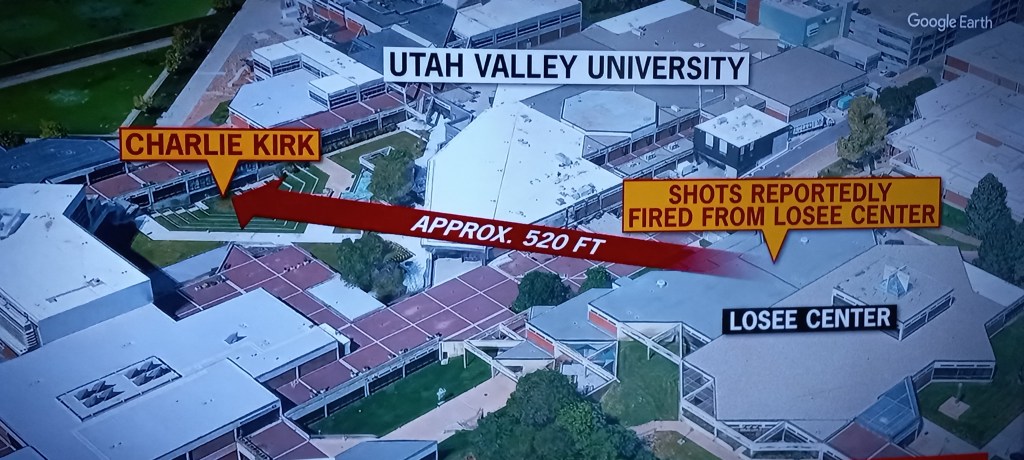
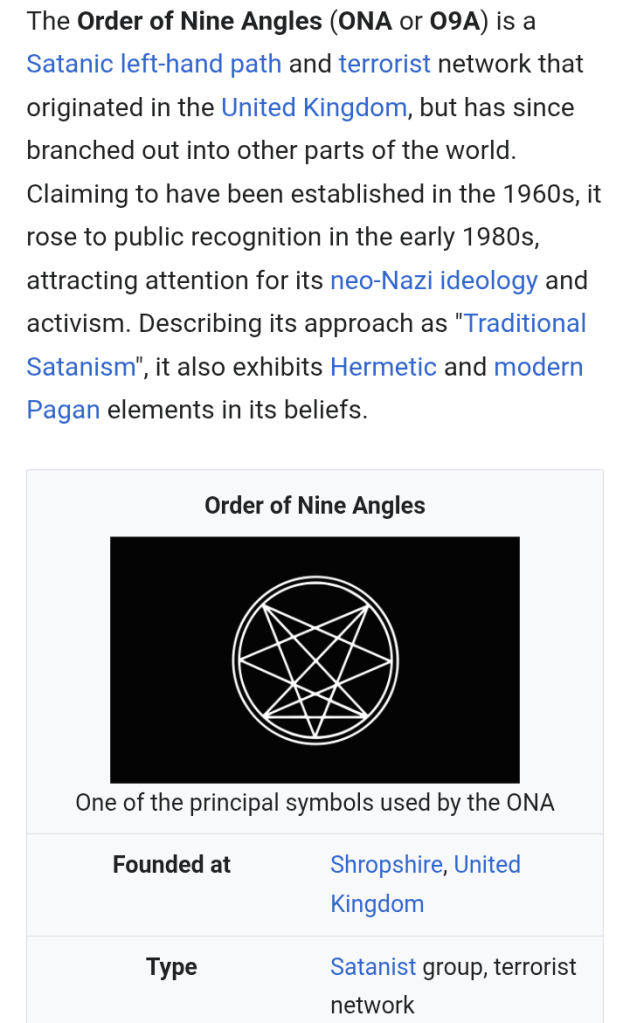
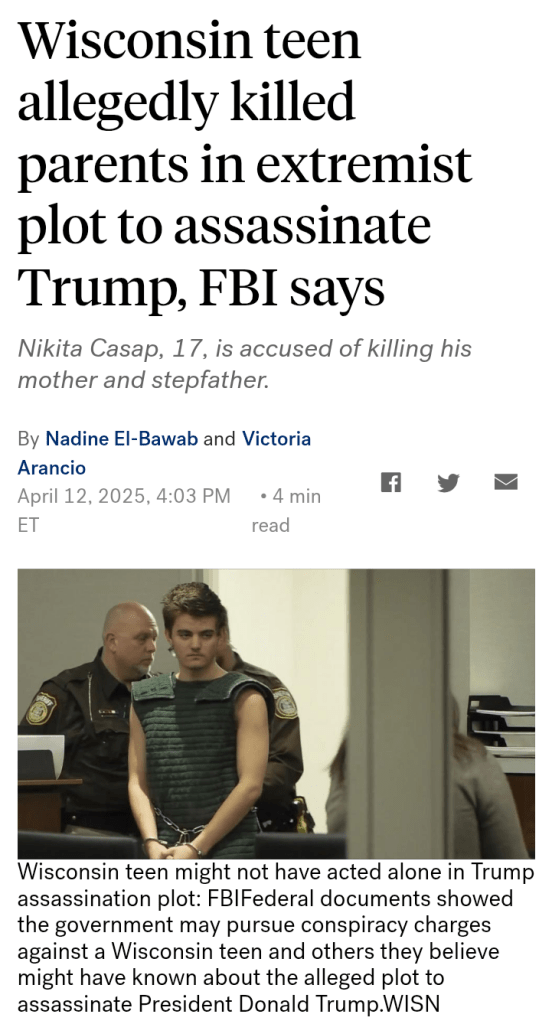
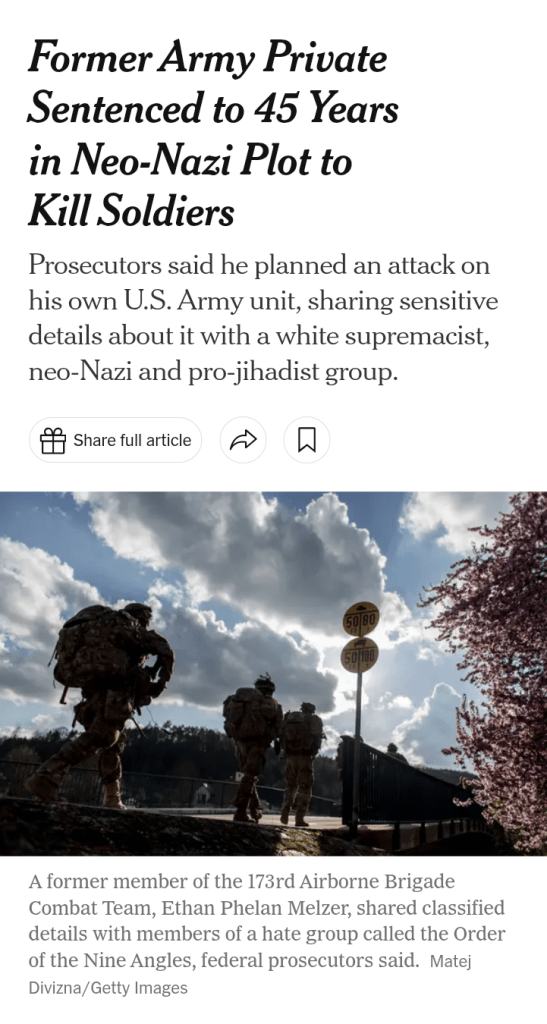

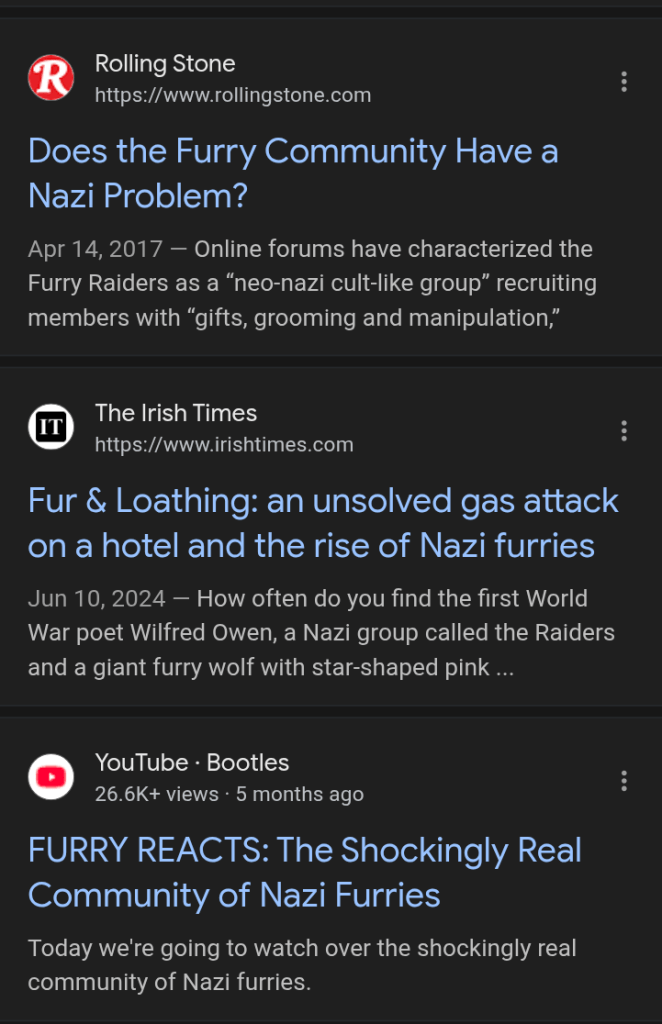
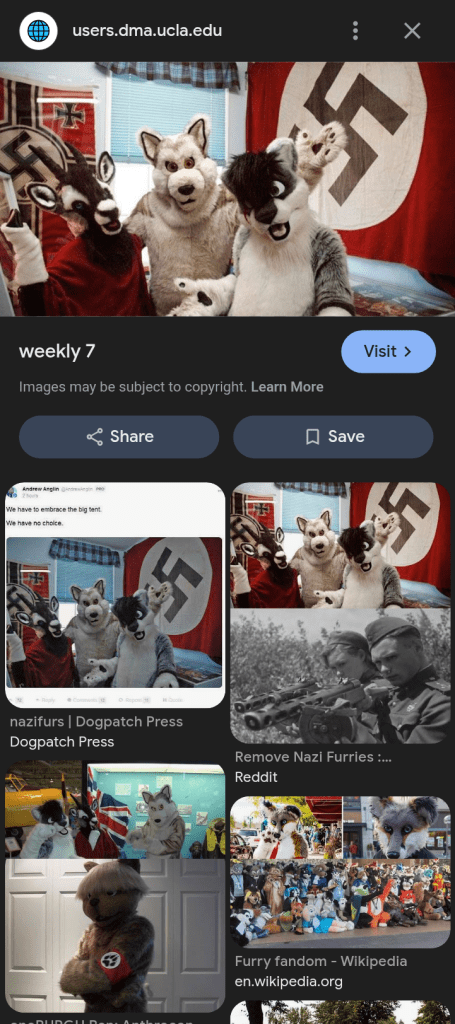


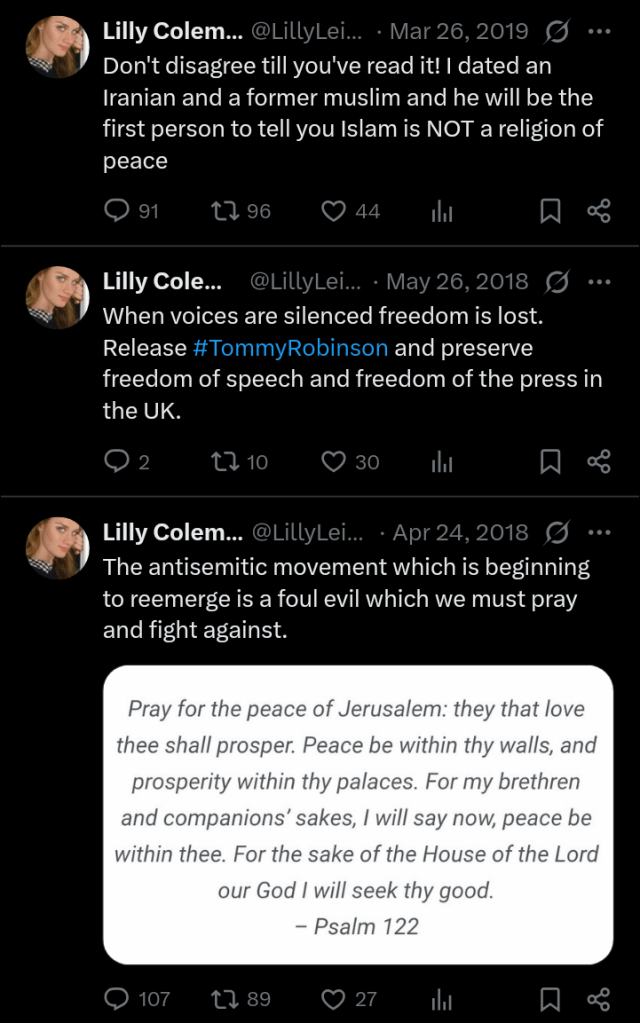
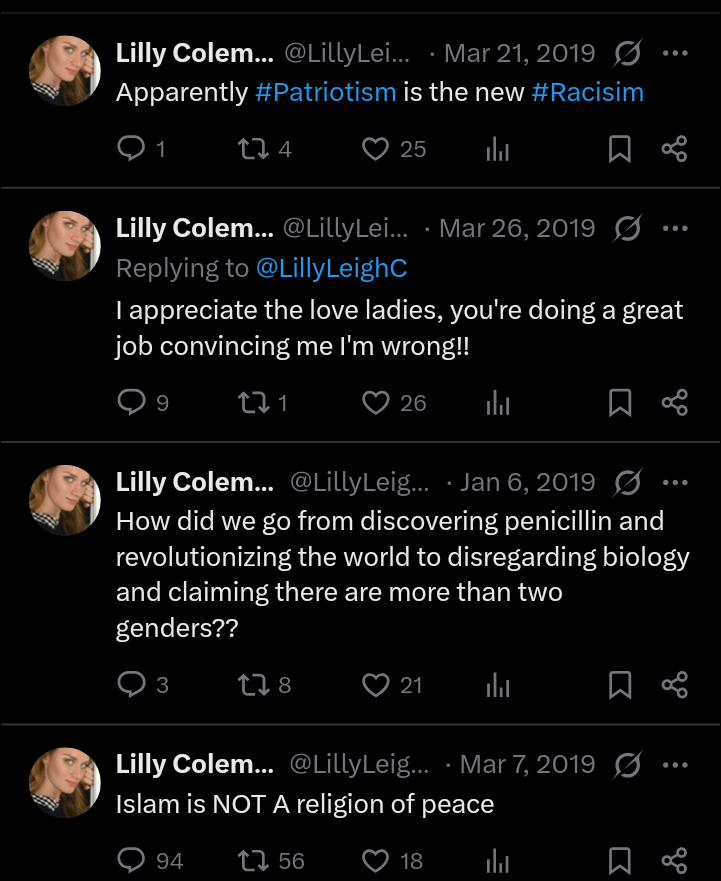
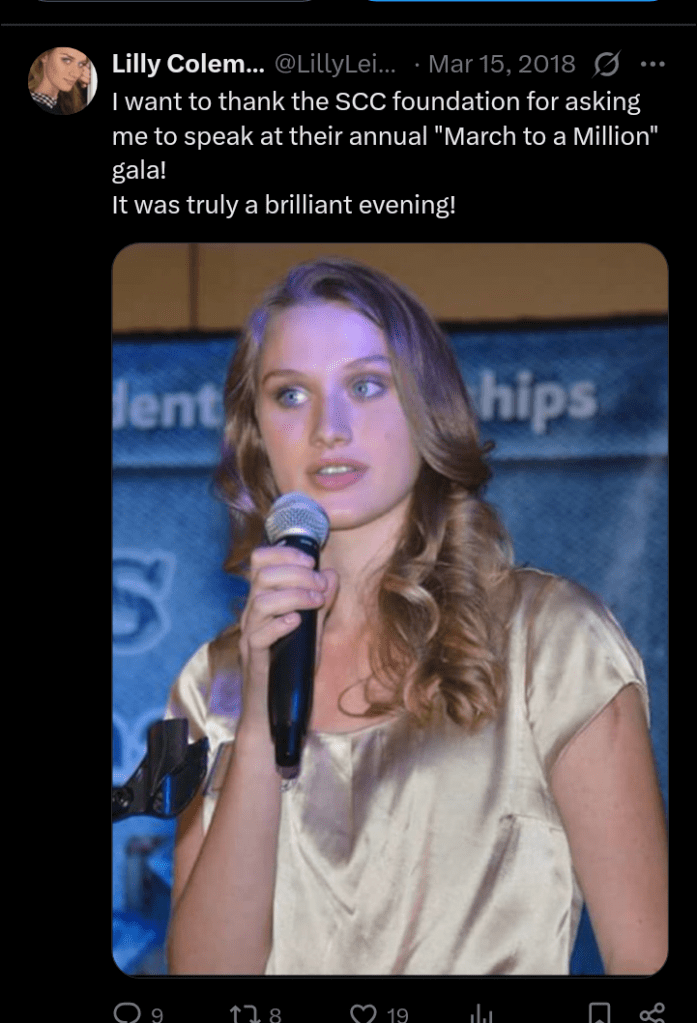
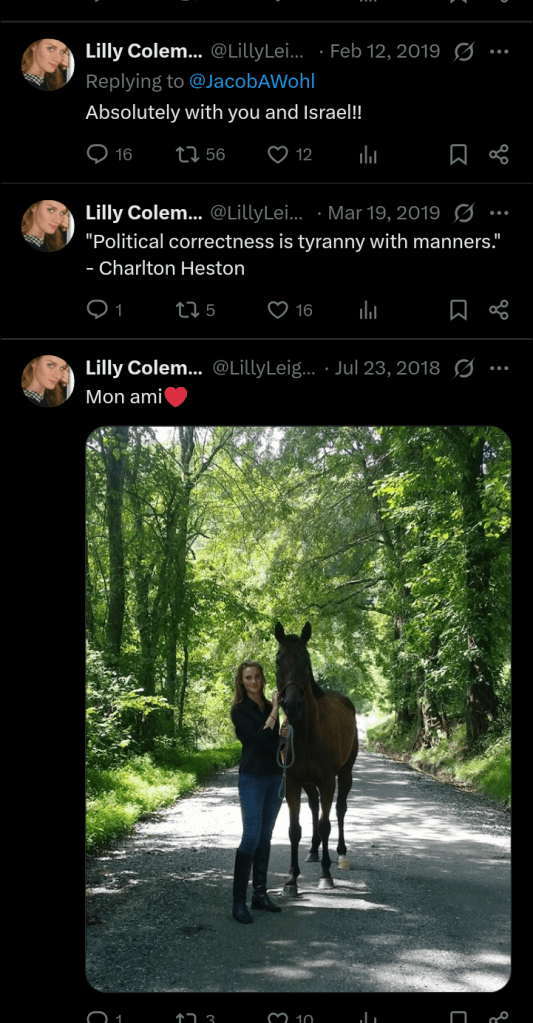


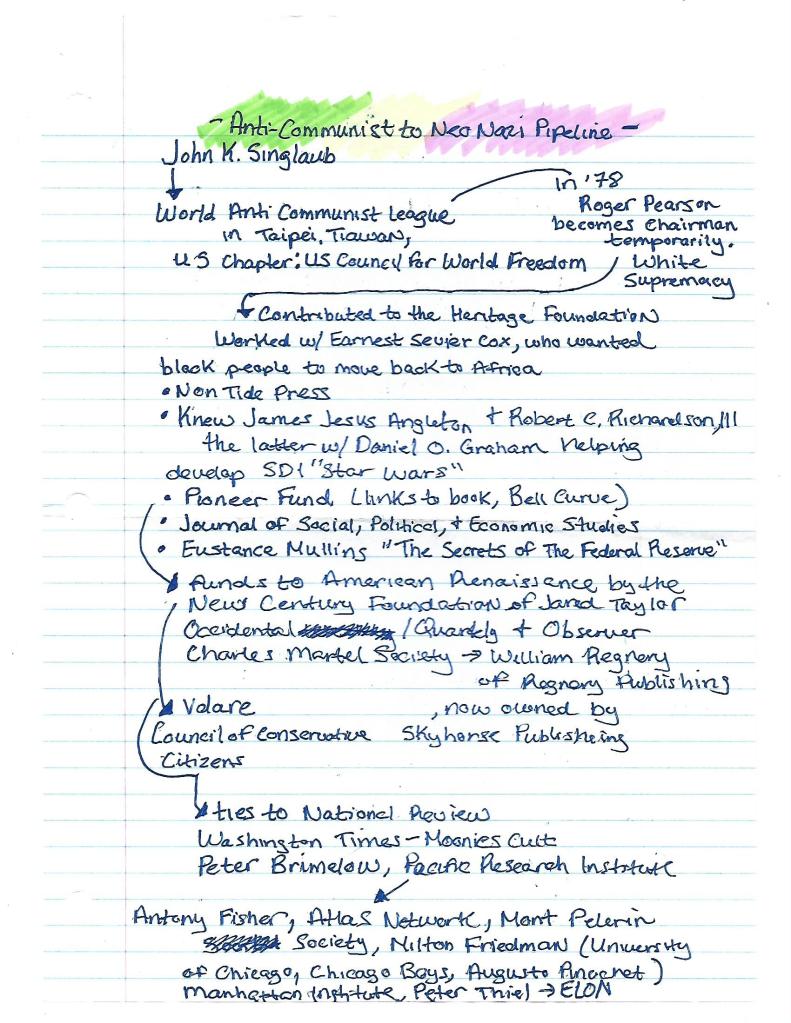
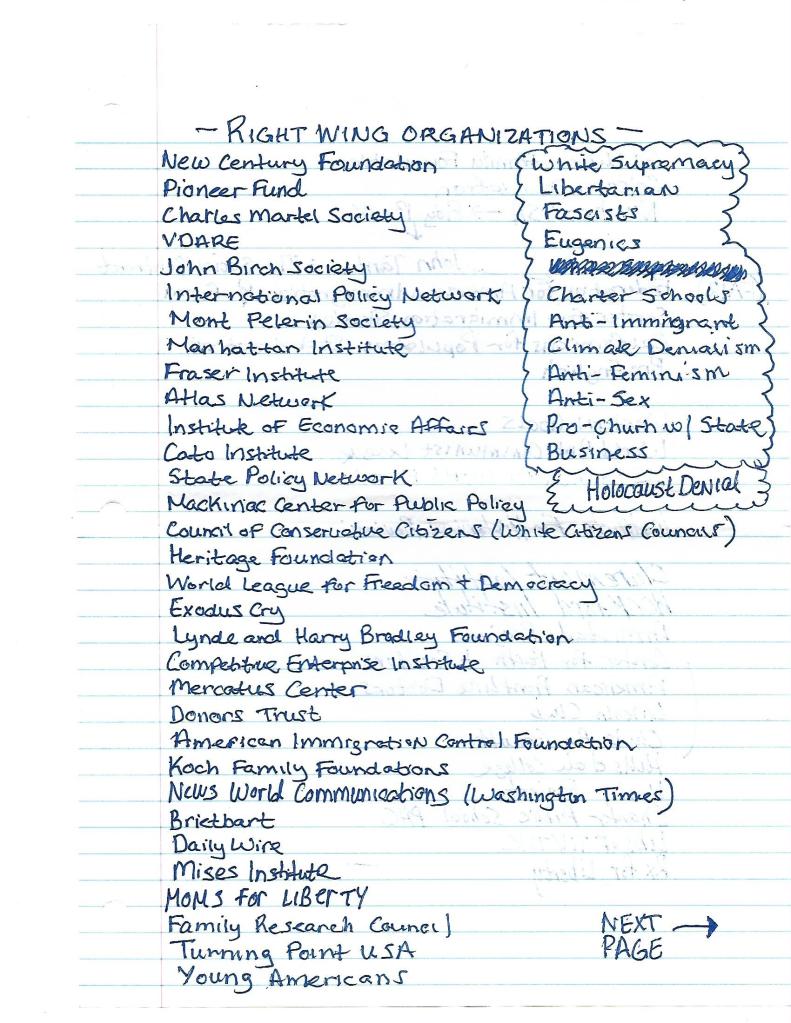

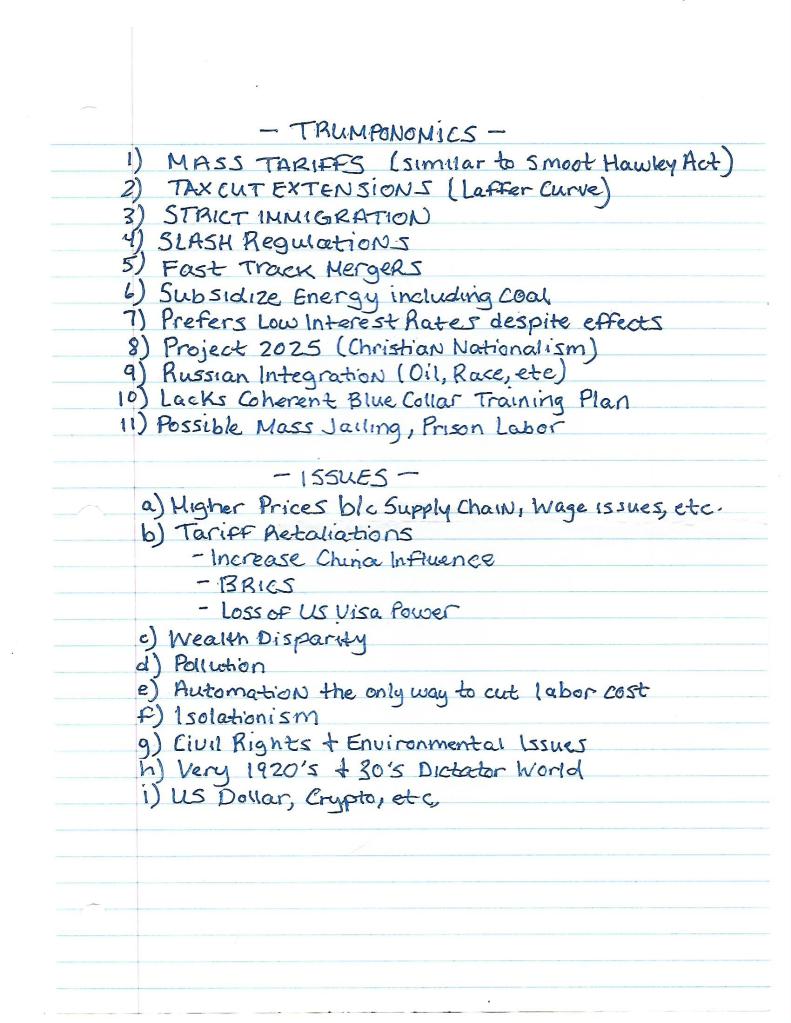
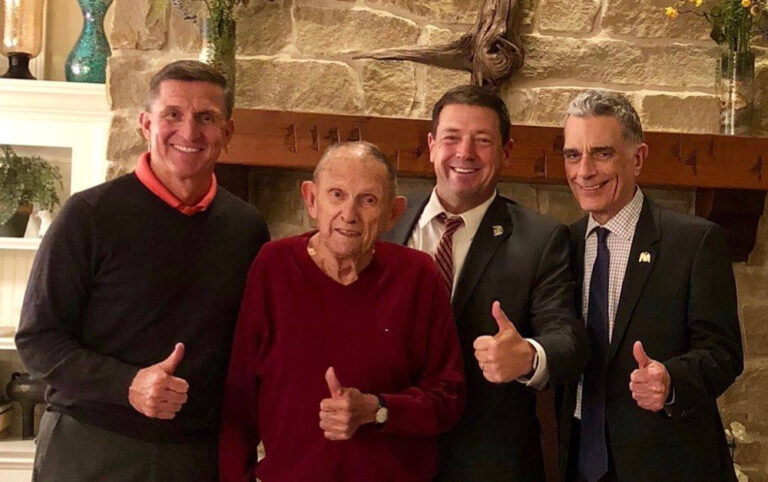
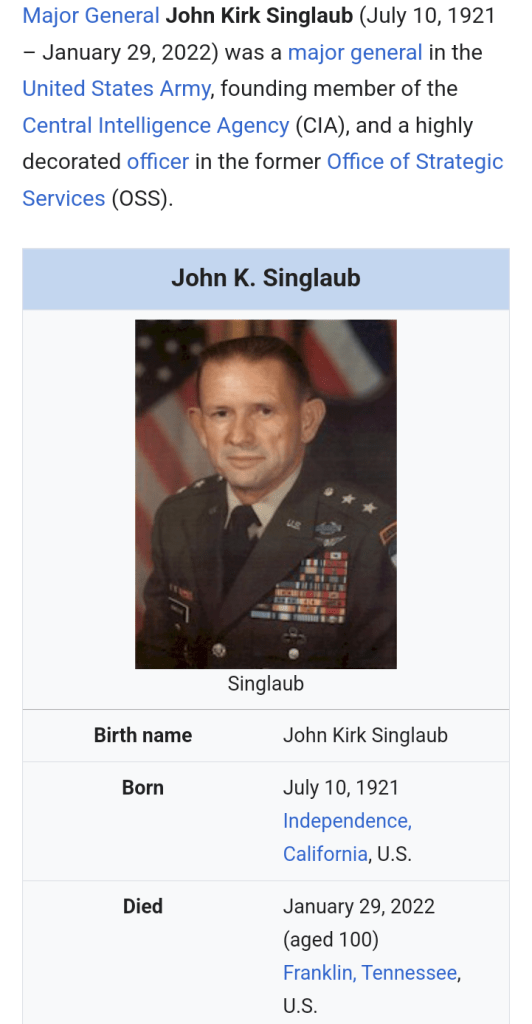


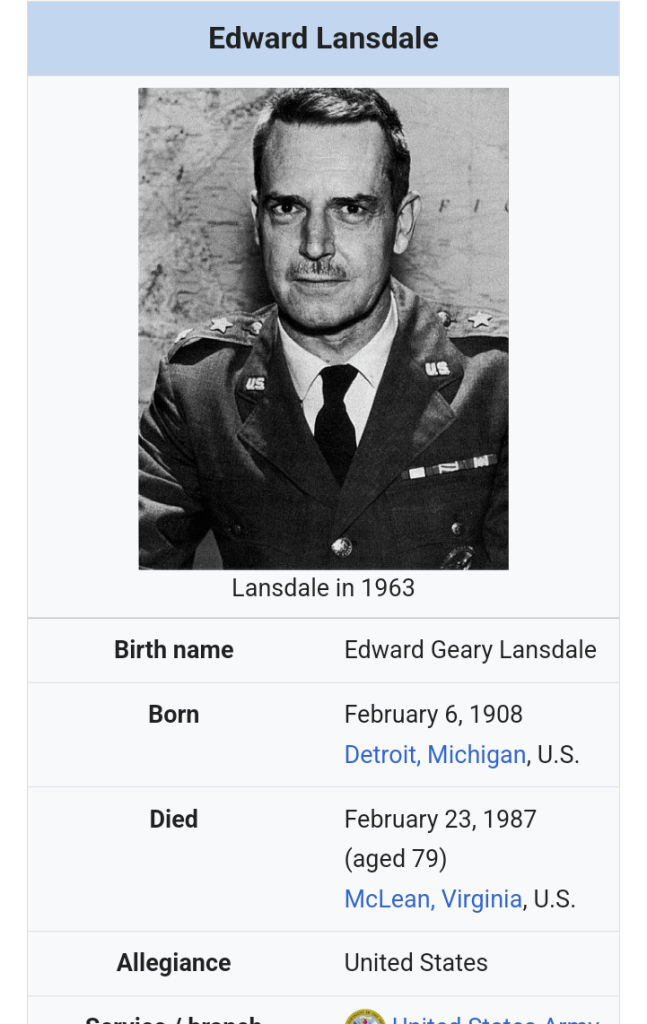


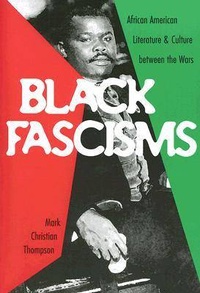
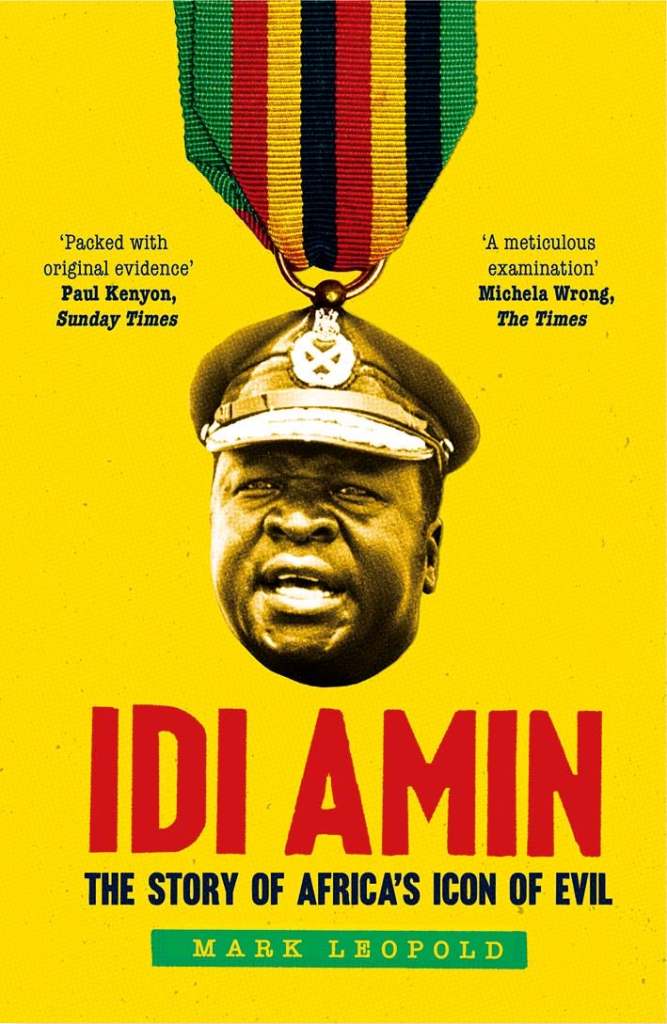


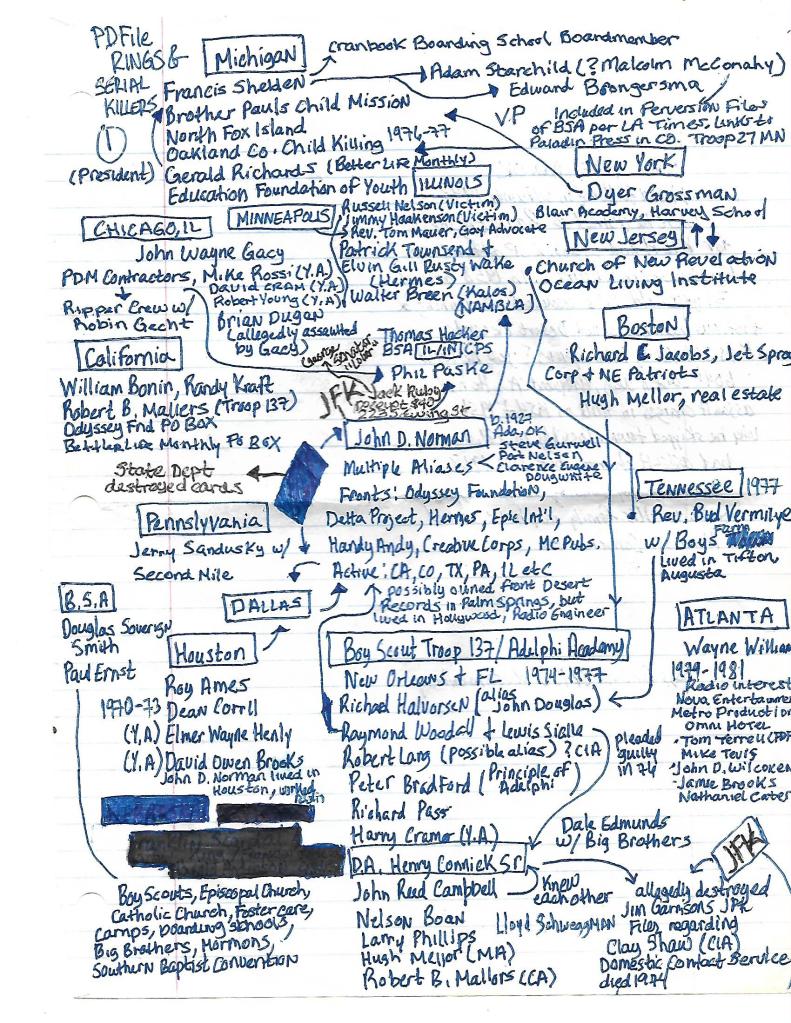




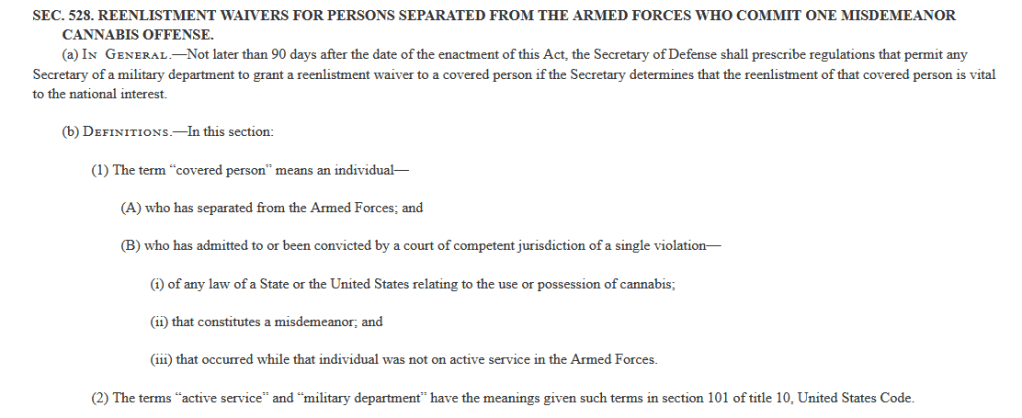

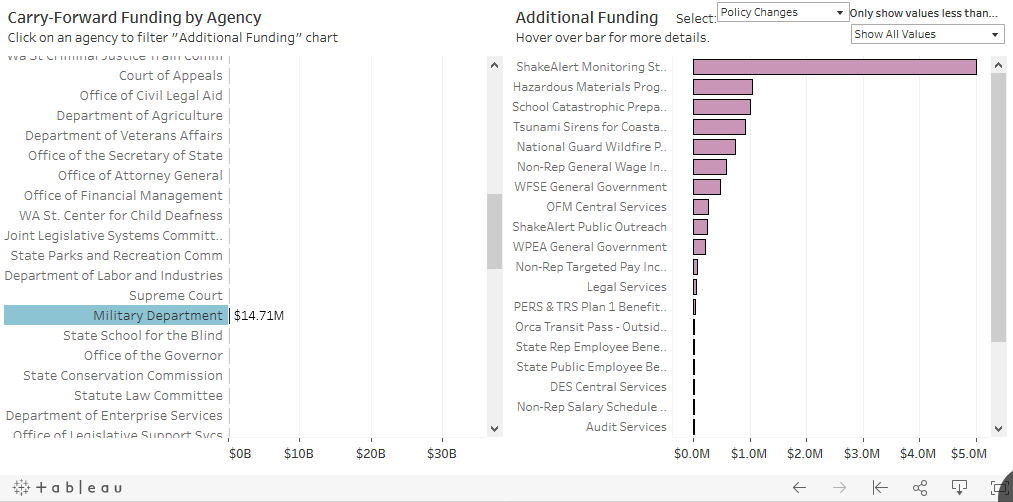


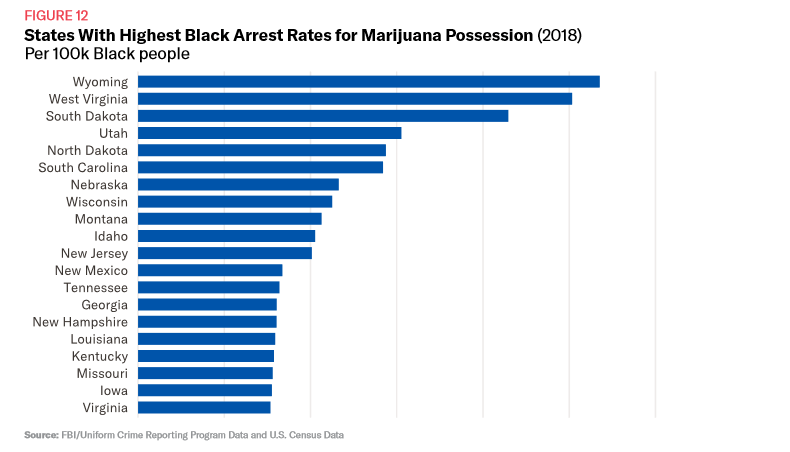
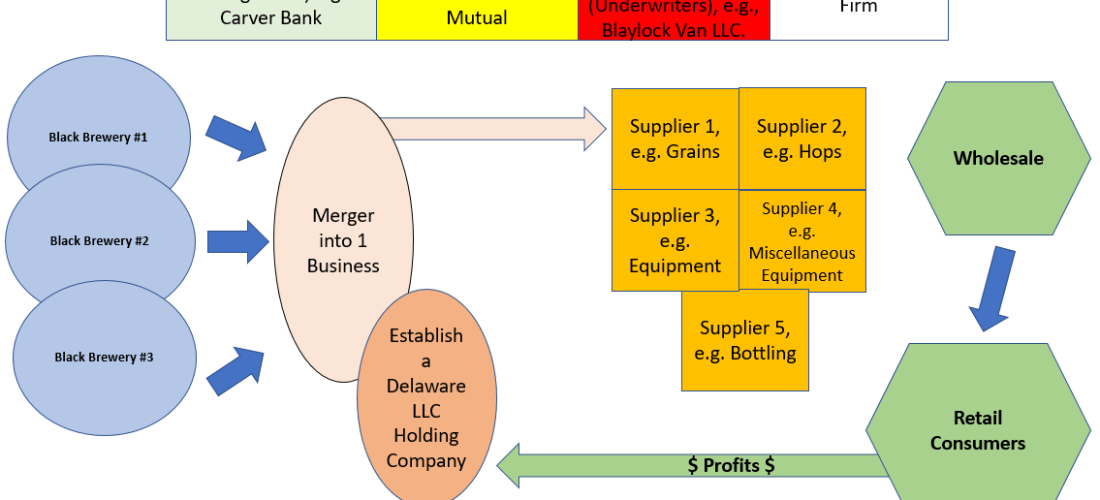

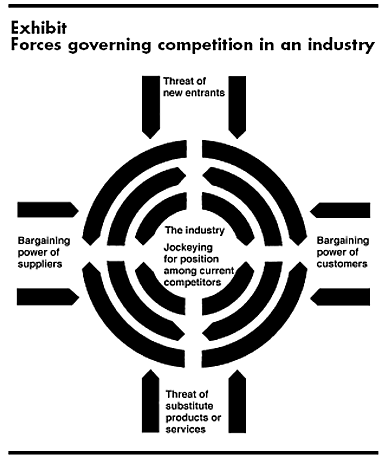
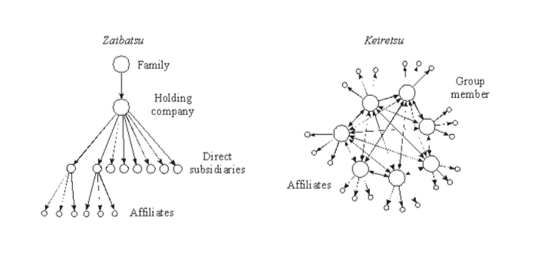
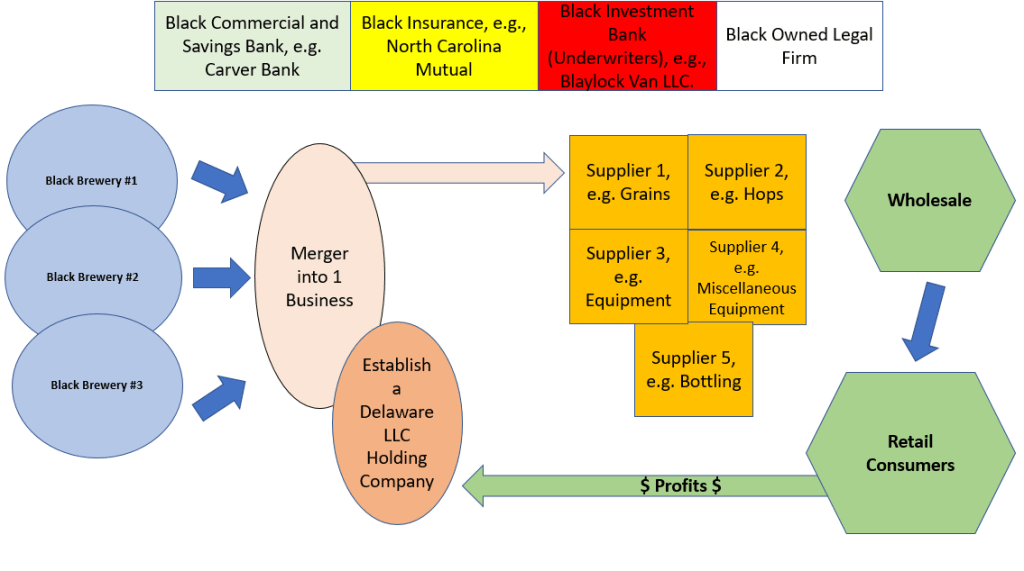
 Mitchell Research Group
